
Jun 15
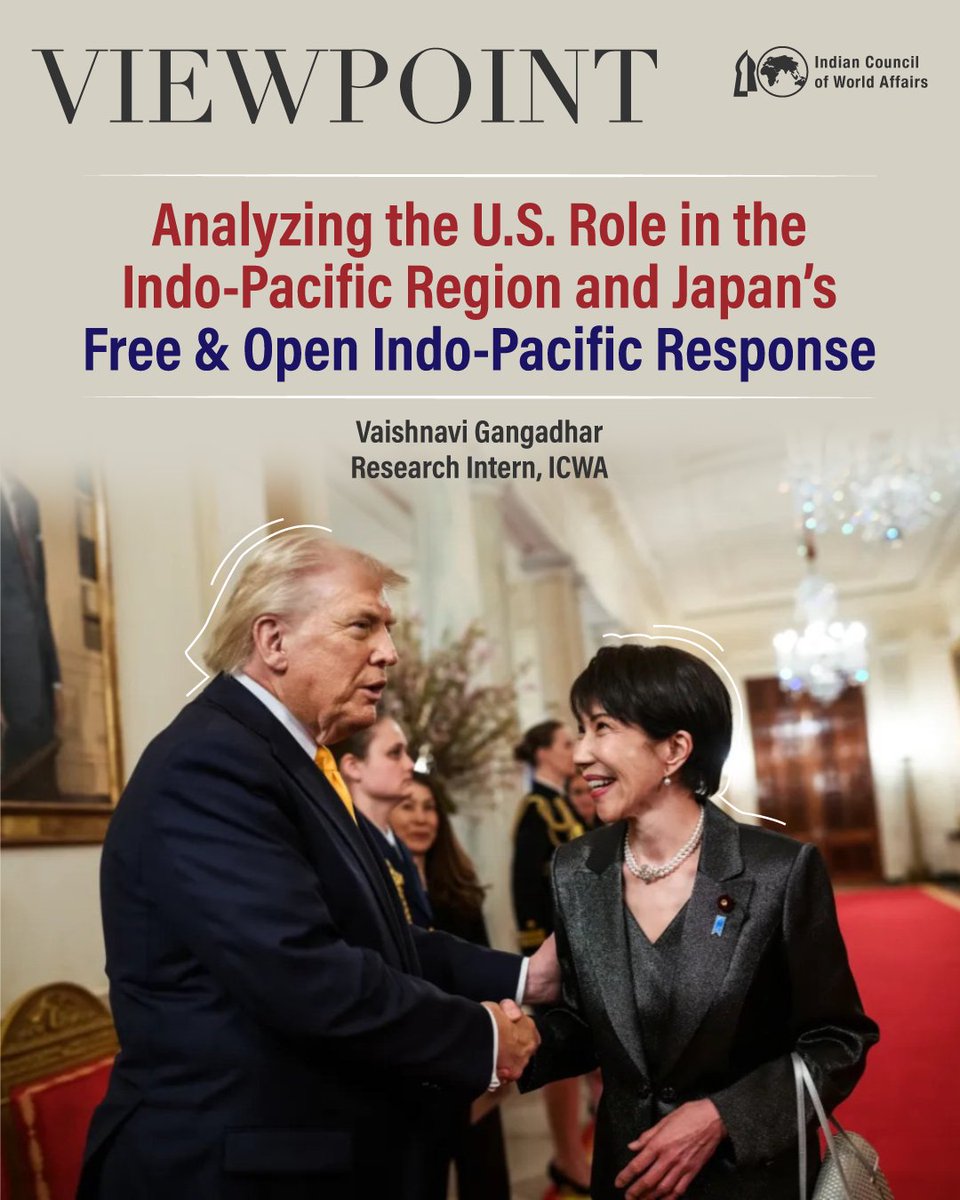
The U.S.’s shifting priorities under the present #Trump Administration have marked a significant transition in the #Indo-#Pacific. Washington’s perspective has evolved from the 2016 regional engagement to a more localized focus on the Western Hemisphere under the ‘America First’ policy. Simultaneously, Japan is rapidly reshaping its Free and Open Indo-Pacific strategy. Questioning the long-term reliability of American engagement, Tokyo is furthering its own economic and military capabilities. #Japan maintains its core alliance with the U.S. while expanding its regional commitments to protect its long-term strategic autonomy against emerging geopoltical challenges in the region.
Read more in #ICWAViewpoint on “Analyzing the U.S. Role in the Indo-Pacific Region and Japan’s Free and Open Indo-Pacific Response” by Vaishnavi Gangadhar, Research Intern, ICWA.
Click 👉 bit.ly/3QlZpfa
1
186
Jun 10
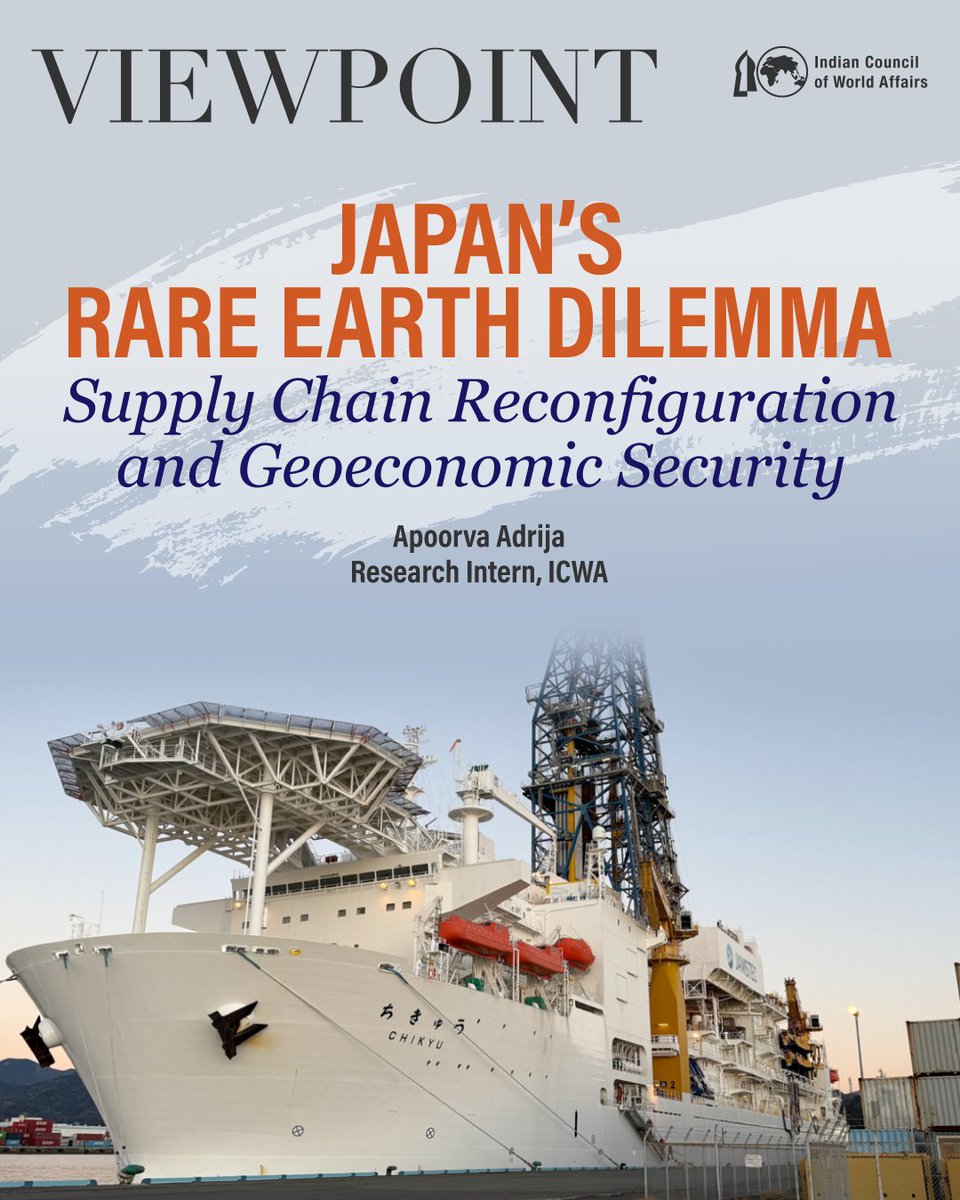
#Japan’s renewed focus on rare-earths have come at a time when #minerals are increasingly shaping the contours of the geoeconomic and geopolitical landscape. As technological competition intensifies and supply-chain vulnerabilities deepen, rare-earth elements have emerged as indispensable strategic assets powering everything from semiconductors and EVs to advanced defence systems.
This paper examines how Japan is responding to these challenges amid #China’s overwhelming dominance in rare-earth production and refining, alongside #Tokyo’s evolving approach towards supply-chain resilience through strategic diversification, stockpiling, recycling initiatives, and investments in indigenous extraction technologies. Japan’s transition from a position of acute dependency to one centred on “managed interdependence” and long-term geoeconomic resilience and its growing engagement with Australia, India, and other strategic partners reflects broader shifts underway within the Indo-Pacific economic and #security architecture.
Read more in #ICWAViewpoint on “Japan’s Rare Earth Dilemma: Supply Chain Reconfiguration and Geoeconomic Security” by Apoorva Adrija, Research Intern, ICWA.
Click 👉 bit.ly/4okb2jh
5
278
Jun 9
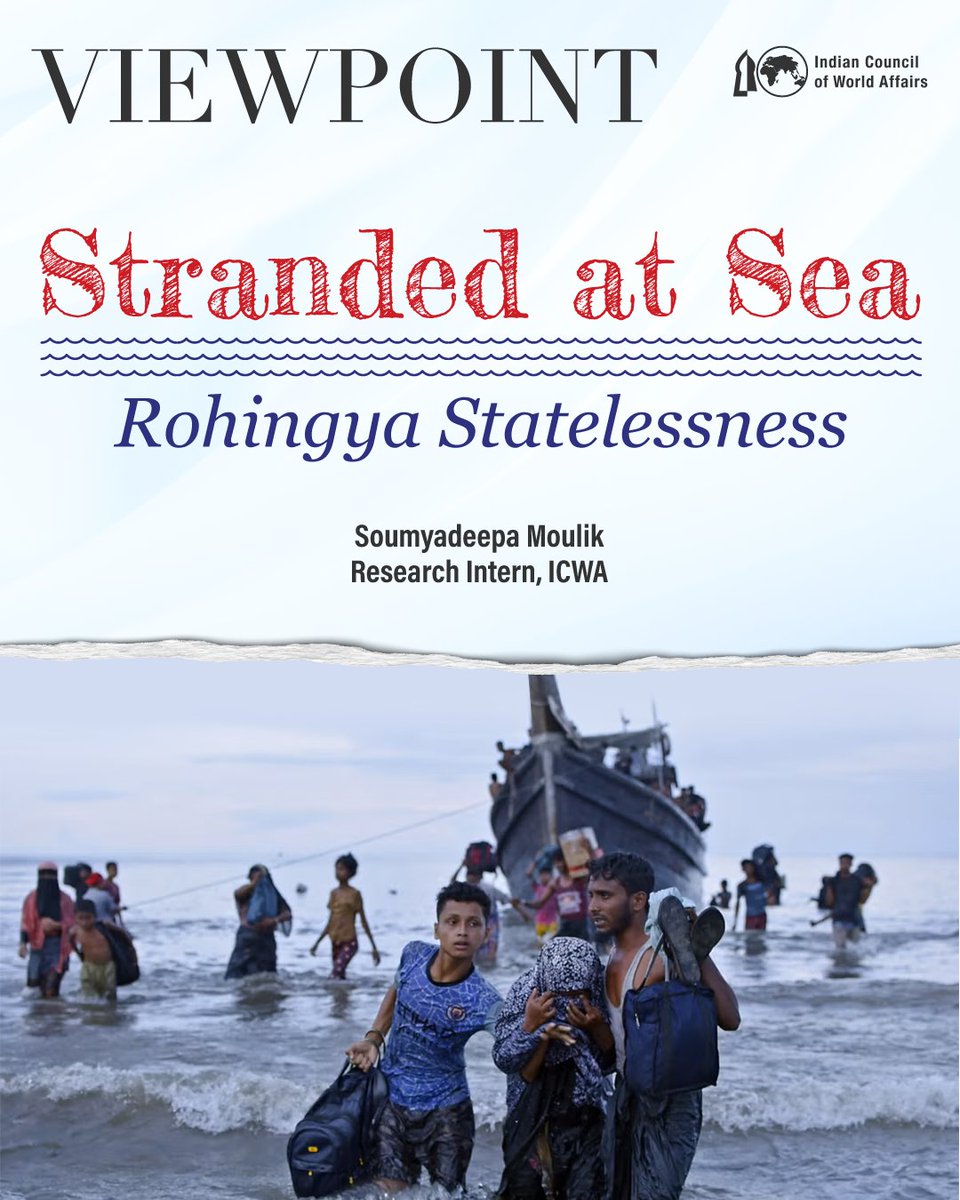
Why do thousands of #Rohingya continue risking their lives at sea? Stranded at #Sea: Rohingya Statelessness explores the historical and political processes that transformed the Rohingyas in #Myanmar’s Rakhine State into a stateless population denied citizenship, mobility, and protection. From the 1982 Citizenship Law to the 2017 mass exodus and today’s refugee crisis in Bangladesh, Malaysia, India, and beyond, the paper highlights how exclusionary policies and weak regional asylum frameworks continue to leave the Rohingyas trapped between persecution and displacement.
Read more in #ICWAViewpoint on “Stranded at Sea: Rohingya Statelessness” by Soumyadeepa Moulik, Research Intern, ICWA.
Click 👉 bit.ly/4vhzqVL
1
1
222
Jun 8
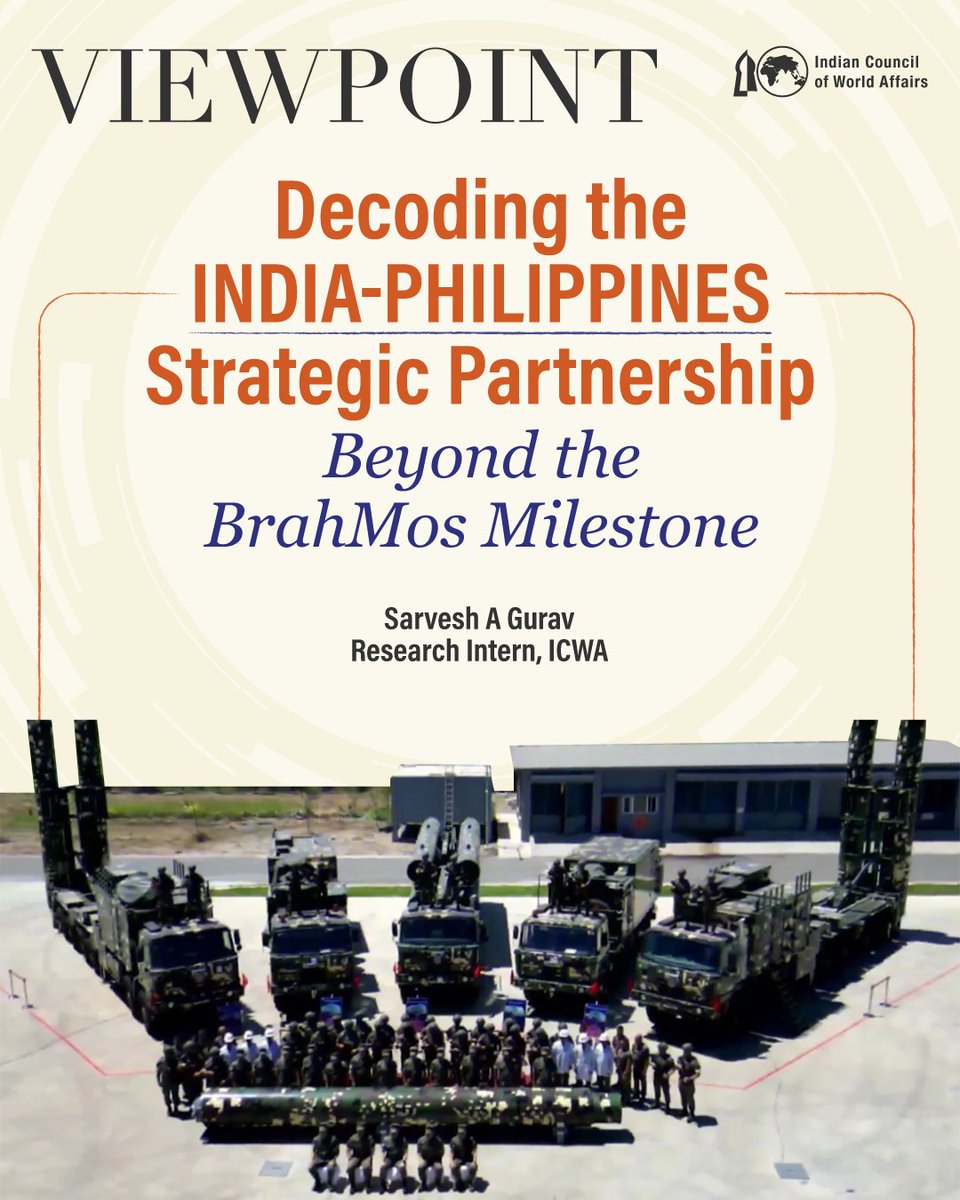
The delivery of the third and final shipment of #BrahMos supersonic cruise missiles to #Manila on April 22nd, 2026, marks a defining pivot in the #India-#Philippines security architecture. Moving past decades of "resource reluctance," the accelerating Delhi-Manila axis signals India’s concrete evolution as a Net Security Provider and secondary balancer. This hardware transfer operationalises the Philippines' Comprehensive Archipelagic Defence Concept (CADC), establishing a robust "deterrence-by-denial" posture in the Luzon Strait.
Read more in #ICWAViewpoint on “Decoding the India-Philippines Strategic Partnership: Beyond the BrahMos Milestone” by Sarvesh A Gurav, Research Intern, ICWA.
Click 👉 bit.ly/49NvAe7
2
8
453
Jun 5
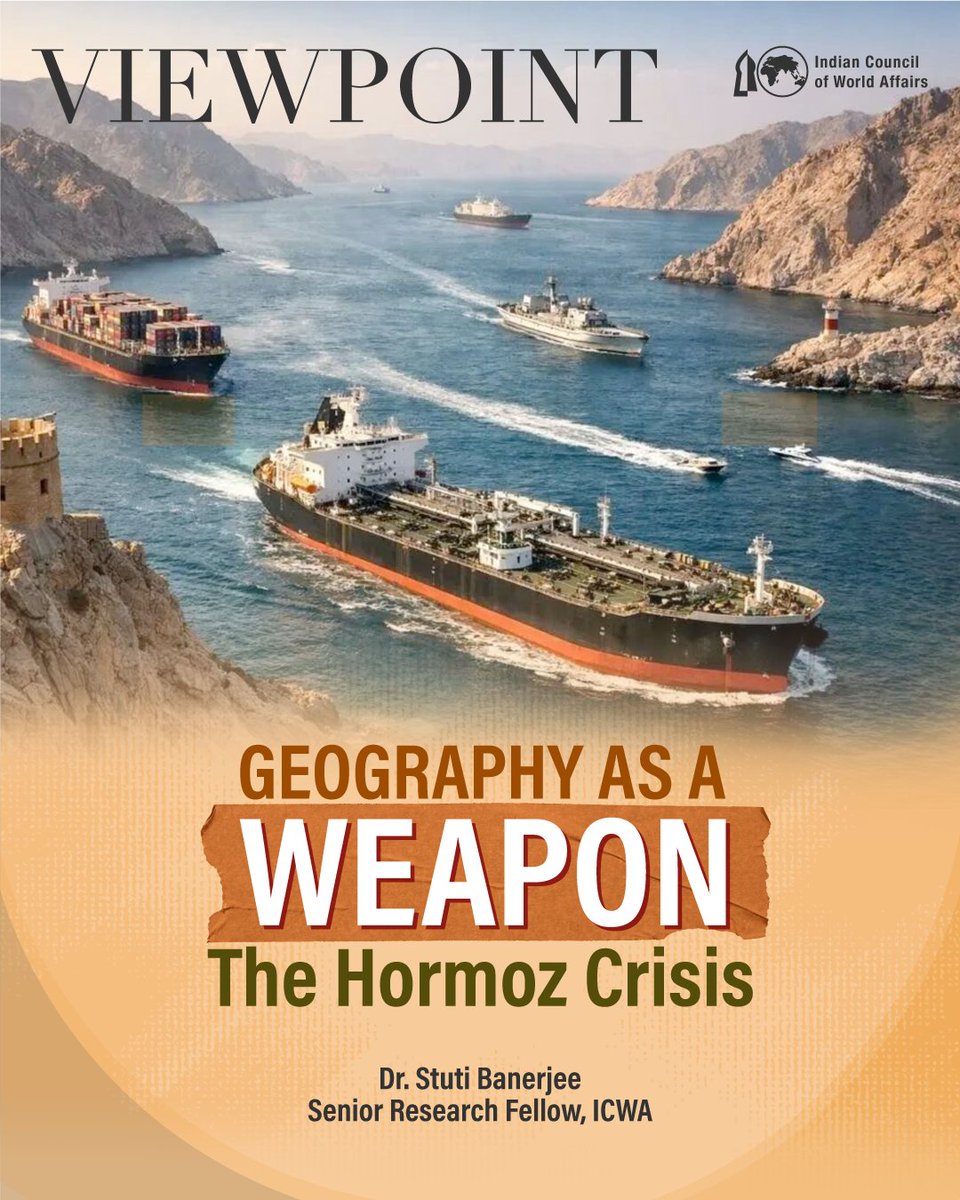
#Iran’s weaponisation of the Strait of Hormuz to disrupt supply chains has ensured that the ongoing conflict involving Iran, #Israel, and the United States is no longer viewed just as a conventional regional crisis. Iran has effectively weaponised its #geography. Today it occupies a #critical chokepoint that controls both energy and data flows, two components that are critical for economic development.
Read more in #ICWAViewpoint on “Geography As a Weapon: The Hormoz Crisis” by Dr. Stuti Banerjee @banerjee_stuti, Senior Research Fellow, ICWA.
Click 👉 bit.ly/4votCZY
3
9
310
Jun 4
The issue of #climate #migration has become increasingly relevant. #Kiribati is one of the first countries expected to submerge due to climate related issues and is currently facing the problems of migration and refugee resettlement. The 1951 #Refugee Convention was made at time where there were several political issues like the World War going on, making it purely political in scope. As climate related challenges rise, the importance of making laws and policies for climate change-induced migration is of great importance.
Read more in #ICWAViewpoint on “Relevance of the 1951 Refugee Convention in Contemporary Issues: Kiribati’s Peril and New Zealand’s Response” by Rathika Lakshmi Gopalakrishnan, Research Intern, ICWA.
Click 👉 bit.ly/43LrMqg

4
222
May 26
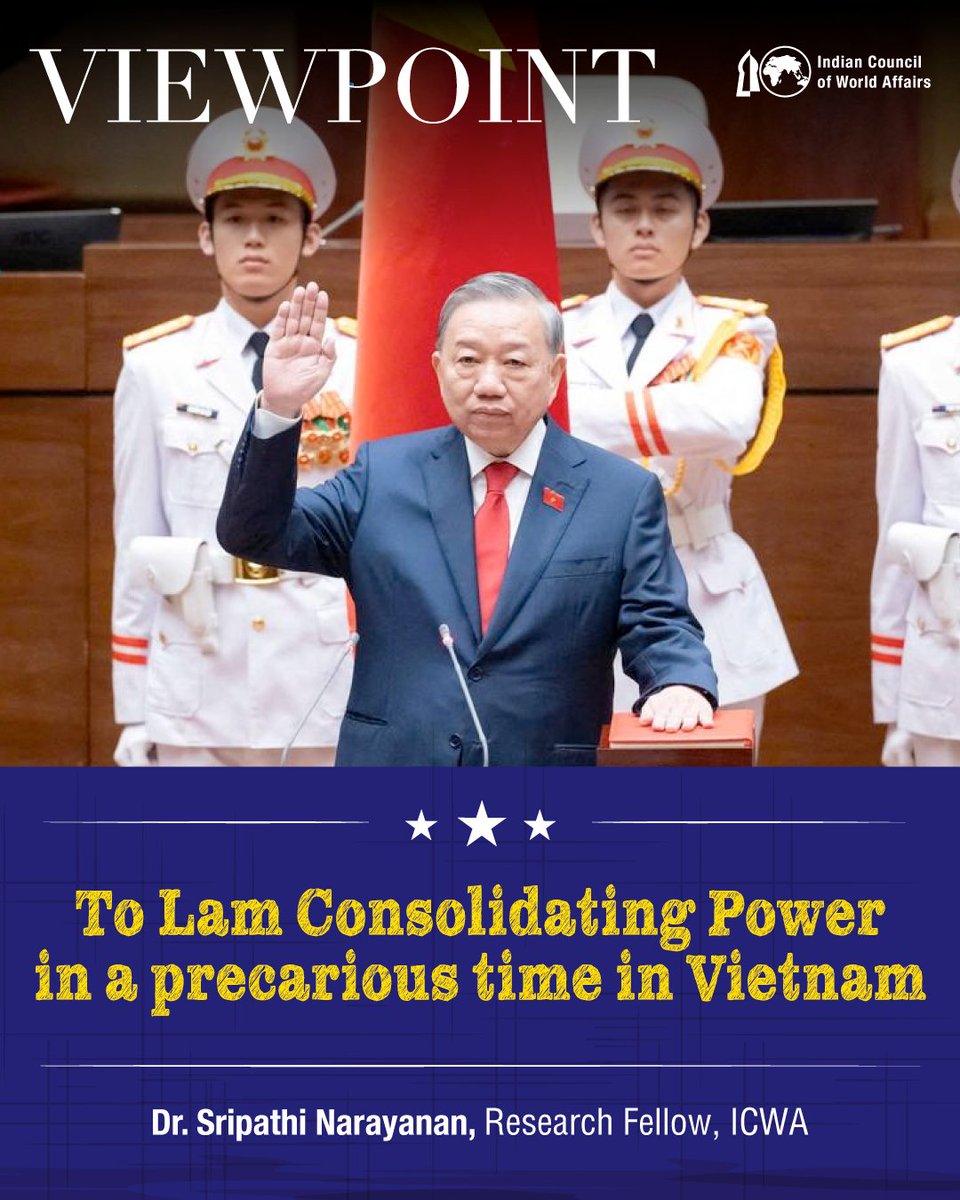
The elevation of Tô Lâm, the General Secretary of the Communist Party of #Vietnam as the #President of Vietnam through a unanimous vote in the first session of the 16th National #Assembly comes at a time when Vietnam, like much of the world, is navigating significant disruption and turbulence caused by the ongoing crisis in the Persian #Gulf. At the same time, Tô Lâm is assuming the role of head of state, when Vietnam is going through a significant degree of internal churn.
Read more in the #ICWAViewPoint on "To Lam Consolidating Power in a precarious time in Vietnam" by Dr. Sripathi Narayanan @_sripathi, Research Fellow, ICWA.
Click 👉 bit.ly/4dyb9UM
4
247
May 20
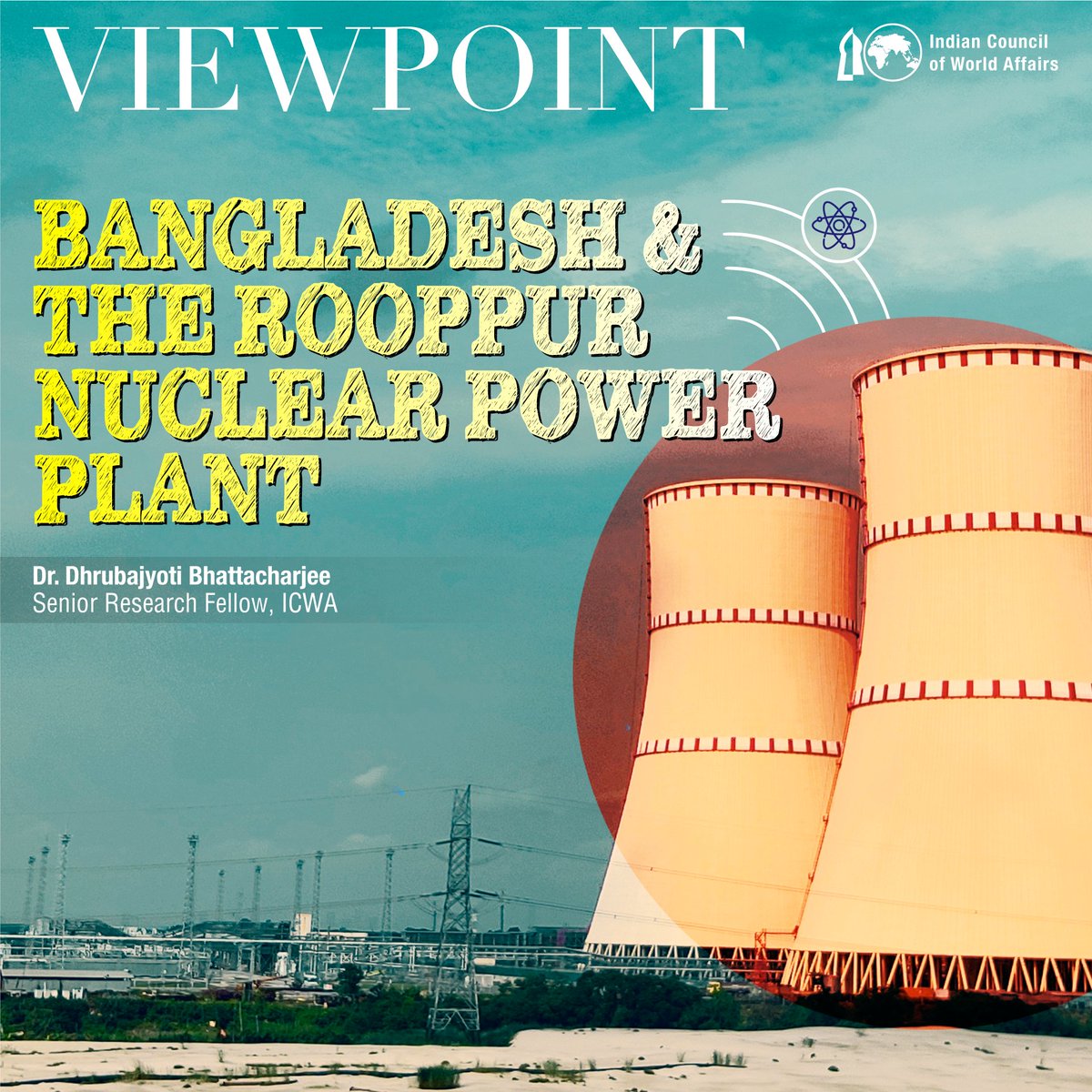
#Bangladesh’s entry into civil #nuclear power through the #Rooppur Nuclear Power Plant marks a major step towards long-term energy #security and #sustainable growth. While such projects promise reduced carbon emissions and enhanced energy efficiency, emerging geopolitical and fuel supply challenges highlight the complexities developing nations face in balancing strategic autonomy with economic and technological aspirations.
Read more in the #ICWAViewPoint on "Bangladesh and the Rooppur Nuclear Power Plant" by Dr. Dhrubajyoti Bhattacharjee @dhrubajyoti2006, Senior Research Fellow, ICWA.
Click 👉 bit.ly/42EDWRo
1
8
427
May 11
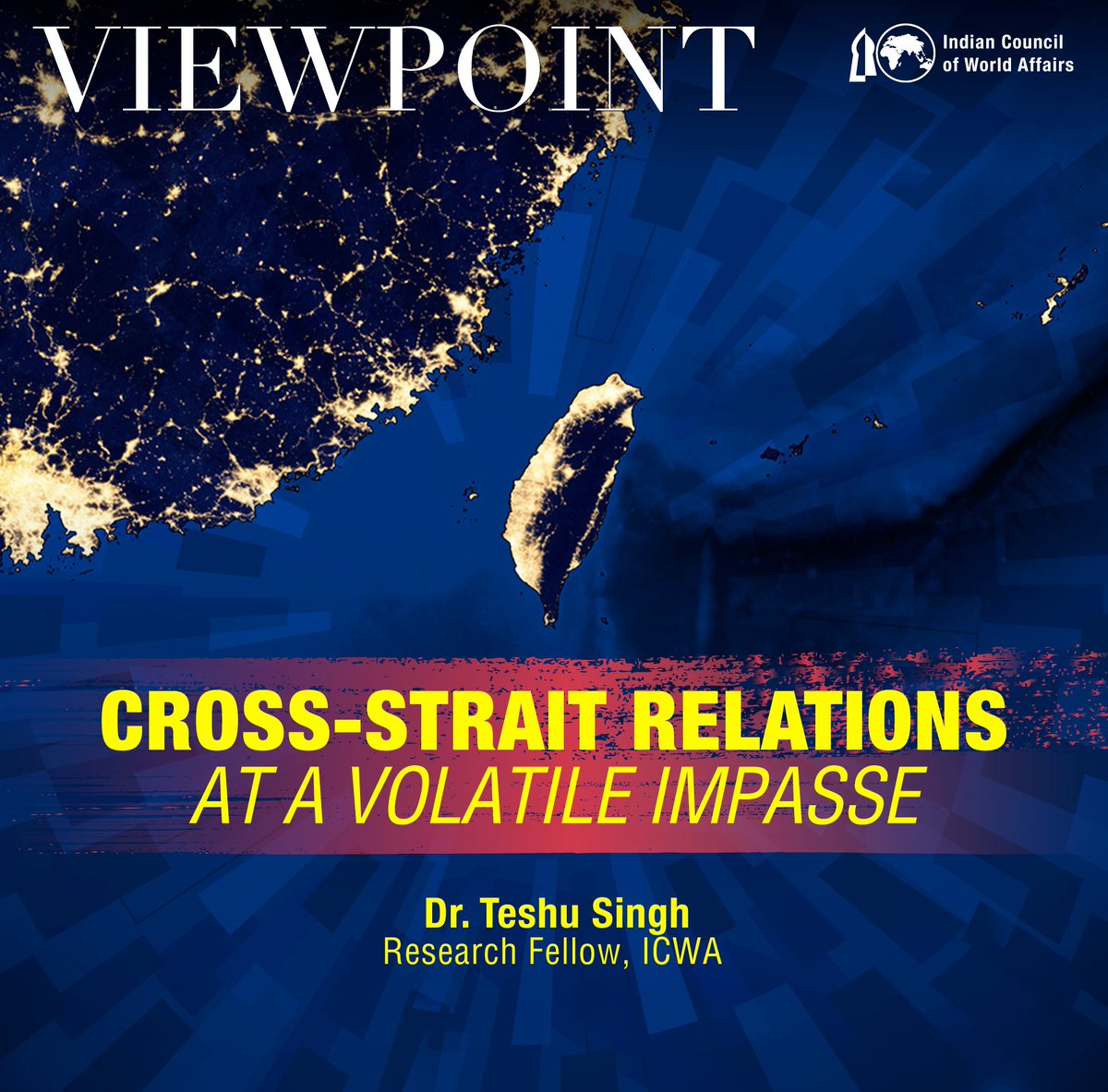
The issue of #Taiwan’s reunification with #China has gained traction. China is pursuing a dual-track approach towards Taiwan. On the one hand, it is engaging in coercive actions, such as naval exercises, repeated airspace violations, and chequebook #diplomacy. On the other hand, it is attempting to engage in peace talks by reaching out to Taiwan’s opposition party.
Read more in #ICWAViewpoint on “Cross-Strait Relations at a Volatile Impasse” by Dr. Teshu Singh @T18singh, Research Fellow, ICWA.
Click 👉 bit.ly/42dTc7A
6
317
Apr 22
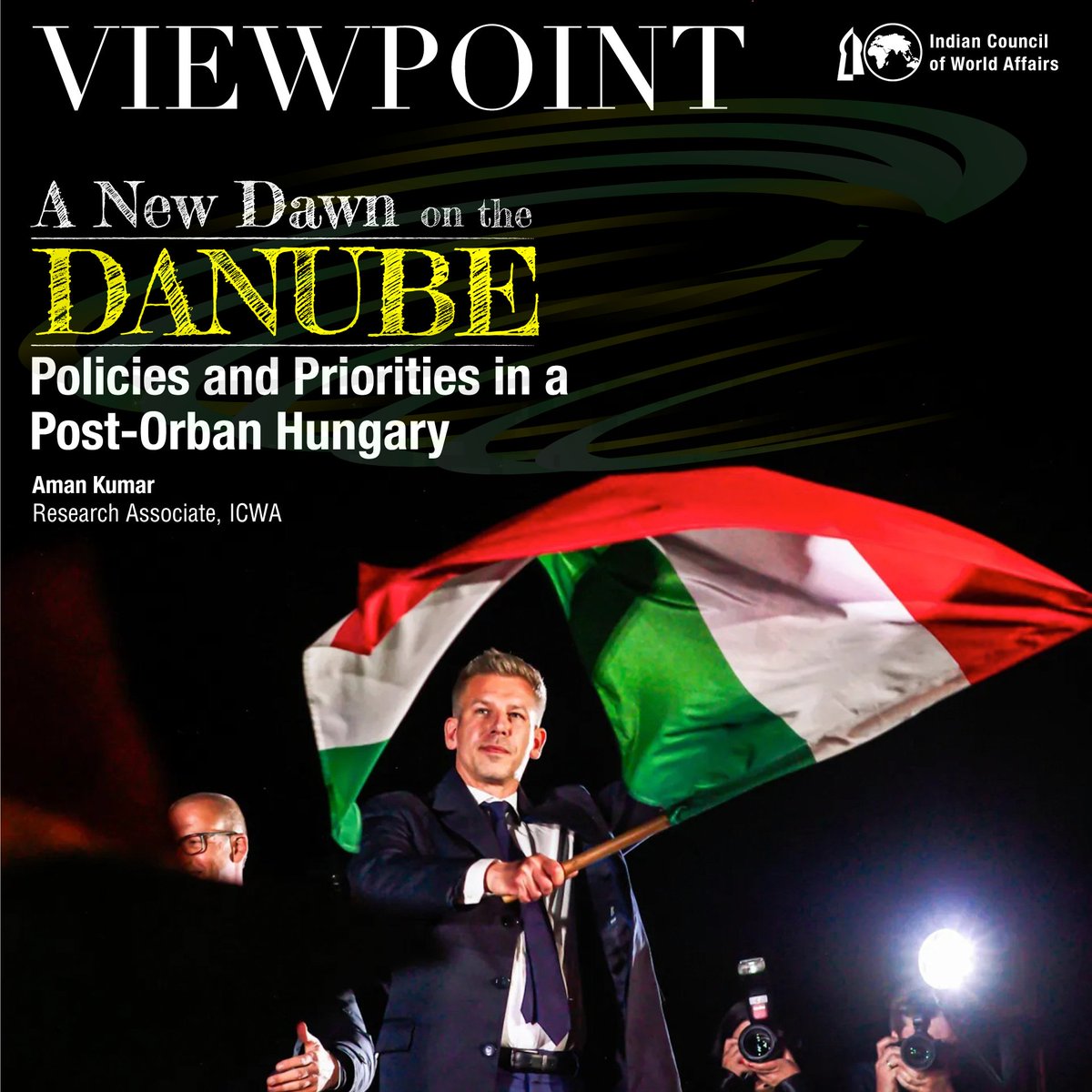
With the change of government, #Hungary stands at a critical juncture in its post-Soviet history. The electoral defeat of Viktor Orbán—whose idea of “illiberal democracy”defined Hungary’s domestic and foreign policy—has created an opening for a reorientation toward #Europe. The new leader, Péter Magyar, a former Orbán ally, now faces the complex task of repairing #Budapest’s strained relationship with the European Union while delivering on ambitious political and economic reforms aimed at reversing the country’s growing isolation and economic stagnation. His challenge, however, is compounded by the continued influence of entrenched Orbán loyalists across key governmental and judicial institutions. At the same time, Magyar’s support for #Ukraine’s sovereignty and his recognition of it as a victim of aggression signal a major shift in Hungary’s foreign policy, including a gradual reduction of dependence on Russia through energy diversification and deeper cooperation with European partners. Magyar, at the same time, remains conservative on issues such as migration and border control and is expected to continue Orban's policies in this domain.
Read more in #ICWAViewpoint on “A New Dawn on the Danube: Policies and Priorities in a Post-Orban Hungary” by Aman Kumar @amansetu1, Research Associate, ICWA.
Click 👉 bit.ly/3OUwI8r
6
363
Mar 20
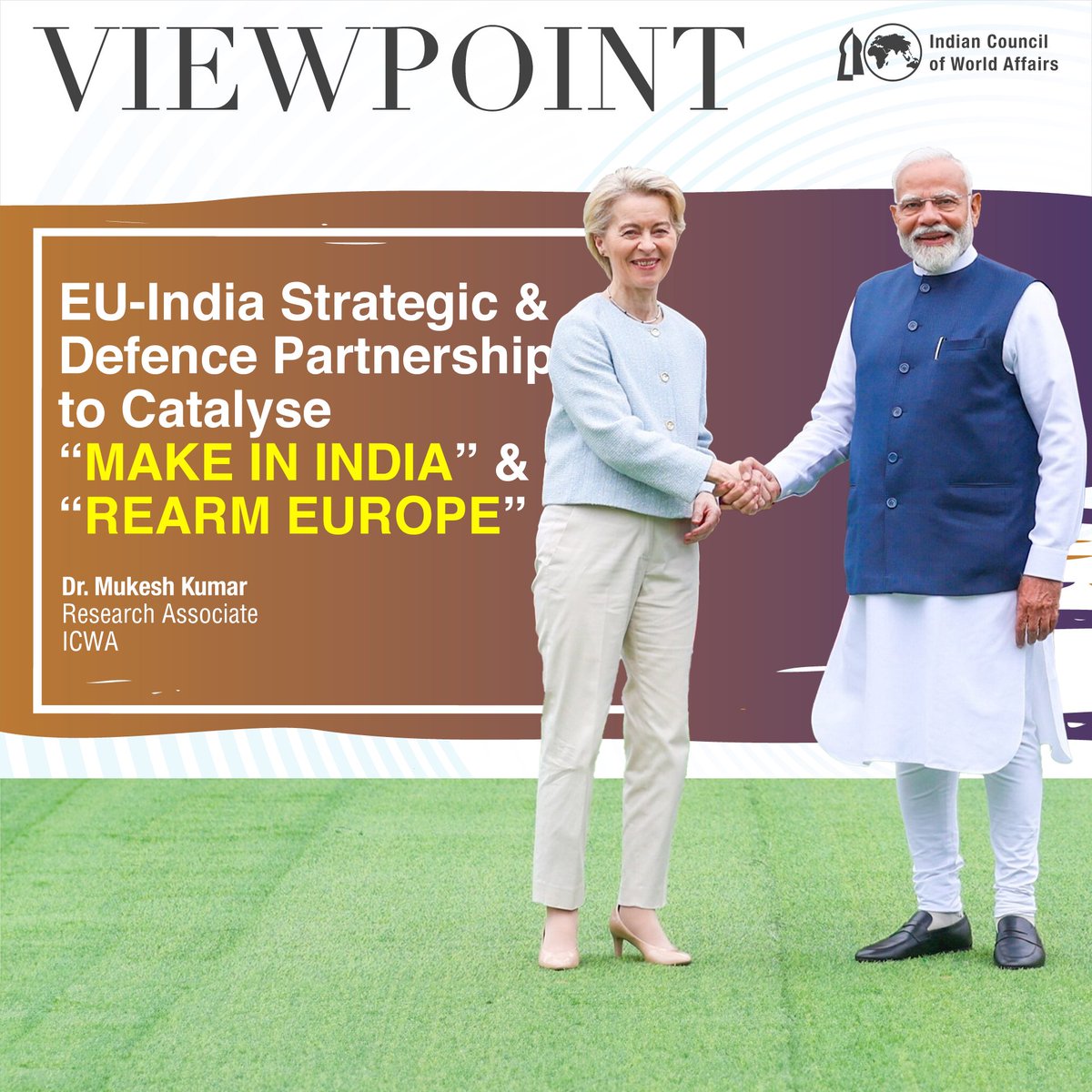
The #EU-#India Strategic and #Defence #Partnership (SDP) marks a milestone step in the EU’s “ReArm Europe” plans and India’s “Make in India” ambitions. It could strengthen defence industry collaboration between India and Europe while promoting equipment sales and diversifying defence sources for both. The SDP could be instrumental in changing the narratives of smaller EU countries regarding the perceptions about India, India-Europe relations, India’s defence spending and decision-making.
Read more in #ICWAViewpoint on EU-India Strategic and Defence Partnership to Catalyse “Make in India” and “ReArm Europe” by Dr. Mukesh Kumar @strikermukesh, Research Associate, ICWA.
Click 👉 bit.ly/3PcHaIq
1
8
367
Mar 17
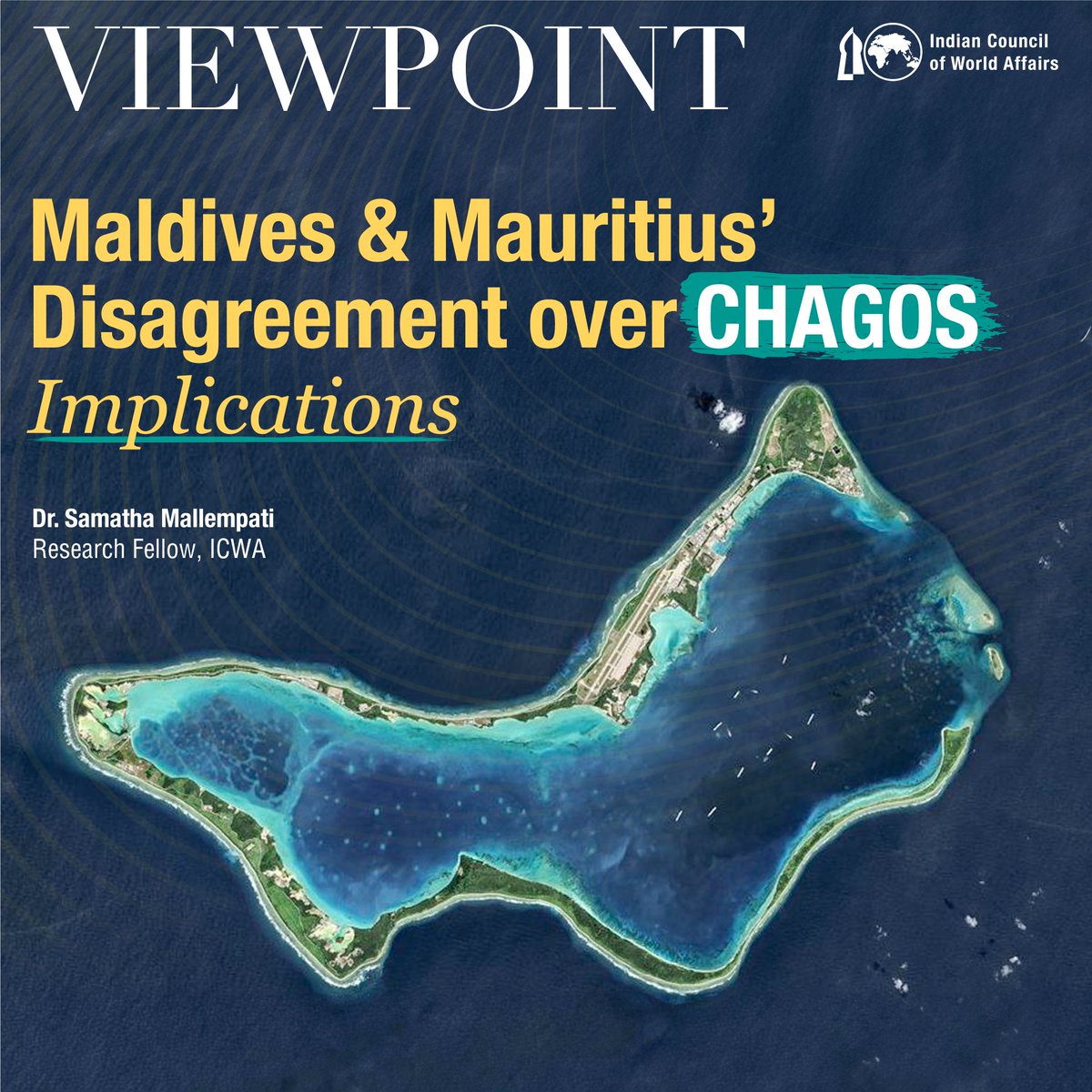
The suspension of diplomatic relations between the #Mauritius and #Maldives, two strategically located island countries in the Indian Ocean, over the #Chagos issue, amidst the current volatile geopolitics in the region, is a cause for concern. The decision by Mauritius, came following series of statements and positions taken by the present People’s National Congress (PNC) government in #Male on Chagos Archipelago in the parliament, at domestic public meetings and in international fora including at the UN after it came to power in 2023.
Read more in #ICWAViewpoint on “Maldives and Mauritius’ Disagreement over Chagos: Implications” by Dr. Samatha Mallempati @SamathaMallemp1, Research Fellow, ICWA
Click 👉 bit.ly/4sfjOR3
1
4
317
Mar 16
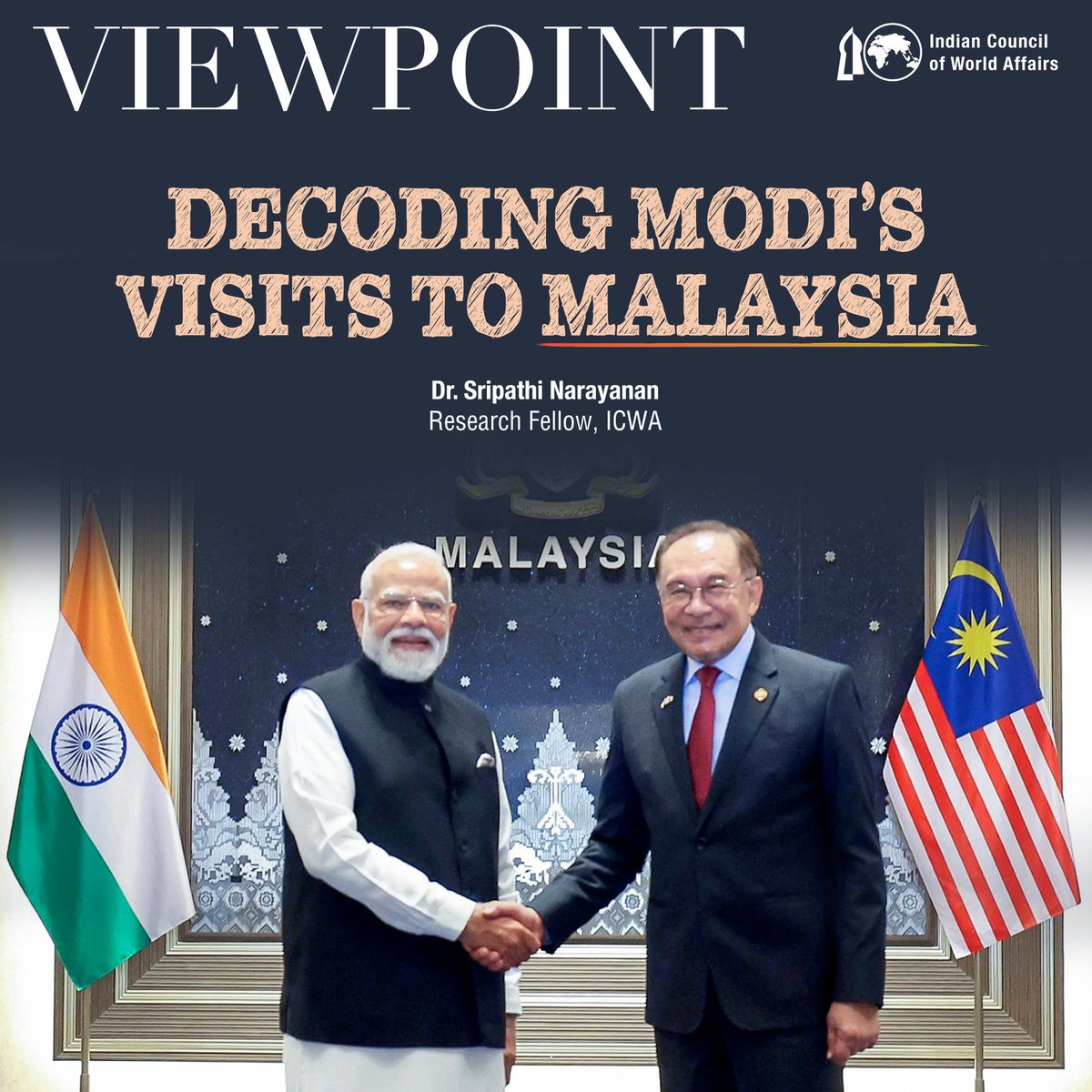
Prime Minister Narendra Modi was on a two-day visit to Malaysia on February 7 and 8, 2026. The visit has opened new avenues for #India-#Malaysia bilateral cooperation. Some of the notable developments include cross-border payment in respective currencies, namely the Indian #Rupee and Malaysian #Ringgit. India will also establish an additional mission in Malaysia’s Sabah state located in the Borneo Island. Malaysia has the second largest Indian #diaspora, both People of Indian Origin and non-residential India’s. To boost people to people ties, the sixth generation of Malaysian citizens of Indian origin will now be eligible for Overseas Citizenship of India (OCI). Malaysia, which produces about a sixth of the world’s semiconductors will cooperate with India in this sector.
Read more in the #ICWAViewpoint titled “Decoding Modi’s Visits to Malaysia” by Dr. Sripathi Narayanan @_sripathi, Research Fellow, ICWA.
Click 👉 bit.ly/4uLTks2
4
275
Mar 5
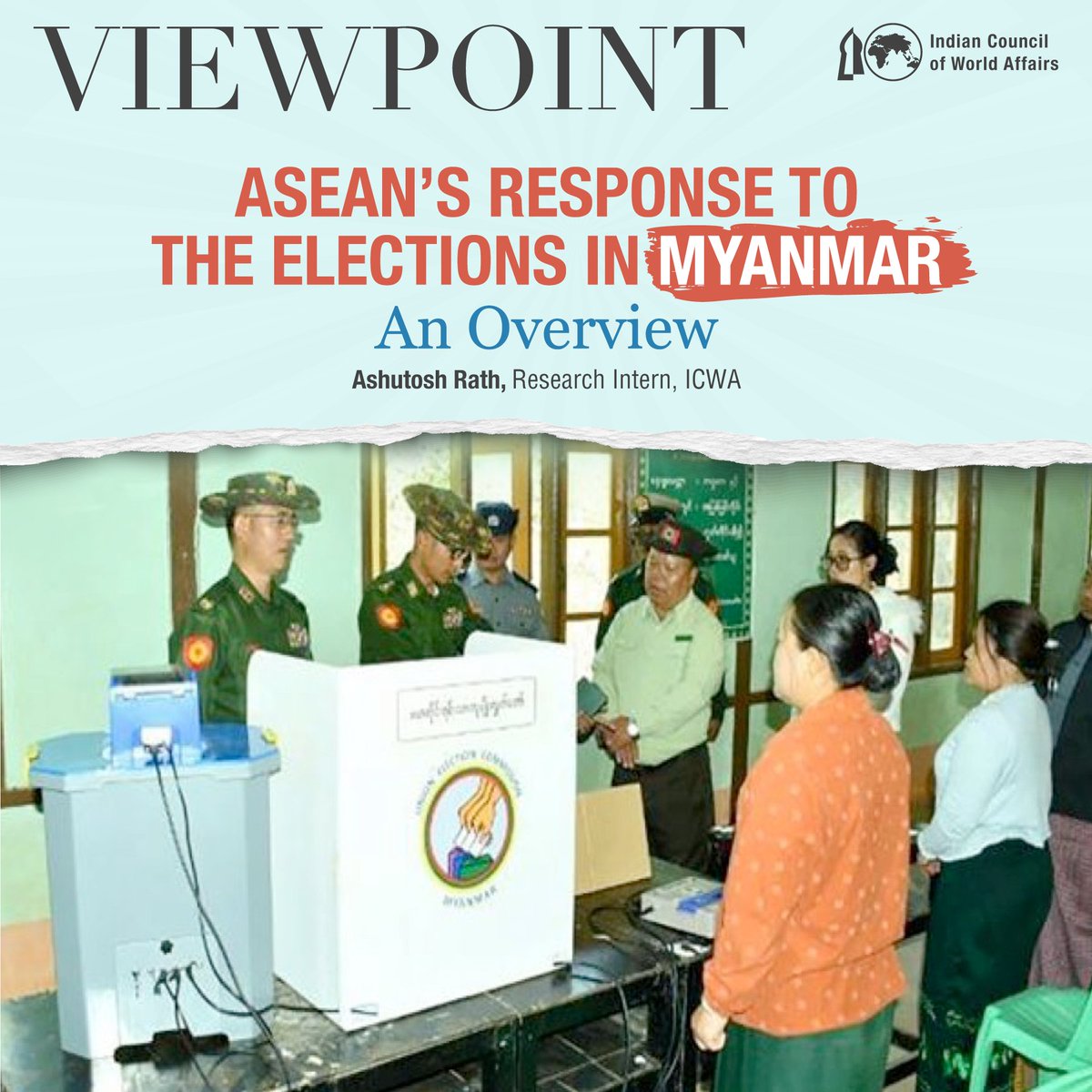
The recently concluded general elections in Myanmar, conducted in three phases from December 2025 to January 2026, mark a critical juncture in #SoutheastAsia and Regional Stability. With the military-backed Union Solidarity and Development Party (USDP) securing a decisive majority, the electoral process has triggered divergent responses within #ASEAN, raising concerns over legitimacy, democratic transition, and institutional credibility. This research examines ASEAN’s evolving engagement with Myanmar, highlighting differing positions among member states and the broader implications for #RegionalSecurity, #Diplomacy, and ASEAN Centrality. As the bloc balances its principle of non-interference with mounting humanitarian and geopolitical pressures, the question remains: how will ASEAN recalibrate its approach toward the post-election government while advancing the Five-Point Consensus?
Read more in the #ICWAViewpoint titled “ASEAN’s Response to the Elections in Myanmar: An Overview” by Ashutosh Rath, Research Intern, ICWA.
Click 👉 bit.ly/4ufvQLC
1
3
239
Mar 3
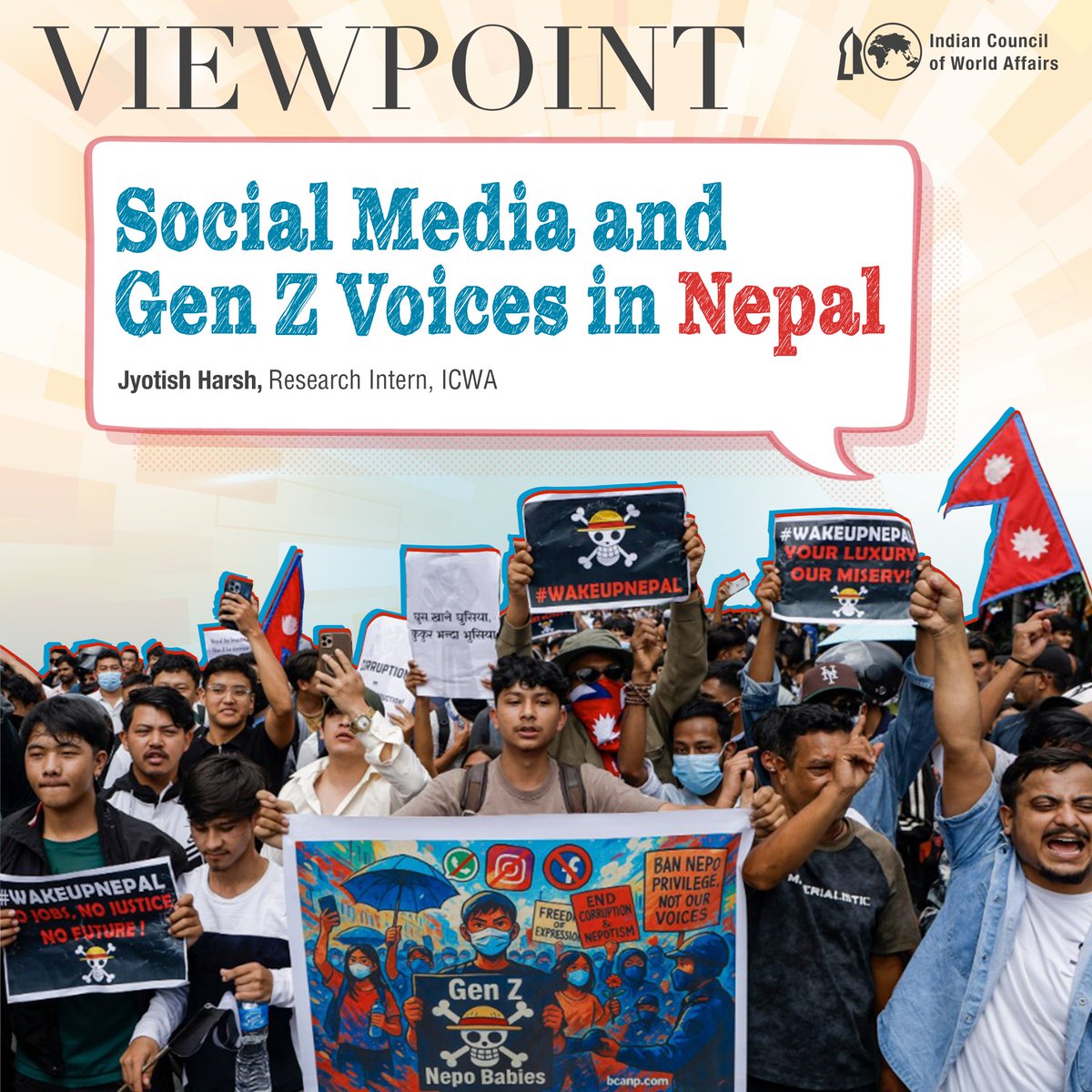
The recent Gen-Z-led mobilisation in #Nepal marks a significant shift in the country’s political landscape, highlighting the growing role of social media in enabling youth political participation. The September 2025 protests, largely mobilised through digital platforms, reflected widespread youth dissatisfaction over governance, accountability, and transparency. This research examines how social media has emerged as a new political space, amplifying Gen-Z voices and facilitating digitally enabled civic engagement in Nepal.
The study further analyses the broader implications of Gen Z digital mobilisation for Nepal’s political transition, #governance reforms, and youth representation. As social media reshapes political communication and participation, understanding #Gen-Z aspirations becomes crucial for examining Nepal’s evolving political dynamics and the role of youth in shaping the country’s democratic future.
Read more in the #ICWAViewpoint titled “Social Media and Gen-Z Voices in Nepal: #Digital Political Participation and Aspirations for Political Transformation” by Jyotish Harsh @Jyotishharsh05, Research Intern, ICWA.
Click 👉 bit.ly/3OSXL3B
1
3
205
Mar 2
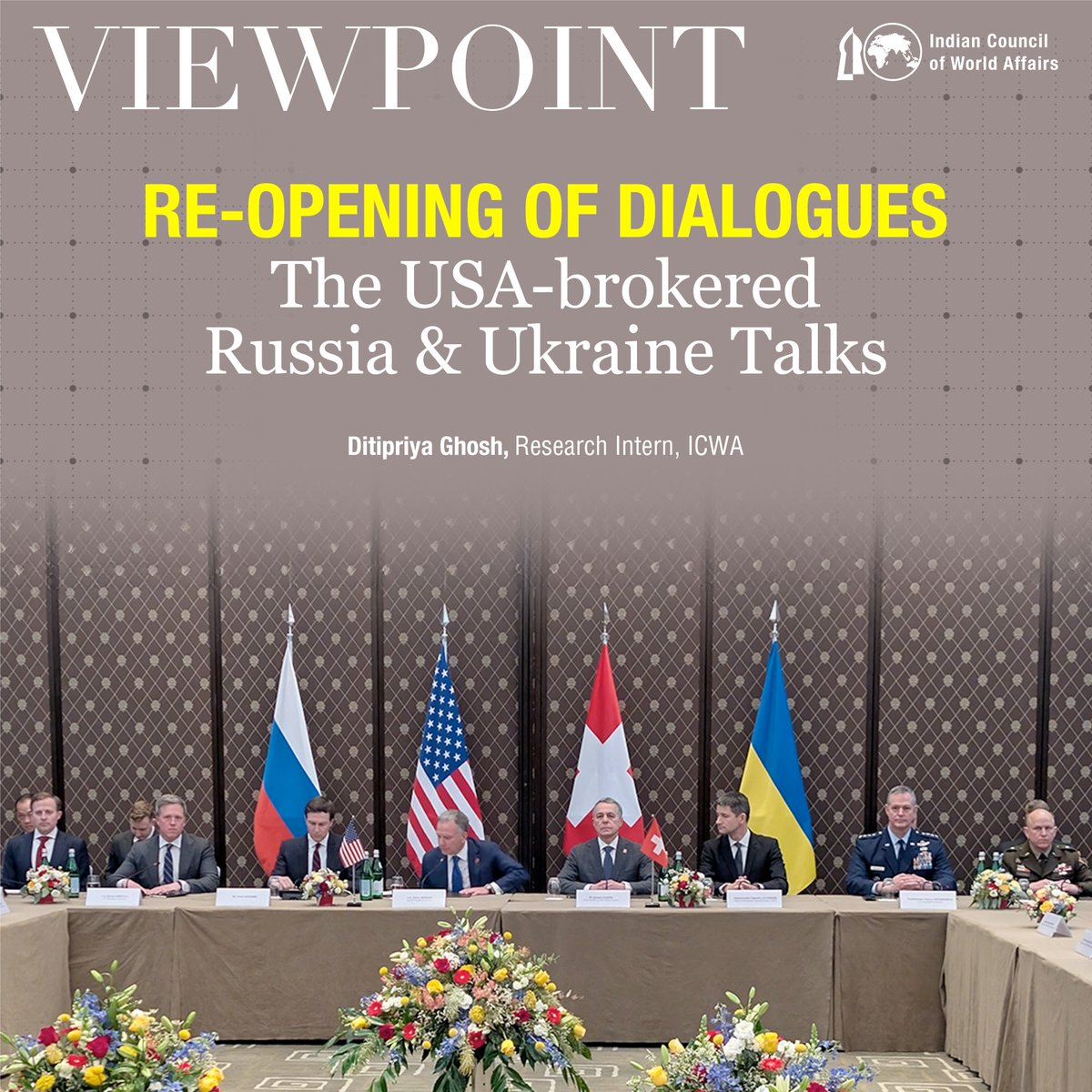
The latest 2026 Trilateral Talks between #Russia, #Ukraine, and the #UnitedStates—a cautious yet meaningful step in managing one of the most consequential conflicts of our time. While not a breakthrough, the dialogue marked a shift toward structured diplomacy, situating the crisis within the broader European Security Architecture and Power Relations shaping post-war stability.
Discussions around Territorial Control, Ceasefire Mechanisms, and Humanitarian Concerns reveal enduring distrust, yet underscore the value of sustained engagement. Examines the Political Motivations behind trilateralism, Strategic Calculations, and lessons from past negotiation failures, assessing implications for Regional Security and LongTerm Conflict Management. Despite uncertainty, these talks remain a fragile but viable pathway toward de-escalation and a redefined #EuroAtlanticStability.
Read more in the #ICWAViewpoint titled "Re-opening of Dialogues: The USA-brokered Russia and Ukraine Talks" by Ditipriya Ghosh, Research Intern, ICWA.
Click 👉 bit.ly/3OLfMko
1
3
422
Feb 26
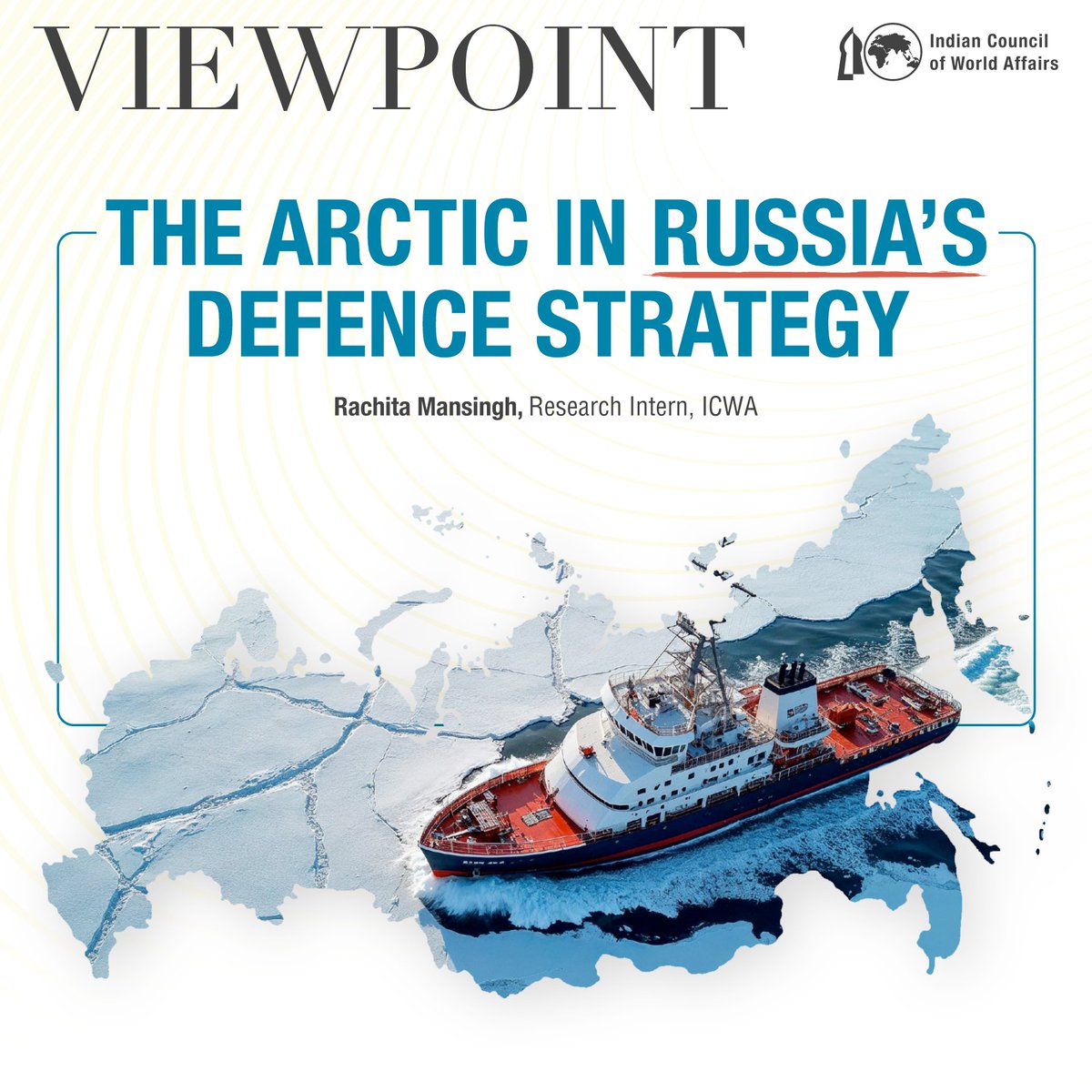
#Russia is transforming the #Arctic from a remote, frozen frontier into a central "strategic resource base" that is now the heart of its national defense. As climate change melts the #ice, the Kremlin views the region as both a massive economic opportunity for energy wealth and a security risk as its natural northern defenses disappear. To protect these interests, the paper explains how Russia is militarizing the Northern Sea Route, reopening Soviet-era bases, and deploying specialized hardware designed for extreme cold. These actions, including the creation of new military districts and the use of nuclear icebreakers, signal that Russia now views its economic goals and military security in the Arctic as completely inseparable. Ultimately, the Arctic has moved from a peripheral asset to a non-negotiable, pivotal core of Russia’s global military strategy, especially as a response to NATO’s presence in the region.
Read more in the #ICWAViewpoint titled “The Arctic in Russia’s Defence Strategy” by Rachita Mansingh, Research Intern, ICWA.
Click 👉 bit.ly/4rEAuRC
4
288
Feb 25
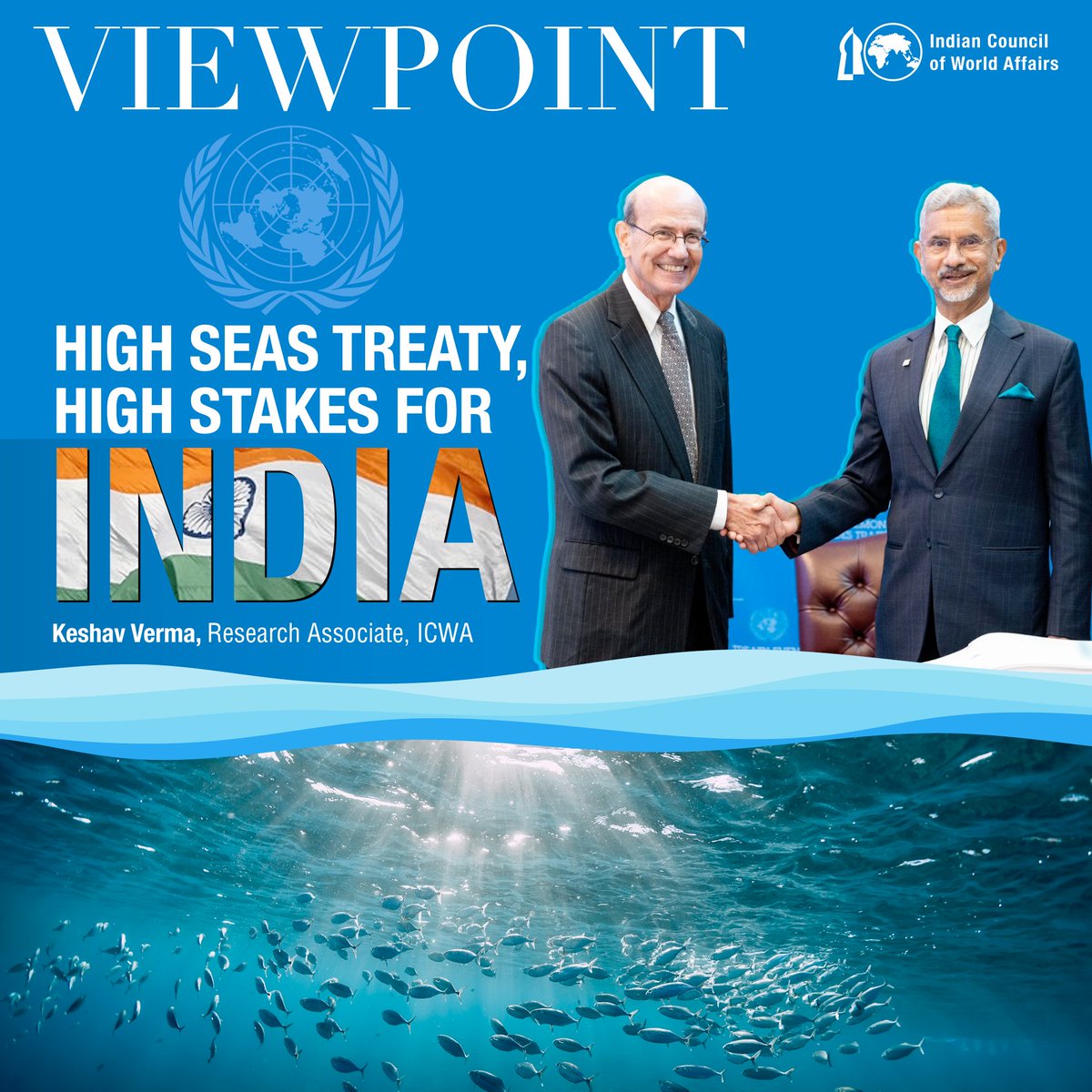
#India is preparing to ratify the new High Seas #Treaty (BBNJ), aiming to strengthen ocean governance, biodiversity protection & #climate resilience. This move aligns with India’s evolving maritime vision, expanding focus beyond coastal interests to #global ocean stewardship, scientific cooperation, and sustainable use of marine resources.
Read more in #ICWAViewPoint on High Seas Treaty, High Stakes for India by Keshav Verma @keshavvermair, Research Associate, ICWA.
Click 👉 bit.ly/4u7MQDw
4
187
Feb 14
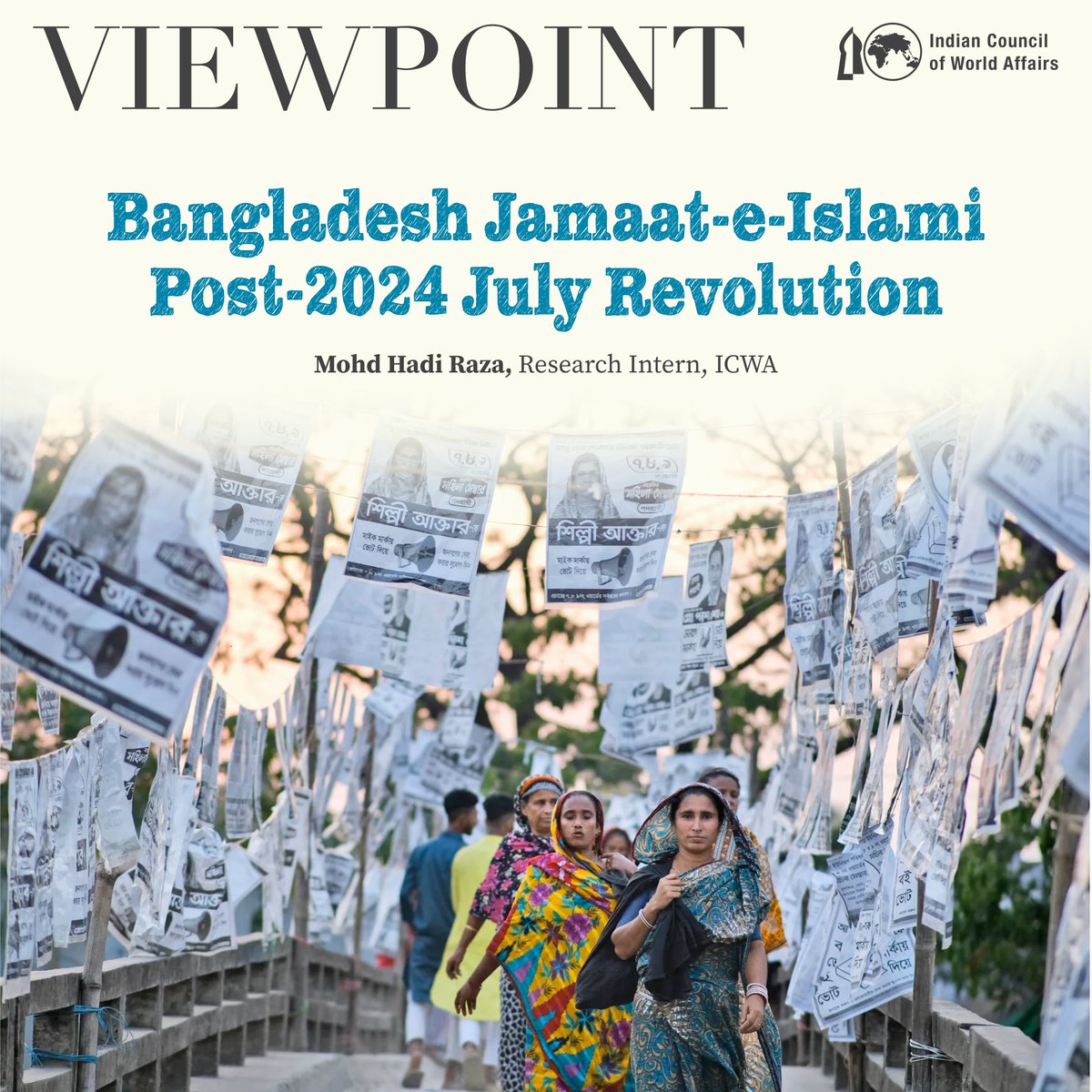
The July Revolution and the collapse of the Awami League government have marked a new shift in Bangladeshi politics. The rise of Jamaat-e-Islami (JeI) has shaped a new bipolar politics that has emerged between the Bangladesh National Party (BNP) and JeI. This reconfiguration of electoral politics in the country is going to be significant after the general elections and referendum.
Read more in #ICWAViewPoint on “Bangladesh Jamaat-e-Islami Post-2024 July Revolution” by Mohd Hadi Raza, Research Intern, ICWA.
Click 👉 bit.ly/4rL12jG
4
265
18 Dec 2025
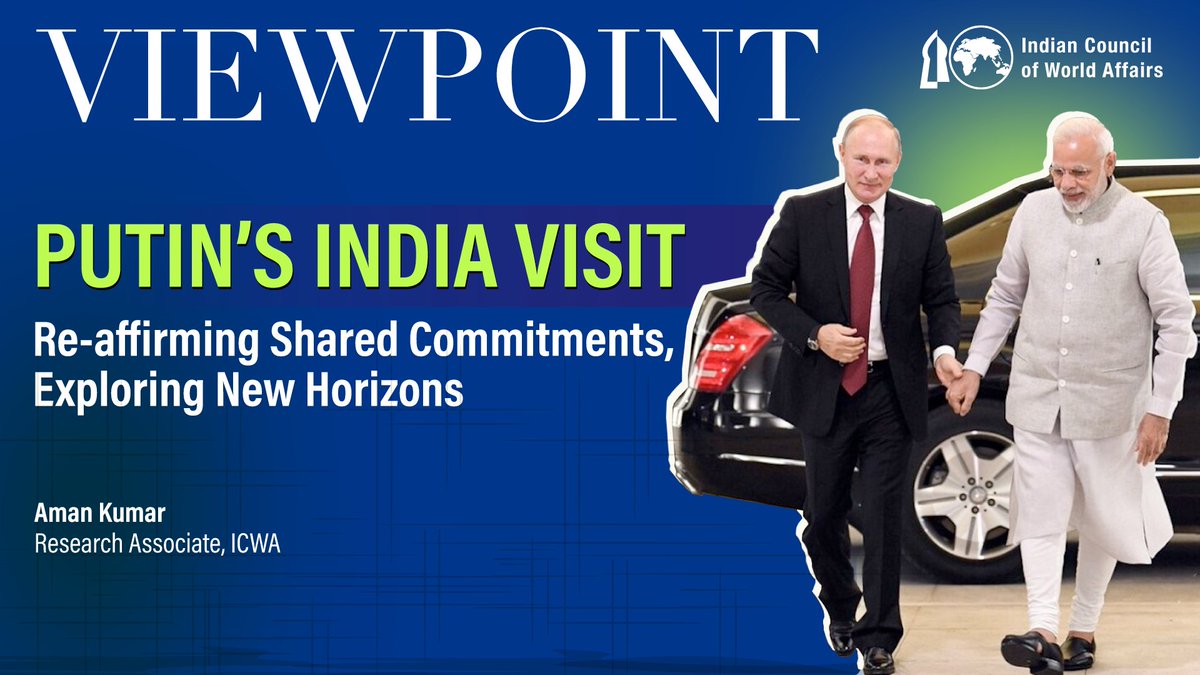
President Vladimir Putin’s December 2025 visit to India for the 23rd #India–#Russia Annual Summit reaffirmed the depth and resilience of the Special and Privileged Strategic Partnership amid global uncertainty. Marking 25 years of sustained political engagement since the 2000 Strategic Partnership, the visit highlighted strong personal rapport between the leaderships which is being reflected in the path the ties between the two countries are traversing. While defence cooperation remains a cornerstone, both sides emphasised diversification into trade, energy, civil nuclear cooperation, space, connectivity and people-to-people links. Russia increasingly views India as a key economic partner, reflected in the joint cooperation programme till 2030 and discussions on a Free Trade Agreement with the Eurasian Economic Union. Connectivity initiatives such as the Chennai–Vladivostok corridor aim to enhance maritime trade. Convergences on the #Arctic and the Indian Ocean Region are being actively explored. Exploring avenues for worker mobility, supported by new Indian consulates in Russia, further underlined the evolving, multidimensional character of the relationship. The visit reaffirmed the continuity in #bilateral relations despite shifting geopolitics and as a factor of regional and global #security and stability.
Read more in #ICWAViewPoint on “Putin’s India Visit: Re-affirming Shared Commitments, Exploring New Horizons” by Aman Kumar @amansetu1, Research Associate, ICWA.
Click 👉 bit.ly/4pLAIp6
2
8
379