
The Kevin Warsh era is officially underway at the Federal Reserve. Just don’t expect any rate-related fireworks during his first policy meeting as central bank chairman, which concludes Wednesday. #Economy #InterestRates #MonetaryPolicy #PRO
scotsmanguide.com/news/what-…

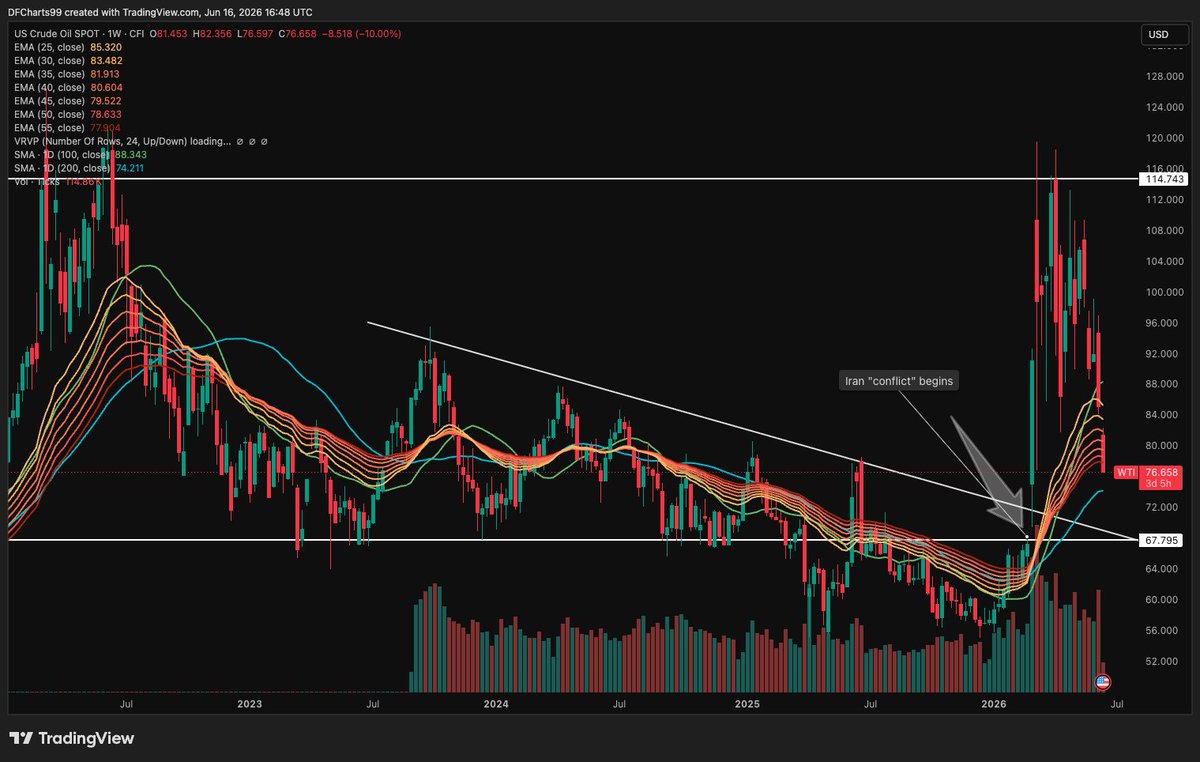
Oil is down roughly 10% this week and is approaching levels last seen before the latest Iran conflict began.
What does that mean for portfolios?
Likely derivatives of lower oil:
-Lower inflation pressure
-Potentially lower rates
-Higher bond prices
-More risk-on sentiment, especially in rate-sensitive areas like REITs, financials and small caps
-Lower gas prices, which can help consumer cash flow
Of course, this assumes hostilities do not renew or escalate.
Also worth noting: governments may eventually need to refill strategic petroleum reserves, which could keep a bid under oil prices.
Oil is not just an energy story.
It’s an inflation story.
A rates story.
A consumer story.
A bond market story.
And ultimately, a portfolio construction story.
$WTI $USO $XLE $TLT $IWM $KRE $VNQ
#Oil #WTI #Inflation #InterestRates #Bonds #Markets #Investing #PortfolioConstruction
Disclosure: Researched, written, and edited by me; polished with AI. Educational only; not investment, tax, or legal advice. Consult your advisors.
14

US and UK central banks expected to keep interest rates on hold amid Iran peace deal
theguardian.com/business/202… #Property #HousingMarket #InterestRates
10

⚠️ WARNING: Ignoring IRS debt won't make it go away. Penalties grow. Interest compounds. Collection actions can escalate.
👇 Find out which IRS relief option you may qualify for:
app.idealtax.com/?utm_source…
#FOMC #Fed #InterestRates #MoneyTips #Taxes #PersonalFinance

46

🏛️ Municipal #investors can benefit from staying disciplined by rate shifts
🔄 Changing #interestrates create both risks & opportunities
📈 A long-term approach supports portfolio growth over time
#Bonds #Investing #Markets #FixedIncome #Munibonds raymondjamesconnect.com/tHDk…

SpaceX rally continues, Dow’s new record, Fox buys Roku and more in Morning Squawk
Happy Tuesday. Snap CEO Evan Spiegel with sit down with CNBC’s Julia Boorstin at 2 p.m. ET today at the Augmented World Expo in California. Watch live on CNBC or CNBC .
animalverse.social/community…
#SpaceX #SPCX #DowJones #StockMarket #WallStreet #Investing #MarketNews #IPO #Nvidia #FederalReserve #InterestRates
21

#BankOfCanada #InterestRates #CanadaEconomy #HousingMarket #EconomicOutlook
The Bank of Canada held its key interest rate at 2.25%, citing ongoing economic uncertainty, elevated energy prices, and inflation risks despite signs of modest economic growth.
bankofcanada.ca/2026/06/fad-…


व्याजदर वॉशिंग्टनमध्ये वाढतात, पण त्याची किंमत घाना, श्रीलंका आणि पाकिस्तानसारखे देश चुकवतात. जागतिक आर्थिक व्यवस्थेतील हीच सर्वात मोठी विषमता! 🌍📉
वाचा सविस्तर विश्लेषण!
or-f.org/39011
#GlobalEconomy #IMF #FederalReserve #InterestRates #DebtCrisis #EmergingMarkets #EconomicInequality #GlobalFinance #MonetaryPolicy #DevelopingCountries
3

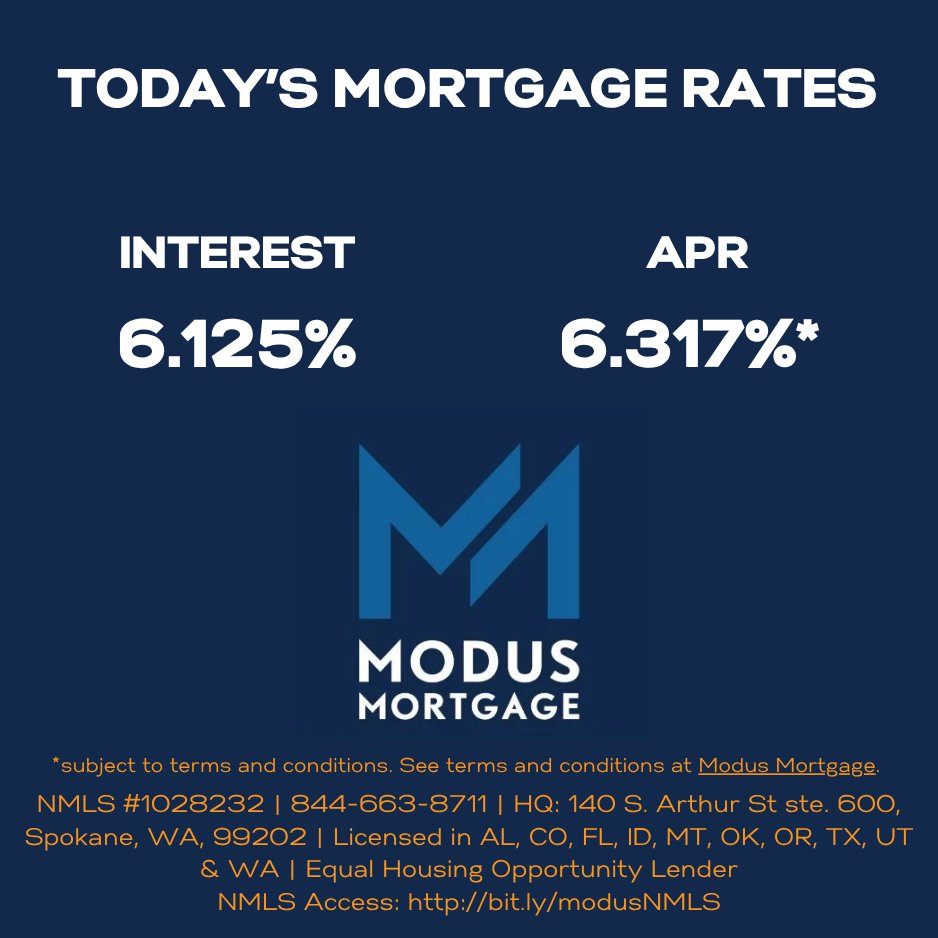
Check out today's rates and compare!
For rate details or to contact us with questions, visit our homepage at: bit.ly/4acwIW5 #BecauseRatesMatter #mortgage #mortgagerates #realestate #InterestRates #homebuying
5

.@bankofbaroda raises FCNR(B) dollar deposit rates again, launches ‘bob Legend’ scheme; hikes come within a week of its Special FCNR(B) deposit offering.
#BankOfBaroda #FCNR #Banking #IndiaFinance #InterestRates #Economy
More news below:
informistmedia.com/MoneyWire…

65

Escrow professionals track deadlines and coordinate paperwork to keep real estate transactions on schedule. #Escrows #RealEstate #LaVerne #MortgageLoans #InterestRates bit.ly/4uUCPJh


Long-bond fears have eased after #RBI and government measures to attract foreign capital, but many debt fund managers still prefer shorter-duration papers amid rate-hike risks.
Read More:
rediff.com/business/report/r…
#BondMarket #DebtFunds #FixedIncome #MutualFunds #InterestRates
6

🚨 Mortgage Market Update – What I'm Watching Today 🚨
Some encouraging news this morning...
⛽ Oil prices have continued to move lower, now around $77 per barrel, the lowest levels we've seen since early March. If that trend continues, experts believe gas prices could eventually move closer to the low $3 range. Lower energy costs can help ease inflation pressures, which is something mortgage markets pay close attention to.
🏡 Housing Starts took a significant hit in May, dropping 15% to the lowest level since 2020. While that may sound negative, it also means fewer new homes are being built. If rates continue to improve and buyer demand increases, tighter housing inventory could become a bigger story heading into the second half of the year.
📉 Employment data continues to show a gradual cooling trend. ADP's weekly employment report showed job creation slowing again, which may support lower interest rates if that trend continues.
📊 Mortgage bonds are improving this morning and Treasury yields are moving lower, both positive signs for mortgage rates. Markets are also closely watching the Fed meeting and tomorrow's rate announcement for clues on where rates may head next.
The combination of lower oil prices, moderating job growth, and softer housing construction is generally favorable for mortgage rates. We still have the Fed meeting and bond auction ahead, so volatility is possible, but the overall trend continues to lean toward a more rate-friendly environment than we saw earlier this year.
If you've been waiting for the right opportunity to buy, refinance, or make a move, this is definitely a market worth paying attention to.
#LindsayTheLender #yourlenderforlife #mortgageguru #generationalwealthbuilder #yourfriendinmortgage #mortgagerates #mortgagemarket #homebuyertips #realestate #homeownership #firsttimehomebuyer #refinance #loanofficer #housingmarket #interestrates #homebuying #realestateagent #wealthbuilding #mortgageupdate #housingmarketnews 📈🏡💙
19

For the first time since taking office, Kevin Warsh is going to speak today. Rates are expected to remain unchanged, however as usual, the legacy of volatality continues.
But what if he announces a surprise BRRRRRRR 💸💸💸
#Interestrates #FOMC #KevinWarsh
3
60
4,803

"Ahead of Tuesday’s decision, an increasing number of economists said they expected the BoJ to raise rates at least one more time in 2026."
3/3
#japan #interestrates #inflation
11

Most Canadians are wondering what the Bank of Canada's latest rate decision means for their finances.
📧 Email: rajeevtalwar@thehomemortgage.ca
Visit us at: thehomemortgage.ca/
#BankOfCanada #InterestRates #CanadianEconomy #FinancialPlanning #MortgageBroker
5

Mortgage Backed Securities Market Movers &Fed Decision!#interestrates #r... youtu.be/vtOoz-a1mdc?si=ysah… via @YouTube
3

ECB’s Lane Says Inflation Is in the Pipeline Despite Iran Deal - Bloomberg.com dlvr.it/TT42yb #Inflation #ECB #Economy #InterestRates #FinancialNews
11

US-Iran Peace Agreement: What Was Agreed
The US-Iran ceasefire memorandum of understanding has been confirmed and will be formally signed in Switzerland on Friday, June 19. The terms of the agreement are notably favorable to Iran. The Iranian nuclear issue has been removed from external negotiation scope. Iran's missile program and its support for regional resistance fronts were excluded from the talks entirely. On the financial side, approximately $120 billion of previously frozen dollar assets will be unfrozen, sanctions on Iranian oil exports have been lifted by the US and its European allies, a $300 billion reconstruction investment commitment has been made, and Iran may introduce transit fees for passage through the Strait of Hormuz. US pre-war objectives around regime change were not achieved. Despite a clear military advantage, the US faced a different calculus around domestic political tolerance for sustained conflict costs, particularly heading into election season.
Fed Watch: Walsh's First Major Speech on June 18
Federal Reserve Chairman Kevin Walsh will deliver his first major policy speech on Thursday, June 18 at 2:30 AM, followed by a press conference. The interest rate decision itself carries no surprise. Markets have reached a firm consensus that rates will remain unchanged at this meeting. All attention is therefore concentrated on Walsh's initial policy statement and the signals it sends about the Fed's future direction.
Understanding Walsh's Policy Philosophy
Walsh's framework represents a meaningful departure from recent Fed communication norms. His core policy proposal centers on a simultaneous rate cut and balance sheet reduction strategy, which at first glance appears contradictory but reflects a clear internal logic.
Rate cuts address the price of money, acting on the right side of the monetary equation as a short-term tool to support capital market activity and align with the current political environment under Trump.
Balance sheet reduction addresses the quantity of money, acting as the left-side preventive tool and Walsh's preferred long-term instrument for achieving price stability.
Walsh's singular priority is price stability. Maximum employment, while part of the Fed's dual mandate, is not treated as an equal objective under his framework. His philosophy aligns more closely with the Greenspan-era conception of the Fed as a macroeconomic gatekeeper rather than a proactive market participant.
Walsh has been openly critical of several aspects of recent Fed practice. He views the dot matrix forward guidance framework as counterproductive, arguing it amounts to premature commitment and creates rigidity when economic conditions shift. He has also pushed back against what he sees as the politicization of the Fed through its engagement with topics such as climate risk assessment, social equity, and the Community Reinvestment Act. He favors a Fed that operates with clearly defined monetary boundaries, strips away non-core functions, and allows genuine internal debate rather than presenting a unified public front.
The Balance Sheet Context
To understand why balance sheet reduction is central to Walsh's agenda, the scale of the current situation is relevant. Following four rounds of quantitative easing since 2008, US M2 money supply has reached $22.8 trillion and M1 has reached $20 trillion. US national debt has exceeded $39 trillion, with annual interest payments of $1.1 trillion now surpassing the defense budget and ranking as the third largest category of federal expenditure after Social Security at approximately $1.46 trillion and healthcare at approximately $1.05 trillion.
Quantitative easing, which expanded the Fed's balance sheet through the purchase of Treasuries and mortgage-backed securities, is not a traditional monetary policy tool. It was introduced by Chairman Bernanke in November 2008 in response to the global financial crisis and deployed in three subsequent rounds through 2014, then again from 2020 to 2022 in response to the COVID-19 pandemic. Each round expanded base money and, through the money multiplier, amplified broader M2 growth significantly.
Bottom Line
Walsh's framework is internally consistent. Rate cuts provide short-term political alignment and market support. Balance sheet reduction is the structural, long-term inflation fighting mechanism. The two tools operate on different dimensions and are not in conflict. For markets, the key question on Thursday is not whether rates move but how explicitly Walsh signals the pace and sequencing of balance sheet reduction, and whether he provides any forward guidance despite his stated opposition to that approach.
$TLT $IEF $DXYZ
#Fed #Walsh #MonetaryPolicy #Iran #Ceasefire #Macro #Treasuries #InterestRates #BalanceSheet #QT #DollarPolicy #GlobalMarkets #Geopolitics #Inflation #CPI #USDebt
58

MORE ECB'S LANE: IT WAS A ROBUST DECISION TO LIFT RATES LAST WEEK
#interestrates #ecb #europeancentralbank #monetarypolicy #energypriceshock #inflation #philiplane
61