
Jun 12
"AI Beetle ID" is useful as a first-pass photo log before formal biosecurity reporting. For coconut rhinoceros beetle interceptions, photos, commodity, vessel, date, and location should stay together.
4

May 15
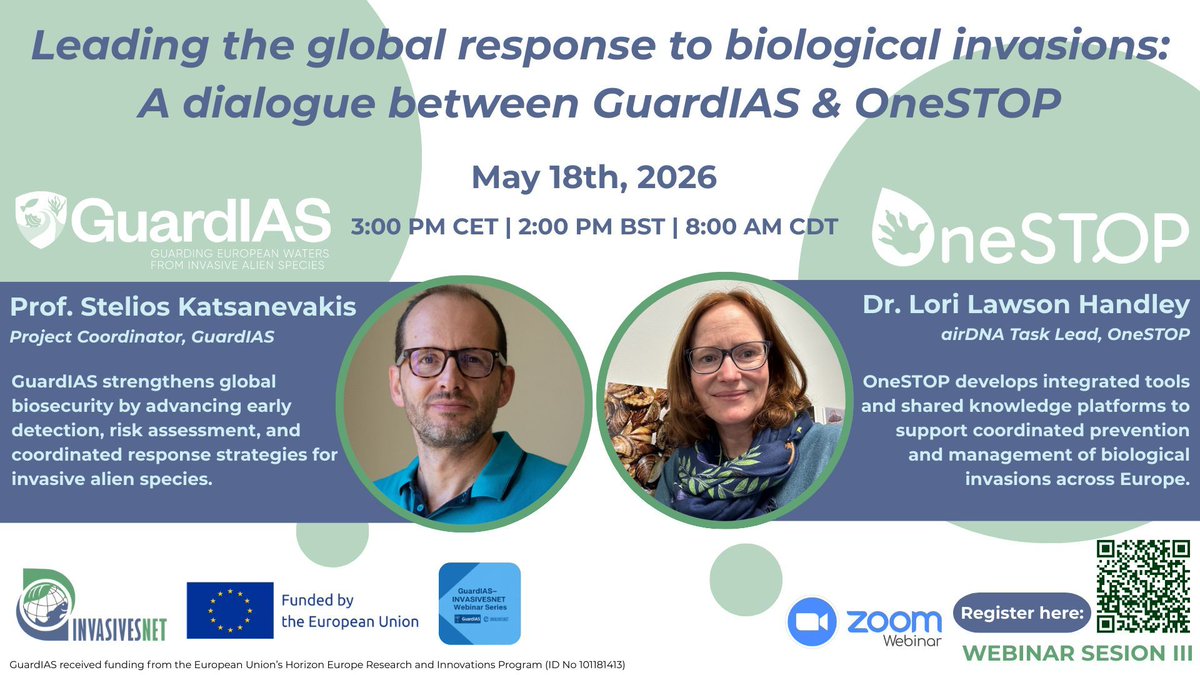
The third GuardIAS-INVASIVESNET webinar is this Monday! Don't miss it!
Register for free here 👉️ buff.ly/zBwkXgq
2
64
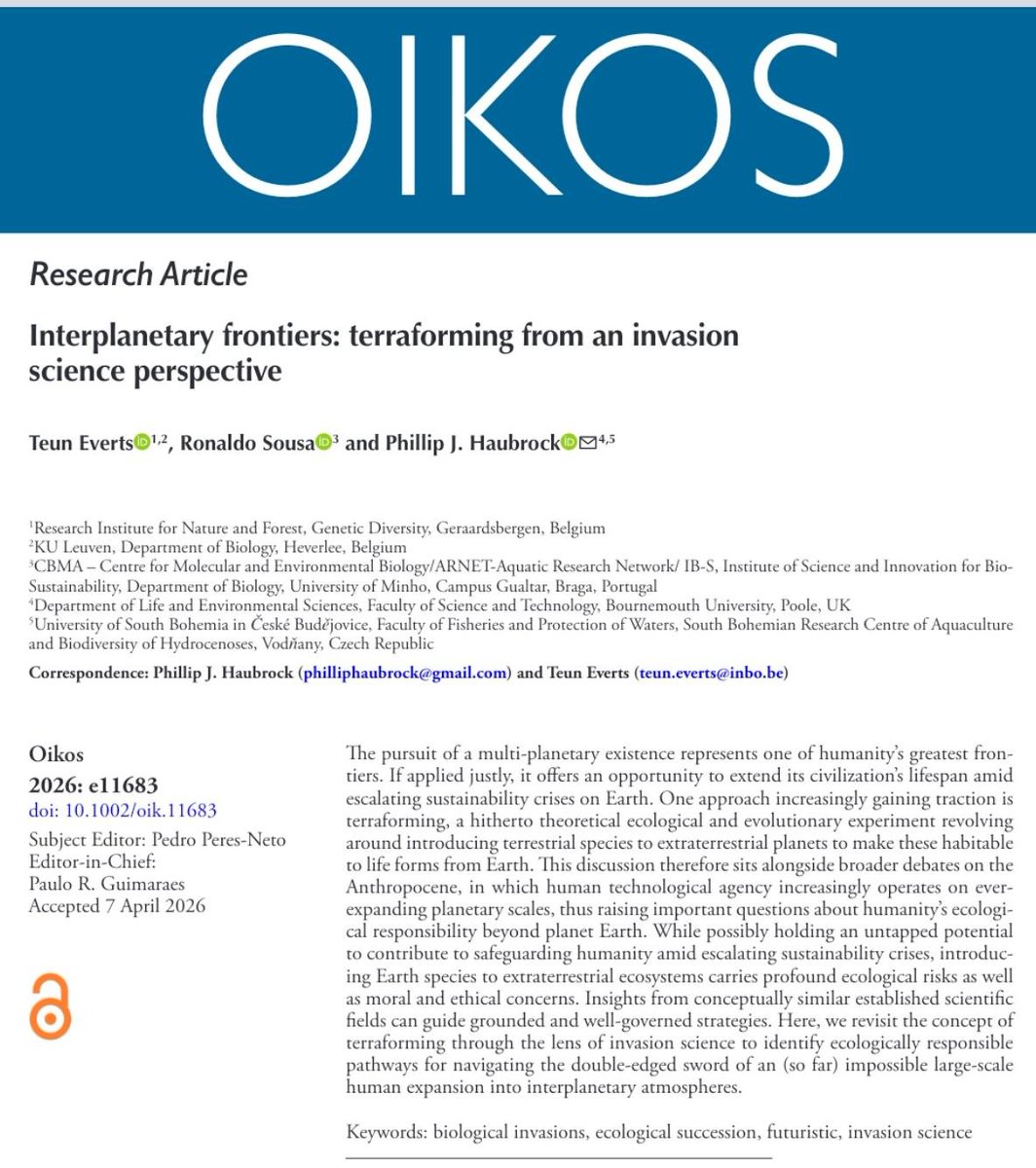
🚀🚀 Just published in #Oikos:
*Interplanetary frontiers: terraforming from an invasion science perspective*
What if making Mars or other planet habitable means deliberately introducing Earth species? We explore this ultimate ecological experiment through the lens of #invasionscience (propagule pressure, boom-bust dynamics, secondary invasions, and the very real risks of unintended ecological surprises...) but on a #planetary scale.
doi.org/10.1002/oik.11683
w/ @TeunEverts
@InvasionsPlant @FishInvasionLab @INVASBio @ESAinvasionecol @Invasivesnet @InvasiveSppEco @InvasiveAliens @InvasivesShow
1
9
15
589

🌍 35,000 new #alienspecies occurrences have been added to the #EASIN Geodatabase thanks to new Data Partners.
Data from the Swedish, Finnish & Italian Competent Authorities and INVASIVESNET strengthen alien species monitoring across Europe.
🔗 More at bit.ly/4rAgwqp

1
4
112
Mar 16
🇬🇧 The first summaries of the 2026 INVASIVESNET journals are now online! 👇️
🇪🇦 Los primeros resúmenes de 2026 ya están disponibles online! 👇️
MBI: buff.ly/JpSUD35
AI: buff.ly/fpzn94B
BIR: buff.ly/XvEeZyu

3
6
157

30 Dec 2025
This is the first review on impacts and would not have been possible without the help and input from so many, including @SKatsanevakis @TeunEverts @SerhanTarkan @ismasoto @TrashTalkRes and many more #invasivespecies @Invasivesnet @InvasiveInfo #Science
4
8
137
11 Dec 2025
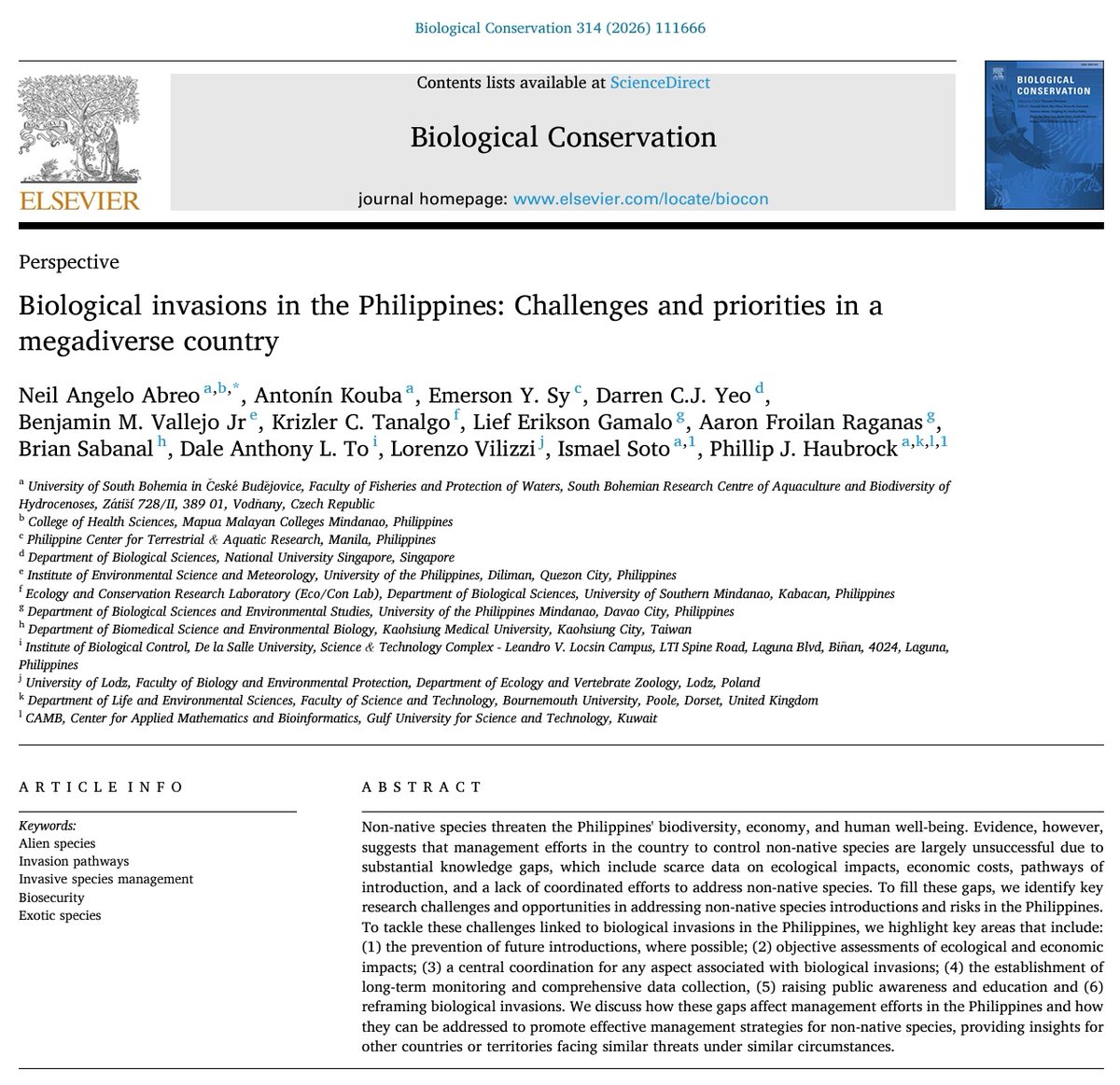
Happy and proud to share my #PhD #student Neil Abreo @TrashTalkRes 2nd PhD-linked #publication on #biological #invasions in the #Philippines
kwnsfk27.r.eu-west-1.awstrac…
#PhDlife #invasivespecies #alien @Invasivesnet @CABI_Invasives
1
5
134

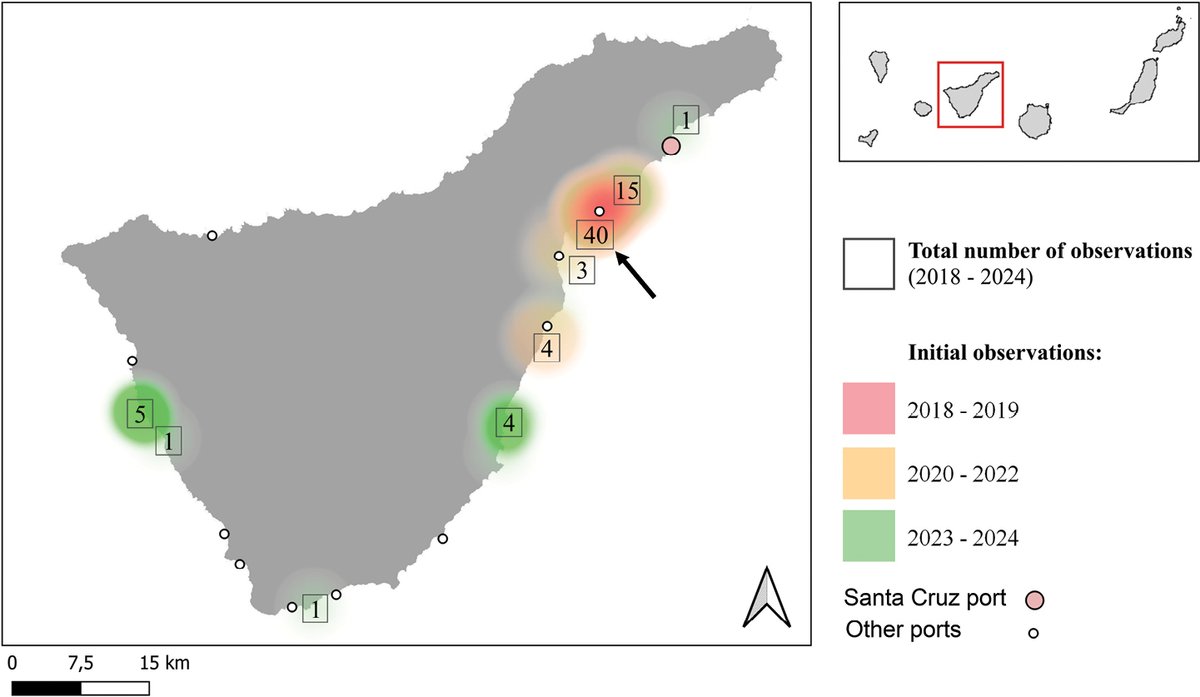
📚New scientific article in Aquatic Invasions @Invasivesnet ➡️"Emergence of an invasive ascidian in #CanaryIslands (Eastern Atlantic): Tracking the arrival and spread of Cnemidocarpa irene".✍️By @xturon09 (CEAB-CSIC), J.C. Hernández (@ULL) et al.👇🏾doi.org/10.3391/ai.2025.20.4…
3
4
452
22 Sep 2025
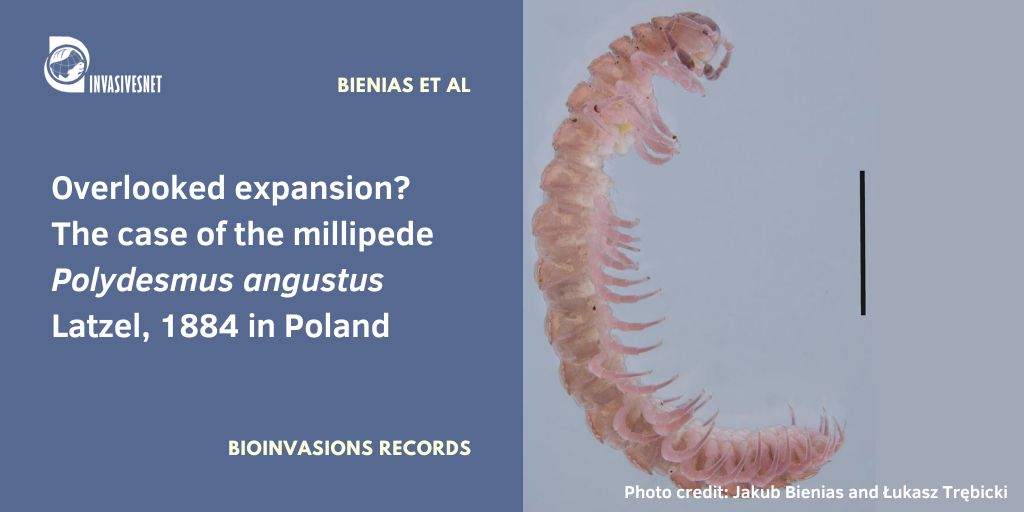
Rapid eastward range extension of the millipede Polydesmus angustus, from Germany to Poland. The species occupies disturbed, anthropogenic habitats, supporting a human-mediated dispersal scenario. Open access buff.ly/iN6BJ75 #INVASIVESNET #BIR
1
4
164
15 Sep 2025
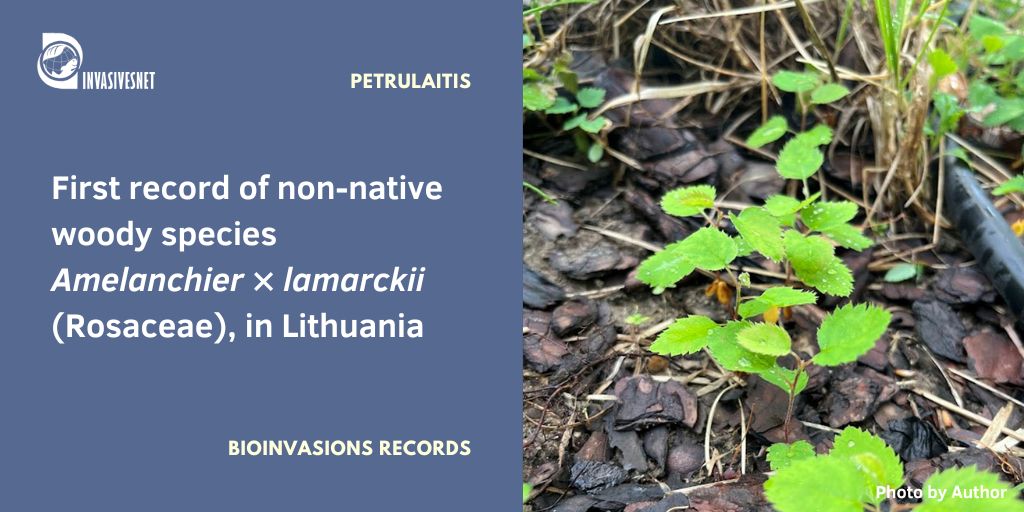
Amelanchier × lamarckii, native to North America, has escaped cultivation and is recorded as a new casual alien plant in Lithuania. The naturalization and spread to natural habitats are highly probable. Open access buff.ly/ePmZ8Qe #INVASIVESNET #BIR
2
5
161
8 Sep 2025
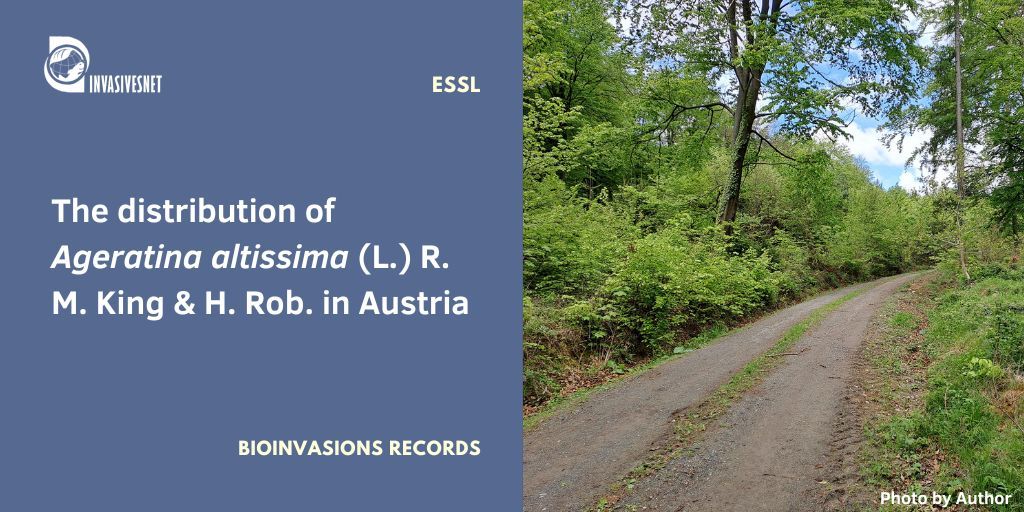
Current distribution of the White snakeroot Ageratina altissima in Austria. Given its substantial expansion, the future spread of Ageratina altissima should be monitored, and if necessary, management actions should be taken. Open access buff.ly/saxdbSu #INVASIVESNET #BIR
1
4
150
1 Sep 2025
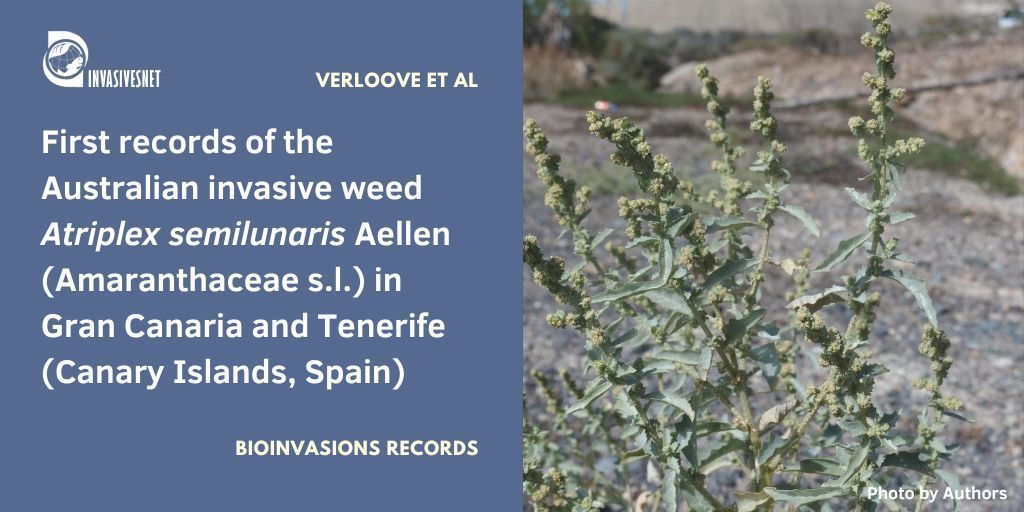
The Australian invasive weed Atriplex semilunaris is recorded in Gran Canaria and Tenerife. Its recent appearance may be the gateway for its introduction to the rest of the archipelago. Open access buff.ly/YpmWjUs #INVASIVESNET #BIR
2
2
334
22 Aug 2025
Explore the latest issue of Management of Biological Invasions #MBI 👇 buff.ly/Nvh6LEo #INVASIVESNET #OpenAccess #OA

2
281

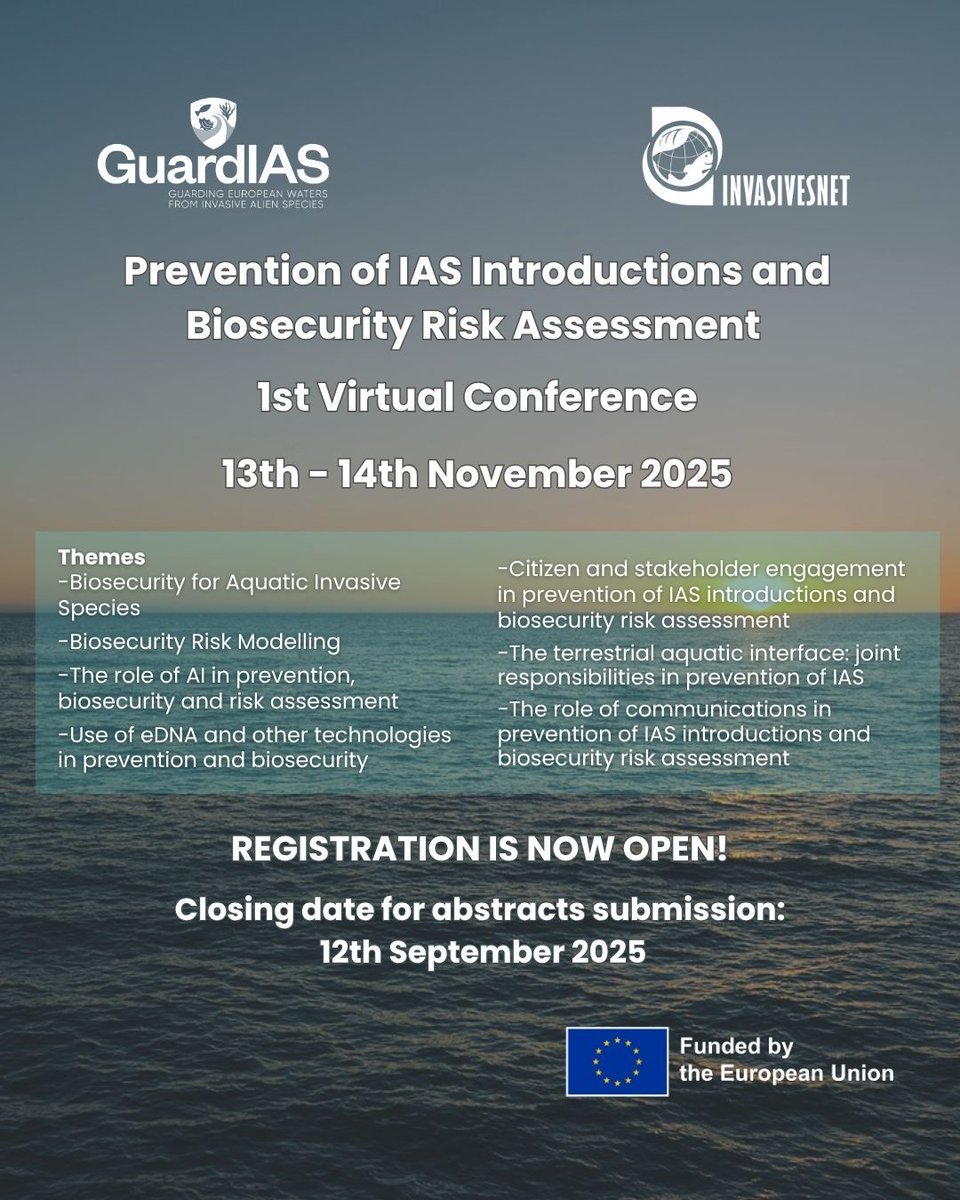
Working with aquatic invasive alien species (IAS)? 🐟🦀🦪🌱
European #GuardIAS project is hosting a 🆓 virtual conference: Prevention of Invasive Alien Species Introductions & Biosecurity Risk Assessment @Invasivesnet
🗓️13-14 November 2025
Register👉 guardias.eu/welcome-to-the-f…
5 Jul 2025

Registration for the inaugural GuardIAS Virtual Conference is now open! This Conference is part of a series hosted by the GuardIAS Project & INVASIVESNET, funded by the European Union’s Horizon Europe Research and Innovation Programme.
More info: buff.ly/ycPlxWU
4
9
243
23 Jul 2025
Genetic diversity and aquatic invasions. The letter to the editor argues for an integrative approach when determining native ranges, combining genetic data with historical, ecological and biogeographical analyses. Open access article 👇 buff.ly/tB9jWZv
#INVASIVESNET #AI
1
4
110

7 Jul 2025
The inaugural GuardIAS Virtual Conference is taking place 13th - 14th November 2025, as part of a series hosted by the GuardIAS Project and its partner INVASIVESNET.
See details in post below 👇
5 Jul 2025
Registration for the inaugural GuardIAS Virtual Conference is now open! This Conference is part of a series hosted by the GuardIAS Project & INVASIVESNET, funded by the European Union’s Horizon Europe Research and Innovation Programme.
More info: buff.ly/ycPlxWU
2
7
758
5 Jul 2025
Registration for the inaugural GuardIAS Virtual Conference is now open! This Conference is part of a series hosted by the GuardIAS Project & INVASIVESNET, funded by the European Union’s Horizon Europe Research and Innovation Programme.
More info: buff.ly/ycPlxWU
7
11
1,496
24 May 2025
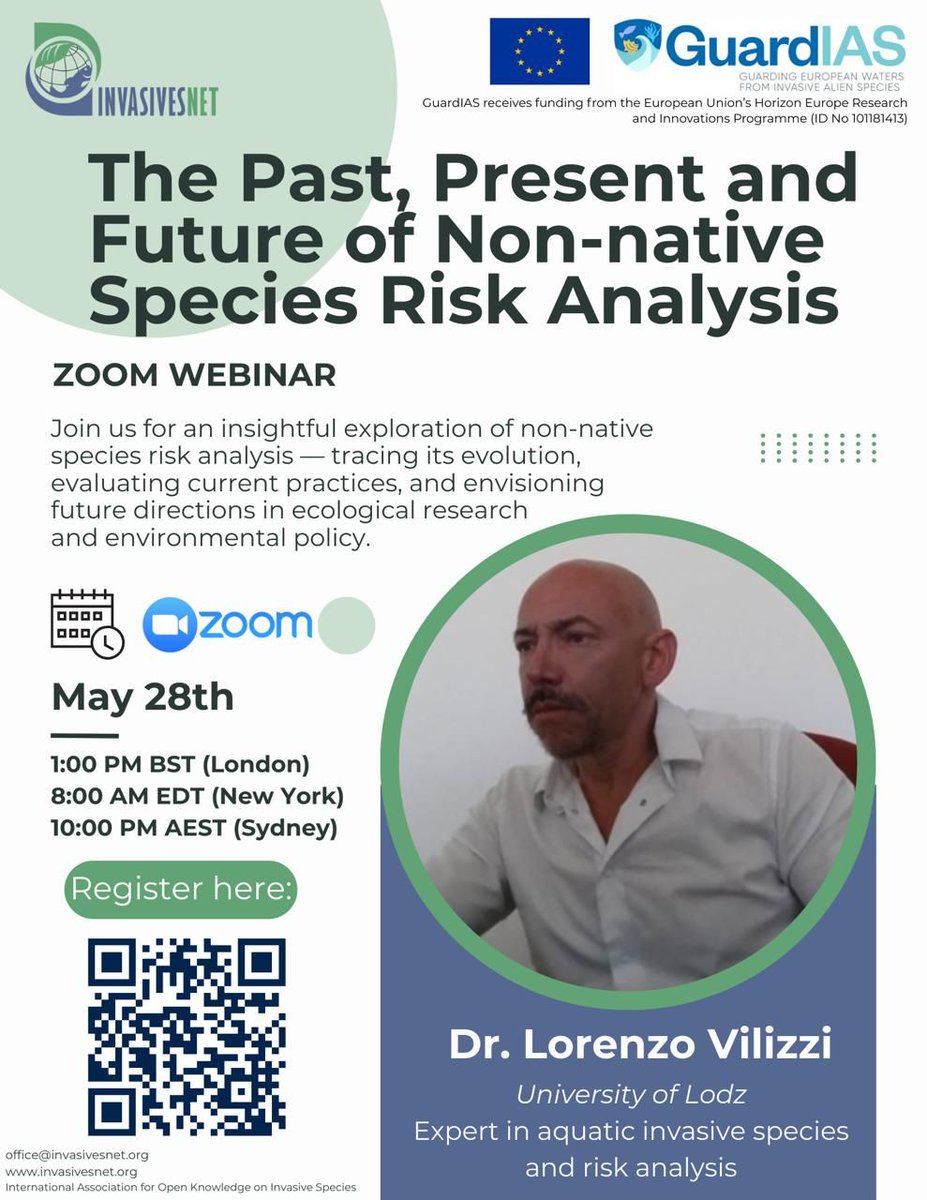
Have you registered for our first webinar yet? 👇
🗓️ May 28 | 🕐 1 PM BST | 8 AM EDT | 10 PM AEST
🎙️ Dr. Lorenzo Vilizzi on the evolution & future of non-native species risk analysis.
🔗 Register: buff.ly/gceUlbw
🌍 Hosted by @Invasivesnet & #GuardIAS
3
11
302

📢 Online webinar alert! For those researching biological invasions, INVASIVESNET will host a webinar titled "The Past, Present and Future of Non-native Species Risk Analysis" by Dr. Lorenzo Vilizzi on the 28th of May. Registration link below 👇
us02web.zoom.us/webinar/regi…
1
3
155
7 May 2025
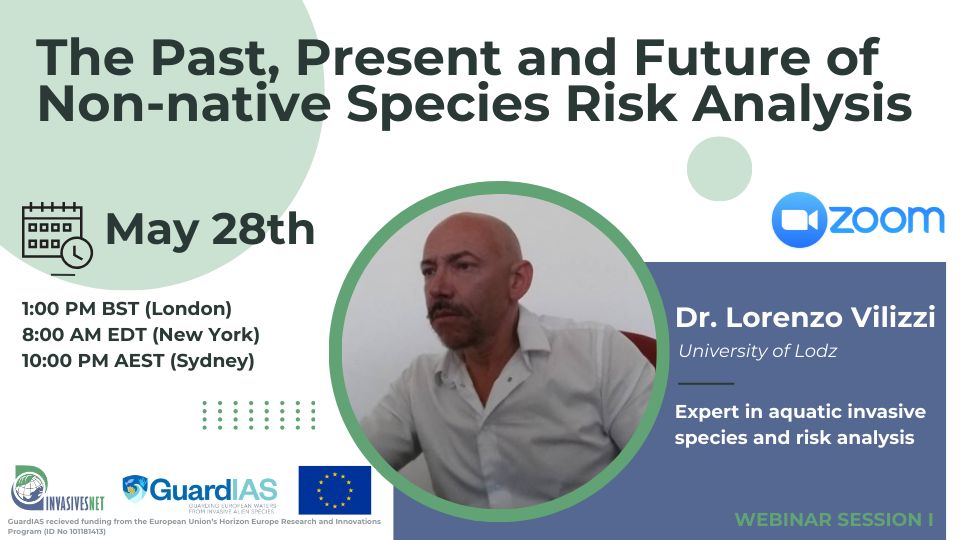
📢 Join our webinar!
🗓️ May 28 | 🕐 1 PM BST | 8 AM EDT | 10 PM AEST
🎙️ Dr. Lorenzo Vilizzi on the evolution & future of non-native species risk analysis.
🔗 Register: bit.ly/3Z7KeYb
🌍 Hosted by @Invasivesnet & #GuardIAS
4
202