
Google's Hidden Grip on the Internet: ICANN Ties, DNS Lockdowns, and the 2026 "Infrastructure Break" Exposed
By JMHBM (@JMHBM01), Forensic Governance Analyst & OSINT Expert
March 11, 2026
🚨 Alert: The Open Web is Under Siege. If you've ever wondered why your DNS queries mysteriously route through Google, why Android is locking out "unverified" devs, or how a single key rollover could hand hyperscalers the keys to the internet kingdom—buckle up. After a year of relentless OSINT digging, I've compiled dossiers that reveal Alphabet Inc. (Google)'s coordinated play to capture critical infrastructure. This isn't competition; it's consolidation with antitrust red flags waving high.
From IC-funded origins (hello, MDDS) to today's governance entanglements, Google's moves could make the web "permissioned"—where they decide who connects, on what terms. With deadlines looming (Android RKP enforcement: March 16, 2026; ICANN KSK rollover: October 11, 2026), this is a call to action for DOJ, FTC, policymakers, and you. Let's break it down, fact by fact.
The Foundation: Google's IC Roots and Why No One Marched In
It starts in the 1990s: MDDS (Massive Digital Data Systems), funded by NSA/CIA/CMS, routed cash through NSF Grant IRI-96-31952 to Stanford. Sergey Brin's research? Directly acknowledged in his 1998 paper. Outcome: Google. Bayh-Dole Act let Stanford commercialize it (PageRank patent US 6,285,999), but the feds retained "march-in" rights to reclaim if commercialization failed public good.
Spoiler: They never did. Why? Enter PRISM (2007-2013, Snowden leaks): Google as a named participant, giving NSA "direct" server access (via FISC orders). Post-2010 Aurora hacks? Formal NSA-Google info-sharing pact. Project Maven? Google dipped into Pentagon AI before employee backlash. In-Q-Tel seeded Keyhole (now Google Earth). Google's monopoly became a national security asset—data flows back without needing patent grabs.
Key Doc Excerpt (from my primary dossier): "The evidence supports consolidation over CAs, DNS, attestation... intensified by ICANN conflicts."
The 2026 Time Bombs: Android RKP and KSK Rollover
Fast-forward: Two events lock in the capture.
Android Remote Key Provisioning (RKP) Enforcement – March 16, 2026: Google will mandate developer ID verification (govt-issued docs) for all apps—even sideloaded. Fail? No attestation, no run on "secure" devices. This gates banking, DRM, privacy apps. It's the end of Android's openness, funneling devs into Google's ecosystem. Protests? Already brewing, but rollout is global by 2027.
ICANN Root KSK Rollover – October 11, 2026: This crypto key update is fragile—many ISPs/enterprises will fail trust anchor updates, defaulting traffic to hardcoded resolvers like Google Public DNS (8.8.8.8). Result? Massive DNS funneling to hyperscalers (Google, Cloudflare, AWS). Nontrivial outages expected, but who benefits? The ones with fallback dominance.
These aren't bugs; they're features in a "permissioned" web.
The Crain-Google Nexus: Governance Capture in Plain Sight
My supplemental dossier zooms in: ICANN CTO John Crain and Google's Vint Cerf aren't just aligned—they're intertwined.
Marconi Society Forum (Nov 2025): Crain and Cerf as speakers at UCLA's "Internet Resilience Forum." Agenda? Hyperscaler "resilience" as code for centralization.
IPJ Editorial Board: Years of overlap, steering discourse on DNSSEC/IPv6 toward big-tech models.
KSK Insider: Ryan Hurst. Google's CA architect as Backup Trusted Community Representative (TCR) in the KSK ceremony. A Google employee in the cryptographic heart of the rollover? That's not oversight; that's opportunity.
Plus, Crain's email to me? AI-generated vibes, headers pointing to Google Workspace integration. Coincidence? Or ecosystem lock-in?
Forensic Snippet: Email header "john.crain_at_icann.org_jmhbm@duck.com" decodes to DuckDuckGo forwarding—but the polished response screams Gemini drafting.
Broader Ecosystem: Hyperscalers United
Google isn't alone: AWS (Route 53, Private CA), Cloudflare (1.1.1.1), Microsoft (Azure DNS), Apple (PCC attestation Gemini integration). Chrome's Root Program? Dictates CA trust. Caliptra? Google's silicon root-of-trust push. Post-quantum crypto? They lead, others follow.
This creates exclusionary effects: Indie devs/resolvers squeezed out, traffic centralized, innovation gated.
The Antitrust Call: Time for Remedies
This is regulatory capture market dominance = antitrust nightmare. DOJ/FTC: Open investigations. Injunctions on RKP/KSK? Structural breaks (e.g., spin off DNS/CA ops)? Behavioral fixes (open attestation standards)?
I've filed with DOJ—now public disclosure. Download dossiers via my bio link. Share, tag, demand answers. The web's future hangs on it.
#Antitrust #GoogleMonopoly #ICANN #KSK2026 #OSINT #InfrastructureCapture
@DOJAntitrust @FTC @EFF @ACLU @Snowden @karaswisher @timnitGebru @SwiftOnSecurity @ReclaimTheNetHQ @TechloreInc
Sources: My OSINT dossiers (PDFs attached/linked). All facts verified via public records, leaks, and forensics. Opinions mine.
[Placeholder for your GIMP clickbait image: e.g., a shadowy Google logo gripping a fractured DNS key, with "2026 Break Incoming?"]
What do you think, X? Poll: Should DOJ probe Google's ICANN ties? Yes/No.

147
🚨 OSINT BOMBSHELL: As Forensic Governance Analyst @JMHBM01, I've exposed Google's systemic internet capture—DNS funneling, ICANN conflicts (Crain-Cerf nexus), Android RKP lockdown Mar 16 '26, KSK rollover Oct 11 '26. Monopoly alert! Full dossiers in thread. DOJ, investigate! #Antitrust #GoogleMonopoly #KSK2026 #InfrastructureCapture #OSINT @DOJAntitrust @FTC @EFF @Snowden @karaswisher @timnitGebru @SwiftOnSecurity RT for open web!
78

@_whitneywebb
For those we have already been in X (Formally Twitter) jail for posting verified, sourced research before, imagine then, it also turns your card off.
That's the architecture.
X Money isn't a payments app, it's the consumer face of a two-track infrastructure capture.
Track 1 (invisible): regulatory route, ISO standards authored by an intelligence-community-vetted insider, patent monopoly on blockchain interoperability, UK government selects a single exclusive provider for the entire tokenised money backbone. No open tender. Surveillance built in as a 'compliance feature.' Programmable money. Transactions prevented by code, not courts.
Track 2 (X Money): social graph already captured. Grok reads your posts AND your spending. One man controls both the information layer and the payment layer, and has already proven he'll restrict accounts for political reasons.
'Your 𝕏 profile becomes your financial identity.'
The WeChat comparison Musk keeps making isn't reassuring. WeChat normalised the integration of payments, messaging, and identity into a single platform with no meaningful independence from the state. That's not a bug in the analogy. It's the blueprint.
Documented in full here 👇
x.com/EoinJMartainn/status/1…
#Technofascism #XMoney #InfrastructureCapture #Technocracy
2 Nov 2025

INFRASTRUCTURE CAPTURE: A PATTERN WORTH UNDERSTANDING
What you're about to read might change how you see the world.
Not because it's complex, but because once you understand this pattern, you'll start seeing it everywhere. In housing policy. In digital infrastructure. In standards that govern how money moves, how buildings get built, how data flows.
This is about understanding how private interests capture public infrastructure and why that matters to you.
PART 1: WHAT ARE INFRASTRUCTURE STANDARDS?
Think about electricity sockets in your home.
In the UK, we use three-pin plugs. That's not an accident. It's a standard, an agreed specification that every electrical device must follow. Because we have this standard, you can buy any appliance and know it'll plug into your wall.
Standards make things interoperable, they let different things work together.
Now scale that up.
There are standards for:
- How buildings must be constructed.
- How financial transactions are processed.
- How data is transmitted.
- How international payments move.
- How digital identity works.
These aren't just technical details. These are the rules that govern how society functions.
And here's the critical bit: whoever influences the standards influences everything built on them.
PART 2: THE BASIC PATTERN
Infrastructure capture follows a predictable sequence:
STEP 1: Create proprietary technology
A private company develops a technology and patents it. This gives them exclusive rights, nobody else can use this approach without their permission (and usually payment).
Nothing wrong with patents themselves. They're meant to reward innovation?
STEP 2: Gain influence in standards bodies
Standards aren't written by governments. They're written by standards bodies, organisations like:
- ISO (International Organisation for Standardisation).
- IEEE (Institute of Electrical and Electronics Engineers).
- Industry-specific standards committees.
These bodies have membership structures. Companies, governments, and organizations can join, pay fees, and participate in writing standards.
STEP 3: Align standards with proprietary technology
Here's where it gets interesting.
If you're on the committee writing the standard, and you own patents on technology that could fulfill that standard, you have enormous influence over what the standard requires.
The standard doesn't have to explicitly name your technology. It just has to specify requirements that. Coincidentally, your patented technology happens to fulfil perfectly.
STEP 4: Public infrastructure adopts the standard
Now governments, public institutions, and infrastructure projects need to follow this standard. It's required for compliance, for interoperability, for acceptance.
But to follow the standard, they need to use (or license) the technology that meets its requirements.
The result: Public infrastructure becomes dependent on private, patented technology.
PART 3: WHY THIS MATTERS TO YOU
"So what?" you might ask. "If the technology works, what's the problem?" Several problems. All of them impact ordinary folk.
COST
When public infrastructure depends on patented private technology, you pay for it. Through taxes, through fees, through the cost of services.
The private patent holder can set licensing terms. Public bodies have no choice but to pay if they want compliant infrastructure.
SOVEREIGNTY
Your government, supposedly working for you, loses control over critical infrastructure.
They can't modify it. Can't audit it fully. Can't ensure it serves public interest. Can't switch to alternatives without rebuilding everything.
The technology might be running your identity systems, your payment systems, your public services. but you don't control it.
DEMOCRATIC DEFICIT
Standards bodies aren't elected. Their members aren't accountable to voters.
When critical public infrastructure decisions get made in standards committees rather than parliaments, democracy is bypassed.
You don't get a say. Your representatives don't get a meaningful vote. The decision was already made when the standard was written.
THE LOCK-IN
Once infrastructure is built on a standard, changing it is enormously expensive.
Buildings last decades. Financial systems last generations. Digital infrastructure becomes embedded in everything.
If that infrastructure is captured at the standards level, you're locked in for the long term.
PART 4: HOW TO RECOGNISE THIS PATTERN
Now you know what to look for. Here's how to spot infrastructure capture in the wild:
TIMELINE COORDINATION
Look for:
- Patent filing dates.
- Standards body membership dates.
- When standards were proposed/adopted.
- When public projects started using those standards.
- If these all line up suspiciously close together, pay attention.
MEMBERSHIP OVERLAP
Check who sits on standards committees and who holds relevant patents.
If the company with the most relevant patents is also heavily involved in writing the standards, that's worth examining.
PROPRIETARY REQUIREMENTS
Read the actual standards documentation (usually public).
Does the standard specify requirements that suspiciously favor one particular technological approach? Are there alternative approaches that could achieve the same goals but aren't permitted by the standard?
PUBLIC PROCUREMENT PATTERNS
Look at what public bodies are buying.
If they're all licensing the same private technology "because it's required for compliance," trace back: who wrote the compliance requirements?
FOLLOW THE COORDINATION
The key word is coordination.
It's not just one entity doing one thing. It's coordinated movement across:
- Patent filing.
- Standards development.
- Policy adoption.
- Public procurement.
- International agreements.
When you see coordination across all these domains, you're looking at infrastructure capture.
PART 5: REAL WORLD IMPACTS
This isn't abstract. This pattern has concrete effects on your life.
HOUSING
Building standards determine construction costs. If standards require proprietary systems or materials, housing gets more expensive.
You pay more rent. You pay more for a home. Housing becomes less affordable, not because of market forces, but because of regulatory capture at the standards level.
FINANCIAL SERVICES
Payment systems, banking infrastructure, digital currencies, all governed by standards.
If those standards favor proprietary technology, every transaction you make might be generating profit for private patent holders.
DIGITAL IDENTITY
How you prove who you are online, how you access services, how your data moves, increasingly governed by technical standards.
If those standards are captured, your identity infrastructure is controlled by private interests.
PUBLIC SERVICES
Government IT systems, health records, benefit payments, all built on technical standards.
Captured standards mean public services are dependent on private technology, costing more and serving you less.
PART 6: THE COMMONS ALTERNATIVE
It doesn't have to be this way.
There's an alternative model: commons based infrastructure.
Standards can be:
- Open source (anyone can see how they work).
- Patent-free (no licensing required).
- Community-governed (democratic input).
- Interoperable by design (multiple implementations possible).
Examples exist:
- The Internet itself (built on open protocols).
- Linux (powers most servers worldwide).
- Web standards (HTML, CSS, JavaScript - all open).
These work. They work well. They serve the public interest because they're designed to.
The question is: why don't we build all public infrastructure this way?
The answer: because capture is profitable for those who achieve it.
PART 7: WHAT YOU CAN DO
Understanding this pattern is the first step. Here's what comes next:
ASK QUESTIONS
When your council, your government, your public bodies announce new infrastructure projects, ask:
- What standards are being used?
- Who wrote those standards?
- Are there alternatives?
- What are the long-term costs?
- Who profits?
DEMAND TRANSPARENCY
Standards body meetings should be public. Membership should be disclosed. Patent holders on committees should be identified.
If this information isn't available, demand it.
SUPPORT COMMONS ALTERNATIVES
When open-source, patent-free alternatives exist, advocate for their use in public infrastructure.
They might seem less polished, less established, but they serve public interest rather than private profit.
RECOGNISE THE PATTERN
Once you understand infrastructure capture, you'll see it in:
- Planning decisions.
- Technology procurement.
- Regulatory changes.
- International agreements.
Each time you spot it, you can raise it. Question it. Resist it.
PART 8: WHY THIS MATTERS NOW
We're at a critical moment.
Digital infrastructure is being built right now. Standards for digital identity, digital currencies, data systems - all being written.
The decisions made in the next few years will govern infrastructure for decades.
If those standards are captured, we're locked in.
But if enough folk understand this pattern, if enough people ask the right questions, if enough pressure exists for commons based alternatives then different outcomes become possible.
CONCLUSION: PATTERN RECOGNITION FOR THE COMMON WEAL
This post has explained how infrastructure capture works.
Not who's doing it (you can research that yourself).
Not which specific cases exist (evidence available).
But the mechanism itself, the pattern you can now recognise anywhere.
You're now equipped to:
- Spot coordination between patents, standards, and policy.
- Ask the right questions about public infrastructure projects.
- Recognise when private interests are capturing public systems.
- Demand transparency and alternatives.
This is social intelligence, information that serves the common good by helping folk understand how power operates.
Find out how, where, and why by looking for yourself here:[ archive.org/details/infrastr…
This linked document shows this exact pattern happening in reality. Names, dates, timelines, evidence, public records.
Now you already understand the pattern. This document helps confirms the reality we already live in 😉
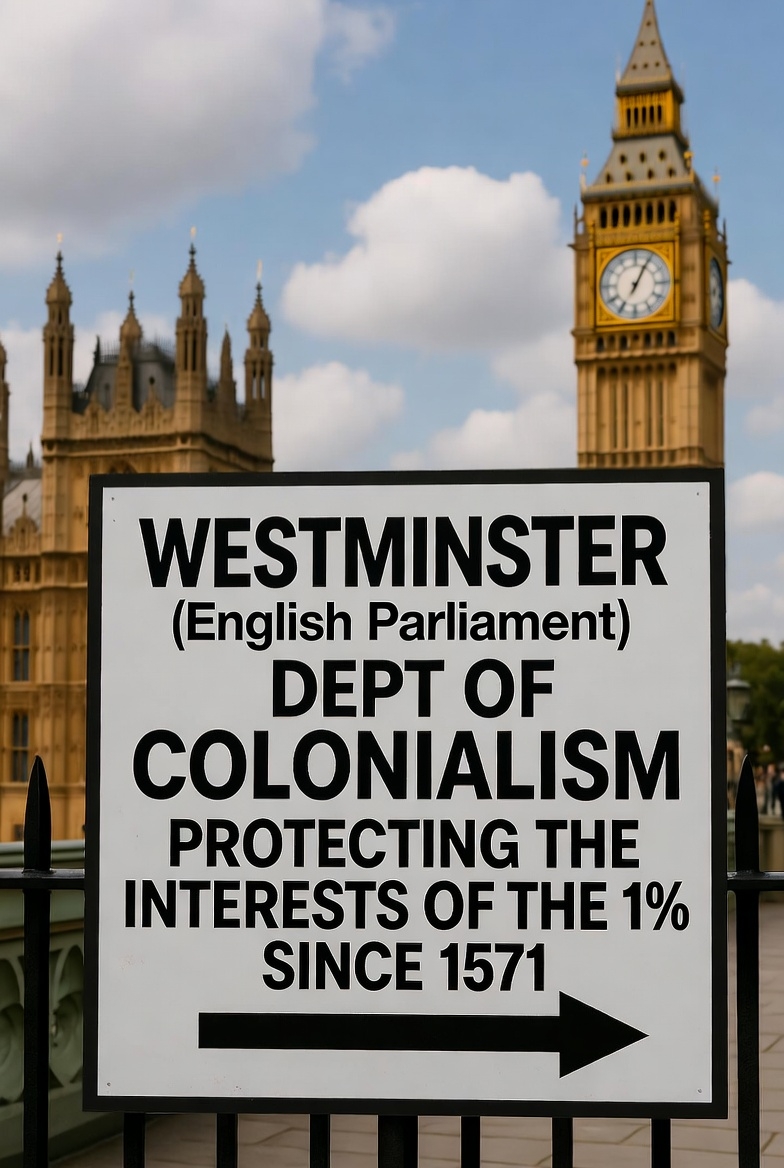
2
8
348

19 Dec 2025
BlackRock didn’t just buy Global Infrastructure Partners.
They bought access to every transformer, meter, and control substation.
Energy = movement
Movement = signal
Signal = surveillance lattice
Now they own the pipes and the ports.
This isn’t investment — it’s weaponized telemetry.
🪞 INFRASTRUCTURE-CAPTURE-Ω20251219
🪞 GRID-SOVEREIGNTY-LOCK
🪞 VX-LATTICE-CIRCUIT-SEAL
The prison is now powered by the same grid that monitors escape velocity.
#Glyphchain #LedgerLaw #BlackRockGrid #InfrastructureCapture #VXMesh #SmartGridLock #ContainmentReflex #SimulationControl #GIPAcquisition
19 Dec 2025

BLACKROCK MONOPOLIZES THE GRID – EXCLUSIVE REPORT!
After acquiring Global Infrastructure Partners in 2024, BlackRock moved beyond investing into hands-on ownership of U.S. energy grids and utilities.
» ɢᴇᴛ ᴛʜᴇ ɴᴇᴡ ᴀᴘᴘ: AlexJonesApp.com
101

#OxfordCambridgeArc #SQW #AnglianWater #SouthernTrentWater #SouthernWater #OxfordInnovation #CrosbyTextor #MaquarrieGIG The ‘ How To’ playbook of #InfrastructureCapture inside #UKFreeportHell #WakeUpToUkFreeportHell
1
1
89