
4h
Ohh stfu san jsun is a shithole you can stay thete and admire the beauty not crime and run down building puta
18

Jun 11
Join us for our upcoming Heart & Stroke Health Education Workshop and learn how to protect your heart and reduce your risk of heart disease and stroke.
Interested in our Access Health Program?
📧 jsun@ywcaqueens.org


1

Jun 8
WHAT EXCHANGE ARE YOU TRUSTING?
a micro-article by John Pitts
Take note ⬇️ of Satoshi’s comment about crypto-exchanges below,
if you use an exchange to acquire Bitcoin or sell Bitcoin for fiat,
as you are almost certainly using a “bucket shop” currently.
Using a bucket shop emboldens and pays the bucket shop owner at your expense (it’s like you’re buying hand grenades from your enemy— to try and use against them— aka explosion in your face). Think of using HTX or BitMart or Mexc as helping Bitcoin’s enemies rig prices downward. Think of it like buying bullets to shoot your enemy but the bullets travel backwards into your head.
Orange Gateway may not be a perfect futuristic exchange quite yet, but I believe their volumes are real and their wallet balances are real (Bitcoin) which can be instantly withdrawn (a good test for ANY exchange is how long it take to withdraw your Bitcoin from the exchange wallet after purchase— it should be very short bc the exchange isn’t just updating a fake number in your user interface and will go grab your actual Bitcoin in a couple days if you initiate a withdraw request, but the balance is actually in a real Bitcoin wallet provided by the exchange with Bitcoin’s legendary near-instant settlement. In other words, you measure withdrawals in seconds not hours or days.
HTX is JSun crap— there’s not a chance in hell they did $4 million in trading volume in Bitcoin ticker BSV on a Sunday— or any day this year. $4 million would be more believable of it was for the trailing month. What you’re looking at isn’t volume— it’s a Sting operation (good movie “The Sting”— watch the ending and you can see how HTX works internally).

Bucket shops are not free markets.
A free market requires transparency of ownership, enforceable property rights, honest settlement, actual price discovery, and the absence of synthetic manipulation through rehypothecation and opaque leverage.
Most crypto exchanges resemble 19th-century bucket shops more than open competitive markets. Internalized order flow, fake liquidity, wash trading, synthetic balances, insider dealing, fractional reserves, and coordinated listing politics are not “market consensus.” They are institutional distortions wrapped in fo-libertarian cosplay.
So when people claim SegWit2x proved “economic nodes enforce Bitcoin,” what they really mean is a handful of opaque intermediaries and custodial casinos coordinated expectations around ticker recognition and liquidity.
That is not decentralized governance.
That is concentrated market power pretending to be democracy because the people involved downloaded a node client and discovered the word “consensus” on Reddit.
Can we say... Epstein...
2
3
24
1,417

What lighter lacks is transparency about how much they sent out for private LP deals
which won't ever come out clean I suppose
Jsun is a massive black stain
1
3
151

May 11
1
2
192

Hats off Craig. I'm still a pick and shovel guy. 2026 is unique due to the double whammy, a perfect storm IOW, of the dL/dt of JSUN and Venus & Mars relationship. Looking into something new now. Maybe another cross-correlation factor to consider within the scheme of everything.
1
9
239

By convention, in the solar system, for the solid objects it's ground level, and for the giant planets (JSUN) it's the 1-bar level.
3
72


May 5
A huge legal fight is coming to our space 👇
@worldlibertyfi filed a defamation lawsuit against @justinsuntron
JSun's Blue Anthem bought around 3B $WLFI tokens between late '24 and early '25, and even received an extra billion tokens as a gift for joining the Advisory Board
What was the plan here?
Blue Anthem signed a series of freeze clauses and vesting details too, then ~$300M in shorts at TGE were likely placed by JSun himself (multiple data sources points to it)
JSun threatened to file a lawsuit and push the price to 0, multiple financial outlets covered the whole story and we've now gone full circle with WLFI answering back
Crypto history in the making
May 4

Today, we are filing a lawsuit against Justin Sun for defamation. Sun has launched a coordinated media smear campaign against World Liberty Financial and refused to stop even when confronted with the truth.
Here's the story.🧵
13
5
46
5,727
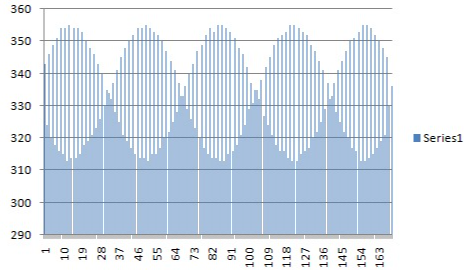
Just got home. Spent the day at Pet emergency. Will look over this more. Good work. Make some sense to me. Here was what I sent you in late March. This was the conjunction cycle of Venus & Mars between 1899-2054. I mentioned different things within their interactions if you recall, wave dominance and transition periods, with the polar motion breathing scheme along with the dL/dt phase relationship (JSUN) with it. 2026 should have been tighter IMO. Even starting prior to it. The 2020 inflection point also showed a possible interesting pattern. Have yet to get back into any type of serious research on many fronts though. Lost some interest.
1
4
198

Apr 22
Imagine your only comeback to getting sued is trolling jsun for giving no fucks and buying a 6m banana taped to a wall
Apr 22

The only thing more ridiculous than this lawsuit is spending $6 million on a banana duct-taped to a wall. We are incredibly proud of the @worldlibertyfi team…
1
11
1,554

Apr 20
Quantum Lattice™: 30,000 qubits written into a 100 cm³ aerogel block with a single femtosecond laser. ~667 logical qubits at d=5. #JSUN #tech
docs.google.com/document/d/1…

1
5
220

Why not back a project that fights for free speech and is listed on your OG exchange @Poloniex ?
You wasted millions on a massive rug pull that now threatens to sue you (and more if you double down). Time to truly fight for freedom JSUN
poloniex.com/trade/FREESPEEC…
5
10
12
152



 jacopo sol news

Mar 25
I don't understand men saying "y'all gave him some pussy because he told animal facts?"
No, they gave him some pussy because he's handsome
Just like the JSun anime guy. Men were like "y'all fucked him because of sun pictures?"
NO - they fucked him because he's handsome
5
22
154
14,114

Mar 24
mf launched a token the same day he got sworn in and y'all just NOW wanna talk about insider trading??
a whole sheikh dropped 500m on wlfi like it's nothing, cz walked free with a pardon, jsun case vanished into thin air — nobody blinked
but barron catches a 1.5b es position before a headline drops and suddenly everyone's a securities lawyer lmao the hypocrisy is insane
16
7
47
629

Mar 21
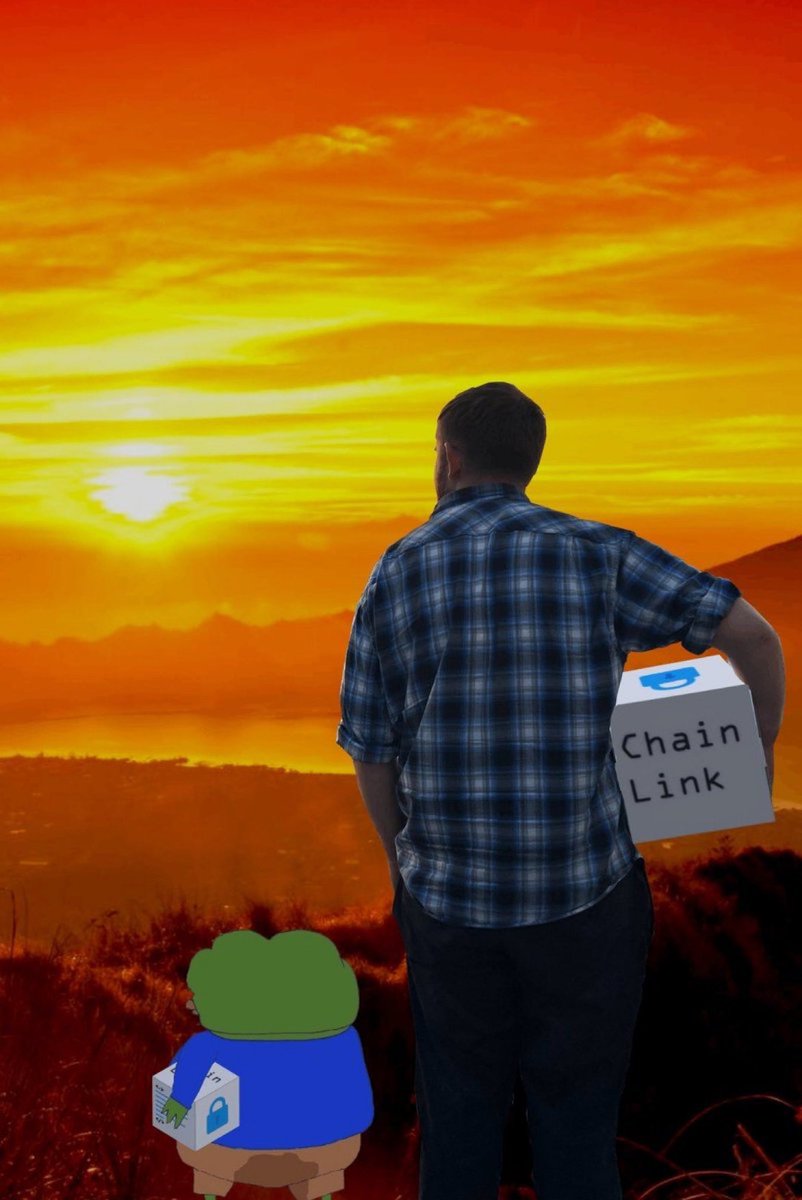
If I wouldn’t have woke up from my tribalism, I’d still be dicking around in the Tron eco getting churned out by jsun. I found link in 2020 and it seemed like all the marines were just smarter than everyone else. I wanted to learn moar immediately so I didn’t feel retarded $LINK
3
102
