
Jun 11
Most meeting notes do not fail because they miss the whole conversation. They fail because they miss the one part that actually matters.
It might be a decision, a useful point, or a next step that only gets mentioned once and then disappears into the rest of the meeting.
TicNote helps capture that part, so you do not have to dig through the full conversation later just to figure out what was important.
#TicNote #MeetingNotes #KnowledgeWorker #ProductivityTools #jujutsu
3
8

Jun 3
The actual mechanic involves decoupling material lifestyle and avocations from the notions of 'paid work' and 'working to live.' People are great at figuring out how to occupy themselves, as long as their needs are met.
The hard nut to crack is: we're about to unjob pretty much the whole knowledgeworker middle and upper middle classes. And it's going to happen too fast for these people to retrain as plumbers (until the robots become good plumbers). They all have mortgages and expectations and the education to have some notion of rights -- they aren't a lumpen proletariat.
So this 'sovereign wealth fund' stuff is nonsense unless it's engineered quite explicitly to mean that when person X -- a middle manager in Marketing at BigCorp -- loses their job to AI, they do not lose their house, can still feed their family, can take a nice vacation every year, etc.
Nor (obviously) can we afford to simply freeze economic positions as they are now, because you can't condemn today's 'less privileged' to remain so forever because of where they were in their lives when the Singularity happened.
So THIS combination of requirements seems to suggest we need to have a conversation about 'what's really enough' and draw up a picture of an average life-well-lived for a citizen of X, and leave (within that picture) enough optionality that people can fit in that average-sized box comfortably.
1
4
138
Jan 28
Correct: If AI doesn't kill us all or somehow enable a conflict that kills us all, the entire knowledgeworker class will basically be unjobbed inside of ten years at the outside.
Convincing: Work with Clawd for an hour. Let it do stuff for you.
Charismatic: Follow me if you want to live.
3
251
Jan 26
I think you have the shape of this wrong, but that's a sideline theoretical discussion (interesting, but not germane to the point you're making, which is very important).
If we generalize past the 'which set of highly-compensated knowledgeworkers loses their jobs first?' question, we can simplify to saying that a big chunk of the middle- and upper-middle classes (and also some truly wealthy people) will find themselves out of work over a few years. And 'few' means FEW. If you're 30 and working today, you will not see 35 before these changes land.
The changes won't look like the long, slow debilitation of, say, union factory jobs did over the past 50 years, where people had generations of time to adapt. (And I'm not saying that didn't suck, but still, time lets you consider options like 'moving where more jobs are' and 'starting a landscaping business for the rich folks who gentrified our former factory town.') NONE of these dodges will work to preserve your income this time. AI air-drops benefits to wherever there's internet. There will be no places where (whatever you do now) isn't threatened. The leading edge is going to be messy, for sure, so it'll LOOK like there might be opportunities with companies that seem fixed on staying well behind the leading edge. But we're talking precarious at best, and finding these bolt-hole jobs will be harder and harder because competition for them will be fierce. 'Just become a plumber!' isn't as easy as it looks, either. And you can expect the still-jobbed blue collar workforce to resist mass incursion of 'smart, plucky, can-do marketing managers' into their ranks (dropping prices for work and otherwise screwing with a good thing).
So people (both sexes) will lose jobs, and the luckiest among them will maybe 'bounce along the bottom' for a while thinking they can reach a stable state. But a couple years in, a huge and growing chunk of the core of the knowledgeworker economy will be skint. And then the real horrors start: no income, no mortgage payments, no paying down college debt, etc. -- everything people have built, and every assumption they've made about lifestyle, retirement, and of course family creation, will fall like sand through their fingers.
I think most people -- men, women -- impacted by this will choose to go down together. Or they'll choose to rise up together, which gets us, basically, to the Butlerian Jihad. Where millions of people all around the world -- all raised to think they were doing the right things, being smart, working hard, having plans, saving, buying property -- all that jazz ... stand up and say "No, y'all can't abrogate the Social Contract like this on us. And no, we _don't_ want to, say, cannibalize our parents and grandparents decades of hard and honest work in order to squeeze out a few more years of owning kitchens with nice fixtures. No, we do not want to all move into repurposed, stacked-up shipping containers. No, no -- we really don't."
What I _don't_ think is a real problem (except in a very small number of bubbles) is global change in mating patterns due to the male population suddenly being force-redefined as 'guys who stay home and play videogames all day while their women work.' There will absolutely be some of this (and this always exists, even now). Absolutely some young, pretty women will (continue to) re-evaluate opportunities for income-generation and/or assortative mating as the rules shift. The AIs will write future 'Vanity Fairs' and 'Madame Bovarys' about these women.
But it's not going to be most guys' biggest problem in the middle of the Butlerian Jihad.
2
106
Jan 2
Heh. There's no plan. I would not at all be surprised if the closest thing to a plan we have right now is a notion that we need to balance rapid, highly-visible advances in core AI abilities (keeps the bubble bubbling) with a long slow-roll (maybe 20-30 years) of actually plumbing AI into things, thus delaying the Vast Unjobbing And Revocation of Social Contracts with the Most-Entitled Members of the KnowledgeWorker Class that will trigger the Butlerian Jihad. The irony being that -- once we hit AGI, getting to ASI (and I'm not even talking about ASI-that-just-kills-everyone) happens much faster than society can absorb the hits.
Every time someone says 'we're gonna solve all problems of scarcity,' I think about the (recent) experience I had with a customer-service agent for some onshore org, obviously in the Philippines, who asked to pause our conversation briefly because her roosters were crowing loudly in the background. She (and her roosters, who she's feeding on corn purchased with sweet, sweet pennies earned from customer-service work) will be a very early casualty, which will compromise the Philippines being able to bootstrap itself, etc. Ain't _nobody_ thinking about this stuff.
1
2
57

18 Dec 2025
The AI revolution is not coming. It is already here.
A recent Gallup poll shows that nearly half of employees are using AI at work today, often without formal guidance or structure.
That is the real risk. Not adoption, but the absence of strategy. Teams using AI without leadership direction move fast, but not always forward.
The data is clear. Organizations with strong AI leadership are 8.8 times more likely to thrive, innovate faster, and retain talent in an AI-driven workplace.
The gap between winners and laggards is no longer technology. It is decision making.
Swipe to see the key insights, who is leading the shift, and how smart leadership turns AI from a tool into an advantage.
For exclusive AI insights that keep you ahead of the curve, visit ai-brief.com
#MaheshDevallaAI #AIWorkplace #FutureOfWork #DigitalTransformation #GallupPoll #AIAdoption #BusinessTrends #LeadershipDevelopment #Innovation #AIStrategy #CareerGrowth #TechInsights #KnowledgeWorker #WorkplaceAI
1
2
35

26 Nov 2025
I built Self-Manager.net because I was drowning in scattered tasks, emails and projects. Now this AI-powered task and project manager is the brain behind my day – planning my goals, tracking my time, and helping me review every week and month with AI.
#SelfManager
#AITaskManager
#ProductivityApps
#KnowledgeWorker
#GetOrganized
1
3
121

17 Jul 2025
🧠 What is @recallnet by @cookiedotfun ?
Imagine your brain had a search engine. That’s Recall.
Developed by CookieDotFun, Recall is a powerful AI-based memory tool that stores everything you’ve read, seen, or thought—and helps you recall it instantly when needed.
🔍 How It Works
Capture: Save anything—tweets, articles, ideas, screenshots—instantly.
Organize: Tag, summarize, and connect ideas. Build your second brain.
Retrieve: Search with natural language and get exactly what you’re looking for—fast.
✨ Why It Matters
No more “Where did I see that?”
Say goodbye to messy notes and browser tabs.
Boost your productivity and creative thinking by never forgetting anything important again.
🧠 Built for Power Users
Seamless integration with X (Twitter), Notion, and more.
Works offline with local AI processing.
Trusted by researchers, creators, and builders.
Try Recall now and upgrade your brain.
🔗 cookie.fun/jJd3FJSH
#Recall #CookieDotFun #AItools #Productivity #SecondBrain #PKM #notetaking #zettelkasten #aiassistant #knowledgeworker

4
14
310

27 Mar 2025
Grata a Piero #Bassetti
già esimio presidente @RegLombardia
brillantissimo panelist
a gremito Convegno
#Pace #Libertà
@FGBassetti
in @ComuneMI
Lo si ascolta volentieri
e ci si eleva
ed arricchisce sempre
#KnowledgeWorker
@VivMilano @Aldo_DiZa @EmilianoVerga @GiovannaDiTroia
4
5
122

19 Feb 2025
Bu platforma "gönderini düzlenle seçeneği ivedilikle gelmeli vesselam. @elonmusk
(bakalım algoritma nasıl çevirecek ses etmeyin..)
#GüldaniyeSofi
#namıdiğer 🩷
#ŞukufeTozpembe
#KnowledgeWorker
1
1
14

【電子書籍(丸善KnowledgeWorker)】
『女性たちの韓国近現代史――開国から「キム・ジヨン」まで』(崔誠姫 著)
開国から現代にいたるまで、朝鮮・韓国の女性はどう生き、どう変わっていったのか。
有名・無名のさまざまな女性たちに光を当て、近現代韓国の歴史を描きだす。
kw.maruzen.co.jp/ims/itemDet…
詳細・目次 keio-up.co.jp/np/isbn/978476…

4
5
1,155
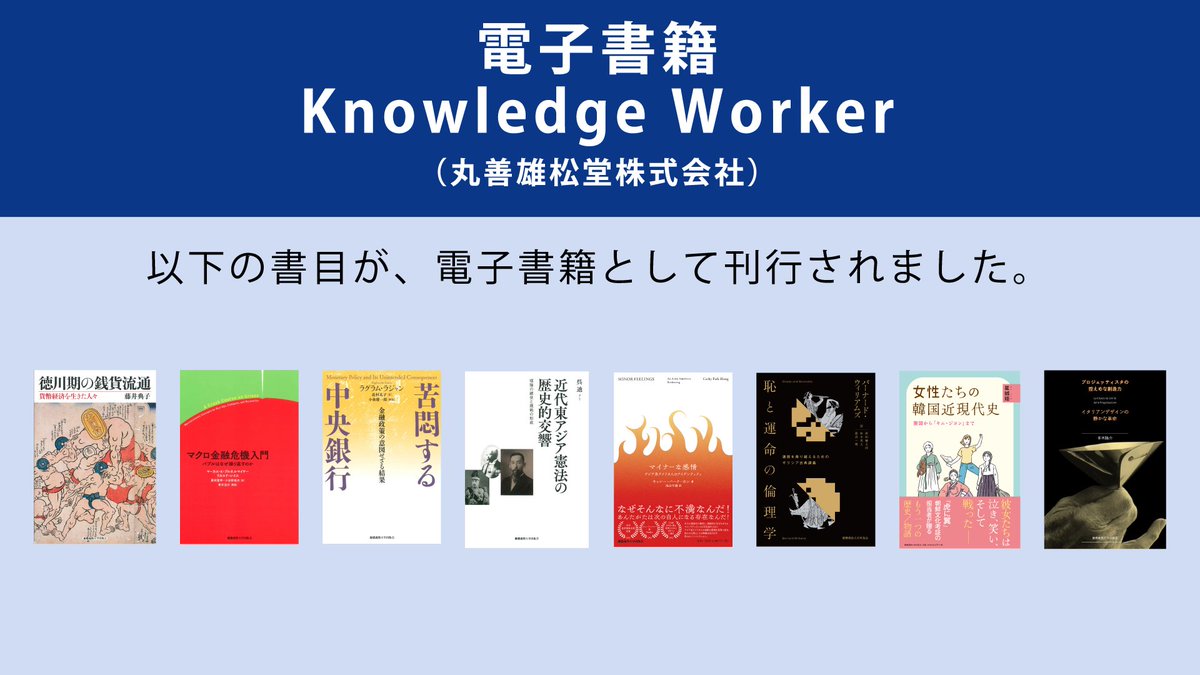
【電子書籍(丸善KnowledgeWorker)】
以下の書目が、電子書籍として刊行されました。
「KnowledgeWorker」にてお求めいただけます。
keio-up.co.jp/np/all/digital…
@MARUZEN_KW
1
3
2
491
29 Nov 2024
Grata a
Concetta 🍀@Riva1920
ed Elena 🍀 @LaStatale
#InformationDesk
🔜 #help #gentilezza #garbo
intelligentissime
#KnowledgeWorker
#goodnews #piccolecose
#HaveANiceWeekend
dear #friends
#botd #29novembre2024
@VivMilano @signor_aldo
@EmilianoVerga @AvvCanu
@GiovannaDiTroia
3
4
85
【電子書籍(丸善KnowledgeWorker)】
以下の書目が、電子書籍として刊行されました。
「KnowledgeWorker」にてお求めいただけます。
keio-up.co.jp/np/all/digital…
@MARUZEN_KW

1
3
4
312
【電子書籍(丸善KnowledgeWorker)】
独立を守ろうとする首相たちや、文化人や芸術家の抵抗や亡命を軸に、芸術都市ウィーンの緊迫した日々を描く注目作。
『ウィーン1938年 最後の日々――オーストリア併合と芸術都市の抵抗』(高橋義彦 著)
kw.maruzen.co.jp/ims/itemDet…
●詳細・目次 keio-up.co.jp/np/isbn/978476…

1
5
5
1,655
【電子書籍(丸善KnowledgeWorker)】
以下の書目が、電子書籍として刊行されました。
「KnowledgeWorker」にてお求めいただけます。
keio-up.co.jp/np/all/digital…
@MARUZEN_KW

2
3
8
873
【電子書籍(丸善KnowledgeWorker)】
以下の書目が、電子書籍として刊行されました。
「KnowledgeWorker」にてお求めいただけます。
keio-up.co.jp/np/all/digital…
@MARUZEN_KW

1
2
4
668


25 Aug 2024
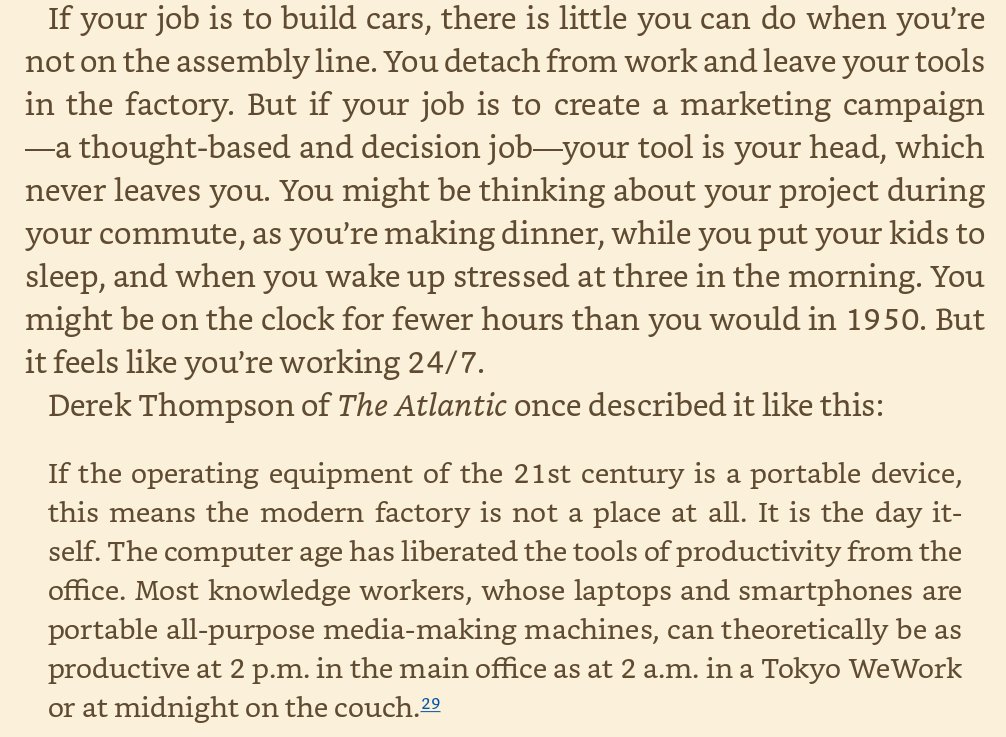
「Knowledgeworkerという良書に出会える確率が高い書籍サイト」を進めるスパムがうちにも来た。
こんな検索ノイズにまみれそうな名前のサービスを勧めるならせめて、URLくらい書いてほしい。
2
30
5,337
【電子書籍(丸善KnowledgeWorker)】
以下の書目が、電子書籍として刊行されました。
「Knowledge Worker」にてお求めいただけます。
keio-up.co.jp/np/all/digital…
@MARUZEN_KW

1
3
3
688