




19 Dec 2025
Islanding and Large Loads: How Islanding is Changing Autonomous Energy
(sources, NERC regs and guidelines, SMPNet, Mar 2024, experential knowledge)
ISLANDING refers to a situation in power grids where a part of the grid (i.e., power island) gets separated from the main power network. If you are not connected to the grid at all, this does not happen, but the issue is not trivial, see below for whether you are regulated by NERC. STARLINK could render much of this irrelevant, but presumably that will be more long-dated than developers want to wait.
If you are co-located, you will be connected to the grid and must deal with this issue. The easiest way to island is to open your switches so current cannot flow through. (If done deliberately this might be because you observe in the control room that an adjacent ERO is having major difficulties, such as blackouts or frequency drops, that you cannot help out on, or it may be because transmission gets cut because there is inadequate transfer capacity.) But you have to figure out how to keep your own operations running smoothly, and you have to figure out how to reconnect; you can't stay unconnected forever.
(AI ISSUE. DISCONNECTION OF DISTRIBUTION BLOCKS OF ENERGY IS A NEWER ISSUE, SO SOME TERMS ARE NOT STANDARDIZED. Several AI articles confuse Islanding with Isolation, which is a transformer function term—more in later post; the AI articles indicate that Isolation is lawful vis a vis NERC and Islanding is unplanned or lacking in procedures for handling and is thus nonconforming.)
=====================================
ISLANDING, PLANNED AND UNPLANNED. This comment deals with large loads such as data centers and the process of islanding, planned and unplanned. It is easier to deal with islanding involving a large interruptible load, with or without batteries, than a base load such as a data center unless there is excess capacity and adequate BESS to lean on.
Protocols and Plans for operation converting to an island, operating during an island, and reconnecting are still needed.
NERC has primary responsibility for Reliability on the grid, and generators and transmission owners must comply with NERC Standards and Guidelines. Load, especially volatile load—not planned regular fluctuations) can often affect reliability. Actions must be taken to protect not only the load, but also the continued existence and operation of the transmission wires, transmission and distribution equipment, batteries, and generation.
NERC is inching toward taking jurisdiction over large loads even behind the fence, but no guideline or standard has been adopted. As mentioned, co-location loads are already tied to the grid.
NERC’S LARGE LOADS TASK FORCE (LLTF). To begin understanding large loads and identify effective pathways for their integration, NERC’s Reliability and Security Technical Committee (RSTC) established a Large Loads Task Force (LLTF) in August 2024.
There is a time mismatch. The NERC task force has not finished, and the transmission capacity and interconnections are not all ready, but the demand for the large loads is ready to go and will not wait.
INTENTIONAL DISCONNECT PERMITTED? A crucial question is whether now large loads such as data centers can intentionally disconnect themselves from the grid (even with signed interconnection obligations).
The answer is YES and is documented in NERC’s Large Loads Frequently Asked Questions, May 2025:
“VOLTAGE RIDE-THROUGH. Currently, there are no specific voltage ride-through Reliability Standards for large loads. Large loads, specifically data centers, frequently house a multitude of sensitive electronics that require ideal electrical conditions. If poor electrical conditions exist (like low voltage), large loads can disconnect from the grid to protect their equipment from damage.”
(If you are tied to the grid, there is an issue of whether you may just decide you do not want to be on the grid on a given day, i.e. you do not observe low voltage; you just do not want to mess with multiple markets, costing and hedging LMP which you do not get to avoid with bilateral contracts, and other non-electrical engineering complexities and grid idiosyncrasies. I do not think we all can have a voluntary grid; the grid by its nature is socialized. You signed a mutual agreement. But NERC change could come if we got a more modern 21st century grid.)
RELIABILITY GUIDELINE. A reliability guideline on Risk Mitigation for Emerging Large Loads is also included in the LLTF Work Plan. Progress on these upcoming documents can be found on NERC’s website. Additionally, the NERC LLTF hosts monthly meetings for industry experts to present the latest work on large load integration to the grid.
IS A BEHIND THE FENCE FACILITY SUBJECT TO NERC REGS? A fence doesn't automatically exempt a generator from NERC. NERC Regulations apply as to size—large renewable projects 20MVA, 60kV, and interconnection point at 100kV, suffice to require a generator to register as a GO/GOP and to comply with applicable NERC Standards.
NERC requires each system, control area, pool, and Region to have procedures to deal with operating emergencies:
** Agreements for emergency assistance from neighboring systems;
** Procedures for system operators
** Authority to shed adequate load (and to determine blocks of load to be shedded) to restore generation/load balance to prevent undershedding;
** Procedures for system restoration
** As a failsafe, each area is required to install automatic underfrequency load shedding (protective relays detect a low frequency condition and automatically actuate the disconnection of blocks of load to arrest the decline in frequency and restore 60Hz operations
3
12
481


15 Oct 2025
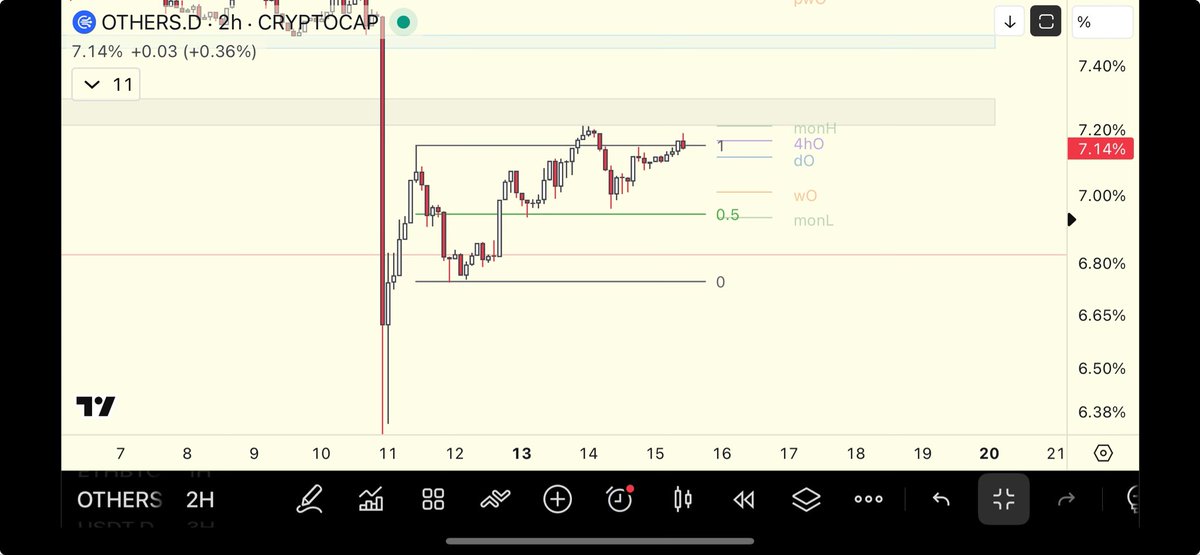
$OTHERS.D LLTF Idea Update
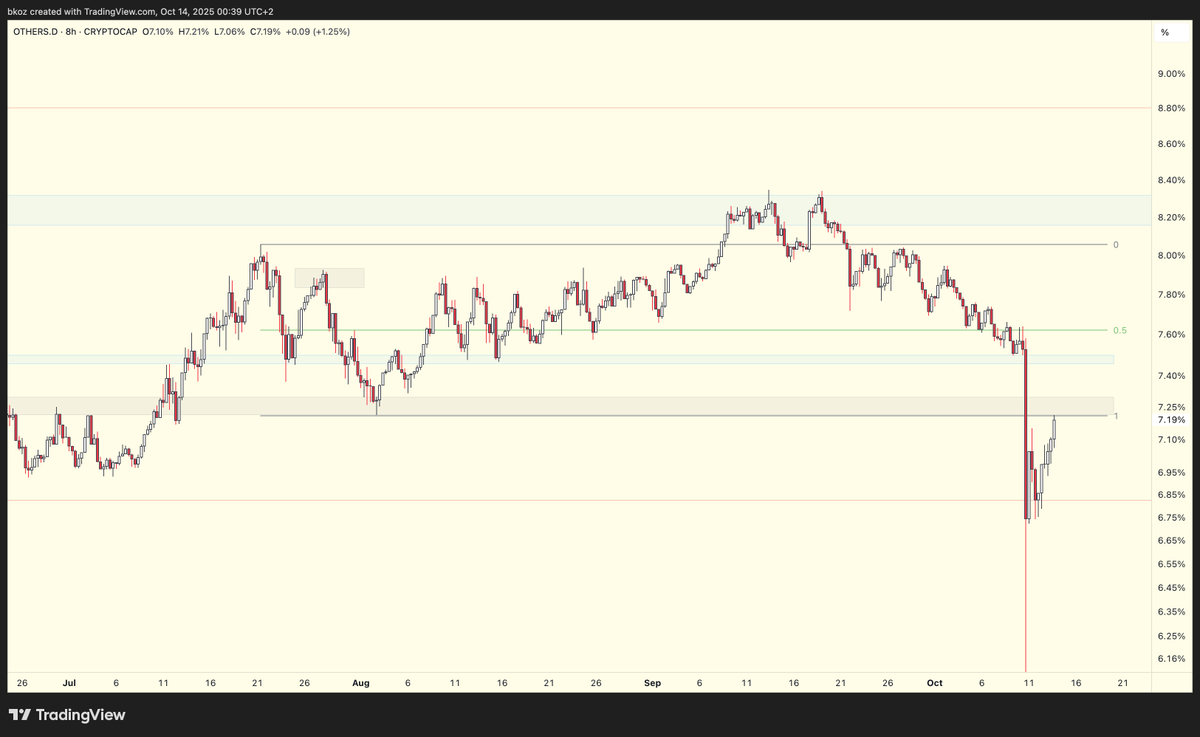
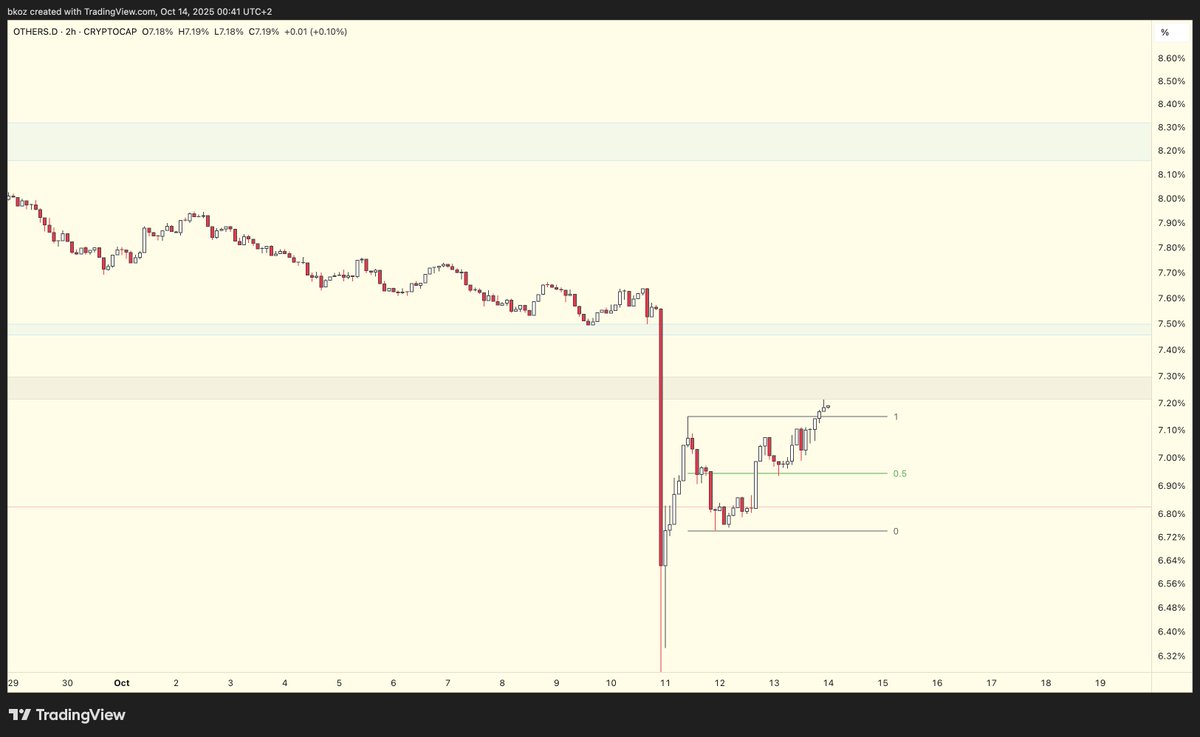
- 7.01% bolgesinden, EQ tarafi, tepki aldi ve Range High geldi. Bence invalidation temiz, bu bolgede mLTF asagi MSB olursa gerileme bekliyorum. wO ve kaybi olursa monLow alabilir. Bu sebepten oturu su an longdan ziyade bekleyip duruma gore aksiyon alacagim.
- Gri ustune atarsa, maviye uzayabilir. Alt market icin long bakarim.
Diger postlarda bulunan fikirlerim devam ediyor Eth ve Btc icin, yolda olacagim. Bir degisiklik olursa aksama guncelleme gecebilirim.
13 Oct 2025

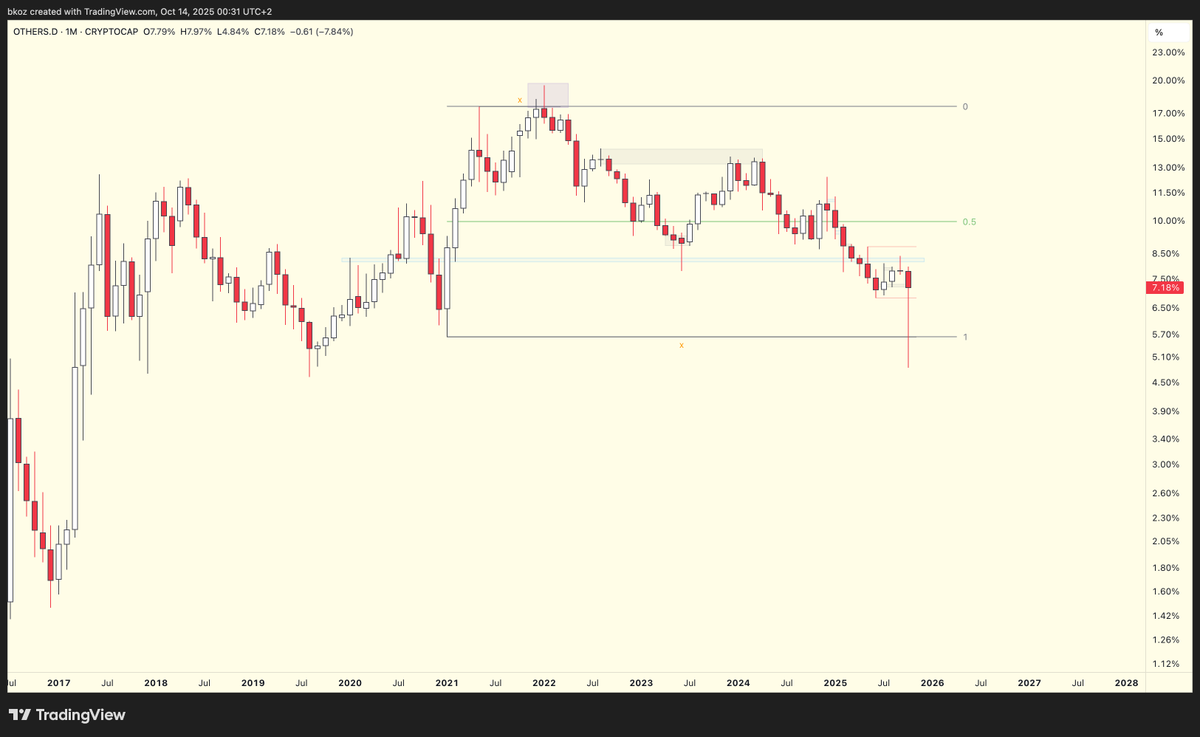
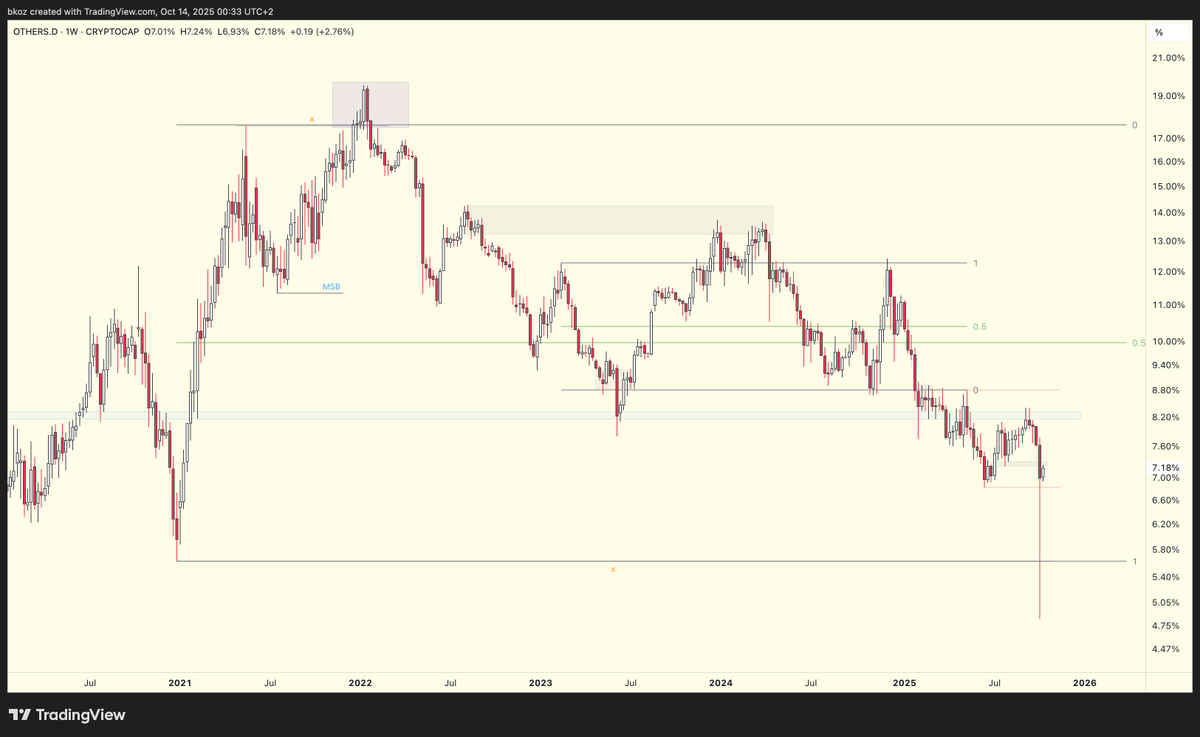
$OTHERS.D Fikirler
- LH -> LL devam eden trendi abarti bir sekilde yaptigi son dusus hareketiyle Monthly grafikte 1700 gunluk bir lowu temizledi. Haftalikta MSB yazan yapi degismesiyle Range icinde olusan yukari yonlu yapilarin Supply bolgelerinden altigi satislar / Range ici olusan yeni araliklarda Range High sapma sonrasi asagi devam geldi genel.
- Range Low alinmasiyla buyuk bir wick birakti. Su an fiyat, bir onceki postta bulunan Range'in Range Low tarafinda.
- Bu seviye onceden destek olarak calisan bir yer, S/R olarak calisabilecegini goz onunde bulundurarak, buradan gelebilecek bir satisin 7.01% - 6.93% arasina (2H Range EQ) goturecegini dusunuyorum.
- Eger S/R ustune atabilirse, kaybettigi lowu ve destegi kazanmis olur. Mavi kutuya devam etmesini beklerim
Markette asiri bir temizlik gerceklesti, bu tarz durumlarda fiyatlar yukari sert gidebilir fomo olusabilir veya yine bir sert dusus olur dusuncesinde olan ama eli islem almaya gitmeyen veya gordugunun tersini trade etmeye calisan biri olmayin. Olan oldu, yapilar olusunca onlari trade etmek lazim. Tahmin etmek yerine grafik ne gosteriyorsa ona katilalim.
2H
8H
1W
1M
1
20
4,599


10 Jul 2025
Had a good sleep last night and today’s stream was a banger! 8:30am - 10:30am UK time
Have you watched a stream yet? If not come and join the LLTF team
1
2
51

8 Jul 2025
NERC’s Large Loads Task Force (LLTF) was formed in Aug 2024 to address reliability challenges from new large loads like #AI data centers and hydrogen plants. Key work includes white papers on risks and gaps and #guidelines to improve planning and operations processes.
1
2
482

30 Jun 2025
This is all Tesla NERC LLTF docs with the semi analysi logo on it lol
3
186


2 Jun 2025
兵庫公演メモ
サクラバイバイ解釈
yup!yup!yup!
104期ラスト眩耀夜行
LLtF解釈
Dear my future解釈
飴色解釈
On your mark解釈→僕は僕を信じて
ユメワズライ→君がくれたプロローグ
KoL→全部無駄じゃなかった
↓
アステリズム→すべて「希望だった」
呪い→希望
6
427

29 May 2025
Devs once again showing dynamic movement of all problems in real-time...if anyone thinks Dune Awakening isn't going to be the real deal, then they are sadly mistaken. #LLTF 🗡️
1
69

21 May 2025
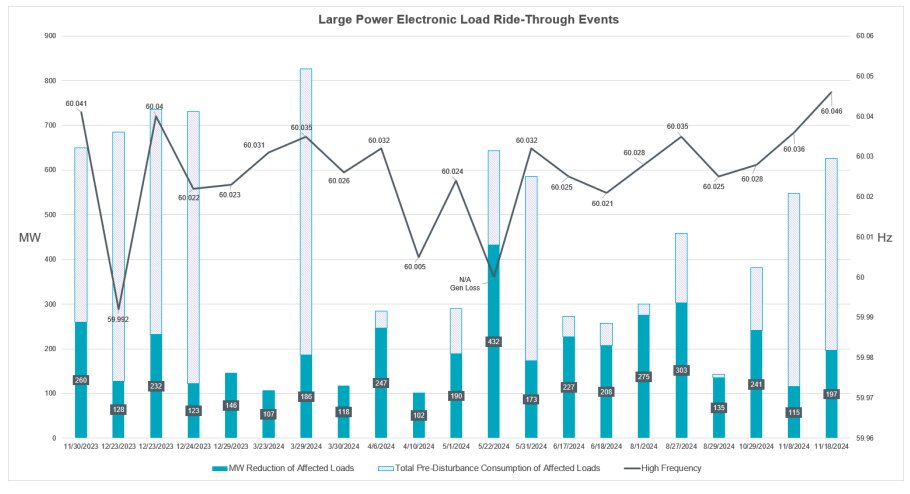
ERCOT and PUCT are tightening the rules. Interconnection agreements are no longer a free pass. Future compliance may require detailed modeling, inertia contributions, and ride-through specs.
NERC may define ride-through rules and large-load planning standards. The LLTF is watching closely. IREN might need to upgrade even after energization. The compliance journey won’t stop at go-live.
1
6
763

22 Mar 2025
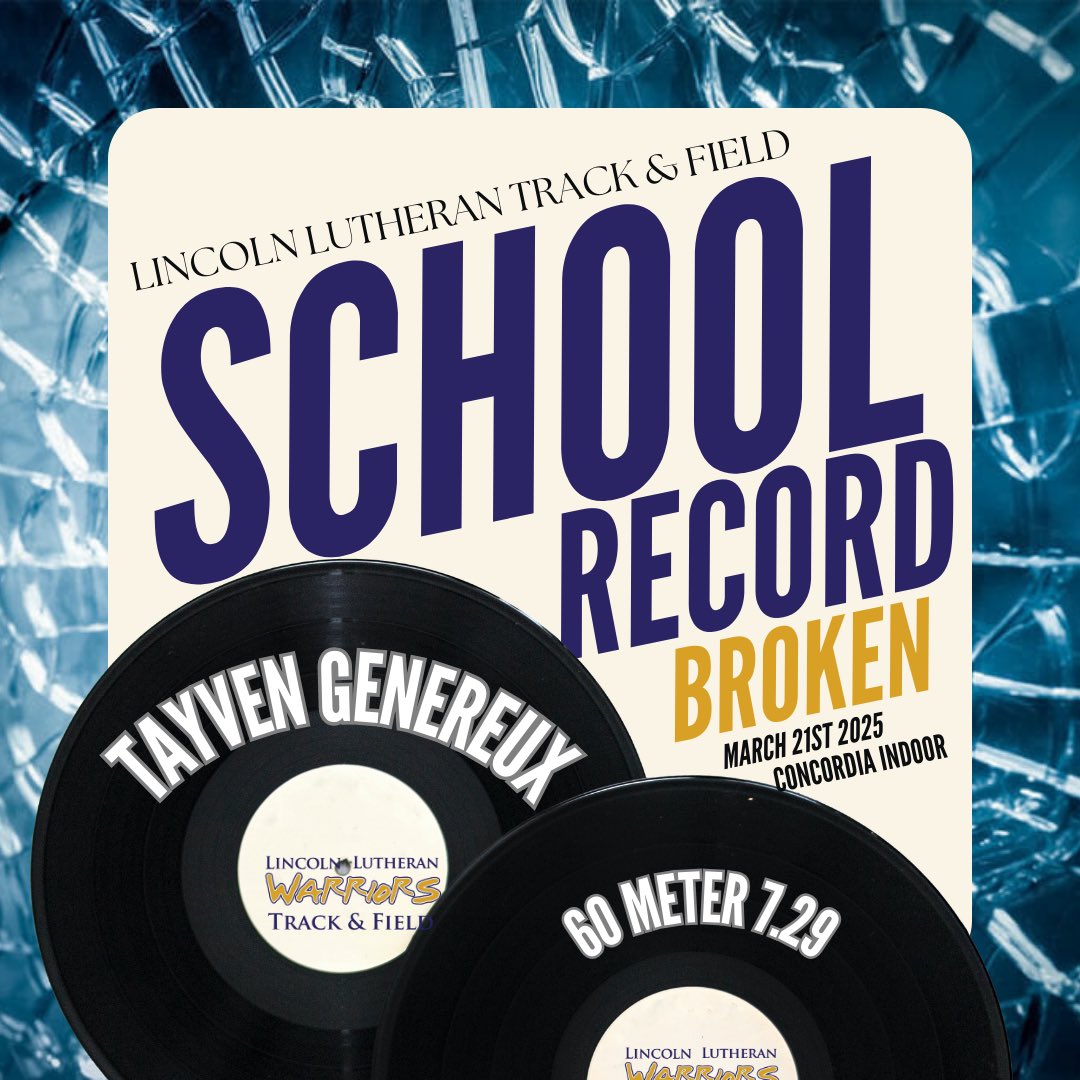
Congrats to Tayven on setting a LLTF School Record yesterday in the 60!
@LLActivities

1
13
531
22 Mar 2025
MEET 1 RESULTS from Concordia!
3 School Records, 4 Meet Records, 10 LLTF Top 10 Marks and several PBs!!!
Great start Warriors!
Full results can be found here:
results.blacksquirreltiming.…

6
269