
The California Forever proposal is great except it will take 10 years for full operational status.
That is the rest of President Trumps term and two terms of the next President.
@SecWar @SECNAV @mercoglianos @johnkonrad @reindsummit @USWREMichael
Pier 70: The Evolution of a Maritime Landmark Pier 70 is a massive historic site spanning approximately 69 acres. Within this expanse, a 28-acre section is currently undergoing a $3.5 billion redevelopment to transform the area into a vibrant, mixed-use neighborhood featuring housing, modern offices, and public parks. Central to the site’s history are its two massive dry docks, which were once the backbone of the West Coast ship repair industry. Their scale remains impressive:
• Dry Dock No. 2: Known as the largest floating dry dock on the West Coast, it measures 900 feet long with a lifting capacity of 55,000 to 66,000 tons. This immense size allowed it to service major cruise ships and large Navy vessels.
• The Eureka Dry Dock: The smaller of the two, the Eureka is 528 feet long and roughly 70 to 80 feet wide, with a lifting capacity of 14,500 tons.
Despite their storied past, as of early 2026, both structures are slated for demolition by the Port of San Francisco. The decision stems from their deteriorating condition and the prohibitively high costs required for maintenance and repair.
If the U.S. Navy were to acquire Pier 70 and reintegrate it as a dedicated military shipbuilding and maintenance facility, the cost savings would stem from three primary areas: operational efficiency, infrastructure preservation, and strategic logistics.
As of 2026, the Navy faces a severe West Coast dry dock shortage, which has led to $2.3 billion in deferred maintenance work. A facility like Pier 70 could mitigate these costs through the following mechanisms:
1. Elimination of Contract Inefficiencies Currently, the Navy relies heavily on private shipyards for surface ship repairs. According to the GAO, work performed in public (Navy-owned) shipyards can sometimes be more expensive due to overhead, but it offers workload stability.
• Eliminating "Unplanned Work" Premiums: Private yards often charge significantly higher rates for unplanned or emergency repairs because they must displace commercial clients. A Navy-owned Pier 70 would provide "priority surge capacity," saving millions in scheduling penalties.
• Direct Labor Savings: By using an organic (Navy) workforce, the government avoids the profit margins (typically 10-15%) built into private defense contracts.
2. Reducing "Deadhead" and Transit Costs The West Coast has a massive "capacity gap." Many ships stationed in San Diego or the Pacific Northwest are forced to wait for open slots or travel long distances for maintenance.
• Fuel and Readiness Savings: Moving a Carrier Strike Group or a destroyer for repairs costs hundreds of thousands in fuel and takes the ship out of "ready" status for weeks of transit.
• Localized Maintenance: Having a high-capacity hub in San Francisco would allow ships to be serviced closer to their operational theaters, reducing the wear and tear of long transits just to find an empty dry dock.
3. Capital Asset Preservation The current plan for Pier 70 involves a $3.5 billion transformation into a mixed-use neighborhood, which includes the demolition of Dry Dock No. 2 and the Eureka.
• Avoided Replacement Costs: Building a new floating dry dock with the capacity of Dry Dock No. 2 (66,000 tons) from scratch today would cost an estimated $400M to $600M. By purchasing and rehabilitating the existing docks, the Navy could secure vital infrastructure for a fraction of the "new-build" cost.
• Leveraging Historic Infrastructure: Pier 70’s Building 12 and other "Union Iron Works" structures were built for heavy industry. Converting them back to functional use is often more cost-effective than building specialized, reinforced industrial facilities from the ground up on new land. Cost Comparison Summary (Theoretical) Category Private Contract Model (Current) Navy-Owned Pier 70 Model Potential Annual Savings Transit/Fuel High (Transit to available yards) Low (Centralized West Coast hub) $15M – $30M Contract Markup 10-15% Profit Fees 0% (Organic Workforce) $50M – $100M
Category Private Contract Model (Current) Navy-Owned Pier 70 Model Potential Annual Savings Scheduling High penalties for urgent repairs Immediate priority access $20M (Readiness value) Infrastructure $500M for new dry docks ~$150M for restoration $350M (One-time)
The "Cost of Inaction" The Navy's 2026 budget request includes $65.8 billion for shipbuilding. A significant portion of this is spent on maintaining an aging fleet. Without facilities like Pier 70, the "deferred maintenance" backlog grows, leading to:
1. Early Decommissioning: Ships that can't be repaired are retired years before their intended end-of-life, wasting billions in original investment.
2. Compounded Decay: A $1M repair deferred today often becomes a $10M structural failure three years later.
Note on Feasibility: While the cost savings are significant, the Navy would face a high "upfront" political and financial cost to buy out the current 28-acre redevelopment project (led by Brookfield Properties), which is already well underway.
The acquisition of Pier 70 by the U.S. Navy would represent a strategic shift from commercial redevelopment to national security infrastructure. In the current 2026 fiscal landscape, where the Navy’s ship maintenance budget has climbed to over $16.2 billion and shipbuilding delays for critical classes like the San Antonio-class (LPD 17) and Virginia-class submarines continue to grow, the "cost savings" of such a move are both immediate and long-term.
Here is an elaboration on the specific financial and operational advantages of turning Pier 70 into an active Navy facility.
1. Cost Avoidance: Infrastructure Replacement The most direct saving is the avoided cost of building new facilities. As of early 2026, the industrial base is severely strained, making new construction prohibitively expensive.
• Dry Dock Acquisition: Replacing a 66,000-ton lifting capacity floating dry dock (like No. 2) today would cost between $500M and $750M in new construction and take 5–7 years to deliver. Purchasing and rehabilitating Pier 70’s existing docks would likely cost less than 30% of that total.
• Building Rehabilitation: Pier 70 already contains heavy-industrial "high-bay" buildings (like Building 12) designed for massive steel fabrication. Repurposing these is significantly cheaper than the $200M cost of constructing new hardened military industrial facilities on the West Coast.
2. Operational Savings: The "San Antonio" Class Use Case The San Antonio-class amphibious transport docks are the workhorses of the Pacific fleet. They have a full displacement of approximately 25,300 tons and a length of 684 feet. • The "Perfect Fit" Factor: While many smaller dry docks cannot handle the beam (width) or displacement of an LPD, Pier 70’s Dry Dock No. 2 (900 ft, 66,000 tons) could service two LPDs simultaneously or one LPD with room for auxiliary craft. • Parallel Maintenance: Being able to dry-dock two ships at once in a single facility reduces the Navy's "cost per hull" for maintenance by sharing overhead costs (security, electricity, and management) across multiple projects.
3. Logistical & Readiness Savings Currently, West Coast maintenance is concentrated in San Diego and the Pacific Northwest (Bremerton). This creates a "bottleneck" that costs the Navy millions in "deadhead" expenses. • Fuel & Transit Costs: Moving a vessel from its station to a distant repair yard can cost upwards of $500,000 per transit in fuel and personnel. • Eliminating Deferred Maintenance: The Navy currently pays a "late tax" on repairs. According to 2026 CBO reports, delays in ship repair can increase costs by 20% annually as minor rust or mechanical issues compound into structural failures. A dedicated yard at Pier 70 would eliminate the "waiting list" for West Coast ships, potentially saving $100M per year in compounded repair costs.
4. Strategic Financial Summary (Projected) Category Navy Acquisition of Pier 70 Private Sector/New Build Model Estimated Savings Asset Value ~$200M (Retrofit) $600M (New Build) $400M
Category Navy Acquisition of Pier 70 Private Sector/New Build Model Estimated Savings Annual Maintenance Organic Navy Rates (Lower) Private Contract 15% Profit $45M/year Readiness/Speed Priority Access Market-rate Scheduling $25M/year Total 10-Year Value ~$1.2 Billion ~$2.3 Billion $1.1 Billion
The Competitive Edge By 2026, the U.S. has recognized a critical "Shipbuilding Gap" with China. Pier 70 is one of the few remaining sites on the West Coast with the geographical footprint and deepwater access necessary to help close this gap. While the $3.5 billion commercial redevelopment offers luxury housing and offices, its "opportunity cost" to national defense is arguably much higher. To understand the true economic impact of a Navy takeover, we should look at the clash of two different economies: the current "Innovation & Lifestyle" trajectory vs. a "Defense & Industrial" revival.
As of early 2026, the Pier 70 redevelopment is already deep into its $3.5 billion transformation. Here is how the economic profile would shift if the Navy re-acquired the site.
1. Job Creation: Quality vs. Quantity The current mixed-use plan and a potential Naval shipyard offer very different labor markets:
• The Mixed-Use Plan (Current): Estimates suggest the creation of 10,000 construction jobs and 12,000 permanent jobs. These are largely "white-collar" or service-oriented, focusing on biotech, creative arts, and retail.
• The Naval Shipyard (Proposed): Military shipyards are massive "blue-collar" engines. Based on 2026 economic impact studies of similar facilities (like the proposed Solano Shipyard), a full-scale yard could support 15,000 to 40,000 direct and indirect jobs.
o The "Multiplier" Effect: Industrial jobs typically have a higher "multiplier" (roughly 2.5) than retail or office jobs. For every 1 ship-fitter or welder, 2.5 additional jobs are created in the local supply chain (steel, logistics, specialized tools).
2. Revenue Streams: Property Tax vs. Federal Investment The way the city of San Francisco "makes money" changes entirely depending on who owns the land:
• Mixed-Use Model: The city relies on Property Taxes from luxury condos and Sales Taxes from retail. With 2,000 new homes (30% affordable), this model provides a steady, long-term tax base for local services.
• Navy Facility Model: Federal land is tax-exempt. However, the Navy would likely provide PILOT (Payments in Lieu of Taxes) or massive federal grants for local infrastructure (roads/utilities) to support the base. The real "win" is the infusion of federal spending—billions of dollars in annual operating budget that circulates through local small businesses and contractors.
3. The "Opportunity Cost" of Housing San Francisco's primary economic crisis in 2026 remains housing affordability.
• By turning Pier 70 into a shipyard, the city loses 2,000 planned residential units.
• This could drive up housing costs elsewhere in the city, potentially offsetting some of the economic gains from the shipyard jobs by making it harder for those same workers to live near the facility.
Economic Comparison Table Feature Mixed-Use Redevelopment (Current) Active Naval Shipyard (Proposed) Primary Job Type Biotech, Tech, Arts, Retail Industrial, Engineering, Logistics Direct Investment $3.5 Billion (Private Capital) $1.2B (Federal Defense Budget) Housing Impact 2,000 units (helps supply) 0 units (increases demand) Local Revenue High Property & Sales Tax Federal Grants & Worker Spending Feature Mixed-Use Redevelopment (Current) Active Naval Shipyard (Proposed) Economic Resilience Sensitive to Tech/Real Estate cycles Stable; tied to National Defense needs
Summary of the "Big Win"
The Navy purchasing Pier 70 would be a massive win for industrial diversity. San Francisco has largely moved away from its blue-collar roots, and a shipyard would provide high paying, union-protected jobs for residents who aren't in the tech or biotech sectors. However, it would require the Navy to "buy out" the existing developers, which in 2026 would likely cost upwards of $1 billion just for the land and work already completed, making the initial "price of entry" for the government very high.
Is the trade-off of losing 2,000 new homes worth the gain in high-paying industrial jobs for the city?
If the Navy and federal government were to take the extraordinary step of reclaiming Pier 70, a "Strategic Offset Package" would be essential to prevent a local economic crisis. This approach is not without precedent. The federal government frequently uses financial mechanisms to compensate cities when "National Security" overrides local land-use plans.
Here is how a potential federal offset and housing credit plan could look in 2026:
1. Federal Housing "Density Credits"
To replace the 2,000 lost housing units, the federal government could issue a massive infusion of Low-Income Housing Tax Credits (LIHTC) specifically for San Francisco.
• The "90% Subsidy" Model: Under current 2026 legislative proposals (like the BUILD Act), developers building near "large-site" military facilities can receive tax credits covering up to 90% of project costs, compared to the standard 70%.
• The Result: This would make it hyper-profitable for private developers to build high-density, affordable housing in other parts of the city (such as the nearby Hub or SoMa districts), effectively replacing the Pier 70 units elsewhere at a lower cost to the city.
2. Infrastructure "Swap" (Hunters Point Acceleration) San Francisco already has a massive, delayed shipyard redevelopment at Hunters Point.
• The Trade: The Navy could commit to an accelerated, federally funded $1 billion cleanup of the remaining parcels at Hunters Point.
• The Result: By cleaning up Hunters Point faster, the Navy would "unlock" land that can support over 10,000 housing units. This would more than quintuple the housing capacity lost at Pier 70, turning a local loss into a massive long-term gain for the city's housing supply.
The "New" Economic Summary
If these offsets were implemented, the 10-year outlook for San Francisco would shift: Metric Original Mixed-Use Plan Navy Shipyard Federal Offsets Housing Units 2,000 (on-site) ~10,000 (unlocked at Hunters Point) Direct Jobs 12,000 (Office/Retail) 15,000 - 30,000 (Industrial/Engineering) City Revenue $X (Property Tax) $X Increased by Hunters Point Dev. National Role Waterfront Destination Strategic Hub for Pacific Defense.
The Reality Check (May 2026)
The Port of San Francisco has already budgeted $61 million just to demolish the deteriorating dry docks because they are becoming a liability. If the Navy doesn't step in soon, the infrastructure you're hoping to save will be scrapped.
The Window of Opportunity: To make this happen, a "Stay of Demolition" would need to be issued by the Secretary of the Navy within the next few months to prevent the Port from beginning the teardown.
National Security Land Use
The timing is critical. As of May 2026, the Port of San Francisco has already spent nearly $9 million on emergency stabilization for Dry Dock #2, and while actual demolition isn't expected until early 2027, the window to change course is closing.
Given the new America’s Maritime Action Plan (MAP) released in February 2026, the federal government is currently looking for "Maritime Prosperity Zones" to rebuild domestic shipyard capacity. This makes your "National Security" appeal much more viable than it would have been just a year ago.
Here is how you can leverage these mechanisms to move forward:
1. The "National Security Land Use" Appeal
Because Pier 70 is listed on the National Register of Historic Places and sits on a deepwater port, it qualifies for protection under several federal mandates.
• The SHIPS Act Trigger:
Use the Shipbuilding and Harbor Infrastructure for Prosperity and Security (SHIPS) Act of 2025. This legislation allows the Secretary of the Navy to designate specific historic maritime sites as "Critical Industrial Infrastructure," which can freeze demolition orders.
• The Appeal Argument: Your appeal should focus on the "irreplaceable maritime footprint." While housing can be built anywhere, the specific concrete and depth requirements for a 900-foot dry dock like No. 2 are rare on the West Coast.
2. Formal Petition to the Secretary of the Navy
A petition isn't just about signatures; it's a formal "Expression of Interest" that forces a federal review.
Key Components for your Petition:
• The Readiness Deficit: Cite the $2.3 billion West Coast maintenance backlog.
• The "Dual-Use" Value: Argue that Pier 70 could serve as a Public-Private Partnership (P3)—servicing Navy San Antonio-class vessels while also maintaining the regional cruise ship industry.
• The Preservation Mandate: Reference the Section 106 review of the National Historic Preservation Act. Demolishing the dry docks would be considered an "adverse effect" on the historic district, which the Navy has the authority to mitigate by taking ownership.
3. The "Housing Credit" Negotiation Strategy
To get the City of San Francisco on board, the federal government would likely need to offer a "Land-for-Land" Swap.
• Accelerating Hunters Point: The Navy could offer to fast-track the remaining $1 billion environmental cleanup at the Hunters Point Shipyard.
• The Math: Cleaning up Hunters Point faster "unlocks" land for over 10,000 housing units. This would allow the Navy to keep the 69 acres at Pier 70 for industrial use while giving the city five times the housing capacity it would have lost.
• Strategic Roadmap: Next 90 Days
Phase Action Goal Immediate File a Section 106 "Notice of Interest" with the State Historic Preservation Officer. Pause the $61M demolition project for "further review." Month 1 Submit a formal letter to the Secretary of the Navy and the White House Maritime Council. Trigger a "Maritime Prosperity Zone" feasibility study. 30 days Month 2 Engage the San Francisco Board of Supervisors regarding the Hunters Point swap. Pivot local political support from luxury condos to industrial jobs. Month 3 Form a Maritime Industrial Coalition (Unions Defense Contractors). Show the Pentagon that a workforce is ready to staff the yard.
The Bottom Line In 2026, I believe the U.S. Navy is desperate for West Coast repair capacity. If you frame Pier 70, not as "stopping a housing project" but as "saving a National Strategic Asset," you are speaking the language the Pentagon is currently using.
Jun 16

What role will AI play in rebuilding America’s shipyards and reviving ship repair?
At @reindsummit, the Department of War’s @USWREMichael says the AI doomers are getting it wrong. The future isn’t humans vs. machines. It’s humans machines rebuilding industrial power.
1
4
127

Jun 16
6️⃣To better fight as a network, Singapore’s air force & navy have invested in datalinks to connect our 4 P-8As, 4 G550 AEWs, 3 G550 MSAs, 4 OPVs, 4 LPDs, 6 frigates, 6 MRCVs, 6 Type 218SGs, 8 LMVs, & a host of manned-unmanned small boats, UAVs & autonomous underwater vehicles.
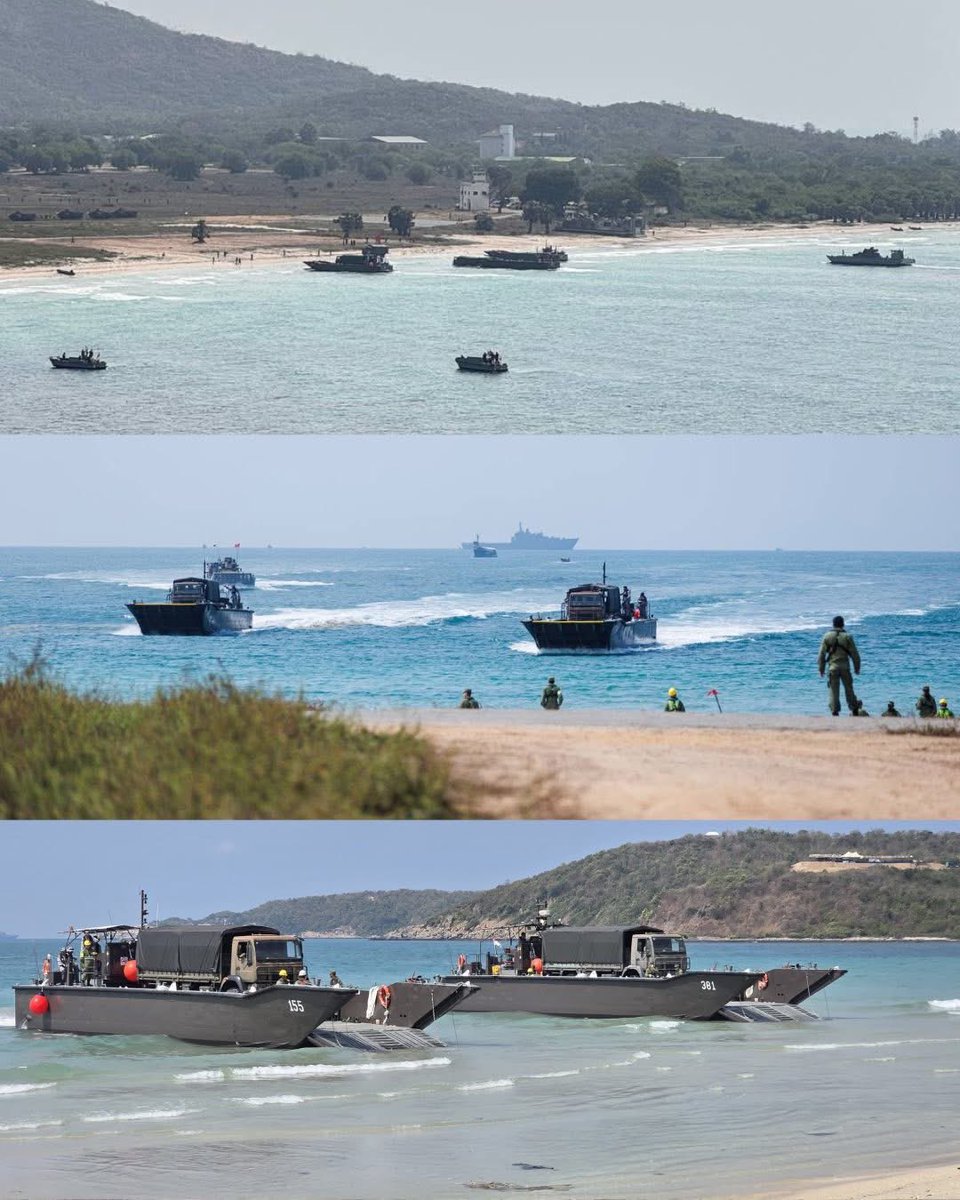
5 Apr 2021

A video by Republic of Singapore Navy officers explaining simply their vision of what the Navy will be like in the near future, to better safeguard Singapore’s waters and interests.
1
5
373

Jun 16
LpDs hnos ✨
escribo esto para alzar la voz y proteger mi trabajo de esas personas a las que esto aplica.
-Las Acciones de las Personas las Describen-
Las acciones de las personas revelan su verdadero carácter, y robar el trabajo ajeno es una de las formas más bajas y claras de mostrar falta de integridad y respeto propio.
He visto a varios “creadores de contenido” tomar mis investigaciones, que conllevan horas de esfuerzo, análisis y material original para publicarlos como si fueran suyos, sin pedir permiso o sin dar el crédito correspondiente.
Eso no es compartir, es robar descaradamente. Peor aún, algunos que visitan mi página constantemente ni me siguen, solo para tomar de mi contenido
y luego hacen lives afirman que “ellos lo investigaron”, cuando una persona verdaderamente derecha diera el credito como encontraron o dieron con esa información.
Su cinismo, su falta de verguenza y su sinverguenza total les impide decir una simple verdad: “Encontré esta información gracias a [ tal persona ]”.
Esa omisión deliberada no solo es deshonesta, es cobardía moral.
A quienes usan mi contenido con permiso o dando crédito visible y respetuoso, Dios les pague. Valoro y respeto profundamente la integridad.
A esos “creadores” que roban de mis investigaciones, y hasta las distorsionan al explicarlas de forma inexacta; su propio juicio está nublado por la obsesión enfermiza de conseguir likes y vistas, les digo claramente: ustedes saben exactamente quiénes son y necesitan aprender a respetar y tener la decencia de parar esas acciones, porque eso revela quiénes son realmente.
Si eres creador de contenido, entenderás la molestia que causa ver tu esfuerzo robado, mal usado y presentado como propio.
Lidiar con el constante hostigamiento de los exlldm en X sin que uno ni los siga, con etiquetas constantes de acoso y tonterías,
ya es bastante molesto. X no es como FB que uno tiene más regulación, lidiar con los amargados me ha hecho más experta en detectar los espíritus y modus operandi de las personas, y en distinguir quién tiene integridad y quién no.
Aprovecho para agradecerles a mis hnos que me siguen, Dios les pague de todo corazón 💖✨
2
27
400


Jun 13
And in two years the current Govt has cut nine ships (4x Frigates, 2x LPDs, 1x MCMV and 2x Tanker) whilst ordering nothing...
Note:
Every single ship and submarine currently under construction in the UK was ordered by the previous Govt.
7
113
Adrei Aldovino 🇵🇭 retweeted

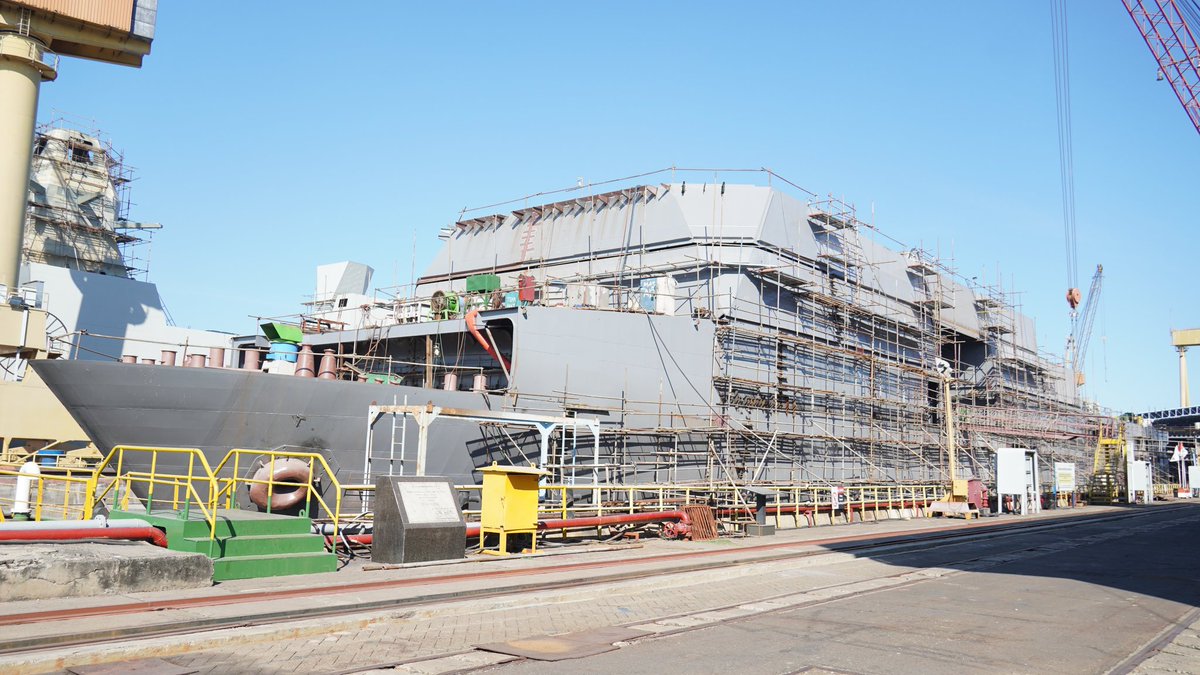
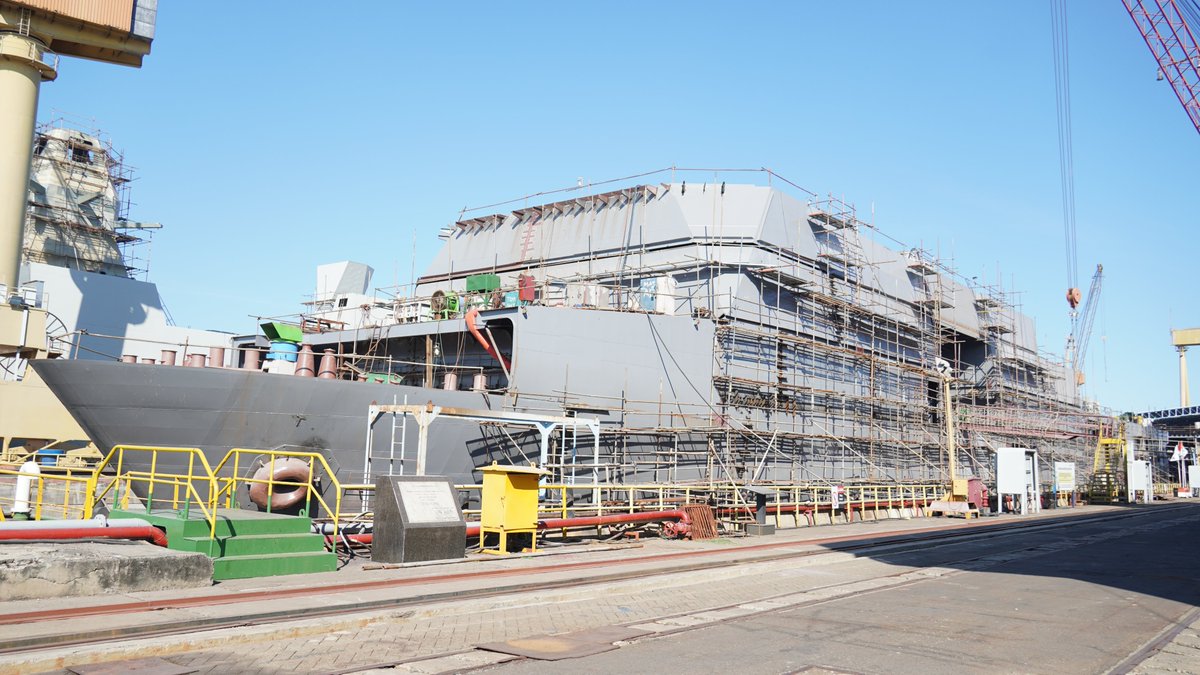
PDM Report: The first hull of the two additional Landing Platform Docks (LPDs) is now gradually taking shape after years of delay.
The Philippine Navy is eagerly awaiting its delivery to help address the current shortage of operational sealift assets.
Jun 12

The Philippine Navy's third LPD will be launched this 30 June following earlier delays and revised contractual milestones. The matter was confirmed by PT PAL's CEO during my visit to the shipbuilder. tinyurl.com/4h2rys7k
2
46
2,664

Jun 12
🩸 AVWS cohort: 140 patients, including 106 (76%) with MPNs and 26 (19%) with LPDs.
📊 Bleeding symptoms occurred in 70%, while clinically significant bleeding was seen in 24%.
⚠️ Major bleeding was far more common in LPDs than MPNs (58% vs 13%).
2
2
312


Jun 11
I counted the nominal ships that could be available for ops. Both Fearless LPDs weren't operational when the Falklands were invaded, but they got Intrepid out as soon as they could. And why not count the RoRos? They and STUFT would have been lifting plenty of the Bde's equipment.
239
Nick Lockwood🇺🇦 retweeted

Jun 10
💥 Volgograd region, LPDS "Krasny Yar" after the visit of SSO drones on June 8, one RVS-5000 tank burned out
2
32
254
9,715