
Feb 4
dile que te lo haga bilingüe, que añada el componente languagecontext ;)
1
2
95

22 Jan 2025
Fiz seguindo algo chamado LanguageContext que encontrei na internet porém tinha uma noção porque no trabalho fazem com Json mas basicamente eu criei um seletor com botões que alteram uma propriedade baseado na linguagem escolhida e guardava em uma variável local
1
2
294

8 Dec 2024
今、Product Huntに出すために、海外文化を考慮しながらのグローバリゼーションしてるけど。
多言語対応、Nodeプロジェクトの場合、「Composer Agent」を使えば、20~30ファイルの修正が、数分~数十分で終わる。
やり方的には難しくなし👇
やり方:
① Cursorひらく
② Ctrl I(Mac: Command I)でComposor Agent開く
③ LanguageContext.tsx作らせる
④ 日本語化したい5ファイル程度のファイルと、LanguageContext.tsxをComposorの参照に入れる(単に、「@<ファイル名>」でOK
⑤以下の要求をする。
==
指定したファイルを多言語対応をしてください。
また、Headerで言語の選択を変えたら、translationが、選択に合わせて変わるようにしてください。
なお、既存のLanguageContextにある定義を勝手に削除しないこと。
日本語の定義を英語約するとき、英語圏の文化的な背景を鑑みて魅力的な表現や通例に倣った表現にすること。
==
なお、おすすめのモデルは、「o1-mini」でふ
9
1,804

24 Aug 2023
The perception and use of the F-word, like many profanities, have evolved significantly over time, influenced by a myriad of factors ranging from societal norms to media consumption. Historically, the F-word was viewed as one of the most offensive words in the English language. Its utterance in public or in print was taboo, and it was a term strictly avoided in polite society.
However, with the rise of film, television, and later, the internet, these barriers began to erode. Movies and TV shows from the late 20th century onwards started to use the F-word more liberally. This not only reflected societal attitudes but also played a role in influencing them. As the word became more commonplace in media and everyday language, many individuals became desensitized to its impact. This doesn't imply that everyone now finds its use acceptable, but it certainly has become less shocking to many than it was in the past.
One of the reasons for the F-word's widespread use is its linguistic versatility. It can function as a noun, verb, adjective, adverb, and even an interjection. This adaptability has allowed it to be used in various contexts, from expressing frustration to emphasizing agreement. Moreover, recent cultural shifts, especially among younger generations, have led to a broader acceptance of swearing in certain contexts. While the F-word is still considered strong language, it's often used colloquially without the intent to offend.
Insights from corpus linguistics, which studies language as it appears in real-world sources, have shown an increase in the use of the F-word in literature and other written forms over the past few decades. This quantitative approach offers a tangible measure of its growing prevalence. However, it's crucial to note that despite its more widespread use, the F-word retains its potency in specific contexts. Using it in formal settings, around children, or in front of those with conservative linguistic views can still be deemed inappropriate and offensive. Additionally, the perception of the F-word can vary based on region, culture, and individual upbringing. In some cultures or regions, its use is more accepted, while in others, it remains highly taboo. In essence, while the F-word's prominence has grown and its shock value may have diminished for some, its appropriateness remains context-dependent. Do your findings confirm these, @lovermob ? Many thanks for your amazing research. #LanguageEvolution #ProfanityShift #MediaInfluence #LinguisticTrends #TabooWords #CulturalShifts #Desensitization #CorpusLinguistics #LanguageContext #ModernLinguistics
24 Aug 2023

Is the F-word getting weaker over time?? A big thanks to @lovermob for sharing findings from his forthcoming article with us! youtube.com/shorts/eSNzuQyTg…
1
9
760
19 Apr 2023
As Sinclair said, 'the study of language is the study of patterns.' Corpus linguistics provides us with the tools to uncover these patterns and understand language use in context. #CorpusLinguistics #LanguagePatterns #LanguageContext
4
12
739

Tomorrow our own Peadar will speak at the @LanguageContext seminar (virtually) in Edinburgh on Scottish #Gaelic in eighteenth-century letter-writing ... just when you thought he had shut up about #McLaganMSS, he's off again!
8 Mar 2022

Join us Friday (11 March) for our next talk from Dr Paedar Ó Muircheartaigh! The talk is on a fascinating bit of linguistic history and you will not want to miss it!

1
1

9 Dec 2021
Check out this exciting talk on Scots and Nynorsk coming up tomorrow - please contact our colleagues @LanguageContext for joining details!
8 Dec 2021
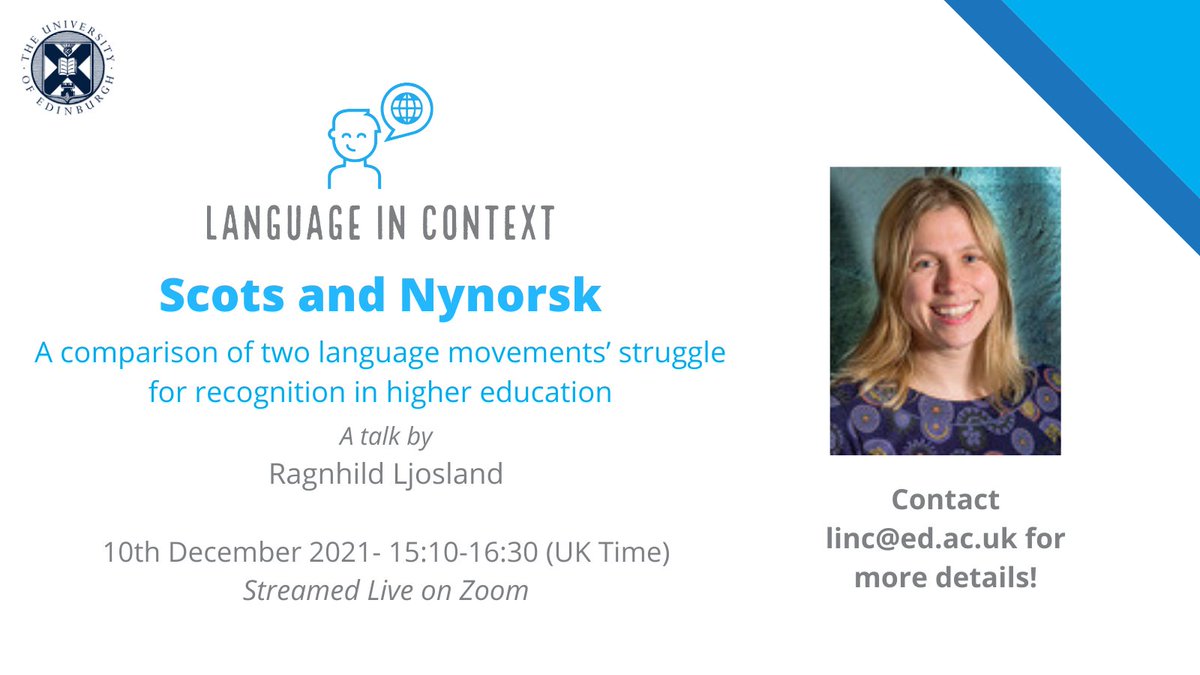
Next up in our stunning seminar series, we have a talk by Ragnhild Ljosland, who will give a talk entitled "Scots and Nynorsk: A comparison of two language movements' struggle for recognition in higher education". Fri. 10 Dec. @ 15:10 on Zoom - contact us for more details! 😊
3

11 May 2021

1
4


23 Oct 2019
34/100 Learned react context API. Built a login page with ThemeContext and LanguageContext. First did with class component, then refactored to functional component with hook and useContext. #100DaysOfCode
4

15 May 2018
It would look nicer and be more searchable this way:
```
const LanguageContext = createRequiredContext('LanguageContext')
// `The ${name}.Consumer ... within a ${name}.Provider ...`
```
3