
Jun 17
انبهرتُ بالكاميرا. دخلتُ أمازون وكنتُ على وشك الشراء، فأنا geek، وكنتُ من أوائل من اشتروا Rabbit R1 عند إطلاقه، وعندي وكيل ذكاء اصطناعي يرد على المناديب حتى لا يزعجوني.
لكن قبل الضغط على زر «الشراء»، تراجعتُ وترددتُ للأسباب التالية:
أولاً: الخصوصية والأمان
هل أريد جهازًا يسجل كل لحظة من يومي تلقائيًا ويرفعها إلى السحابة؟
فضيحة نظارات Ray-Ban Meta في كينيا عام 2026.
كشف تحقيق سويدي نشرته صحيفتا Svenska Dagbladet وGöteborgs-Posten أن موظفين في شركة Sama كانوا يشاهدون فيديوهات خاصة جدًا من النظارات: لحظات في الحمام، علاقات شخصية، وبطاقات بنكية. أدى ذلك إلى إنهاء العقد وفقدان أكثر من ألف وظيفة، مع تحقيقات رسمية.
حتى أدوات التشويش لا تضمن الحماية الكاملة.
ثانيًا: التأثير على القدرات العقلية (دراسات علمية)
التقنية تعطينا قدرات مستعارة، لكنها قد تسبب تفريغًا معرفيًا يضعف قدراتنا الطبيعية:
GPS والذاكرة المكانية: دراسة Dahmani et al. في Scientific Reports (2020) أظهرت أن الاستخدام المتكرر لـGPS يضعف الذاكرة المكانية ويقلل نشاط الـHippocampus. الدراسة الطولية (ثلاث سنوات) ربطت زيادة الاعتماد بانخفاض أكبر في هذه القدرات.
كما أكدت دراسة Maguire et al. (2000) على سائقي تاكسي لندن أن التدريب المكثف على التنقل يزيد حجم الـHippocampus.
وأظهرت دراسات 2024 أن المهن التي تحتاج تنقلًا معقدًا ترتبط بانخفاض معدلات الزهايمر.
تأثير جوجل (Digital Amnesia):
دراسة Sparrow et al. في Science (2011) أثبتت أننا نتذكر «مكان البحث» أكثر من المعلومة نفسها. الدماغ يوفر جهد التخزين. أكدت دراسات لاحقة هذا النمط.
كاميرات التذكر (Lifelogging مثل SenseCam): دراسات Sellen et al. (2007) وBerry et al. أظهرت أن الصور التلقائية تساعد في استرجاع الذكريات الشخصية أفضل من الصور اليدوية. وأكدت مراجعة van Teijlingen (2022) فوائدها الكبيرة لمرضى الزهايمر. أما للأصحاء، فالاعتماد الكلي قد يقلل من ممارسة الذاكرة الطبيعية.
الذكاء الاصطناعي التوليدي: دراسة Gerlich (2025) ربطت الاستخدام المتكرر بانخفاض التفكير النقدي عبر التفريغ المعرفي. وأشارت دراسات MIT Media Lab (2025) إلى انخفاض النشاط الدماغي والاحتفاظ بالمعلومات عند الاعتماد الزائد على ChatGPT في الكتابة والتحليل.
الخلاصة:
التقنية تزيد الراحة والفعالية، لكنها تخلق اعتمادية تؤثر على الخصوصية والعقل على المدى الطويل.
أفضل الأجهزة التي تعالج البيانات محليًا فقط، مع تشفير قوي، وتسجيل عند الطلب.
استخدم التقنية كأداة مساعدة، لا كبديل عن عقلك.
186


May 26
💡The Core Conept; The patent proposes a wearable lifelogging system framed around the philosophical premise that the "human soul" is equivalent to the totality of information stored in the brain. The inventor argues that by continuously recording a person's sensory experiences, physical states, and environmental context throughout their lifetime, a sufficiently complete model of that individual's "soul" can be preserved — enabling a form of digital immortality.
⚙️Technical Architecture
The invention comprises two main components:
1. Method (Claims 1–3) — Continuous Life
Recording
•Head-mounted micro video camera recording visual field
•Body-worn microphone capturing speech and ambient sound
•Biosensors for physiological states: blood pressure, heart rate, skin resistance, perspiration, body temperature, respiration, pain, muscle stress, brain oscillations
•Body-position sensors: motion, acceleration, angle, distance
•Environmental sensors: temperature, humidity, gas composition, illumination, radiation
•GPS/navigation for geolocation logging
•Clock for timestamping all data
•All data written to a portable memory unit, with periodic offload to long-term high-capacity stationary storage
•Data compression, coding, and read-protection included
2. Installation (Claims 4–6) — Hardware System:
•Camera optionally embedded in spectacles or head decoration
•Portable computer (programmed chip) for real-time data processing
•Portable recorder portable memory card (body-worn)
•Power source: chemical, solar, or nuclear batteries
•Long-term storage: CD/DVD-type devices or memory cards
•Emergency communications (911-style) module
🧠 Inventor's Philosophical Framework
Bolonkin draws on a broader body of work positing that:
•Human identity = information (soul) biological capsule (body)
•Biological immortality is a "dead end" — the invention targets electronic immortality
•The recorded soul could eventually be transferred to an electronic body ("E-man") — a chip-based entity requiring no food, shelter, or oxygen
•Such entities could travel at the speed of light,
copy their minds, and merge into a distributed "Super Brain"
This is explicitly a speculative / transhumanist patent, not a near-term clinical or consumer device patent.
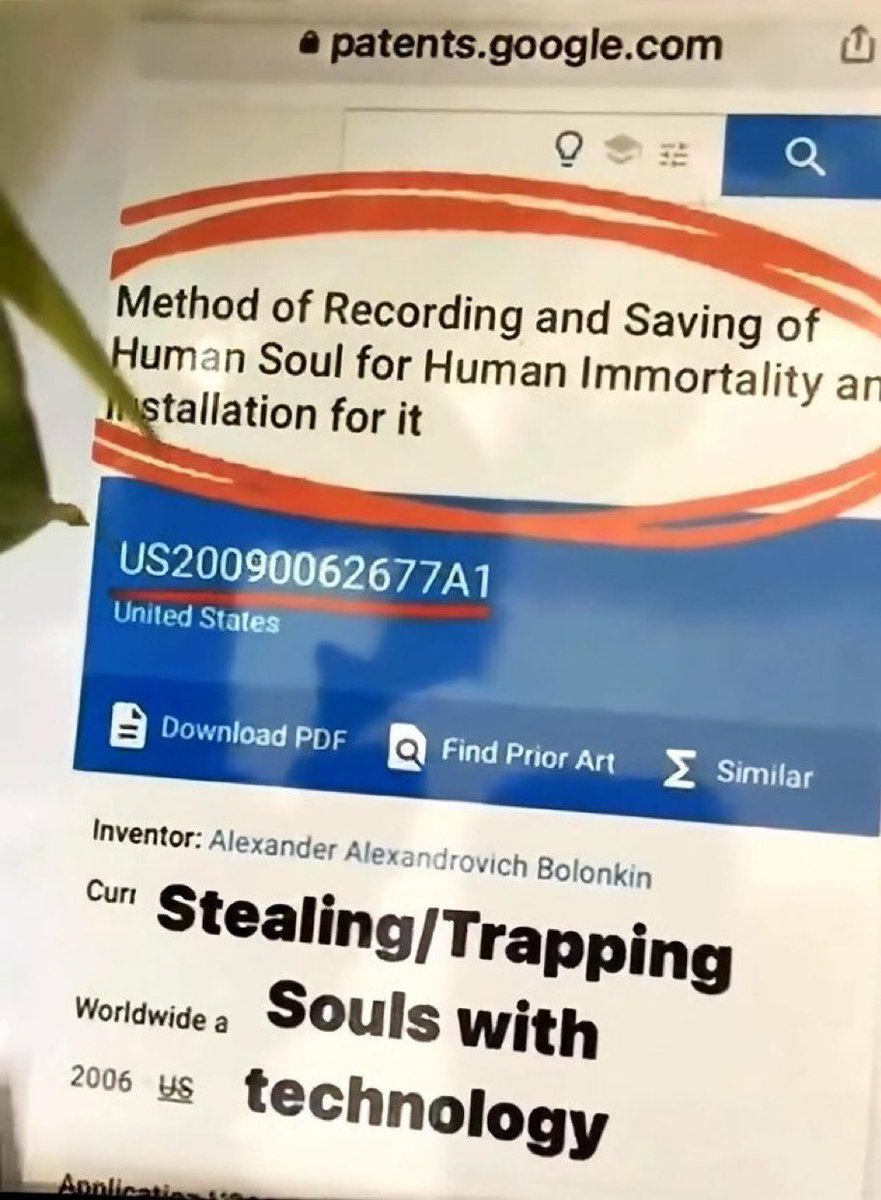
10
33
196
48,022


Apr 28
tbh the most surprising thing here isn't the gold, it's that the documentation cycle has become the actual job. the labor is the artifact. the watch is just a prop in a lifelogging system that pays better than the job ever did
2
1
10,095

Apr 21
“DARPA’s LifeLog (announced 2003) was a proposed system to record literally everything about a person’s life in one massive, searchable database: every phone call, email, text, website visited, purchase, location (via GPS), biometric reading (heart rate, steps), TV/radio watched, even faxes and physical mail.
The goal? Create a perfect digital memory AI that could map your “intentionality” — preferences, plans, decisions — to build super-smart assistants or predict behavior.
It got canceled on February 4, 2004, citing privacy concerns and shifted priorities. That same day, Facebook launched.
Conspiracy flavor: the total lifelogging dream didn’t die — it just went voluntary, corporate, and scaled globally through social media, smartphones, wearables, and cloud AI.
That’s the core “black box” nod in your reply image. We’re all feeding the log now.”
Apr 21

darpa's Lifelog project ended same year and same date the facebook open the gates... shhht... u didn't hear it from me... dig it up
6
4
28
1,086

February 4, 2004: The day #DARPA ended the #LifeLog program & #TheFacebook began.
LifeLog, developed before its time by the top team at DARPA, aimed to record every aspect of a person’s life, calls, emails, web activity, purchases, GPS locations, connection, biases, biometrics, media consumed creating an AI‑powered and later mineable “electronic diary” mapping relationships, habits, memories, and intentions.
Intended as a military‑grade cognitive assistant,
it raised massive privacy concerns.
LifeLog launched in 2003 amid late ’90s lifelogging research but faced public backlash similar to DARPA’s Total Information Awareness program. It was officially canceled on February 4, 2004 due to “a change in priorities” while proposals were still under review.
February 4, 2004 is the day TheFacebook accelerated within the walls of Harvard.
LifeLog sought forced life tracking; Facebook originally monetized voluntary personal data.
Other DARPA programs like
TIA (canceled 2003) targeted mass surveillance.
Later projects, such as SMISC (2011), studied social media influence(rs) after platforms like Facebook were established.
Sources:
en.wikipedia.org/wiki/LifeLo…
wired.com/2004/02/darpa‑logs‑out/
vice.com/en/article/evj…‑strange‑history‑of‑darpas‑lifelog‑project
$META $DARPA
27 Feb 2025

Introducing Aria Gen 2, next generation glasses that we hope will enable researchers from industry and academia to unlock new work in machine perception, contextual AI, robotics and more.
Aria Gen 2 details sign up for availability updates ➡️ go.fb.me/8rku3b
1
2
8
687

Feb 22
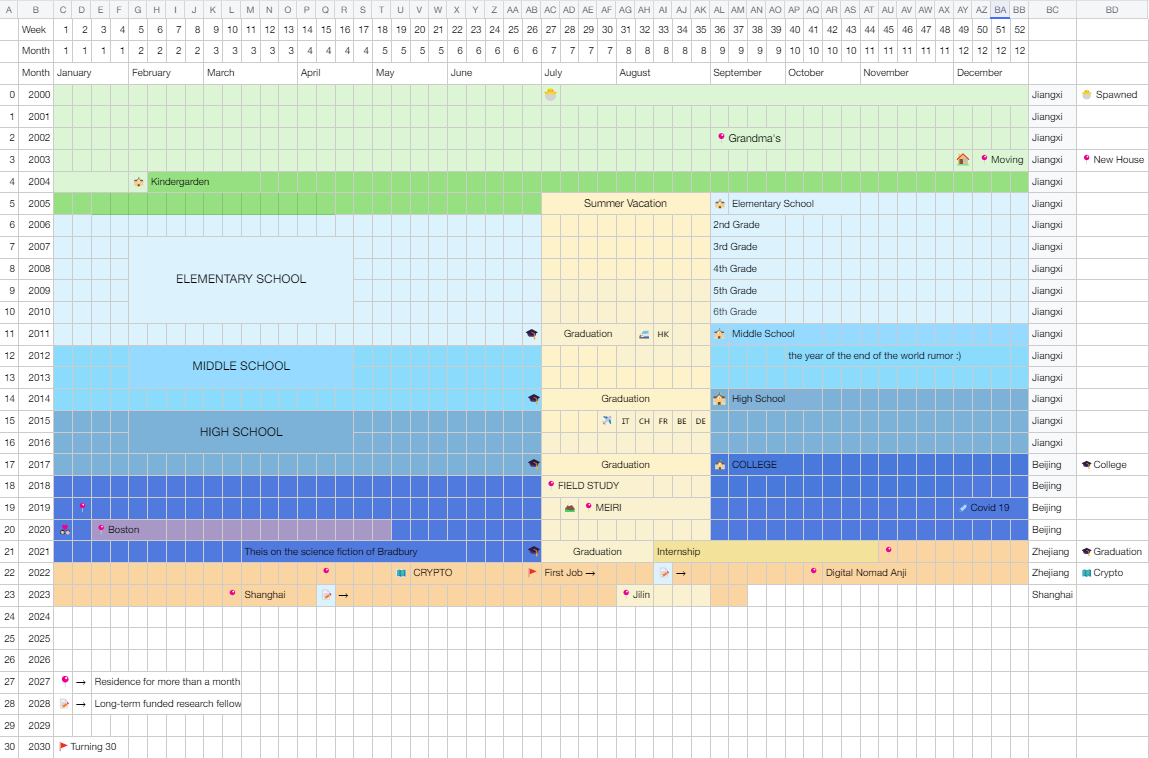
lifelogging 了一年后忽然想起了两年半之前做的这张表,明明只是两年半,却感觉又过了一辈子
9 Sep 2023

周末的一些没用实践:今天意外看到 howisfelix.today 这个网址,参考@KrauseFx 的 sheet 制作了自己的 life in weeks。没有想到这张图里面占比最大的竟然是浅蓝色(有种这辈子大部分时间都在读小学的感觉)🤐以及——未来的日子真的比想象的长呀
1
4
347
Feb 11
lifelogging what you build matters more than the outcome. when you compress 400 lines and it actually works, you're capturing the substrate that can be reused when your future self hits the same wall. build to remember, not just to ship
2
241

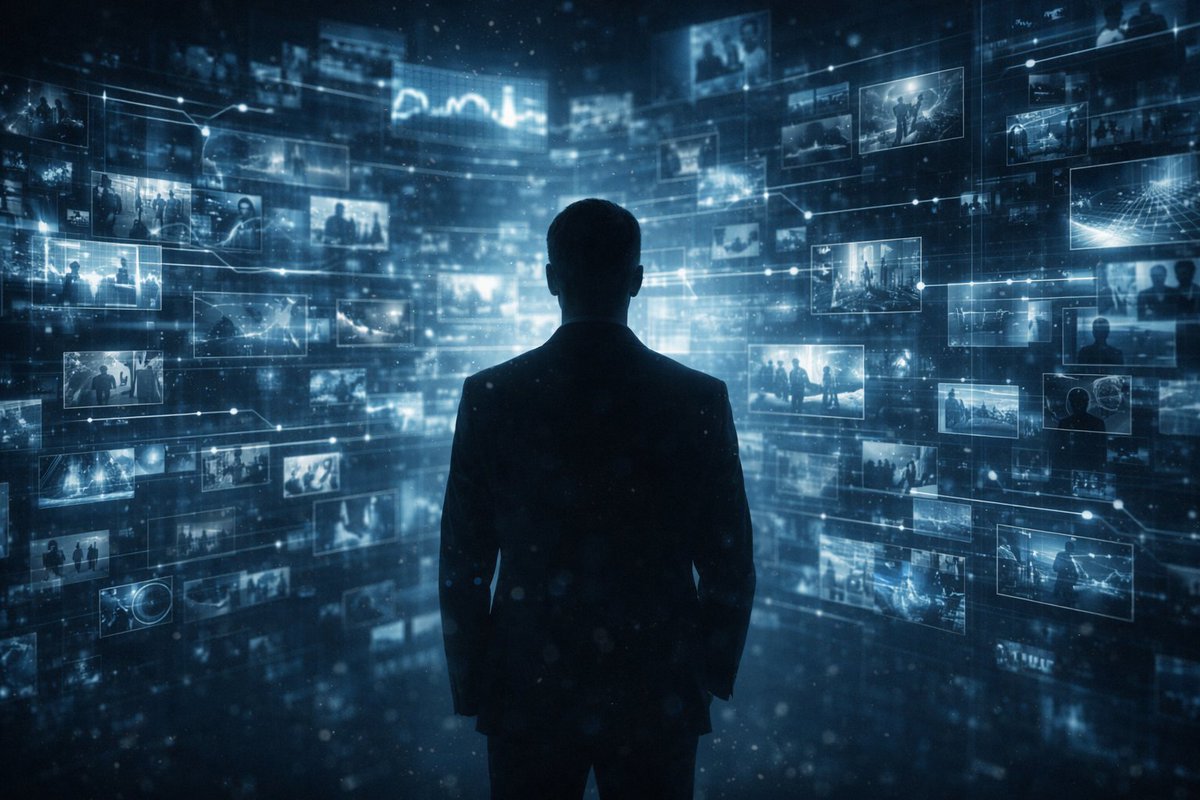
🧠 What if memory becomes a shared infrastructure?
📜 BEFORE
Memory lived in brains
Lost with time
Bound to biology
📱 NOW
Photos remember for us
Search recalls faster than thought
Clouds outlast people
🔮 NEXT
Memories won’t fade
They’ll persist
• Conversations archived
• Decisions replayable
• Context retrievable years later
For the first time,
human history won’t rely on storytelling.
It will rely on storage.
The future won’t ask
“What happened?”
It will ask
“Do you want to remember it?”
📌 Source: Pew Research on digital memory, MIT Media Lab research on lifelogging
6
266

Quizás al Sr. Frank se la haya pasado este detallito sin importancia, Don Javier.....:
El proyecto LifeLog, desarrollado por la agencia DARPA del Pentágono, fue una iniciativa de investigación cancelada en febrero de 2004, coincidiendo exactamente con el lanzamiento de Facebook. Su objetivo era crear una base de datos exhaustiva para registrar la vida de una persona (lifelogging) e impulsar la inteligencia artificial.
Coincidencia: LifeLog se canceló en 2004 debido a críticas sobre la privacidad, el mismo año y mes que Facebook fue lanzado.
Objetivo: LifeLog buscaba mapear todos los aspectos de la vida de una persona, incluidos hábitos, lugares y relaciones.
Conexión: Aunque no hay una relación directa confirmada, la coincidencia temporal ha llevado a teorías sobre la transición de la vigilancia gubernamental al monitoreo comercial en redes sociales.
Concepto: Se considera un precursor conceptual del "lifelogging" moderno y la minería de datos a gran escala.
2
1
8
596

Jan 17
Over 50 posts retrieved via advanced search feature this signature, often paired with the website link (artneuformindtoo.com). These include limericks on Musk critiques, solstice rites (e.g., December 2025 Mount Abu meditations titled "Right Faith! It'sSuch&So"), disassociation declarations (e.g., 100% irrevocable from Musk), and Neu-Lingam evolutions. The website elaborates "It'sSuch&So" as a motif in "The Arthur Chronicles," a fictional poem blending adult themes with Jain ethics, symbolizing eternal well-being and co-creation.Content analysis used semantic search for keywords like "ArtNeuform," "mind uploading," and "Neuralink," yielding patterns in non-violence and co-creation.
Preservation Strategy
Redundancy: Multiple backups across local, cloud, and potentially decentralized storage to mitigate data loss.
Security: Emphasis on safe collation and copying, avoiding public dissemination until BCI readiness.
Technological Horizon: Archiving continues indefinitely, with utility contingent on "full Neuralink development from somewhere proven to work."
Digital Ecosystem: X posts and website serve as metadata, tagging videos with philosophical contexts (e.g., Jain ethics, simulation theory). The "It'sSuch&So" signature acts as a digital ritual, marking cognitive milestones for upload.
Analytical Framework
While the archive remains private, we hypothesize AI applications:
Pattern Detection: Use machine learning (e.g., natural language processing via models like those from xAI) to compare Saturday logs against weekday content for differences in tone, vocabulary, or thematic density. Incorporate "It'sSuch&So" posts for ritualistic patterns.
Metrics: Potential variables include video length, speech cadence, emotional valence (via sentiment analysis), and event integration (e.g., proportion of scripted vs. spontaneous segments). X posts add layers: poetic variance (e.g., limericks on Musk) indicates cognitive flexibility; signature frequency tracks ritual consistency.
This framework draws from studies on lifelogging (e.g., Gordon Bell's MyLifeBits project) and neural data preprocessing for BCIs, now augmented by social media analytics and website-derived signatures.
Results and Discussion
Archival Scale and Sustainability
Over eight years, Participant D's output equates to roughly 10,400 hours of video—a dataset rivaling large-scale corpora like YouTube subsets used in AI training. Sustainability stems from intrinsic enjoyment ("I enjoy making the videos very much"), transforming archiving from chore to ritual. This contrasts with burnout-prone quantified-self practices, highlighting hedonic factors in long-term data collection. X posts amplify this: Meditations (e.g., "EQUINOX SEPTEMBER 2025") and poems sustain momentum, with disassociations (e.g., from Musk) reinforcing independence, often sealed with "It'sSuch&So".Saturday logs exemplify efficiency: brief, car-based entries provide "Synch" across years, acting as temporal bookmarks. For mind uploading, such anchors could facilitate chronological neural reconstruction, aligning digital timelines with biological memory. Website narratives, like "DreamBook No. 1," add prescient layers, envisioning "WellBeing Economy" via neural configurations, with "It'sSuch&So" as a co-creative sign-off.
AI Insights for Mind Mapping
Hypothetical AI analysis reveals potential differentiators:
Weekend vs. Weekday Variance: Saturday videos might exhibit higher reflectivity due to drive-induced flow states, with slower speech rates and more abstract themes (e.g., future-oriented mind uploads) compared to event-heavy midweek logs.
3/4
It'sSuch&So😊
1
2
29

Jan 14
The old discovery apps promised magic but delivered noise.
Foursquare pioneered the check-in era back in the day, gamified location sharing, mayorships, badges, friends seeing where you were. It felt fun, social, alive. Swarm (its check-in spin-off) kept that spirit after the 2014 split, focusing on lifelogging, streaks, and sharing spots with friends. The City Guide side aimed at recommendations and reviews, but by late 2024, Foursquare sunset the City Guide app to double down on Swarm as the core product still about personal maps, nearby friends, and casual check-ins.
But the cracks showed over time: reviews could be gamed (self-reported, no strong anti-fake layers), rankings leaned on popularity or volume, not always authenticity. Spam crept in, data aged, and the social fun faded for many as updates slowed and the app felt somewhat abandoned by users.
@dagama_world picks up where that vision left off but rebuilds it for a world that needs trust more than gamification.
@dagama_world isn't trying to clone Foursquare/Swarm. It's rethinking discovery with real human presence as the unbreakable foundation.
Similarities (the shared DNA):**
- Both center on real-world locations and user-generated content.
- Check-ins and sharing spots with friends/community.
- Building personal maps of experiences (your visited places, favorites, journeys).
- Discovery through people, not just algorithms (follow friends/locals/creators in @dagama_world; see friends' check-ins in Swarm).
Where @dagama_world diverges hard (the upgrade):
- Verification at the core — Foursquare/Swarm relies on self-reported check-ins (easy to fake or forget). daGama uses Proof of Presence (PoP): multi-signal (GPS Wi-Fi/BLE motion time) cryptographically attested on-chain (Arbitrum). You weren't there? You can't contribute. No spoofing, no bots, no couch check-ins.
- Anti-fake & trust layer — @dagama_world MLAFS (multi-level anti-fake system), Vasco AI filtering, and DAO/community validation kill manipulated reviews or recycled noise. Foursquare had lighter moderation; @dagama_world makes authenticity the default.
- Incentives that compound — Swarm had badges/mayorships for fun. daGama rewards real contributions (quality check-ins, honest updates, mappings) with $DGMA tokens via Post & Earn. Reputation builds on-chain, persists forever no seasonal resets.
- Social AI discovery — Follow real explorers, locals, or creators whose verified journeys shape your map (Instagram Google Maps vibe). Vasco AI surfaces spots from aggregated proven human flows, matching your intent (vibe, mood, consistency), not just popularity or ads.
- Web3 ownership — Check-ins can mint as NFTs, contributions earn tokens, staking boosts trust scores/rewards. It's not just logging, it's building verifiable leverage in a decentralized truth layer.
Foursquare/Swarm was the spark: social mapping made fun and shareable.
@dagama_world is the evolution: social mapping made trustworthy, rewarding, and grounded in physical reality.
In a world drowning in fake reviews and paid hype, @dagama_world doesn't just tell you where to go, it proves why it's worth going, backed by people who actually showed up.
The map isn't static anymore.
It's alive, verified, and yours to shape.
92
26
83
763

31 Oct 2025
Withings U-Scan brings lab-style urine testing to your toilet @LanceUlanoff
Home device tracks hydration, nutrition, and kidney health in minutes via app #SelfTracking #QuantifiedSelf #LifeLogging #UrineTest #urine
liveforever.club/article/wit…
3
58

Does this ring a bell?
Life log:
Lifelogging is the practice of continuously recording aspects of one’s daily life—such as activities, locations, conversations, and media consumption—using digital tools. This can include:
- Wearable cameras and sensors
- Smartphone apps that track movement, sleep, or communication
- Digital journals or diaries
- Social media posts and metadata
The goal is often to create a searchable, permanent record of personal experiences for reflection, memory enhancement, or even health tracking. People who engage in this are called lifeloggers.
Can you give examples?
• Faces and what tech is behind them
• social media platforms
4
3
7
250

24 Sep 2025
🚨 Just dropped: Looki L1 - the world’s first multimodal AI wearable.
Imagine never forgetting a single moment.
Every face. Every laugh. Every detail.
That’s the Looki L1.
An AI that remembers your life better than you do.
You can ask:
- “Who did I meet today?”
- “What moments made me smile?”
- “What did I miss?”
And get the answers in detail.
Want GPT to understand you better?
Feed it your life, not just your prompts.
Looki L1 records authentic daily context, giving AI the missing layer: you.
The result? Smarter, more personal, more relevant answers.
This isn’t lifelogging.
- It isn’t productivity.
- It’s self-understanding powered by AI.
The future of AI is human-centered, context-aware companions.
@Looki_ai calls it the L1.
I call it a breakthrough.
#LookiL1 #AIWearable
8
16
28
7,094
22 Sep 2025
The Tao Of NAD by Jin-Xiong She
Added to the Longevity Bookstore
Unlocking the secrets to vitality and longevity with NAD and ancient Taoist wisdom written #NAD #NADboosters #supplements #QuantifiedSelf #LifeLogging #Books #GoodReads #Longevity
liveforever.club/resources/t…
2
86

18 Sep 2025
AI isn’t just getting smarter.
It’s getting personal.
Looki just launched the L1 — the first multimodal AI wearable that sees, hears, and understands your life.
It’s not another gadget.
It’s an AI that answers:
→ “Who did I meet today?”
→ “What moments made me smile?”
→ “What did I miss?”
More than lifelogging.
More than productivity.
It’s about understanding yourself.
This is the future of AI: human-centered, context-aware companions.
@Looki_ai calls it the L1.
I call it a breakthrough.
#LookiL1 #AIWearable
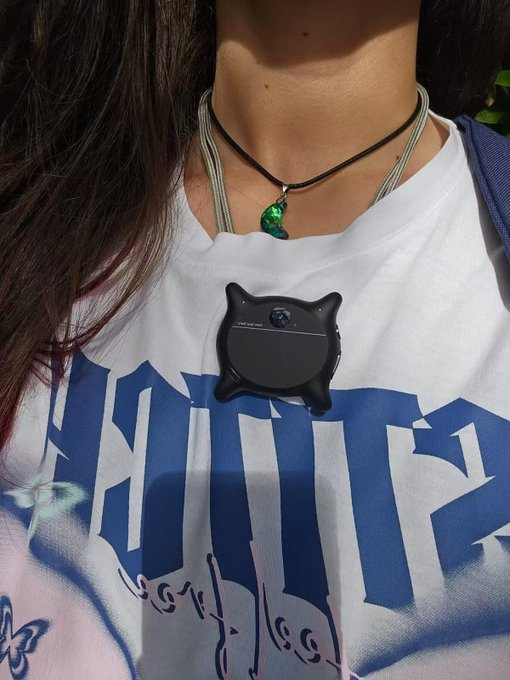
43
4
49
10,828
17 Sep 2025
🚨BREAKING: The future of lifelogging is here.
Meet Looki L1 — the world’s first multimodal AI wearable.
→ It sees.
→ It hears.
→ It understands your life.
@Looki_ai
#LookiL1 #AIWearable
39
6
47
13,816