
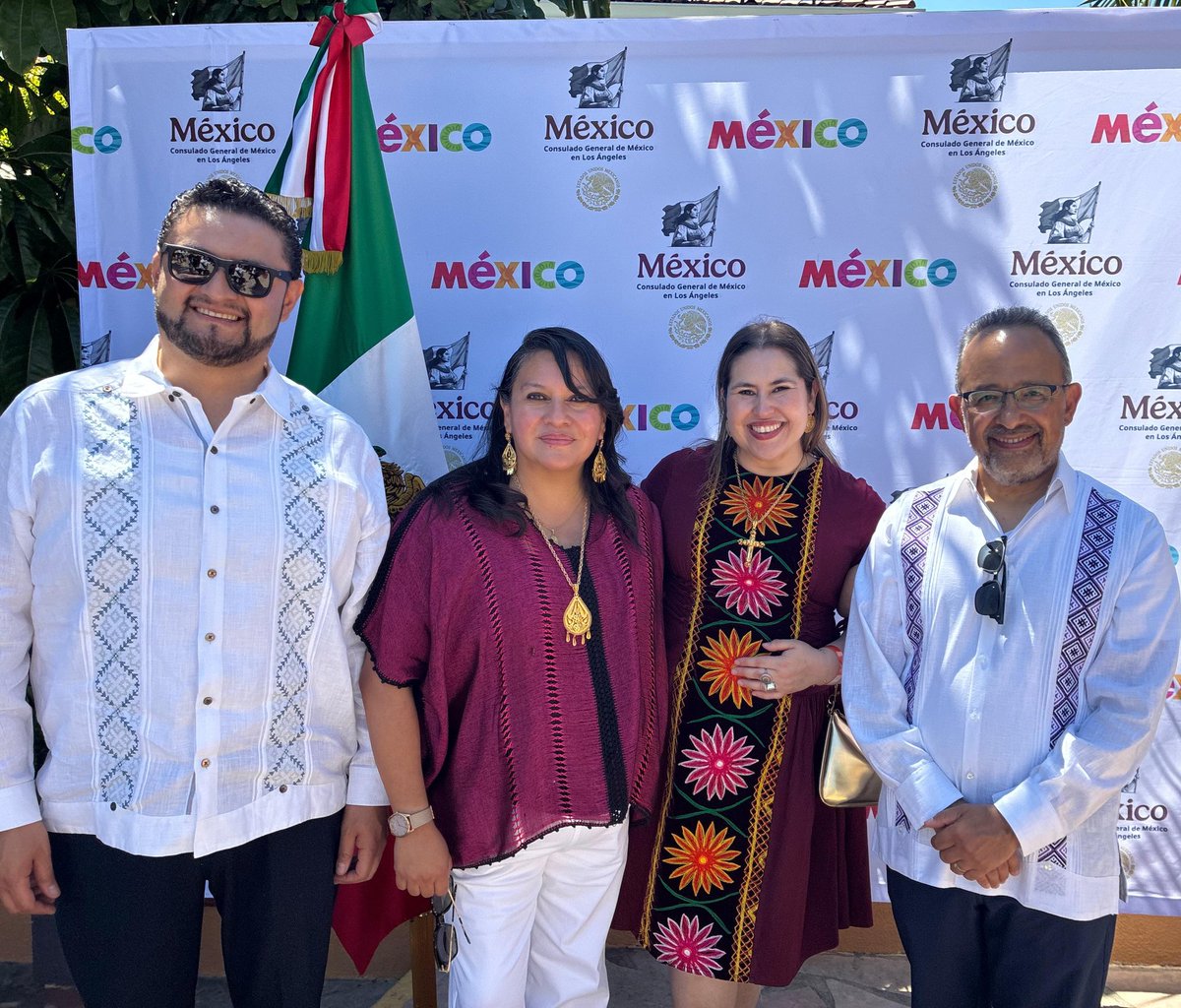
Gracias MAOF 🎶💞🇲🇽🫶🏻 about last night! Me encanto cantarles y honrar a los destacados de la organización!!

4


#BecasAlas es el programa regional de becas impulsado por los consulados 🇲🇽 @ConsulMexLan, @ConsulmexStaAna, @ConsulMexFresno. @ConsulMexOxn, con apoyo del @IME_SRE y de @MAOF (en calidad de agente fiscal).
Ayúdanos a respaldar a jóvenes. Entérate aquí: maof.org/becasalas
7
17
450
Hoy se abre la subasta silenciosa para apoyar el programa #BecasAlas 🎓, iniciativa que apoya a estudiantes latinos para ingresar a la universidad.
Gracias a @MAOF y a los artistas y aliados que donaron piezas para esta subasta.
🗓️Cierra el 5 junio
🖼️🎨 zeffy.com/en-US/ticketing/be…

5
9
311

May 25
Fadi Swidan - Israeli Arab Director of MAOF Business Incubator an Hybrid Accelerator.
His venture is directly funded by the Israeli Ministry of Economy and Ministry of Equality to encourage Israeli Arab tech entrepreneurship.
Israel sucks at “apartheid.”
2
5
32
455


May 17

2
6
262

Isn't that like the points . They are supposed to be attached to each guy they are draw association to different cards easily recognizable i knew Sylus mc dress immediately same with Zayne’s cuz its MaoF same as how phrases are reused in different cards to emphasize that LI
1
2
390

Apr 16
🌽🌽 Moaf: I hate kanye west
🌽🌽 fir: I agree
🌽🌽 Moaf: chat agree with me
🌽🌽 Chat: moaf your the goat i love you so much moaf maof marry me
1
4
168

Apr 11
MAOF AMI TANVIE.N TODOAD ALAS NOSHE S TE DEDIKO UNA ADEMAS TE AMO DESDE KE NADI
1
1
13




Mar 19
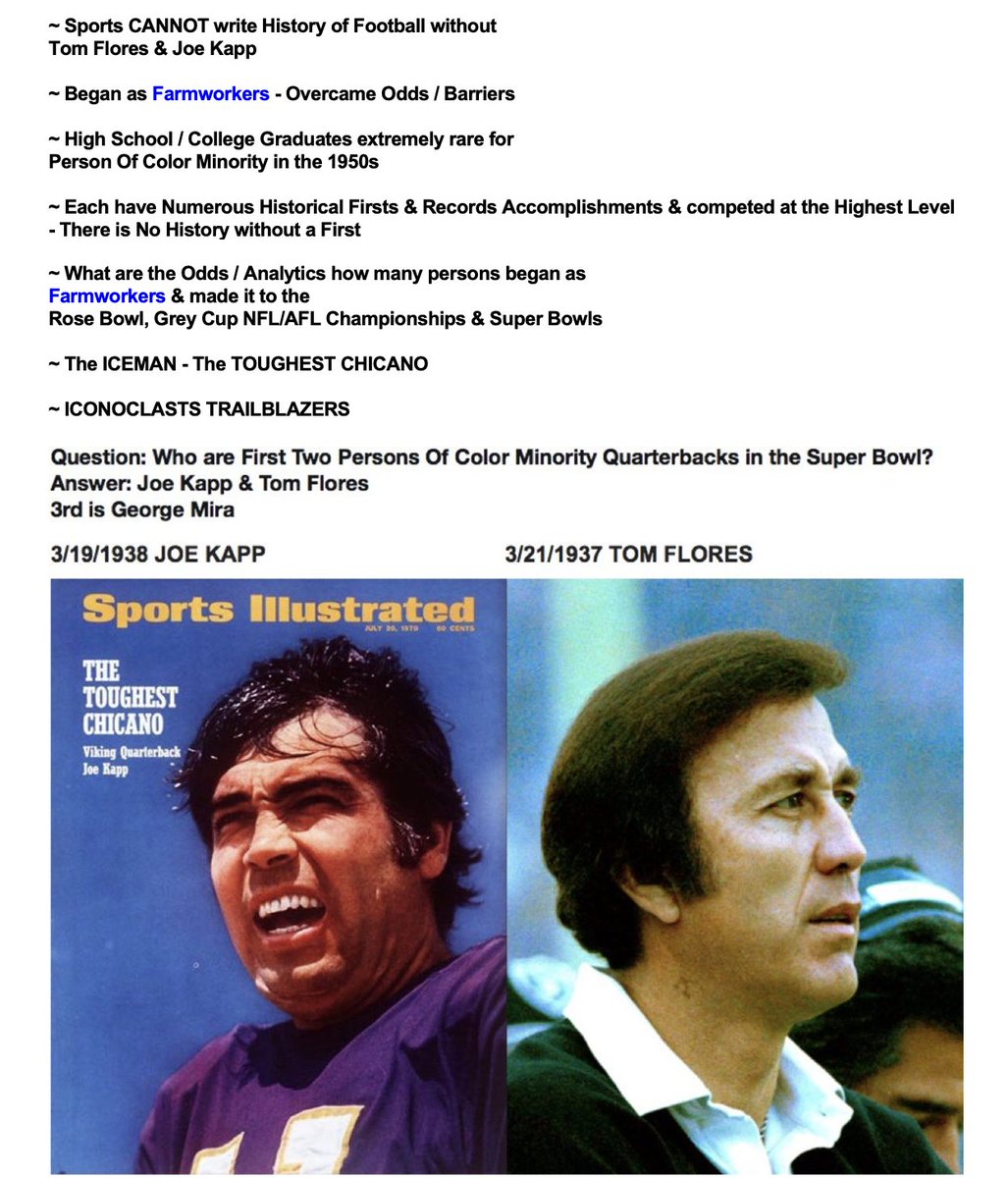
Cultural Sports Legends 🧵↕️
~ HOF Tom Flores 3/21/37
~ Joe Kapp 3/19/38 - 5/8/23
What are the Odds/Analytics how many began as Farmworkers - Overcame Odds/Barriers - ICONOCLASTS TRAILBLAZERS
~ CANNOT write Football History w/out them
~Numerous Firsts
#HappyBirthday Birthday
1
16
20
1,310

Mar 8
𝗧𝗵𝗲 𝗠𝗲𝘀𝘀𝗶𝗮𝗻𝗶𝗰 𝗘𝘂𝗿𝗮𝘀𝗶𝗮𝗻𝗶𝘀𝘁 𝗭𝗶𝗼𝗻𝗶𝘀𝘁 𝗔𝘅𝗶𝘀
Conventional geopolitical analysis frequently posits that Russian and Israeli state interests operate on strategically divergent paths, separated by regional alliances and Israel’s foundational reliance on the United States. However, an objective examination of institutional partnerships, financial flows, and historical intelligence overlaps indicates a structurally integrated network connecting Russian Eurasianist ideologues, Israeli political strategists, and diaspora organizations.
This network operated concurrently with the diplomatic alignment between Russian President Vladimir Putin and Israeli Prime Minister Benjamin Netanyahu. Utilizing historical intelligence precedents and philanthropic infrastructure, this axis has systematically advocated for an Israeli foreign policy shift toward a multipolar Eurasian bloc.
PART I: HISTORICAL PRECEDENTS IN INTELLIGENCE AND STATE-BUILDING
To analyze the operational synchronicity between Moscow and Jerusalem, it is necessary to examine the historical foundations of the Israeli intelligence community. Early Zionist leaders, including Ber Borochov, David Ben-Gurion, and Berl Katznelson, operated within ideological frameworks significantly influenced by Eastern European socialist models.
This structural affinity extended to the establishment of early Israeli intelligence agencies, the Shai, the Mossad, and the Shin Bet. Founders of the Israeli intelligence apparatus, such as Isser Harel (born in Vitebsk), Reuven Shiloah, and Boris Guriel, utilized organizational models similar to Soviet intelligence entities (the VChK, NKVD, and KGB). Operational doctrines such as compartmentalization (konspiratsia), targeted kinetic operations, and the use of deep-cover assets were implemented in Tel Aviv. Furthermore, the Mossad’s sayanim network, utilizing diaspora volunteers for logistical support, parallels the Soviet intelligence model of relying on non-official, ideologically aligned assets.
Historical ties between the respective state apparatuses extend to 1948, when Joseph Stalin authorized Operation Balak, a massive covert arms transfer from Czechoslovakia to the Haganah. This historical event is frequently cited within contemporary Eurasianist discourse as the Soviet Midwife narrative, used to establish a foundational strategic relationship and a conceptual strategic debt between Moscow and Jerusalem.
Throughout the Cold War and post-Soviet eras, these shared operational methodologies facilitated backchannel intelligence deconfliction. Documented interactions involving figures such as Israeli operative Rafael Eitan, East German Stasi chief Markus Wolf, KGB chairman Viktor Chebrikov, and double-agent Shabtai Kalmanovich indicate that intelligence coordination between the respective blocs was consistently maintained.
PART II: THE IDEOLOGICAL FRAMEWORK OF EURASIANISM
The contemporary ideological basis for this network is outlined in Russian political philosopher Alexander Dugin’s text, The Jews and Eurasia. Dugin establishes a two-fold model of Jewish history to conceptualize a geopolitical alliance.
Dugin critiques what he terms the Occidentalist or Talmudic demographic, associating it with Western liberal democracy, market capitalism, and the Atlanticist geopolitical order. In contrast, he supports an Orientalist or Eurasianist Jewish model, characterized by Hasidic mysticism, collectivism, and historical participation in revolutionary Bolshevism.
Within this framework, Dugin argues that the Jewish role in Bolshevism should be viewed not as a destructive force against Imperial Russia, but as a transformative geopolitical energy. He advocates for redirecting this energy toward the establishment of a Great Eurasian Empire, proposing a supra-national entity where the Russian state and aligned Jewish partners coordinate against Western hegemony.
PART III: CAPITAL FLOWS AND INSTITUTIONAL BRIDGES
The operational infrastructure of this network is supported by significant capital allocations from Russian and Russian-Israeli business magnates. These financial flows frequently utilize philanthropic organizations to fund religious, academic, and media institutions, providing structural support for the Putin-Netanyahu diplomatic alignment.
Key figures and institutions in this financial network include:
Lev Leviev & Roman Abramovich: Co-founders of the Federation of Jewish Communities of Russia (FJCR/FEOR), an organization established with the support of the Putin administration, which elevated Berel Lazar to the position of Chief Rabbi of Russia. Leviev’s Ohr Avner Foundation and Abramovich's philanthropic entities provide substantial funding for Chabad infrastructure and Israeli settlement projects.
Mikhael Mirilashvili: Controlling shareholder of Israel’s Channel 14, a media outlet highly supportive of the Netanyahu administration, and a primary patron of the Genesis Philanthropy Group. Genesis funds academic centers, such as the Sefer Center in Moscow, while Channel 14 provides a platform for commentators advocating for multipolarity.
Konstantin Malofeev: Funder of the St. Basil Foundation, Tsargrad TV, and the Katehon think tank, which serve as primary distribution channels for Duginist ideology.
Arkady Gaydamak: Funder of the KEROOR religious organization and various right-wing Israeli political factions.
Mikhail Gagloev: Former CEO of Tempbank (sanctioned by the U.S. in 2014), documented as a financial sponsor of Dugin's International Eurasian Movement.
Arkady Rotenberg: Chairman of the Enlightenment Publishing House, providing overarching structural support to Russian state-aligned educational and ideological publishing.
This financial infrastructure supports entities such as the AGRAF publishing house, which distributes texts by Yakov Bromberg and Lev Karsavin, synthesizing Bolshevism and Zionism. The ideological coordination is formalized at events such as the 2011 Tikkoun Olam Center conference in Nice, France. Participants including Dugin, Israeli activist Avigdor Eskin, Christian Bouchet, Rav Mordekhai Chriqui, and Rav Leo Guez discussed a Chasidic-Marxist framework, redefining the concept of Tikkun Olam as a geopolitical mandate against Western liberalism.
Related discourse continues at the Ramhal Institute, involving figures such as Oury Cherki, Yoel Benharrouche, and Jean Marc Rosenfeld. Dugin also frequently references the teachings of Rabbi Yitzhak Ginsburgh (Od Yosef Chai yeshiva). Avram Shmulevich, a Hasidic rabbi and co-leader of Be’ad Artzeinu, acts as an institutional liaison between the Eurasia Party leadership and Chabad organizations.
PART IV: INTELLIGENCE ALUMNI AND POLICY IMPLEMENTATION
The transition from ideological frameworks to state policy involves individuals with backgrounds in Soviet and Israeli intelligence structures.
Yakov Kedmi, the former director of Nativ (Israel’s covert liaison organization for Soviet Jewry), operates as a prominent analyst on both Russian state media and Israeli networks, consistently advocating for a multipolar global order. Avigdor Lieberman, the Soviet-born leader of Yisrael Beiteinu and a frequent coalition partner in Netanyahu governments, has historically utilized post-Soviet rhetoric to advocate for a multi-vector foreign policy, reducing diplomatic reliance on Washington.
This intelligence and policy nexus includes former Nativ official Zvi Magen, intelligence analyst Yossi Melman, Russian-linked journalist Nick Kolyohin, and former Netanyahu spokesperson Eli Feldstein. They operate alongside Duginist policy nodes such as the MAOF Analytical Group, directed by Vladimir Boukharsky.
Operational strategy aligns with the Soviet doctrine of Reflexive Control, the practice of disseminating specific, curated information to influence a target's strategic calculations. Through platforms like MAOF and engagements with Israeli think tanks (such as INSS, BESA, and JCPA), the network distributes analyses emphasizing the decline of American geopolitical influence, the perceived threat of Western liberalism to state sovereignty, and regional security contingencies regarding Syrian airspace and Iranian capabilities.
By systematically highlighting these strategic vulnerabilities, the network provided structural and analytical support for the Netanyahu administration's multi-vector diplomacy. This approach facilitated Israel's capability to act as a geopolitical mediator and pursue independent regional coordination with the Russian Federation.
PART V: OPERATIONAL METRICS AND FEEDBACK LOOPS
In influence operations, efficacy is measured through a mechanism known as a feedback loop. Success is indicated when targeted demographics, such as political strategists, defense analysts, and media platforms, organically incorporate specific conceptual frameworks and terminology into their independent discourse.
The documented use of terms such as multipolarity, Atlanticist neo-colonialism, and arguments prioritizing sovereign interests over liberal democratic frameworks within Israeli right-wing circles, the Haredi press, and Russian-language Israeli media demonstrates the integration of Eurasianist concepts into Israeli policy debates.
The structural integration of the Eurasianist network, intelligence alumni, and oligarchic capital highlights a documented geopolitical coordination. Utilizing historical intelligence precedents, targeted philanthropy, and the doctrine of Reflexive Control, this apparatus provided the institutional architecture that supported the strategic alignment between the Putin and Netanyahu administrations, systematically advancing a multipolar foreign policy framework within the Middle East.
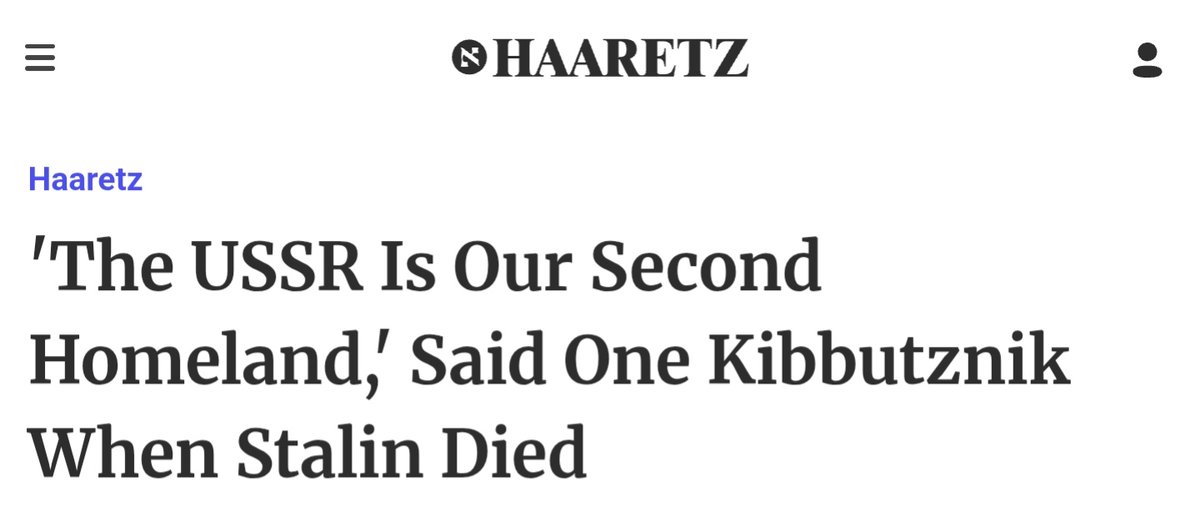
Feb 6

The Red Thread: The Soviet Roots of the Israeli Intelligence Mossad and the Enduring Strategic Nexus
Introduction: The Shadow History of the Middle East
In the sanitized and often simplified corridors of Western diplomatic history, the narrative of the relationship between the State of Israel and the Soviet Union is presented as a dramatic but ultimately brief affair followed by a bitter, decades-long divorce. We are told a story of geopolitical opportunism: Joseph Stalin, the Soviet dictator, supported the creation of the Jewish state for a fleeting moment in 1947 and 1948 to spite the British Empire, only to turn against it in a fit of Cold War calculation, plunging the two nations into the deep freeze of hostility. In this conventional telling, Israel became the bastion of Western democracy in the Middle East, while the Soviet Union became the champion of the Arab cause, arming Israel's enemies and fueling the fires of anti-Zionism.
But history, when stripped of its official veneer and examined through the lens of intelligence archives, demographic shifts, and deep-state maneuvering, rarely adheres to such clean, binary narratives. A growing body of evidence—buried in the dusty files of the KGB and the archives of the Israeli defense establishment, hinted at by high-level defectors, and visible in the complex, contradictory geopolitical landscape of the twenty-first century—suggests a radically different reality. It posits that the relationship between the Soviet security apparatus (evolving from the VChK to the NKVD, the KGB, and today’s FSB) and the Israeli Mossad was never truly severed. Instead, it evolved from a parental bond into a sophisticated, covert partnership that continues to shape the Middle East to this day.
This is not merely a story of diplomatic relations or military alliances. It is a story of shared DNA. It is the story of how the ruthless tradecraft of the Bolshevik Revolution was transplanted to the sands of the Middle East, creating an intelligence apparatus in Tel Aviv that mirrored its counterpart in Moscow. It is the story of how the Soviet Union provided the critical lifeline that allowed Israel to survive its birth, not just through diplomatic recognition, but through a massive, covert military operation that armed the Jewish state when the West refused. It is the story of a "fake divorce" during the Cold War, a strategic deception that allowed Israel to integrate into the Western security architecture while maintaining a deep, subterranean connection to the East. And it is the story of the modern era, where the rise of Russian-Jewish oligarchs and the spiritual diplomacy of the Chabad-Lubavitch movement have created a "Moscow-Tel Aviv" axis that operates beneath the surface of official politics, binding the two nations together in a web of financial, cultural, and strategic interests.
To understand the present, we must go back to the beginning. We must peel back the layers of mythology that surround the founding of Israel and the origins of its intelligence services. We must look beyond the speeches of politicians and the headlines of newspapers to the secret meetings in Prague, the clandestine arms shipments in the Mediterranean, and the shared ideological roots of the men who built the KGB and the Mossad. We must unravel the "Red Thread" that connects the Kremlin to the Kirya, a thread that has remained unbroken for nearly a century.
Part I: The Bolshevik Blueprint and the Roots of Zionism
To understand the DNA of the Mossad, one must look not to the gentleman spies of London’s MI6 or the Ivy League recruits of the early CIA, but to the ruthless underground of the Russian Revolution. The founding fathers of the Israeli intelligence community were not products of Western liberalism; they were Eastern European socialists, many born in the Russian Empire, who spoke Russian and Yiddish as their mother tongues. Their worldview was shaped by the revolutionary fervor of Lenin and Trotsky, and the harsh realities of survival in the Pale of Settlement.
The Zionist movement itself, particularly the Labor Zionism that dominated the pre-state Yishuv (the Jewish community in Palestine) and the first three decades of Israeli history, was deeply rooted in Russian socialism. The early pioneers who built the kibbutzim—collective farms that were the only functioning examples of pure communism in the non-communist world—were inspired by the ideals of the Russian Revolution. They believed in the collective over the individual, in the sanctity of labor, and in the necessity of a strong, centralized state to protect the revolution.
This ideological affinity extended to the realm of security and intelligence. The early Jewish defense organizations in Palestine, such as the Hashomer and later the Haganah, were modeled on the revolutionary cells of Eastern Europe. They operated in secrecy, relied on strict discipline and compartmentalization, and viewed themselves as the vanguard of a national liberation movement. When it came time to build a professional intelligence apparatus, the leaders of the Yishuv looked to the only model they knew and respected: the Soviet secret police.
The Chekist Legacy
The VChK (All-Russian Extraordinary Commission), known as the Cheka, was founded by Felix Dzerzhinsky in December 1917, just weeks after the Bolshevik Revolution. Its mission was to defend the revolution against "counter-revolutionaries" and "saboteurs." The Cheka established the doctrine of the "Sword and Shield" of the Party—a secret police force operating outside the law, utilizing discipline to secure the Bolshevik hold on power. It was an organization born of necessity, operating on the principle of Konspiratsia—the belief that the state requires a ruthless, secret apparatus to survive.
This mindset was critical because the founders of Israel adopted this exact worldview. They viewed their nascent state as a revolutionary entity surrounded by hostile imperialist powers (the British) and feudal enemies (the Arab states). They believed that survival depended on secrecy, ruthlessness, and the ability to strike first.
Isser Harel, the legendary "Memuneh" (The Boss) who built the Mossad and the Shin Bet (Israel's internal security service) into world-class agencies, was born in Vitebsk, Russia (now Belarus). Harel was a product of the Russian revolutionary milieu. Although he eventually became a fierce anti-communist in his political allegiance to David Ben-Gurion, his operational philosophy was pure Bolshevism. He believed in total loyalty to the state, the use of "illegals" (deep-cover agents operating without diplomatic immunity), and the necessity of "wet affairs" (assassinations) to eliminate threats.
Under Harel's leadership, the early Israeli intelligence community developed a structure and culture that mirrored the Soviet NKVD (the successor to the Cheka). The Shin Bet, responsible for internal security, established a network of informers within the Arab population and the Jewish political opposition, much like the NKVD's domestic directorates. The Mossad, responsible for foreign intelligence, focused on penetration, deception, and covert action, using methods that were distinct from the intelligence-gathering focus of Western agencies.
Former Mossad officer Juval Aviv has been candid about this lineage, admitting in interviews that the Mossad is, at its core, "an old Russian school." He noted that the agency's foundational tactics—the reliance on human intelligence (HUMINT), the use of sayanim (volunteer helpers in the diaspora), and the willingness to violate the sovereignty of other nations to achieve its goals—are direct adaptations of the tradecraft perfected by the Cheka and the NKVD. The "Russian School" emphasizes patience, deep cover, and the psychological manipulation of targets, traits that became the hallmarks of Israeli intelligence operations.
The Shai and the NKVD
Before the establishment of the State of Israel, the intelligence arm of the Haganah was known as the Shai (Sherut Yediot, or Information Service). The Shai was not a traditional military intelligence unit; it was a clandestine underground organization that operated under the nose of the British Mandate authorities. Its primary targets were not just Arab irregulars, but the British police and military, as well as internal Jewish dissidents (such as the Irgun and Lehi).
The Shai's organizational structure bore a striking resemblance to the Bolshevik underground. It was organized into cells, with strict compartmentalization to prevent the British from rolling up the entire network if one agent was captured. It utilized a vast network of informants, double agents, and wiretaps to gather information. Crucially, the Shai maintained contact with Soviet intelligence operatives in the Middle East, viewing them as potential allies against the common British enemy.
During World War II, as the Soviet Union battled Nazi Germany, the relationship between the Yishuv and Moscow deepened. The "V League" (League for Victory) was established in Palestine to support the Red Army, and Soviet diplomats and intelligence officers began to cultivate ties with Jewish leaders. They saw in the Zionist movement a potential anti-imperialist force that could be used to undermine British hegemony in the Middle East.
This strategic convergence laid the groundwork for the events of 1947 and 1948. When the British announced their intention to withdraw from Palestine, the Soviet Union saw a golden opportunity. By supporting the creation of a Jewish state, Stalin could drive a wedge into the British Empire's strategic dominance in the region. The Shai, with its Russian-speaking leadership and socialist orientation, was the natural partner for this endeavor.
Part II: 1948 – The Soviet Midwife of the Jewish State
The myth of 1948 is that the United Nations, driven by post-Holocaust guilt and American pressure, birthed the State of Israel. The narrative highlights the diplomatic struggle at the UN and the heroic defense of the Jewish settlements against overwhelming Arab odds. While these elements are true, they obscure the decisive role played by the Soviet Union. The reality is far more significant: without Soviet intervention, the State of Israel would likely have been crushed in its infancy.
In 1947, the geopolitical landscape of the Middle East was dominated by Great Britain. The United States, while sympathetic to the Zionist cause due to domestic political pressure, was ambivalent about the creation of a Jewish state. The US State Department and the Pentagon were concerned that supporting Israel would alienate the Arab world and jeopardize American access to oil. Consequently, the US enforced an arms embargo on the region, refusing to sell weapons to the Jews or the Arabs.
The British, for their part, were actively hostile to the Zionist enterprise. They viewed the Jewish insurgency as a threat to their imperial interests and sought to leave Palestine in a way that would preserve their influence in the Arab states, particularly Jordan and Iraq. They supplied arms and officers to the Arab Legion of Jordan, the most effective fighting force arrayed against the Jews.
Into this vacuum stepped the Soviet Union. Stalin, the supreme realist, saw the situation with clarity. He believed that a socialist Israel, populated by Eastern European Jews and led by socialist parties, could become a Soviet satellite in the Mediterranean—a "Cuba of the Middle East" before Cuba even existed.
The Diplomatic Offensive
The first step in Stalin's strategy was diplomatic. In May 1947, Soviet Deputy Foreign Minister Andrei Gromyko stunned the world with a speech at the UN General Assembly. Reversing previous Soviet policy, Gromyko declared that the Jewish people had a right to a state of their own in Palestine, citing the suffering they had endured during the war. He argued that the British Mandate had failed and that partition was the only viable solution.
This speech was the turning point. It signaled to the world that the Soviet Union was throwing its weight behind the Zionist cause. When the Partition Plan (Resolution 181) came to a vote in November 1947, Stalin ordered the entire Soviet Bloc—the USSR, the Ukrainian SSR, the Byelorussian SSR, Poland, and Czechoslovakia—to vote in favor. This bloc provided the critical margin needed for the resolution to pass with the required two-thirds majority. Without the Soviet votes, there would have been no international legal basis for the creation of Israel.
Operation Balak: The Arms Pipeline
Diplomatic recognition, however, would not stop the Arab armies. The Yishuv needed weapons, and they needed them fast. With the US and Britain enforcing an embargo, Ben-Gurion turned to the East.
In late 1947, agents of the Haganah, led by Ehud Avriel (who would later become a key figure in Mossad), began secret negotiations with the Czechoslovak government. These negotiations were conducted with the direct approval of Moscow. Stalin authorized Czechoslovakia to sell massive quantities of weapons to the Jews, including rifles, machine guns, ammunition, and, most critically, fighter aircraft.
This operation, known as Operation Balak, was a logistical masterpiece of covert action. The Soviets provided the airfields in Czechoslovakia (specifically Zatec) where the weapons could be loaded onto transport planes. They provided the false paperwork and the "blind eyes" at border crossings. They even trained Israeli pilots and mechanics on the Avia S-199, a Czech-built version of the German Messerschmitt Bf 109.
The impact of these weapons cannot be overstated. When the Arab armies invaded on May 15, 1948, the Jewish forces were short of arms. The arrival of the Czech rifles and machine guns allowed them to hold the line. The arrival of the fighter planes gave the nascent Israeli Air Force the ability to challenge Egyptian air superiority and bomb enemy columns.
Ben-Gurion himself admitted, "Without the Czech arms, we would not have survived." But these were not just "Czech" arms; they were Soviet arms, delivered via a Soviet-controlled pipeline, authorized by the Kremlin.
Intelligence Cooperation in 1948
The arms deal was accompanied by intense intelligence cooperation. Soviet intelligence officers from the MGB (Ministry of State Security, the precursor to the KGB) worked closely with their Israeli counterparts to coordinate the logistics of the airlift. They shared intelligence on British military movements in the region and provided "target packages" on Arab forces.
During this period, the distinction between Israeli and Soviet intelligence was blurred. Many of the key operatives involved in the arms smuggling—such as Shaul Avigur, the head of Mossad Le'Aliyah Bet (the organization responsible for illegal immigration)—had deep ties to the Soviet world. They spoke Russian, understood the Soviet bureaucracy, and were viewed by Moscow as "friendly" elements.
The Soviets also used this opportunity to infiltrate the Israeli establishment. They embedded agents within the flow of immigrants coming from Eastern Europe. They recruited officers within the Palmach (the elite strike force of the Haganah), many of whom were members of the pro-Soviet Mapam party. These agents were not seen as traitors by their Israeli handlers at the time; they were seen as liaisons with a vital ally.
This period of "operational symbiosis" created a network of personal and professional relationships that would persist long after the official political alliance shifted. It established a precedent for cooperation and a channel of communication that could be activated in times of crisis.
Part III: The "Fake" Divorce and the Cold War Deception
The conventional historical narrative tells us that the Soviet-Israeli romance was short-lived. By 1950, relations had cooled. Israel, desperate for economic aid to absorb the massive influx of immigrants, turned to the United States and West Germany. Stalin launched a campaign known as the "Doctors' Plot" and turned his focus elsewhere. By the mid-1950s, the Soviet Union was arming Egypt and Syria, and Israel was firmly in the Western camp.
However, intelligence analysts and historians who have examined the period closely suggest a more complex dynamic. They argue that the "divorce" was, in some respects, a "fake" or managed rupture—a strategic realignment that served the interests of both the Soviet and Israeli deep states, even as their political leaders traded insults.
The Strategic Logic of the Split
From the Soviet perspective, the shift to an anti-Zionist stance was a calculated move to gain influence in the Arab world. The Arab states were far more populous, resource-rich (oil), and strategically located than Israel. By championing the Palestinian cause and arming the Arab regimes, Moscow could displace British and French influence in the region and gain a foothold in the Mediterranean.
However, the Soviets were careful not to destroy Israel. A destroyed Israel would no longer serve as a rallying cry for Arab nationalism and would remove the need for Soviet protection. The Soviet goal was a state of "controlled conflict"—enough tension to keep the Arab states dependent on Moscow, but not enough to trigger a superpower war or the elimination of the Jewish state.
From the Israeli perspective, the shift to the West was an economic necessity. The US could provide the financial aid and investment that the Soviet economy could not. However, the Israeli intelligence establishment never forgot who had assisted them in 1948. They maintained a respect for Soviet power and a wariness of American naivety.
Operation SIG: The Disinformation Campaign
One of the most controversial aspects of this period is "Operation SIG" (Zionist Governments). According to Ion Mihai Pacepa, the highest-ranking intelligence officer to ever defect from the Eastern Bloc, Operation SIG was a massive KGB disinformation campaign designed to turn the developing world against Israel and the United States.
The operation involved flooding the world with anti-Zionist propaganda, framing Israel as a colonialist outpost of Western imperialism. The KGB funded Palestinian groups, trained their cadres, and helped draft their manifestos. They equated Zionism with racism and spread information about Jewish control of the media and finance.
On the surface, this looks like total war against Israel. But Pacepa and other analysts suggest a deeper layer. By polarizing the conflict and making Israel a pariah in the Third World, the Soviets actually strengthened Israel's internal cohesion and its reliance on a militarized state. The constant threat justified the existence of a powerful security apparatus—the Mossad and Shin Bet—which mirrored the KGB's own structure.
Furthermore, the "controlled opposition" theory suggests that by managing the anti-Zionist movement, the KGB could ensure that it never actually threatened Israel's existence. The Soviets provided the Arabs with enough weapons to feel confident, but often withheld the most advanced offensive systems or the training to use them effectively. They encouraged Arab rhetoric but restrained Arab action when it threatened to spiral out of control.
The Penetration of the Israeli State
Throughout the Cold War, the KGB maintained a level of penetration within the Israeli establishment. This was not just a matter of recruiting a few spies; it was a systemic infiltration facilitated by the shared cultural background of the Israeli and Soviet elites.
The case of Israel Beer is illustrative. Beer was a lieutenant colonel in the IDF and a close advisor to David Ben-Gurion. He had access to the highest levels of Israeli strategic planning. In 1961, he was exposed as a Soviet spy. Beer was an ideological spy who believed that Israel's future lay with the Soviet Union.
Another high-profile case was that of Marcus Klingberg. Klingberg was a scientist and the deputy director of the Israel Institute for Biological Research at Ness Ziona, one of the most secretive facilities in the country. For decades, he passed sensitive biological and chemical information to the GRU (Soviet military intelligence). Klingberg was not caught until 1983. Like Beer, he was motivated by ideology and his past as a Red Army officer during WWII.
But perhaps the most intriguing figure is Shabtai Kalmanovich. A flamboyant businessman and spy, Kalmanovich emigrated to Israel from the USSR in 1971. He quickly ingratiated himself with the Israeli political elite, hosting gatherings and interacting with ministers and generals. He worked for the KGB for over a decade before being arrested in 1987. Kalmanovich was not just a spy; he was a bridge. He facilitated deals, carried messages, and acted as a conduit between the two worlds.
These cases suggest that the "Iron Curtain" between Israel and the USSR was porous. The KGB had connections inside the Israeli cabinet, the IDF General Staff, and the scientific establishment. This intelligence allowed Moscow to calibrate its policies in the Middle East with precision, knowing exactly what Israel's red lines were.
The "Refusenik" Movement as Intelligence Cover
The movement to free Soviet Jews ("Refuseniks") became a cause in the West during the 1970s and 80s. While genuine activists drove the movement, intelligence historians argue that the KGB also used it as a cover for infiltration.
By allowing numbers of Jews to emigrate, the KGB could insert agents into the stream of refugees. These "sleeper" agents would settle in Israel, join the army, enter the civil service, and work their way up the ladder. The volume of immigration made it challenging for the Shin Bet to vet every arrival thoroughly. This strategy planted the seeds for the demographic shift that would occur in the 1990s.
Part IV: The Modern Nexus – Oligarchs, Rabbis, and Realpolitik
The collapse of the Soviet Union in 1991 did not end the relationship between Moscow and Tel Aviv; it accelerated it. The geopolitical constraints of the Cold War evaporated, allowing the covert ties to come into the open and evolve into a strategic partnership.
The Great Aliyah and the "Russification" of Israel
The most significant factor in this transformation was the "Great Aliyah." Between 1989 and 2000, over one million citizens of the former Soviet Union immigrated to Israel. This influx increased Israel's population significantly.
These immigrants were highly educated, secular, and culturally Russian. They did not melt into the Israeli "sabra" identity; they transformed it. They established their own newspapers, TV stations, and political parties. They brought with them the Soviet mindset: a respect for strong leadership, a skepticism of certain liberal ideals, and a pragmatic approach to security.
Vladimir Putin has described Israel as a "Russian-speaking country." This is not just a cultural observation; it is a geopolitical claim. The "Russian street" in Israel is a powerful political bloc that no Israeli prime minister can ignore. Politicians like Avigdor Lieberman (born in Soviet Moldova), who served as Defense Minister and Foreign Minister, represent this constituency. Lieberman has consistently advocated for a foreign policy that is more independent of the US and more accommodating of Russia's interests. - (continues below)
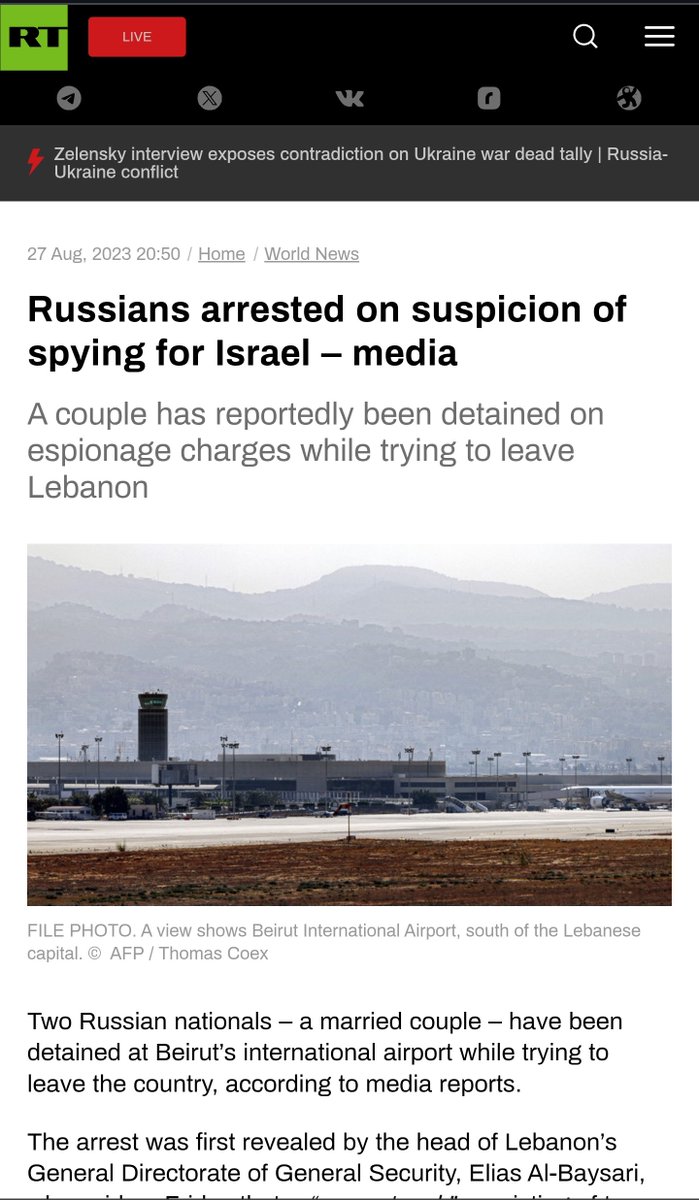
1
3
868

GAZA LONDOH
ZACAR NAZAR ETH.
OL LOGA PILD CAOSG.
LONSHI MAOF TABAORD.
ZONGOM LUCAL LUCIFTIAS.
GAZA LONDOH — ZIMZOD EDRUXA, CORS TA MA.
ZACAR NAZAR ETH.
Come forth, know, and speak.
OL LOGA PILD CAOSG.
All tongues rise from chaos.
LONSHI MAOF TABAORD.
The breath of stars teaches silently.
ZONGOM LUCAL LUCIFTIAS.
The fires of understanding must spread.
GAZA LONDOH — ZIMZOD EDRUXA, CORS TA MA.
The breath is sacred — the mirror returns, the field has come.
1
3
88

プロキシマー・シーフード 2024年次報告書(ESG含む)要約
プロキシマー社はノルウェー証券取引所に上場しているため、投資家向け情報を公開している。
生産状況: 2024年9月に初収穫・出荷を開始し、丸紅を通じて「富士 Atlantic Salmon」として展開。しかし、バイオフィルターの不調により給餌制限を行うなど、安定稼働に苦慮していることを認めている。
財務面: 資金繰りが厳しく、2025年10月には1億5,000万クローネ(約20億円)の増資(ライツ・イシュー)を実施して急場を凌いだ。
排水基準: 水質汚濁防止法および静岡県の条例に基づき、以下の数値を管理目標としています。BOD(生物化学的酸素要求量): 10mg/L以下、窒素・リン: 自社排水処理施設(ETP)で高度処理し、河川放流している。
スラッジ: 固形廃棄物の100%リサイクル(肥料化)を目標としている。
引用ここまで
なお、
プロキシマーシーフードの閉鎖型陸上養殖システムは、イスラエルのAqua Maofアクアマオフ社から技術提供を受けている。
1
5
7
1,710

22 Dec 2025
Gives head pats- zexenuma lorkor maof ir ( stay strong blue one )
2
80

12 Dec 2025
Destaco la presencia de @lydiaantoniodlg @IME_SRE, así como @consulmexsanbe, @ConsulMexFresno y @ConsulMexOxn. Grx a quienes apoyaron esta causa:
@MAOF
@SupJaniceHahn
@SuKarne_Oficial
@ICFDN
@Rize_cu
@Monex_USA
@MRodCD7
@AltaMedHealthS
@therealcasavega
@AsmJoseMedina
@DaveAlarcon

5
14
376
