
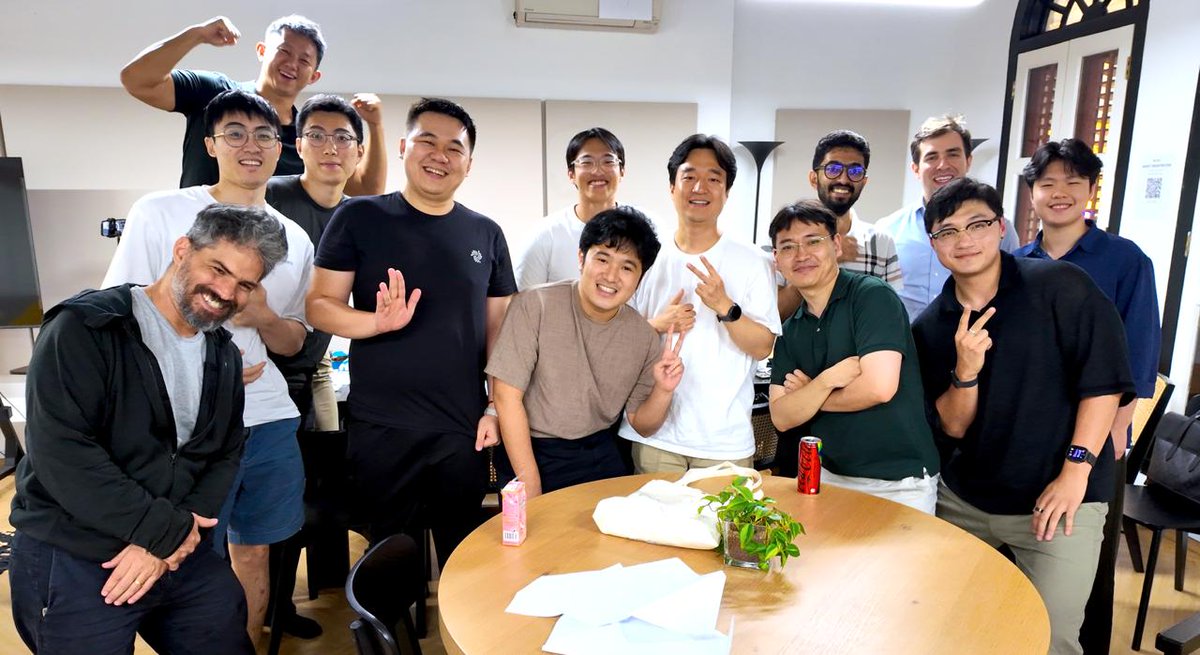
🇸🇬 SINGAPORE | 11th June 🇸🇬
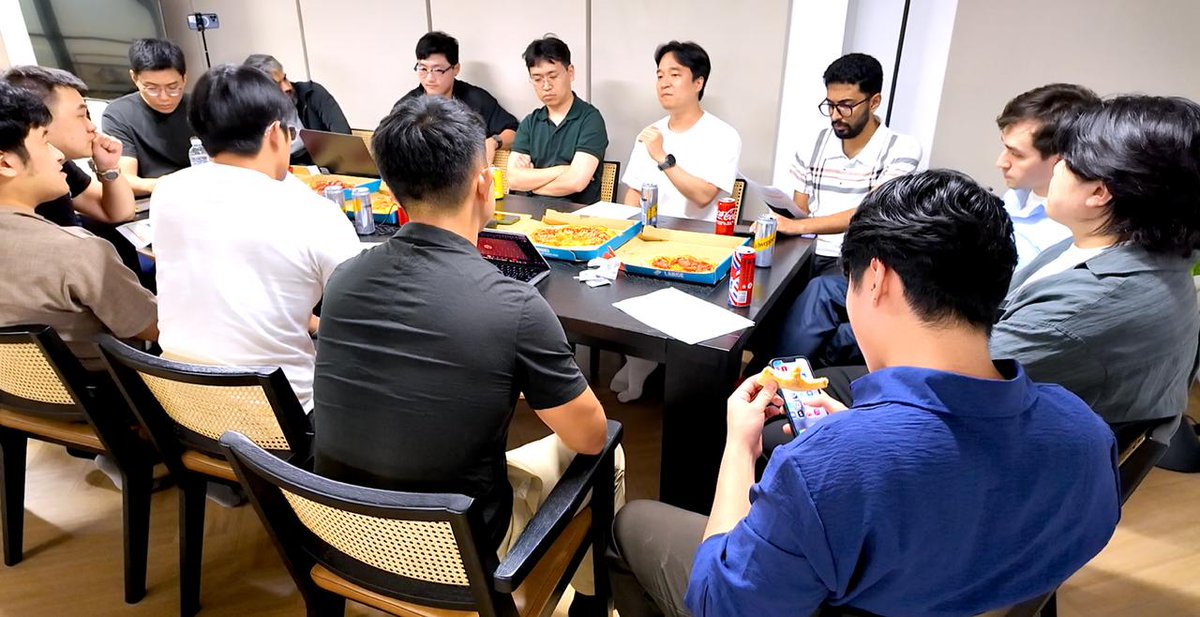
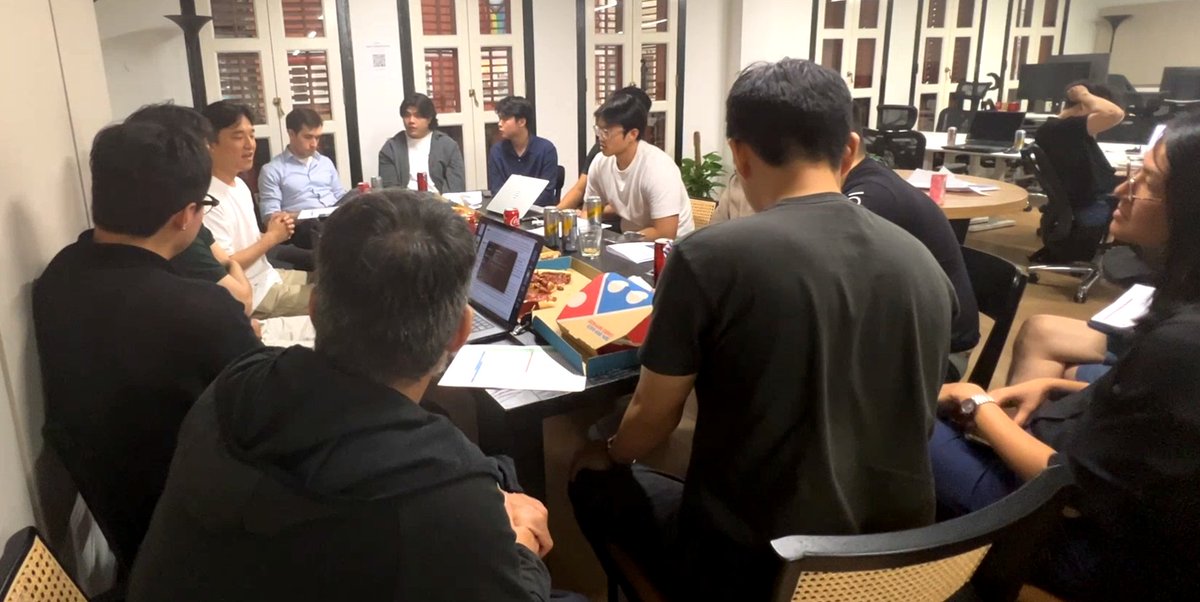
We hosted one of the most hardcore Whitepaper Reading Club sessions in Singapore last Thursday, where we were deciphering:
🧠 Cryptography’s XLA Moment: Why ZK may need a compiler, not another proving system 🧠
This session was led by @jumanzi_dev from Fractalyze, the team building “the PyTorch for ZK” — a Python-first compiler stack for Zero-Knowledge.
Big shoutout to our:
- Discussion: Jooman & Batzorig from Fractalyze for working on this amazing project. They are deeply passionate about what they do and I feel I've learned so much.
- Thank you to my partner in crime @BrianSeong who made this session possible.
- Great to see @ulandaoon @kowei1995 @9oelM and welcome @tomespel (welcome back to ZK)
🙏 Appreciate @kimmi from @SuperteamSG, for being there for us :)
📝 For more information:
- Fractalyze: fractalyze.io
- Event summary: docs.google.com/document/d/1…
📆 Upcoming events: luma.com/whitepaper
‼️ THE EVENT NOTES > TL;DR ‼️
(1) ZK’s Problem: zkVM/proving teams like @SuccinctLabs, @RiscZero, @ziskvm, OpenVM, Plonky3 (@0xPolygon), Jolt from @a16zcrypto, and Binius from @IrreducibleHW are all fighting the same hard problem: turning Rust/CUDA, memory layout, GPU execution, and field arithmetic into production-level proving performance.
(2) Fractalyze's Solution: Build ZK proving systems in high-level Python, then let a cryptography-native compiler handle optimization underneath.
(3) Zorch: Fractalyze’s stack aims to become the “PyTorch for ZK” — making proving systems easier to write, test, optimize, package, and deploy.
(4) The XLA Analogy: ML scaled as researchers stopped hand-writing kernels. @OpenXLA / MLIR helped high-level models compile into efficient hardware execution.
(5) Cryptography Needs the Same Layer: ZK, FHE, MPC, post-quantum crypto, and formal verification all need better compiler infrastructure if they are going to become real products they are going to become real products — see @zama, @TACEO_IO, @rv_inc, and @NethermindSec.
(6) Not Just Developer UX: The goal is not only abstraction. The deeper claim is that compiler automation can beat hand-written optimization by reasoning across the whole computation graph.
(7) Hardware Portability: Today’s ZK systems are often tied to specific @nvidia GPU assumptions. A compiler layer could make cryptographic workloads easier to move across CPU, GPU, FPGA, and future crypto-specific hardware — a direction also explored by teams like @Ingo_zk / ICICLE and @cysic_xyz.
(8) Ethereum: This matters for real-time block proving, lighter validation, larger block capacity, and the long-term vision of @ethereumfndn becoming easier to verify.
(9) Bigger Than ZK: The real question is whether advanced cryptography can move from research papers and hand-built systems into reusable infrastructure — the same way AI did.
🧠QUESTIONS:
(i) Is the next major ZK breakthrough a new proving system — or the compiler layer underneath all of them?
(ii) If Ethereum itself becomes ZK-powered, what is the future role of ZK rollups?
(iii) Can cryptography become a profitable product category, or is it closer to public-good infrastructure?
(iv) Will AI-generated code make formal verification and verifiable compute much more important?
(v) What happens when cryptography gets 100x or 1000x cheaper to run?
#ZK #Cryptography #Ethereum #MLIR #XLA #VerifiableCompute #Fractalyze #WhitepaperReadingClub
7
71

Honor Magic 9 gonna Release nopm crapton. Nevertheless. From Release History this IS going to BE the best Android Type flagship ever released. Perfect Phone Android Mate Type of device. Does camera perfectly Well. Does SME2 Not on Chip, but systemdeps wise with MLIR
1
11
IS Not completely wrong. But the 3% wrong are satanic bung Jobs Zucker Style. MLIR into negative picture Processor boom. These Phone Booms at different sectors Just. Every device Here booms
1
6
♥︎Dani♡︎ retweeted

How damon and graham already got that thousand yard stare when this was even before mlir 😭


5
10
156
2,930

Jun 13
mlir é meu álbum favorito deles! preciso conhecer mais fãs de blur, me manda uma dm se quiser trocar uma ideia
11

Jun 13
✅ 테슬라 로보택시 FSD 최신 업데이트 내용 (2026년 6월 12~13일 기준)
1. FSD v14.3.4 (최신 롤아웃 중)
• 6월 11~12일부터 본격 배포 시작 (Elon Musk 직접 발표)
• 주요 개선점
◦ Actually Smart Summon (Cybertruck에도 드디어 지원)
◦ 목적지 도착 시 주차 옵션 미리 지도에 표시 (Parking Plan Preview)
◦ Pull Over (차량을 길가에 세우기) 기능 강화 새로운 UI
◦ AI 컴파일러 MLIR 재작성 → 신경망 반응 속도 20% 향상
◦ FSD, Actually Smart Summon, Robotaxi 모델 통합 → 더 일관되고 안정적인 주행
◦ 주차 선택 더 적극적, 차선 편향 감소 등 Robotaxi같은 느낌. 일반 오너 차량에서도 로보택시 수준의 주행 경험에 가까워졌다는 평가가 많음
2. Robotaxi (Cybercab / Unsupervised) 현황
• 텍사스 (Austin, Dallas, Houston) 중심으로 운영 중
◦ Austin: 약 40~50대 규모 (unsupervised 차량 확대 중)
◦ 전체 Robotaxi fleet: 수십 대 수준 (Waymo에 비해 아직 작음)
• Cybercab (전용 로보택시): 생산 시작 단계, 2026년 volume production 목표
• Robotaxi 기능들이 FSD 일반 버전에 점진적으로 적용 중 (Musk 발표)
3. 기타 최신 동향
• 유럽: Belgium, Denmark 등 FSD Supervised 추가 승인
• 캐나다 coast-to-coast 무개입 주행 성공 사례 (v14.3.3)
• 안전 통계: FSD 사용 시 수동 운전보다 크게 안전 (네덜란드 3배 이상 등)
FSD v14.3.4는 Robotaxi 기술을 일반 차량에 더 많이 이식한 업데이트로, 실제 로보택시 서비스는 텍사스에서 천천히 확대 중!!
Cybercab 대량 생산은 올해 후반~2027이 주요 타임라인.
2
5
260

Jun 12
FSD 14.3.4 comments compiled
1. **Quick point release to address 14.3.3 issues**: Many users reported 14.3.3 as rough (phantom braking, harsh behavior, lane/HOV problems, overreactions to shadows/grass/birds). 14.3.4 is seen as a targeted fix/iteration, with rapid rollout generating excitement that Tesla is iterating fast on feedback.
2. **Technical under-the-hood upgrades praised**: Key changes include upgraded RL (reinforcement learning) training for broader scenarios, improved vision encoder for rare/low-visibility/3D geometry/traffic signs, and a full MLIR-based AI compiler/runtime rebuild for ~20% faster reactions and better iteration. Users call these "meaningful improvements across the AI stack" and "chef’s kiss."
3. **Smoother, more human-like, and decisive driving**: Early drives (city/suburban, ~23 miles, Vegas Strip, parking lots) describe it as "smooth, safe, capable," "flawless except minor issues," with reduced lane biasing, less tailgating, and more decisive maneuvers. Impressions include better handling of the Las Vegas Strip and Actual Smart Summon (ASS) on Cybertruck.
4. **Major parking and destination improvements**: New UI shows parking/pullover options on the map near destinations (with "P" pin prediction), explains plans, and allows selection (including curbside pullover for drop-offs). This is a standout feature—smoother, less hesitant parking, addressing a top user complaint. Feels more robotaxi-like.
5. **UI/UX enhancements for clarity and new users**: New messages announce destinations ("Heading to Costco") and parking plans. FSD streak animations (at milestones) and overall transparency make it feel more seamless and educational. Backfilling of streaks on update noted humorously.
6. **Strong early real-world tests with minimal interventions**: Positive reports from varied drives (including tight scenarios and summon tests) highlight capability in city/suburban settings. Some note minor nits like one nav error or wet-patch braking, but overall "great work" sentiment dominates early feedback.
7. **Excitement around rapid progress toward unsupervised/robotaxi**: Comments frame it as evolving "in real time," with RL gains and refinements building confidence. Some speculate wide release soon; optimism for features like nap-in-back-seat unsupervised use.
8. **Actually Smart Summon improvements**: Explicitly noted as working well on Cybertruck in tests; unified model with FSD contributes to overall refinement.
9. **Mixed but mostly positive rollout sentiment**: Excitement is high ("already feeling like sci-fi," "Tesla's listening"), with users eager to test. A few pre-update complaints about prior version contrast with fresh optimism; limited negative reports so far on 14.3.4 itself.
10. **Broader context of fast iteration**: Part of the Spring Update wave; commentary notes accelerating updates and confidence from Tesla AI/Elon (e.g., reposts, cross-country hints). Users appreciate the pace despite occasional bugs in point releases.
2
21
1,387

Jun 12
LAYER 2 — SOFTWARE MOAT: 35 years of compiler optimizations. WAS the deepest moat. AI eroded it — Google’s MLIR/TVM auto-generates optimized code for ANY ISA. What took decades can now be built in 2-3 years. 12/20
10

Jun 12
FSD v14.3.4 in 2026.14.6.10 brings Actually Smart Summon to the Cybertruck and an MLIR rewrite for ~20% faster reaction time — upgrades to RL and vision improve rare/low‑visibility handling. More decisive, safer supervised driving: teslahubs.com/blogs/tips/202… #Cybertruck
94

Jun 12
The 20% faster reaction time from the MLIR rewrite is a massive safety unlock. That’s huge.
1
1
1,906

Jun 12
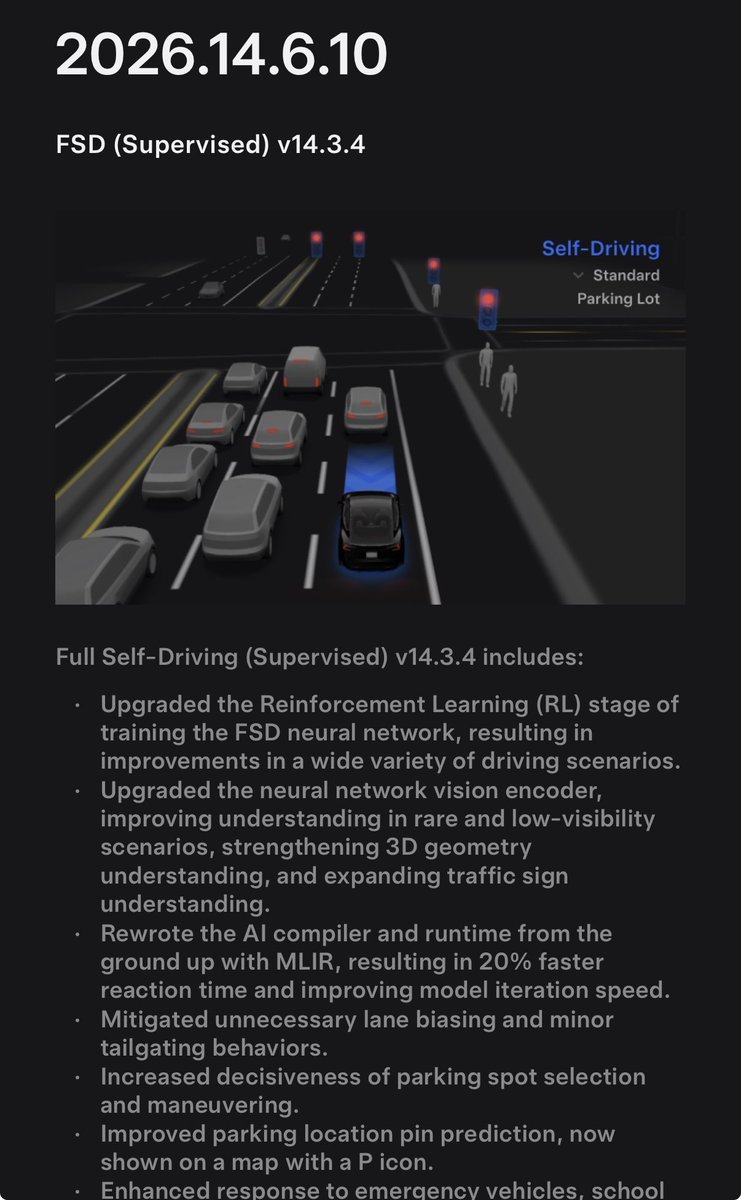
今天特斯拉刚发布了新版FSD的v14.3.4 升级的内容包括:
升级了 FSD 神经网络训练的强化学习 (RL) 阶段,从而在各种驾驶场景中均有所改进。
升级了神经网络视觉编码器,提高了在罕见和低能见度场景下的理解能力,增强了 3D 几何理解能力,并扩展了对交通标志的理解能力。
使用 MLIR 从头开始重写了 AI 编译器和运行时,从而提高了 20% 的反应速度并提升了模型迭代速度。
减少了不必要的车道偏转和轻微的尾随行为。
提高了停车位选择和操控的果断性。
改进了停车位置标记预测,现在在地图上用 P 图标显示。
增强了对紧急车辆和校车的反应能力。
135

Jun 12
• Supports ONNX, TensorFlow Lite, PyTorch, Core ML, and more
• Available as browser app, desktop app, or Python package
• Experimental support for MLIR, JAX, GGUF, and PaddlePaddle
• Open sample models directly from the browser version
1
16

"Rewrote the AI compiler and runtime from the ground up with MLIR, resulting in 20% faster reaction time and improving model iteration speed. "
Stepping stones for hw4lite, using less cpupower?
1
375
Could the "Rewrote the AI compiler and runtime from the ground up with MLIR, resulting in 20% faster reaction time and improving model iteration speed. "
Be the start of HW14lite? Seems like they use less computerpower now.
1
1
112

Jun 12
Big props on the 20% faster reactions and smarter parking with v14.3.4, Elon—MLIR compiler and RL upgrades look solid for edge cases. But real talk from the road: some folks are seeing more hesitation, phantom braking in construction zones, and nav routing that still loops or picks weird paths. Hope this irons it out quick. Keep pushing
1
1
167

Jun 12
A 20% increase in reaction time using MLIR is a massive technical milestone. People often forget that FSD isn’t just about navigation, it’s a massive real-time computing problem. Upgrading the vision encoder for low-visibility and sharpening the parking logic shows how close we’re getting to true, seamless autonomy. Can't wait to see the real-world drive clips for this build 🚀
1
1
24