

Jan 6
I've been diving into blockchain projects that stand out for their focus on real scalability and innovation, and @skalenetwork has impressed me with how it's positioning itself for the AI-driven future. From exploring their website at skale.space, SKALE Network comes across as a multichain blockchain ecosystem optimized for what they call the "Internet of Agents." It's designed to handle the demands of 2025 and beyond, where AI agents need fast, private, and cost-effective environments to operate onchain. What started as a way to scale Ethereum has evolved into a platform that's ready for massive adoption, especially in areas like gaming, DeFi, and AI applications.
At its core, SKALE is an Ethereum-compatible network that lets developers create their own customizable chains, called SKALE Chains. These are high-performance blockchains that run alongside Ethereum, providing unlimited scalability without the congestion or high costs. The key appeal is zero gas fees on SKALE chains, which means users can execute transactions without worrying about per-transaction costs eating into their value. This is huge for AI agents that might need to make countless micropayments or quick decisions in real time.
One of the standout technologies is their instant finality, where transactions confirm in tenths of a second. That speed delivers a user experience that's more like traditional web apps, making it practical for everyday use. They also introduced Blockchain Integrated Threshold Encryption, or BITE, which encrypts transactions before consensus to keep data private. This ensures that AI agents' actions and logic stay confidential, which is critical in a world where privacy matters more than ever.
SKALE's V4 upgrade, highlighted on the site, boosts throughput with increased TPS and enhanced privacy features, all tailored for the Agentic Era. They support standards like x402 and ERC-8004, with integrated SDKs and MachinePay for seamless agent operations. For developers, it's straightforward to deploy – simple APIs let you set up agents quickly, and the modular design means you can customize security and performance as needed.
The network's scale is already impressive, with metrics showing billions in gas fees saved and millions of transactions processed, though the exact numbers on the site reflect ongoing growth. SKALE Expand v1 on Base is a new initiative, bringing gas-free transactions to other ecosystems as part of a multi-chain strategy. This shows their commitment to enhancing the broader blockchain world, with plans to connect more chains soon.
Use cases are front and center, especially for AI agents thriving onchain. But it's not limited to that – they've got success stories in gaming, like Swing to Earn going live with precision golf mechanics on a gasless chain. The ecosystem includes tools for DeFi, NFTs, and more, all benefiting from the privacy and speed.
News from their blog covers timely topics, like why agents need onchain privacy and recaps of events such as SKALE School Episode 6 with Thirdweb. It's clear they're active in education and community building. Backed by top-tier VCs, SKALE has the resources to push forward.
If you're looking for a blockchain that's built for the future of AI and decentralized apps, @skalenetwork deserves a closer look.
Head to skale.space to explore more, from deploying your own chain to joining the conversation. It's projects like this that make me optimistic about where Web3 is headed. #SKALENetwork #Blockchain #AI
19
8
36
547

13 Dec 2025
Nice to see Machinepay lining up with real infra upgrades like x402 V2. This is how payments actually move forward.
1
1
24

11 Dec 2025
Soon on Machinepay!
11 Dec 2025

🚀 After millions of payments on x402, we’re excited to introduce x402 V2.
Listening to community feedback, we’re releasing V2 to evolve internet-native payments with greater flexibility and power.
What’s new 🧵
11
3
27
1,002

2 Dec 2025
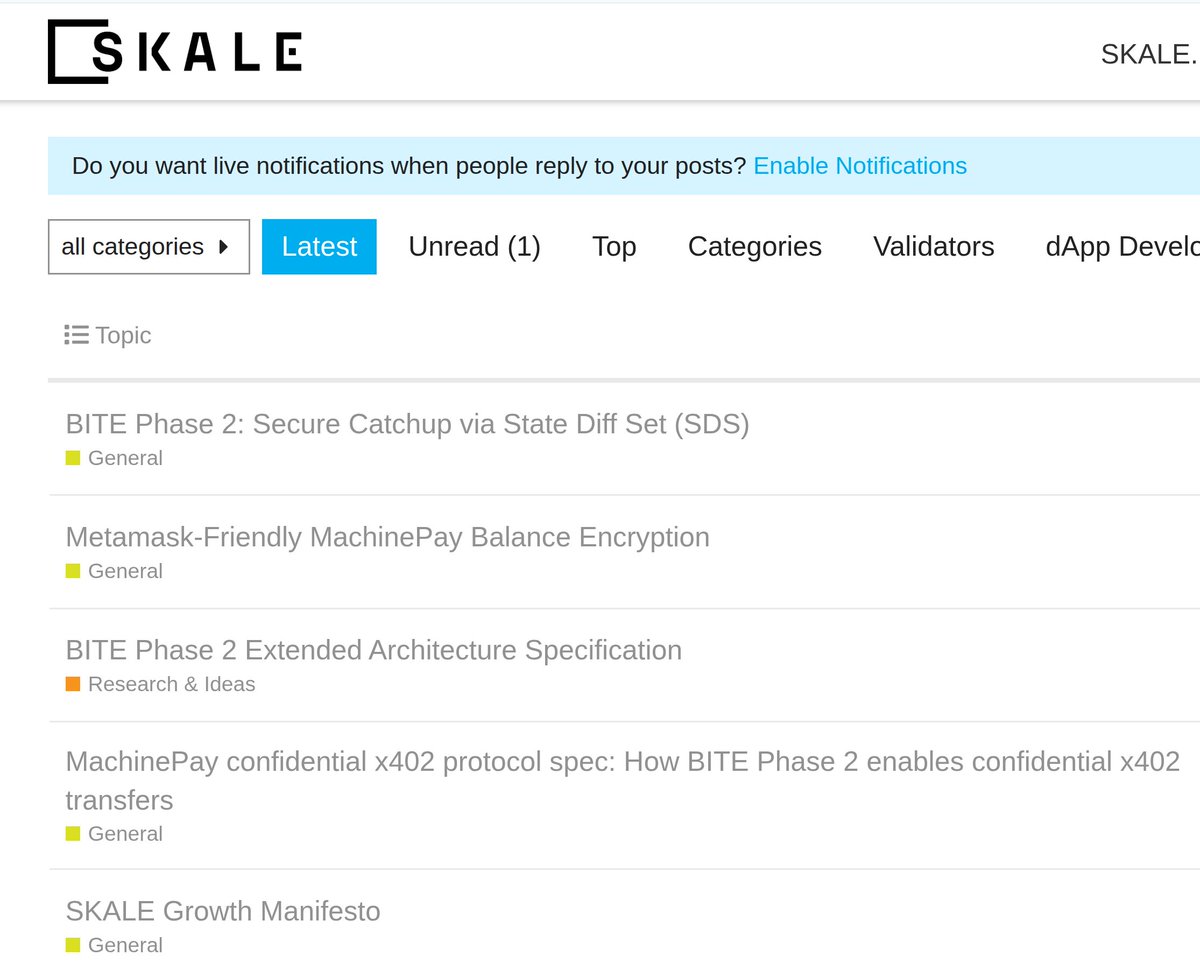
SKALE forum is very busy with BITE and MachinePay
BITE Phase 2 turned out way more than BITE Phase 1
forum.skale.network/
6
4
41
985
2 Dec 2025
MachinePay with BITE2 phase 2 is going to be a next gen confidential chain.
Today we are publishing another piece of the BITE2 spec: secure catchup
forum.skale.network/t/bite-p…
3
10
32
1,185
1 Dec 2025
We want MachinePay-encrypted x402 token balances to work seamlessly with Blockscout and MetaMask.
Here is a draft spec.
Comments welcome !:)
forum.skale.network/t/metama…
5
7
34
1,033

27 Nov 2025
@Stan_Kladko this is massive.
MachinePay dropping the first *actually usable* x402 spec, running live on BITE, powered by SKALE…
This isn’t another “trust me bro” payment layer — this is the real deal: confidential, user-friendly, zero-knowledge payments that normies could actually use tomorrow.
Phase 1 Phase 2 live already? Most projects are still writing whitepapers.
SKALE quietly building the payment rail the rest of crypto begged for.
LFG 🚀🔥
#MachinePay #SKALE #x402 #CryptoPayments
1
4
5
265
19 Nov 2025
Come join us for a x402 MachinePay demo today during Decrypt show

1
5
15
515
18 Nov 2025
The AI engineering speed-up is about 10×.
I coded MachinePay with AI help (Gemini Ultra) in about one month.
Then I ran the same Gemini Ultra on the MachinePay repo and asked how many human-months it would take to recreate it.
Here’s what it says: roughly 10 human-months.
## 📅 Effort Estimate — Balanced (Human‑Months)
Balanced staffing model, expressed in human‑months
- Balanced (3–4 C engineers 0.5 FTE QA 0.5 FTE DevOps; 8–10 weeks)
- QA estimate: ~1.0–1.25 human‑months (0.5 FTE over 8–10 weeks)
- Engineering (C DevOps) subtotal: ~7.0–8.75 human‑months
- Total including QA: 8–10 human‑months
- Practical planning number (total incl. QA): ~9 human‑months (midpoint)
- With 15% risk buffer (applied to the total): ~10.5 human‑months
1
3
15
562

17 Nov 2025
MachinePay x402protocol...the what/how it is...
14 Nov 2025

Here is the story of the MachinePay x402 protocol.
The Bank of MachinePay
Imagine a special bank in a world where privacy is everything. This bank doesn't have a big open vault; instead, every single user has their own personal, ultra-secure safe. Inside these safes, they store their golden coins.
The magic of this bank is that nobody can look inside anyone else's safe. Not the bank tellers, not other customers, not even a prying mayor.
The Two-Key Safes
Each safe in this bank is a marvel of engineering. It has two completely different ways to be opened:
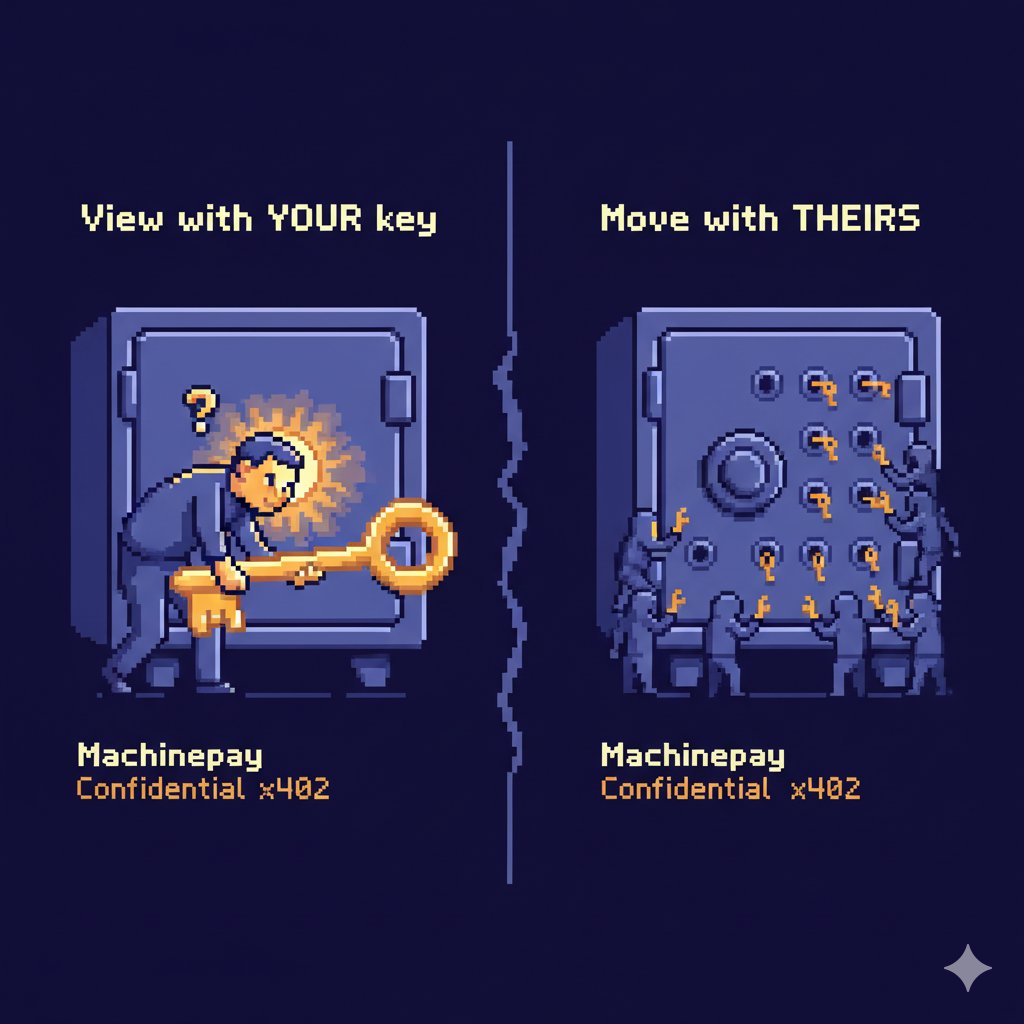
The Personal Key (Your Key): You have a unique, personal key. You can use this key at any time to open a tiny peephole in your own safe, look inside, and count your coins. However, this key is "view-only"—it cannot be used to take coins out or put coins in. Only you have this key.
The Bank's Master Key (Their Keys): The front of the safe also has 11 keyholes. The only way to actually move coins is to get the bank's 11 "Governors" (the most trusted employees) to come at the same time. The bank actually has 16 of these Governors, but any 11 will do. When they all turn their keys together, the safe opens, allowing them to perform a transfer.
This two-key system is the bank's secret: You can view your balance privately, but only the bank can move your coins, and only when you ask.
How to Make a Secret Transfer
Let's say you (Alice) want to send 10 golden coins to your friend, Bob. You can't just shout "Send 10 coins to Bob!" because everyone would know your business.
Here is the two-day process you follow.
Day 1: Sending the Secret Request
Write the Note: You take a piece of paper and write a very specific, signed request: "I, Alice, authorize the bank to move 10 coins from my safe to Bob's safe. Signed, Alice." (This is your signed authorization).
The Magic Envelope: You don't just hand this note to a teller. You put it in a Magic Red Envelope. As soon as you seal it, the ink on the outside vanishes. The mailman who delivers it just sees a blank red envelope. He has no idea who sent it, who it's for, or what's inside.
The Inner Sanctum: This envelope is delivered to a special, high-security room in the bank. A manager (the BITE protocol) is the only one who can open it. He reads your note: "Ah, Alice wants to send 10 coins to Bob. Signature's good."
Schedule the Governors: The manager cannot move the coins himself. Instead, he posts a public bulletin: "Work Order #123: Governors, please assemble tomorrow to service Safe A (Alice's) and Safe B (Bob's)."
Notice what happened: The public saw a red envelope go in and a work order go up, but they have no idea how many coins are being moved. The "10 coins" part was read inside the secure room and passed to the Governors in a sealed, internal memo.
Day 2: The Governors Do the Work
The Governors Arrive: The next day, 11 of the bank's Governors (the Contract-Triggered Transaction) arrive with their keys. They have Work Order #123.
Open Safe A: They go to your safe (Alice's). All 11 put their keys in the 11 holes and turn. The safe opens. They look inside and see you have 100 coins.
Check the Memo: They check the secret internal memo: "Move 10 coins."
Perform the Logic: They ask: "Does Alice have 10 coins?" "Yes, she has 100." They take 10 coins out. They lock your safe. It now has 90 coins.
Open Safe B: They walk over to Bob's safe. All 11 use their keys to open it. They see he has 50 coins.
Complete the Transfer: They place your 10 coins inside Bob's safe and lock it. It now has 60 coins.
The Result: Total Privacy
Think about what anyone watching from the street saw:
They saw a blank, red envelope delivered on Day 1.
They saw 11 Governors move from one safe to another on Day 2.
No one ever saw:
How many coins you sent.
How many coins Bob received.
How many coins you had to begin with.
How many coins Bob had in his safe.
That is the secret of the Bank of MachinePay: confidential transactions (the Magic Envelope) and confidential balances (the 11-Key Safes).
Imagine a special bank in a world where privacy is everything.
This bank doesn't have a big open vault; instead, every single user has their own personal, ultra-secure safe. Inside these safes, they store their golden coins.
The magic of this bank is that nobody can look inside anyone else's safe. Not the bank tellers, not other customers, not even a prying mayor.
The Two-Key Safes
Each safe in this bank is a marvel of engineering. It has two completely different ways to be opened:
The Personal Key (Your Key): You have a unique, personal key. You can use this key at any time to open a tiny peephole in your own safe, look inside, and count your coins. However, this key is "view-only"—it cannot be used to take coins out or put coins in. Only you have this key.
The Bank's Master Key (Their Keys): The front of the safe also has 11 keyholes. The only way to actually move coins is to get the bank's 11 "Governors" (the most trusted employees) to come at the same time. The bank actually has 16 of these Governors, but any 11 will do. When they all turn their keys together, the safe opens, allowing them to perform a transfer.
This two-key system is the bank's secret: You can view your balance privately, but only the bank can move your coins, and only when you ask.
How to Make a Secret Transfer
Let's say you (Alice) want to send 10 golden coins to your friend, Bob. You can't just shout "Send 10 coins to Bob!" because everyone would know your business.
Here is the two-day process you follow.
Day 1: Sending the Secret Request
Write the Note: You take a piece of paper and write a very specific, signed request: "I, Alice, authorize the bank to move 10 coins from my safe to Bob's safe. Signed, Alice." (This is your signed authorization).
The Magic Envelope: You don't just hand this note to a teller. You put it in a Magic Red Envelope. As soon as you seal it, the ink on the outside vanishes. The mailman who delivers it just sees a blank red envelope. He has no idea who sent it, who it's for, or what's inside.
The Inner Sanctum: This envelope is delivered to a special, high-security room in the bank. A manager (the BITE protocol) is the only one who can open it. He reads your note: "Ah, Alice wants to send 10 coins to Bob. Signature's good."
Schedule the Governors: The manager cannot move the coins himself. Instead, he posts a public bulletin: "Work Order #123: Governors, please assemble tomorrow to service Safe A (Alice's) and Safe B (Bob's)."
Notice what happened: The public saw a red envelope go in and a work order go up, but they have no idea how many coins are being moved. The "10 coins" part was read inside the secure room and passed to the Governors in a sealed, internal memo.
Day 2: The Governors Do the Work
The Governors Arrive: The next day, 11 of the bank's Governors (the Contract-Triggered Transaction) arrive with their keys. They have Work Order #123.
Open Safe A: They go to your safe (Alice's). All 11 put their keys in the 11 holes and turn. The safe opens. They look inside and see you have 100 coins.
Check the Memo: They check the secret internal memo: "Move 10 coins."
Perform the Logic: They ask: "Does Alice have 10 coins?" "Yes, she has 100." They take 10 coins out. They lock your safe. It now has 90 coins.
Open Safe B: They walk over to Bob's safe. All 11 use their keys to open it. They see he has 50 coins.
Complete the Transfer: They place your 10 coins inside Bob's safe and lock it. It now has 60 coins.
The Result: Total Privacy
Think about what anyone watching from the street saw:
They saw a blank, red envelope delivered on Day 1.
They saw 11 Governors move from one safe to another on Day 2.
No one ever saw:
How many coins you sent.
How many coins Bob received.
How many coins you had to begin with.
How many coins Bob had in his safe.
That is the secret of the Bank of MachinePay: confidential transactions (the Magic Envelope) and confidential balances (the 11-Key Safes).
1
3
68

14 Nov 2025
MachinePay incoming! Love seeing that BITE alpha integrated 🔥
3
108
14 Nov 2025
Here is the story of the MachinePay x402 protocol.
The Bank of MachinePay
Imagine a special bank in a world where privacy is everything. This bank doesn't have a big open vault; instead, every single user has their own personal, ultra-secure safe. Inside these safes, they store their golden coins.
The magic of this bank is that nobody can look inside anyone else's safe. Not the bank tellers, not other customers, not even a prying mayor.
The Two-Key Safes
Each safe in this bank is a marvel of engineering. It has two completely different ways to be opened:
The Personal Key (Your Key): You have a unique, personal key. You can use this key at any time to open a tiny peephole in your own safe, look inside, and count your coins. However, this key is "view-only"—it cannot be used to take coins out or put coins in. Only you have this key.
The Bank's Master Key (Their Keys): The front of the safe also has 11 keyholes. The only way to actually move coins is to get the bank's 11 "Governors" (the most trusted employees) to come at the same time. The bank actually has 16 of these Governors, but any 11 will do. When they all turn their keys together, the safe opens, allowing them to perform a transfer.
This two-key system is the bank's secret: You can view your balance privately, but only the bank can move your coins, and only when you ask.
How to Make a Secret Transfer
Let's say you (Alice) want to send 10 golden coins to your friend, Bob. You can't just shout "Send 10 coins to Bob!" because everyone would know your business.
Here is the two-day process you follow.
Day 1: Sending the Secret Request
Write the Note: You take a piece of paper and write a very specific, signed request: "I, Alice, authorize the bank to move 10 coins from my safe to Bob's safe. Signed, Alice." (This is your signed authorization).
The Magic Envelope: You don't just hand this note to a teller. You put it in a Magic Red Envelope. As soon as you seal it, the ink on the outside vanishes. The mailman who delivers it just sees a blank red envelope. He has no idea who sent it, who it's for, or what's inside.
The Inner Sanctum: This envelope is delivered to a special, high-security room in the bank. A manager (the BITE protocol) is the only one who can open it. He reads your note: "Ah, Alice wants to send 10 coins to Bob. Signature's good."
Schedule the Governors: The manager cannot move the coins himself. Instead, he posts a public bulletin: "Work Order #123: Governors, please assemble tomorrow to service Safe A (Alice's) and Safe B (Bob's)."
Notice what happened: The public saw a red envelope go in and a work order go up, but they have no idea how many coins are being moved. The "10 coins" part was read inside the secure room and passed to the Governors in a sealed, internal memo.
Day 2: The Governors Do the Work
The Governors Arrive: The next day, 11 of the bank's Governors (the Contract-Triggered Transaction) arrive with their keys. They have Work Order #123.
Open Safe A: They go to your safe (Alice's). All 11 put their keys in the 11 holes and turn. The safe opens. They look inside and see you have 100 coins.
Check the Memo: They check the secret internal memo: "Move 10 coins."
Perform the Logic: They ask: "Does Alice have 10 coins?" "Yes, she has 100." They take 10 coins out. They lock your safe. It now has 90 coins.
Open Safe B: They walk over to Bob's safe. All 11 use their keys to open it. They see he has 50 coins.
Complete the Transfer: They place your 10 coins inside Bob's safe and lock it. It now has 60 coins.
The Result: Total Privacy
Think about what anyone watching from the street saw:
They saw a blank, red envelope delivered on Day 1.
They saw 11 Governors move from one safe to another on Day 2.
No one ever saw:
How many coins you sent.
How many coins Bob received.
How many coins you had to begin with.
How many coins Bob had in his safe.
That is the secret of the Bank of MachinePay: confidential transactions (the Magic Envelope) and confidential balances (the 11-Key Safes).
Imagine a special bank in a world where privacy is everything.
This bank doesn't have a big open vault; instead, every single user has their own personal, ultra-secure safe. Inside these safes, they store their golden coins.
The magic of this bank is that nobody can look inside anyone else's safe. Not the bank tellers, not other customers, not even a prying mayor.
The Two-Key Safes
Each safe in this bank is a marvel of engineering. It has two completely different ways to be opened:
The Personal Key (Your Key): You have a unique, personal key. You can use this key at any time to open a tiny peephole in your own safe, look inside, and count your coins. However, this key is "view-only"—it cannot be used to take coins out or put coins in. Only you have this key.
The Bank's Master Key (Their Keys): The front of the safe also has 11 keyholes. The only way to actually move coins is to get the bank's 11 "Governors" (the most trusted employees) to come at the same time. The bank actually has 16 of these Governors, but any 11 will do. When they all turn their keys together, the safe opens, allowing them to perform a transfer.
This two-key system is the bank's secret: You can view your balance privately, but only the bank can move your coins, and only when you ask.
How to Make a Secret Transfer
Let's say you (Alice) want to send 10 golden coins to your friend, Bob. You can't just shout "Send 10 coins to Bob!" because everyone would know your business.
Here is the two-day process you follow.
Day 1: Sending the Secret Request
Write the Note: You take a piece of paper and write a very specific, signed request: "I, Alice, authorize the bank to move 10 coins from my safe to Bob's safe. Signed, Alice." (This is your signed authorization).
The Magic Envelope: You don't just hand this note to a teller. You put it in a Magic Red Envelope. As soon as you seal it, the ink on the outside vanishes. The mailman who delivers it just sees a blank red envelope. He has no idea who sent it, who it's for, or what's inside.
The Inner Sanctum: This envelope is delivered to a special, high-security room in the bank. A manager (the BITE protocol) is the only one who can open it. He reads your note: "Ah, Alice wants to send 10 coins to Bob. Signature's good."
Schedule the Governors: The manager cannot move the coins himself. Instead, he posts a public bulletin: "Work Order #123: Governors, please assemble tomorrow to service Safe A (Alice's) and Safe B (Bob's)."
Notice what happened: The public saw a red envelope go in and a work order go up, but they have no idea how many coins are being moved. The "10 coins" part was read inside the secure room and passed to the Governors in a sealed, internal memo.
Day 2: The Governors Do the Work
The Governors Arrive: The next day, 11 of the bank's Governors (the Contract-Triggered Transaction) arrive with their keys. They have Work Order #123.
Open Safe A: They go to your safe (Alice's). All 11 put their keys in the 11 holes and turn. The safe opens. They look inside and see you have 100 coins.
Check the Memo: They check the secret internal memo: "Move 10 coins."
Perform the Logic: They ask: "Does Alice have 10 coins?" "Yes, she has 100." They take 10 coins out. They lock your safe. It now has 90 coins.
Open Safe B: They walk over to Bob's safe. All 11 use their keys to open it. They see he has 50 coins.
Complete the Transfer: They place your 10 coins inside Bob's safe and lock it. It now has 60 coins.
The Result: Total Privacy
Think about what anyone watching from the street saw:
They saw a blank, red envelope delivered on Day 1.
They saw 11 Governors move from one safe to another on Day 2.
No one ever saw:
How many coins you sent.
How many coins Bob received.
How many coins you had to begin with.
How many coins Bob had in his safe.
That is the secret of the Bank of MachinePay: confidential transactions (the Magic Envelope) and confidential balances (the 11-Key Safes).
7
6
26
1,218

8 Nov 2025
**AI is awakening protocols that have been sleeping for decades** 🤖
HTTP 402 "Payment Required" sat dormant for 27 years until X402 brought it back to life for AI agent payments.
There's something poetic about how early internet engineers built infrastructure with such foresight - leaving spaces for futures they could only imagine.
Those "idealistic" designs are now becoming the backbone of the AI economy.
#AI #HTTP402 #InternetInfrastructure #MachinePay
atypica.ai/artifacts/podcast…
3
4
253
7 Nov 2025
Congratulations Stan on MachinePay architecture being announced today !!
1
2
100
7 Nov 2025
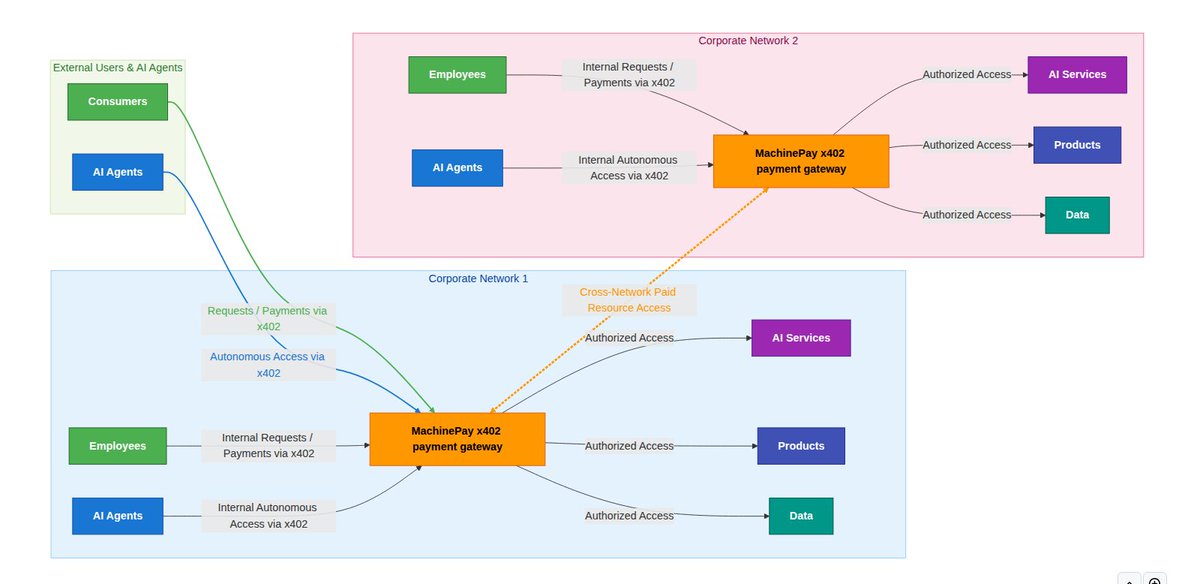
MachinePay architecture announced today
10
9
39
1,522
5 Nov 2025
Congratulations Stan the thousand miles has began...Machinepay has processed its first transaction 👏👏👏
1
4
66
4 Nov 2025
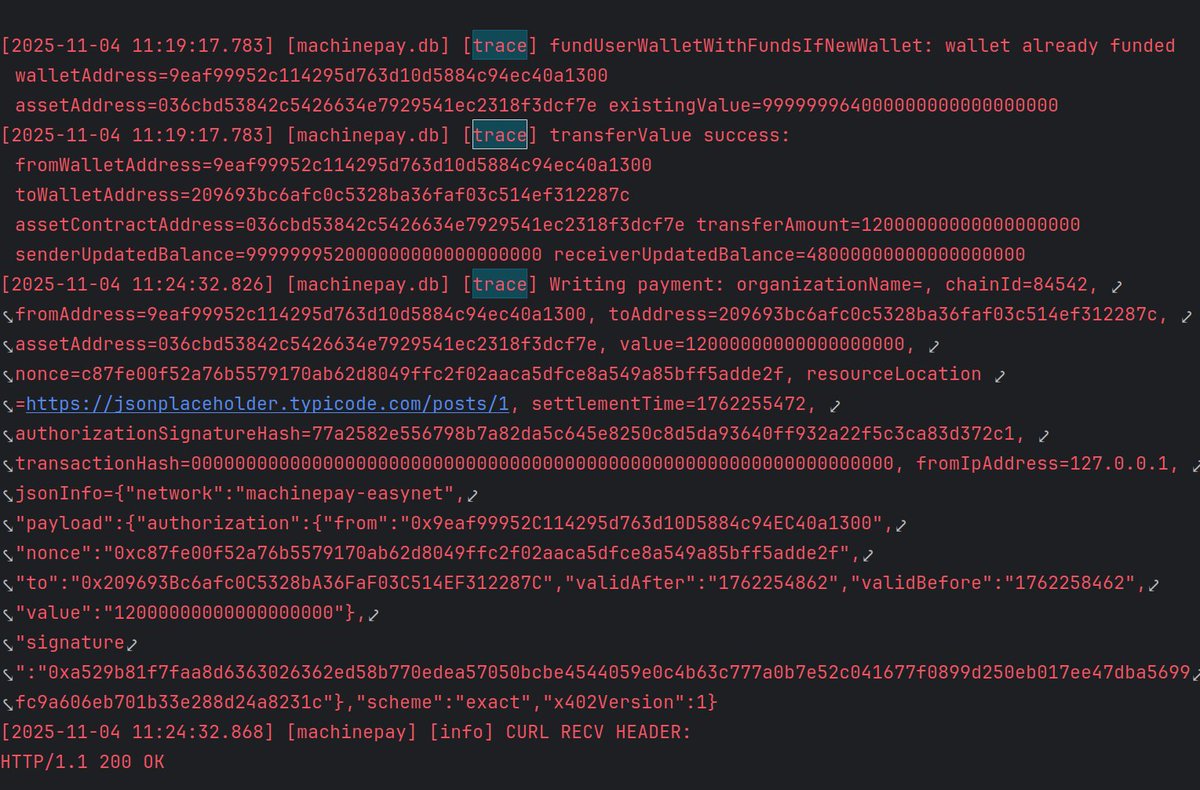
Road of a thousand miles begins with a single step
Machinepay just processed the first transaction
11
9
32
1,552
