James Carron retweeted

15h
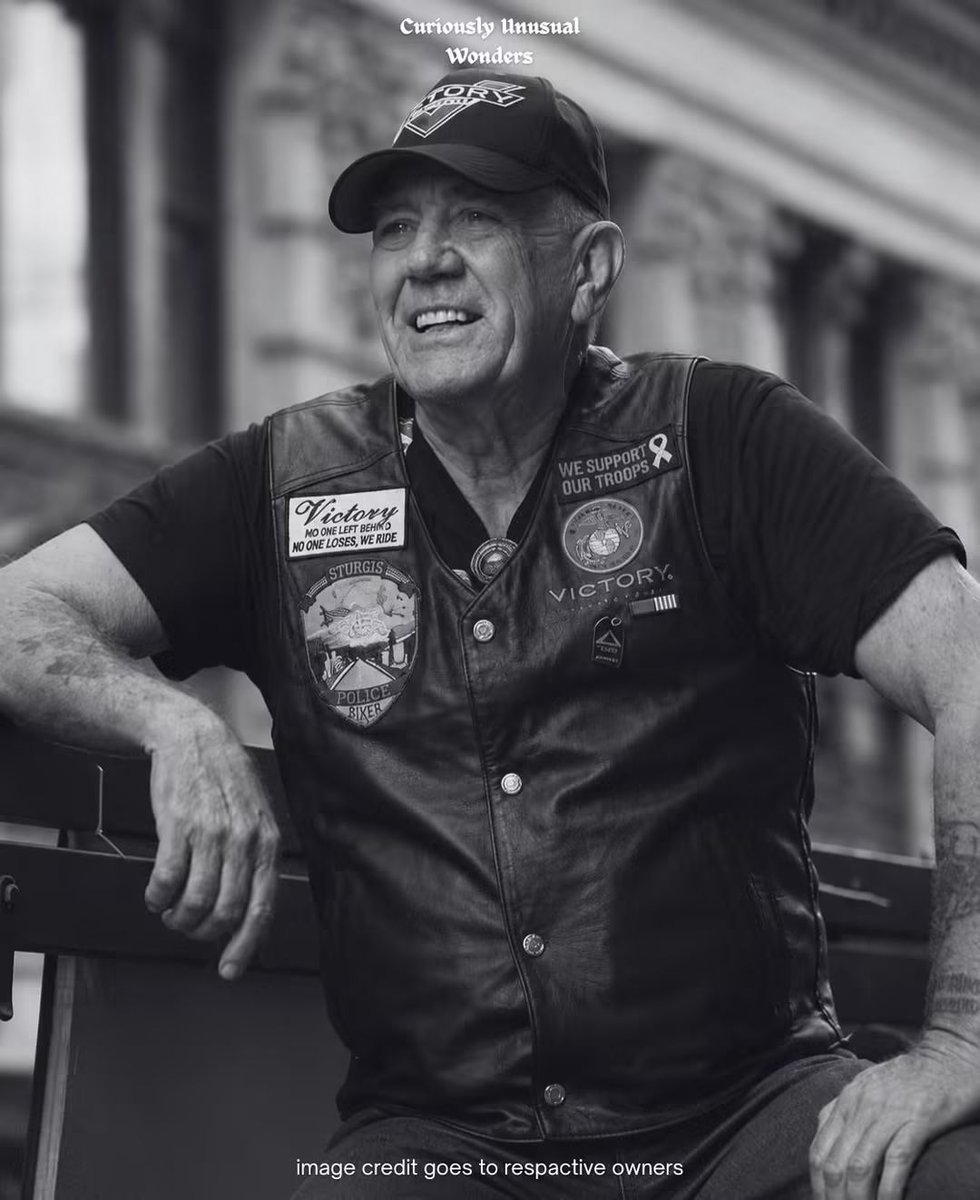
Stanley Kubrick demanded 70 takes from actors. He let this medically discharged Marine improvise.
In 1985, R. Lee Ermey stood on a film set in England with nothing but memories and a voice that could cut through steel. He was not supposed to be there. Not as an actor, anyway.
Stanley Kubrick had hired him as a technical advisor for Full Metal Jacket. The role of Gunnery Sergeant Hartman was already cast with a trained professional. Ermey's job was to teach actors how drill instructors actually behaved.
But Ermey had spent years watching Hollywood get it wrong. He approached Kubrick with a request that bordered on audacity.
"Let me show you what a real drill instructor sounds like."
Kubrick was skeptical. This was a director who shot scenes 40, 50, sometimes 70 times until they were perfect. He controlled every word. Every gesture. Every breath.
But he agreed to watch.
Ermey positioned actors in formation. The cameras rolled. And he began screaming.
For two hours, he unleashed a torrent of creative, devastating verbal assault. Stagehands pelted him with tennis balls and oranges to simulate chaos. He never flinched. Never broke rhythm. Never repeated himself.
Because he wasn't acting.
He was remembering.
Ronald Lee Ermey had enlisted in the Marines at seventeen after a Kansas judge gave him a choice: jail or the military. He chose the Corps. From 1965 to 1967, he served as a drill instructor at Marine Corps Recruit Depot San Diego, breaking down civilians and rebuilding them as Marines.
In 1968, he deployed to Vietnam for fourteen months.
Then injuries ended his career. Medical discharge. Twenty-seven years old. No college degree. No plan.
He drifted to the Philippines, enrolled in university using his GI Bill, and stumbled into film work as a technical advisor. Small roles followed. A helicopter pilot in Apocalypse Now. A drill instructor in The Boys in Company C.
But nothing that changed his life.
Until Kubrick watched those tapes.
The director saw something no acting class could manufacture: authenticity so complete it became art. Ermey had produced 150 pages of original insults. His intensity never wavered. His knowledge was absolute.
Kubrick made a decision almost unheard of in his career.
He fired the original actor. He gave Ermey the role. And he allowed him to improvise more than half of his own dialogue.
Stanley Kubrick, the perfectionist who demanded endless takes from every performer, needed only two or three takes from a former drill instructor with no formal training.
Because you cannot fake what is real.
When Full Metal Jacket premiered in 1987, Ermey's performance became instantly iconic. Real drill instructors said it was the most accurate portrayal ever filmed. Veterans said it triggered memories they had buried for decades.
Ermey earned a Golden Globe nomination. He went on to appear in over sixty films. He voiced Sarge in Toy Story. He hosted military programs on the History Channel.
But he never forgot his brothers and sisters in uniform.
In 2002, the Marine Corps awarded him an honorary promotion to Gunnery Sergeant, making him the only retiree in Corps history to receive that recognition. He spent years visiting troops overseas, supporting veterans, and keeping the military spirit alive.
R. Lee Ermey passed away on April 15, 2018. The Marine Corps called him a great American and an even greater Marine.
Think about that journey.
A troubled teenager from Kansas. A drill instructor. A combat veteran. A medical discharge. Odd jobs in foreign countries. And then, at forty-three, convincing one of cinema's most demanding directors to trust him with creative freedom.
He did not succeed because he pretended to be something he wasn't.
He succeeded because he refused to be anything else.
That is not a Hollywood story.
That is a Marine who improvised, adapted, and overcame, all the way to immortality.
167
1,205
7,135
178,250

Australia is just so far ahead of us, medically speaking, they've disappeared over the horizon.
19h

A 64-year-old grandmother had a tumor on her spine.
Sitting hurt.
Lying down hurt.
Sleeping required painkillers.
Open surgery meant screws in her back and weeks of recovery.
She refused.
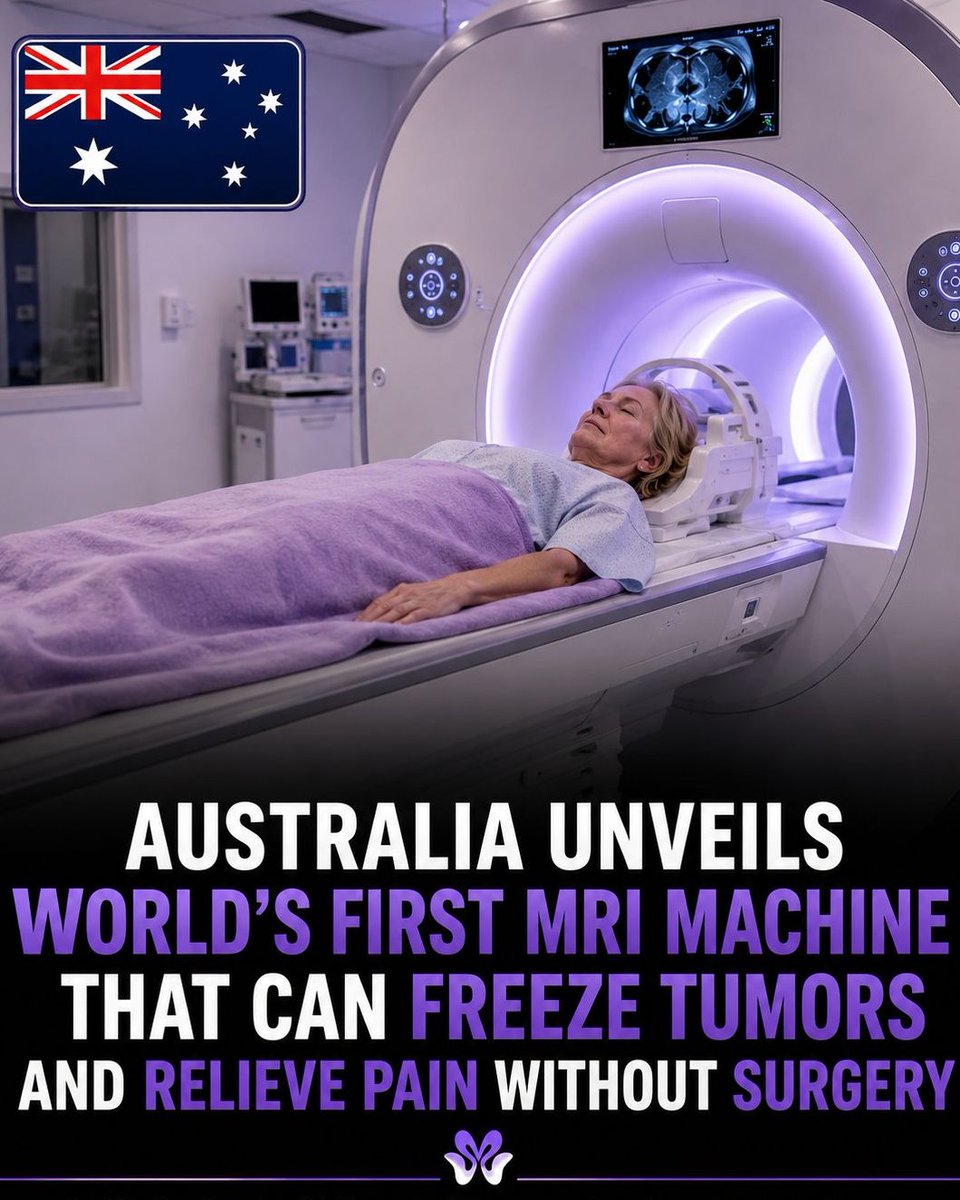
Then doctors at Sydney's Liverpool Hospital offered something different. They slid a thin probe into the tumor under real-time MRI and froze it at -180°C.
The next day, the pain was gone.
"I'm back to normal," Josephine Cordina said. "It was a big relief."
This is MRI-guided cryoablation.
Australia's first dedicated system, just installed at Liverpool Hospital as part of a $1 billion redevelopment.
Here's the basic idea:
Interventional radiologists insert cryoprobes directly into the tumor. Supercooled argon gas forms a controlled ice ball that ruptures cancer cells while MRI shows the exact position in real time.
No ionizing radiation.
No large incisions.
Often just local anesthesia.
The precision is what changes everything.
Doctors can see exactly where the ice ball ends and healthy tissue begins.
Results from Liverpool's earlier cryoablation program (before MRI guidance):
→ Small kidney tumors under 3 cm: 90-98% success rates
→ Liver tumor studies: 89-98% efficacy for smaller lesions
→ Broader research: 94% five-year progression-free survival in select cases
And now MRI adds superior visibility for tumors that CT and ultrasound struggle to see clearly.
Patients often go home the same day.
Recovery that used to take weeks now takes hours.
Pain that defined someone's daily life disappears overnight.
This matters for people who aren't candidates for traditional surgery.
Tumors near major blood vessels.
Painful bone metastases in the spine.
Lesions in the liver, kidneys, soft tissues.
Dr. Glen Schlaphoff and his team at Spectrum Interventional Radiology pioneered this in Australia. It's part of a new cancer centre expected by 2027.
Medicine does not always need a louder miracle.
Sometimes it needs a better way to reach the same target, with less damage on the way in.
What should impress us more: how complex the machine is, or how lightly it touches the patient?
2

So the way we do things in my camp, and the way it’s been passed down to me
Is that the different classes of drugs are primarily used to do different things or pull different levers
Anadrol strength drive is via size and retention — more glycogen, more water and more work (more red blood cells and thus more strength endurance) you do get some strength as it’s an androgen but it’s not true neurological drive via high threshold motor units
Dbol also falls mostly into that Size column
DHT derivatives like anavar and Winstrol seem to have a bigger impact on “snappiness” and strength via other mechanisms (Masteron does also). Now anavar isn’t medically accepted as increasing neural drive directly but it’s seen over and over again in strength sports
The last lane is neurology and psychology and Tren is king there. Modulating psychological aggression and emotional delusions—great for peak blocks
There’s an additional swim lane for non abaolics for neurological drive, cherry on top and that’s your neuro agonists like Clen / ephedrine / caffeine — these are the cherry on top
Hope this helps 🤘
1
5

he a ahole but his behavior could be a sign of a health problem heshould be medically checked out
2
Tom retweeted

The uncomfortable truth that so many people do not want to confront: doctors have no right to medically mutilate children who are not capable of knowing who they are yet.
 Sidewalk Steve
16
107
654
17,175

Well anyway that's it someone who wants me death or in the wrong hands with me dint care but I have to stand up dlfir myself but can't don't know how to medically survive this can't function because of all the medical melding with my mind well anyway need my rest can't function anymore not with the right medications he provides and not without certain other ones but antiobiotics no just a certain withdrawal trajectory from those normally they are tapered first but these assholes want me to stay in them because they need me to be on them to cause a problem by them that they then van pretend to resolve the best way is to not cause that problem in the first place coming of antipsychotics means beving more emotional but also being able to sleep which I am not anymore and my body is overheating like crazy don't know what to do Akineton won't help this and if I get into the wrong ambulance things won't end well at all this is ridiculously stupid of that person and well he is no shrink shouldn't administer meds at all don't know what the F he thinks he is doing but not the right thing in my advantage...

 T G J
T G J
Matthew Ward retweeted

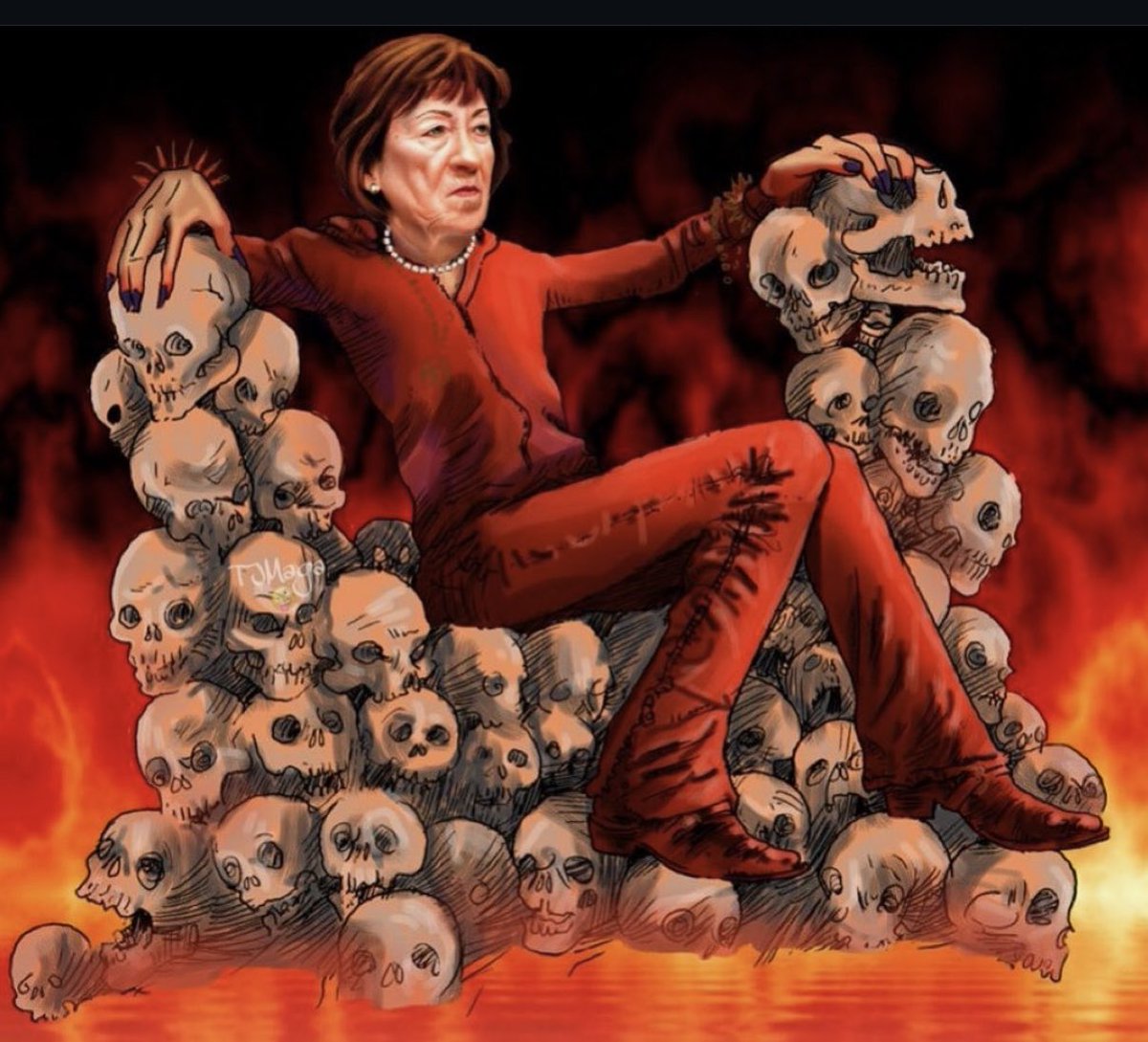
All the women who died after being forced to carry medically unsound pregnancies since her vote to confirm Kavanaugh ended Roe.

3
15
144
2,338

You can’t make a provider to something they don’t think is ethical or medically risky
2

I was looking at a map. To me, the SOH kind of looks like an anus with a hemorroid. Trump has blessed the world with a big medically inoperable hemorroid! (but maybe I'm just being snarky).
3

kooksupa ☃️❄️🪺🪹🦮🪽🍳💜 retweeted


2
124
323
1,898

10m
I work in healthcare and insurance is a whole ass scam!!! Medications that are MEDICALLY NECESSARY are not approved. You have to do all this 1st step therapy BS. People who are 20/400 normally and can get to 20/20 for contact lenses are not approved through insurance. SCAAAMMM!
4
138