










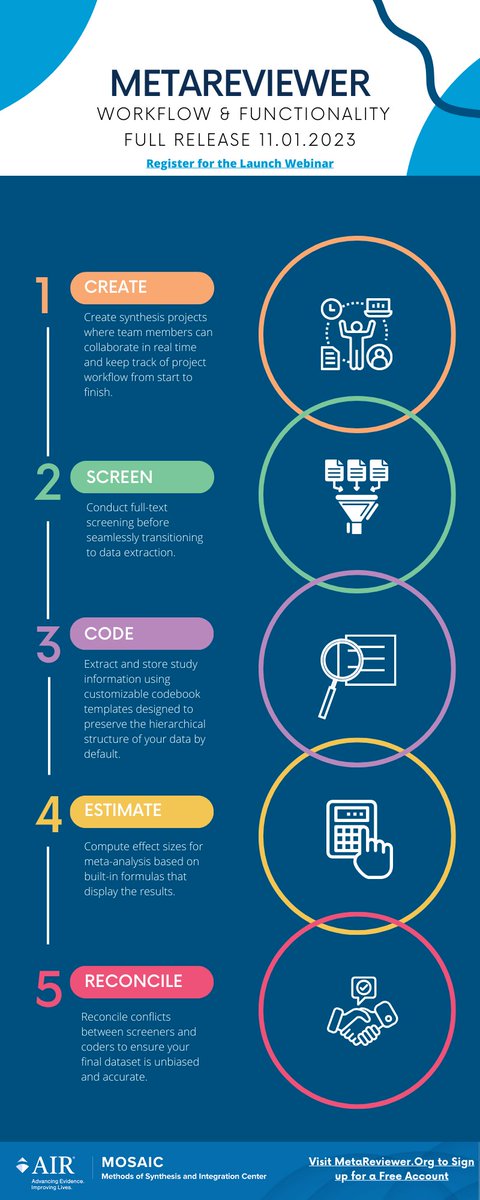
ALT An infographic of MetaReviewer's functionality. It includes 5 aspects: (1) create (Create synthesis projects where team members can collaborate in real time and keep track of project workflow from start to finish), (2) screen (Conduct full-text screening before seamlessly transitioning to data extraction), (3) code (Extract and store study information using customizable codebook templates designed to preserve the hierarchical structure of your data by default), (4) estimate (Compute effect sizes for meta-analysis based on built-in formulas that display the results), and (5) reconcile (Reconcile conflicts between screeners and coders to ensure your final dataset is unbiased and accurate). The post includes a link to the registration webinar at the top; at the bottom, it references the Methods of Synthesis and Integration Center at the American Institutes for Research.

