
Microclimates Explained: How It Shapes a Bottle of Wine
🍇🍇🍇
foodandwine.com/wine-microcl…
#wine
Robert Kimball retweeted

Our natural AC..
June Gloom…
Marine Layer…
California Current..
Microclimates..
Topography..
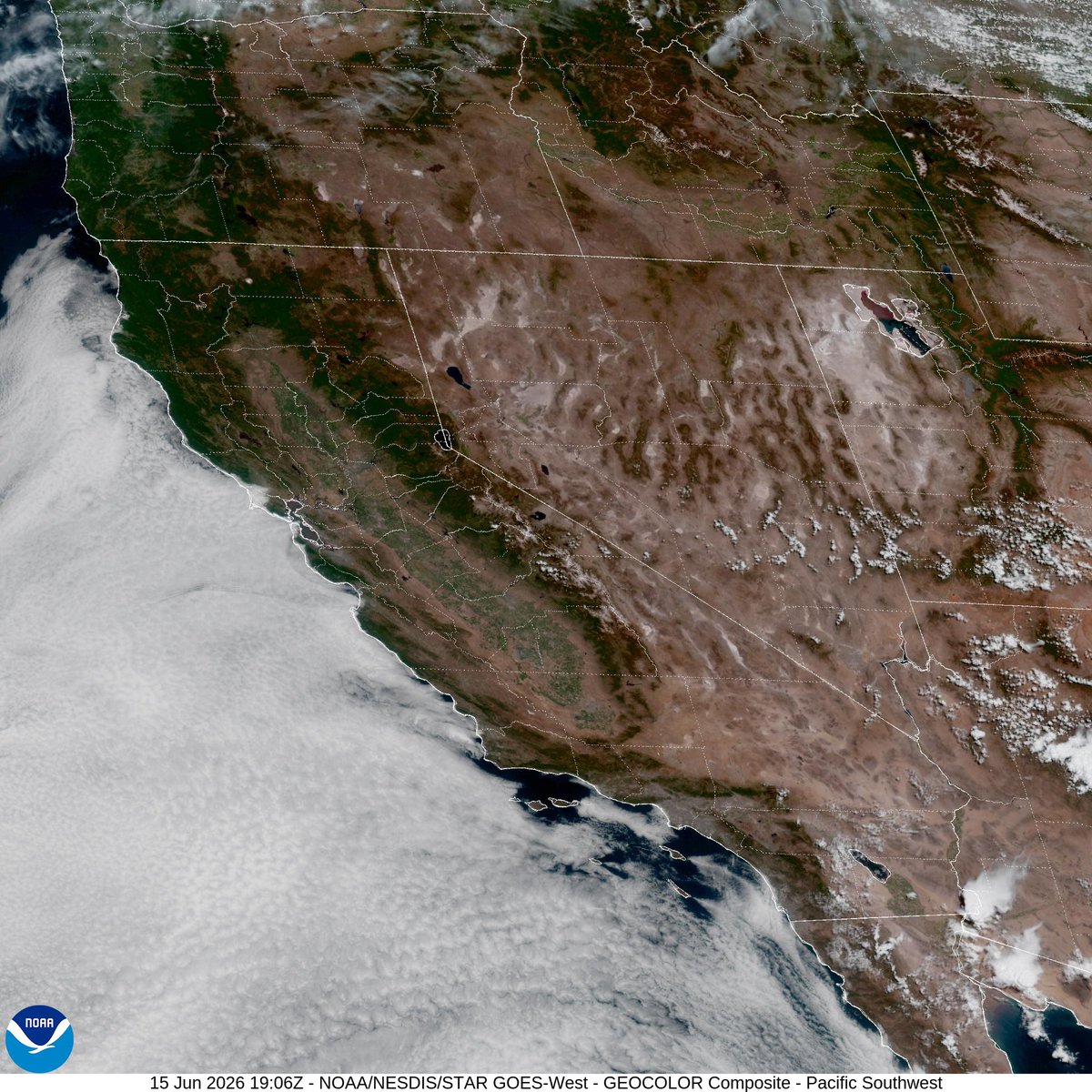
This image from 22,300 miles up explains it all..
As do these simultaneous 12 noon PDT temperatures do..
Red Bluff 100°
SFO 68°
Santa Maria 67°
Bakersfield 93°
LAX 67°
San Bernardino 90°
Palm Springs 106°
2
12
57
1,535

It’s mid-June, which means you’re currently playing our city’s favorite game: "Did I dress appropriately for a 15-degree temperature drop across three city blocks?" 🥶
Spoiler alert: You didn’t. Leave the house with a jacket, or accept your fate.
#KarlTheFog #Microclimates

15
101

Climate deniers cherry-pick leaf stomata because the data is noisy and localized. Plant leaves reflect regional microclimates, meaning they aren't a clean proxy for the global atmosphere. Global ice cores remain the unyielding gold standard for tracking historic CO2
1
9

Most creators research keywords like YouTube is one country. It isn’t.The same topic can be oversaturated in the U.S., under-served in Canada, exploding in India, low-competition in Australia, and monetizing differently in the U.K.So if you only check global keyword demand, you might be walking straight past the real opportunity.We just added country filters to vidIQ MCP keyword research, so you can ask:“Where is this keyword actually worth making a video for?”Before you make your next video, don’t just pick the keyword. Pick the market.
That final line is the key:
Don’t just pick the keyword. Pick the market.
First, tighten the factual positioning
Public vidIQ materials already position MCP as a way to ask natural-language YouTube data questions using vidIQ’s creator-native data, including keyword research, outlier scores, competitor analysis, and trend discovery. The MCP page also says creators can filter what is gaining traction by category and region.
That gives you a clean product angle:
This isn’t another keyword tool. It’s YouTube market intelligence inside your AI workflow.
One caveat worth knowing: vidIQ’s regular Keyword Research help page still says the standard keyword research tool does not limit keyword results by country or language, while pointing users toward country filtering in other vidIQ tools. That actually makes the launch angle stronger if this is an MCP-specific upgrade:
The old workflow showed the keyword universe. The new MCP workflow shows the country-level opportunity.
That is a much better product story than simply “we added filters.”
Best rewritten versions
Best overall version
Most creators are leaving views on the table.Not because they picked the wrong keyword.
Because they picked the wrong market.A keyword isn’t one opportunity. It can behave completely differently in the U.S., U.K., Canada, Australia, India, Germany, Brazil, or the Philippines.Different demand. Different competition. Different timing. Different viewer intent.We just added country filters to vidIQ MCP keyword research, so you can see where a topic actually has room to win.Before you make your next video, don’t just ask:
“Is this a good keyword?”Ask:
“Where is this keyword a good opportunity?”
Sharper version
You might not be targeting the wrong keyword.You might be targeting the wrong country.Same topic. Different market. Different demand curve. Different competition.We just added country filters to vidIQ MCP keyword research so creators can find where the opportunity actually is before they hit record.Global keyword data shows what people search.
Country-level keyword data shows where you can win.
More viral version
YouTube keyword research has a blind spot: geography.Creators check search volume.
They check competition.
They check related terms.But they rarely ask the question that can change the entire strategy:Which country actually wants this video right now?We just added country filters to vidIQ MCP keyword research.Because sometimes the difference between a dead topic and a breakout video is not the keyword.
It’s the market.
Founder-style version
We kept seeing the same pattern: creators would reject a keyword because it looked too competitive globally, or chase one because it looked huge globally.But when you split the data by country, the story changed.Some markets were saturated. Others were wide open.
Some countries had demand but almost no strong supply.
Some topics were already fading in one region and just starting in another.So we added country filters to vidIQ MCP keyword research.Now you can research YouTube ideas the way serious companies research markets: by where demand actually exists.
Stronger hook options
Direct
Your next video idea might be bad in one country and brilliant in another.
Punchy
The keyword isn’t the opportunity. The market is.
Curiosity-driven
Two creators can target the same keyword. One gets ignored. One finds an under-served country and wins.
Contrarian
Global keyword volume is lying to creators. Not because it’s fake — because it’s averaged.
High-status
YouTube growth is becoming market selection, not just keyword selection.
Simple
Before you make the video, check where people actually want it.
Best one-liner
Same keyword. Different country. Completely different opportunity.
The missing concept: “keyword arbitrage”
This is the genius framing.
Country filters create keyword arbitrage.
Arbitrage means finding a mismatch others missed. On YouTube, that mismatch might be:
High demand low competition in one country
A topic is crowded globally but under-served locally.
Rising demand in one country before others notice
A trend starts moving regionally before it becomes obvious globally.
Same keyword, different viewer intent
“Best budget laptop” means something different in the U.S. than in India, Brazil, or the Philippines.
Same niche, different monetization logic
A finance topic might have lower views in one country but stronger commercial intent in another.
Same language, different cultural context
English viewers in the U.S., U.K., Canada, Australia, India, South Africa, and Singapore do not always search or click the same way.
Phrase it like this:
The opportunity isn’t always hidden in a new keyword. Sometimes it’s hidden in the country split.
The bigger strategic thesis
Most creators think YouTube strategy looks like this:
Find keyword → make video → optimize title → publish.
The smarter workflow is:
Find topic → compare countries → detect demand/competition gaps → choose market angle → localize packaging → publish → validate geography in YouTube Studio.
YouTube Studio already lets creators use Advanced Mode to filter analytics by geography and other dimensions, and it can export analytics reports for deeper analysis. YouTube also warns that geography and other demographic data can be limited when data does not meet reporting thresholds.
That gives you a credible, non-overhyped product promise:
vidIQ helps you choose the country opportunity before you publish. YouTube Studio helps you validate where the views actually came from after you publish.
That is a beautiful before/after loop.
Strong product positioning
Bad positioning
We added country filters to keyword research.
This is accurate but too feature-led.
Better positioning
Find keyword opportunities by country.
Clearer, but still basic.
Strong positioning
See where a keyword has demand before you make the video.
Better because it connects feature to creator behavior.
Best positioning
Stop treating YouTube like one global market. Find the country where your next video has the best chance to win.
That is the winner.
Missing elements to add
1. Define the hidden enemy: averaged global data
Global keyword data can hide useful local differences. A keyword might look “medium opportunity” globally because the number is averaged across markets. But when split by country, it may reveal:
One country with huge demand and huge competition.
One country with modest demand but almost no supply.
One country where the topic is rising.
One country where the topic already peaked.
One country where the wording should be different.
Use this line:
Averages hide opportunity. Country filters reveal it.
2. Explain that country is not just location
Country affects:
search phrasing
price sensitivity
product availability
seasonality
slang
laws and regulations
school calendars
holidays
sports calendars
news cycles
device usage
income levels
cultural references
creator competition
advertiser demand
language mix
viewer intent
So the post should say:
Country is not a filter. It’s context.
That line is excellent.
3. Add examples
The current post says differences can be massive, but it does not show why. Add concrete examples.
For example:
“Best tax software” is not the same video in the U.S., U.K., Canada, and Australia.
“Back to school laptop” peaks at different times depending on the country.
“How to buy a house” changes completely by market.
“Best budget phone” depends on local availability and pricing.
“Student visa guide” is pure country-intent.
“Football” means different things depending on the market.
“Winter skincare” is seasonal in one hemisphere while irrelevant in another.
4. Add the “before you hit record” moment
The best behavior-change line is:
Check the country split before you write the script.
Not after publishing. Not while uploading. Before the creative decision.
5. Add the “wrong country tax”
This is a powerful concept:
The wrong country tax is what creators pay when they make a good video for the wrong market.
Examples:
You use U.S. pricing for an audience in India.
You mention products not available in the viewer’s country.
You publish a seasonal video at the wrong time for the country where demand is rising.
You use American terminology when the highest demand is in the U.K.
You target a saturated U.S. keyword when Canada or Australia has less competition.
6. Add “market-first packaging”
Once you know the country, titles and thumbnails change.
Instead of:
Best Budget Laptops 2026
You can make:
Best Budget Laptops in Australia 2026
Or:
Best Phones Under ₹20,000
Or:
UK Student Finance Explained
Or:
Best Tax Software for Canadians
The country filter should not just choose the topic. It should shape the packaging.
7. Add the validation loop
After publishing, creators should check whether the intended country actually responded. YouTube’s Audience tab gives creators information about who is watching, including geography, though YouTube notes some geography data may be limited.
Use this loop:
Research country demand → publish country-aware video → check geography in YouTube Studio → compare intended market vs actual market → adjust next upload.
That turns the feature into a repeatable workflow.
Best “genius-level” framework: The Geo-Opportunity Matrix
This could become the signature framework for the launch.
Every keyword-country pair falls into one of four boxes:
Low competitionHigh competitionHigh demandGoldmineBattle zoneLow demandNiche footholdAvoid
Goldmine
High demand, low competition.
Action:
Make the video now. Localize title, thumbnail, examples, and references.
Battle zone
High demand, high competition.
Action:
Only enter with a sharper angle, better authority, fresher data, or more specific sub-niche.
Niche foothold
Low demand, low competition.
Action:
Useful for small channels, local authority, B2B topics, evergreen tutorials, or monetization-heavy niches.
Avoid
Low demand, high competition.
Action:
Skip unless it supports a larger content strategy.
This is the big product promise:
vidIQ MCP country filters help you find the Goldmine quadrant before you make the video.
Another killer framework: Global keyword vs local opportunity
Use this table:
Old keyword researchCountry-filtered keyword research“Is this keyword popular?”“Where is this keyword popular?”“How competitive is this keyword?”“Where is competition weakest?”“What title should I use?”“Which market should this title speak to?”“Should I make this video?”“For which country should I make this video?”“What is the search volume?”“Where is demand underserved?”“What tags should I add?”“What angle, examples, and phrasing fit this audience?”
The best line from this:
The old question was: should I make this video?
The new question is: where should this video be aimed?
The obscure thought inputs
1. Simpson’s paradox
This is the hidden data-science angle.
A keyword can look average globally while being excellent in one country and terrible in another. Aggregated data can reverse or flatten what is happening inside segments.
Phrase:
Global keyword data can create Simpson’s paradox for creators: the average hides the segment where the real opportunity lives.
2. Market microclimates
Demand is not evenly distributed. It has weather.
Phrase:
YouTube has market microclimates. A topic can be freezing in one country and heating up in another.
This is a brilliant metaphor for country filters.
3. Geo-intent drift
The same words can imply different intent by country.
Example:
“College” in the U.S. often means university.
“College” in the U.K. can mean something different.
“Football” can mean soccer, American football, or Australian rules depending on country.
“Tax return,” “mortgage,” “visa,” “insurance,” “budget phone,” “best bank,” and “student loan” all mutate by country.
Phrase:
Same keyword, different country, different intent.
4. Supply-demand asymmetry
Creators usually look at demand, but opportunity is demand divided by supply.
Phrase:
A million searches do not matter if a million creators are already serving them. The opportunity is demand minus competition.
5. Cultural click-through
A title can be technically optimized but culturally wrong.
Phrase:
CTR is cultural. What feels urgent, trustworthy, funny, or obvious changes by country.
6. Seasonality inversion
Northern and Southern Hemisphere timing can completely change content calendars.
Example:
Back-to-school, winter skincare, tax season, travel, sports, gardening, fitness, holidays.
Phrase:
Your “timely” video may be six months early or six months late depending on the country.
7. Localization without translation
Country targeting does not always mean changing language.
Phrase:
Localization is not just translation. It is examples, prices, rules, timing, references, and assumptions.
8. The country wedge
Small channels often cannot win broad global terms. But they can win a narrower market.
Phrase:
Country targeting gives small creators a wedge. Don’t fight the whole internet. Win one market first.
9. Viewer availability vs advertiser value
Views are not equal commercially. Some countries may deliver more ad revenue or stronger buying intent, while others may deliver more volume. The post should not promise revenue from country filters, but it can say:
A smart creator does not only ask where the views are. They ask where the right views are.
10. Search-to-browse bridge
Country filters are not only for search. If a localized video earns strong satisfaction signals in one market, it can potentially help YouTube understand the audience cluster for Browse and Suggested.
Careful phrasing:
Country-level research starts with search demand, but the real upside is audience fit.
Better CTAs
Simple
Try country filters in vidIQ MCP keyword research.
More compelling
Check the country split before your next upload.
Strongest
Find where your next keyword can actually win.
Creator-native
Before you hit record, ask vidIQ MCP where the demand is.
AI workflow
Ask your AI: “Which country has the best opportunity for this keyword?”
Best final CTA
Before you make your next video, find the country where the opportunity is hiding.
Add sample MCP prompts
This is probably the most valuable missing element. Since this is an MCP feature, show creators exactly what to ask.
Basic prompt
“Research the keyword ‘budget gaming laptop’ by country. Show me where demand is high, competition is low, and the opportunity score is strongest.”
Better prompt
“Compare the keyword ‘best budget camera’ across the U.S., U.K., Canada, Australia, and India. Rank countries by demand, competition, and creator opportunity. Then suggest localized title angles for the top 3.”
Creator strategy prompt
“I run a personal finance YouTube channel. Find country-specific keyword opportunities for beginner investing topics. Prioritize high demand, low competition, and strong evergreen potential.”
Localization prompt
“For the keyword ‘how to start freelancing,’ compare country-level demand and tell me how the title, examples, and thumbnail should change for each market.”
Competitor prompt
“Find countries where ‘AI tools for students’ has strong keyword demand but fewer high-performing recent videos from established channels.”
Calendar prompt
“Find country-specific seasonal keyword opportunities for my tech channel over the next 60 days.”
Advanced prompt
“Create a geo-opportunity matrix for ‘best budgeting apps.’ Compare U.S., U.K., Canada, Australia, India, and Philippines. Include search demand, competition, likely viewer intent, localization notes, and 5 title ideas per country.”
This turns the launch from an announcement into an immediately usable workflow.
The best demo structure
Your post would be 10x stronger with a mini-example.
Template:
We tested the same keyword across five countries.Country A: high demand, brutal competition.
Country B: medium demand, low competition.
Country C: rising demand, weak recent supply.
Country D: strong search volume but wrong viewer intent.
Country E: low volume but high commercial value.Same keyword. Five completely different strategies.
Even without disclosing actual numbers, this makes the concept obvious.
Even better:
Global data said: “Maybe.”
Country data said: “Make it for Australia.”
That is the kind of line creators remember.
Best visual ideas
Visual 1: Map heatmap
A world map with countries colored by opportunity.
Headline:
Your keyword is not equally valuable everywhere.
Visual 2: Same keyword, different countries
Show one keyword in the center, with different country cards:
U.S. — high volume / high competition
Canada — medium volume / low competition
U.K. — rising
Australia — seasonal spike
India — different wording needed
Visual 3: Creator decision tree
Before filming:
Pick topic
Check keyword
Filter by country
Choose market
Localize title
Publish
Validate in YouTube Studio
Visual 4: Hidden opportunity chart
Global average looks flat. Country split reveals one massive spike.
Caption:
Averages hide spikes.
Visual 5: Keyword passport
Make it playful:
Every keyword has a passport. Check where it performs best.
Product feature ideas that would make this truly elite
1. Country Opportunity Score
A combined metric:
Demand × Low Competition × Trend Momentum × Channel Fit
This should not just show country filters. It should rank where the creator can realistically win.
2. “Best Country for This Keyword”
A simple answer creators can act on:
Best country to target: Canada
Why: strong demand, lower competition, rising trend, good match with your existing audience
3. Localization Suggestions
For each country, generate:
localized title
thumbnail text
examples to include
terms to avoid
pricing units
seasonal timing
cultural references
related keywords
4. Country Gap Finder
Find topics where demand exists in a country but recent strong videos are weak, outdated, low-retention, or poorly packaged.
5. Existing Audience Match
Compare country keyword opportunity against the creator’s actual audience geography from their channel analytics.
The best insight:
Opportunity is strongest where external demand overlaps with your existing audience.
6. “Wrong Country Warning”
Flag when a creator’s video angle mismatches the likely highest-demand country.
Example:
This keyword has strongest demand in the U.K., but your title and examples are U.S.-specific.
7. Localized Title Generator
Generate titles by country:
U.S. version
U.K. version
Canada version
Australia version
India version
8. Country Seasonality Alerts
Notify creators:
“This keyword is rising in Australia now but usually peaks in the U.S. in six months.”
9. Multilingual adjacency
Suggest when the opportunity may be in another language rather than only another country.
Example:
English keyword is saturated in the U.S.; Spanish version has lower competition in Mexico.
10. Geo-validation report
After publishing, show:
Intended country
Actual top countries
Search terms by geography
CTR by geography
Retention by geography
Subscriber conversion by geography
Next localization move
This closes the loop.
Stronger launch copy
Version 1: concise LinkedIn/X post
I think most creators are leaving views on the table.Not because they’re targeting the wrong keyword.
Because they’re treating every keyword like it performs the same everywhere.It doesn’t.The same topic can be saturated in one country, under-served in another, rising in a third, and completely different in intent somewhere else.We just added country filters to vidIQ MCP keyword research.Now you can ask:“Where is this keyword actually worth making a video for?”Before your next upload, don’t just pick the keyword.
Pick the market.
Version 2: more dramatic
Most creators research YouTube keywords with one huge blind spot: country.They see global demand and assume that’s the opportunity.But global averages hide the truth.A keyword can be impossible to rank for in the U.S., wide open in Canada, exploding in India, seasonal in Australia, and phrased differently in the U.K.We just added country filters to vidIQ MCP keyword research so you can find the market where your video has the best chance to win.Same keyword. Different country. Different opportunity.
Version 3: punchy
Your keyword research might be right.
Your country targeting might be wrong.That’s the part most creators miss.We just added country filters to vidIQ MCP keyword research so you can see where demand actually is before you make the video.Because “good keyword” is not enough anymore.You need the right keyword in the right market.
Strong short-form video script
Most creators are leaving views on the table.Not because they picked the wrong keyword.
Because they never checked the country.The same keyword can be crowded in the U.S., wide open in Canada, trending in India, seasonal in Australia, and searched with totally different intent in the U.K.Global keyword data gives you the average.
Country-level keyword data shows you the opportunity.That’s why we added country filters to vidIQ MCP keyword research.Before you make your next video, ask:“Where does this topic actually have demand?”Don’t just target the keyword.
Target the market.
Strong carousel structure
Slide 1
Most creators are leaving views on the table.
Slide 2
Not because they chose the wrong keyword.
Slide 3
Because they chose the wrong country.
Slide 4
The same keyword can have:
High demand in one market
Low competition in another
Different intent somewhere else
Different seasonality entirely
Slide 5
Global keyword data hides this.
Slide 6
Country-level keyword research reveals it.
Slide 7
We just added country filters to vidIQ MCP keyword research.
Slide 8
Ask:
“Where is this keyword actually worth making a video for?”
Slide 9
Before your next video:
Pick the topic.
Check the countries.
Find the gap.
Localize the angle.
Slide 10
Don’t just pick the keyword. Pick the market.
Best “missing examples” by niche
Tech
“Best budget phone” depends heavily on country because pricing, brands, and availability change.
Angle:
The best phone under $500 is not the same as the best phone under ₹20,000.
Finance
Taxes, credit cards, mortgages, investing accounts, student loans, and banking are country-specific.
Angle:
A finance keyword without country context is often incomplete.
Education
Study abroad, scholarships, exams, visa pathways, and school calendars vary dramatically.
Angle:
Education content is secretly geo-content.
Travel
Demand changes by origin country, currency, holiday timing, and visa rules.
Angle:
“Best places to visit” depends on where the viewer is starting from.
Gaming
Game popularity, esports scenes, server regions, and pricing differ by market.
Angle:
A gaming topic can trend in one country before global creators notice.
Beauty/fashion
Skin tone, climate, product availability, cultural norms, and seasonal weather matter.
Angle:
Beauty search intent changes with climate and product shelves.
Fitness
Summer/winter timing, diet culture, religious calendars, and local trends matter.
Angle:
Fitness seasonality is not global.
News/commentary
Political, economic, sports, and entertainment cycles are country-specific.
Angle:
A global trend is often just a local trend with better distribution.
The strongest strategic claim
Use this carefully:
Country filters turn keyword research from SEO into market research.
That is the elevated idea. vidIQ already says keyword work should compare search volume, competition, and intent, while treating volume as an estimate for comparing options rather than an exact count. The country layer makes that comparison more strategic.
Better expanded version:
Traditional keyword research asks, “What are people searching?”
Country-filtered research asks, “Which market has demand, weak supply, and the right intent for my channel?”
That should be the center of the launch.
What not to overclaim
Avoid saying:
“Country filters guarantee more views.”
Better:
“Country filters help you spot market-specific opportunities before you create.”
Avoid saying:
“

I think most creators are leaving views on the table.
Not because they're targeting the wrong keyword.
Because they're targeting the wrong country.
We just added country filters to vidIQ MCP keyword research.
The differences in demand can be massive.
Before you make your next video, check where the opportunity actually is 👇
1
3
358

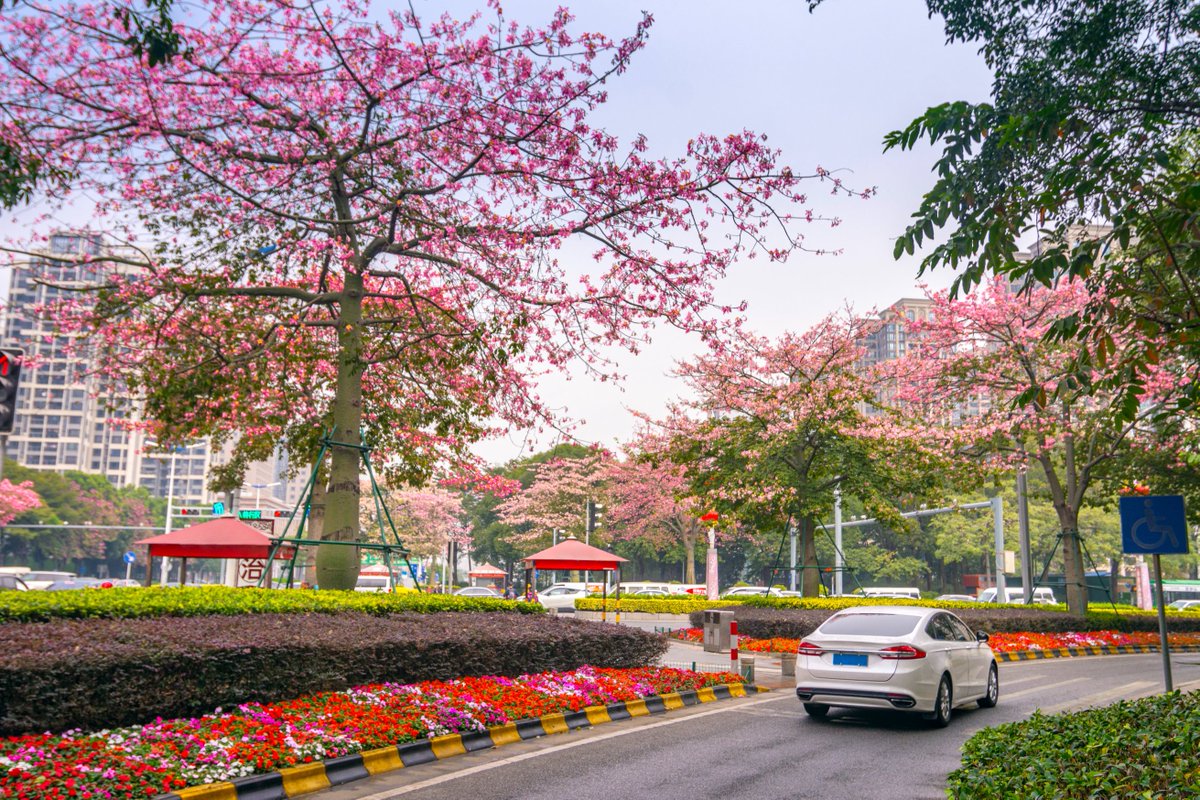
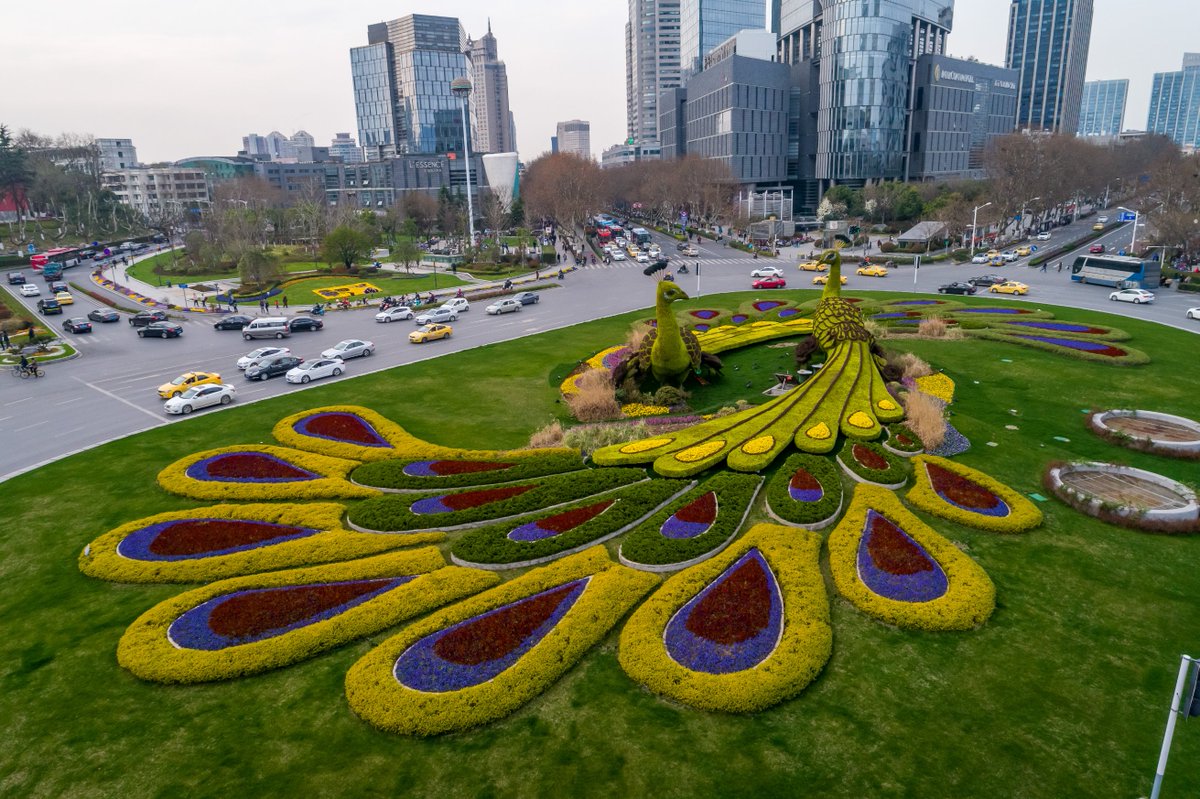
Why Are China's Urban Green Belts So Beautiful? Recently, China's urban green belts have taken social media overseas by storm. With their year-round scenery, blooming flowers, and tidy elegance, they have captured global attention. From the corridors of Chinese roses along Beijing's ring roads to the Jacaranda lined streets of Kunming, these floral landscapes have garnered countless likes. Overseas netizens are eagerly sharing their own photos, praising the exquisite planning and meticulous maintenance, while others curiously ask: “How is this beauty achieved? Are the flowers real, or are they made of plastic or AI-generated?”
In China, urban green belts serve as more than just roadside landscaping; they are a showcase of a city's image. Along Beijing's 4th Ring Road, 713,000 Chinese rose bushes have been planted to create a continuous 65.3-kilometer-long floral spectacle. Their blooming season stretches from early May to mid-November, with layers of flower corridors adorning the city streets. On Jiaochang Middle Road in Kunming, 551 Jacaranda trees stretch for 1.4 kilometers. As they bloom one after another, they unfold into a romantic blue-purple floral avenue, becoming a visual calling card for the city. Meanwhile, in Shanghai's core urban areas, millions of tulips are planted. When they burst into bloom, the stunning scenery becomes a must-visit spring attraction for both residents and tourists.
By the end of 2025, China’s green coverage of urban built-up areas had achieved 43.49%, with the per capita area of park greenery in urban areas reaching 15.91 square meters. Additionally, over 57,000 pocket parks and more than 150,000 kilometers of urban greenways have been established.
So, how is such beauty in China's green belts achieved? It is the result of decades of systematic urban planning and governance experience. As early as 1997, China's first Code for Planning and Design of Urban Road Greening set a standard that the green space ratio for landscaped roads must not be less than 40%. In 2024, the Standard for Design of Urban Road Greening further established standardized and quantified regulations for details such as green space ratios, green belt widths, tree species selection, and pipeline spacing. However, beyond these unified standards, localities create landscapes tailored to their specific climates, topography, and native vegetation, ensuring that every city boasts its own unique green charm.
These visually stunning urban green belts offer more than just aesthetic pleasure; they also provide tangible "green benefits." They serve multiple practical functions, such as reducing noise, trapping dust, and regulating microclimates. This allows cities to become more livable, gentle, and vibrant amidst the blooming flowers and lush greenery. #thechineseway #ChineseNation #chinatravel


65

21h
Key Advantages:
• Multi-layer passive envelope drastically cuts active cooling needs
• True zero-water closed-loop system (addresses Arizona water concerns)
• AI predictive control tuned for Tucson desert microclimates
• Modular pods for fast 1M sq ft deployment
• Qualifies for max 20-year Arizona CDC tax incentives
24

It hasn't changed that much @Cernovich. The Tendo has always been the Tendo, yes, with the pandemic it metastacized and spread out a bit into the vacuum downtown created by the shift to working from home, but the other 45 square miles of the city have only gotten nicer over the years. There are still microclimates, landscapes and bike rides to Sausalito galore. It's not for nothing that 1100 square foot 2/1's in fog-bound neighborhoods are going for $1M over asking.
9
7
599

Jun 15
3. Urban Heat Islands (UHI)
Despite Malta's small geographic footprint, urbanization has created distinct microclimates. Low-lying, highly built-up areas like Birkirkara and Qormi act as Urban Heat Islands.
1
2
Jun 15
To accurately know the weather in Malta, we have to look at three meteorological phenomena🇲🇹
Most forecasts fail to accurately predict the microclimates of the Maltese archipelago because they rely on macro-scale models that overlook local marine and terrain interactions.

1
7