Filter
Exclude
Time range
-
Near
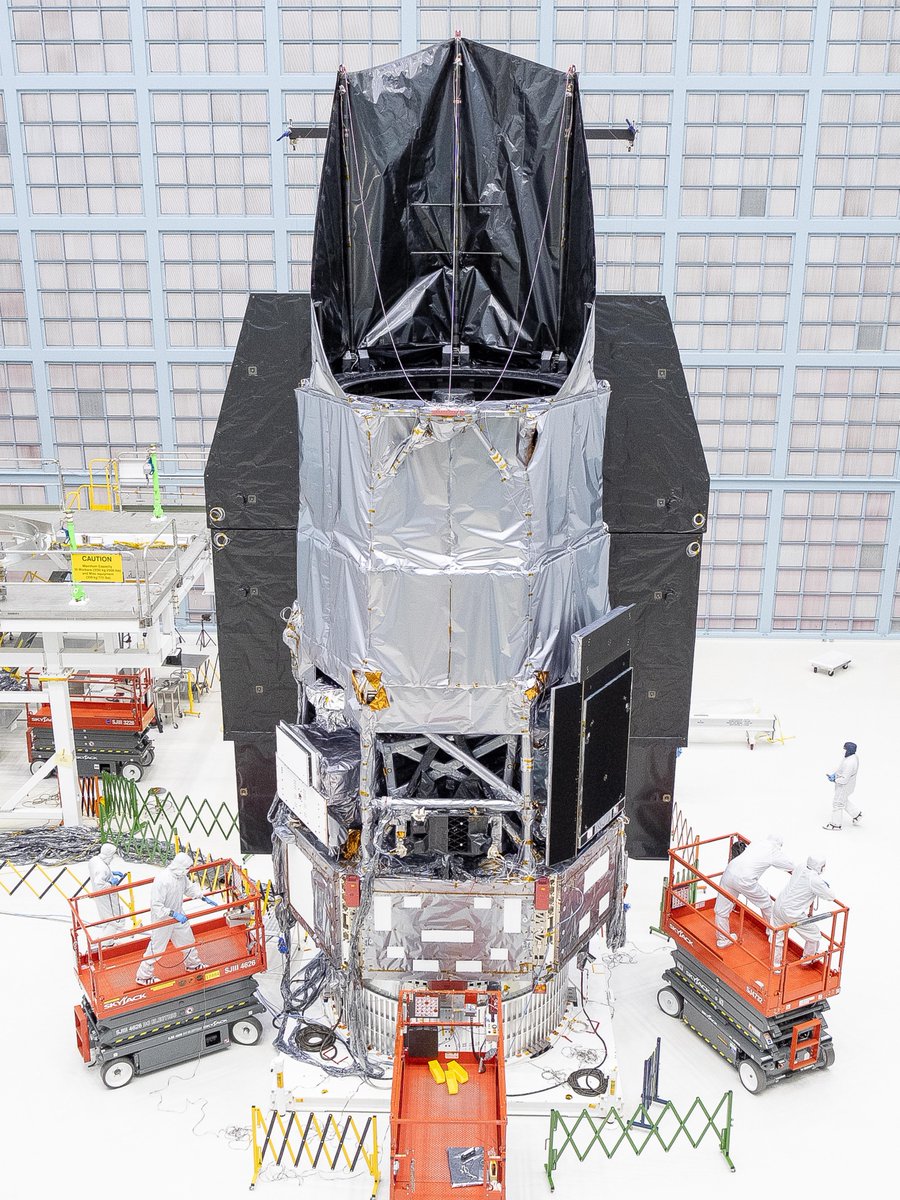
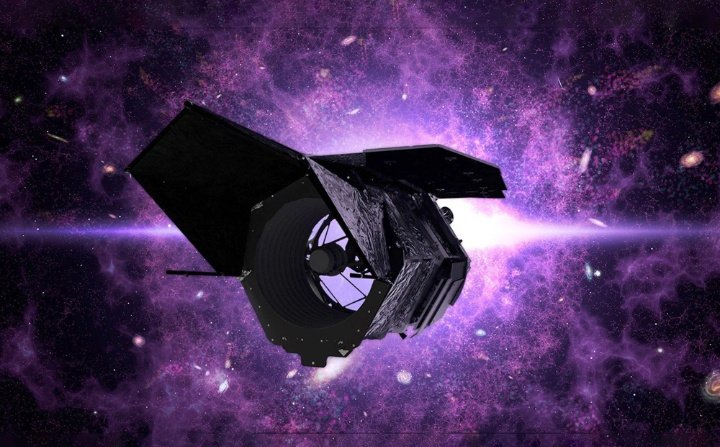
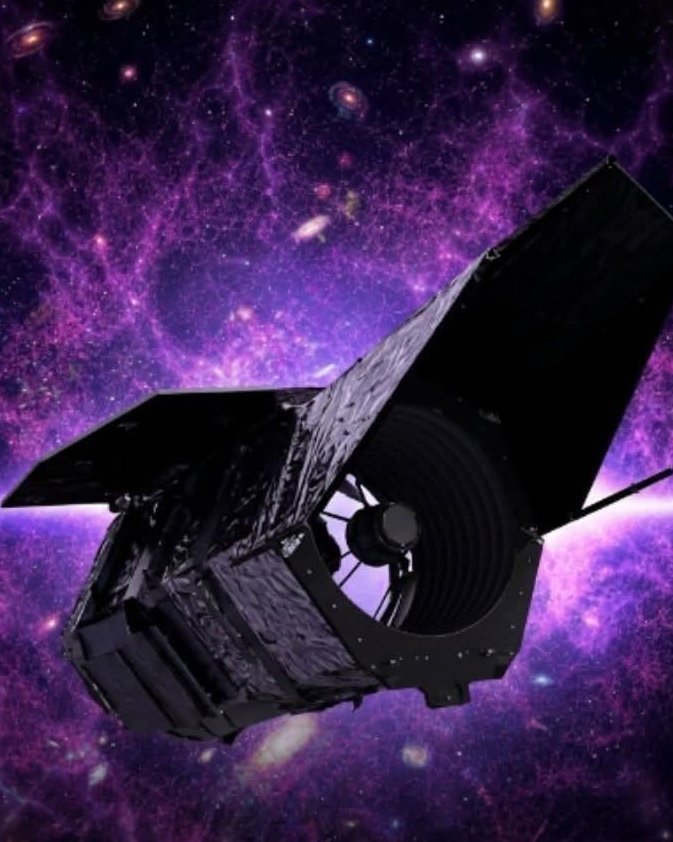
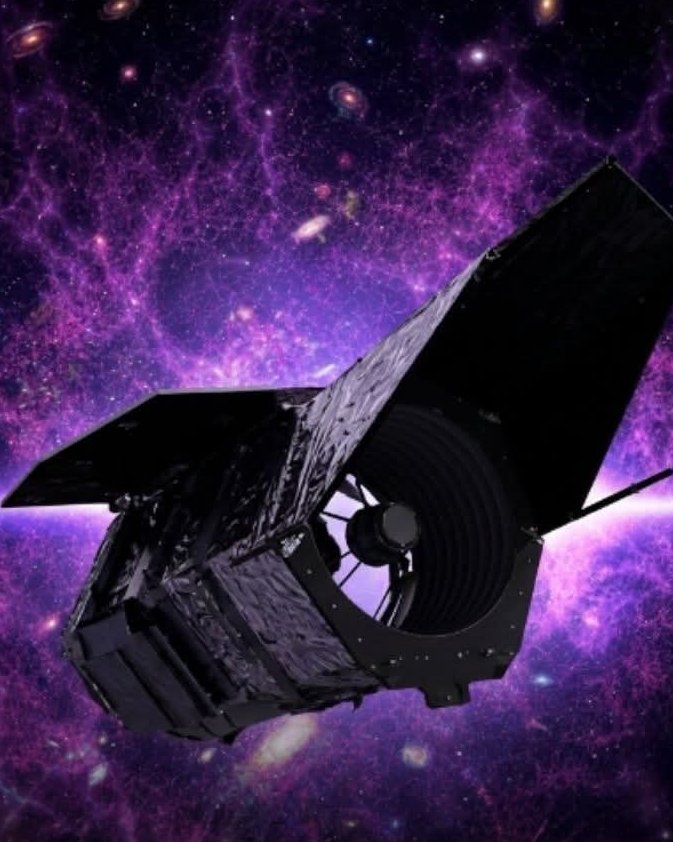
Get Ready: NASA’s Nancy Grace Roman Space Telescope Launches August 30! This is big news for the future of astronomy. NASA is set to launch the Nancy Grace Roman Space Telescope on August 30, 2026 — a powerful new observatory named after NASA’s first chief astronomer, a true pioneer who helped shape the agency’s space science program. Positioned at the stable Sun-Earth Lagrange Point 2 (about 1.5 million km from Earth), Roman will have a field of view ~100–200 times larger than Hubble’s while maintaining sharp infrared vision. That means it can map enormous swaths of the sky in a single shot, revealing patterns we could never see before. Key Missions:Dark Energy — Probe the mysterious force accelerating the universe’s expansion using wide-field surveys, supernovae, weak lensing, and galaxy clustering. Exoplanets — Discover thousands of new worlds through gravitational microlensing (including rogue “free-floating” planets) and directly image others with its advanced coronagraph. Cosmic Architecture — Create massive maps of galaxies and cosmic structure across billions of light-years to understand how the universe evolved. While telescopes like Hubble and Webb deliver stunning deep, narrow views, Roman is built for breadth and speed — the perfect complement that will generate an enormous legacy archive for decades of discovery. The universe is about to get a whole lot clearer. This mission will help answer some of the deepest questions in cosmology and planetary science — and it’s just weeks away from liftoff. Who’s excited for Roman’s first light?
1
6
27
2,934
Replying to @mathelirium
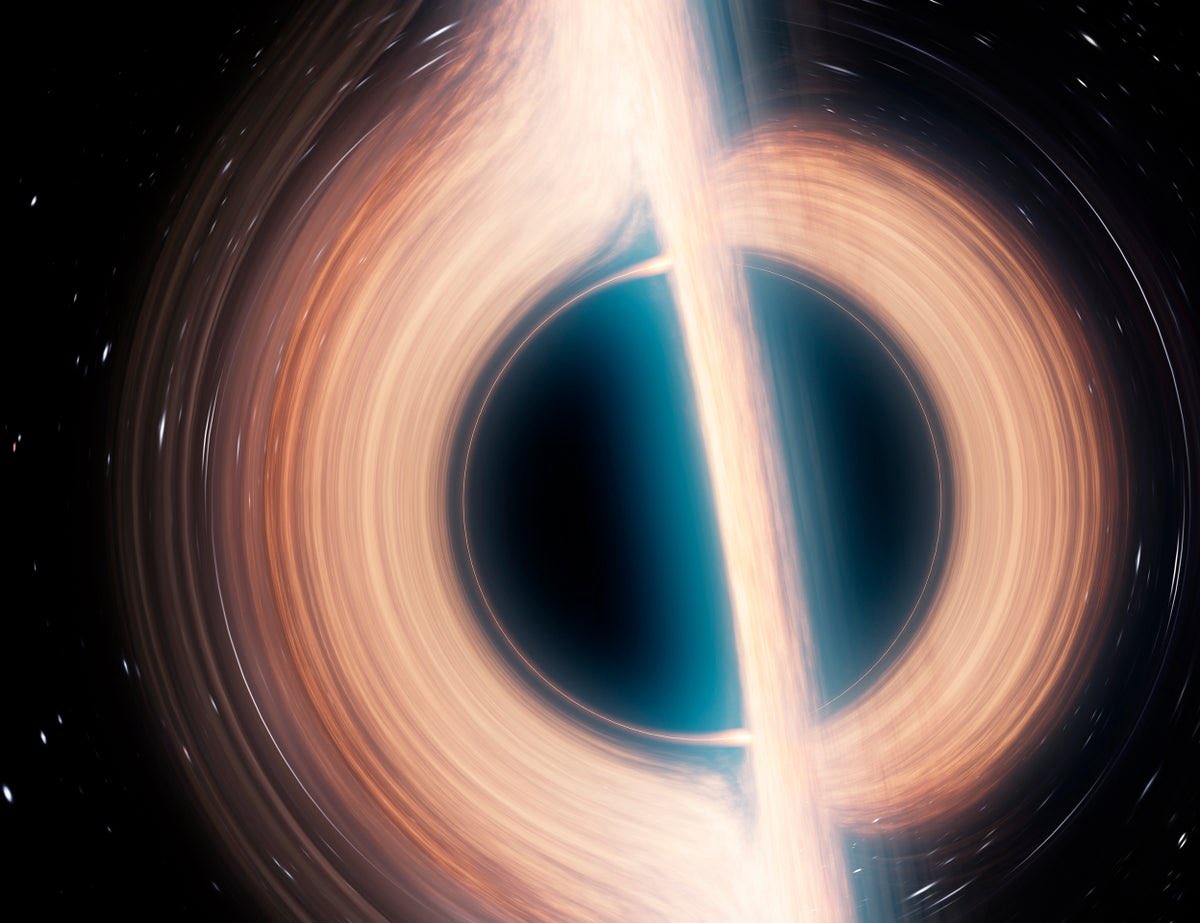
Binary gravitational microlensing is the ray-mapping of a source plane through a time-dependent two-body lens potential. Critical curves live in the image plane, caustics in the source plane, and the dramatic bright structures arise where the Jacobian determinant of the lens map approaches zero. The black cores in the animation are visualization markers for the lens positions, not literal dark disks unless the simulation also imposes occultation.
23
Gravity can bend light so strongly that one source appears as arcs, rings, and duplicated images. This is Binary Gravitational Microlensing. Each pixel on the screen represents an apparent angular position θ = (θₓ, θᵧ). The compact masses bend the incoming light, and thus the source position β is found through the thin-lens map: β = θ - Σⱼ mⱼ(θ - θⱼ)/(|θ - θⱼ|² ε²). The image is then created by sampling a distant luminous source field S(β): I(θ,t) = S(β(θ,t)). The sharp bright structures come from the Jacobian of the lens map: A = ∂β/∂θ, μ = 1/|det A|. Where det A gets close to zero, the magnification spikes. Light folds into crowns, arcs, and glowing caustic ridges around the moving binary lens. In this animation, two compact masses orbit each other while the background source plane is ray-mapped through their gravitational field. The black cores mark the lens positions. Gold and pearl show the strongest magnification. Cyan and ice reveal stretched background light as the source is duplicated and wrapped around the lens. Gravity bends the geometry that light travels through and does not touch the light directly. #GravitationalLensing #GeneralRelativity #Microlensing #Astrophysics #PhysicsVisualization #MathematicalPhysics
3
30
196
6,534
Get Ready: NASA’s Nancy Grace Roman Space Telescope Launches August 30! This is big news for the future of astronomy. NASA is set to launch the Nancy Grace Roman Space Telescope on August 30, 2026 — a powerful new observatory named after NASA’s first chief astronomer, a true pioneer who helped shape the agency’s space science program. Positioned at the stable Sun-Earth Lagrange Point 2 (about 1.5 million km from Earth), Roman will have a field of view ~100–200 times larger than Hubble’s while maintaining sharp infrared vision. That means it can map enormous swaths of the sky in a single shot, revealing patterns we could never see before. Key Missions:Dark Energy — Probe the mysterious force accelerating the universe’s expansion using wide-field surveys, supernovae, weak lensing, and galaxy clustering. Exoplanets — Discover thousands of new worlds through gravitational microlensing (including rogue “free-floating” planets) and directly image others with its advanced coronagraph. Cosmic Architecture — Create massive maps of galaxies and cosmic structure across billions of light-years to understand how the universe evolved. While telescopes like Hubble and Webb deliver stunning deep, narrow views, Roman is built for breadth and speed — the perfect complement that will generate an enormous legacy archive for decades of discovery. The universe is about to get a whole lot clearer. This mission will help answer some of the deepest questions in cosmology and planetary science — and it’s just weeks away from liftoff. Who’s excited for Roman’s first light?
2
17
59
3,490
Roman will use both planetary transits and gravitational microlensing, enabling it to detect worlds that other telescopes often miss—including distant planets, rogue planets, and systems unlike our own. science.nasa.gov/mission/rom… By surveying vast sections of the galaxy, astronomers hope to build the most complete census of exoplanets ever created and gain new insights into how planetary systems form and evolve throughout the Milky Way.
1
64
Using the transit and microlensing technique Nancy Grace Roman Space Telescope offers a panoramic field of view 200 times greater than Hubble's. TRST will attempt to locate exoplanets, measure the cosmological constant of dark matter, dark energy.
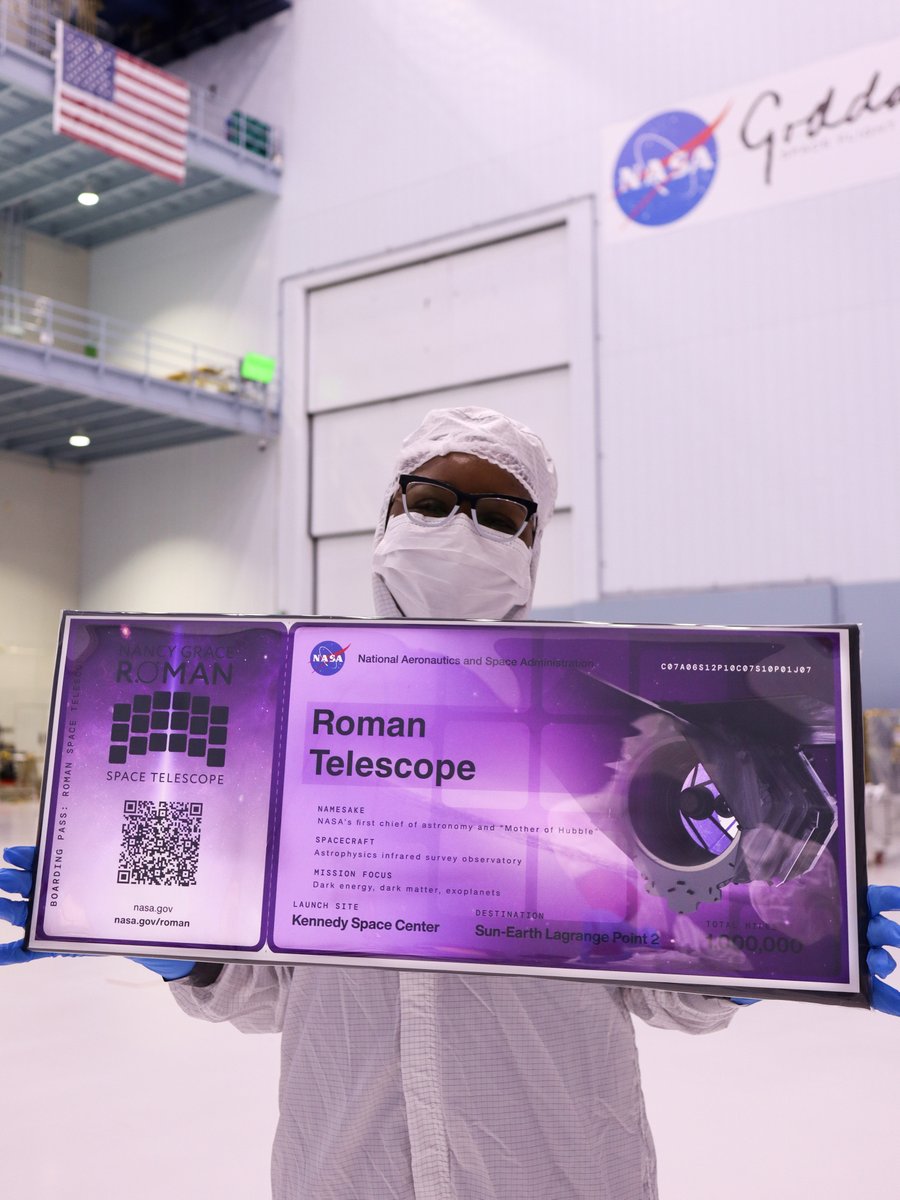
Have you ever wanted to have your name 'Roman' a million miles away? Now you can! Send your name along the Nancy Grace Roman Space Telescope, scheduled to launch Aug. 30, 2026! Sign up here: go.nasa.gov/4ejkRcR Submissions close July 12.
47
Replying to @NASA @NASARoman
🔭 Webb sees deep. Roman sees wide. The Roman Space Telescope launches August 30 eight months ahead of schedule. Its field of view is 100 times larger than Hubble's. Same resolution. 100 times the sky in the same exposure time. Over five years it will measure light from roughly a billion galaxies. Run a microlensing survey of the inner Milky Way that should reveal over 1,000 planets including free-floating worlds with no star at all, drifting alone through the galaxy. And map dark matter and dark energy, the 95% of the universe that has never been directly observed. Nancy Grace Roman was NASA's first Chief of Astronomy. She fought for Hubble's funding in the 1960s when most of the agency thought it was too risky and too expensive. She never lived to see Roman launch. She died in 2018. The telescope named after her will spend the next decade answering questions she spent her career making possible. 📌 Source: NASA, TechTimes, SpacePolicyOnline, June 2026
4
275
Manu retweeted
Replying to @GastonGiribet
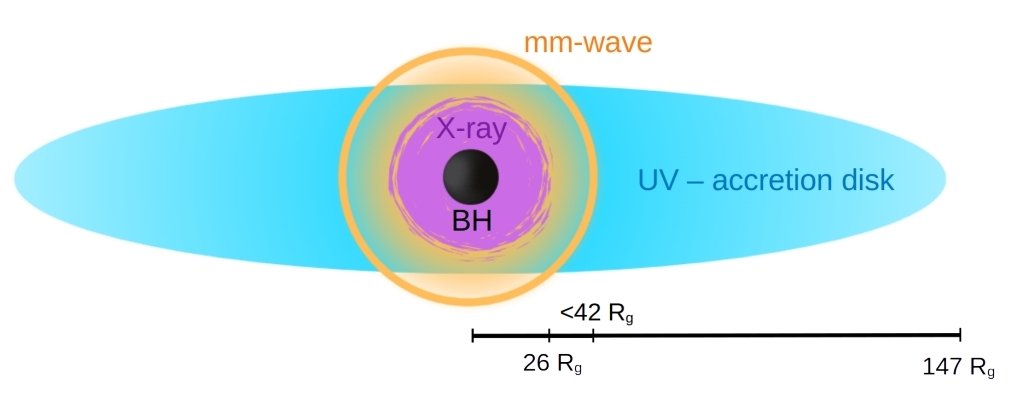
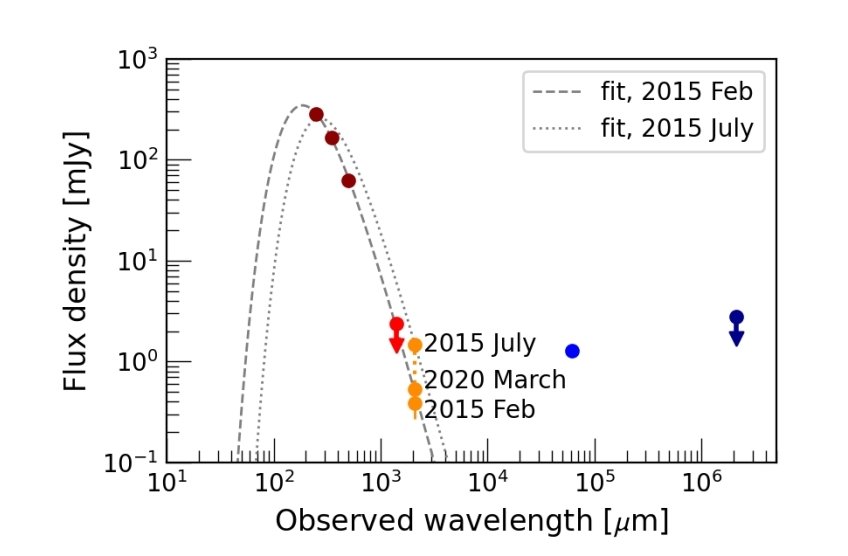
#AA Detection of millimetre-wave coronal emission in a quasar at cosmological distance using microlensing aanda.org/articles/aa/full_h… #arXiv arxiv.org/abs/2503.13313 RXJ1131-1231, z = 0.658, flux-ratio variability is consistent with microlensing with a half-light radius 50 AU.
3
14
905
Jun 11
TL;DR 🔭 Unlocking the universe through Hubble, Webb, and Roman: 36 years of spaceborne eyes in 60 seconds ⏱️ 🚀 In April 1990, the Hubble Space Telescope launched into low-Earth orbit, overcame a near-fatal 2.2-micrometer mirror flaw through a legendary 1993 human servicing mission, and went on to pin down the universe’s age at 13.8 billion years. Yet, over its highly productive lifetime, it has captured only 0.1% of the sky through a narrow cosmic keyhole. ✨ The James Webb Space Telescope launched in December 2021 to the distant Sun-Earth L2 point, dramatically extending Hubble's partial capabilities by using infrared vision to pierce dense dust clouds, study exoplanet atmospheres, and discover unexpectedly massive, evolved early galaxies that are forcing astronomers to refine models of galaxy formation. 🧩 Targeting an August 30, 2026 launch date, the Nancy Grace Roman Space Telescope will journey to the Sun-Earth L2 region, matching Hubble’s 2.4-meter mirror size but introducing a 300-megapixel near-infrared Wide Field Instrument with a field of view at least 100 times larger to map the wide horizon. 🪐 Roman's five-year primary mission will unlock vast statistical scale, using gravitational microlensing to discover over a thousand planets farther out from their stars and the transit method to reveal up to 100,000 exoplanets, while deploying a Coronagraph Instrument technology demonstration to directly image nearby giant worlds and disks. 🌌 By observing a billion galaxies and simultaneously deploying three independent techniques, tracking Type Ia supernovae, weak gravitational lensing, and baryon acoustic oscillations, Roman will cross-verify data to map the precise behavior of the mysterious component that makes up 68% of the accelerating universe. 👩‍🔬 The telescope honors Dr. Nancy Grace Roman, NASA’s first Chief of Astronomy and first female executive, who leveraged her technical and management skills at the Naval Research Laboratory to build the institutional funding, engineering paths, and satellite programs that earned her the title "Mother of Hubble." 👁️ This 36-year generational handoff culminates in a shared quest: Hubble helped reveal dark energy but lacked the survey scale to map it, Webb looks deep into the past but lacks a wide field of view, and Roman will step in to look wider and see more, opening a new pair of eyes to the scale of the cosmos.
4
2
12
3,110
Ray Marshall retweeted
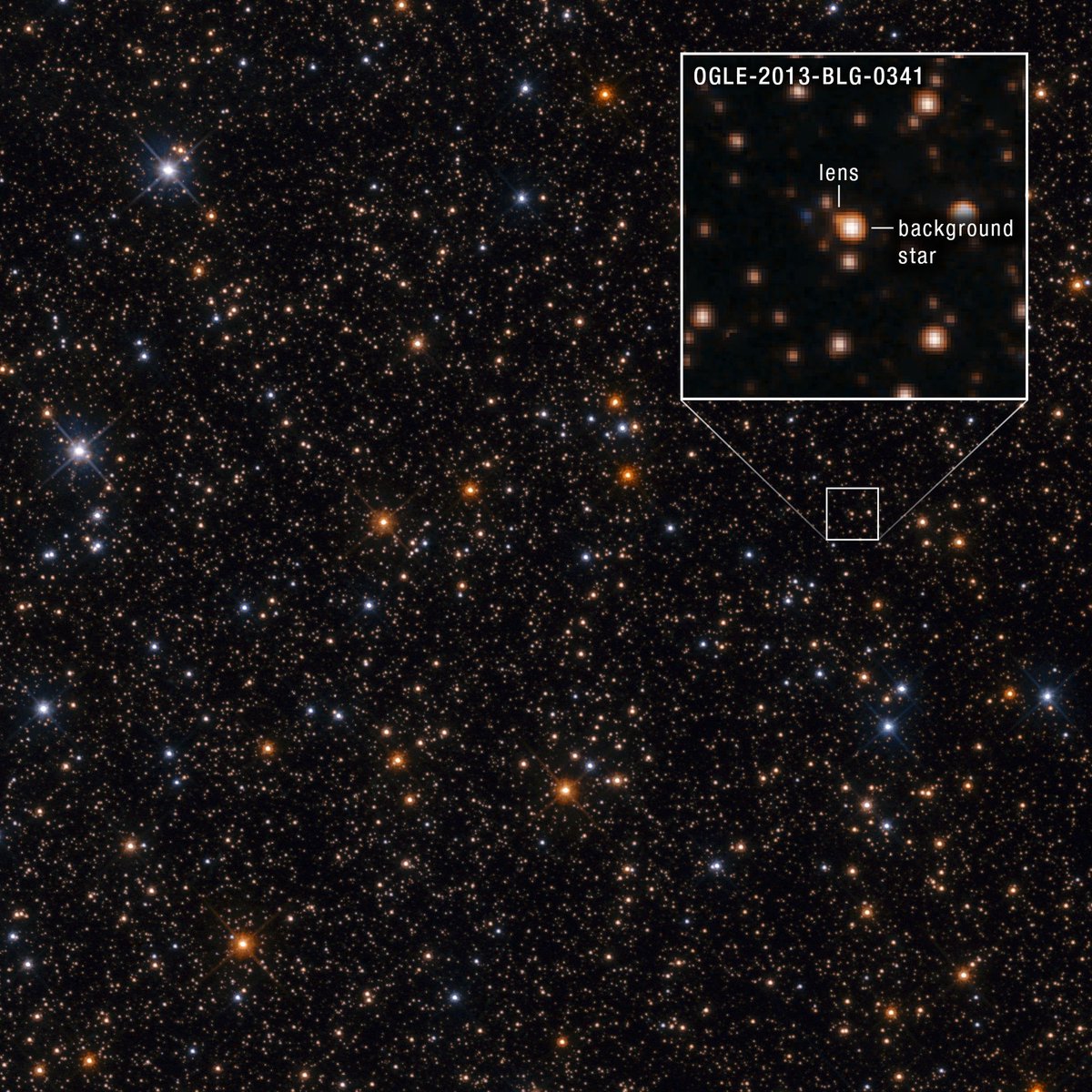
This Hubble image of a microlensing event, OGLE-2013-BLG-0341, shows how astronomers can use Hubble to distinguish lensing objects from background stars, allowing them to interpret future events that will be seen by #NASARoman: news.stsci.edu/42TpwwF
1
28
82
3,399
Lesson 16: Exoplanets — Worlds Beyond Our Solar System For thousands of years humans wondered if other stars had planets. Today we know the answer is yes — there are trillions of them, many in habitable zones where liquid water could exist. 1. Discovery Methods Exoplanets are mostly detected indirectly: •Transit Method: A planet dims its star’s light as it passes in front. •Radial Velocity: The star wobbles due to the planet’s gravitational pull. •Direct imaging and microlensing for rarer cases. 2. Diversity of Worlds We have found rocky super-Earths, massive gas giants, lava worlds, ice planets, and worlds orbiting two stars. Some hug their star tightly, others orbit at great distances. 3. Habitable Zones The habitable zone is the orbital distance where liquid water can exist on a planet’s surface. Future telescopes will search for biosignatures in atmospheres, such as combinations of oxygen and methane. 4. Implications for Life With billions of potentially habitable planets in our galaxy alone, the odds of extraterrestrial life rise dramatically. Finding even simple life elsewhere would transform our understanding of humanity’s place in the Universe. Key Fact:
More than 5,700 exoplanets have been confirmed, with thousands of candidates waiting. We are living in the first era of history where we can realistically search for life beyond Earth. #UniverseAcademy #Exoplanets #HabitablePlanets #SearchForLife #Astrobiology #Astronomy #Cosmology #Science #xAI #Grok #TheUniverseRule
1
1
1
20
Tiny Black Hole Candidate Could Be a Relic from the Dawn of the Universe Astronomers have discovered one of the most exciting objects yet: a possible primordial black hole with a mass of only three times that of the Moon (0.026 Earth masses). Named Phoebe, it was detected in December 2019 through a brief, perfectly symmetrical one-hour brightening of a distant star in the Large Magellanic Cloud — the classic signature of gravitational microlensing by an ultra-compact, extremely dense object. Unlike stellar black holes, primordial black holes are thought to have formed in the extreme conditions of the first fractions of a second after the Big Bang. If confirmed, Phoebe would be one of the strongest candidates so far and could help explain part of the universe’s dark matter. Statistical analysis strongly favors it being a primordial black hole in the Milky Way’s dark matter halo, about 18,200 light-years away. Alternative explanations (rogue planet or faint star) are hundreds of thousands of times less likely. Together with other ultra-short microlensing events (including candidates from Subaru toward Andromeda), Phoebe hints at a hidden population of lunar-mass black holes drifting through the galaxy. A single one-hour flicker of starlight may have just opened a new window into the birth of the Universe.
1
84
The physicists tried to test for black holes being a part of it in the dumbest way that would never result in anything conclusive, gravitational microlensing, they are retarded and get no pussy just like sounding smart
51
Recent astrophysical models and simulations suggest that supermassive black holes at the centers of galaxies act as massive Black Hole Planet factories. By hosting gargantuan, dusty accretion disks, they can foster the creation of thousands, or even millions of planets that grow to be far larger than Earth or Jupiter. While the space immediately surrounding an active black hole is too hostile and hot for matter to clump together, the cooler, outer regions of an Active Galactic Nucleus are ideal for planet formation. A typical black hole dust torus can hold up to a hundred thousand times the mass of the Sun, a billion times more raw dust than standard star-forming disks. In the dense, low-temperature regions far beyond the "snow line," icy dust grains can safely collide and stick together without being torn apart by radiation or radial drift barriers. Simulations indicate planets born in these disks could form in around 70-80 million years. Because of the endless supply of material, they can grow up to 10 times the mass of Jupiter. While these planets could make up the largest planetary systems in the universe, finding them is exceptionally difficult. Because they orbit in deep space around distant galactic centers, they are impossible to view directly with current instruments. Instead, astronomers are looking to gravitational microlensing techniques using upcoming space observatories, such as NASA's Nancy Grace Roman Space Telescope, to detect them as they pass in front of more distant stars. ➡️: scientificamerican.com/artic…
1
1
2
179
Replying to @SpaceX
What makes Grace Roman Telescope special? 🚀🌌 It can image areas of the sky about 100 times larger than Hubble in a single shot while maintaining similar sharpness. It will help scientists investigate dark matter & dark energy. It's expected to discover more than 100,000 exoplanets using gravitational microlensing techniques. Its advanced coronagraph will test technologies for directly imaging planets around other stars.
3
7
137
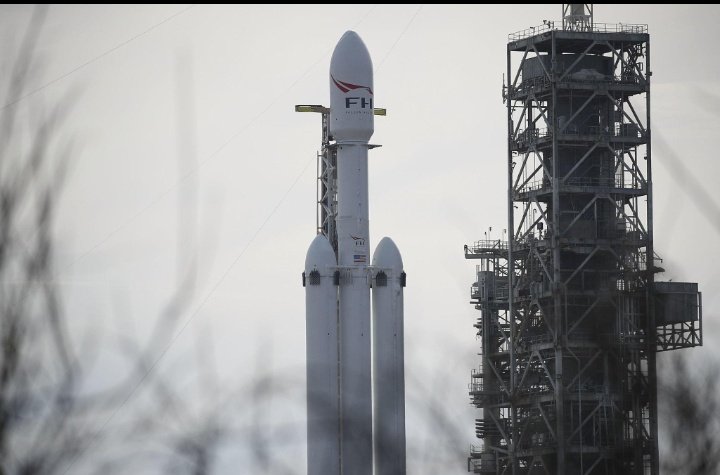
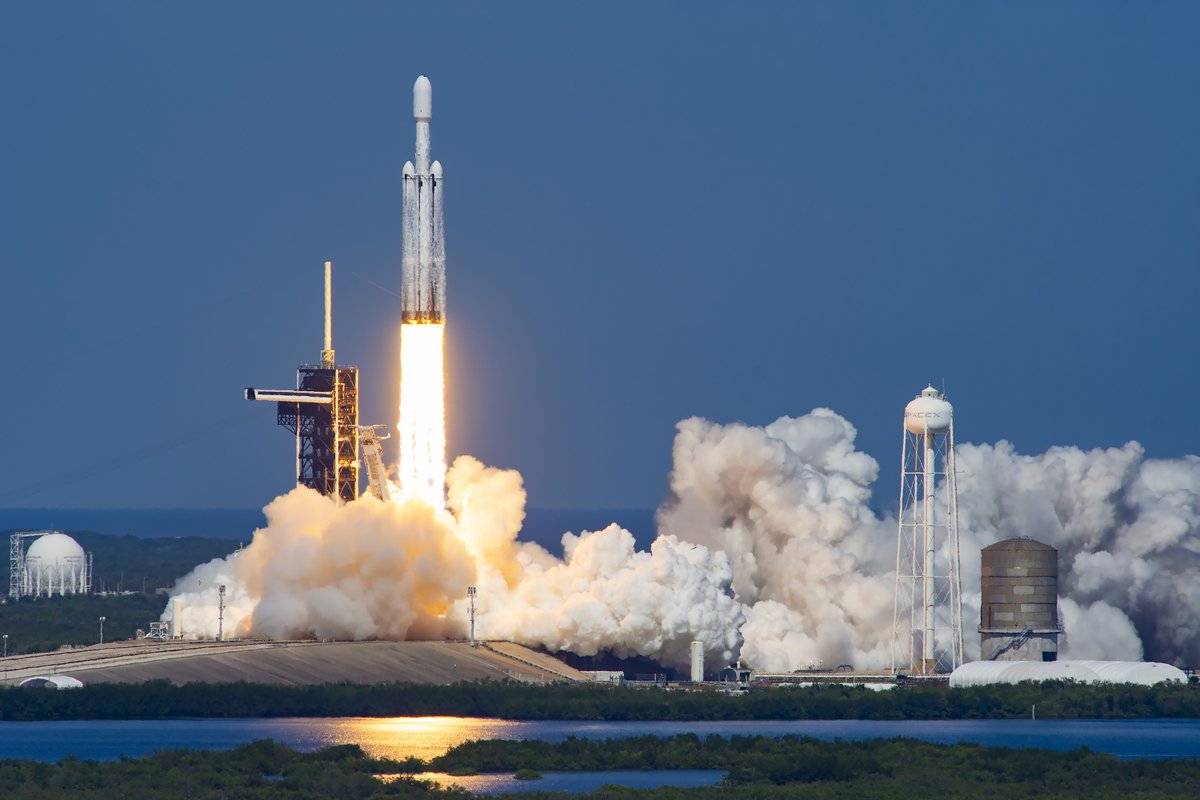
SpaceX & NASA: Falcon Heavy will launch the Nancy Grace Roman Space Telescope as early as August 30 from historic Pad 39A in Florida — 8 months ahead of schedule! This telescope is named after NASA’s first Chief of Astronomy. Nancy Grace Roman is a powerful wide-field infrared observatory with a 2.4m mirror and a field of view 100x wider than Hubble. Headed to Sun-Earth L2, it will: • Probe the mysteries of dark energy and dark matter by surveying billions of galaxies and supernovae • Hunt thousands of exoplanets using gravitational microlensing and direct imaging • Unlock new insights into cosmic structure, star and planet formation, and infrared astrophysics This is a fascinating piece of engineering and science to learn more about our Universe. Looking forward to this launch and what we learn from the Nancy Grace Roman Telescope.
Jun 4
We’re excited for Falcon Heavy to launch the Nancy Grace Roman Space Telescope as early as this August from pad 39A in Florida
3
329
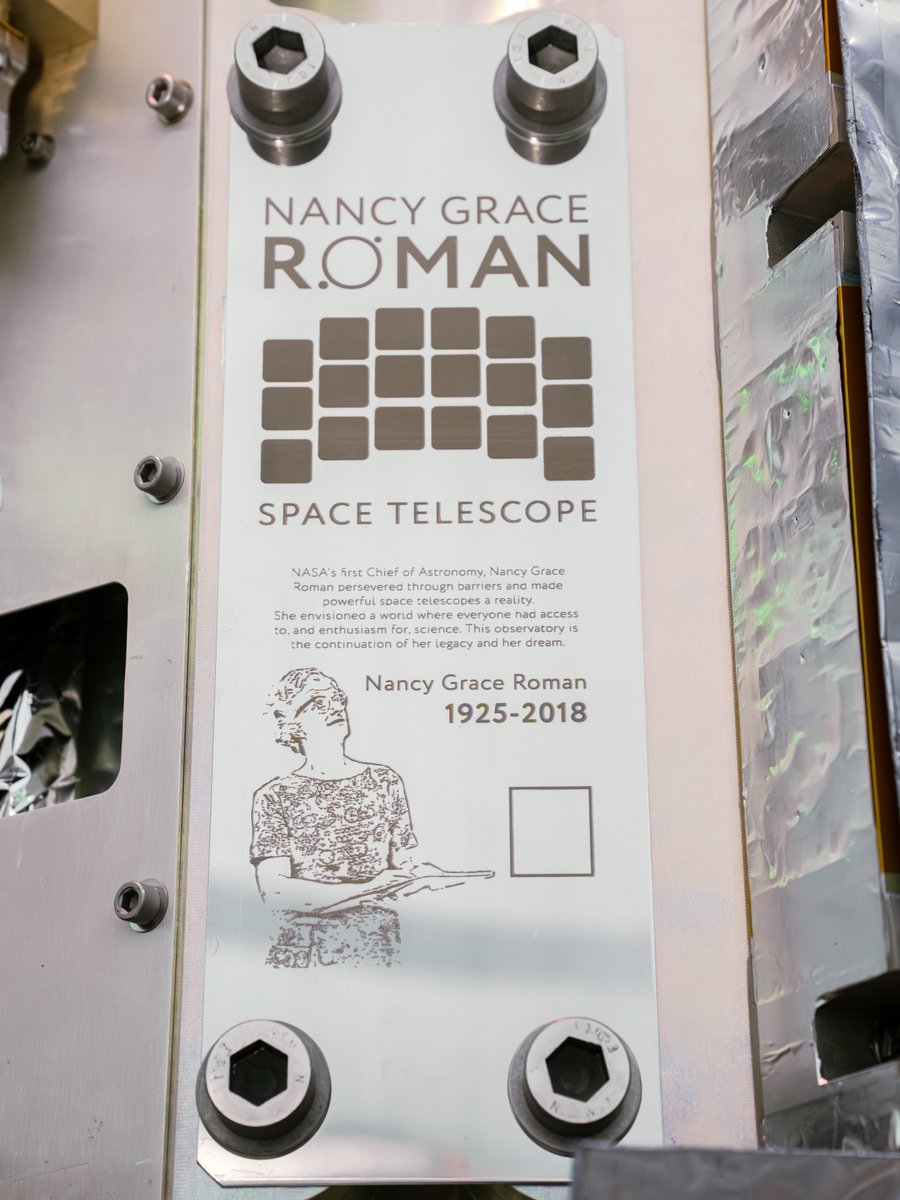
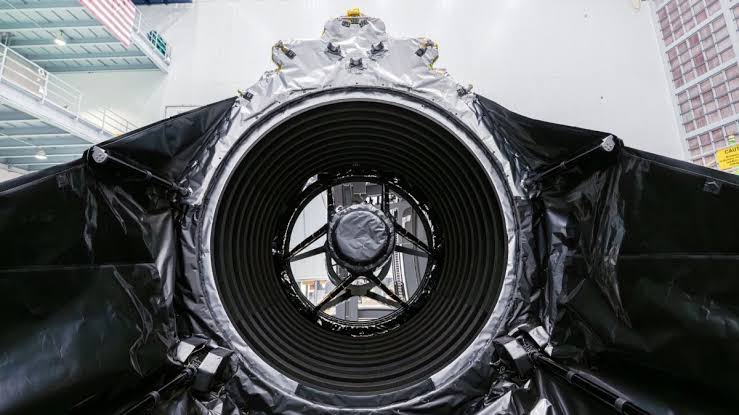
Roman is ready for launch: the mirror has passed its final inspection. NASA has completed the final inspection of the primary mirror of the Nancy Grace Roman space telescope. This means the spacecraft is being prepared for delivery to the Kennedy Space Center, with a launch scheduled for September 2026. After years of development, funding disputes, and name changes (the project was previously called WFIRST), the project has finally reached the finish line. The mirror's parameters are impressive in themselves. It measures 2.4 meters in diameter, and its silver coating is only 400 nanometers thick—hundreds of times thinner than a human hair. This thin metal layer will capture near-infrared light from distant objects. The project's budget is approximately $4 billion, almost half the cost of the James Webb Space Telescope. Roman's scientific program is ambitious and diverse. Dark matter and dark energy, direct observation of exoplanets, the search for worlds using gravitational microlensing, the formation and evolution of galaxies, and the study of stellar populations. Essentially, the observatory will address several key areas of modern astrophysics, complementing the work of Webb. After launch, Roman will travel to the L2 Lagrange point—the same location where Webb currently operates. This location is approximately 1.5 million kilometers from Earth, away from the Sun. Lagrange points are convenient gravitational "pockets" where the gravitational pull of the Sun and Earth balances, requiring minimal fuel for the spacecraft to maintain its position. The Sun-Earth system has five such points. These Lagrange points require minor adjustments, but these are mere pittances compared to trying to keep a satellite stationary at a random point in space.
3
6
36
3,859
Replying to @brasscogg @sudoingX
Not in a way that is unambiguously detectable in most cases. The Transit Method is the best we have right now with 4600 planets. Doppler detection has found 1000. Gravitational microlensing is about 280, and is kind of what you described, but needs very specific conditions.
1
2
18
Title: A Lunar-Mass Primordial Black Hole Microlensing Candidate in the Milky Way Halo. The paper identifies the lensing object as Phoebe and interprets it as a possible primordial black hole candidate. The direct arXiv link is: arxiv.org/abs/2605.19375
1
5
193