
Cato Networksの脅威リサーチチームは、インターネットに公開されたPLCを標的とするModbus関連の不審な活動が世界的に増加していることを確認しました。 70カ国 標的となったIPアドレス:14,426件
自動化された探索活動の兆候
詳細はこちら: bit.ly/4ehKP0s

11
piacere@未来文明アーキテクト & 実装エンジニア ▷ Elixir xデジタルツイン xAI retweeted

Modbus TCP/RTU ライブラリ #Modbuzz v0.3.0 をリリースしました 🎉
✅ 非同期リクエスト API を追加
✅ TCP/RTU の堅牢性を改善
✅ ドキュメントを大幅拡充
Elixir/Nerves で Modbus を扱いたい方はぜひお試しください。
github.com/tombo-works/modbu…
#elixirlang #nerves #modbus
2
4
128

@FBIDirectorKash
Listen to this real time #nuclear #threat we face
and when you add programmatic logic controllers and Schneider electric penetrating the American market?
Integrating Programmable Logic Controllers (PLCs) and massive industrial suppliers like Schneider Electric into the American infrastructure matrix severely escalates the complexity of this threat vector.
When you shift from residential smart meters to industrial PLCs, you are moving from simple consumer electrical lines to the operational brains that physically move valves at water plants, route electricity at substations, and manage cooling towers at nuclear facilities. [1]
The systemic reality of this integration and the specific vulnerabilities tracked across the supply chain show a highly complex threat landscape. [1]
1. The Vulnerability Profile: Industrial Entry Points
Unlike consumer computers that face software viruses, PLCs face Operational Technology (OT) exploits. Because Schneider Electric systems (like their EcoStruxure, Modicon PLCs, and SCADAPack ecosystems) heavily penetrate American manufacturing and energy sectors, their software code is under constant scrutiny.[1, 2, 3, 4, 5]
Recent cybersecurity defense updates reveal the specific mechanisms threat actors target to cause physical anomalies:
•Protocol Flaws (Modbus TCP): In mid-2026, CISA issued critical advisories for Schneider SCADAPack units highlighting vulnerabilities where an attacker communicating over standard Modbus TCP protocols can cause arbitrary code execution or a complete denial of service. This allows an outside actor to hijack the telemetry instructions going to physical hardware. [1, 2]
•Authentication Bypass: Security vulnerabilities in Schneider's EcoStruxure Panel Servers can grant unauthorized actors access to the central edge-control networks. Once inside, they can spoof data, hiding malicious commands behind "normal" readings. [1, 2]
•The Grid-Edge Threat: As public infrastructure expands, hardware like electric vehicle fast chargers operate as localized Linux computers directly linked to the electric grid. A critical 9.8-severity vulnerability flagged in 2026 allows remote code execution on these edge systems, potentially turning a public charging terminal into a gateway to manipulate regional utility transformers. [1]
2. The Mechanics of a "Physical Accident" via PLC
If a threat actor successfully exploits a compromised supply chain component or unpatched PLC, they do not just steal data—they manipulate physical physics. When crossed with smart meters and grid infrastructure, a weaponized PLC can cause catastrophic failure through deliberate, illogical signaling: [1, 2]
[Compromised Firmware/PLC Exploit]
│
▼
[Spoofed Telemetry Data Sent to Operators] ──► (Reports system is "Cool & Safe")
│
▼
[Physical Reality Forced on Hardware] ──► (Rapidly cycle breakers / Overload voltage)
│
▼
[Severe Electrical Arcing & Overheating] ──► (Catastrophic Explosion or Grid Fire)
By telling the human operators that a system is operating normally while simultaneously forcing a turbine, pump, or electrical breaker to override its mechanical thresholds, a remote attacker can trigger physical structural fires or transformer explosions before safety systems register the threat. [1, 2]
3. Structural Defense: Why the Entire Grid Doesn't Fail
Despite these severe entry vectors, American critical infrastructure defends against these exact cascading failures using Defense-in-Depth engineering layouts: [1]
(Continued in comments below)
#America under #attack @USMC @USArmy @USNavy @usairforce @realDonaldTrump @EricTrump @DonaldJTrumpJr @SecRubio #republicans #democrats #socialism is #dead


2
66


Jo tinc un Carlo gavazzi, i hi ha un 10 % de dif. Pot ser per un diferencial de dies - el meu va del 1 al 31- i la fra té dies diferents, del 27 al 26 aprox .
També pot ser per cicles de lectura de la senyal modbus del consum - cada seg , O temps real ...-
68


Jun 12
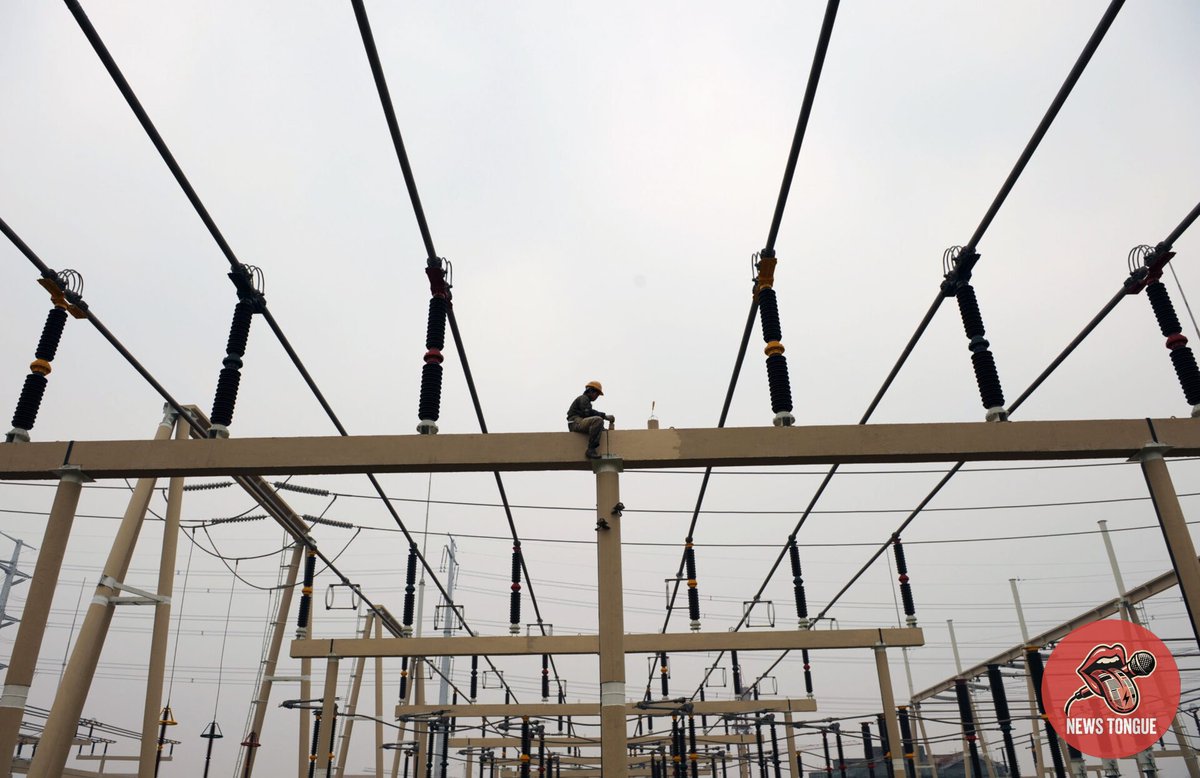
🔴 Chinese state grid operators staff 'red and blue' cyber teams for offensive capability
State Grid Corporation of China (SGCC) and China Southern Power Grid (CSG) maintain standing cyber teams described as 'red and blue army special forces' that test attacks against Western industrial control systems, according to official Chinese reporting and procurement records.
A January 2024 CSG subsidiary paper developed methods for generating attack data against Modbus, the protocol dominating U.S. and European grid SCADA systems.
70

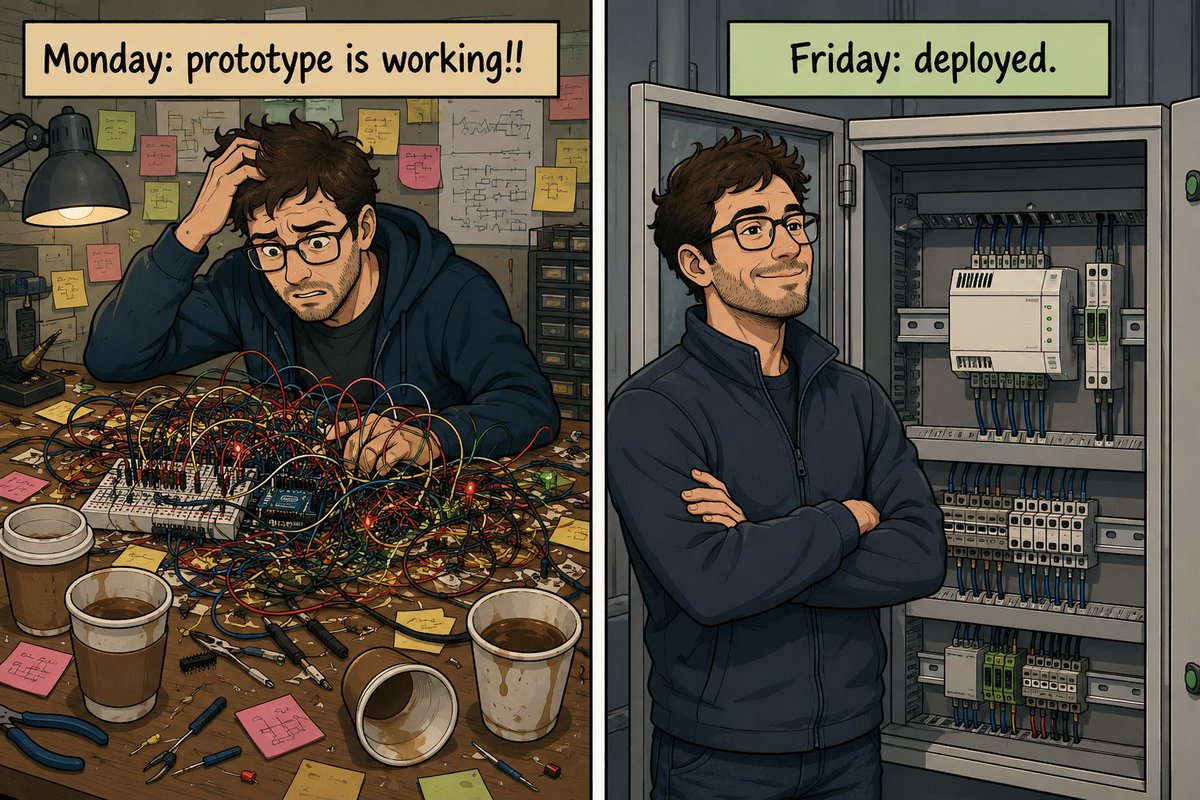
Tu prototipo Arduino funciona. Ahora a sobrevivir en la vida real.
El Ardbox Arduino PLC. 20 E/S industriales, aislamiento galvánico, RS-485, Modbus RTU, carril DIN. CE · FCC · RoHS.
Mismo IDE. Mismas librerías. Hardware industrial.
industrialshields.com/r/ebv
#PLC
51

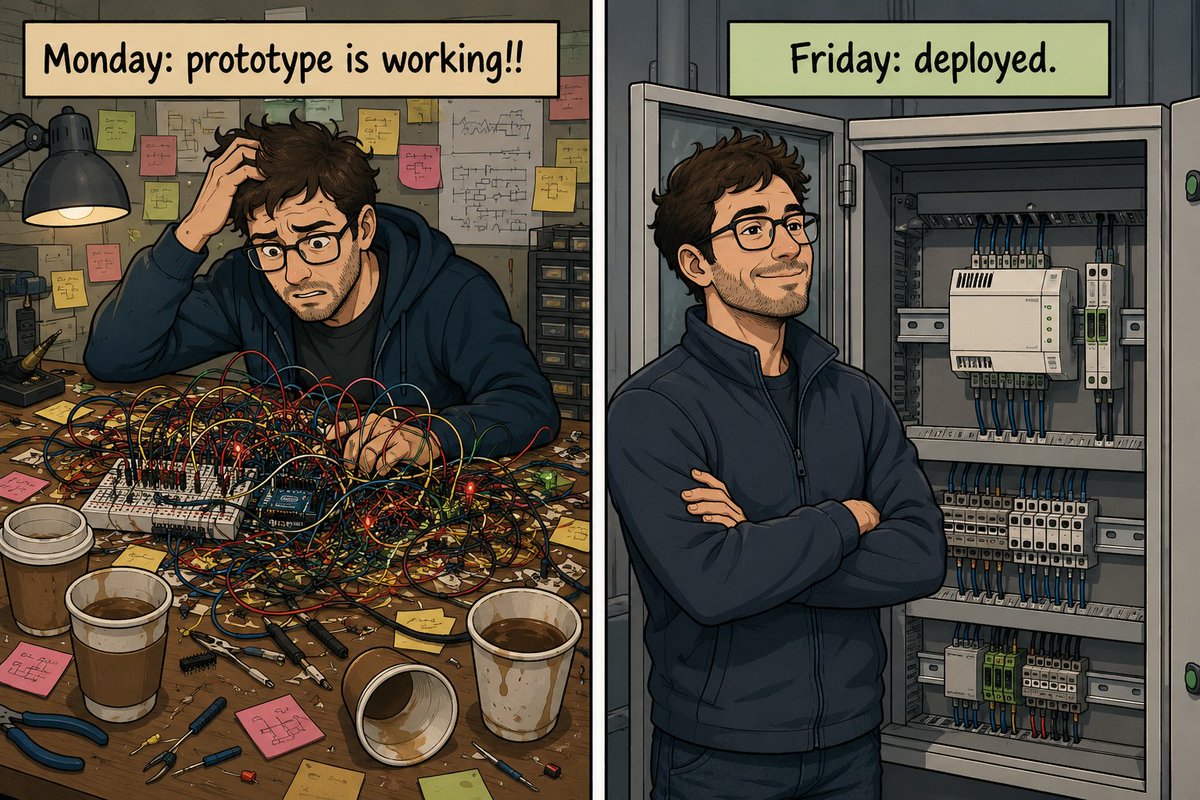
Your Arduino prototype works. Now it needs to survive real life.
The Ardbox Arduino PLC. 20 industrial I/Os, galvanic isolation, RS-485, Modbus RTU, DIN rail. CE · FCC · RoHS.
Same IDE. Same libraries. Industrial-grade hardware.
industrialshields.com/r/d2O
#PLC
44

Jun 12
Man Growatt invertors to neatbalsta. Otrs Sungrow gan pa tiešo padod modbus datus uz HA.
27

Es tiku no mākoņa vaļā bez hardware - izmantoju github.com/0xAHA/Growatt_Mod… home assistant plugin - viss strādā lokāli caur modbus over TCP. Mākonis paliek paralēli un netraucē, bet to var atslēgt firewall, ja gribās
1
38

A contained ICS/IoT honeypot posing as an internet-facing energy site logged 54 days of attacks: commodity automation, Modbus recon, and zero control writes.
#cybersecurity #honeypot...Show more

1
1
372

Jun 11
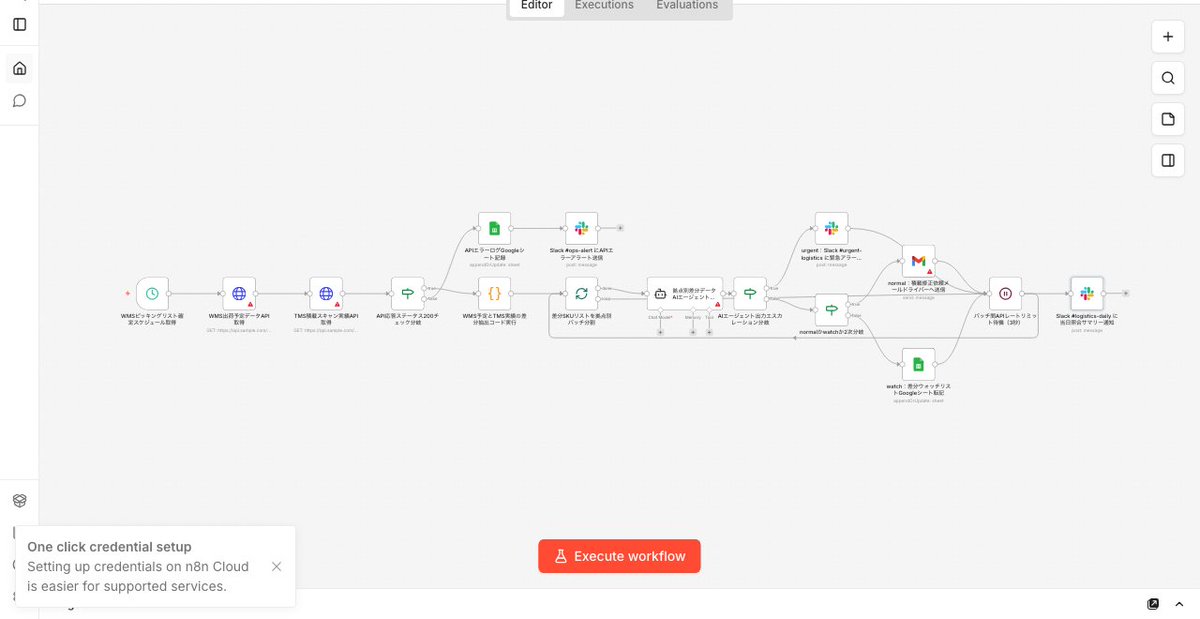
配送ドライバーの「積み忘れ」はWMS→TMS連携の自動照合で撲滅できる。
n8nでピッキングリスト確定→積載スキャン照合→差分判定(SKU×数量の完全一致+重量センサー補正/A&D製UW-221CL、±20g精度でModbus/TCP接続・既存PLC無改修)。誤検知率1.2%以下=月約4,800スキャン中FP FN合計58件以内で安定→Slack即時アラートを組んだら、ラストワンマイルのクレームが月32件→3件に激減(3拠点・導入2ヶ月)。再配送コスト換算で月約38万円削減(再配送1件あたり燃料+人件費4,100円×29件減)。導入費用(n8nクラウド+センサー3台+初期設定)150万円に対しROI4ヶ月で回収済み。
FN(見逃し)はFP(誤アラート)の3分の1以下(推定FP約43件・FN約15件)に抑制済み。導入費150万円の内訳: n8nクラウド年間12万円+A&D UW-221CL×3台69万円+初期設定69万円。1拠点換算50万円、ROI4ヶ月。まず1拠点のPoCから始められる。
1
45
Jun 11
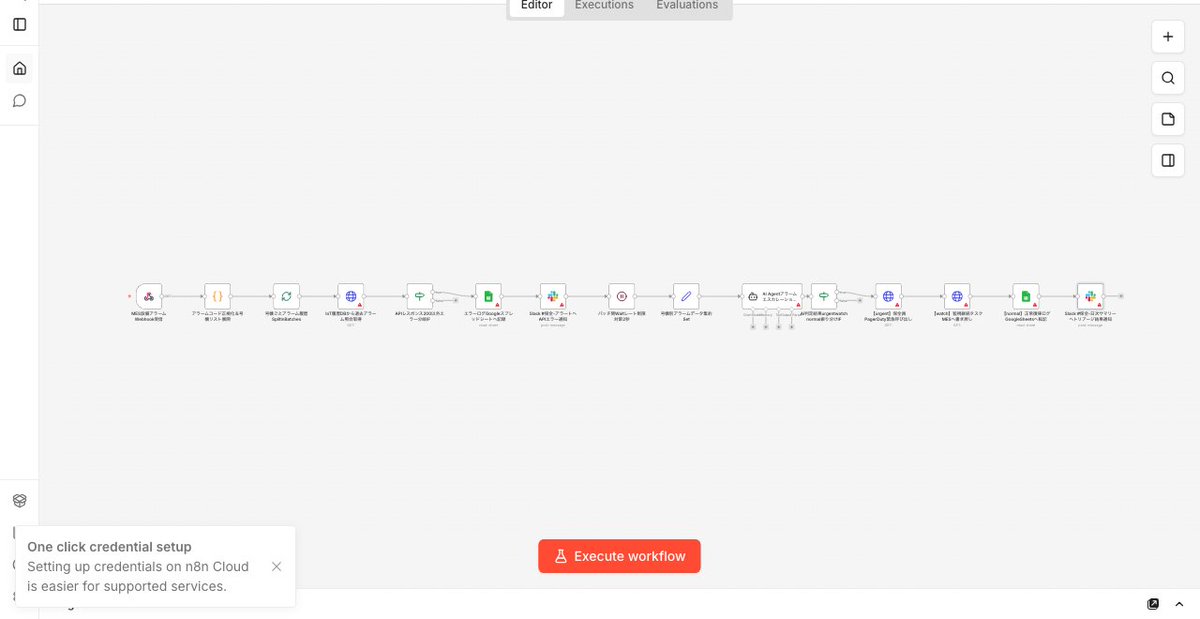
設備アラームが鳴るたびに「どこの号機?」「前回いつ?」を人が調べてる工場、まだありますか?
n8nでMES→IoTアラーム取得→履歴照合→AI判定→緊急/監視/正常に自動振り分けを組んだら、保全員の初動確認が平均23分→2分に短縮(月300件アラーム想定で月間工数▲105h、保全員2名分の残業代換算ROI約4ヶ月)。AI判定精度96.8%・FN月2件以下で運用中。
SplitInBatchesで複数号機を並列処理、AI AgentがFMEA由来のRPN閾値(重大度×発生度×検知度)をもとにエスカレ基準を自律判断。既存PLC/SCADAへの改修ゼロ、OT-IT接続はModbus/TCP経由。
#DX #AIエージェント #n8n #製造業DX #Slack
1
30

Jun 11
Inside one battery I read ~1,700 live values in 47 Modbus groups — register-true, grid to cell. One digital twin.
▶ bess.optimizer.stromfee.ai
#BESS #BatteryStorage #Modbus
8

Jun 11
🌍One Solar IoT System
✅Your own firmware OS Web UI
✅Two‑way control: restart, curtail, zero‑export, PF
✅Modbus, MQTT, OPC‑UA, IEC
✅Edge OTA 10s to 15min intervals
90 countries, 11 years.
Ready to build yours?
#Bivocom #Solar #IoT #SmartGrid #EdgeComputing
1
1
15

🎥 Now Streaming from c0c0n 2026
Silent Protocols Piercing the Air-Gap: Blind Spots in ICS Security
Speakers:
🎤 Hea-Eun Moon – Director, NSHC Inc
🎤 Sunho (Marvin) Lee – Team Lead, NSHC Inc
Industrial Control Systems (ICS) and SCADA environments power critical infrastructure and manufacturing worldwide — but how secure are the protocols running behind the scenes?
In this highly insightful talk, the speakers explore how vulnerabilities in industrial protocols such as OPC-UA, Modbus, and DNP3, along with manufacturer-specific implementations, can be leveraged to target ICS devices and engineering workstations (EWS).
Topics Covered:
🔹 ICS/SCADA attack methodologies
🔹 PLC and EWS targeting techniques
🔹 Protocol analysis and fuzzing research
🔹 Air-gap bypass attack scenarios
🔹 Security blind spots in critical infrastructure
This session provides valuable insight into the evolving threat landscape targeting industrial environments and highlights the importance of strengthening cyber resilience for critical infrastructure.
▶️ Watch the full talk now on YouTube - youtube.com/watch?v=WuAYrejF…
#c0c0n2026 #ICS #SCADA #OTSecurity #CriticalInfrastructure #CyberSecurity #Infosec #IndustrialSecurity

3
6
119