
🕯️ #9 on the Weiser Inventory: Tracing a Lost Vida Géza Sculpture
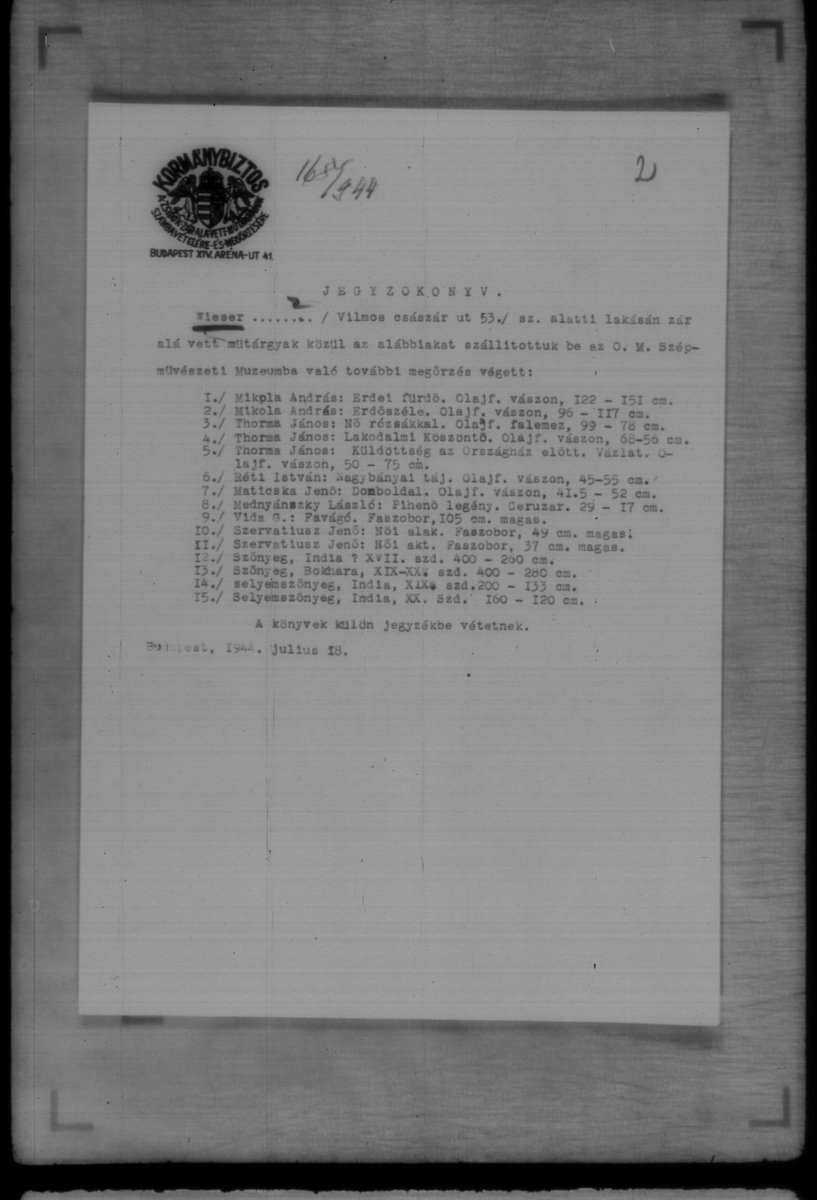
Continuing the review of Case 168/1944 — the 18 July 1944 seizure from the Budapest apartment of Jewish collector Miklós Weiser at VI., Vilmos Császár út 53.
The inventory records:
“9./ Vida G.: Favágó. Faszobor, 105 cm. magas.”
(“Vida G.: Woodcutter. Wood sculpture. Height 105 cm.”)
🌲 The Strongest Candidate
One work stands out as an exceptionally strong match candidate:
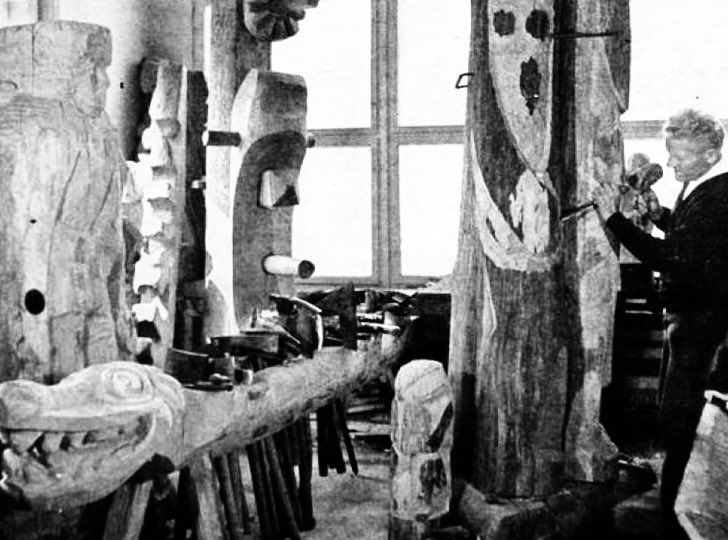
Vida Géza, A favágó (The Woodcutter), 1937
Wood sculpture
Height: 105 cm
The sculpture appears in an official 2018 public document concerning the Bay Collection at the Thorma János Museum in Kiskunhalas, where it is listed as:
“Vida Géza: A favágó, 1937 (fa, 105 cm)”
The alignment is striking:
• Artist: Vida G. / Vida Géza
• Title: Favágó / A favágó
• Medium: Wood sculpture
• Height: 105 cm
• Subject: Woodcutter
📚 About the Artist
Vida Géza (1913–1980) was one of the most significant sculptors associated with the Nagybánya (Baia Mare) artistic tradition. Known for expressive wood carvings depicting workers, peasants, and everyday life, he frequently explored labor-oriented themes that reflected the social realities of the era.
A sculpture titled A favágó fits squarely within his documented artistic practice.
🔍 Why This Matters
Provenance research often depends on assembling multiple pieces of evidence rather than finding a single document that answers every question.
Here, the combination of:
• Artist match
• Subject/title match
• Medium match
• Exact height match (105 cm)
creates a compelling connection between the 1944 Weiser inventory and the museum-listed sculpture.
At present, no publicly available provenance records explain how a sculpture matching the inventory description may have traveled from a Holocaust-era seizure record to its later museum listing.
📜 A Call for Transparency
The historical record would benefit from the publication of any available acquisition files, provenance research, transfer records, or wartime documentation relating to this sculpture.
Under the spirit of the Washington Principles and ongoing Holocaust-era provenance initiatives, transparency helps institutions, researchers, descendants, and the public better understand the history of cultural property affected by persecution and war.
Every recovered document adds another piece to the story.
🕯️ Remembering Miklós Weiser means remembering not only the people who were targeted, but also the artworks and cultural objects caught up in that history.
#HolocaustArtRecovery #ProvenanceResearch #VidaGeza #WashingtonPrinciples #HEARAct #ArtHistory #CulturalHeritage #MuseumTransparency #Nagybanya #LostArt
@WJRORestitution @nytimesarts @USAmbHungary @SecRubio @HolocaustUK @HolocaustMI @CathyHickley @AmbHerzog @TheLeoTerrell @CarolineGlick
3
4
187

Jan 22
Tuol Sleng Genocide Museum denies overcharging for tickets
#TuolSlengMuseum #GenocideAwareness #CambodiaHistory #TourismIntegrity #MuseumTransparency
khmertimeskh.com/501831417/t…
2
109

15 Sep 2020
PREACH! (You'll get the image if you read the article) #payequality #Museumtransparency
nonprofitaf.com/2020/09/not-…
1
1
6

12 Jun 2020
first off, this work is ongoing. how can you support? by recognizing #museumarenotneutral, and demanding #artsaccountability and #museumtransparency. as a constituent, you have power. Here’s how you can use it: instagram.com/p/CBO36rhpAsU/
1
1
6