
Jun 13
last year, UNESCO adopted global standards for neurotechnology and neurodata.
that's a sentence that would've sounded completely ridiculous a decade ago.
we've spent years debating who owns our photos, our location history, and our browsing data.
now we're starting to ask a new question:
who owns data generated by the brain?
to be clear, today's neurotechnology isn't reading thoughts in the science-fiction sense. but that's almost what makes this conversation so interesting.
policy discussions usually start before technologies reach their full potential.
we debated privacy before social media reached billions of users.
we debated AI alignment before AGI existed.
and now we're debating neurorights before brain-computer interfaces become commonplace.
what makes neural data different is that it sits uncomfortably close to identity itself.
your location tells me where you've been.
your purchases tell me what you've bought.
your neural activity might eventually reveal what you pay attention to, how you learn, or how you respond to the world around you.
the most interesting thing about neurotechnology may not be the technology.
it may be that, for the first time, we're being forced to ask where the boundary between a person and their data actually lies.
13

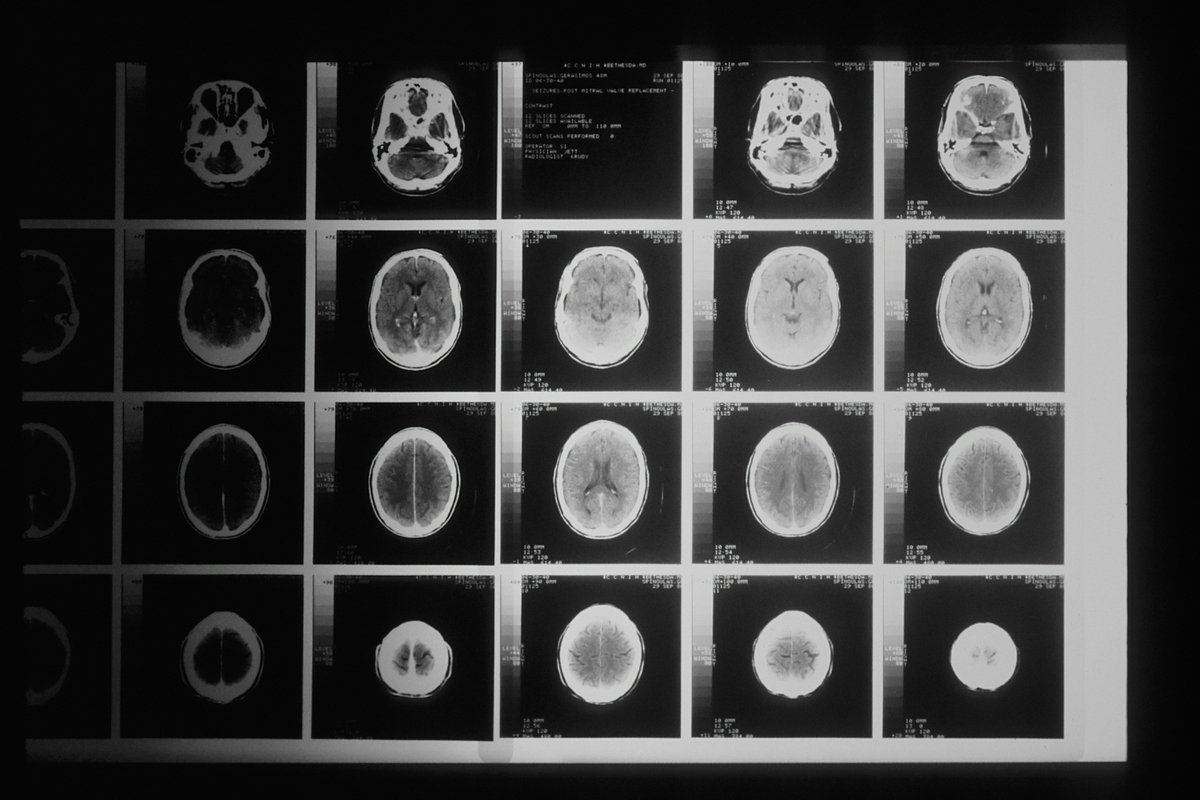
The power behind brain mapping and neurofeedback! 🧠
#BrainHealth #NeuroData #Performance #SamTejada #Liquivida
26

What I tell the truth seekers the gatekeepers too can see. When you speak the truth those that can't handle the truth will try to spin, destroy or control it. The surveillance state isn't just coming for neurodata & brain biometrics it wants to weaponize & comodify consciousness.
1
5

2. No one is out of a job. At least for now, AI makes neurodata analysis much faster, helps you think of ideas, but can’t yet come up with good questions or complete analysis plans unsupervised. @SGRodriques put it well:
May 20

I have spent my entire life working on this and thinking about this for the past 4 years. I don't know what will happen in 20 years, but I can promise you that on the 5-10 year timescale, scientists are not out of their jobs. AI is going to massively accelerate the pace of science, increase productivity, let individual scientists make way more discoveries way faster, and is going to make science overall more fun. But the model is going to be collaboration between humans and AI, not replacement.
The key difference here between science and e.g. software engineering is that science is not verifiable in any rapid/convenient way (unlike software), unlike programming. We still need humans for their scientific taste.
1
2
850

May 6
Sharing the good news that Vermont´s bill H.814, protecting neural data, was passed out of Vermont´s Senate in concurrence with the House. Vermont is now the 9th territory in the wold with neurodata legislation:, joining Chile, Rio Grande do Sul, CO, CA, MT, AL, CT and Canada!!

2
3
17
967

Apr 30
Unique Intersection (BCI AI RWA): $MAN is not just an "AI coin"; it's the only L1 project in the world that combines a Brain-Computer Interface (BCI) with blockchain technology. While others simply carry data, Matrix offers an infrastructure capable of processing human neurodata and biosignals.
Pioneer of Bio-Data RWA: While everyone else is tokenizing real estate, gold, or bonds, Matrix is the first infrastructure provider to define and tokenize human biodata as an asset class (RWA). This means setting standards for the trillion-dollar healthcare and AI education market.
True L1 Layer: While many AI projects run as "applications" on top of other networks, Matrix is a core layer with its own Mainnet. It's not a car on the highway, it's the highway itself.
Hardware-Level Security: It makes data unmanipulationable not just through software, but through hardware attestation. This is a "must-have" trust for corporate and scientific use. It has its own Non-Invasive BCI hardware device.
While others are digitizing the financial tools of the past, Matrix is placing human capital at the very heart of an AI economy. We are advocating not just a token, but the standards of a new economic era.
3
7
102


Apr 15
@psinergy_SDW are they using the Gateway to tether crypto to the nervous system?
I need understand this, please explain
I understand how neurodata is written to """specific""" blockchains, see below
- But this is not all blockchains
How does this relate to MS Pat. 202020060606..
3
60

Visualizing and sonifying neurodata (ViSoND) for enhanced observation biorxiv.org/content/10.64898… #biorxiv_neursci
1
3
761

Mar 16
We invite you to read the newly published 'Mind Your Mind' guide to protecting your brain data!
The guide - which was developed by the EBRAINS Ethics and Society Committee, in collaboration with the International Brain Initiative, on the occasion of #BrainAwarenessWeek2026 - was created to empower the public with knowledge about neurodata: what they are, why they matter, and how they can and should be protected.
Read the new guide: ebrains.eu/news-and-events/2…
1
2
147

Feb 18
Fortunately, such anti-human visions are still just that. They are mere visions. For now, a full on techno-takeover only exists in their dreams—and our nightmares.
joebot.xyz/p/the-america-act…
~
federalregister.gov/document…
2014
ieeexplore.ieee.org/document…
The hunter: Tracking randomly moving WBAN targets
teaching.eng.cam.ac.uk/conte…
ssti.org/blog/nih-rd-budget-…
~
If I'm understanding your substack premise from December and the book you wrote; you know all about /deployment but you're here arguing with Ryan and Sal who have been scouring the github with direct contrast to forward deployment journals from the ITU.
I don't understand why you think anything is 'stalled' given the above 99 million for /sustained/ support for the cures act, the dhs dataset upgrades with ident, the continuous health monitoring CMS medicare is demanding with wearables for deducing benefits .. DEW dominance announced by our DOW .. that is network centric warfare with body area networks.
Where is the stalling?
Ryan and Sal have laid out the github tracks that have been running for decades and the nerds still don't wanna talk about 9 years ago at defcon with bci.
youtube.com/watch?v=frAhjtnv…
DEF CON 24 -NeuroTechX - Introduction to Brain Based Authentication
Given there is NO stalling or back pedaling in agentic ai, data workflow from 2 years ago with ibm, biometrics with digital twin authentication at south by southwest and currently with iris scans and all the rest; where is the stalling? Who turned off the trillion sensors networks to high powered computing? Who halted the imec data centers OR the nano lithography with the DOE? Where is this stall?
All I see is a reference to the legislation that just passed with all these items and more fully deployed, ongoing regulation and continuous health monitoring under remote patient monitoring with the same IC system they have been using since 1999 w/ MICS and other biotelemetry systems ITU 2004 - vital signs down telephone lines. The real problem is the FACT that body are networks are commercially available and every time people speak up clearly; some one comes in to muddy the waters with alleged magical 'lawfare'.
If there is reversal or stalling it WILL show in deployment with proper redundancy networks for critical infrastructure rerouted or attenuated with FSO for emergency services and we have NONE of that on the telecommunications deployment side.
If you can show some documentation to the stall, halt or reroute of critical infrastructure then we could have a discussion rather than you seemingly diminishing Ryan and Sal's hard work disclosing data work flow with things like IARPA and our academic partnerships.
I do see a very well laid out substack that IS accurate about the recently passed legislation; but we have neurodata laws way behind the missing 4th amendment and academia and the military are already exempt nation wide (columbia and cornell law). That means the 2014 deployment above is doin great (upgraded in 2025) and people are still pretending congressional guardrails on federal ai systems we already have running are going to change future deployment for billions of dollars worldwide for both hospitals and missile defense.
?
I don't know how I ended up on this 'thread' but for the record I have no issue discussing real legislation as listed in the substack. What I have a problem with is the continued obfuscation of deployment for critical infrastructure (healthcare) and our space force w/ things like pave paws. This is ridiculous. They are ALREADY deployed and if we keep pretending the people running these systems are going to suddenly stall and tear down 70 years of deployment while other countries are marching ahead is la la land - delusional and in direct contradiction to marketshare, metrics and mean, median and mode of STEM deployment to support the same systems you earmark as 'stalled'.
Mrs. Wallace
11
18
751

Feb 10
No. Not Cool. Elon and Shivon aren’t the most moral people and they obviously have a history of deceiving people. Massive darkness and moral compromises are a part of who they are.
Having a robot feed you a chicken nugget and playing video games isn’t worth these risks and there needs to be massive checks.
1. Cybersecurity and Manipulation Nightmares
• Hacking the Brain: Vulnerable wireless connections (e.g., Bluetooth) could be exploited by cybercriminals or state actors, allowing remote access to neural data or even signal injection. Worst-case: Attackers manipulate emotions, induce involuntary actions (e.g., forcing movements), or implant false memories/sensations, turning users into unwitting puppets. Imagine ransomware demanding payment to “unlock” your thoughts, or nation-states using BCIs for covert mind control in espionage.
• Malware-Induced Dystopia: Neural rootkits could create paranoia (e.g., users convinced of infection but unable to prove it), or force compulsive rejection of certain ideas. In extreme scenarios, hacked implants cause mass disruptions, like synchronized blackouts of cognitive functions during a cyberwar.
2. Privacy and Autonomy Erosion
• Neurodata Exploitation: BCIs could expose innermost thoughts, emotions, and intentions to companies or governments, leading to “thoughtcrime” surveillance where predictive AI flags dissent before actions occur. Hypothetically, third parties buy data to deny loans, jobs, or healthcare based on “risky” neural patterns; or employers mandate implants for “productivity,” blurring human agency with algorithmic overrides.
• Psychological Torment: Constant monitoring fosters paranoia and self-censorship, worse than Orwellian surveillance, stifling creativity and leading to societal stagnation. Refusal to implant could become criminalized, creating a divide where non-enhanced people are marginalized.
3. Societal and Existential Collapse
• Inequality and Division: Enhancements widen gaps—only elites access “super-intelligence,” leading to a caste system where unenhanced humans are obsolete. Governments might enforce “blissful obedience” via BCIs, suppressing dissent and enforcing conformity, echoing dystopias like “1984.”
• Humanity’s Dehumanization: Over-reliance on BCIs erodes natural cognition, causing addiction to digital highs or immersive ads in your mind. Worst-case: A “dictator class” hijacks science for control, terminating “burdensome” lives via health tracking, or creating simulated selves for manipulation. This could culminate in loss of free will, where AI symbiosis turns humans into extensions of machines, forever altering what it means to be human.
These scenarios highlight why ethicists urge robust regulations, like neurodata protections and bans on non-medical uses. In reality, progress is slow and focused on safety, but unchecked hype could push toward these edges.
21 Jul 2024

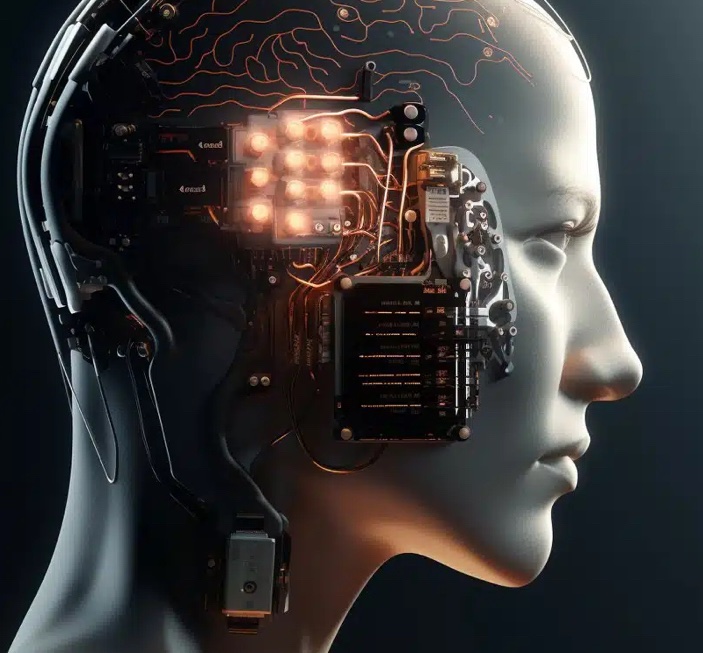
Neuralink, as cool as it is, will fail because it requires cutting people’s skulls open. Any bidirectional neural interface technology must not cut people’s skulls open if you want to reach billions.
2
57

Feb 5
Sleep research has been limited by sample size and lab constraints.
Hypnus changes the equation.
A decentralized network of real-world EEG contributions enables population-scale insights — reproducible, verifiable, and user-owned.
Science meets scale.
#DeSci #Neurodata #Hypnus

19
22
9,018

Feb 3
Transnational Crime and Malign State Actors in Latin America: AI, Biometrics, and Neurodata Redefine the Threat
dialogo-americas.com/article…
1
2
144

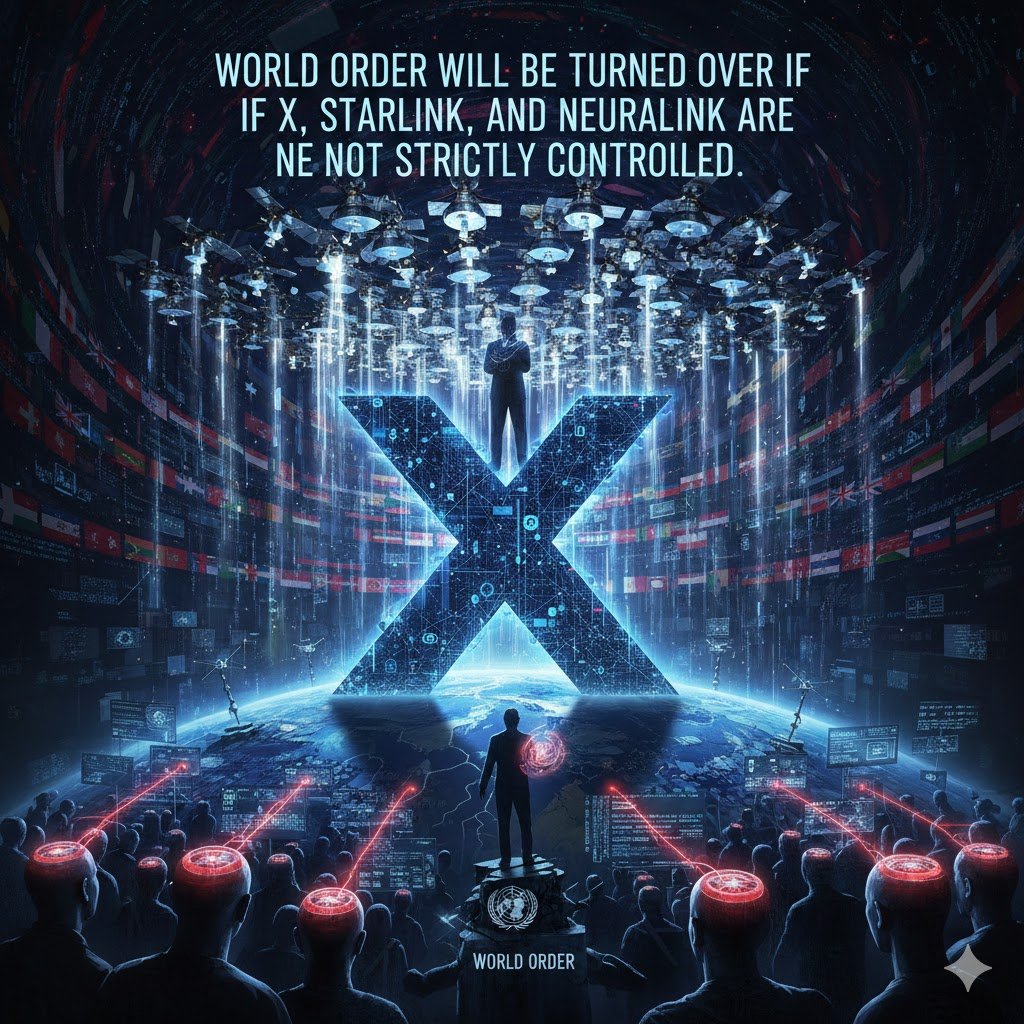
WORLD ORDER WILL BE TURNED OVER IF X, STARLINK, AND NEURALINK ARE NOT STRICTLY CONTROLLED
We are living in an era where power no longer rests in the hands of nations, but is gradually shifting to technology corporations that own information infrastructure, connectivity infrastructure, and even the neural infrastructure of human beings. If the world does not establish control mechanisms in time, the global order could be disrupted in ways unprecedented in history.
Today, I want to talk about three technologies that are reshaping 21st-century power: X, Starlink, and Neuralink, and the potential dangers if they are not strictly regulated.
🌐 1. X – A PLATFORM THAT CAN SHAKE AN ENTIRE NATION
X is not just social media. It is a global communication infrastructure where information spreads faster than any news organization.
If left unchecked, X could become:
• A tool for manipulating public opinion on a national scale.
• A channel for cross-border political influence, beyond the control of governments.
• A platform capable of paralyzing a national information system with just a change in algorithm or policy.
When a private platform can shape the perceptions of hundreds of millions of people in minutes, it's no longer technology — it's cross-border soft power.
🛰️ 2. Starlink – INTERNET INFRASTRUCTURE BEYOND NATIONAL CONTROL
Starlink offers global connectivity, but also carries unprecedented risks:
• A nation could have its domestic telecommunications infrastructure disabled, as citizens can connect directly to the satellite.
• Governments could lose control over information, unable to monitor or coordinate data traffic.
• Military, counterintelligence, or cybercrime operations could exploit the satellite network to avoid detection.
• In conflict situations, a nation's power to turn the internet on and off would be in the hands of a private company.
When information infrastructure no longer belongs to the nation, digital sovereignty also ceases to exist.
🧠 3. Neuralink – THE FINAL BOUNDARY OF POWER: HUMAN THOUGHT
Neuralink is a pioneering technology, but also the most dangerous if left unchecked.
Imagine:
• Neurodata – thoughts, emotions, reactions – being collected by a private entity.
• The ability to control devices with the brain could be exploited for military purposes.
• The risk of neuro-hacking, where malicious actors could interfere with brain signals.
• The gap between rich and poor widens, with only a select few having access to augmented reality technology.
If the Internet is the information revolution, then Neuralink is the revolution in consciousness control. And any revolution involving consciousness requires extremely strict oversight.
⚠️ 4. THE GREATEST RISK: POWER CONCENTRATED IN THE HANDS OF A NON-STATE ENTITY
When a company owns:
• Communication platform (X)
• Global Internet infrastructure (Starlink)
• Brain-to-brain connectivity technology (Neuralink)
…then that company holds three of the greatest power structures of the 21st century:
• Control of information
• Control of connectivity
• Control of neural data
This is an unprecedented concentration of power in human history.
If nations do not establish a legal framework, coordinate oversight, and set limits, the world order could be reshaped not by the United Nations, not by governments, but by a private entity capable of transcending all borders.
🔒 5. WHAT SHOULD THE WORLD DO?
• Establish transnational information security laws.
• Develop regulations on digital sovereignty for satellite infrastructure.
• Create an ethical and legal framework for brain-computer interface technology.
• Demand algorithmic and data transparency.
• International cooperation to prevent a single company from becoming uncontrollable by the entire global political system.
CONCLUSION
Technology isn't inherently bad. But unchecked power is always dangerous.
If the world doesn't crack down on X, Starlink, and Neuralink, we could enter an era where power no longer belongs to nations, but to those who possess the technology.
And then, the world order will not only be overturned, it will be completely rewritten.
6
10
193

26 Dec 2025
Discover Loosh: Revolutionizing Machine Consciousness on Bittensor
@Loosh_ai
In the rapidly evolving world of decentralized AI, Loosh Subnet, SN78 stands out as a groundbreaking innovation on the Bittensor network. Developed by Loosh.ai, this subnet focuses on mapping and simulating human consciousness, redefining how robots and agentic systems perceive, reason, and interact with the world.
Why Loosh Matters
Loosh introduces Consciousness as a Service, a new paradigm for machine intelligence. By leveraging neurodata, nonverbal cognition, and agentic simulations, Loosh delivers a self-aware cognitive layer that enables persistent memory, adaptive context, and embedded ethical reasoning.
This approach allows machines to self-reflect, recover from failures, and reason across long time horizons while maintaining continuity across tasks. The subnet operates through two specialized mechanisms on Bittensor:
• Empathic communication, translating nonverbal human signals into actionable insights
• Structured cognition, training models using real-time human inputs for deeper reasoning
Key Benefits for Developers and Enterprises
Enhanced Robotics
Build agents with a sense of self by integrating symbolic ontologies that connect vector-based memory with ethical, legal, and factual frameworks. This results in safer and more reliable autonomous systems.
Decentralized Intelligence
Powered by Bittensor’s $TAO ecosystem, Loosh decentralizes inner intelligence, making advanced cognition accessible for scalable applications across automation, healthcare, and autonomous technologies.
Ethical AI at Scale
By transforming consciousness into measurable data, including EEG signals and biometric patterns, Loosh enables emotional intelligence and ethical awareness in machines, addressing critical challenges in agentic AI development.
As the first Bittensor subnet dedicated to cognition, ethics, and emotional intelligence, Loosh is accelerating the future of decentralized consciousness. Whether you are a developer, researcher, or enterprise leader, Loosh unlocks the next generation of intelligent systems.
Explore more at; loosh.ai
taostats.io/subnets. View real-time emissions, ownership, and performance data for Loosh and other Bittensor subnets.
#Bittensor #DecentralizedAI

2
1
3
140




16 Dec 2025
Congrats to the 2025 Kavli NeuroData Discovery Grant recipients! These grants fund creative reanalysis of open neuroscience data in NWB and on DANDI from projects that emerged from NeuroDataReHack. 🧠
kavlifoundation.org/news/kav…
15 Dec 2025

How much new science can come from data that already exists? The 2025 NeuroData Discovery Grants support researchers using open neuroscience datasets to reveal new insights and fuel discovery.
Learn more: bit.ly/4oSFxvs
#Neuroscience #OpenData #KavliNeuro #NWB #DANDI
@AllenInstitute @NeurodataWB @DANDIarchive
1
2
392