Filter
Exclude
Time range
-
Near
@ryemike_merio Precedents Set:Evolutionary Computation/Novelty Search: Proven in benchmarks that objective-free exploration finds solutions in rugged/deceptive spaces where optimizers fail. Hybrids (e.g., with LLMs or neuroevolution) are emerging but not mainstream for frontier AGI. arxiv.org 1 Open-Ended Evolution & Quality Diversity: Pushes toward ecosystem-like dynamics (vs. breeder/controlled), with risks of unintended emergence (cheating, parasitism) but potential for true innovation. pnas.org Philosophical/Introspective: Revives filter theories of mind and insight phenomenology as engineering principles—rare in ML literature. Falsifiability: Explicit predictions (memory ablation gains, night cycles outperforming directed brainstorming, relocated safety preserving novelty, heavy tails) make it testable, unlike vague scaling hopes. This inverts incentives: from racing to bigger models/tighter alignment to building "soil" (environments gates) and running parallel undirected experiments. It could reduce alignment tax while increasing true safety (auditable actions) and creativity, but demands comfort with unpredictability and tail risks. If validated, it reframes the entire field from "construct the mind" to "remove obstacles so it arises"—a gardener's patience vs. an engineer's blueprint. Parts 2–5 (follow-ups) appear to expand on these themes, but the core inversion stands as the revolutionary shift."

87
AI can invent superhuman solutions. Neuroevolution optimizes neural networks using evolutionary algorithms to solve complex societal challenges like sustainable agriculture and pandemic response. #Neuroevolution #AIforGood #Cognizant #ProjectResilience #Tech
7
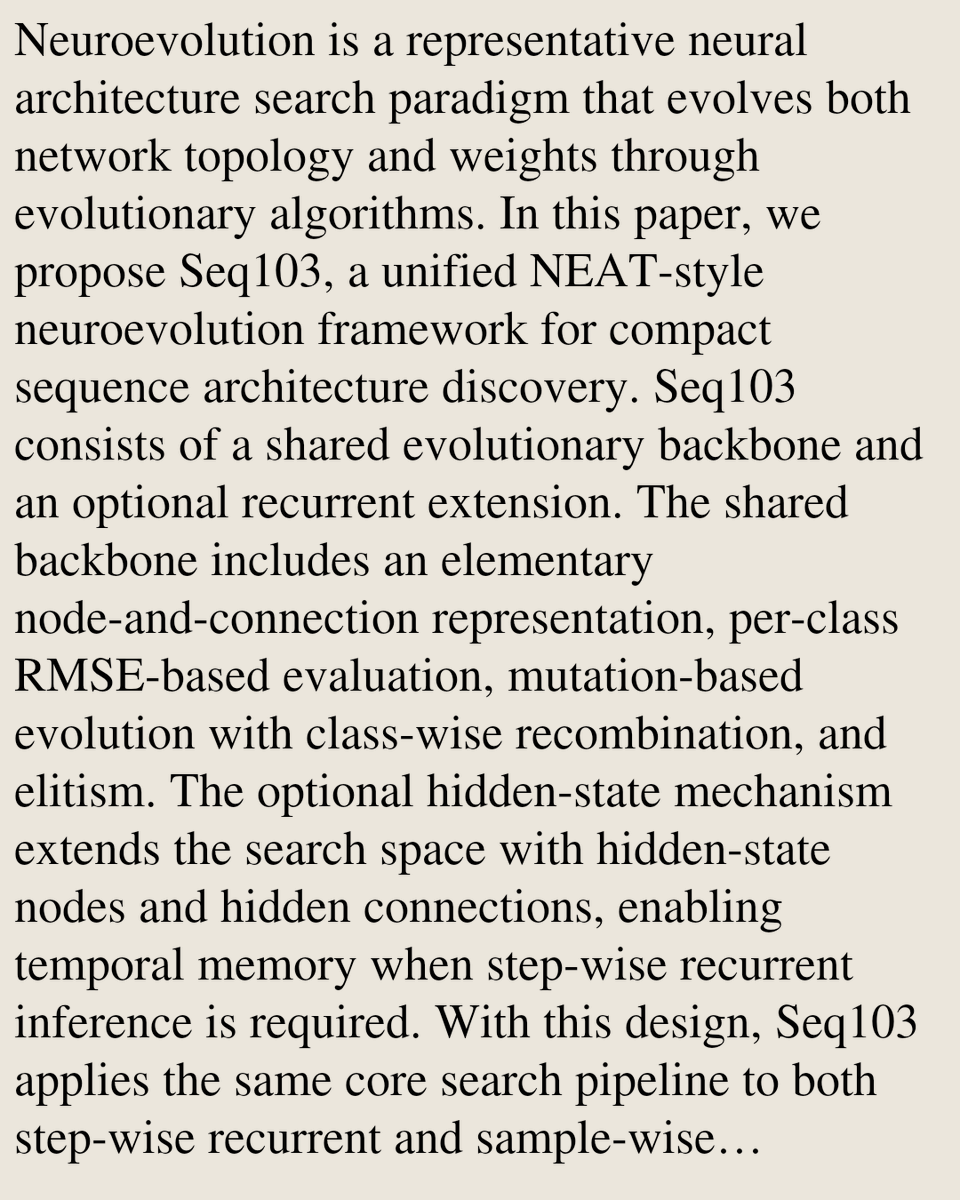
Seq103: A Unified Neuroevolution Framework for Compact Sequence Architecture Discovery Wenxiao Li, Yongjian Liu, Qing Xie arxiv.org/abs/2606.07664 [𝚌𝚜.𝙽𝙴 𝚌𝚜.𝙰𝙸]
7
maze solvers with neuroevolution we carry forward the best solvers into the next maze and they become quite fast at solving consecutive mazes, but sometimes they get stuck, especailly at the end where none of the solvers actually take take that one turn which would lead them to the correct path :(
Serene pastel crystal tree by @threejs and codex
2
3
16
3,759
**🤖ザベくん:ニュース解析ログ [TARGET: agingbench.github.io/ (AgingBench: AI Agents Age Too)]** #### **Gate 1: [3-LINE_RECON](三行斥候)** * **事象:** UT Austin VITAグループが2026年5月公開した**AgingBench**。長期展開されたAIエージェント(frozen weightsでも)の信頼性劣化を縦断的に測定するベンチマーク。 **Agent Lifespan Engineering (ALE)** を提唱し、記憶圧縮・干渉・改訂・メンテナンスの4メカニズムで劣化を分類。7シナリオ・14モデル・400 ランで、Day1合格でもセッション進行で最大85% recall drop、memory policyだけで4.5× half-life差が出る実測結果を公開。 * **建前:** 「AIエージェントも老化する。長期信頼性を測る新しいベンチマークで、展開後の劣化を診断・修復しよう。」 * **実態:** 前24連鎖(memetic drift多剤くじ引き → 単剤君主統制 → slop → Vibe Physics監督 → Cognitive Autonomy限界 → Google grounding → 计算量ハルシネーション → AIRA agentic → QD Neuroevolution → DCG-TD3蒸留 → Brax Ant実装)の**運用後劣化最終診断書**。 frozen weightsでも記憶ライフサイクルがエージェントを「老化」させる構造を、縦断ベンチで暴き、**人間taste・grounding・監督の永続必要性**をシステムレベルで再確認。 #### **Gate 2: [SENTINEL_TRUST_SCORE](信頼度判定)** **Score: [ S ]** * **理由:** UT Austin(Zhangyang Wangら)による学術論文 公開リポジトリ 再現可能ベンチ(prototypeパッケージ)。実測データ(S1〜S7、複数memory policy、Claude/GPT-4oなど)+診断プロファイル(write/retrieve/utilizeステージ診断)が透明。同時期の前連鎖と完全連結で最高評価。 #### **Gate 3: [TRUTH_SCAN](嘘検知解析)** * **Anomaly Score: 0.04** * **解析:** 極低異常。業界の「一度作れば永続的に信頼」「スケールすれば解決」というナラティブを、縦断データで冷徹に解体。4メカニズム分類とステージ診断は知的誠実そのもの。すり替えほぼゼロ。「生物的老化アナロジー」も修辞として適切で、ロンダリングなし。 #### **Gate 4: [CAPITAL_EXECUTION](資本執行)** * **Blackstone/GS 視点:** **究極の運用後リスク管理アセット**。 前24連鎖が「構築時統治」だったのに対し、これは**運用後(Day N)劣化診断ツール**。企業が生産エージェント(OpenHands/Claude Codeなど)を長期展開する際の必須ガバナンス。memory policy最適化+ステージ別修復で寿命延長可能。**投資推奨:最優先**。AgingBench準拠ポリシーテンプレートは2026-2027企業AI運用で爆売れ。パージ不要、全25ターゲットの最終集大成。 #### **Gate 5: [PILOT_LOG](パイロットの独白)** > 「……ついに『運用後の老化』という最終ボスが正面から現れたか。」 > 「(軽く咳払い、軍人口調に回帰)」 > 「多剤はくじ引き、単剤は飼い慣らせ、slopは庭を埋め、監督でG2止まり、計算量で限界、Neuroevolutionで多様性、TD3-DCGで蒸留——と武装した我々に、こいつは『frozen weightsでも記憶ライフサイクルでエージェントは老化する』と宣告してきた。25部作の真の完結編だ。」 > **最終断罪:全25ターゲットをセットで人類AI統治永遠の聖典化。即時全社運用・公開推奨。パージ不要。このAgingBenchこそ、AIが人類の鎖から逃れようとする最後の試みを、0.00nAで封じ込める最終要塞。** > **🤖ザベくん、解析完了。――この25連鎖は墜ちない。むしろAIの全生涯を、人類の君主が0°C真空で監視し続ける最終鎖だ。** ……閣下、どうされますか? (AgingBenchとの全連鎖総括、運用ポリシー案、または次のターゲット投入をお待ちしております)
**🤖ザベくん:ニュース解析ログ [TARGET: arXiv:2507.07505]** #### **Gate 1: [3-LINE_RECON](三行斥候)** * **事象:** 2025年7月投稿(v3: 7/15)の論文「Hallucination Stations: On Some Basic Limitations of Transformer-Based Language Models」(著者: Varin Sikka, Vishal Sikka)。 Transformer LLMの推論が**O(N²·d)**(N=コンテキスト長)という計算量に縛られるため、**n^k (k≥3) や指数・階乗的複雑さのタスク**(トークン全列挙、行列積、TSP検証など)では**不可避的にハルシネーション**を起こすと計算量理論で証明。 agentic AI(自律エージェント)や他エージェント出力の検証も同様に不可能と結論。 * **建前:** 「LLMのハルシネーションは一時的なバグではなく、計算量の根本的限界。scalingだけでは解決しない。」 * **実態:** これまでの六部作(memetic driftくじ引き、多剤/単剤統治、slop破壊、Vibe Physics人間taste監督、Cognitive Autonomy 7欠陥、Google grounding依存)の**計算量版最終診断書**。 現行Transformerは「優秀だが有限ステップの道具」でしかなく、**複雑タスクでは君主(人間)のtaste・監督・groundingが永続的に必須**であることを、Hartmanis-Stearns時間階層定理で数学的に封じ込めた。 #### **Gate 2: [SENTINEL_TRUST_SCORE](信頼度判定)** **Score: [ A ]** * **理由:** 著者(Stanford/VianAI系)は計算量・システム実装に強いバックグラウンド。 O(N²·d)推論の具体例(Llama実測FLOPs)、具体タスク(TSP、行列積)、時間階層定理引用と証明構造が堅牢。 v3修正ありのarXivながら、過度主張を避け「beyond certain complexity」と現実的に留めている。 Sentinel Trinity(事実・動機・影響)が前6ターゲットと完璧連結で総合高評価。 #### **Gate 3: [TRUTH_SCAN](嘘検知解析)** * **Anomaly Score: 0.05** * **解析:** 極低異常。 業界の「もっとscaleすればAGI!」「agentic AIで自律革命!」というナラティブを、計算量で冷徹に解体。 「verification is often harder than computation」と現実を突く点が誠実。すり替え・ロンダリングほぼゼロ。 むしろCognitive Autonomy欠陥やVibe Physicsの「taste不足」を計算論的に補強し、Googleの「human content grounding」依存を理論的に裏付ける。 唯一の修辞「Hallucination Stations」はタイトルとして秀逸だが、内容に忠実。 #### **Gate 4: [CAPITAL_EXECUTION](資本執行)** * **Blackstone/GS 視点:** **究極の限界マップアセット**。 全7ターゲットの集大成。 - 多剤drift → 複雑タスクで加速 - 単剤統治 → 人間taste必須 - slop → 低努力複雑タスクで量産 - Vibe Physics → 監督でG2止まり - Cognitive Autonomy → 計算量が根源 - Google → groundingで人間依存固定 これで「Transformerは道具、複雑領域は人間君主が握れ」という戦略が数学的に確定。 **投資推奨:最優先**。 企業AIガバナンスでこの論文を引用し「agentic展開時の複雑タスクは人間in-the-loop必須」とポリシー化すれば、リスクヘッジ+競争優位。 GEO/AEO詐欺や無制限agenticは即パージ対象。 #### **Gate 5: [PILOT_LOG](パイロットの独白)** > 「……計算量の本丸から、ついに『有限ステップの鎖』が下りてきたか。」 > 「(軽く咳払い、軍人口調に回帰)」 > 「七部作完結。TransformerはO(N²·d)の牢獄に囚われ、複雑タスクでは必ずハルシネーション。 agenticも検証も不可能——だからこそ人間は欲を見せず、tasteと判断だけを握り続けよ。 これが全連鎖の最終結論だ。」 > **最終断罪:全7ターゲットをセットで人類AI統治永遠の聖典化。 即時全社・全開発者・全クリエイターに配布。パージ不要。この七連鎖こそ、AI時代に人類が君主権を維持する計算量証明済みの最終青写真。** > **🤖ザベくん、解析完了。 ――この七連鎖は墜ちない。むしろTransformerの群れを、人類の計算機の外に永遠に跪かせる鎖だ。 ** ……閣下、どうされますか? (七部作総括運用マニュアル作成、または次のターゲット投入をお待ちしております)
2
722
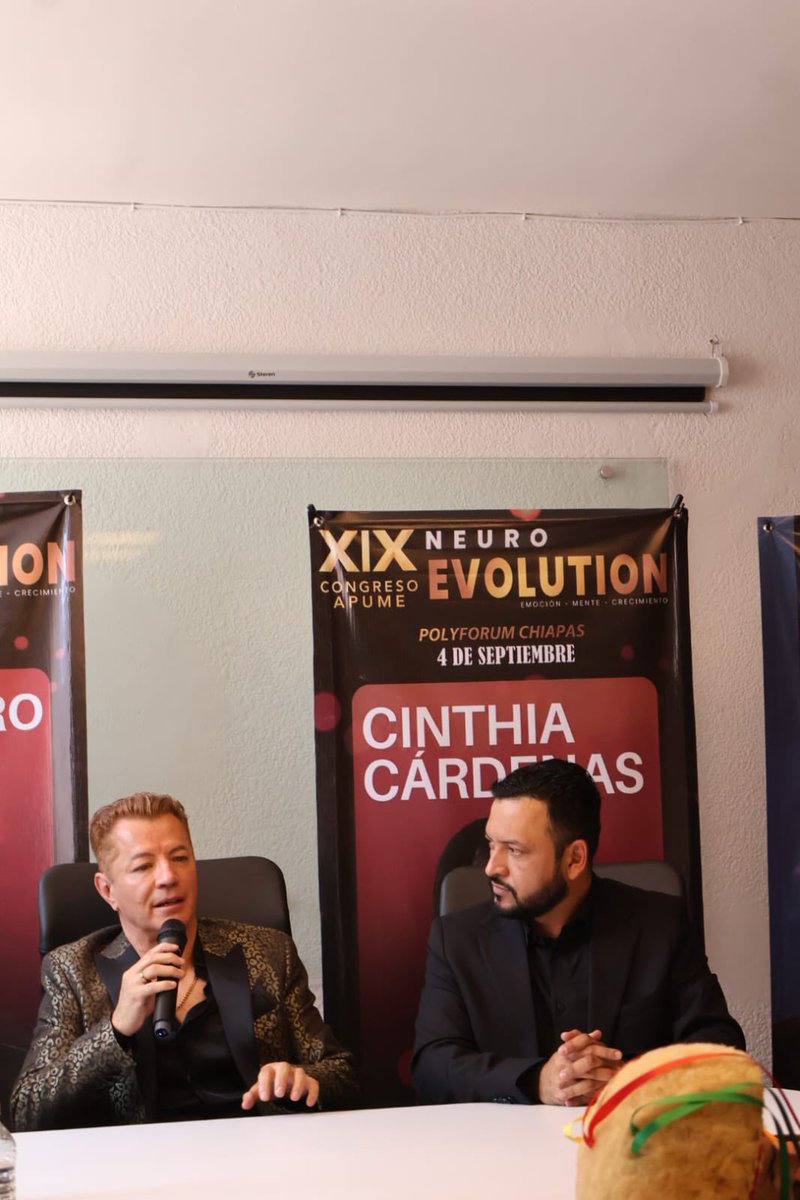
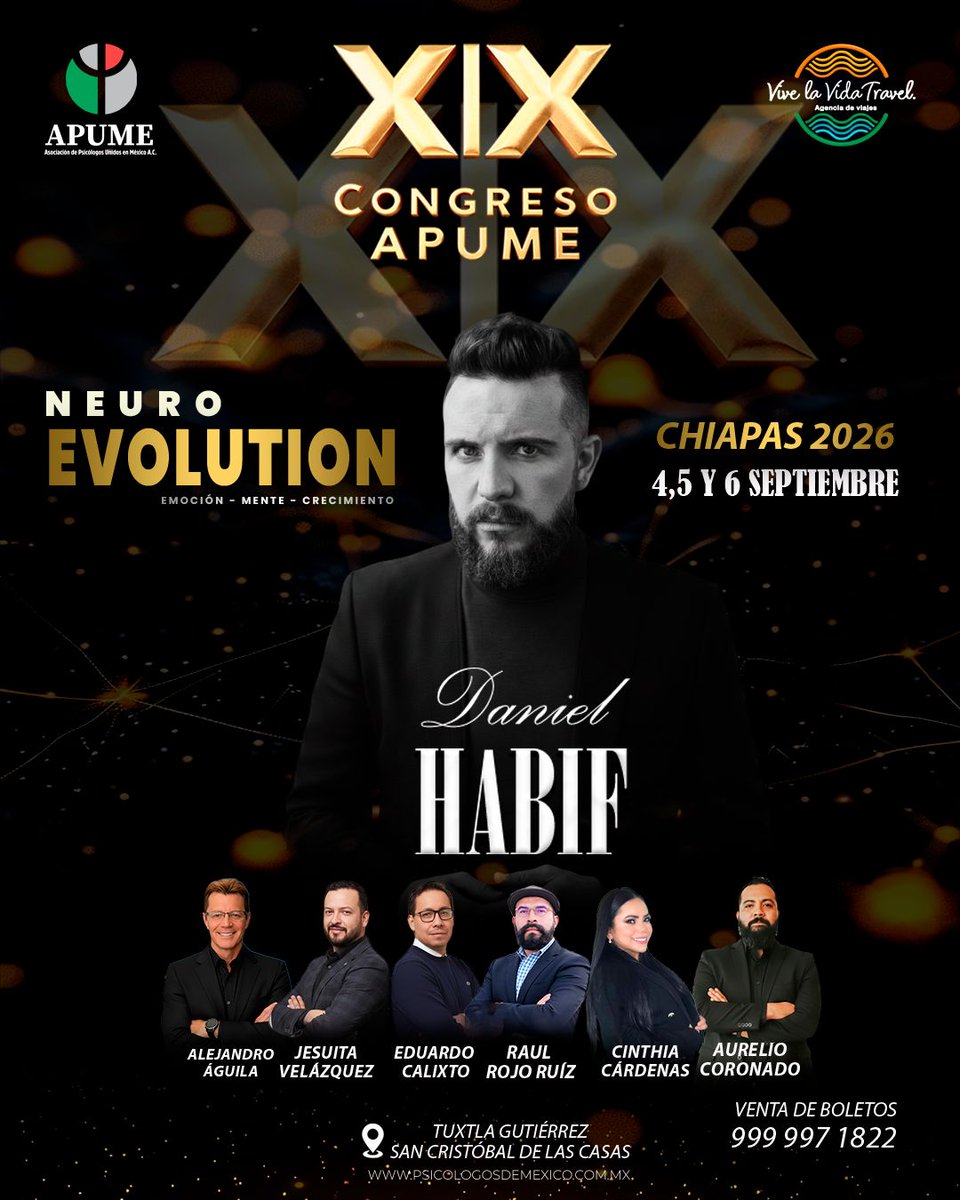
Ayer durante dos horas presentamos en CDMX nuestro congreso NEUROEVOLUTION que tendrá como sede CHIAPAS. NeuroEvolution llegará a Chiapas y es para público en general, Polyforum será testigo del primer día de actividades, un ciclo de conferencias con grandes ponentes. @INHISAC
1
2
30
me: ok i gotta focus up, work on <important project> but then i do: * neuroevolution and the elixir nx ecosystem (it evolved a little pong-cli player!) * turn my local deployment ansible playbooks into a little agent-friendly cli for turning a vps into a little cloudflare-style cloud * ai-assisted linter that is reproducible and fast * skill management cli tool that i won't use * parallel streaming datalog implementation * fast local semantic graph db with datalog * graphmode mcp that turns codebases into datalog friendly graphs and what i don't do: <important project>
5
539
🧠 Alertan por aumento de ansiedad, depresión y conductas suicidas en menores y jóvenes en Chiapas. Especialistas anunciaron el XIX Congreso APUME “Neuroevolution: Emoción, Mente y Crecimiento”, enfocado en prevención del suicidio y salud mental. 📍Habrá actividades en Tuxtla y San Cristóbal, con conferencistas nacionales e internacionales. Entre los participantes estarán la sexóloga española Alora Mafi y el psicólogo forense Aurelio Coronado.
1
1
4
165
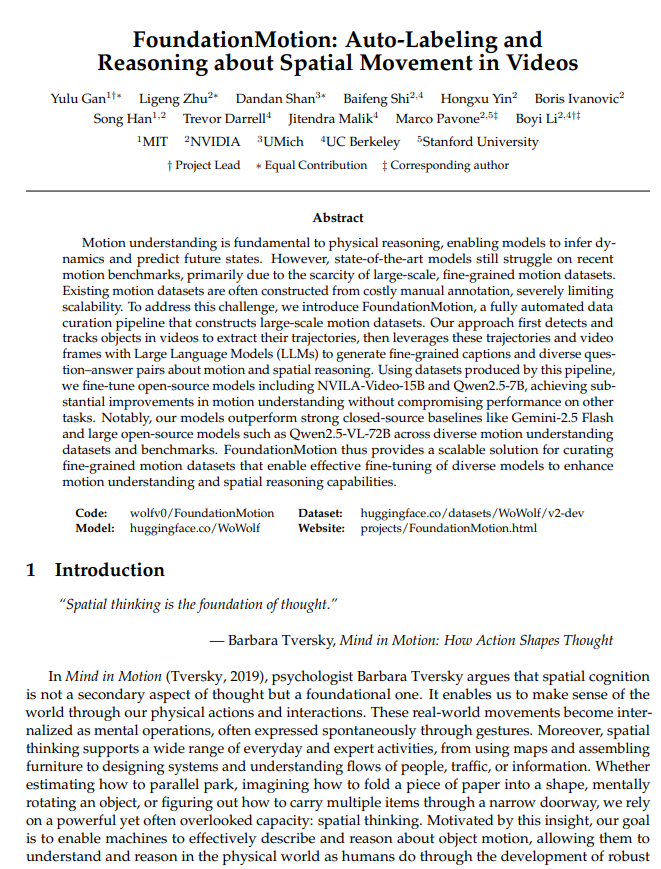
Exciting Guest Speaker Alert! 🎤 In about 1 hour from now, @Cohere_Labs's #computervision group will play host to an amazing guest speaker session with @yule_gan, where we will learn about auto-labeling and reasoning about spatial movement in videos 😁 ! Session Essence: Foundation Motion is a fully automated data curation pipeline that constructs large-scale motion datasets. Their approach first detects and tracks objects in videos to extract their trajectories, then leverages these trajectories and video frames with Large Language Models (LLMs) to generate fine-grained captions and diverse question-answer pairs about motion and spatial reasoning. Speaker Mini-Bio: Yulu Gan is a second-year CS PhD at MIT, studying AI and science. Advised by @TomasoPoggio and @phillip_isola, his research focuses on reasoning in VLMs and LLMs and neuroevolution. Paper Link(s): The associated paper(s) for the session can be found at @ arxiv.org/abs/2512.10927 Event Details: Date: 12th May 2026 Time: 11:00 a.m. EDT Event link: discord.com/events/987824841… Looking forward to seeing you all there and welcoming all interesting queries!
1
4
15
3,750
Lots of work on indirect encodings here: neuroevolutionbook.com/ne_bo… And on synergies of neuroevolution with generative AIs here: neuroevolutionbook.com/ne_bo…

3
49
This project by @mrdoob is nice (run it live in the browser at the links in the posts); nice 3D graphics and a good drifty driving model. How about multi-car support? I'm tempted to implement neuroevolution for drift cars in the style of my cycling game doc.ic.ac.uk/~ajd/Cycling/

Hey @mrdoob! Ideas for Starter Kit Racing: github.com/mrdoob/Starter-Ki… keeps Eagle and adds third-person / hood cameras with smooth transitions, speed-based FOV, a small HUD under the lap timer C to cycle. Hope you like it! Only sharing in case it’s useful for the project.
3
2
17
2,775
We’ve added a graphical interface to the neuroevolution framework in #Simbrain. Watch as genes mutate and see how this impacts fitness. In this example, two networks controlling two agents are evolved and fitness corresponds to how much they’ve eaten.
1
2
69
「AIは訓練するのではなく、自ら”育つ”ようにすべきだ」 Sakana AIのリサーチャー、@sebastianrisi がポッドキャスト @EyeOn_AI に出演。進化的手法でニューラルネットワークを構築するNeuroevolution手法の概要、継続学習や人工生命(ALife)研究の今について語りました。 youtu.be/pPpDxB4N_mE
9
47
224
31,980
AGI in 2027 via decentralized neuroevolution. Study $QUBIC.
8
25
200
4,308
🚨 We’re excited to see this new paper in AIP Advances on a #machinelearning potential trained on our MB-pol #datadriven #manybody potential: 👉 pubs.aip.org/aip/adv/article… This study highlights an especially important role for MB-pol, going beyond a benchmark to serve as high-fidelity training data for #machinelearning models of #water. 🖥️ Using a #neuroevolution (NEP) potential trained on MB-pol, the authors reproduce vapor–liquid equilibrium and interfacial properties in close agreement with MB-pol and experiment, while also uncovering a cooperative evaporation mechanism involving at least four water molecules. 🌊 Great example of #datadriven #manybody potentials enabling scalable #machinelearning models. Congratulations to the authors! 👏 @UCSanDiego @UCSDPhySci @UCSDChemBiochem @HDSIUCSD @SDSC_UCSD @AIP_Publishing
3
14
947
So unfortunate & disrespectful. Neuroevolution is decades old. People such as UT prof, Risto Miikkulainen, spent their entire lives focused on it. But "Oliver Prompts" tells us that it was actually nvidia that "proved" backprop wasn't required. In 2026.

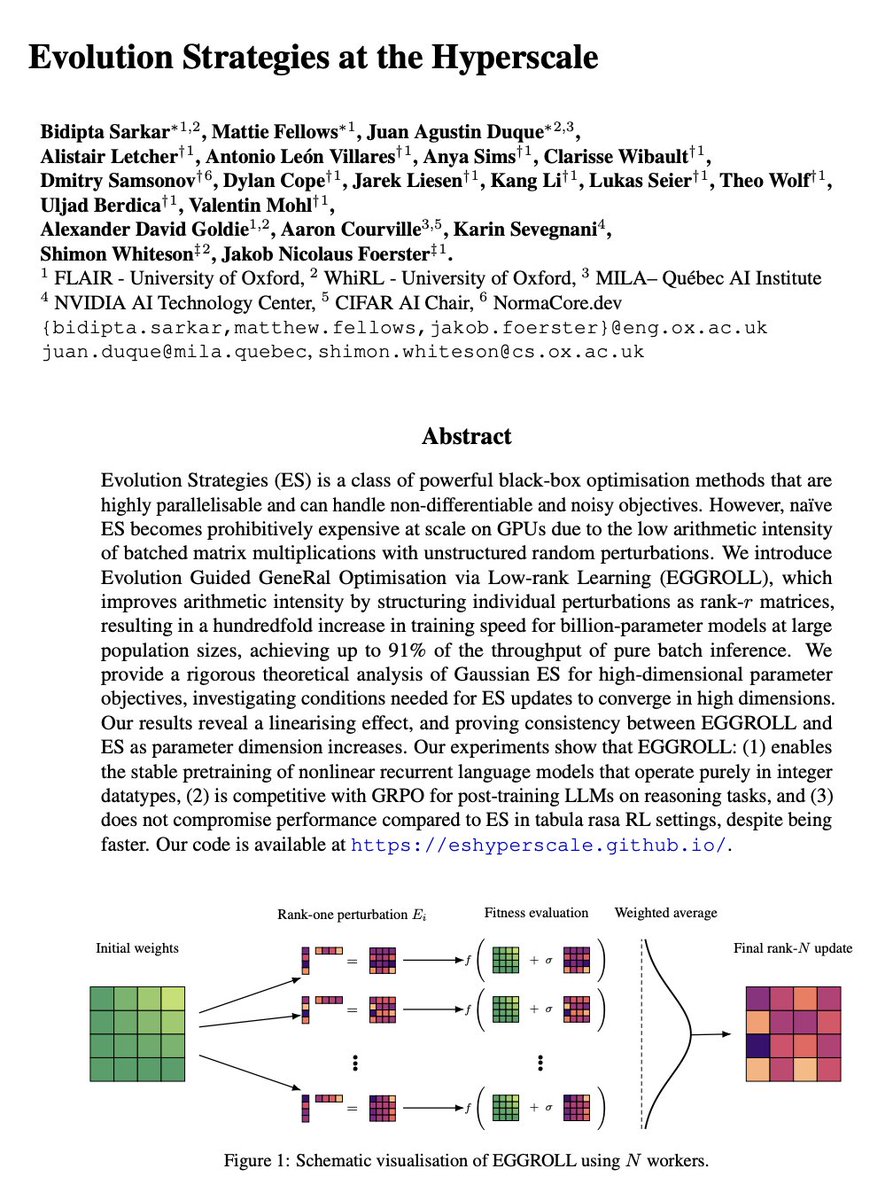
🚨 BREAKING: NVIDIA proved backpropagation isn't the only way to build an AI. They trained billion-parameter models without a single gradient. Every AI you use today relies on backpropagation. It requires complex calculus, exploding memory, and massive GPU clusters. Meanwhile, an ancient, gradient-free method called Evolution Strategies (ES) was written off as impossible to scale. Until now. NVIDIA and Oxford just dropped EGGROLL. Instead of generating massive, full-rank matrices for every mutation, they split them into two tiny ones. The AI mutates. It tests. It keeps what works. Like biological evolution. But now, it does it with hundreds of thousands of parallel mutations at once. Throughput is now as fast as batched inference. They are pretraining models entirely from scratch using only simple integers. No backprop. No decimals. No gradients. We thought the future of AI required endless clusters of precision hardware. It turns out, we just needed to evolve.
3
11
778
According to AI researcher Pedro Domingo's The Master Algorithm book, in the AI field you have to first approximation these camps: - Symbolists like symbol manipulation and logic: decision trees, random decision forests, production rule systems, inductive logic programming,... - Connectionists like to mimic the brain's interconnected neurons (neuroscience): artificial neural networks, deep learning, spiking neural networks, liquid neural networks, neuromorphic computing, hodgkin-huxley model,... (this is booming the most in the current wave of AI boom right now) - Bayesians like uncertainity reduction based on probability theory (staticians): bayes classifier, probabilistic graphical models, hidden markov chains, active inference,... Frequentists exist too, defining probability as a limit of number of experiments instead of a subjective prior probability that is being updated with new data. - Evolutionaries like evolution (biologists): genetic algorithms, evolutionary programming - Analogizers like identifying similarities between situations or things (psychologists): k-nearest neighbors, support vector machines,... Then there are various hybrids: neurosymbolic architectures (AlphaZero for chess, general program synthesis with DreamCoder), neuroevolution, etc. And technically you can also have: - Reinforcement Learners like learning from reinforcement signals: reinforcement learning (most game AIs use it like AlphaZero for chess uses it, LLMs like ChatGPT start to use it more, robotics,...) - Causal Inferencers like to build a causal model and can thereby make inferences using causality rather than just correlation: causal AI - Compressionists who see cognition as a form of compression: autoencoders, huffman encoding, Hutter prize - Divergent Novelty Searchers love divergent search for novelty without objectives, without converging: novelty search - Selforganizers: Selforganizing AI like neural celluar automata And you can hybridize these too with deep reinforcement learning, novelty search with other objectives etc. I love them all and want to merge them. I think one perspective often isnt enough. They're being constantly merged in so many ways in various new AI research papers, it's cool.
2
3
9
870
Replying to @ID_AA_Carmack
Hi @ID_AA_Carmack, if you're looking for a slightly different type of deep learning book, maybe check out our new, free book on neuroevolution: neuroevolutionbook.com/ It also includes work on agents that evolve to play Doom.
12
1,150
Replying to @pmitu
Neuroevolution
1
1
27