
🟠 The @UNEP - @MethaneData standard has become the primary methodological reference for the European Regulation on #methane #emissions. The case of Italian emissions reports shows how OGMP 2.0 is already influencing operators’ practices.
👉On Astrolabio: astrolabio.amicidellaterra.i…
61

Progress includes membership in @UNEP's OGMP 2.0 and use of satellite data from IMEO's Methane Alert and Response System.
From detecting emissions to taking action on the ground, the video highlights how turning data into action can help keep valuable gas in the pipeline instead
1
21

The @EnovateAI webcast made the case clearly: every carbon credit must pass three additionality tests — Regulatory, Financial, Technological. Here’s how $LMCX answers each, with receipts.
REGULATORY. EPA OOOOb/OOOOc (April 2026 final) loosened — 72hr flare limits, all flares & enclosed combustion exempt, no emissions quantified. The federal floor dropped. $LMCX operates BEYOND it: OGMP 2.0 Level 5, EPA Subpart W, ISO 14064 / ISO 14065. The gap IS the premium.
FINANCIAL. Marginal wells run 8–15% EBITDA. Manual OGI monitoring costs $22K /well/year. Carbon revenue makes the economics work. Without it, the reduction doesn’t happen.
TECHNOLOGICAL. <12% of marginal operators ran electronic monitoring in 2023. OGI detection floor: 60 g/hr. Continuous AI: 0.5 g/hr. $LMCX uses Enovate Ai (US Patent 12,394,980 B1) as primary oracle. Not business-as-usual by any standard.
The scale: 750K marginal wells. 3.7% true methane loss rate (vs 1.4% self-reported). $260B in wasted gas annually. 80× warming potential vs CO₂ over 20 years.
Christopher Unit #1 Y1 supply: 2,176,779 CATs. Verified by Kent Group (ISO 14065 VVB). CCCi Lloyd’s $100M/wallet enforced at the @solana Token-2022 Transfer Hook.
Looser federal rules don’t weaken the carbon market. They sharpen it. ESG buyers pay 15–30% more for credits from demonstrably compliant operators.
$LMCX is built for that gap. Auditable. Insured. Tokenized.
$LMCX — receipts not vibes.
6
12
194

May 21
During 1Q26, PEMEX flared 3.925Bcf/d of natural gas into the atmosphere, effectively wasting 5.5% to 6% of its total gas production due to a structural lack of capturing and processing infrastructure.
The Global Gap: Eyeing the UN Gold Standard
PEMEX remains one of the few major National Oil Companies (NOCs) that has not yet joined the Oil & Gas Methane Partnership 2.0 (OGMP 2.0), the United Nations Environment Programme's premier measurement framework.
Read more on Mexico Business News.
#PEMEX #MethaneEmissions #EnergySovereignty #ClimateAction #WorldBank #OGMP20 #MexicoBusiness #OilAndGas #Sustainability #PublicPolicy #NaturalGas #Infrastructure mexicobusiness.news/oilandga…
2
96
📅 19 May: UNEP’s IMEO is hosting a webinar for its Methane Alumni Network on building effective methane MRV frameworks aligned with OGMP 2.0.
➡️ Organized in collaboration with Carbon Limits, this session brings together policymakers, industry representatives 🧵
1
1
3
50
#2 Investment-Grade Quality
• Legally titled asset with property rights
• Insurance-backed permanence (AM Best A-rated coverage)
• Balance-sheet friendly & compliance-grade (ISO, OGMP Level 5, CORSIA-ready)
Built like a digital commodity with the @FireblocksHQ tokenization platform, not a speculative token.
12
1
17
654
10 tools for tokenized energy commodities:
1. Solana Token-2022
2. Fireblocks MPC
3. IPFS archiving
4. OGMP 2.0 Level 5
5. Optical gas imaging
6. SWIR spectrometry
7. Monte Carlo quantification
8. ISO 14065 verification
9. OTC bilateral issuance
10. LMCX CAT
What did I miss?
2
1
8
160

Apr 13
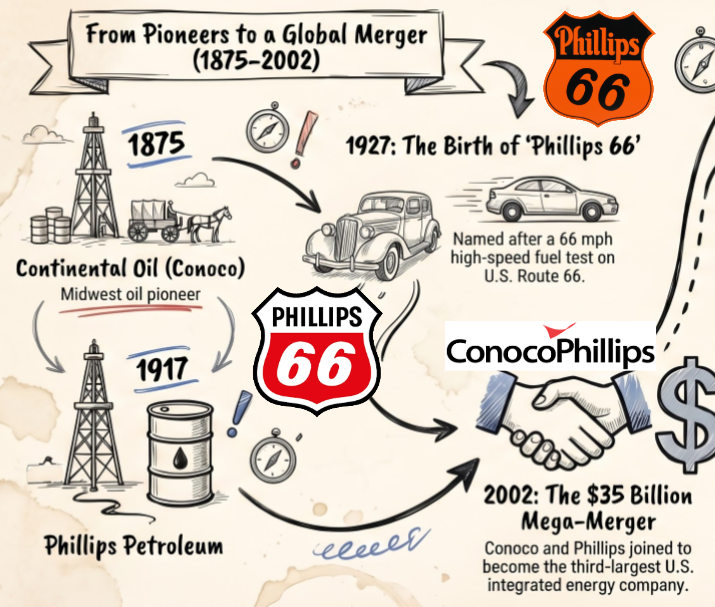
Do you know how Phillips 66 got their name?
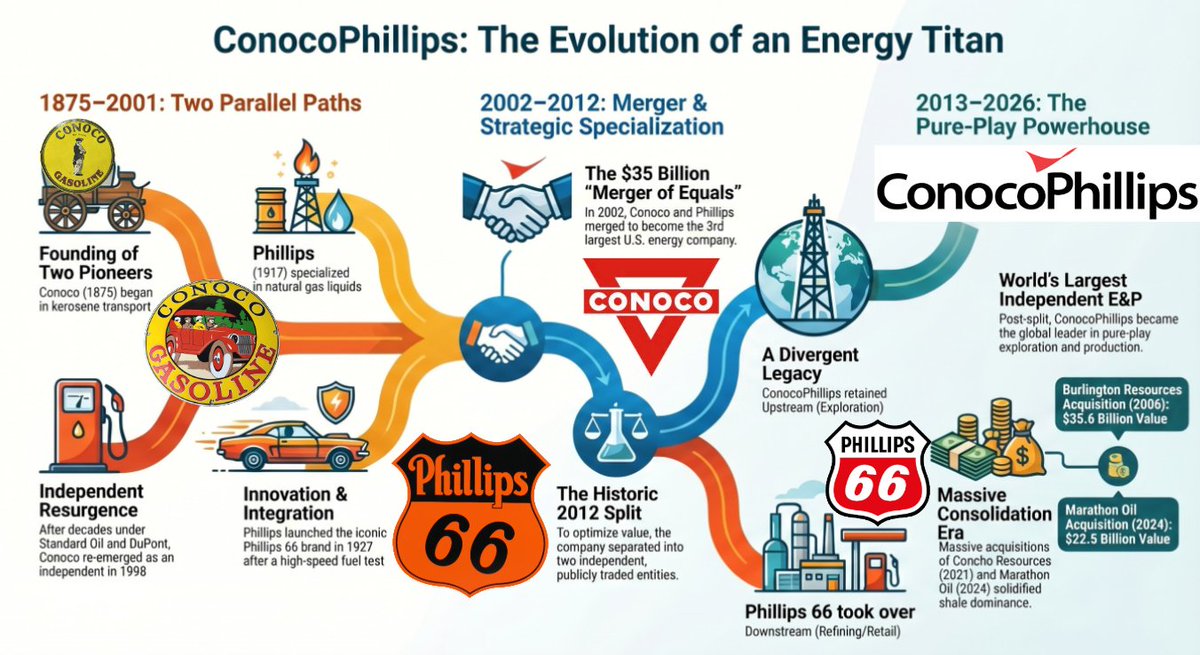
How did ConocoPhillips become the world’s largest independent exploration and production (E&P) company? 🛢️📈
It is a fascinating story of strategic evolution, spanning 150 years of energy history. Born from the pioneering legacies of Continental Oil and Phillips Petroleum, the modern ConocoPhillips was forged in a massive 2002 merger. However, its current trajectory is defined by a bold strategic pivot made a decade later.
Here are the defining moves that shaped this energy giant:
The Strategic Split (2012): Recognizing market dynamics, ConocoPhillips spun off its downstream operations (creating Phillips 66) to become a focused, pure-play E&P powerhouse.
Aggressive U.S. Consolidation (2020–2024): The company cemented its dominance in U.S. shale through highly disciplined, multi-billion-dollar acquisitions, including Concho Resources ($9.7B), Shell’s Permian assets ($9.5B), and Marathon Oil ($22.5B).
Global & Technical Leadership: Beyond the Lower 48, the company continues to pioneer global Liquefied Natural Gas (LNG) supply and is executing major, long-term capital investments like the Willow Project in Alaska.
Driving Sustainability: ConocoPhillips is balancing production with environmental stewardship. They are committed to the "Gold Standard" for methane reduction (OGMP 2.0) and continue to invest heavily in lower-carbon research and technologies.
By leaning into three core pillars, high-scale asset quality, financial strength, and technical innovation, ConocoPhillips has positioned itself not just to navigate the dynamic global energy market, but to lead it.
#ConocoPhillips #EnergyIndustry #OilAndGas #BusinessStrategy #EnergyTransition #Leadership #MergersAndAcquisitions #LNG
5
3
250
Apr 13
ConocoPhillips: The Evolution and Strategic Trajectory of an Energy Giant
Executive Summary
ConocoPhillips stands as the world’s largest independent pure-play exploration and production (E&P) company, a position solidified by its 2012 spinoff of downstream assets and a subsequent decade of aggressive consolidation. Tracing its lineage back 150 years to the earliest American oil discoveries, the company is the product of a massive 2002 merger between Conoco Inc. and Phillips Petroleum Company.
The company’s modern strategy is defined by three pillars: high-scale asset quality, financial strength, and technical innovation. Since 2020, ConocoPhillips has dramatically expanded its footprint in the U.S. shale sector through multibillion-dollar acquisitions of Concho Resources, Shell’s Permian assets, and Marathon Oil Corporation. Concurrently, the firm has maintained a global presence in LNG and conventional production while transitioning toward high-transparency emissions reporting and lower-carbon research.
--------------------------------------------------------------------------------
Historical Foundations: The Dual Legacy
The contemporary ConocoPhillips entity is derived from two distinct pioneering firms that emerged during the late 19th and early 20th centuries.
The Rise of Conoco (Continental Oil)
* 1875 Founding: Isaac Elder Blake founded the Continental Oil and Transportation Company in Ogden, Utah, initially focusing on the distribution of kerosene and lubricants.
* The Standard Oil Era: Acquired by John D. Rockefeller’s Standard Oil trust in 1884, the company operated as a subsidiary until the Supreme Court-ordered breakup in 1911, which restored its independence.
* Consolidation: In 1929, Continental merged with Marland Oil Company. This merger resulted in the adoption of the iconic red triangle logo and moved the headquarters to Ponca City, Oklahoma.
* The DuPont Period: To avoid a hostile takeover in 1981, Conoco was acquired by DuPont. It remained a subsidiary until 1998, when it was divested in the largest IPO in U.S. history at that time.
The Rise of Phillips Petroleum
* 1917 Founding: Brothers Frank and L.E. Phillips established the company in Bartlesville, Oklahoma, following a series of successful oil strikes.
* Innovation and Brand: Phillips became a leader in natural gas liquids (NGLs) and chemical innovation. In 1927, the company launched the "Phillips 66" brand, named after a high-gravity gasoline test on Route 66 where the vehicle reached 66 mph.
* Technical Milestones: Phillips pioneered the HF alkylation process for aviation fuel during WWII and invented high-density polyethylene (Marlex) in 1951, which launched the company’s massive plastics business.
--------------------------------------------------------------------------------
The Era of Integration and the Strategic Split
The 21st century brought a fundamental shift in the company's structure, moving from a fully integrated "major" to a specialized E&P powerhouse.
The 2002 Mega-Merger
On August 30, 2002, Conoco Inc. and Phillips Petroleum Company completed a $35 billion "merger of equals." The resulting entity, ConocoPhillips, became the third-largest integrated energy company in the U.S. and the sixth-largest globally. This merger combined Conoco’s international upstream strengths with Phillips' extensive refining and retail networks.
The 2012 Downstream Spinoff
Recognizing that the market valued upstream (exploration) and downstream (refining) operations differently, the company split into two independent, publicly traded entities on May 1, 2012:
1. ConocoPhillips: Retained all upstream operations, becoming a pure-play E&P company focused on finding and producing oil and gas.
2. Phillips 66: Assumed all downstream, midstream, and chemical operations, including the iconic retail brand and refining assets.
--------------------------------------------------------------------------------
Modern Strategic Expansion (2020–2026)
Since the split, ConocoPhillips has utilized a "disciplined growth" model, characterized by high-value acquisitions in the U.S. Lower 48 and strategic international developments.
Key Acquisitions and Milestones
YearEventStrategic Impact
2021Acquisition of Concho Resources ($9.7B)Massive expansion in the Permian Basin.
2021Acquisition of Shell’s Permian Assets ($9.5B)Solidified dominance in U.S. shale.
2023Willow Project (Alaska) FIDFinal Investment Decision for a major long-term Arctic asset.
2024Marathon Oil Acquisition ($22.5B)Added lucrative assets in Eagle Ford, Bakken, and Permian basins.
2025Ursa and Europa Field SalesAnnounced agreement to sell interests, continuing portfolio optimization.
--------------------------------------------------------------------------------
Global Operations and Core Capabilities
ConocoPhillips operates across diverse geographical regions, leveraging technical expertise to extract resources in challenging environments.
* Geographic Reach: The company maintains significant operations in Alaska, the U.S. Lower 48, Canada, Norway, China, Malaysia, Australia, and Qatar.
* Technical Specialization:
* LNG Leadership: Pioneers in Liquefied Natural Gas, having facilitated the first shipment from Alaska to Japan in 1969. Recent projects include APLNG in Australia and new supply agreements in Germany and Qatar.
* Unconventional Resources: A leader in shale oil and gas through its heavy investments in the Permian and Montney (Canada) regions.
* Deepwater and Subsea: Significant production at subsea tiebacks in Norway and deepwater facilities like Gumusut-Kakap in Malaysia.
--------------------------------------------------------------------------------
Sustainability, CSR, and Environmental Stewardship
The company has integrated environmental and social governance into its operational framework, focusing on transparency and new energy research.
* Climate Alliances: ConocoPhillips was the first U.S. energy company to join the U.S. Climate Action Partnership in 2007.
* Methane Performance: The company is a participant in the Oil and Gas Methane Partnership (OGMP) 2.0, committing to the "Gold Standard" for methane emission reporting and reduction.
* Research and Development: In 2007, the firm dedicated $150 million to R&D for new energy sources. It continues to explore lower-carbon technologies through initiatives like "Energy Technology Ventures," a joint venture with GE and NRG Energy.
* Renewable Diesel: In 2007, it formed a strategic alliance with Tyson Foods to produce renewable diesel from animal fat byproducts, reflecting an early entry into the energy transition space.
--------------------------------------------------------------------------------
Core Values and Corporate Outlook
The identity of ConocoPhillips is rooted in what the company identifies as "operating excellence" and "environmental stewardship." Its leadership emphasizes accountability and performance as the primary driving forces for the company’s success in a dynamic global marketplace. As of 2026, the company remains focused on executing major capital projects, such as the Willow Project, while maintaining its status as a premier independent producer of global energy resources.
6
7
520

Apr 11
Here's How it works:
* CleanConnect.ai’s ProveZero uses AI to analyze production data and certify it against multiple global standards at once (ISO 14067, ISCC, MiQ, OGMP, EO100™, and more).
* Diode’s zero-trust networking securely routes every piece of data,
1
3
38
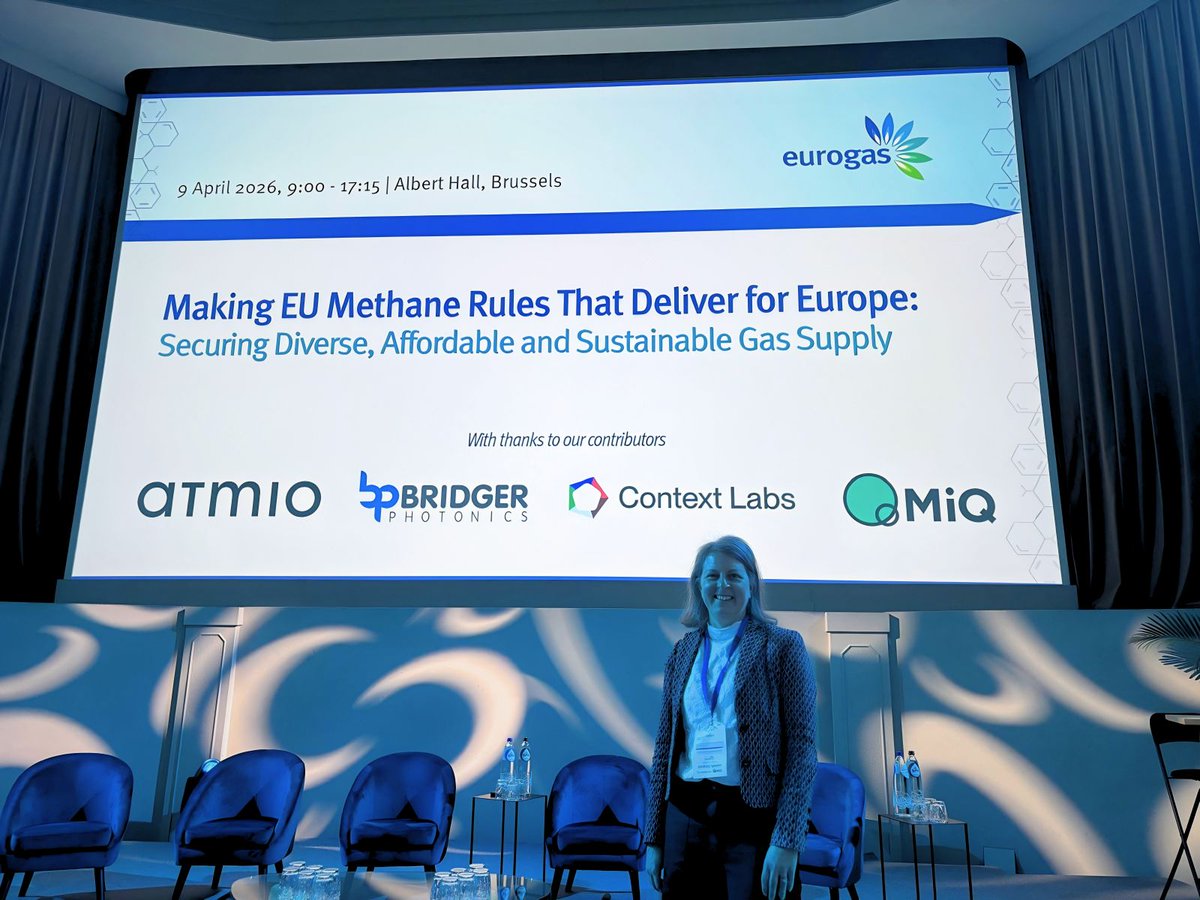
➡️ Discussions focused on the implementation of the EU Methane Regulation, for which #OGMP 2.0 provides the methodological foundation for measurement, reporting and verification of emissions in the oil and gas sector.
1
1
3
40
📍 #OGMP 2.0 Programme Manager Lisa Solomchuk spoke at the Eurogas Methane Emissions Conference in Brussels, joining global experts to discuss the path forward for global methane transparency.
1
3
4
75

An Environmental Certificate Is Only Worth What You Can Prove About It. Oasis Just Made That Proof Cryptographic
The oil and gas certification industry runs on trust chains that are, in practice, surprisingly fragile. A methane measurement gets recorded. A document gets emailed.
A registry entry gets updated. Somewhere in that chain, someone has to take someone else's word for it. For buyers of environmental credits, traders of energy certificates, and regulators auditing compliance, the weakest link in that chain is the one that matters most.
Diode and CleanConnect.ai announced a collaboration that replaces the trust assumptions in that chain with cryptographic proof, and @OasisProtocol is the privacy-preserving blockchain anchoring it.
The integration combines Diode's zero trust networking, CleanConnect.ai's ProveZero multi-certification system, and Oasis's onchain infrastructure to deliver authenticated production proofs with source-level provenance for oil and gas data.
What that means in practice: every methane measurement, every certified performance target, every evidence document generated by ProveZero gets routed through Diode's zero-trust network and anchored on @OasisProtocol.
The result is an Environmental Attribute Certificate that carries cryptographic proof of its underlying data, not a spreadsheet that was emailed at some point in the process. ProveZero can now generate tokenized energy as a verifiable RWA across ISO 14067, ISCC, EO100, MiQ, OGMP, EUMR, and more simultaneously. A single auditable chain of custody across every major certification standard in one place.
Marko Stokic, Head of AI at Oasis, noted that this is the kind of regulated industry adoption the network was built for. The Oasis layer here is not decorative. Regulated industrial data has confidentiality requirements.
Routing it through a public system that exposes underlying metrics to competitors or adversaries is not viable for most operators. Oasis provides the privacy foundation that makes zero-trust networking deployable in environments where that exposure is a dealbreaker.
This is what Oasis infrastructure enabling real economic activity at scale looks like.
Full announcement at diode.io/blog
#OasisNetwork $ROSE

33
70
97
4,911
Hey fam,
Do you know that real World Assets on blockchain have been a compelling idea for years? The execution has been harder. The bottleneck is not the tokenization itself. It is the trust chain behind the underlying data.
A tokenized environmental certificate is only as credible as the verification process that produced it, and most verification processes today rely on documents, spreadsheets, and centralized registries that any party in the chain could quietly alter.
Diode and CleanConnect.ai just announced a collaboration that addresses this directly, and @OasisProtocol is the privacy layer at the center of it. The partnership combines Diode's zero trust networking, CleanConnect.ai's ProveZero multi-certification system, and Oasis's privacy-preserving blockchain to deliver authenticated production proofs with source-level provenance for oil and gas certification data.
What this means concretely: methane measurements, performance targets, and evidence documents are routed through Diode's zero-trust network and anchored on @OasisProtocol, giving producers, traders, and buyers cryptographic proof that the attributes encoded in every Environmental Attribute Certificate reflect real, verified data at the source level. Not a registry spreadsheet. Not an emailed document. On-chain proof.
ProveZero can now generate tokenized energy as a verifiable #RWA across ISO 14067, ISCC, EO100, MiQ, OGMP, EUMR, and more simultaneously. A single, auditable chain of custody across every major certification standard. Marko Stokic, Head of AI at Oasis, noted that this is exactly the kind of regulated industry adoption the network was built for.
This is what Oasis infrastructure enabling real economic activity looks like.
Full announcement at diode.io/blog
#OasisNetwork $ROSE
11
35
51
2,436

CleanConnect’s ProveZero is a key piece
It enables multi-certification across standards like:
ISO 14067, MiQ, OGMP, ISCC, EO100™, EUMR
➡️ One system
➡️ Multiple standards
➡️ Single auditable chain of custody
x.com/diode_chain/status/203…
6/
Mar 17

CleanConnect.ai delivers AI-powered solutions to monitor and cut methane emissions, driving cost savings, compliance, and real-time environmental impact.
🔗 cleanconnect.ai
1
2
35

Mar 26
2/6 Here’s the dream team:
✅ CleanConnect.ai’s ProveZero platform generates multi-certified production data (ISO 14067, ISCC, EO100™, MiQ, OGMP, EUMR & more)
✅ Diode routes it through zero-trust networking private AI control plane
✅ Oasis anchors everything on its privacy-first blockchain
Result? One unbreakable, auditable chain of custody. 🔗🔒
1
4
79

Mar 26
And it goes further.
The system supports multiple certification standards (ISO, MiQ, OGMP, etc.) in one flow, instead of siloed verification.
This is what real-world adoption looks like:
Not louder narratives, just better infrastructure replacing weak trust systems.

6
46
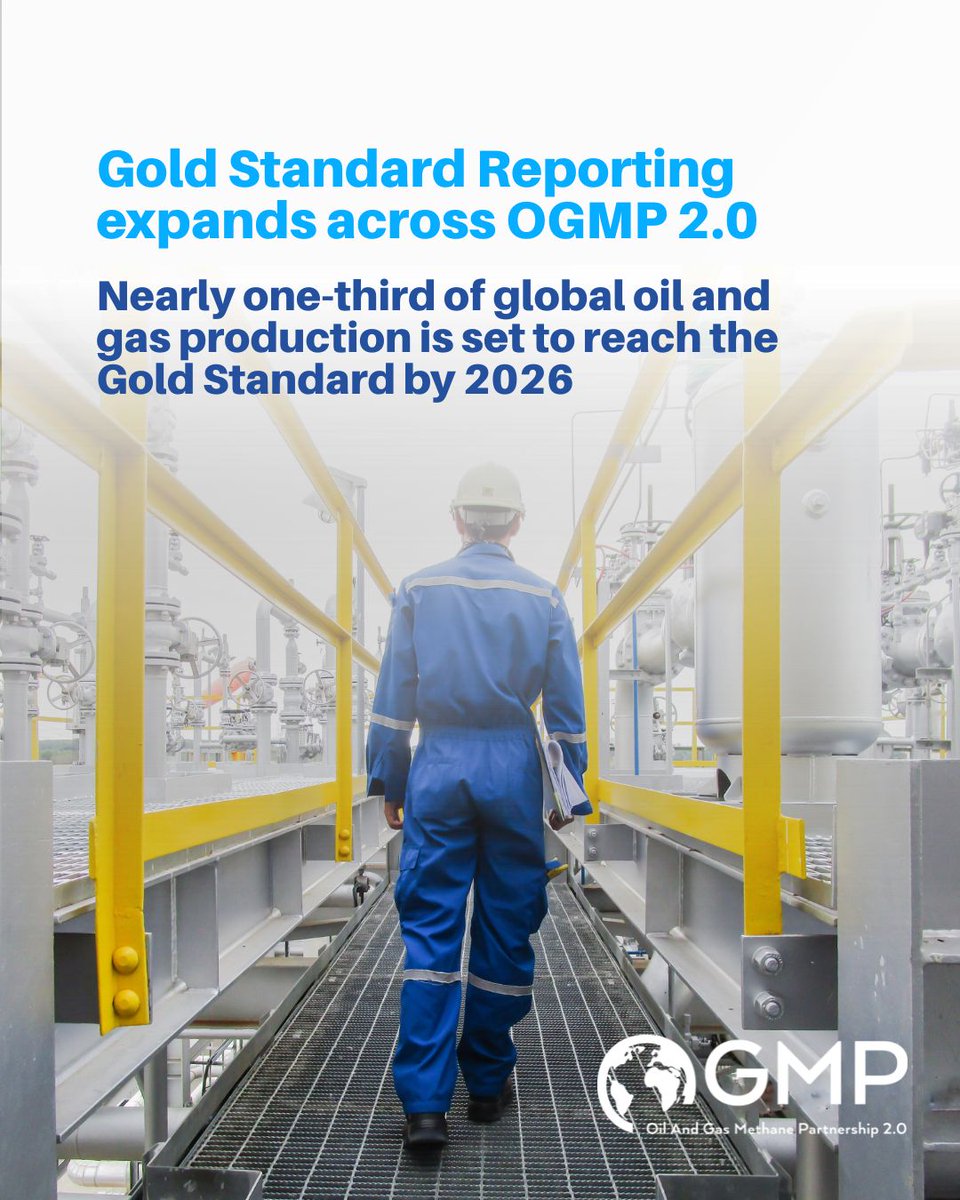
📊 Gold Standard reporting under #OGMP 2.0 continues to expand across the oil and gas sector.
OGMP 2.0 members commit to set methane reduction targets, report emissions annually and progressively improve data quality. 🧵
1
5
6
204
👏 #OGMP 2.0 is on track to deliver measurement-based methane reporting for nearly one-third of global oil and gas supply by 2030.
➡️ A new OGMP 2.0 analysis forecasts how much oil and gas will be reported at the highest data quality level, Level 5, in the coming years. 🧵
1
2
80
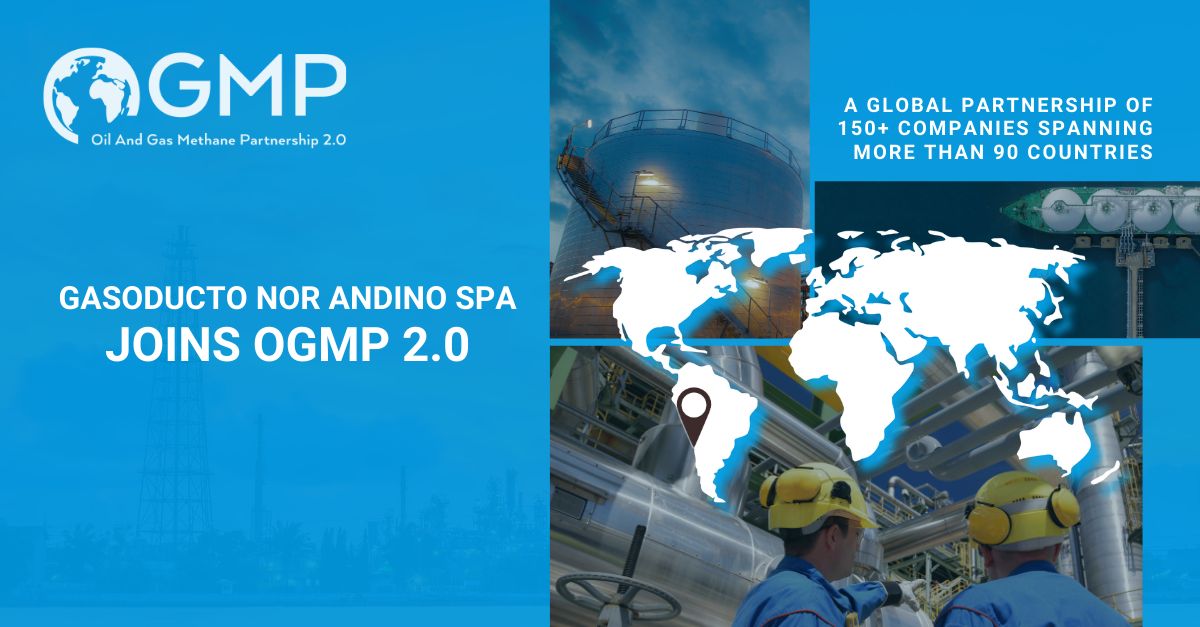
🌟 GNA joins #OGMP 2.0! The partnership welcomes our newest gas pipeline operator and transporter from Chile into the community of practice committed to #CutMethane through transparent, measurement-based data and peer collaboration.
ogmpartnership.com
4
4
153