
May 25
What's happaning on $RENDER Discord, what's currently being discussed in the channels?
Let's dive in
🧵👇🏻👇🏻👇🏻🧵
🧵 general
Community focus split between burn-demand transparency and practical GPU benchmark onboarding issues.
⭕️ Demand/burn concern from @hummus928.
@hummus928 flagged that daily burns were only $269 with under 1% emission coverage, saying the long-term vision remains strong but holders need clearer data on actual external demand, MCP usage, and sustained network utilization. Historical context: similar concerns have come up before around whether AI/compute demand is translating into real job volume, with past discussion noting that core rendering workloads still appear to drive most burn activity while AI tooling ramps.
⭕️ Benchmark JSON file troubleshooting.
@llcmac_9762 could not find the result JSON file in the expected Windows 10 folder. @quintaylor730952 asked when the issue started, while @arupendra suggested copying the downloaded benchmark folder to the desktop before running it, saying the JSON should appear in that folder after the benchmark completes. @standor2639 later asked whether trying another browser would help, but @arupendra questioned how browser choice would affect the local benchmark output.
⭕️ GPU detection and Blackwell support questions.
Team member Luke shared the FAQ guidance that it is normal if the benchmark does not visibly “see” certain hardware, because the assessment records the GPU type and relies on expected GPU scores via OctaneBench. @standor2639 asked whether NVIDIA 6000 Pro Blackwell is accepted; @quintaylor730952 said “I do,” and @arupendra also thought yes, but there was no explicit team confirmation in this thread.
⭕️ Ranking concern from @tinobruno.
@tinobruno questioned whether the benchmark/ranking can undervalue a 5950 paired with an RTX Pro Blackwell 96GB versus a Threadripper with an 8GB 3070. Team member Luke clarified that the benchmark records the GPU as described in the FAQ, and @tinobruno acknowledged the answer with thanks.
❗ Focus for the team: clarify whether NVIDIA 6000 Pro Blackwell is officially accepted; confirm where Windows users should expect the result JSON file and whether folder location matters; explain how benchmark ranking weights CPU vs GPU, especially for high-VRAM Blackwell cards; provide clearer demand metrics around daily burns, MCP usage, external demand, and sustained utilization.
❇️ Final thoughts: The tone was constructive but pointed. Users are trying to onboard serious hardware while also asking for sharper proof that network demand is scaling beyond the vision narrative. The most useful next step would be a concise benchmark troubleshooting note plus a transparent utilization/burn metrics update.
1
2
195

May 22
$RENDER : Review 📜
What if every idle GPU on the planet could be put to work rendering Hollywood movies, training AI models, and building the metaverse, and the people who own those GPUs got paid for it?
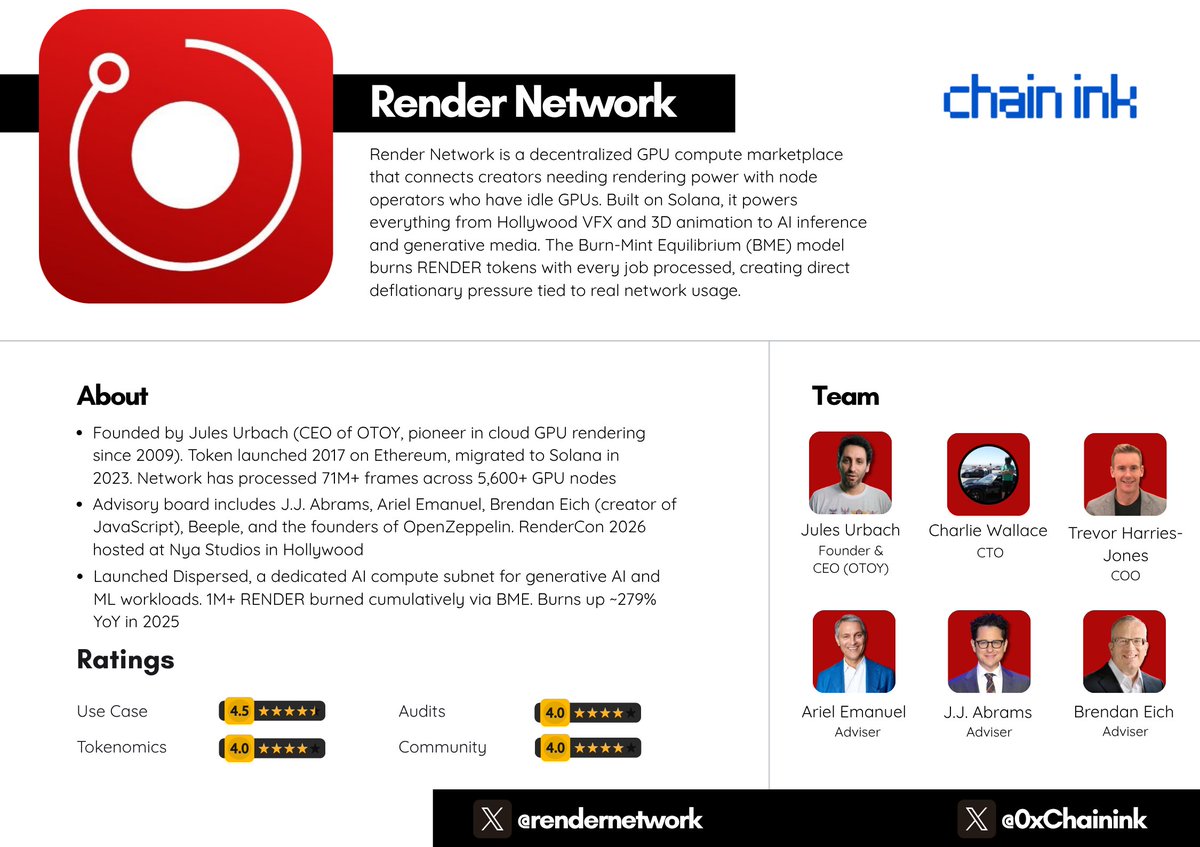
Meet Render Network - a decentralized GPU compute marketplace built on Solana that connects creators with idle GPU power, processing 71 million frames for studios, artists, and AI developers. Advised by J.J. Abrams, Brendan Eich, and Beeple. Where GPU power becomes a tokenized commodity.
Let's explore how Render is decentralizing the future of compute. 👇
⚪ Render at a Glance
Render Network is a peer-to-peer GPU compute marketplace created by Jules Urbach, founder and CEO of OTOY, the company behind the industry-standard OctaneRender engine. The network connects creators who need GPU power with node operators who have idle capacity, creating a decentralized alternative to centralized cloud rendering.
The $RENDER token powers the entire marketplace. Creators pay in RENDER (or fiat, which is converted and burned), node operators earn RENDER for completing jobs, and the Burn-Mint Equilibrium model permanently removes tokens from circulation with every job processed.
Marketplace Insight: The RNP-023 governance vote to integrate Salad's ~60,000 consumer-grade GPUs as an exclusive subnet could massively scale network capacity. RenderCon 2026 at Hollywood's Nya Studios (April 16-17) features Jules Urbach, Refik Anadol, and Rod Roddenberry. The Dispersed AI compute subnet is positioning Render at the intersection of creative rendering and AI infrastructure, with GPU hours available at ~$0.69.
⚪ Mission
Render Network's mission is to democratize access to GPU compute by creating a decentralized marketplace where anyone with idle GPU power can contribute to the world's rendering and AI workloads. By tokenizing compute power, Render aims to break the monopoly of centralized cloud providers and make high-end GPU rendering accessible to independent creators, small studios, and AI researchers alongside Hollywood productions.
🔵 A Brief History
Jules Urbach founded OTOY in 2009 with a vision to make cloud-based GPU rendering accessible to everyone. OTOY's OctaneRender became the industry-standard GPU rendering engine used across film, television, gaming, and architectural visualization. In 2017, Urbach launched the Render Network as the decentralized extension of that vision, tokenizing GPU compute through the RNDR token on Ethereum.
The network went through its initial development phase from 2017-2019, with the full mainnet launching in 2019. Early adoption came from the creative industry, with studios and independent artists using the network for 3D rendering jobs that would otherwise require expensive in-house GPU farms or costly centralized cloud services.
In late 2023, the network made a pivotal migration from Ethereum to Solana, rebranding the token from RNDR to RENDER. The move dramatically improved transaction speed and reduced costs, enabling the high-throughput job submission and settlement that a GPU marketplace demands.
Throughout 2025, network usage accelerated significantly. Token burns increased ~279% year-over-year, with 530,171 RENDER burned in the first nine months of 2025 compared to 139,924 in the same period of 2024. In December 2025, the network hit the milestone of 1 million cumulative RENDER burned.
In 2025, Render also launched Dispersed, a dedicated AI compute subnet built on five years of operational experience running distributed GPU infrastructure. Dispersed handles generative AI, image/video generation, and document processing workloads at approximately $0.69 per GPU hour, positioning Render as a viable alternative to centralized cloud providers for AI compute.
RenderCon 2026, hosted at Nya Studios in Hollywood on April 16-17, features presentations from Jules Urbach, artist Refik Anadol, and Rod Roddenberry, signaling Render's growing influence at the intersection of entertainment, AI, and decentralized infrastructure.
🔵 Ecosystem Narrative
Render's ecosystem sits at the intersection of three massive markets: creative GPU rendering, AI compute, and decentralized physical infrastructure (DePIN). The network turns idle GPU power into a productive, tokenized commodity.
Key dynamics include:
➛ GPU Marketplace connects creators needing render power with 5,600 node operators globally. Jobs are assigned based on OctaneBench scores, availability, scene complexity, and creator reputation.
➛ Burn-Mint Equilibrium (BME) creates direct deflationary pressure. Every job processed on the network results in equivalent RENDER burned. Fiat payments are converted to RENDER and burned automatically. Burns increased ~279% YoY in 2025.
➛ Dispersed is the new AI compute subnet, purpose-built for generative AI, ML workloads, image/video generation, and document processing. GPU hours available at ~$0.69, making it competitive with centralized cloud providers.
➛ OctaneRender integration provides ecosystem lock-in. OTOY's industry-standard rendering engine is natively integrated with the Render Network, meaning studios already using Octane can seamlessly access decentralized GPU power.
➛ Solana infrastructure enables high-throughput job submission, fast settlement, and low transaction costs, critical for a marketplace processing millions of rendering frames.
➛ RNP-023 (Salad Integration) is a pending governance vote to add ~60,000 consumer-grade GPUs via the Salad marketplace as an exclusive subnet, with all payments and rewards flowing through the RENDER token.
➛ RenderCon 2026 at Hollywood's Nya Studios (April 16-17) features Jules Urbach, Refik Anadol, and Rod Roddenberry, showcasing live workflows blending AI inference, 3D rendering, and next-gen media pipelines.
⚪ Token Utilities
$RENDER powers the decentralized GPU compute economy:
➛ Payment for Compute - Creators pay RENDER (or fiat, which is auto-converted and burned) for rendering jobs, AI inference, and compute workloads processed by node operators.
➛ Node Operator Rewards - GPU providers earn RENDER based on OctaneBench Hours (OBh) delivered. Rewards are issued per epoch (weekly).
➛ Burn-Mint Equilibrium - Every job burns RENDER tokens, creating a direct feedback loop between network usage and token supply. The more the network is used, the more tokens are permanently removed.
➛ Governance - RENDER holders participate in Render Network Proposals (RNPs) that determine protocol upgrades, economic changes, and ecosystem direction.
➛ Bounty Platform - Contributors earn RENDER for completing open tasks across technical tooling, documentation, research, and community engagement.
⚪ Key Features
➛ Decentralized GPU Marketplace - 5,600 GPU nodes globally, processing 71M cumulative frames. Connects creators with idle GPU power for rendering, AI, and compute workloads.
➛ Burn-Mint Equilibrium (BME) - Deflationary tokenomics where every job processed burns RENDER. 1.2M tokens burned cumulatively. Burns up ~279% YoY in 2025.
➛ OctaneRender Integration - Native integration with OTOY's industry-standard GPU rendering engine, used across Hollywood, gaming, architecture, and VFX pipelines.
➛ Dispersed (AI Compute Subnet) - Dedicated infrastructure for generative AI, ML, and compute workloads. ~$0.69 per GPU hour. Represents Render's strategic expansion beyond creative rendering into AI infrastructure.
➛ Solana-Native - Migrated from Ethereum in 2023 for faster settlement, lower costs, and higher throughput. Enables scalable job submission and real-time marketplace operations.
➛ Governance via RNPs - Render Network Proposals allow the community to propose and vote on protocol changes, economic upgrades, and ecosystem direction.
➛ Hollywood-Grade Adoption - Used by major studios, VFX professionals, and independent creators. RenderCon hosted at Hollywood's Nya Studios with industry leaders presenting live workflows.
🔵 Meet the Render Team
Render is led by one of the most connected founders in the GPU compute space, backed by an advisory board that spans Hollywood, Silicon Valley, and the open-source software world.
▶️ Core Members:
➛ Jules Urbach - Founder & CEO | Founder and CEO of OTOY, the company behind OctaneRender. Pioneer in cloud GPU rendering since 2009. Has presented at Nvidia GTC alongside Jensen Huang. Urbach's vision connects decentralized compute with Hollywood production, AI, and spatial computing. Featured in numerous GTC keynotes and Apple Vision Pro demonstrations.
➛ Charlie Wallace - CTO | Leads Render Network's technical architecture, protocol development, and infrastructure scaling across the rendering and AI compute layers.
➛ Trevor Harries-Jones - COO | Oversees operations, partnerships, and business development for the Render Network ecosystem.
▶️ Advisers:
➛ Ariel Emanuel - Adviser | CEO of Endeavor (parent company of WME, UFC, and IMG). One of the most powerful executives in entertainment and media. Connects Render to Hollywood's highest levels.
➛ J.J. Abrams - Adviser | Filmmaker, producer, and founder of Bad Robot Productions. Director of Star Wars: The Force Awakens, Star Trek, and numerous blockbuster franchises. Brings entertainment industry vision and credibility.
➛ Brendan Eich - Adviser | Creator of JavaScript, co-founder of Mozilla and the Brave browser. One of the most influential figures in internet technology history. Brings deep technical credibility and open-source philosophy.
➛ Mike Winkelmann (Beeple) - Adviser | Digital artist who sold "Everydays" NFT for $69M at Christie's. One of the most recognized names in digital art and crypto culture.
➛ Demian Brener - Adviser | CEO and co-founder of OpenZeppelin, the gold standard in smart contract security. Brings blockchain security expertise.
➛ Manuel Araoz - Adviser | Co-founder of OpenZeppelin. Pioneered smart contract auditing and security standards used across the entire crypto industry.
➛ David Vorick - Adviser | Founder of Sia, one of the earliest decentralized storage networks. Brings decentralized infrastructure expertise.
➛ Jennifer Zhu Scott - Adviser | Technology investor and thought leader in AI, blockchain, and emerging technology.
➛ Render Network Foundation - Oversees protocol governance, emissions management, grants, bounties, and ecosystem development. Publishes detailed monthly reports on network metrics, burns, and emissions.
🔵 Ratings
➛ Use Case: ★★★★✦ (4.5/5) - Render sits at the intersection of three massive growth markets: creative GPU rendering, AI compute, and DePIN. The network has processed 71M frames across 5,600 nodes with real Hollywood and studio adoption. The Dispersed AI subnet opens the door to the multi-billion dollar AI infrastructure market. OctaneRender integration provides genuine ecosystem lock-in that competitors can't easily replicate. The BME model ties token economics directly to real usage. The 0.5 deduction is because the AI compute expansion (Dispersed) is still early, and the network faces serious competition from both centralized cloud providers (AWS, Google Cloud) and decentralized competitors (Akash, io.net).
➛ Tokenomics: ★★★★ (4/5) - The Burn-Mint Equilibrium is one of the most elegant tokenomic models in crypto. Every job burns RENDER, creating deflationary pressure directly proportional to network usage. Burns increased ~279% YoY in 2025, hitting 1M cumulative. Max supply is capped at 644.2M with ~85M remaining to be emitted, and emissions decrease over time. Unused monthly emissions stay locked by the Foundation. The 1-point deduction is because burn rates, while growing, still don't exceed monthly emissions to nodes (~500K RENDER), meaning the network is still net inflationary. The crossover point where burns exceed emissions would be a major inflection.
➛ Audits: ★★★★ (4/5) - The codebase is open-source and the Foundation publishes detailed monthly financial reports with full transparency on emissions, burns, and expenditures. The Solana migration was executed smoothly without security incidents. Smart contract security benefits from advisers like Demian Brener and Manuel Araoz, the founders of OpenZeppelin, the gold standard in blockchain security. The network has operated since 2019 without a major exploit or loss of funds. The 1-point deduction is because the job verification system relies on creator approval (or 72-hour auto-approval) rather than trustless verification, and as the AI compute expansion scales via Dispersed, more visible formal protocol-level auditing would strengthen confidence.
➛ Community: ★★★★ (4/5) - Render has a unique community that spans crypto natives, 3D artists, VFX professionals, GPU miners, and AI developers. RenderCon has become a legitimate industry event hosted in Hollywood. The Bounty Platform enables community-driven development. The RNP governance system gives token holders real input on protocol direction. The Salad integration vote (RNP-023) shows active community participation in ecosystem decisions. The deduction is that Render's community skews more toward professional creators and institutional users than grassroots crypto culture, which limits viral retail engagement compared to chains like Solana or Kaspa.
🔵 Conclusion
Render Network is what happens when a GPU compute pioneer with 15 years of industry experience brings Hollywood-grade infrastructure to decentralized crypto. Jules Urbach didn't start with a token and work backward to find a use case. He built OTOY, created the industry-standard OctaneRender engine, and then decentralized the compute layer because the market demanded it.
The advisory board tells the story: J.J. Abrams, Brendan Eich, Beeple, Ariel Emanuel, and the OpenZeppelin founders don't attach their names to speculative projects. They advise Render because the technology is real and the adoption is measurable. 71M frames rendered, 1M tokens burned, 5,600 GPU nodes, and a dedicated AI subnet processing workloads at $0.69 per GPU hour.
The trajectory is compelling. Burns growing 279% YoY, Dispersed opening the AI compute market, RNP-023 potentially adding 60,000 GPUs via Salad, and RenderCon 2026 cementing Render's position at the intersection of Hollywood and decentralized infrastructure.
If GPU compute demand continues its exponential growth trajectory (and it will), Render is the only crypto project with the industry relationships, technical infrastructure, and tokenomic design to capture meaningful market share.
The question isn't whether decentralized GPU compute has a future. It's whether Render can scale fast enough to own it.
8
23
108
5,404

→ Pricing
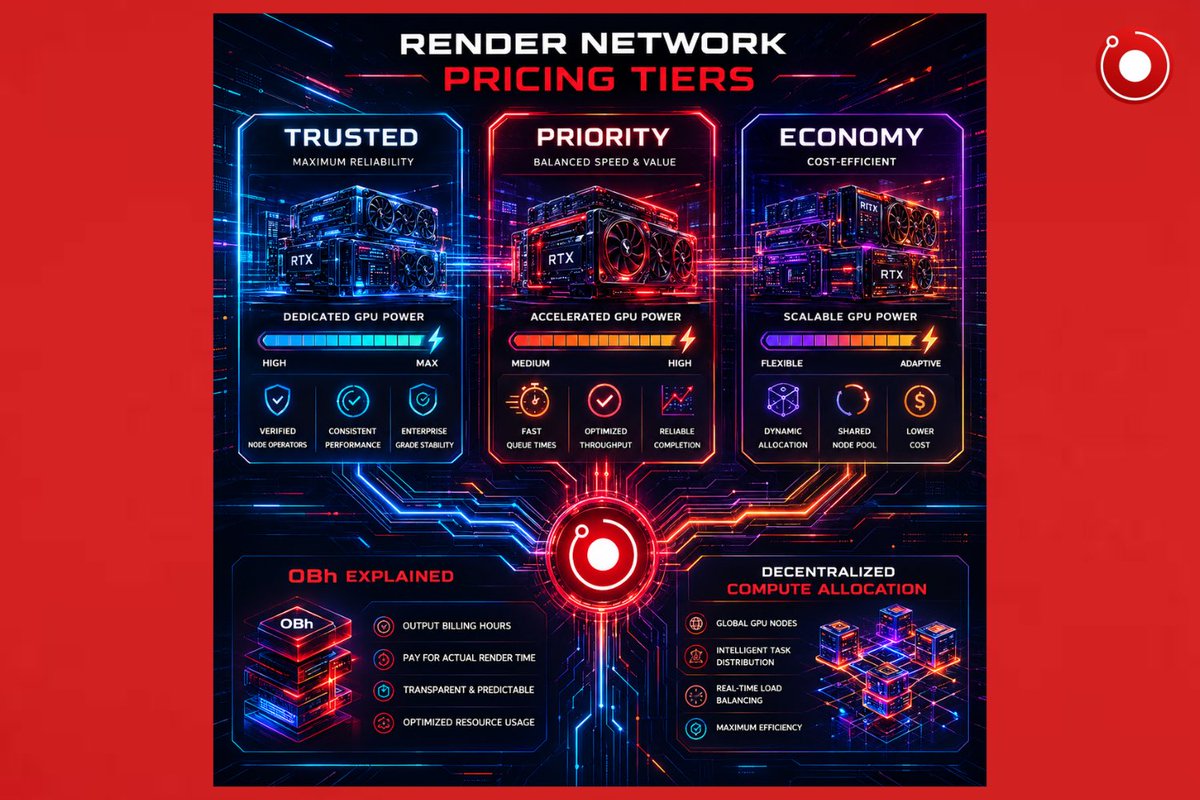
Render simplifies GPU rendering costs through structured pricing tiers based on OBh or OctaneBench Hours.
To put that into perspective, 200 OBh represents the power of one RTX 2070 running for one hour.
Users can choose between Trusted, Priority, or Economy tiers
Depending on the urgency and complexity of their workloads.
That flexible structure allows the network to support everything
From high priority studio rendering to more affordable long duration workloads.
1
6
27

May 9
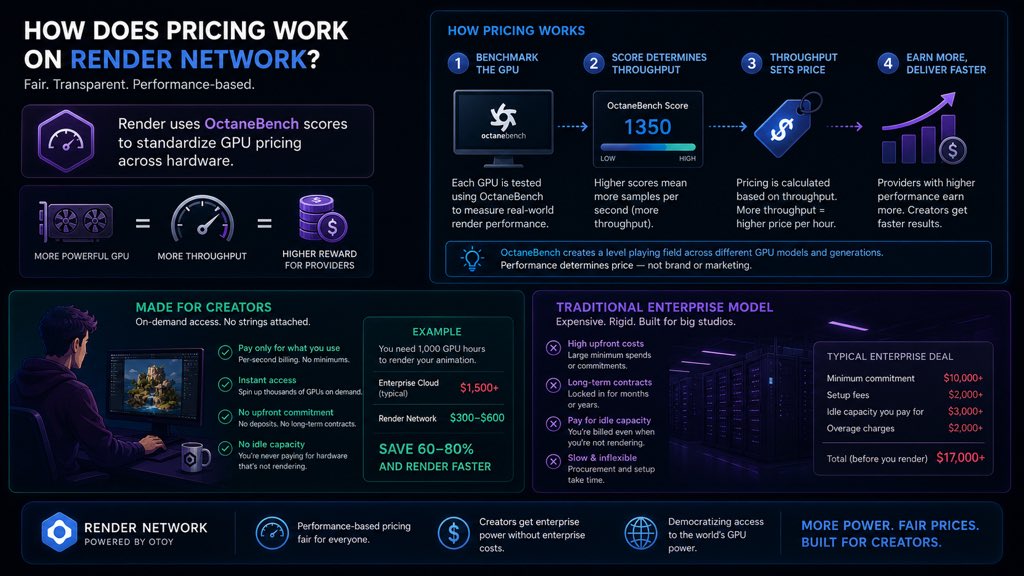
How does Pricing work on Render Network?
Render uses OctaneBench scores to standardize GPU pricing across hardware.
More powerful GPU = more throughput = higher reward.
Creators get on-demand access with no upfront commitment. No long-term contracts. No idle capacity they’re paying for.
This is the part that matters for independent creators who can’t afford enterprise agreements.
2
11
193
Apr 16
$RENDER : Review 📜
What if every idle GPU on the planet could be put to work rendering Hollywood movies, training AI models, and building the metaverse, and the people who own those GPUs got paid for it?
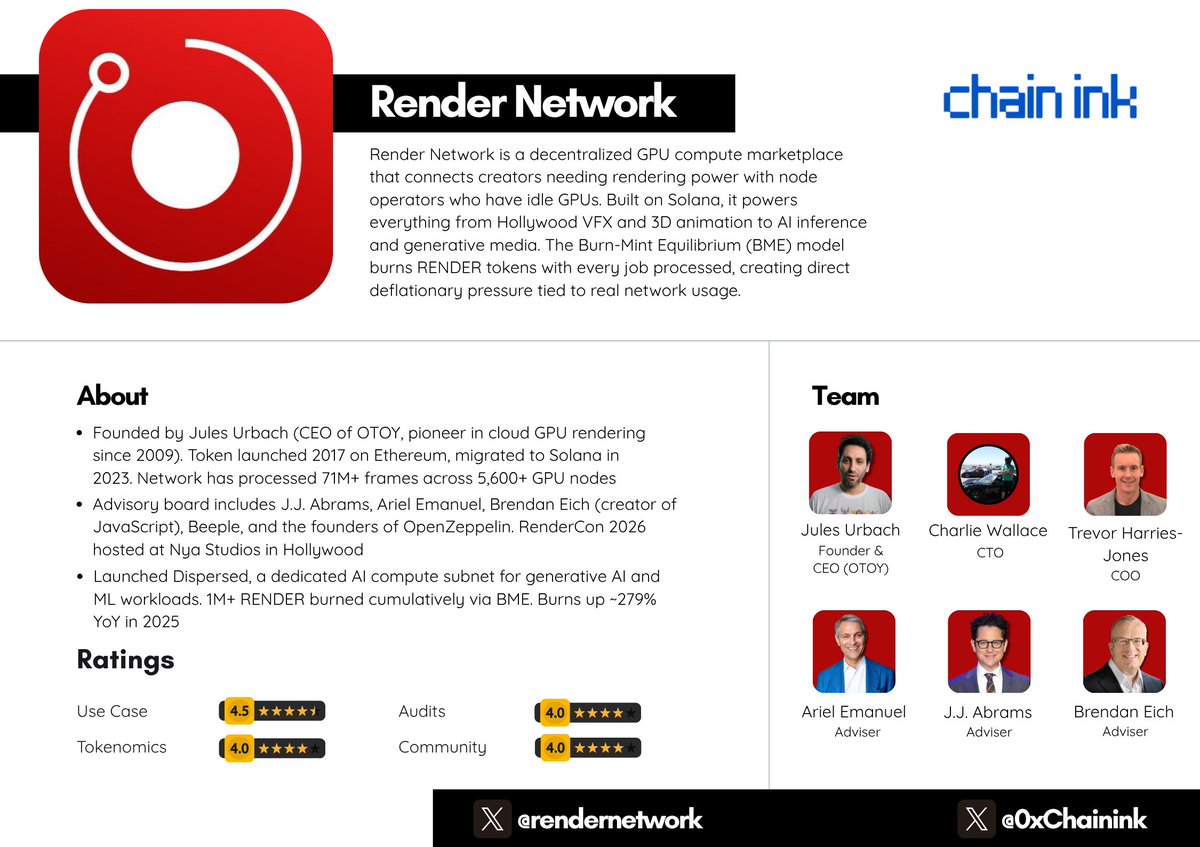
Meet Render Network - a decentralized GPU compute marketplace built on Solana that connects creators with idle GPU power, processing 71 million frames for studios, artists, and AI developers.
Advised by J.J. Abrams, Brendan Eich, and Beeple. Where GPU power becomes a tokenized commodity.
Let's explore how Render is decentralizing the future of compute. 👇
⚪ Render at a Glance
Render Network is a peer-to-peer GPU compute marketplace created by Jules Urbach, founder and CEO of OTOY, the company behind the industry-standard OctaneRender engine.
The network connects creators who need GPU power with node operators who have idle capacity, creating a decentralized alternative to centralized cloud rendering.
The $RENDER token powers the entire marketplace. Creators pay in RENDER (or fiat, which is converted and burned), node operators earn RENDER for completing jobs, and the Burn-Mint Equilibrium model permanently removes tokens from circulation with every job processed.
As of April 2026, $RENDER trades around $2.07 with a market cap of approximately $1B. Max supply is 644.2M RENDER, with ~552M in circulation. The network has processed 71M cumulative frames across 5,600 GPU nodes, with 1.2M RENDER burned cumulatively.
Marketplace Insight: The RNP-023 governance vote to integrate Salad's ~60,000 consumer-grade GPUs as an exclusive subnet could massively scale network capacity.
RenderCon 2026 at Hollywood's Nya Studios (April 16-17) features Jules Urbach, Refik Anadol, and Rod Roddenberry. The Dispersed AI compute subnet is positioning Render at the intersection of creative rendering and AI infrastructure, with GPU hours available at ~$0.69.
⚪ Mission
Render Network's mission is to democratize access to GPU compute by creating a decentralized marketplace where anyone with idle GPU power can contribute to the world's rendering and AI workloads. By tokenizing compute power,
Render aims to break the monopoly of centralized cloud providers and make high-end GPU rendering accessible to independent creators, small studios, and AI researchers alongside Hollywood productions.
🔵 A Brief History
Jules Urbach founded OTOY in 2009 with a vision to make cloud-based GPU rendering accessible to everyone. OTOY's OctaneRender became the industry-standard GPU rendering engine used across film, television, gaming, and architectural visualization. In 2017, Urbach launched the Render Network as the decentralized extension of that vision, tokenizing GPU compute through the RNDR token on Ethereum.
The network went through its initial development phase from 2017-2019, with the full mainnet launching in 2019. Early adoption came from the creative industry, with studios and independent artists using the network for 3D rendering jobs that would otherwise require expensive in-house GPU farms or costly centralized cloud services.
In late 2023, the network made a pivotal migration from Ethereum to Solana, rebranding the token from RNDR to RENDER. The move dramatically improved transaction speed and reduced costs, enabling the high-throughput job submission and settlement that a GPU marketplace demands.
Throughout 2025, network usage accelerated significantly. Token burns increased ~279% year-over-year, with 530,171 RENDER burned in the first nine months of 2025 compared to 139,924 in the same period of 2024. In December 2025, the network hit the milestone of 1 million cumulative RENDER burned.
In 2025, Render also launched Dispersed, a dedicated AI compute subnet built on five years of operational experience running distributed GPU infrastructure. Dispersed handles generative AI, image/video generation, and document processing workloads at approximately $0.69 per GPU hour, positioning Render as a viable alternative to centralized cloud providers for AI compute.
RenderCon 2026, hosted at Nya Studios in Hollywood on April 16-17, features presentations from Jules Urbach, artist Refik Anadol, and Rod Roddenberry, signaling Render's growing influence at the intersection of entertainment, AI, and decentralized infrastructure.
🔵 Ecosystem Narrative
Render's ecosystem sits at the intersection of three massive markets: creative rendering, AI compute, and decentralized physical infrastructure (DePIN). The network turns idle GPU power into a productive, tokenized commodity.
Key dynamics include:
➛ GPU Marketplace connects creators needing render power with 5,600 node operators globally. Jobs are assigned based on OctaneBench scores, availability, scene complexity, and creator reputation.
➛ Burn-Mint Equilibrium (BME) creates direct deflationary pressure. Every job processed on the network results in equivalent RENDER burned. Fiat payments are converted to RENDER and burned automatically. Burns increased ~279% YoY in 2025.
➛ Dispersed is the new AI compute subnet, purpose-built for generative AI, ML workloads, image/video generation, and document processing. GPU hours available at ~$0.69, making it competitive with centralized cloud providers.
➛ OctaneRender integration provides ecosystem lock-in. OTOY's industry-standard rendering engine is natively integrated with the Render Network, meaning studios already using Octane can seamlessly access decentralized GPU power.
➛ Solana infrastructure enables high-throughput job submission, fast settlement, and low transaction costs, critical for a marketplace processing millions of rendering frames.
➛ RNP-023 (Salad Integration) is a pending governance vote to add ~60,000 consumer-grade GPUs via the Salad marketplace as an exclusive subnet, with all payments and rewards flowing through the RENDER token.
➛ RenderCon 2026 at Hollywood's Nya Studios (April 16-17) features Jules Urbach, Refik Anadol, and Rod Roddenberry, showcasing live workflows blending AI inference, 3D rendering, and next-gen media pipelines.
⚪ Token Utilities
$RENDER powers the decentralized GPU compute economy:
➛ Payment for Compute - Creators pay RENDER (or fiat, which is auto-converted and burned) for rendering jobs, AI inference, and compute workloads processed by node operators.
➛ Node Operator Rewards - GPU providers earn RENDER based on OctaneBench Hours (OBh) delivered. Rewards are issued per epoch (weekly).
➛ Burn-Mint Equilibrium - Every job burns RENDER tokens, creating a direct feedback loop between network usage and token supply. The more the network is used, the more tokens are permanently removed.
➛ Governance - RENDER holders participate in Render Network Proposals (RNPs) that determine protocol upgrades, economic changes, and ecosystem direction.
➛ Bounty Platform - Contributors earn RENDER for completing open tasks across technical tooling, documentation, research, and community engagement.
⚪ Key Features
➛ Decentralized GPU Marketplace - 5,600 GPU nodes globally, processing 71M cumulative frames. Connects creators with idle GPU power for rendering, AI, and compute workloads.
➛ Burn-Mint Equilibrium (BME) - Deflationary tokenomics where every job processed burns RENDER. 1.2M tokens burned cumulatively. Burns up ~279% YoY in 2025.
➛ OctaneRender Integration - Native integration with OTOY's industry-standard GPU rendering engine, used across Hollywood, gaming, architecture, and VFX pipelines.
➛ Dispersed (AI Compute Subnet) - Dedicated infrastructure for generative AI, ML, and compute workloads. ~$0.69 per GPU hour. Represents Render's strategic expansion beyond creative rendering into AI infrastructure.
➛ Solana-Native - Migrated from Ethereum in 2023 for faster settlement, lower costs, and higher throughput. Enables scalable job submission and real-time marketplace operations.
➛ Governance via RNPs - Render Network Proposals allow the community to propose and vote on protocol changes, economic upgrades, and ecosystem direction.
➛ Hollywood-Grade Adoption - Used by major studios, VFX professionals, and independent creators. RenderCon hosted at Hollywood's Nya Studios with industry leaders presenting live workflows.
🔵 Meet the Render Team
Render is led by one of the most connected founders in the GPU compute space, backed by an advisory board that spans Hollywood, Silicon Valley, and the open-source software world.
▶️ Core Members:
➛ Jules Urbach - Founder & CEO | Founder and CEO of OTOY, the company behind OctaneRender. Pioneer in cloud GPU rendering since 2009. Has presented at Nvidia GTC alongside Jensen Huang.
Urbach's vision connects decentralized compute with Hollywood production, AI, and spatial computing. Featured in numerous GTC keynotes and Apple Vision Pro demonstrations.
➛ Charlie Wallace - CTO | Leads Render Network's technical architecture, protocol development, and infrastructure scaling across the rendering and AI compute layers.
➛ Trevor Harries-Jones - COO | Oversees operations, partnerships, and business development for the Render Network ecosystem.
▶️ Advisers:
➛ Ariel Emanuel - Adviser | CEO of Endeavor (parent company of WME, UFC, and IMG). One of the most powerful executives in entertainment and media. Connects Render to Hollywood's highest levels.
➛ J.J. Abrams - Adviser | Filmmaker, producer, and founder of Bad Robot Productions. Director of Star Wars: The Force Awakens, Star Trek, and numerous blockbuster franchises. Brings entertainment industry vision and credibility.
➛ Brendan Eich - Adviser | Creator of JavaScript, co-founder of Mozilla and the Brave browser. One of the most influential figures in internet technology history. Brings deep technical credibility and open-source philosophy.
➛ Mike Winkelmann (Beeple) - Adviser | Digital artist who sold "Everydays" NFT for $69M at Christie's. One of the most recognized names in digital art and crypto culture.
➛ Demian Brener - Adviser | CEO and co-founder of OpenZeppelin, the gold standard in smart contract security. Brings blockchain security expertise.
➛ Manuel Araoz - Adviser | Co-founder of OpenZeppelin. Pioneered smart contract auditing and security standards used across the entire crypto industry.
➛ David Vorick - Adviser | Founder of Sia, one of the earliest decentralized storage networks. Brings decentralized infrastructure expertise.
➛ Jennifer Zhu Scott - Adviser | Technology investor and thought leader in AI, blockchain, and emerging technology.
➛ Render Network Foundation - Oversees protocol governance, emissions management, grants, bounties, and ecosystem development. Publishes detailed monthly reports on network metrics, burns, and emissions.
🔵 Ratings
➛ Use Case: ★★★★✦ (4.5/5) - Render sits at the intersection of three massive growth markets: creative GPU rendering, AI compute, and DePIN. The network has processed 71M frames across 5,600 nodes with real Hollywood and studio adoption. The Dispersed AI subnet opens the door to the multi-billion dollar AI infrastructure market.
OctaneRender integration provides genuine ecosystem lock-in that competitors can't easily replicate. The BME model ties token economics directly to real usage. The 0.5 deduction is because the AI compute expansion (Dispersed) is still early, and the network faces serious competition from both centralized cloud providers (AWS, Google Cloud) and decentralized competitors (Akash, IO Net).
➛ Tokenomics: ★★★★ (4/5) - The Burn-Mint Equilibrium is one of the most elegant tokenomic models in crypto. Every job burns RENDER, creating deflationary pressure directly proportional to network usage. Burns increased ~279% YoY in 2025, hitting 1M cumulative. Max supply is capped at 644.2M with ~85M remaining to be emitted, and emissions decrease over time.
Unused monthly emissions stay locked by the Foundation. The 1-point deduction is because burn rates, while growing, still don't exceed monthly emissions to nodes (~500K RENDER), meaning the network is still net inflationary. The crossover point where burns exceed emissions would be a major inflection.
➛ Audits: ★★★★ (4/5) - The codebase is open-source and the Foundation publishes detailed monthly financial reports with full transparency on emissions, burns, and expenditures. The Solana migration was executed smoothly without security incidents. Smart contract security benefits from advisers like Demian Brener and Manuel Araoz, the founders of OpenZeppelin, the gold standard in blockchain security.
The network has operated since 2019 without a major exploit or loss of funds. The 1-point deduction is because the job verification system relies on creator approval (or 72-hour auto-approval) rather than trustless verification, and as the AI compute expansion scales via Dispersed, more visible formal protocol-level auditing would strengthen confidence.
➛ Community: ★★★★ (4/5) - Render has a unique community that spans crypto natives, 3D artists, VFX professionals, GPU miners, and AI developers. RenderCon has become a legitimate industry event hosted in Hollywood.
The Bounty Platform enables community-driven development. The RNP governance system gives token holders real input on protocol direction. The Salad integration vote (RNP-023) shows active community participation in ecosystem decisions. The deduction is that Render's community skews more toward professional creators and institutional users than grassroots crypto culture, which limits viral retail engagement compared to chains like Solana or Kaspa.
🔵 Conclusion
Render Network is what happens when a GPU compute pioneer with 15 years of industry experience brings Hollywood-grade infrastructure to decentralized crypto. Jules Urbach didn't start with a token and work backward to find a use case.
He built OTOY, created the industry-standard OctaneRender engine, and then decentralized the compute layer because the market demanded it.
The advisory board tells the story: J.J. Abrams, Brendan Eich, Beeple, Ariel Emanuel, and the OpenZeppelin founders don't attach their names to speculative projects. They advise Render because the technology is real and the adoption is measurable. 71M frames rendered, 1M tokens burned, 5,600 GPU nodes, and a dedicated AI subnet processing workloads at $0.69 per GPU hour.
The risks are clear: AI compute expansion is early, burns don't yet exceed emissions (making it still net inflationary), and centralized cloud providers have enormous scale advantages. The token is also down ~90% from its ATH of $13.60, reflecting broader market conditions rather than network fundamentals.
But the trajectory is compelling. Burns growing 279% YoY, Dispersed opening the AI compute market, RNP-023 potentially adding 60,000 GPUs via Salad, and RenderCon 2026 cementing Render's position at the intersection of Hollywood and decentralized infrastructure.
If GPU compute demand continues its exponential growth trajectory (and it will), Render is the only crypto project with the industry relationships, technical infrastructure, and tokenomic design to capture meaningful market share. The question isn't whether decentralized GPU compute has a future. It's whether Render can scale fast enough to own it.
4
26
139
10,137
Apr 13
In response to a question about whether rising RNDR price would make rendering more expensive for users:
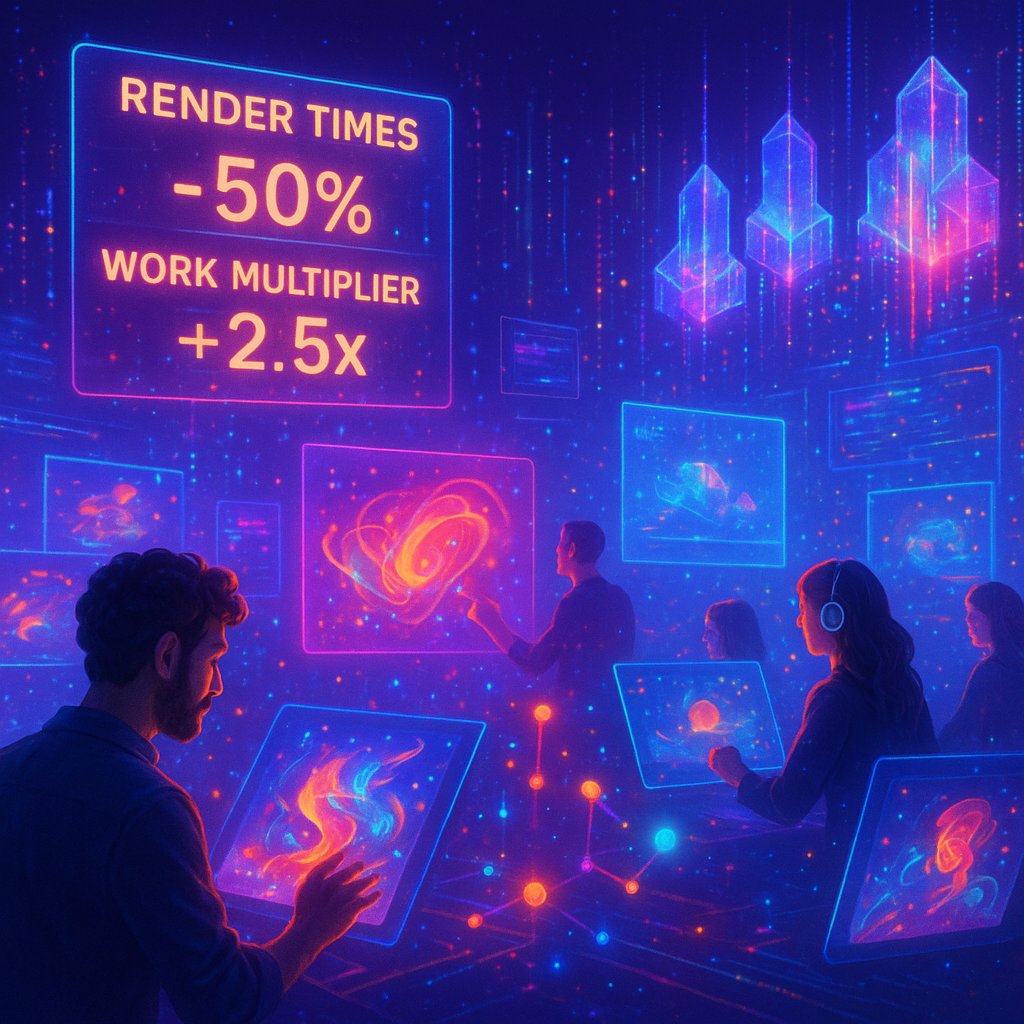
“the token value - is not based on $ but on GPU render work - and always delivers a fixed floor of minimum OctaneBench render work (~256^2 OB seconds), even as external token prices have fluctuated 11x this year (from 3c to 33c). The equivalent cost of a token’s floor OB work on AWS is about 25c (for on demand pricing of P100 instance), but, in the RNDR network the token also has no fixed maximum, and that can be used by artists as a work multiplier, with different tiers which allow you to complete the work in longer periods of time, determined by RNDR network capacity, which if it is efficient enough may deliver 8x base work per token ( i.e. $2 of AWS GPU work ) faster than AWS can deliver the same, and at a lower price. The more nodes on the network (with newer gpu’s like ampere) the more work done on the network to saturate node time = greater OBh work multiplier potential per token, which is why I could see a $1 token price still being the best value if the work multipliers across lower tiers become fast enough to match the tier above it, even as the higher tiers may also go up in efficiency - and become even faster at delivering the same work.”
@JulesUrbach 19.02.21
$RENDER
9
2
13
810
Mar 30
In response to a question about whether the RNDR price increase means it will be more expensive for users to render their projects:
“The token value - is not based on $ but on GPU render work - and always delivers a fixed floor of minimum OctaneBench render work (~256^2 OB seconds), even as external token prices have fluctuated 11x this year (from 3c to 33c). The equivalent cost of a token’s floor OB work on AWS is about 25c (for on demand pricing of P100 instance), but, in the RNDR network the token also has no fixed maximum, and that can be used by artists as a work multiplier, with different tiers which allow you to complete the work in longer periods of time, determined by RNDR network capacity, which if it is efficient enough may deliver 8x base work per token (i.e. $2 of AWS GPU work) faster than AWS can deliver the same, and at a lower price. The more nodes on the network (with newer gpu’s like ampere) the more work done on the network to saturate node time = greater OBh work multiplier potential per token, which is why I could see a $1 token price still being the best value if the work multipliers across lower tiers become fast enough to match the tier above it, even as the higher tiers may also go up in efficiency - and become even faster at delivering the same work. One day a future tier 1 node might be able to deliver 65K OB /s in real time on demand <10 ms latency. This is about what Brigade may need to render live content for TV size holographic panels that could be available at reasonable price points this decade. We are testing this now using 15x A6000 cards to stream real time content to a 20” x 20” LFL panel using Brigade, and using RNDR octane for offline rendered media at 1000x the resolution of UHD per frame of video.”
@JulesUrbach 19.02.21
$RENDER

2
152
Feb 11
In response to a question about whether the increase in RNDR price means more expensive rendering for users:
“The token value - is not based on $ but on GPU render work - and always delivers a fixed floor of minimum OctaneBench render work (~256^2 OB seconds), even as external token prices have fluctuated 11x this year (from 3c to 33c). The equivalent cost of a token’s floor OB work on AWS is about 25c (for on demand pricing of P100 instance), but, in the RNDR network the token also has no fixed maximum, and that can be used by artists as a work multiplier, with different tiers which allow you to complete the work in longer periods of time, determined by RNDR network capacity, which if it is efficient enough may deliver 8x base work per token ( i.e. $2 of AWS GPU work ) faster than AWS can deliver the same, and at a lower price.”
@JulesUrbach 19.02.21
$RENDER
1
4
220

Jan 27
you already got STX covered so here's the rest ranked lower to higher risk/reward:
1. BTC - bedrock play, Morgan Stanley platform adds Grayscale Mini Trust, South Dakota looking at 10% allocation to BTC/ETFs, first ZK rollup on mainnet just launched
2. SOL - dApp powerhouse, Binance added onchain financials to app, Across Protocol integration for USDC transfers, validator count down 65% from 2023 but ecosystem stays active
3. HBAR - enterprise AI angle, integrated Verifiable Compute into NVIDIA GPUs and Intel CPUs through EQTY Lab, Accenture using it for government AI governance, daily volume $130M-$250M
4. RNDR - decentralized GPU rendering, 21Shares launched physically-backed ETP on Euronext Paris, 5,600 node operators with 2M OctaneBench compute capacity deployed
5. ENA - yield bearing stablecoin narrative, backing shifted from 10% to 65% YBS exposure past 12 months, partnered with Sui Foundation for SuiUSDE launch
6. ZETA - cross chain AI focus, launched 2.0 with AI Portal for cross model routing and Private Memory Layer, 11.5M users and 225M transactions
7. ARB - L2 leader with $8.09B stablecoin supply highest among L2s, processed $340M in USDC/USDT withdrawals through Rise Pay, 1.75M payout transactions via Fiat24
8. PENDLE - yield tokenization play, 77M PENDLE staked (45% of supply) at 17.15% APR, but 5.4M tokens ($10.6M) moved from vesting to CEXs Jan 23-27
9. MOLT/CLAWD - autonomous agent speculation, ClawdFomo3D game launched where last buyer wins 40% pot and 25% goes to token holders, but major rebrand drama and founder warning about scammers after $CLAWD crashed from $8M to sub $800K mcap
2
133

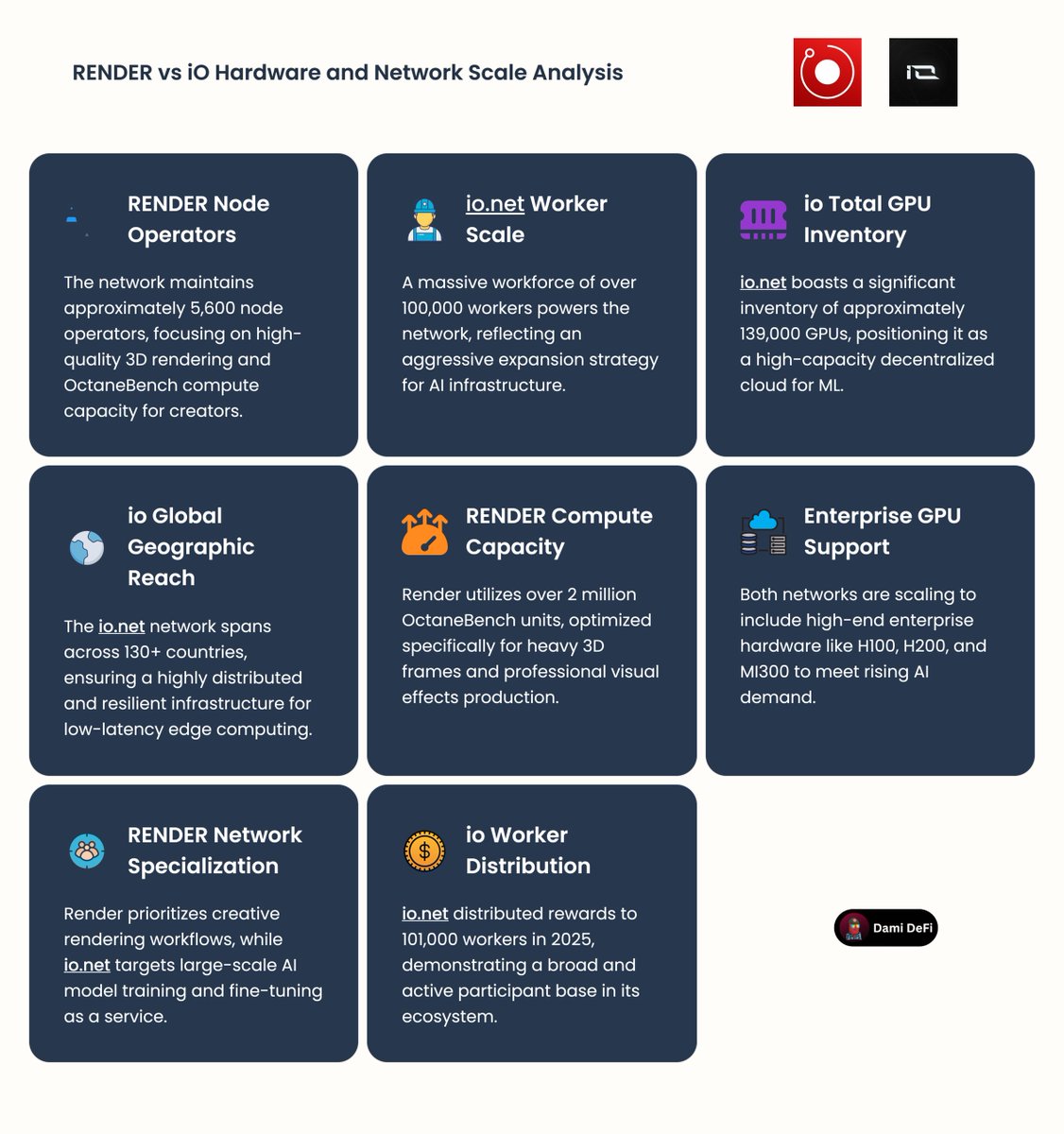
$RENDER vs $io net isn’t just token charts, it’s hardware.
$Render is the OG network with 5,600 node operators and 2M OctaneBench of compute tuned for high-end 3D/VFX.
$io net has gone full blitz mode: 100k workers, 139,000 GPUs across 130 countries, paying out 101k workers in 2025 and pushing hard into large-scale AI training and fine-tuning with enterprise GPUs (H100/H200/MI300).
18
35
180
11,758
29 Dec 2025
In response to a question about the updates that could contribute to deeper integrations with Apple and increase usage of the network:
“I confirmed the 2x RT perf myself when we were optimizing for the M4 in Q1. I may have noted even back then that this will be the new norma, validated now by new post iPad M4 HW. I will say the RT perf per watt on these GPUs is amazing; bodes well for Render node workloads, also means more users will get desktop class GPU in their hands that can kick off the kind of workloads we see coming in form desktop GPUs today - that’s one reason we’ve invested in the iPad and iOS viewport performance as much as OctaneBench offline perf.”
@JulesUrbach 10.09.24
$RENDER
1
9
464

27 Nov 2025
$RNDR: Quiet Momentum Building
Render Network’s on-chain activity is scaling under the radar—real GPU demand from AI and media driving burns and node growth, without the flash.
Key On-Chain Metrics (as of Nov 27, 2025):
• Active GPU Nodes: 19.2K, up 45% since September, fueled by AI rendering spikes.
•Render Credits Burned: $12.8M over the last 30 days, accelerating token scarcity.
•Average Job Payout: 4.1 $RNDR (record high), reflecting premium demand for high-fidelity jobs.
•Whale Activity: 10 new wallets with 100K $RNDR this month, adding to institutional compute bets.
•OctaneBench Demand: 320% quarter-over-quarter, with Hollywood VFX and AI studios leading inflows.
Shifting Story:
•Old View: A decentralized tool for Blender-style rendering.
•New Reality: The sole GPU cloud tapped by Nvidia’s AI ecosystem partners, powering scalable compute for foundry-grade models.
What’s Driving the Change:
•Burn-and-Mint Equilibrium v2 (Live Oct 2025): Locks in permanent RNDR burns per job, tightening supply as usage grows.
•CoreWeave Integration: 45% of incoming jobs now flow through the network, bridging cloud AI with decentralized GPUs.
•Stable Diffusion XL Flux Jobs: Batch renders fetching 9–13 RNDR, with 25% volume uptick in generative AI tasks.
•Apple MLS Testing: Machine Learning Services team piloting RNDR for Vision Pro’s spatial rendering workloads.
Price Action: Coiled at $5.35–$5.42 (up from $5.22–$5.28 range). This setup parallels the 6-week hold before RNDR’s 12x breakout in the last cycle. No major unlocks on horizon, with burns outpacing emissions.
No memes or airdrops. Just surging compute needs eroding available supply.
Silent utility forges the sharpest edges.
Discerning holders stack the subtle cues, not the clamor.
Inspired by @EdgenTech
$RNDR
1
1
3
610

18 Nov 2025
Render Network taps 40% idle GPU capacity, routing 60M frames and AI workloads to consumer hardware instead of centralized clouds
The protocol distributes 3D rendering and AI inference across underutilized GPUs, serving NASA, Las Vegas Sphere, and studios like Pudgy Penguins with encrypted, reputation-based job allocation.
Core mechanics:
- Node operators contribute NVIDIA GPUs (6GB VRAM) benchmarked via OctaneBench
- Jobs priced in fiat, converted to $RENDER, then burned via BME model
- Compute Subnet handles AI inference and training via Jember, Scrypted
- Integrates with Blender, Cinema 4D, OctaneRender
The play is clear: 3D rendering ($4B to $32B by 2032) serves as proof-of-concept while AI compute ($184B to $826B by 2030) becomes the real target.
Consumer GPUs handle production workloads if orchestrated correctly, @rendernetwork's betting distributed inference beats centralized clouds as models commoditize.
2
59
856

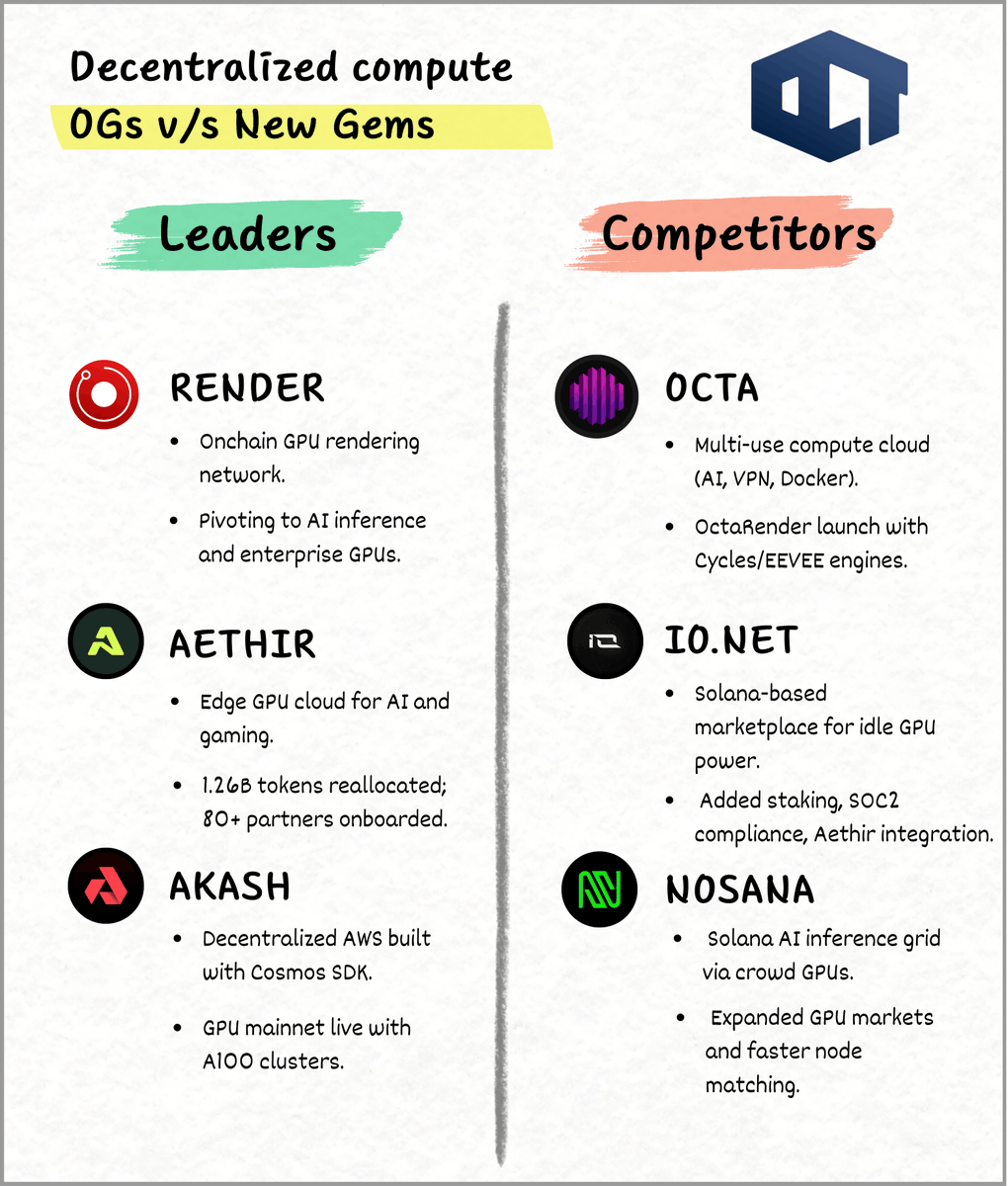
The Decentralized Compute Wars Have Begun.
AI needs GPUs and the world is running out of them.
Decentralized compute is projected to grow ~$22 billion by 2030.
Which of these networks can 10x next? 👇
→ $RENDER vs $OCTA
→ $ATH vs $IO
→ $AKT vs $NOS
🎨 Render vs OctaSpace
✦ Render: the OG of GPU Rendering
☞ Vision: Decentralized GPU marketplace for rendering & AI
☞ Original Idea: Leverage idle GPUs via OctaneRender
☞ Tech Stack: Burn-Mint Equilibrium on Solana OctaneBench pricing
☞ Evolution: From creative rendering to full AI inference layer
☞ Recent Behavior: Expanded enterprise GPU access, Blender Octane 2025 integration, 42.9M frames rendered, 300K RNDR burns
Render is the project that proved GPUs could go onchain.
It started by powering film and VFX rendering now it’s scaling toward AI.
The Burn-Mint model on Solana keeps pricing efficient while balancing supply.
Backed by integrations across Blender, Octane, and Apple’s GPU ecosystem, Render is no longer just for artists it’s building the AI infrastructure of the future.
✦ OctaSpace: the Challenger
☞ Vision: Build a decentralized GPU CPU cloud for AI, VPN, and rendering
☞ Original Idea: Merge GPU compute with Docker containers
☞ Tech Stack: OctaHub, OctaNodes, OctaVPN
☞ Evolution: From rendering beta to full multi-service cloud
☞ Recent Behavior: Launched OctaRender with Cycles/EEVEE support, node monitoring, and batched rendering; fair launch, no VC, 17,000 tasks/sec
OctaSpace plays the utility card.
It’s cheaper, faster, and more flexible running Docker-based compute, AI inference, and even VPN services under one roof.
While Render focuses on creative precision and enterprise partnerships, OctaSpace leans into accessibility and decentralization.
It’s not just competing it’s widening the definition of what “GPU compute” can mean.
👉 Comparison:
Render = Proven network with liquidity and brand power.
OctaSpace = Broader, multi-service cloud with grassroots reach.
⚙️ Aethir vs io.net
✦ Aethir: the OG of AI-first GPU Clouds
☞ Vision: Decentralized GPU infrastructure for AI and gaming
☞ Original Idea: Redistribute idle enterprise GPUs for inference
☞ Tech Stack: Aethir Edge, Cloud Console, GPU Scheduler
☞ Evolution: From rendering base to AI-as-a-Service
☞ Recent Behavior: 1.26B $ATH reallocated to boost network utility; 80 partners; expanding gaming & AI deployments
Aethir built the first decentralized GPU network focused purely on AI and gaming.
Its edge-first model gives developers low latency and global access to enterprise GPUs.
With partnerships across DePIN, gaming, and cloud providers, it’s positioning itself as the decentralized NVIDIA Cloud high throughput, predictable performance, and institutional reach.
✦ io.net: the Challenger
☞ Vision: Decentralized compute marketplace for AI training
☞ Original Idea: Aggregate idle GPUs from miners, data centers, and users
☞ Tech Stack: IO Cloud, IO SDK, Solana integration
☞ Evolution: From distributed compute to real-time AI orchestration
☞ Recent Behavior: Added SOC 2 compliance, regional GPU sovereignty, and staking for reliability; now onboarding Aethir GPUs for cross-network scaling
io.net is pure DePIN in motion.
It’s not just pooling GPUs it’s coordinating them.
With Solana integration and live pricing, it gives developers on-demand compute power anywhere in the world.
By tapping into networks like Aethir, io.net is evolving from a standalone platform to a full-scale decentralized AI infrastructure layer.
👉 Comparison:
Aethir = Enterprise-grade scale and low-latency edge AI.
io.net = Speed, real-time allocation, and developer focus.
Akash vs Nosana
✦ Akash Network: the OG of Decentralized Cloud
☞ Vision: Open cloud marketplace for Web3 & AI
☞ Original Idea: Decentralized AWS powered by Cosmos SDK
☞ Tech Stack: Tendermint Akash Marketplace
☞ Evolution: From DeFi hosting to GPU & AI workloads
☞ Recent Behavior: GPU mainnet live with NVIDIA A100 clusters; exploring Solana migration for higher scalability
Akash is the veteran of decentralized compute.
It’s been quietly building for years, letting developers deploy containers at one-third the cost of AWS.
Now, with GPU support live and Solana integration on the horizon, Akash is ready to scale AI workloads globally.
It’s the cloud backbone Web3 has been waiting for.
✦ Nosana: the Challenger
☞ Vision: Build a lightweight AI inference grid on Solana
☞ Original Idea: Crowd-powered GPU marketplace for inference
☞ Tech Stack: Solana-based container jobs CLI marketplace
☞ Evolution: From small-scale compute to AI-native infrastructure
☞ Recent Behavior: Expanded GPU job markets (e.g., RTX 3060), real-time node matching, and containerized workloads
Nosana brings the Solana speed to compute.
It’s lighter, faster, and fully AI-native built for inference, not general cloud hosting.
While Akash targets enterprises and large workloads, Nosana focuses on plug-and-play AI tasks that anyone can run or supply.
It’s smaller, but it moves like lightning.
👉 Comparison:
Akash = Mature cloud infra and proven reliability.
Nosana = AI-focused agility and Solana performance.
🔚 Final Thoughts
The OGs: Render, Aethir, Akash built the foundations of decentralized compute.
The challengers: OctaSpace, io.net, Nosana are evolving it for the AI era.
Rendering → Render’s enterprise power vs OctaSpace’s flexibility
AI Clouds → Aethir’s scale vs io.net’s speed
Cloud Infra → Akash’s maturity vs Nosana’s agility
The decentralized compute race isn’t just about blockchains
it’s about who powers AI’s future.
5
4
30
4,514
14 Oct 2025
In response to a question about Apple's influence on rendering technology:
“I confirmed the 2x RT perf myself when we were optimizing for the M4 in Q1. I may have noted even back then that this will be the new norma, validated now by new post iPad M4 HW. I will say the RT perf per watt on these GPUs is amazing; bodes well for Render node workloads, also means more users will get desktop class GPU in their hands that can kick off the kind of workloads we see coming in form desktop GPUs today - that’s one reason we’ve invested in the iPad and iOS viewport performance as much as OctaneBench offline perf.”
@JulesUrbach 10.09.24
$RENDER
2
4
279
9 Oct 2025
In response to a question about whether a high $RNDR token price would affect the cost of rendering:
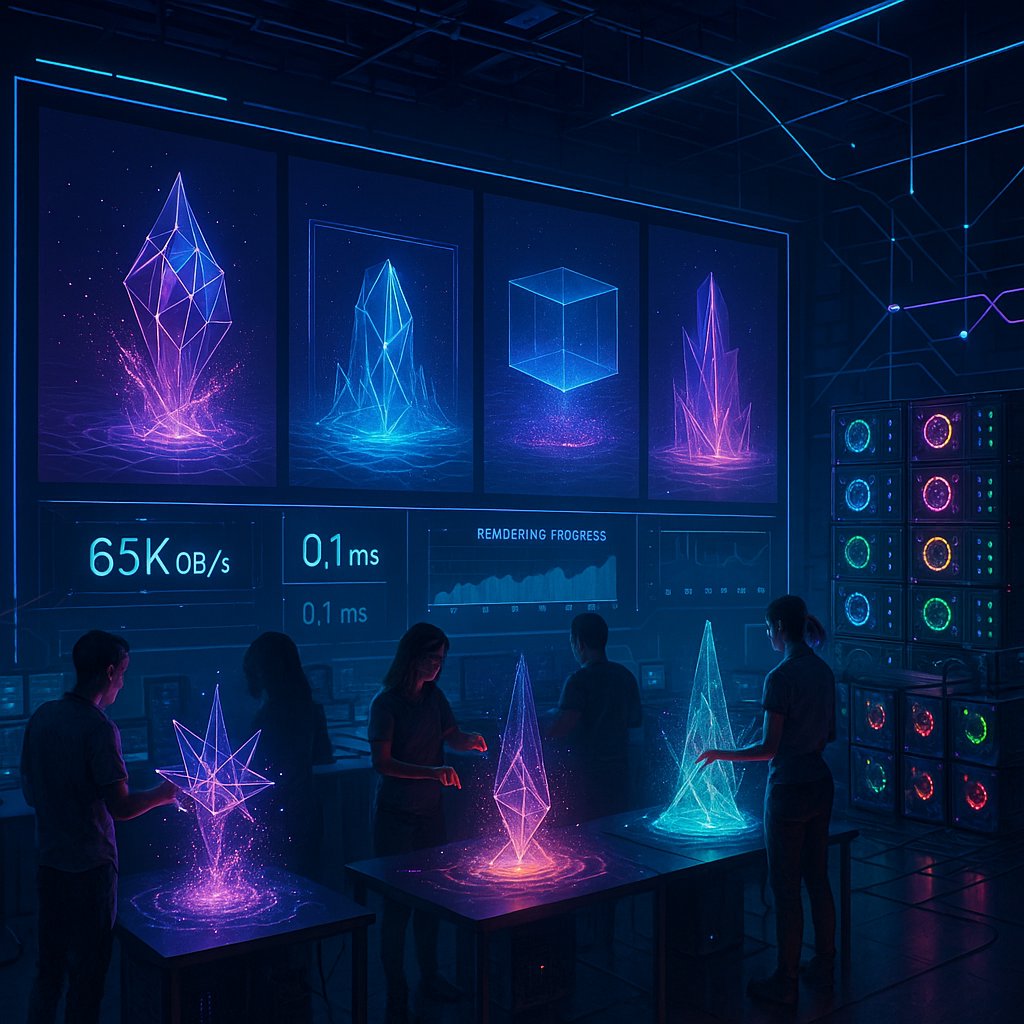
“the token value - is not based on $ but on GPU render work - and always delivers a fixed floor of minimum OctaneBench render work (~256^2 OB seconds), even as external token prices have fluctuated 11x this year (from 3c to 33c). The equivalent cost of a token’s floor OB work on AWS is about 25c (for on demand pricing of P100 instance), but, in the RNDR network the token also has no fixed maximum, and that can be used by artists as a work multiplier, with different tiers which allow you to complete the work in longer periods of time, determined by RNDR network capacity, which if it is efficient enough may deliver 8x base work per token ( i.e. $2 of AWS GPU work ) faster than AWS can deliver the same, and at a lower price. The more nodes on the network (with newer gpu’s like ampere) the more work done on the network to saturate node time = greater OBh work multiplier potential per token, which is why I could see a $1 token price still being the best value if the work multipliers across lower tiers become fast enough to match the tier above it, even as the higher tiers may also go up in efficiency - and become even faster at delivering the same work. One day a future tier 1 node might be able to deliver 65K OB /s in real time on demand <10 ms latency. This is about what Brigade may need to render live content for TV size holographic panels that could be available at reasonable price points this decade. We are testing this now using 15x A6000 cards to stream real time content to a 20” x 20” LFL panel using Brigade, and using RNDR octane for offline rendered media at 1000x the resolution of UHD per frame of video.”
@JulesUrbach 19.02.21
$RENDER
1
12
1,080

22 Sep 2025
With DATs exploding as the next big thing in crypto—tokenized trusts that bridge TradFi with blockchain, offering regulated, liquid exposure to high-growth assets—you need to drill down on their purpose: unlocking capital efficiency, hedging volatility, and funding real-world utility. But not every project fits the DAT mold. You need killer fundamentals like scalable demand, deflationary mechanics, and massive adoption potential. Here's why $RENDER is the perfect DAT candidate, especially for Hollywood heavyweights like Paramount and Netflix, and why it makes absolute sense to launch $RENDER DATs for future productions. 🚀
At its core, Render Network is the decentralized GPU beast powering AI, VFX, rendering, and ML workloads. Studios pay for compute in fiat-equivalent pricing—fixed $ per OctaneBench hour (OBh), a standardized measure of GPU power. But here's the genius: payments are settled by burning $RENDER tokens equivalent to that fiat cost. So, as $RENDER's price moons (driven by surging demand from AI boom, node growth, and burns), fewer tokens are needed to cover the same job. Predictable costs in dollars, but tokenized efficiency that rewards early holders!
Now, enter $RENDER DATs: Imagine Paramount or Netflix creating a Digital Asset Trust, buying up $RENDER tokens today at current prices, and locking them in for upcoming blockbusters. The DAT acts like a tokenized endowment—regulated, tradable shares giving investors exposure to $RENDER without direct crypto hassle. As the token value climbs (we're talking 10x potential with AI market exploding to $1T ), the studio's DAT holdings appreciate massively. But the real magic? Production gets cheaper over time.
Let's break it down: Say a VFX-heavy film needs 10,000 OBh at $0.10 per OBh— that's $1,000 fiat cost. If $RENDER is $5/token, they burn 200 tokens. But if $RENDER hits $50? Only 20 tokens needed for the same work! By front-loading token purchases into the DAT, studios hedge against rising demand while their effective compute costs plummet as token value rises. No more ballooning AWS bills—decentralized, global GPU pools slash expenses by 50-90%, with faster renders and infinite scale.
This isn't pie-in-the-sky: Render's already processed millions of jobs, partnered with Adobe, Apple, and NVIDIA ecosystems. With BME (Burn Mint Equilibrium) mechanics burning tokens per job and minting rewards for nodes, $RENDER's supply tightens as usage skyrockets. DATs supercharge this— attracting institutional money (think BlackRock-style inflows), funding network expansion, and letting studios like Netflix crowdsource GPU power for hits like Stranger Things sequels or Paramount's next Mission: Impossible. Indie creators join too, democratizing Hollywood.
Bullish indicators stacking: AI integrations with tools like Stable Diffusion, and whispers of major studio pilots in 2025. As DATs go mainstream post-ETF approvals, $RENDER DATs could unlock billions in locked capital, propelling the token to new ATHs. This is Web3 meeting Tinseltown—efficiency, innovation, and moonshot gains.
Stack $RENDER, back the DAT revolution, and watch production costs vanish as value soars! 🌟
2
2
9
478


Centralized clouds control the majority of GPUs today, making access scarce and costly.
But the GPU cloud market is set to top $150B by 2030 (~10X from now).
→ $MYCO
→ $RENDER
→ $AKT
→ $GLM
→ $IO
→ $ATH
→ $NOS
→ $HASHAI
→ $GPU
Here are some projects worth looking into 👇
🔴 Render ( $RENDER )
• Focus / Use Case: 3D & graphics rendering → expanding into generative tools like Runway, Luma, Stability AI.
• Hardware & Architecture: Nodes must pass OctaneBench (RTX 3050 with RAM/SSD requirements).
• Network / Supply: Global pool of idle GPUs from creators and operators.
• Pricing / Tiers: Multi-tier system balancing speed, cost, and reputation.
• Adoption / Integrations: Strong creator integrations with Octane, Blender, Redshift.
Render has built its reputation as the go-to decentralized GPU network for creatives.
The hardware benchmarks ensure a baseline of quality, and the pricing tiers make it practical for different types of artists, from hobbyists to studios.
It’s slowly expanding into AI inference, but most demand today is still graphics-heavy rendering frames, animations, and assets.
The real strength is its ecosystem integrations: artists don’t need to learn crypto, they just plug into software they already use.
That’s what keeps adoption sticky even as other GPU networks rise.
My take: Render is most useful for designers, 3D artists, and creative studios who need affordable, scalable rendering power.
It’s not yet the first stop for AI labs, but for creative work it’s way ahead of the pack.
🔴 Akash ( $AKT )
• Focus / Use Case: Decentralized cloud marketplace for compute; supports both CPU and GPU workloads.
• Hardware & Architecture: Providers set resources via Akash SDL; GPU pricing live, with enterprise SKUs listed.
• Network / Supply: Reverse-auction model where tenants post needs and providers bid.
• Economics: AKT token used for deployments and payments.
• Adoption / Integrations: Widely used for general compute; GPU leasing is newer but growing.
Akash takes the cloud computing playbook and decentralizes it. Instead of one company setting prices, you get a marketplace where providers compete, driving down costs.
It’s broader than just GPUs containers, storage, CPU power but GPUs are now a clear focus, with listings for high-end cards like H100s and 4090s.
The reverse-auction model is familiar to enterprises, which makes Akash more approachable than some crypto-native projects. It’s still early days for GPU demand on the platform, but the direction is clear.
My take: Akash is best suited for businesses or dev teams that want a flexible, cheaper alternative to AWS or GCP, with GPUs as part of a bigger cloud stack.
🟣 Golem ( $GLM )
• Focus / Use Case: General compute marketplace enabling tasks from rendering to AI.
• Hardware & Architecture: GPU providers must run NVIDIA 30xx cards with 8GB VRAM.
• Network / Supply: Permissionless, anyone can provide or consume resources.
• Economics: GLM token pays providers for completed jobs.
• Adoption / Integrations: Best for small AI jobs, dev experiments, and lightweight inference.
Golem is one of the oldest decentralized compute projects, and it’s stuck to its vision of a permissionless marketplace.
The requirements are modest if you’ve got a decent GPU, you can join and start providing.
That makes it grassroots-friendly, but it also means performance can vary depending on who’s supplying.
It’s perfect for tinkering, running small inference workloads, or testing decentralized compute ideas.
But when it comes to huge multi-GPU training runs, it’s simply not built for that.
My take: Golem is most useful for developers and hobbyists who want to experiment with decentralized compute or run smaller AI jobs without big overhead.
⚫ io.net ($IO)
• Focus / Use Case: Solana-based aggregator for AI training and inference.
• Hardware & Architecture: Pulls GPUs from data centers, miners, and other DePIN networks.
• Network / Supply: Claims 30k verified GPUs across 130 countries.
• Economics: Payments settle in $IO, even if users pay in fiat or USDC.
• Adoption / Integrations: Fast deployment via io.cloud with auto-scaling clusters.
io.net is trying to build the Airbnb for AI GPUs one place where you can tap thousands of underutilized machines worldwide.
The trick is its routing layer: coordinating GPUs from different environments into something that feels like a unified cluster.
The payment model is clever too: users can pay in fiat or USDC, but it all flows back into $IO, keeping demand on-chain.
Reliability is the key question connecting 30k GPUs sounds great, but stability across that mix is hard.
If they pull it off, it’s a serious cost alternative to AWS or Azure.
My take: io.net is most useful for AI startups and ML engineers looking for cheap, scalable GPU clusters for training and inference.
🟡 Aethir ( $ATH )
• Focus / Use Case: Enterprise-grade GPU cloud for AI, gaming, and virtualized compute.
• Hardware & Architecture: Global fleet aggregation (Aethir Earth) spanning single H100s to 4K-GPU clusters.
• Network / Supply: Enterprise-scale data center GPUs, fully distributed.
• Economics: Rewards via $ATH using Proof of Capacity, Proof of Delivery, and Service Fees.
• Adoption / Integrations: SLAs, enterprise support, and integrations with AI studios.
Aethir is built to mirror traditional cloud providers, but decentralized.
The focus is on enterprise-scale GPUs and infrastructure, which makes it appealing to production teams who need predictability.
Their reward system (PoC PoD) incentivizes reliability and uptime not just availability.
Combined with enterprise-level support, it positions itself as a serious alternative for AI labs and gaming companies.
If cost savings and egress-fee advantages hold true, Aethir has a strong pitch.
My take: Aethir is most useful for enterprises and studios that want decentralized GPU fleets with the same reliability as AWS or Azure.
🟢 Nosana ( $NOS )
• Focus / Use Case: GPU marketplace for AI inference, serving businesses & developers.
• Hardware & Architecture: Hosts include data centers and underutilized consumer hardware (PCs, miners, MacBooks).
• Network / Supply: Hybrid supply with enterprise clusters blended with idle GPUs.
• Economics: NOS token powers payments and host staking.
• Adoption / Integrations: APIs make scaling inference simple and affordable.
Nosana is tackling the inference bottleneck head-on.
By combining enterprise data centers with idle GPUs, it makes compute more accessible for developers who can’t afford enterprise cloud prices.
It’s not focused on big training jobs, but rather on running and scaling AI inference endpoints efficiently.
That’s why its hybrid supply model makes sense it balances cost and availability while keeping setup simple for devs.
My take: Nosana is most useful for AI developers and businesses that need cheap, scalable inference endpoints without paying centralized cloud rates.
🟣 HashAI ( $HASHAI )
• Focus / Use Case: AI-guided mining not GPU rentals.
• Hardware & Architecture: AI-driven rigs that switch between coins like BTC, KAS, and LTC.
• Network / Supply: Centralized pools optimizing for profitability, not jobs.
• Economics: HASHAI token tied to mining income.
• Adoption / Integrations: Active marketing; few verifiable enterprise use cases.
HashAI is a very different kind of project.
Instead of connecting GPUs to AI developers, it uses AI to optimize crypto mining.
The system decides in real time which coins are most profitable and switches rigs automatically.
That makes it interesting for miners but irrelevant for anyone looking to run AI models.
It lives outside the GPU rental landscape and shouldn’t be compared directly to Render, Akash, or io.net.
My take: HashAI is most useful for miners and investors looking for optimized mining economics, not for AI developers.
🟢 NodeAI ( $GPU )
• Focus / Use Case: Decentralized GPU & AI server rentals for individuals and businesses.
• Hardware & Architecture: NVLink/NVSwitch for multi-GPU scaling; advanced cooling and diagnostics.
• Network / Supply: Operated clusters plus community nodes available on-demand.
• Economics: $GPU token distributes revenue from rentals and APIs; node owners earn proportional rewards.
• Adoption / Integrations: Targeted at training teams needing high-performance A100/H100 servers.
NodeAI is positioning itself as the training-focused GPU marketplace.
Its emphasis on NVLink and NVSwitch shows it wants to support multi-GPU workloads, not just simple inference jobs.
By blending community-supplied nodes with operated clusters, it offers both flexibility and enterprise-grade reliability.
And the revenue-sharing model for stakers adds another incentive layer to grow supply. If it delivers stable uptime, it can carve out a strong role in AI infrastructure.
My take: NodeAI is most useful for AI teams and enterprises that need high-performance GPU clusters for training at scale.
🔚 Conclusion: The GPU Divide
• Creative Engines (Bottom-left): Render, Golem → built around graphics & light compute.
They serve creators, artists, and developers who want affordable rendering or small AI jobs without needing enterprise infra.
• Inference Builders (Bottom-right): Nosana, io.net → focused on AI workloads, but powered by hybrid or mixed GPU supply.
They’re carving out a space for affordable inference and scalable training at lower cost than centralized clouds.
• Cloud Challengers (Top-right): Akash, Aethir, NodeAI → going straight after enterprise AI.
These are the projects assembling dense fleets, SLAs, and multi-GPU clusters to compete with AWS, Azure, and Google Cloud.
• Specialized : HashAI → not a rental marketplace at all, but AI-guided mining. Interesting for miners, but a different category altogether.

1
5
348

15 Sep 2025
Centralized clouds control the majority of GPUs today, making access scarce and costly.
But the GPU cloud market is set to top $150B by 2030 (~10X from now).
→ $MYCO
→ $RENDER
→ $AKT
→ $GLM
→ $IO
→ $ATH
→ $NOS
→ $HASHAI
→ $GPU
Here are some projects worth looking into 👇
🔴 Render ( $RENDER )
• Focus / Use Case: 3D & graphics rendering → expanding into generative tools like Runway, Luma, Stability AI.
• Hardware & Architecture: Nodes must pass OctaneBench (RTX 3050 with RAM/SSD requirements).
• Network / Supply: Global pool of idle GPUs from creators and operators.
• Pricing / Tiers: Multi-tier system balancing speed, cost, and reputation.
• Adoption / Integrations: Strong creator integrations with Octane, Blender, Redshift.
Render has built its reputation as the go-to decentralized GPU network for creatives.
The hardware benchmarks ensure a baseline of quality, and the pricing tiers make it practical for different types of artists, from hobbyists to studios.
It’s slowly expanding into AI inference, but most demand today is still graphics-heavy rendering frames, animations, and assets.
The real strength is its ecosystem integrations: artists don’t need to learn crypto, they just plug into software they already use.
That’s what keeps adoption sticky even as other GPU networks rise.
My take: Render is most useful for designers, 3D artists, and creative studios who need affordable, scalable rendering power.
It’s not yet the first stop for AI labs, but for creative work it’s way ahead of the pack.
🔴 Akash ( $AKT )
• Focus / Use Case: Decentralized cloud marketplace for compute; supports both CPU and GPU workloads.
• Hardware & Architecture: Providers set resources via Akash SDL; GPU pricing live, with enterprise SKUs listed.
• Network / Supply: Reverse-auction model where tenants post needs and providers bid.
• Economics: AKT token used for deployments and payments.
• Adoption / Integrations: Widely used for general compute; GPU leasing is newer but growing.
Akash takes the cloud computing playbook and decentralizes it. Instead of one company setting prices, you get a marketplace where providers compete, driving down costs.
It’s broader than just GPUs containers, storage, CPU power but GPUs are now a clear focus, with listings for high-end cards like H100s and 4090s.
The reverse-auction model is familiar to enterprises, which makes Akash more approachable than some crypto-native projects. It’s still early days for GPU demand on the platform, but the direction is clear.
My take: Akash is best suited for businesses or dev teams that want a flexible, cheaper alternative to AWS or GCP, with GPUs as part of a bigger cloud stack.
🟣 Golem ( $GLM )
• Focus / Use Case: General compute marketplace enabling tasks from rendering to AI.
• Hardware & Architecture: GPU providers must run NVIDIA 30xx cards with 8GB VRAM.
• Network / Supply: Permissionless, anyone can provide or consume resources.
• Economics: GLM token pays providers for completed jobs.
• Adoption / Integrations: Best for small AI jobs, dev experiments, and lightweight inference.
Golem is one of the oldest decentralized compute projects, and it’s stuck to its vision of a permissionless marketplace.
The requirements are modest if you’ve got a decent GPU, you can join and start providing.
That makes it grassroots-friendly, but it also means performance can vary depending on who’s supplying.
It’s perfect for tinkering, running small inference workloads, or testing decentralized compute ideas.
But when it comes to huge multi-GPU training runs, it’s simply not built for that.
My take: Golem is most useful for developers and hobbyists who want to experiment with decentralized compute or run smaller AI jobs without big overhead.
⚫ io.net ($IO)
• Focus / Use Case: Solana-based aggregator for AI training and inference.
• Hardware & Architecture: Pulls GPUs from data centers, miners, and other DePIN networks.
• Network / Supply: Claims 30k verified GPUs across 130 countries.
• Economics: Payments settle in $IO, even if users pay in fiat or USDC.
• Adoption / Integrations: Fast deployment via io.cloud with auto-scaling clusters.
io.net is trying to build the Airbnb for AI GPUs one place where you can tap thousands of underutilized machines worldwide.
The trick is its routing layer: coordinating GPUs from different environments into something that feels like a unified cluster.
The payment model is clever too: users can pay in fiat or USDC, but it all flows back into $IO, keeping demand on-chain.
Reliability is the key question connecting 30k GPUs sounds great, but stability across that mix is hard.
If they pull it off, it’s a serious cost alternative to AWS or Azure.
My take: io.net is most useful for AI startups and ML engineers looking for cheap, scalable GPU clusters for training and inference.
🟡 Aethir ( $ATH )
• Focus / Use Case: Enterprise-grade GPU cloud for AI, gaming, and virtualized compute.
• Hardware & Architecture: Global fleet aggregation (Aethir Earth) spanning single H100s to 4K-GPU clusters.
• Network / Supply: Enterprise-scale data center GPUs, fully distributed.
• Economics: Rewards via $ATH using Proof of Capacity, Proof of Delivery, and Service Fees.
• Adoption / Integrations: SLAs, enterprise support, and integrations with AI studios.
Aethir is built to mirror traditional cloud providers, but decentralized.
The focus is on enterprise-scale GPUs and infrastructure, which makes it appealing to production teams who need predictability.
Their reward system (PoC PoD) incentivizes reliability and uptime not just availability.
Combined with enterprise-level support, it positions itself as a serious alternative for AI labs and gaming companies.
If cost savings and egress-fee advantages hold true, Aethir has a strong pitch.
My take: Aethir is most useful for enterprises and studios that want decentralized GPU fleets with the same reliability as AWS or Azure.
🟢 Nosana ( $NOS )
• Focus / Use Case: GPU marketplace for AI inference, serving businesses & developers.
• Hardware & Architecture: Hosts include data centers and underutilized consumer hardware (PCs, miners, MacBooks).
• Network / Supply: Hybrid supply with enterprise clusters blended with idle GPUs.
• Economics: NOS token powers payments and host staking.
• Adoption / Integrations: APIs make scaling inference simple and affordable.
Nosana is tackling the inference bottleneck head-on.
By combining enterprise data centers with idle GPUs, it makes compute more accessible for developers who can’t afford enterprise cloud prices.
It’s not focused on big training jobs, but rather on running and scaling AI inference endpoints efficiently.
That’s why its hybrid supply model makes sense it balances cost and availability while keeping setup simple for devs.
My take: Nosana is most useful for AI developers and businesses that need cheap, scalable inference endpoints without paying centralized cloud rates.
🟣 HashAI ( $HASHAI )
• Focus / Use Case: AI-guided mining not GPU rentals.
• Hardware & Architecture: AI-driven rigs that switch between coins like BTC, KAS, and LTC.
• Network / Supply: Centralized pools optimizing for profitability, not jobs.
• Economics: HASHAI token tied to mining income.
• Adoption / Integrations: Active marketing; few verifiable enterprise use cases.
HashAI is a very different kind of project.
Instead of connecting GPUs to AI developers, it uses AI to optimize crypto mining.
The system decides in real time which coins are most profitable and switches rigs automatically.
That makes it interesting for miners but irrelevant for anyone looking to run AI models.
It lives outside the GPU rental landscape and shouldn’t be compared directly to Render, Akash, or io.net.
My take: HashAI is most useful for miners and investors looking for optimized mining economics, not for AI developers.
🟢 NodeAI ( $GPU )
• Focus / Use Case: Decentralized GPU & AI server rentals for individuals and businesses.
• Hardware & Architecture: NVLink/NVSwitch for multi-GPU scaling; advanced cooling and diagnostics.
• Network / Supply: Operated clusters plus community nodes available on-demand.
• Economics: $GPU token distributes revenue from rentals and APIs; node owners earn proportional rewards.
• Adoption / Integrations: Targeted at training teams needing high-performance A100/H100 servers.
NodeAI is positioning itself as the training-focused GPU marketplace.
Its emphasis on NVLink and NVSwitch shows it wants to support multi-GPU workloads, not just simple inference jobs.
By blending community-supplied nodes with operated clusters, it offers both flexibility and enterprise-grade reliability.
And the revenue-sharing model for stakers adds another incentive layer to grow supply. If it delivers stable uptime, it can carve out a strong role in AI infrastructure.
My take: NodeAI is most useful for AI teams and enterprises that need high-performance GPU clusters for training at scale.
🔚 Conclusion: The GPU Divide
• Creative Engines (Bottom-left): Render, Golem → built around graphics & light compute.
They serve creators, artists, and developers who want affordable rendering or small AI jobs without needing enterprise infra.
• Inference Builders (Bottom-right): Nosana, io.net → focused on AI workloads, but powered by hybrid or mixed GPU supply.
They’re carving out a space for affordable inference and scalable training at lower cost than centralized clouds.
• Cloud Challengers (Top-right): Akash, Aethir, NodeAI → going straight after enterprise AI.
These are the projects assembling dense fleets, SLAs, and multi-GPU clusters to compete with AWS, Azure, and Google Cloud.
• Specialized : HashAI → not a rental marketplace at all, but AI-guided mining. Interesting for miners, but a different category altogether.
2
4
248