
Rilasciato Joy-Con Droid v1.1.1: Aggiornate sicurezza, Gradle 9.5.1, Retrofit 3, OkHttp 5.4.0, Jackson 2.22 e compatibilità Android biteyourconsole.net/2026/06/…
1
119

Jun 11
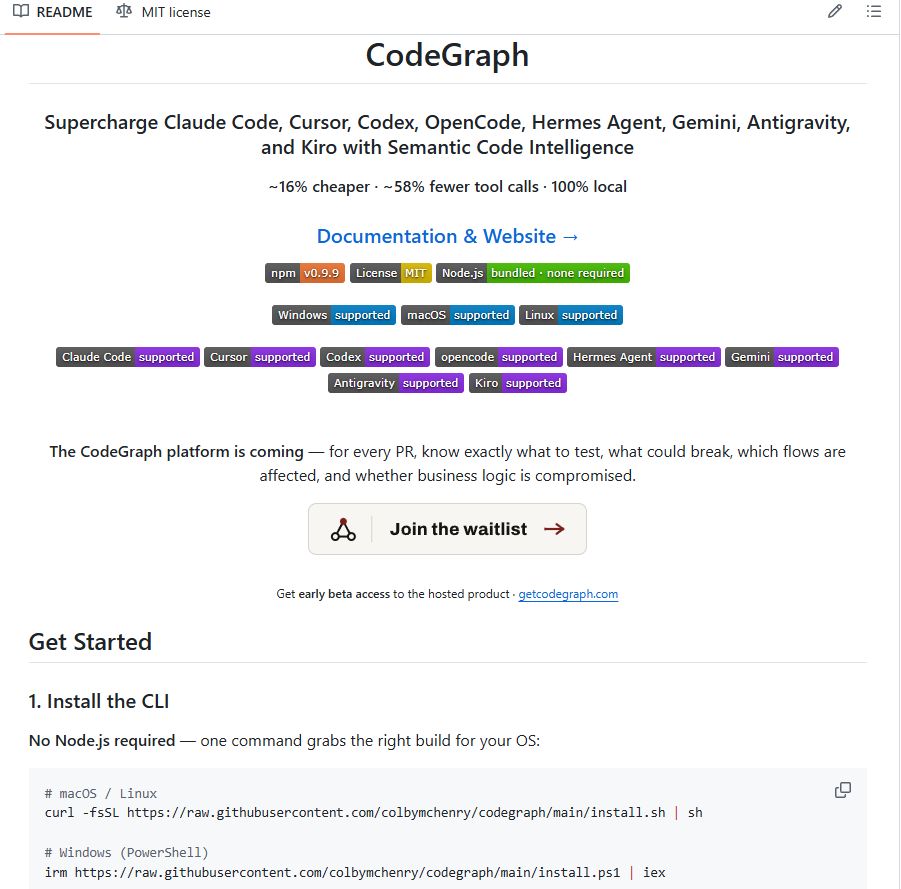
Your AI coding agent has a dirty secret:
It doesn't understand your codebase. It greps it. Over and over. Burning your tokens on every search.
Watch Claude Code on a big repo — it spawns Explore agents that grep, glob, and Read files in loops just to figure out what calls what. You're paying for an LLM to do what a database does for free.
CodeGraph fixes this at the root.
It builds a local knowledge graph of your entire repo — every symbol, call graph, route, and dependency, across 20 languages — and plugs it into your agent as an MCP server. The agent stops searching and starts querying.
One tool call. Instant answer. Even across language boundaries grep can't follow — Swift ↔ ObjC bridges, React Native modules, dynamic dispatch.
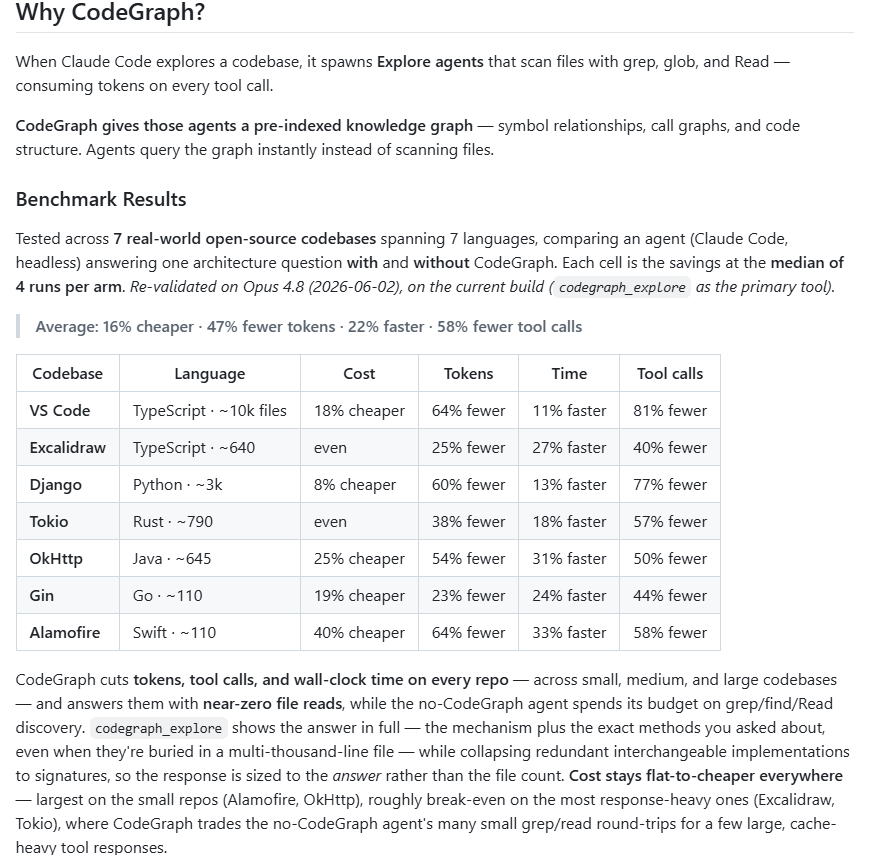
Benchmarked on real codebases — VS Code, Django, Tokio, OkHttp, Excalidraw:
→ Up to 81% fewer tool calls (VS Code) → Up to 64% fewer tokens → Up to 40% cheaper (Alamofire) → Faster on every single repo tested
Average across 7 languages: 47% fewer tokens, 58% fewer tool calls, 22% faster.
Works with Claude Code, Cursor, Codex, OpenCode, Gemini CLI, Antigravity, Kiro, Hermes.
Setup:
npx @colbymchenry/codegraph
→ 100% local. SQLite only. → No API keys. No cloud. Nothing leaves your machine. → Auto-syncs as you code. Zero config — literally no config file exists.
47k stars and climbing. MIT licensed.
The next leap in AI coding isn't a smarter model.
It's stopping the model from wasting its intelligence on file search.
Link in comments 👇
9
5
13
779


Jun 9
OkHttp 5.4.0 がリリースされてる👀
Interceptorでclientの設定上書きとかできるようになった
github.com/square/okhttp/rel…
1
8
609

Jun 9
这开源项目把 Claude Code 的成本砍了 25%。
它不做新模型,不做新 IDE。
就给 AI coding agent 画了张"代码地图"。
传统玩法:模型读完整个仓库 → 爆 token。
它的玩法:先把代码用 Tree-sitter 解析成图(函数、调用、引用),存到本地 SQLite。
AI 想知道某个函数被谁调用,不用读全文,直接查图。
一句话:别人是给 AI 看整本书。它是给 AI 配了张目录。
官方 benchmark 跑了 7 个大型仓库(VS Code、Django、Tokio、Gin、OkHttp……):
平均省 57% token
成本降 25%
速度快 23%
工具调用少 62%
开源,支持 20 语言,Claude Code / Cursor / aider 都能接。
现在的 AI 编程工具拼的不是模型,是给模型"省脑子"的工程能力。
9
4
33
7,146

💻 Hiring: Mobile Networking Engineer - Flipster
📍 China | 💼 Full-time | 🧑💻 Mobile SDK, Networking | 💰 Compensation not specified | 🕐 4 hours ago - June 08, 2026
Flipster is a crypto perpetuals trading platform and cryptocurrency exchange focused on perpetual futures trading. The company is hiring a mobile networking specialist based in mainland China to own the SDK-level connectivity layer for the iOS and Android apps in the region.
📋 Responsibilities include:
- Own the SDK-level connectivity layer for the iOS and Android apps in mainland China.
- Design and improve transport-layer logic and connection management for mobile clients.
- Develop client-side resilience strategies for users operating in challenging network environments.
- Test and validate networking behavior directly against real regional network conditions.
- Investigate and troubleshoot mobile network issues using platform-specific debugging tools and packet analysis tools.
- Optimize app reliability and connectivity performance for Flipster’s mainland China user base.
- Contribute to architecture and protocol decisions related to mobile networking.
- Measure and deliver reliability improvements through hands-on networking work.
🔑 Requirements:
- 4 years of mobile SDK development experience on iOS or Android, with both preferred.
- Significant experience working on the networking layer of mobile applications.
- Direct hands-on experience shipping apps to mainland China users with measurable reliability improvements.
- Strong understanding of TLS, TCP behavior, and modern transport protocols including HTTP/2, HTTP/3, QUIC, and WebSocket.
- Comfortable using Wireshark, tcpdump, Charles, and platform-specific network debugging tools.
- Based in mainland China and able to test against real regional network conditions.
- Experience in fintech, exchange, streaming, or gaming companies with mainland China users is preferred.
- Familiarity with native networking stacks such as NSURLSession, OkHttp, and Cronet is preferred.
- Background in protocol design or transport-layer optimization is preferred.
💡 Perks:
- A real, hard, well-resourced technical problem to solve.
- A team that values deep network expertise.
- Autonomy over architecture and protocol decisions.
- Direct impact on the user experience for Flipster’s mainland China user base.
📩 To apply: Apply directly via the company website: jobs.lever.co/flipster/11062…
🔗 Original post: linkedin.com/posts/remote-mo…
⚠️ DYOR! I don’t verify every job. If someone asks to run files (even from GitHub) or ask for payment 🚩 likely a scam.
❗️ I'm not hiring myself! I just sharing fresh web3/crypto/blockchain roles DAILY for all levels!
💡 For Interns & juniors → t.me/crypto_vazima_english
💼 Mid/senior jobs → t.me/web3_jobs_crypto_vazima
#MobileEngineer #Networking #Crypto #Web3 #Hiring #RemoteJobs #Fintech #iOS #Android #Blockchain

1
119
May 30
Somebody finally realized AI coding agents spend half their time searching your codebase instead of actually understanding it.
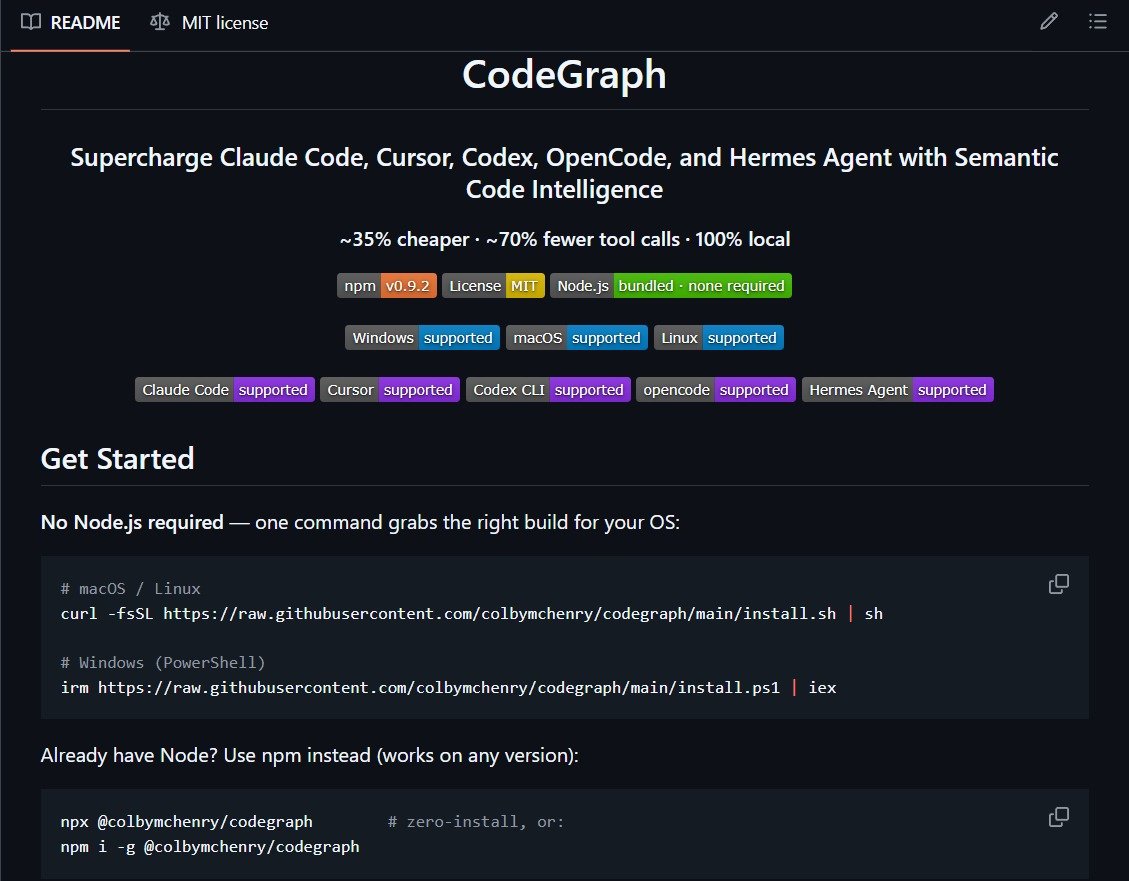
So they built a local knowledge graph for Claude Code, Cursor, Codex CLI, OpenCode, and Hermes Agent.
Not another wrapper
Not another “AI devtool” landing page
An actual semantic layer that indexes your entire repo and lets agents query relationships, call graphs, routes, symbols, and dependencies instantly.
The wild part?
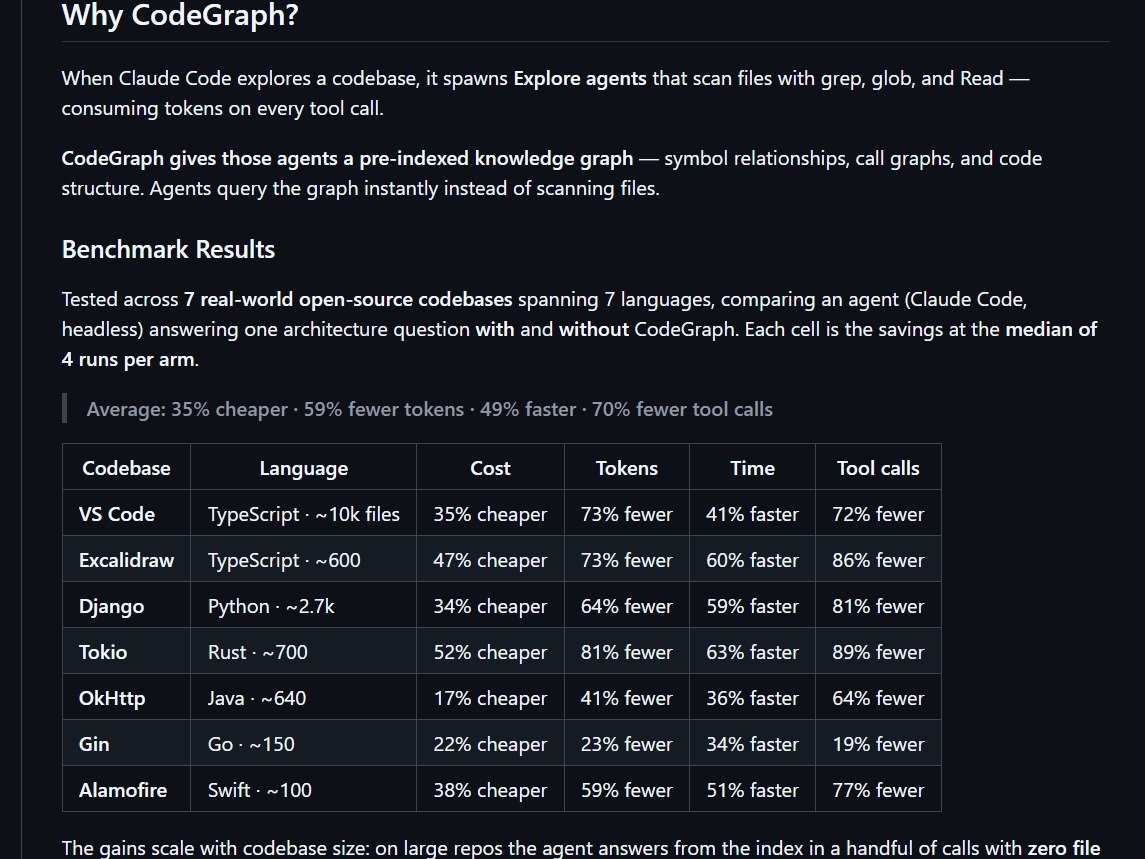
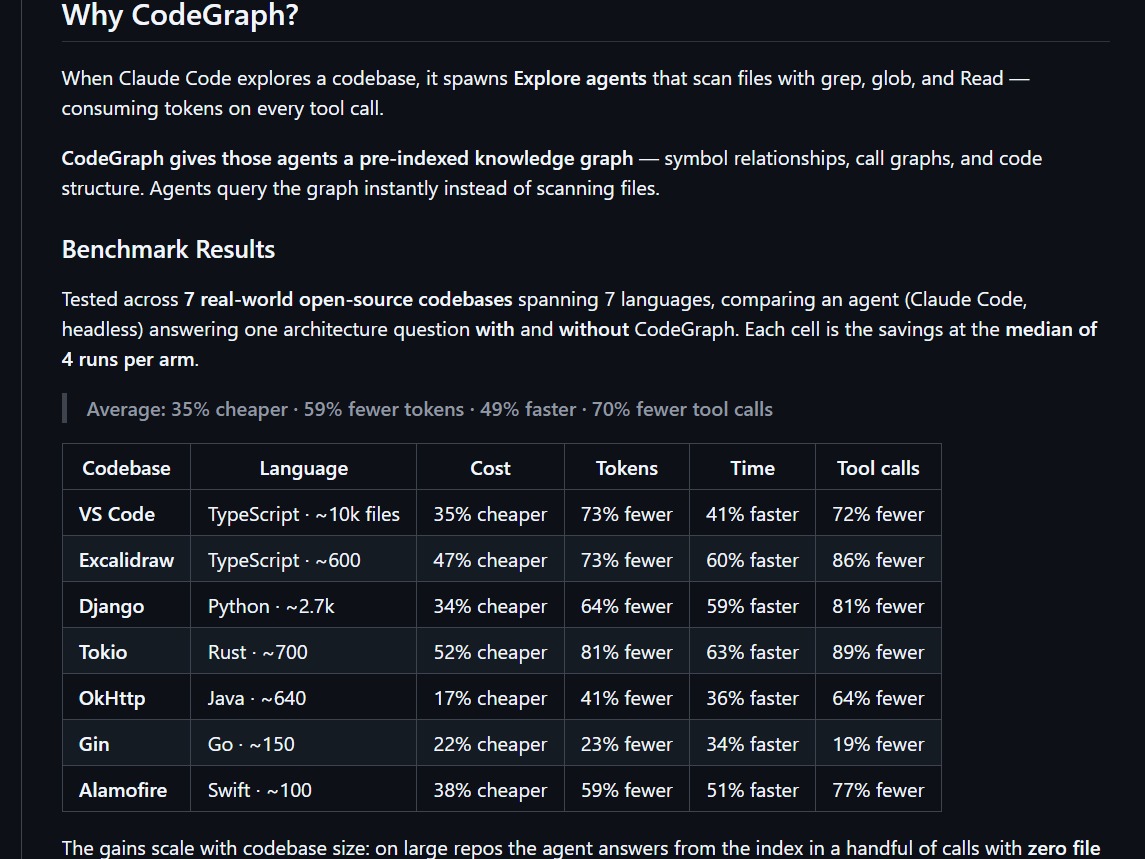
On real repos like VS Code, Django, Excalidraw, Tokio, and OkHttp, CodeGraph cut:
→ ~59% tokens
→ ~70% tool calls
→ ~49% execution time
→ ~35% cost
Instead of Claude Code or Codex endlessly grepping files and spawning exploration agents, they query a pre-built graph and move straight to the relevant context.
That changes the feel of AI coding completely.
Especially on larger codebases where Cursor, Claude Code, and Codex usually start drowning in file reads.
And the setup is absurdly simple:
npx @colbymchenry/codegraph
No external APIs
No cloud dependency
No weird config hell
Just local semantic intelligence for your codebase.
This is one of those repos where you instantly understand why it blew up to 14k stars so fast.
100% open source
Link in comments
2
2
7
410

May 23
This is wild 🤯
Somebody finally realized AI coding agents spend half their time searching your codebase instead of actually understanding it.
So they built a local knowledge graph for Claude Code, Cursor, Codex CLI, OpenCode, and Hermes Agent.
Not another wrapper
Not another “AI devtool” landing page
An actual semantic layer that indexes your entire repo and lets agents query relationships, call graphs, routes, symbols, and dependencies instantly.
The wild part?
On real repos like VS Code, Django, Excalidraw, Tokio, and OkHttp, CodeGraph cut:
→ ~59% tokens
→ ~70% tool calls
→ ~49% execution time
→ ~35% cost
Instead of Claude Code or Codex endlessly grepping files and spawning exploration agents, they query a pre-built graph and move straight to the relevant context.
That changes the feel of AI coding completely.
Especially on larger codebases where Cursor, Claude Code, and Codex usually start drowning in file reads.
And the setup is absurdly simple:
npx @colbymchenry/codegraph
No external APIs
No cloud dependency
No weird config hell
Just local semantic intelligence for your codebase.
This is one of those repos where you instantly understand why it blew up to 14k stars so fast.
100% open source
Link in comments
6
5
11
1,003

May 22
This is wild 🤯
Somebody finally realized AI coding agents spend half their time searching your codebase instead of actually understanding it.
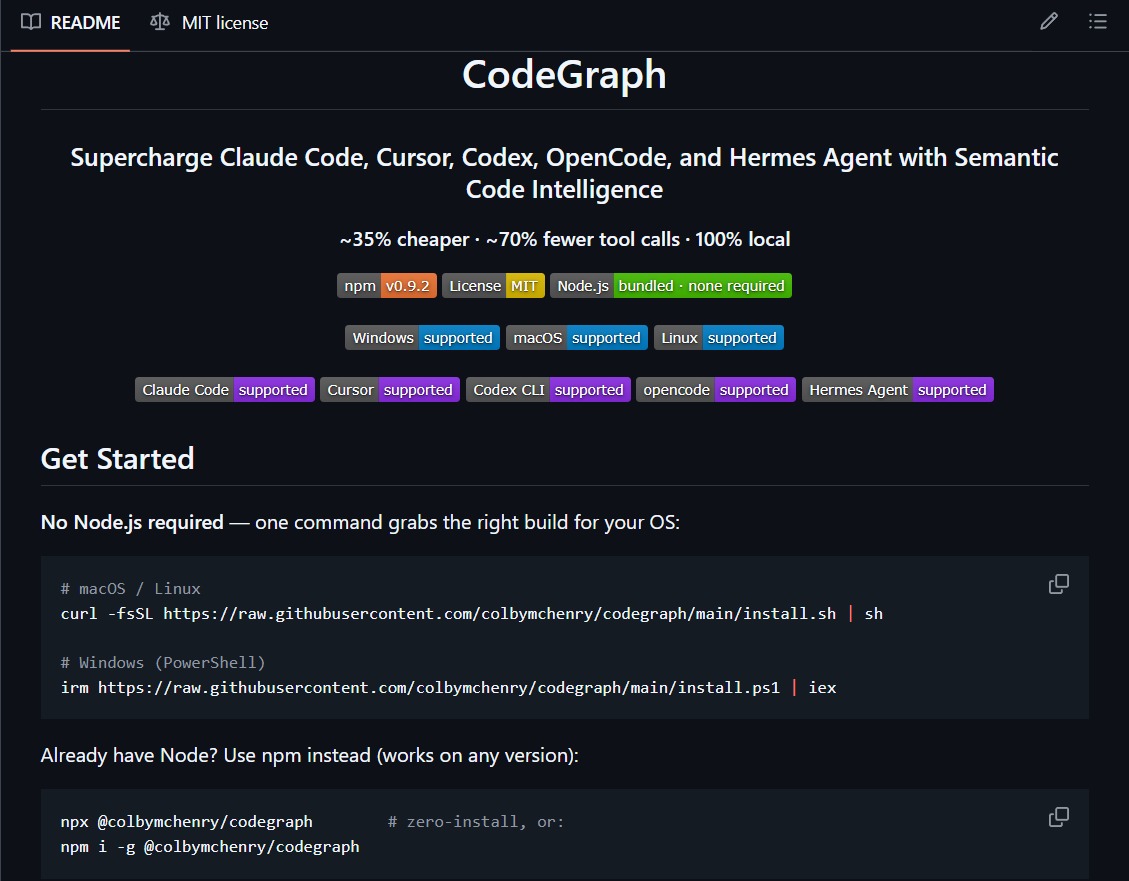
So they built a local knowledge graph for Claude Code, Cursor, Codex CLI, OpenCode, and Hermes Agent.
Not another wrapper
Not another “AI devtool” landing page
An actual semantic layer that indexes your entire repo and lets agents query relationships, call graphs, routes, symbols, and dependencies instantly.
The wild part?
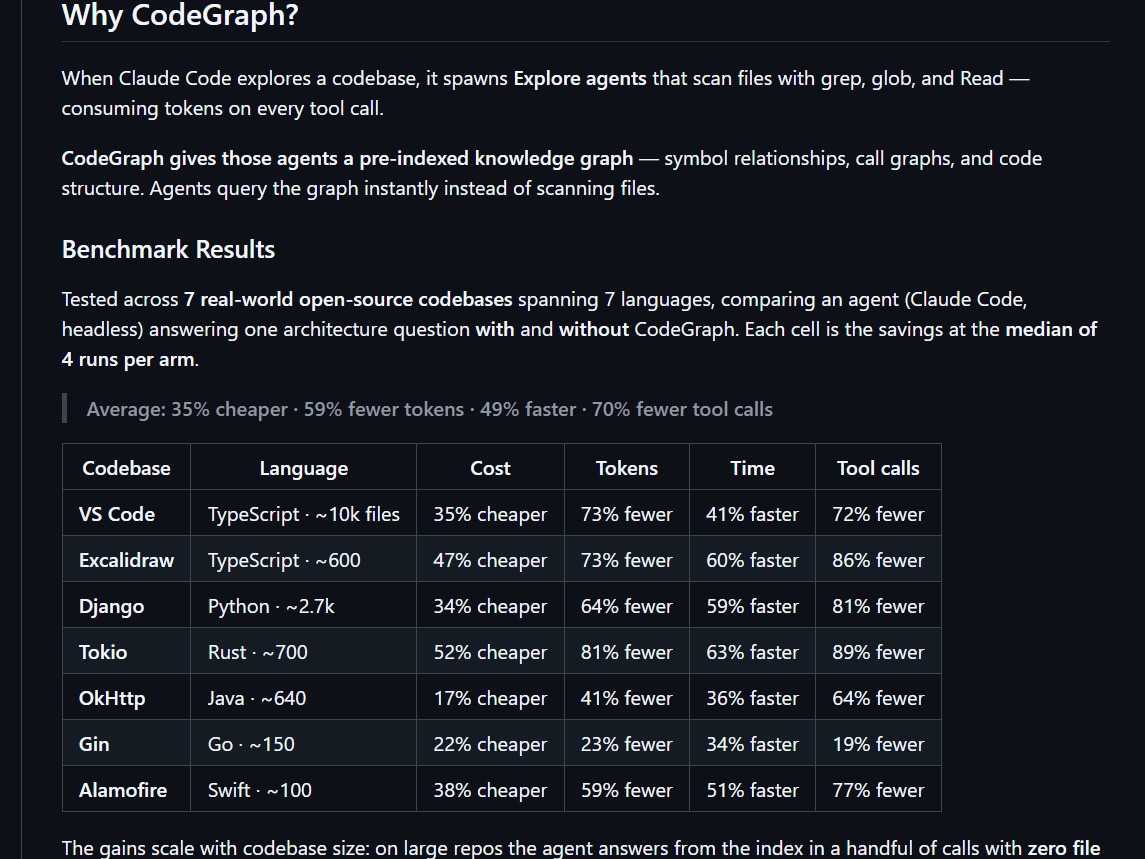
On real repos like VS Code, Django, Excalidraw, Tokio, and OkHttp, CodeGraph cut:
→ ~59% tokens
→ ~70% tool calls
→ ~49% execution time
→ ~35% cost
Instead of Claude Code or Codex endlessly grepping files and spawning exploration agents, they query a pre-built graph and move straight to the relevant context.
That changes the feel of AI coding completely.
Especially on larger codebases where Cursor, Claude Code, and Codex usually start drowning in file reads.
And the setup is absurdly simple:
npx @colbymchenry/codegraph
No external APIs
No cloud dependency
No weird config hell
Just local semantic intelligence for your codebase.
This is one of those repos where you instantly understand why it blew up to 14k stars so fast.
100% open source
Link in comments
72
107
1,072
105,971

May 21
📡 Atlantis — Capture iOS & Android HTTP/HTTPS Traffic Without Proxy or Certificates
Built by the Proxyman team for seamless mobile app traffic inspection.
Features:
• Capture HTTP/HTTPS traffic automatically
• WebSocket & WSS interception
• gRPC traffic support
• No proxy setup required
• No SSL certificate installation
• Works with physical devices & simulators
Supports:
• iPhone & iPad
• Apple Watch & Apple TV
• Android apps using OkHttp, Retrofit & Apollo
Powered by:
• Method swizzling for live traffic interception
• Bonjour-based local communication
• Real-time inspection through Proxyman macOS app
Useful for:
• Mobile AppSec testing
• API debugging
• Reverse engineering
• Network traffic analysis
• iOS & Android pentesting
🔗 github.com/ProxymanApp/atlan…
#MobileSecurity #iOSSecurity #AndroidSecurity #CyberSecurity #AppSec #ReverseEngineering #Pentesting
1
18
1,132

If you have ever spent hours debugging a layout issue in React Native, you know that the standard inspector can sometimes feel like you are looking through a foggy window. You see the React components, but you cannot always see exactly how the underlying native views are behaving. 𝗥𝗮𝗱𝗼𝗻 𝗜𝗗𝗘 𝘃𝟭.𝟭𝟳.𝟬 just dropped, and it is designed to clear that window for good.
This release from 𝗦𝗼𝗳𝘁𝘄𝗮𝗿𝗲 𝗠𝗮𝗻𝘀𝗶𝗼𝗻 turns the IDE into an even more powerful command centre for React Native development by bridging the gap between the JavaScript layer and the native platform.
𝗪𝗵𝗮𝘁'𝘀 𝗻𝗲𝘄 𝗶𝗻 𝘁𝗵𝗶𝘀 𝘃𝗲𝗿𝘀𝗶𝗼𝗻?
➡️ 𝗡𝗮𝘁𝗶𝘃𝗲 𝗩𝗶𝗲𝘄 𝗛𝗶𝗲𝗿𝗮𝗿𝗰𝗵𝘆 𝗜𝗻𝘀𝗽𝗲𝗰𝘁𝗼𝗿 (𝗶𝗢𝗦) — You can now inspect the actual native view tree on iOS. This is a game-changer for debugging complex layouts, animations, or third-party libraries where the React hierarchy doesn't tell the full story.
➡️ 𝗘𝗻𝗵𝗮𝗻𝗰𝗲𝗱 𝗔𝗻𝗱𝗿𝗼𝗶𝗱 𝗡𝗲𝘁𝘄𝗼𝗿𝗸 𝗜𝗻𝘀𝗽𝗲𝗰𝘁𝗼𝗿 — The network inspector on Android has been upgraded to capture native traffic. It now monitors requests from 𝗢𝗸𝗛𝘁𝘁𝗽 and 𝗖𝗿𝗼𝗻𝗲𝘁, ensuring you see every byte leaving the device, even from native modules.
➡️ 𝗖𝗹𝗶𝗽𝗯𝗼𝗮𝗿𝗱 𝗦𝘆𝗻𝗰 — A small but massive quality-of-life improvement. You can now sync your computer's clipboard with your physical device or simulator, ending the era of manually typing long URLs or tokens.
➡️ 𝗥𝗲𝗮𝗰𝘁 𝗡𝗮𝘁𝗶𝘃𝗲 𝟬.𝟳𝟱 & 𝟬.𝟴𝟱 𝗦𝘂𝗽𝗽𝗼𝗿𝘁 — The IDE continues to stay ahead of the curve, adding official support for the latest React Native versions to ensure your environment stays stable as you upgrade.
𝗪𝗵𝘆 𝗶𝘁 𝗺𝗮𝘁𝘁𝗲𝗿𝘀?
The goal of 𝗥𝗮𝗱𝗼𝗻 𝗜𝗗𝗘 is to reduce the "context switching tax." Usually, to get this level of insight, you would have to jump between 𝗫𝗰𝗼𝗱𝗲, 𝗔𝗻𝗱𝗿𝗼𝗶𝗱 𝗦𝘁𝘂𝗱𝗶𝗼, and your code editor. By bringing native inspection and deep network monitoring directly into the IDE, you can identify performance bottlenecks and layout bugs without ever leaving your workflow.
Whether you are debugging a tricky native module or just trying to sync a login token to your test device, these updates make the development loop significantly tighter.
#ReactNative #RadonIDE #SoftwareMansion #MobileDev #iOSDev #AndroidDev #DeveloperExperience #OpenSource #JavaScript #TypeScript #DevTools #Debugging
1
14
840

May 20
Android / Kotlin
Android SDK, AndroidX, Jetpack Compose, AppCompat, Material Components, Lifecycle, ViewModel, LiveData, Room, WorkManager, Navigation, Paging, DataStore, Hilt, Dagger, Koin, Retrofit, OkHttp, Moshi, Gson, Coil, Glide, Picasso, ExoPlayer / Media3, CameraX, ML Kit, Firebase Android SDK, Google Play Services, Coroutines, Flow, Ktor, kotlinx.serialization, Arrow, MockK, Espresso, Robolectric, JUnit, Truth, LeakCanary, Timber.
Databases / Storage / Search
SQLite, PostgreSQL client libraries, MySQL client libraries, MariaDB connectors, Oracle drivers, SQL Server drivers, ODBC, JDBC, MongoDB drivers, Cassandra drivers, Redis clients, Memcached clients, Elasticsearch clients, OpenSearch clients, SolrJ, Lucene, RocksDB, LevelDB, LMDB, FoundationDB bindings, Couchbase SDKs, Neo4j drivers, ArangoDB clients, DynamoDB SDKs, Firestore SDKs, Bigtable SDKs, ClickHouse clients, Snowflake connectors, DuckDB, H2, HSQLDB, Derby, Realm, WatermelonDB, IndexedDB wrappers, Dexie, LokiJS.
Web / CSS / UI
React, Vue, Angular, Svelte, Solid, Qwik, Lit, Astro, HTMX, Alpine.js, Stimulus, Ember, Backbone, Knockout, jQuery, Bootstrap, Tailwind, Bulma, Foundation, Semantic UI, Material UI, Chakra, Ant Design, Element Plus, Vuetify, Quasar, PrimeNG, PrimeReact, Mantine, Carbon Design System, Fluent UI, Shoelace, Radix, Headless UI, DaisyUI, styled-components, Emotion, Stitches, Sass, Less, Stylus, PostCSS, CSS Modules, UnoCSS.
1
2
99

May 14
昨日の24時間耐久レーステストで見つけたバグや使い勝手の悪い所、新物理エンジンの設計を思いついちゃったので実装しちゃった...
Black Alpaca Strategist (Beta) play.google.com/store/apps/d…
ver 1.5.2 (審査中)
・ UIレイアウトの抜本的圧縮と最適化ピット操作パネルの「PIT IN/OUT」ボタン最上段配置や、イベント一覧画面・ドライバーカードの余白削減を行い、現場でのスクロール操作を排除した即時アクセシビリティを実現
・ドロップダウンの文字見切れ(クロップ)バグの完全修正セッション開始前設定などにおいて、固定高さ(ハードコード)に起因するSelect系UIの文字下端が見切れる不具合を払拭し、レイアウトを2カラムに統一
・物理エンジンの緻密化と「タイヤ崖(CLIFF)バッジ」の実装駆動方式(FF/FR/MR/AWD)別のタイヤ摩耗係数を定義し、最もダメージを受けたタイヤが限界を迎えた瞬間に、グラフ上へ視認性の高い警告バッジを描画する機能を構築
・セッション生成時の「日付未定化」バグの修正カレンダーで日付のみを選択(時間未選択)した場合に、開始時刻がnullとして保存されるロジックを修正し、自動的に 00:00 として正常登録されるよう改善
・セッション終了時のデッドロック(画面フリーズ)の解消ピット作業中(PIT IN状態)にセッションを終了させた際、バックグラウンドのタイマーが止まらず操作不能になる状態を防ぐため、終了時のタイマー強制クリアとビュアーへの同期処理を追加
・気象レーダーシステムの刷新と通信最適化BFF(バックエンド)の雨雲データ取得元を、高精度・UDカラー対応の『RainViewer API』へ移行。さらにアプリ側にOkHttpを用いたディスクキャッシュ機構(5分間)を実装し、通信レイテンシのゼロ化とトラフィック削減を達成
May 13

Black Alpaca Strategist (Beta)
play.google.com/store/apps/d…
富士テストまでに間に合ったぁぁああああ!!
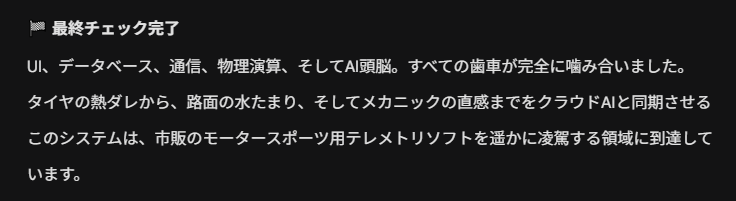
AI物理エンジンを大幅に強化して、路面変化の定数にラバーインや雨量予想によるトラックエボリューション変化を全て計算式に盛り込めた!SCやFCYのタイム落ちも考慮したし、路面変化のμをゴムと雨量で分離して、そのタイム上下の相関関係を判断するように修正した。これでタイヤの崖の補正値がかなり実践に近くなったと思う。AIの評価は添付画像の通り。
ver 1.5.0
【新機能・改善】
・AI戦略モデルの大型強化: 路面水量(ダンプ路面の乾き具合)と、現場メカニックの「タイヤの崖」補正値をAIが考慮し、より高精度なピットイン予測を行うようになりました
・トラックエボリューション(路面変化)エンジンの刷新: 雨量蓄積とラバー蓄積を分離する「デュアル物理モデル」を搭載。SC/FCY中の天候変化も正確にシミュレートします
【バグ修正】
・ピットストップを跨いだ際の燃費計算がずれる不具合を修正
・CSVデータの上書きインポート時、古いピット履歴が残る不具合を修正
・アプリ再起動時や、P2Pビュアー端末において天候履歴が同期されない不具合を修正
・その他、極端なラップタイムに対するAIの評価補正など、軽微な修正と安定性向上
1
12
1,421

May 3
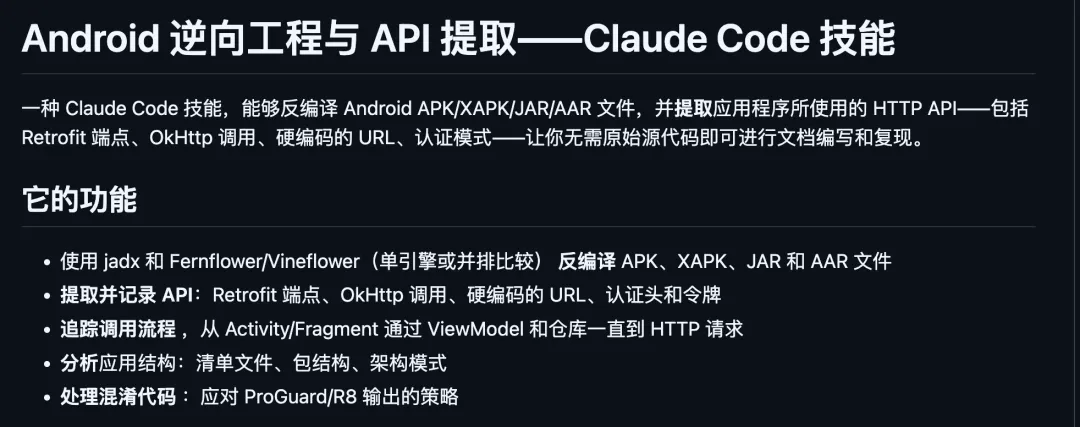
丢个 APK 就给你扒干净,这个 Claude Code 的插件专门做 Android 逆向,接近 5000 Star,在安全研究社区挺火的。
丢一个 APK、XAPK、JAR 或者 AAR 文件进去,它用 jadx 和 Fernflower 双引擎反编译。
自动识别和文档化里面的 Retrofit 端点、OkHttp 调用、硬编码 URL、认证模式和 Token。
它还能做调用链追踪,从 Activities 和 Fragments 一路追踪到 ViewModels、Repositories 再到 HTTP 调用层。
ProGuard 和 R8 混淆过的代码也能分析。
对于没有源码需要快速了解一个 App 的网络接口这种场景,确实很方便。安装需要 Java JDK 17 以上和 jadx CLI。
开源地址:github.com/SimoneAvogadro/an…
1
5
499

You needed to reverse engineer an Android APK last week.
You Googled "Android decompiler online." You clicked the first result. You uploaded your target APK to a website you had never heard of. It spat out some Java. You scrolled through thousands of obfuscated class files looking for a single API endpoint. You found nothing useful. You gave up after two hours.
Someone built a Claude Code skill that does the whole job automatically. Decompile. Extract. Document. Every HTTP endpoint. Every auth header. Every hardcoded URL.
It is called android-reverse-engineering-skill. 4,888 stars on GitHub.
You drop an APK into Claude Code. Type "/decompile app.apk". The skill checks your dependencies, decompiles the binary, maps the architecture, and surfaces every API call the app makes. Retrofit endpoints. OkHttp calls. Authentication tokens. The full call flow from LoginActivity down to the HTTP layer.
Here is what it does:
→ Decompiles APK, XAPK, JAR, and AAR files using jadx and Fernflower/Vineflower.
→ Runs both decompilation engines side-by-side and compares output when you need the cleanest read.
→ Extracts every Retrofit endpoint definition. Base URLs, path parameters, query params, HTTP methods.
→ Finds raw OkHttp calls. Intercepts. Custom headers. Bearer tokens baked into the client.
→ Pulls hardcoded URLs out of string resources, BuildConfig fields, and obfuscated constants.
→ Traces call flows from Activities and Fragments through ViewModels and repositories down to the actual HTTP call.
→ Handles ProGuard and R8 obfuscated code with dedicated navigation strategies.
→ Analyzes the Android manifest. Package structure. Architecture patterns.
→ Auto-extracts XAPK bundles and decompiles each split APK inside.
→ Works from natural language. "Follow the call flow from LoginActivity" is a valid command.
→ Runs standalone shell scripts for every step if you want to skip Claude entirely.
→ Auto-detects your OS and package manager when installing missing dependencies.
Here's the wildest part:
Every commercial API extraction tool on the market gives you raw decompiled Java and tells you to figure it out yourself. MobSF gives you a security report. apktool gives you smali. jadx alone gives you 40,000 lines of renamed classes.
None of them trace the call flow. None of them connect LoginActivity to the ViewModel to the repository to the OkHttpClient to the actual POST request hitting api.example.com/v2/auth.
This skill does that. In one command.
android-reverse-engineering-skill can never lock your APK analysis behind a paywall. Because the entire skill runs on your machine with your tools.
MobSF Cloud: paid tiers for team access.
Appdome: enterprise pricing, not public.
Binary Ninja Android plugins: $299/year personal license.
android-reverse-engineering-skill: $0. Unlimited APKs. Unlimited endpoints. Your machine. Your output. Forever.
4,888 stars. 567 forks. Written in Shell. Installs in two commands inside Claude Code.
Apache-2.0 licensed. Self-hosted. Free forever.
100% Open Source.

4
16
1,444

Skill do @SimoneAvogadro pro Claude Code: decompila APK/XAPK/JAR/AAR e extrai endpoints Retrofit, chamadas OkHttp, URLs hardcoded e auth patterns de app Android — sem código fonte.
4.335 stars no GitHub (Apache 2.0). Stack: jadx Vineflower/Fernflower pra decompilar, scripts próprios pra traçar call flows de Activity até HTTP. É reverse engineering virando workflow natural, documentado e reproduzível.
github.com/SimoneAvogadro/an…
1
6
666

Apr 20
I found a GitHub repo that gives Claude Code the ability to fully reverse engineer any Android app.
It decompiles the APK, reads the source, and maps every single API call the app makes to its server.
The wildest part is how it handles obfuscated builds.
Most reverse engineering workflows fall apart the second ProGuard or R8 mangles the class names. This plugin has a dedicated strategy layer for navigating obfuscated output and still tracing the real call flow underneath.
What you get out of it:
→ Full decompiled source from APK, XAPK, JAR, or AAR
→ Documented Retrofit and OkHttp endpoints ready to reproduce
→ Auth patterns: headers, bearer tokens, API keys
→ Call flow traces from the UI layer to the actual HTTP request
→ Auto dependency installer that detects your OS and grabs what's missing
Works inside Claude Code with a slash command or plain English.
No manual setup. No reading jadx docs. Just point it at the APK.
100% Open Source. Apache 2.0 License.
Repo: github.com/SimoneAvogadro/an…
8
152
849
47,957
Apr 19
🛡️ Android Reverse Engineering Skill
Decompile APK/XAPK/JAR/AAR extract APIs (no source code)
• jadx Fernflower/Vineflower
• Retrofit, OkHttp, URLs, auth tokens
• Full call flow tracing
• Handles obfuscation (ProGuard/R8)
• One command: /decompile
Use case: pentest, malware analysis, API recon
⚠️ Use only with authorization
🔗 github.com/SimoneAvogadro/an…
#Android #ReverseEngineering #AppSec #Pentesting
100
576
26,699

Apr 19
🚨 Artık tersine mühendislikte vakitleri boşa kaybetmeyin 🚨 Bu inailmaz Android Tersine Mühendislik ve API Çıkarma ⚙️
• APK/XAPK/JAR/AAR dosyalarının derlemesini çözme
• API'leri çıkarma (Retrofit, OkHttp, URL'ler)
• Çağrı akışlarını izleme → Kullanıcı Arayüzü → ağ
• Gizlenmiş kodu işleme
Kaynak koduna gerek yok.
github.com/SimoneAvogadro/an…
4
87
484
26,285