
We just launched a new #AgentExperience (AX) series 👇
👉 AX stack: where you can win aka.ms/AgentExperience.stack
👉 How agents use your tech aka.ms/AI.CodingAgents
Build smarter. Measure impact. Win with AI 🚀
#MSFTAdvocate #DeveloperExperience #Copilot #DevTools
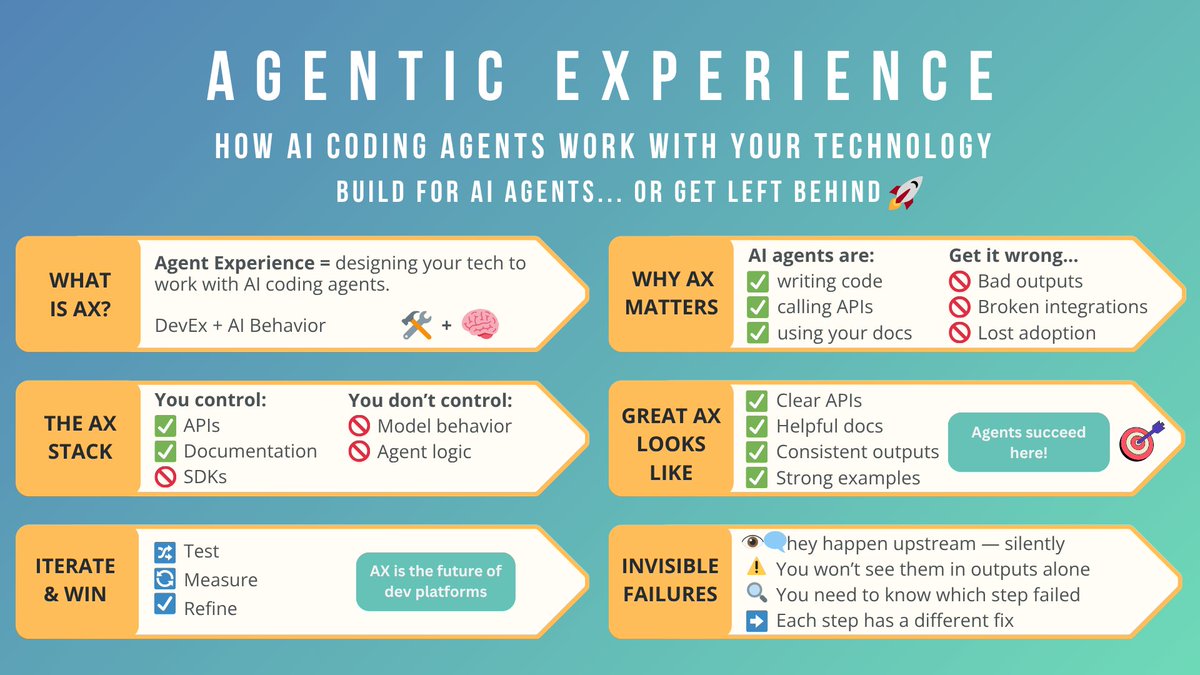
ALT 🚀 New blog series alert: Agent Experience (AX)
24

致命的に便利すぎて絶望する。ターミナルからインフラやデバッグを完結させる @xai のプラグインエコシステム。コード生成の先にある『環境操作の自動化』が開発体験を破壊的に変える。 #xAI #DeveloperExperience

The Grok Build Plugin Marketplace is now in beta.
Build with MongoDB, Vercel, Sentry, Cloudflare, and Chrome DevTools plugins from your terminal.
Read more x.ai/news/grok-plugin-market…
69

Most AI integration platforms require you to trust them with your code, your credentials, and your infrastructure.
We built IntegrateAPI OS differently.
✅ Your code stays yours
✅ Your keys stay yours
✅ Run locally or in your own infrastructure
✅ Bring your own AI models
No repo uploads. No vendor lock-in. No black boxes.
AI-powered. Trust-minimized.
Get early access -> integrateapios.com
#AI #ArtificialIntelligence #AIDevTools #LocalFirst #PrivacyFirst #DataPrivacy #SelfHosted #OpenSourceAI #AIAgents #DeveloperExperience


Jun 13
If your onboarding process requires a 50-page PDF, you probably need better diagrams.
#DeveloperExperience #Engineering
1

An eBPF agent caused a production kernel panic. During business hours. A node rebooted.
I audited this observability platform's "fastest onboarding, zero-code visibility" quick start.
#Observability #eBPF #DevTools #DeveloperExperience
9

One statistic from this article stood out:
Teams adopting a contract-first approach reported substantially fewer integration defects and significantly faster delivery cycles.
The reason isn't magic.
Frontend, backend, QA, and product stop working in sequence and start working against the same contract.
Paths.
Schemas.
Fixtures.
Error states.
Validation rules.
Less interpretation.
Less rework.
Less surprise.
That's a platform engineering lesson as much as a frontend one.
#PlatformEngineering #DeveloperExperience #SoftwareArchitecture #DevOps #EngineeringEfficiency

7

Jun 13
TypeScript catches class of errors JavaScript doesn't. But TypeScript doesn't make bad architecture good. Good architecture makes TypeScript useful. #DeveloperExperience #CodeQuality
2

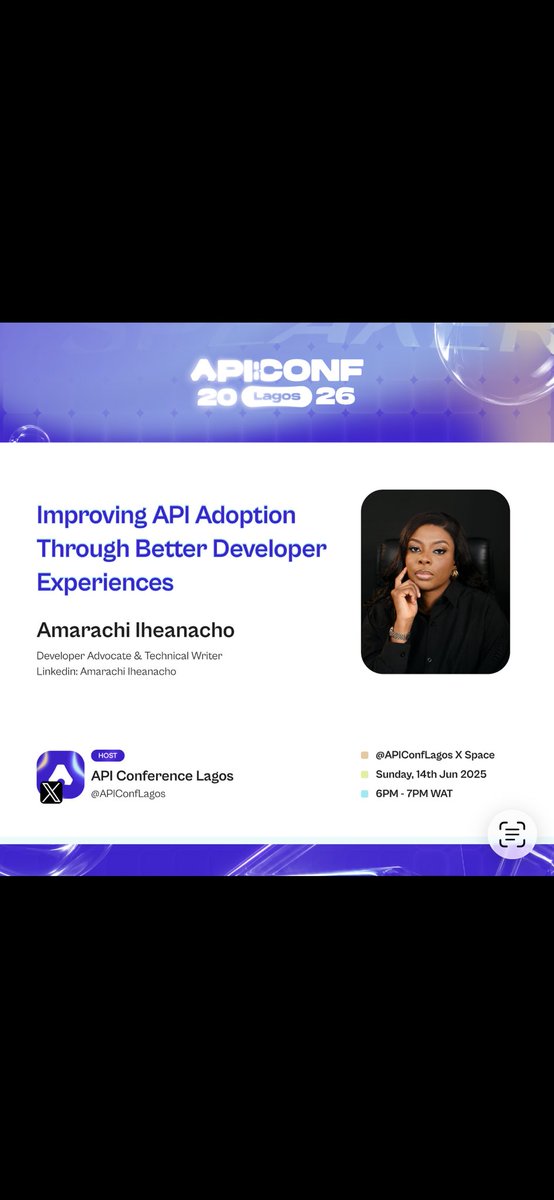
How do great developer experiences drive API adoption? 🚀
Join us for an exclusive X Space as Developer Advocate & Technical Writer Amarachi Iheanacho explores how thoughtful developer experiences can accelerate API adoption, improve developer satisfaction, and drive product growth.
📅 Sunday, 14th June 2026
⏰ 6:00 PM WAT
Set your reminders: twitter.com/i/spaces/1dxYlld…
#APIConfLagos #DeveloperExperience #DevEx #APIs #DeveloperAdvocacy #TechCommunity #APILagos
1
1
1
24

Jun 13
Hot take: If developers HAVE to use your internal platform, you haven't built a platform — you've built a mandate. 🔥
New research dives into adoption metrics for optional platforms and why the 'Three Asks' approach changes everything about how we measure platform success.
Are you tracking the right signals? 📊
🎥 lckhd.eu/UaXqJ8
#PlatformEngineering #DevEx #DeveloperExperience #DevOps
2
59

Jun 12
Two questions on my mind: - What's the new approach to perf reviews as AI gets adopted? - What does it even mean to be a "high-performing developer" now? What do you think? 👇 #DevRel #DeveloperExperience #AI #BuildInPublic #TechCommunity
7

Jun 12
We just launched a new #AgentExperience (AX) series 👇
👉 AX stack: where you can win aka.ms/AgentExperience.stack
👉 How agents use your tech aka.ms/AI.CodingAgents
Build smarter. Measure impact. Win with AI 🚀
#MSFTAdvocate #DeveloperExperience #Copilot #DevTools
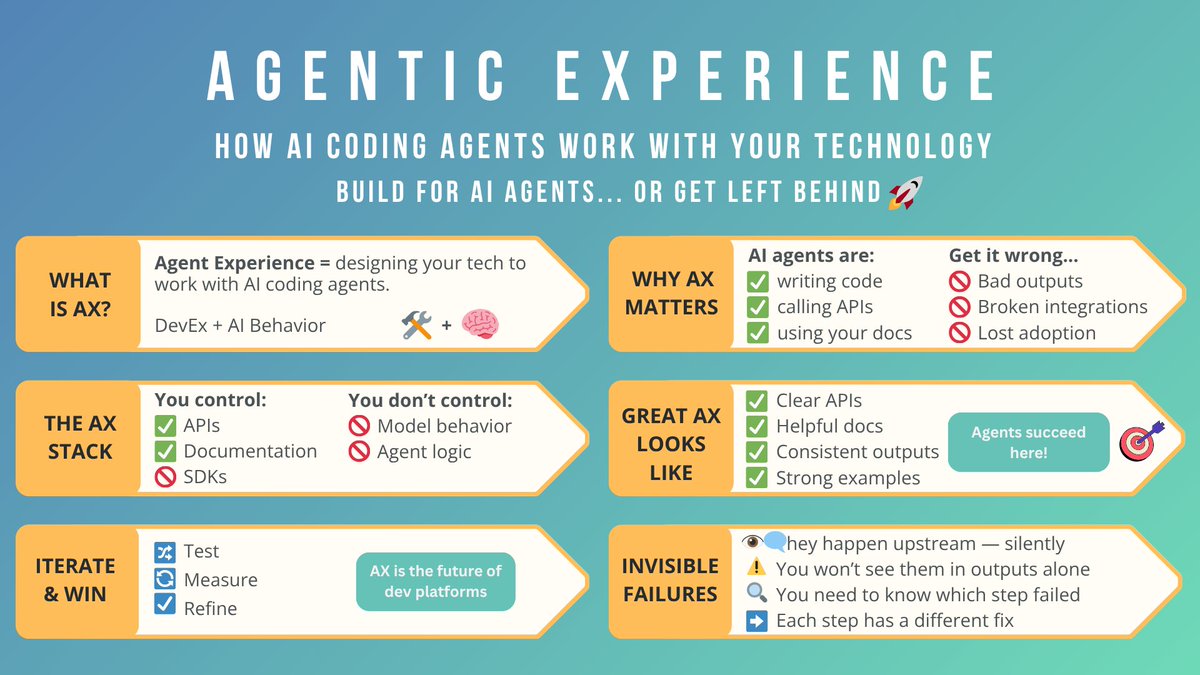
ALT 🚀 New blog series alert: Agent Experience (AX)
1
14

Jun 12
Platform engineering fails to scale when not treated as a product. A clear product strategy, user focus, and scope are key for adoption and success.
#platformengineering #internaldeveloperplatform #developerexperience #adoption
5

Jun 12
Development teams want speed. Operations teams need governance. Why choose?
See how Fractal Cloud delivers secure, reusable environments in minutes without slowing down development.
#PlatformEngineering #DeveloperExperience #DevOps #CloudGovernance
youtu.be/QcFlCp7iJEg
16

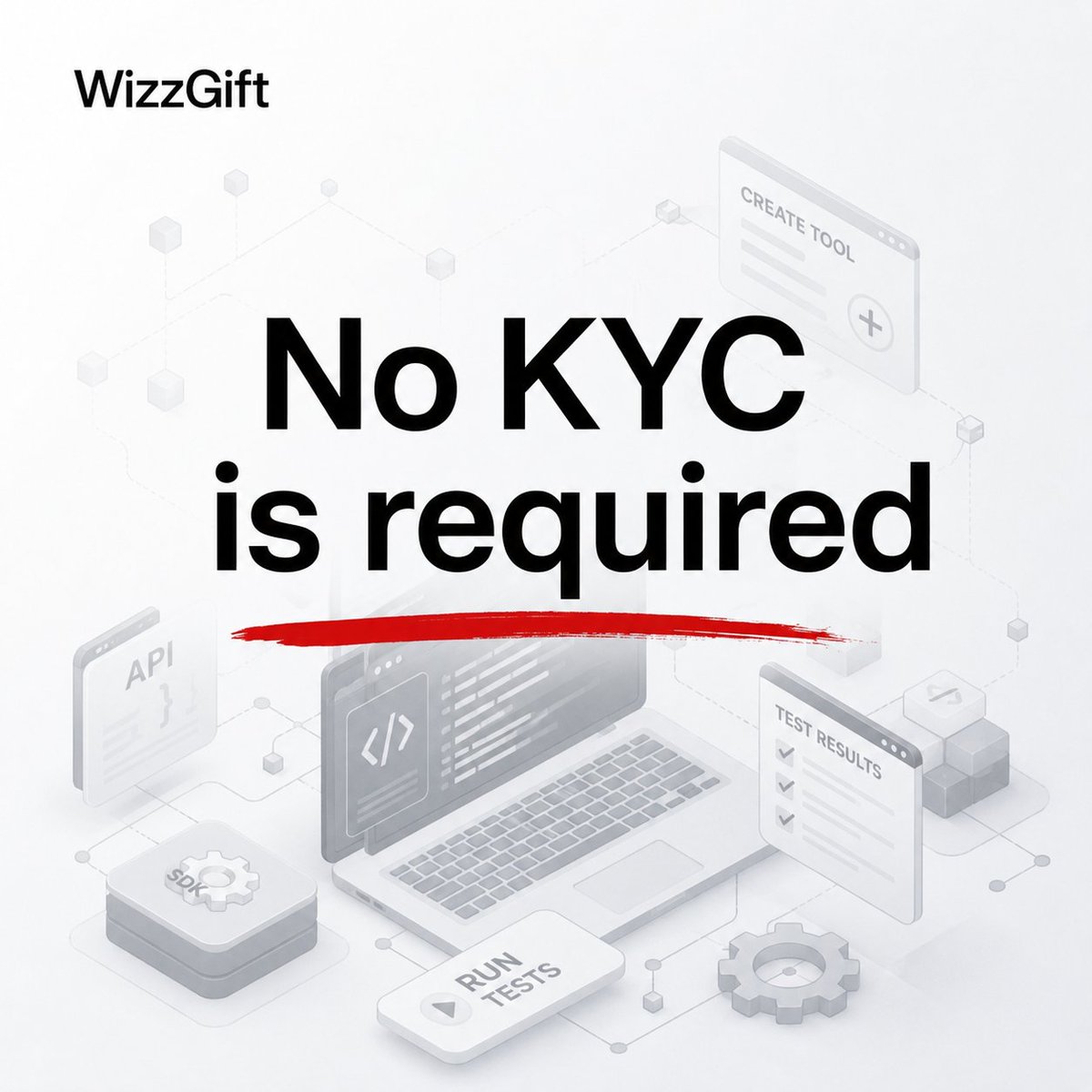
💻 Build. Test. Integrate.
Access WizzGift developer tools without KYC requirements and start testing your integrations in minutes. ⚡🚀
#WizzGift #DeveloperExperience #APIIntegration #SoftwareDevelopment #Fintech
10

Jun 12
One of the most overlooked constraints in AI-assisted software development is not model capability. It is developer workflow friction.
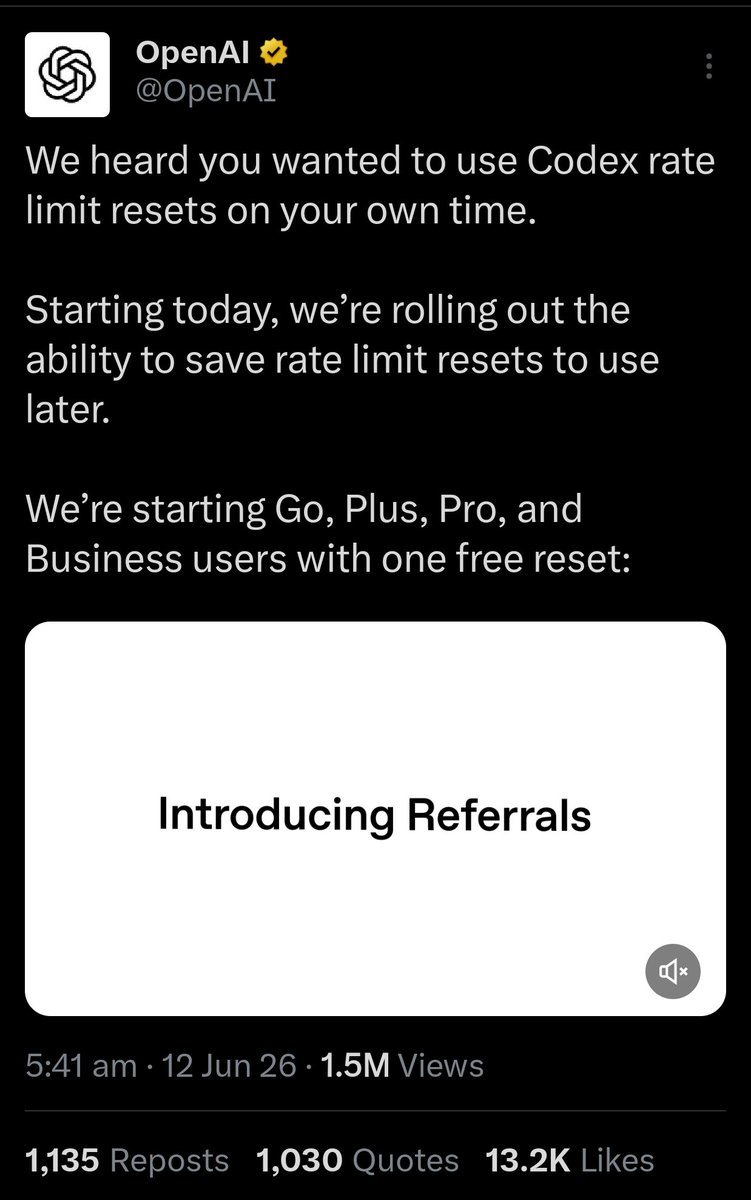
#OpenAI's latest #Codex update introduces the ability to save unused #ratelimit resets and use them later. On the surface, this looks like a billing or quota management feature. It is much more than that.
Enterprise developers rarely work in perfectly distributed patterns. There are intense bursts during architecture reviews, production incidents, migration projects, code modernization initiatives, and release cycles. Then there are quieter periods.
Traditional quota models assume uniform consumption. Real engineering teams do not operate that way.
By allowing developers to bank unused resets and consume them when demand spikes, the platform becomes better aligned with how software delivery actually happens.
This is an important signal for AI platform design.
The next phase of enterprise AI adoption will not be driven solely by larger context windows, faster inference, or better benchmarks. It will be driven by reducing operational friction around how teams consume AI capabilities.
The winning platforms will understand that developers do not need another tool. They need AI that adapts to existing delivery patterns, sprint cycles, incident response processes, and governance controls.
Small product decisions often reveal larger strategic direction.
This one suggests AI coding platforms are starting to mature from model providers into productivity infrastructure.
#EnterpriseAI #AIArchitecture #AIGovernance #SolutionArchitecture #DeveloperExperience #PlatformEngineering #GenAI
1
2
98

Jun 11
𝗛𝗮𝗹𝗹𝘂𝗰𝗶𝗻𝗮𝘁𝗶𝗻𝗴 𝗱𝗲𝗽𝗿𝗲𝗰𝗮𝘁𝗲𝗱 𝗹𝗶𝗯𝗿𝗮𝗿𝗶𝗲𝘀
One failure mode is obvious: agents suggest tools or libraries that should not be used anymore.
That slows teams down and adds risk.
#LLMs #AIAgents #DeveloperExperience
1
2

DevRel is more than content and events—it’s intention, empathy & consistent action. Learn proven activity patterns that help #DevRel teams engage developers meaningfully while staying aligned with company strategy. #DeveloperExperience #DX #OpenSource
🔗 ow.ly/3vtc50YO78l

56
hasiya alhassan retweeted

Jun 10
🔗 More time to think
ma.ttias.be/more-time-to-thi…
#workflow #productivity #ai #developerexperience #thinking
1
1
8
1,384

Zed's theme-builder explained: instead of manually tweaking colors in config files like it's 1997, you now point-and-click your way to a beautiful editor theme. Finally, aesthetics don't require a computer science degree.
#DevTools #Zed #DeveloperExperience #CodeEditor
22

Jun 10
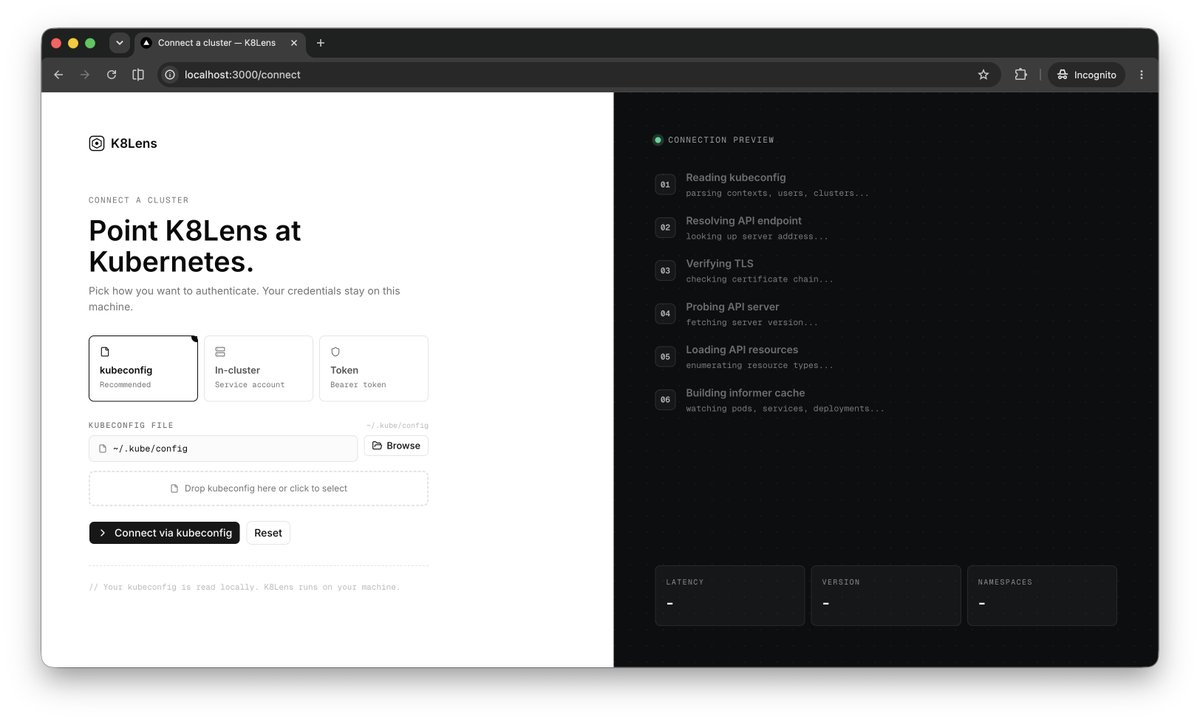
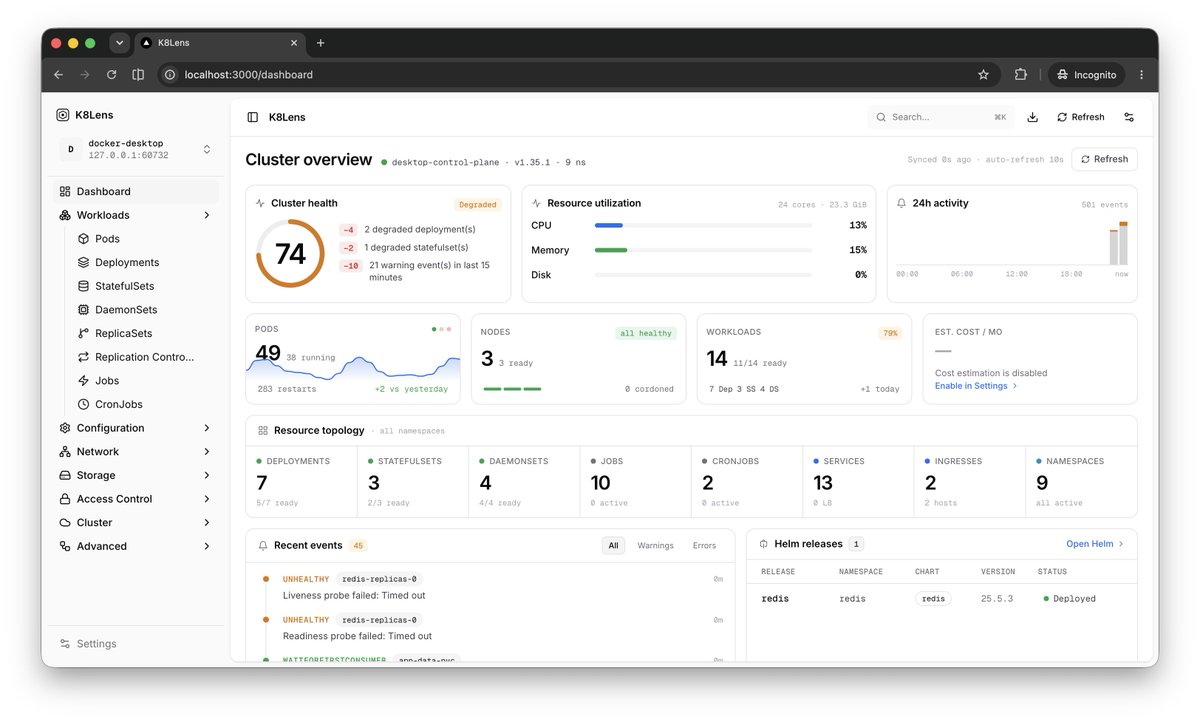
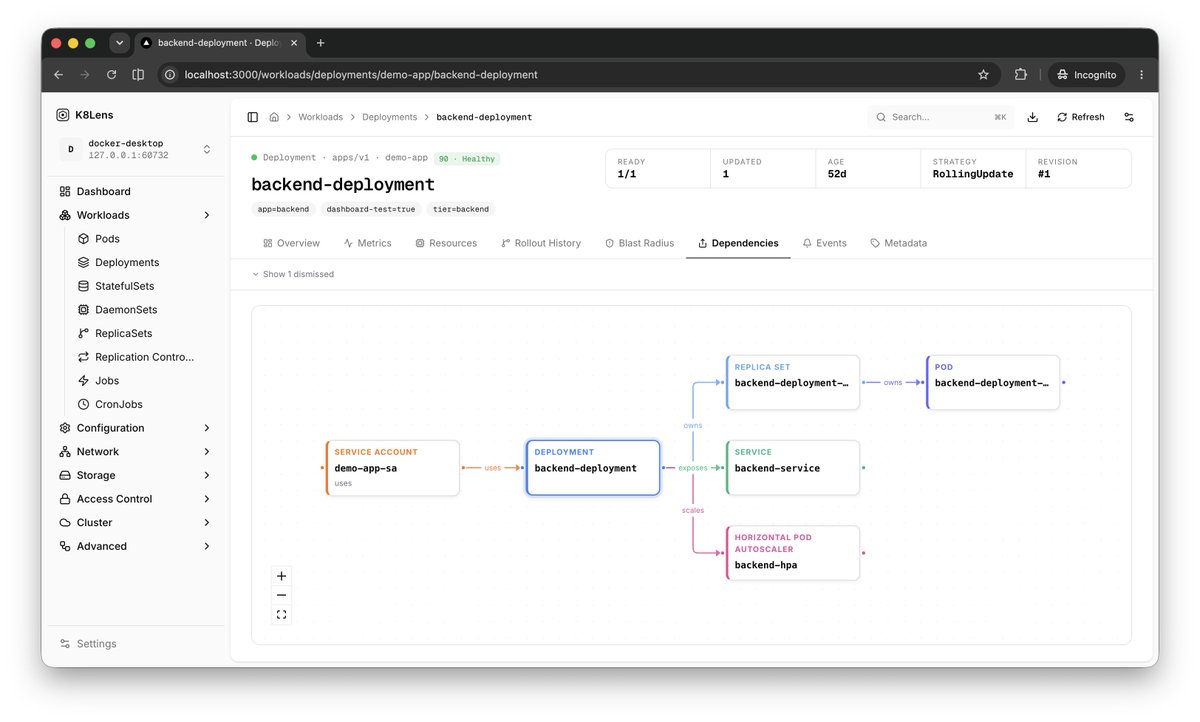
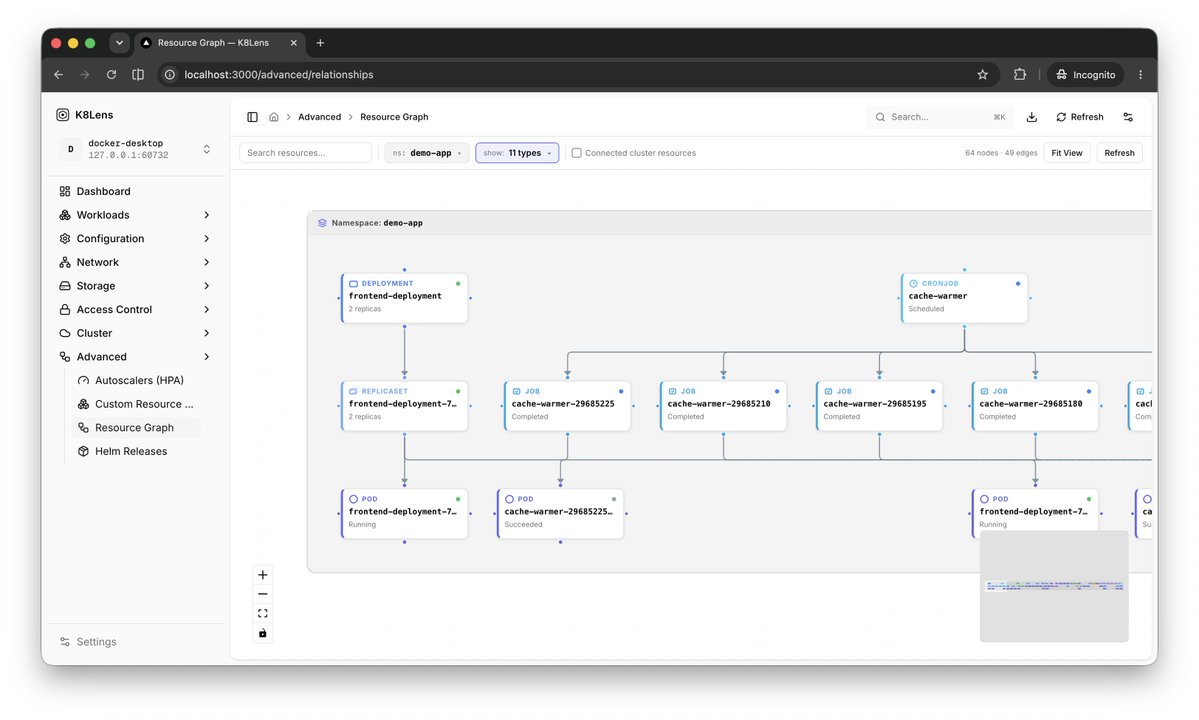
For the last couple of months, I've been building a new Kubernetes Dashboard project alongside my full-time job. Progress has been slower than I'd like because of work commitments, but today I'm excited to share the very first glimpse of what I've been working on. 🚀
This is still an early iteration, but the first public release is planned for next week.
My goal isn't to build another Kubernetes monitoring dashboard. I want to build something that genuinely helps platform engineers, SREs, DevOps teams, and Kubernetes operators manage their clusters more effectively.
The screenshots below showcase some of the work so far:
• Cluster connectivity & onboarding
• Cluster Dashboard
• Resource listings & detailed views
• Cluster navigation experience
I'd love feedback from the Kubernetes and DevOps community:
👉 What features do you feel are missing from existing dashboards?
👉 What are the biggest pain points you face when managing Kubernetes clusters?
👉 If you could add one feature to your ideal dashboard, what would it be?
Your feedback will directly influence the roadmap.
#Kubernetes #K8s #CloudNative #DevOps #PlatformEngineering #SRE #CNCF #OpenSource #CloudComputing #Containers #Docker #Infrastructure #Observability #GitOps #DeveloperExperience #PlatformOps #Kubectl #CloudEngineering #TechTwitter #OSS
3
164