
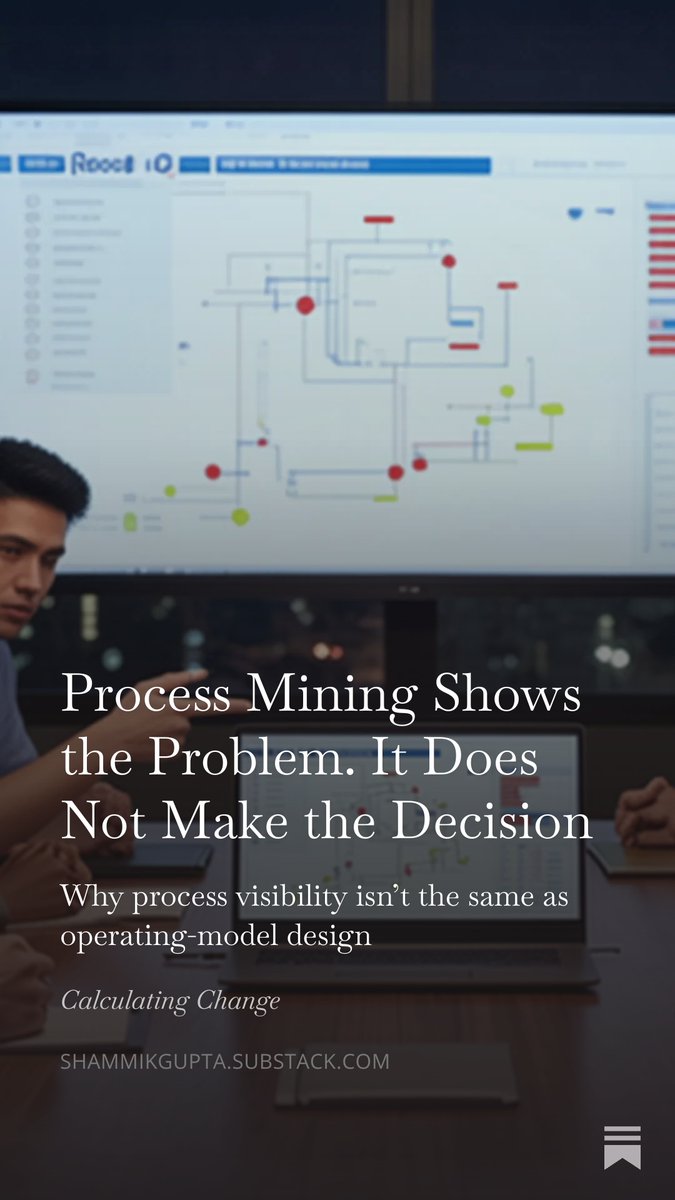
Process mining tells you where the operation hurts.
It can't tell you whether the fix is process, control redesign, staffing, scheduling, automation, or training.
Because an X-ray is not a prescription.
Part 3 of 5 — Calculating Change 👉 [open.substack.com/pub/shammi…]
#ProcessMining #OperationalTransformation
1
11

11 Nov 2025
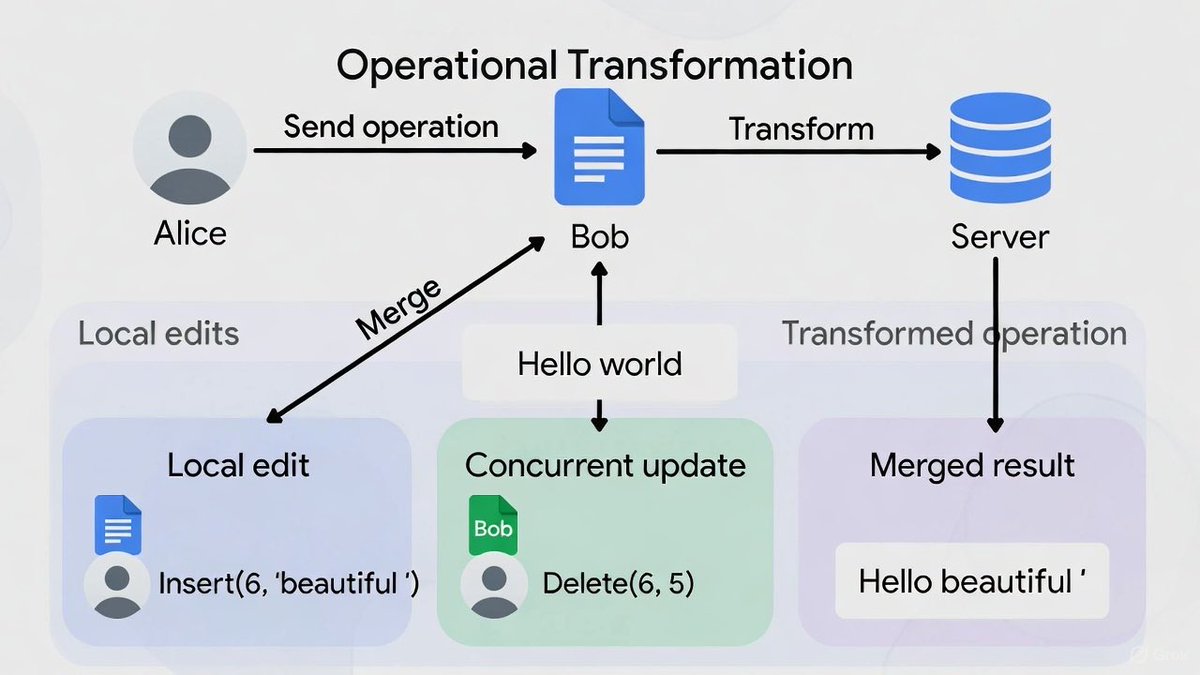
Imagine two users Alice and Bob editing the same Google Doc at the same time.
Initial text: Hello world
Now:
•Alice types “beautiful ” before “world” → Insert(6, "beautiful ")
•Bob deletes “world” → Delete(6, 5)
Both edits happen simultaneously on different devices.
Each user’s browser applies the edit locally for instant feedback.
So Alice sees:Hello beautiful world
Bob sees:Hello
The problem: When their changes reach the server, the document states don’t match.
If we just apply one after the other, we might lose a user’s edit.
So how does Google Docs merge them correctly?
The Core Idea: Operational Transformation (OT)
Google Docs doesn’t sync entire documents, it syncs operations.
Every operation carries:
•Position (where to apply the change)
•Type (insert/delete)
•Content (what’s inserted/deleted)
•Version info (what state this operation was based on)
When two operations conflict, Google Docs uses OT to transform one operation in the context of the other.
In our case:
1The server receives both operations.
2It sees they’re based on the same version.
3It transforms them so that both effects survive.
Result: Hello beautiful
Both Alice’s and Bob’s changes are merged correctly, preserving intent.
Modern Alternative: CRDT (Conflict-free Replicated Data Types)
OT needs a central server to resolve transformations.
Modern editors like Figma, Notion, and Yjs use CRDTs, which allow conflict-free sync even without a central authority.
Each operation carries enough causal info to merge automatically, so even if users go offline, edits merge later without conflicts.
TL;DR
Google Docs keeps real-time collaboration consistent through Operational Transformation, ensuring every user’s intent is preserved even during concurrent edits.
Modern systems evolve this idea using CRDTs for distributed, offline-first editing.
#SystemDesign #DistributedSystems #GoogleDocs #CRDT #OperationalTransformation
2
64

10 Apr 2025
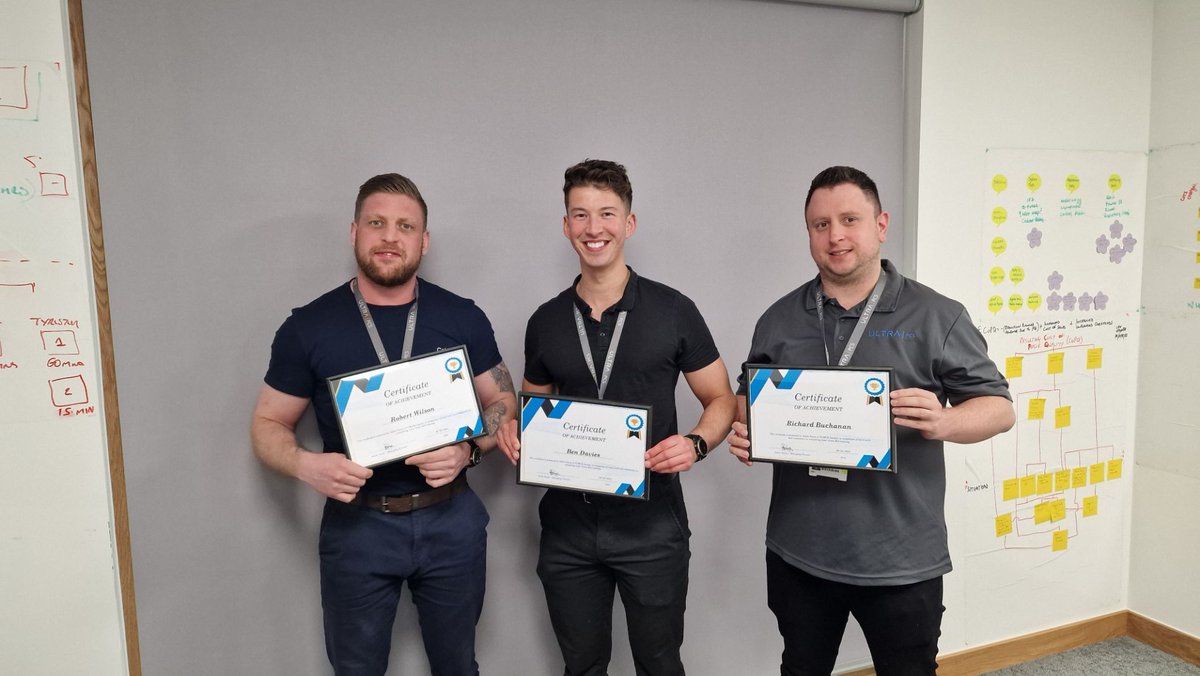
Ever felt your factory's heartbeat? 🏭💚 Lean Coaching ignites a rhythm of growth & efficiency. Ready for change?
👉 Transform with us! bit.ly/tcmuklcp
#LeanCoaching #ManufacturingExcellence #OperationalTransformation #LeanManufacturing
1
5
30

17 Jan 2025
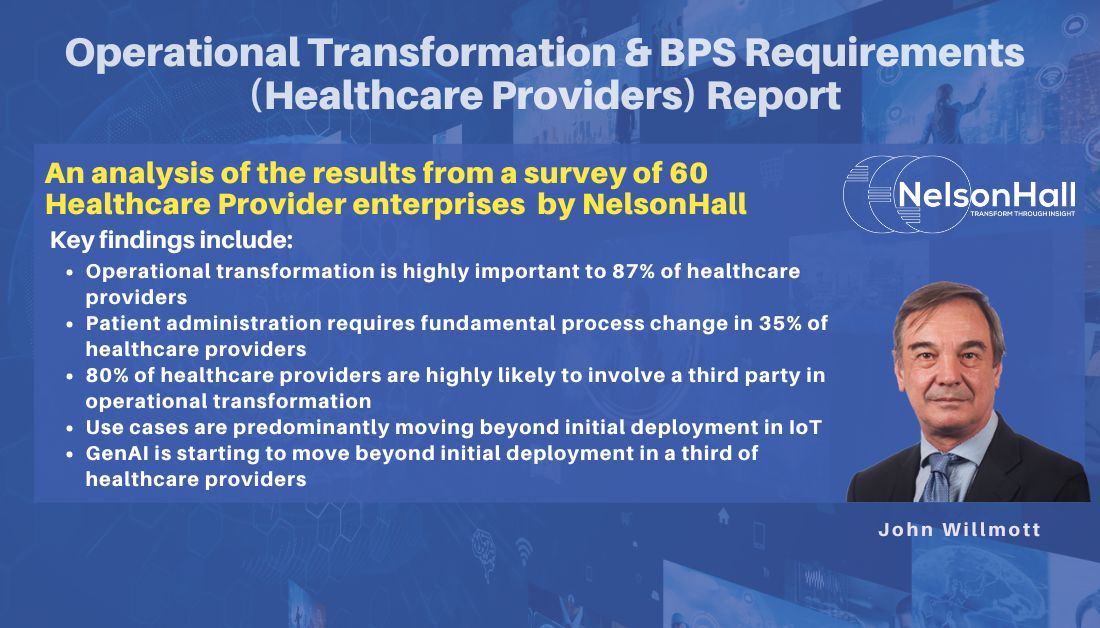
'#BPaaS is...moving extensively beyond initial deployment'. See our #OperationalTransformation & #BPS Requirements – #HealthcareProvider Report for more: research.nelson-hall.com/sou…
2
92

15 Jan 2025
Discover how Operational Transformation (OT) powers collaborative editing in Univer! Dive into the details and access the English version of our blog post here: docs.univer.ai/en-US/blog/ot 🚀 #CollaborativeEditing #OperationalTransformation
18 Jan 2024

We implemented collaborative editing in Univer. You can read how we did that here. Spoiler alert: OT, dependency injection and state machine. zhuanlan.zhihu.com/p/6784547… (in Chinese)
2
149
22 Aug 2024
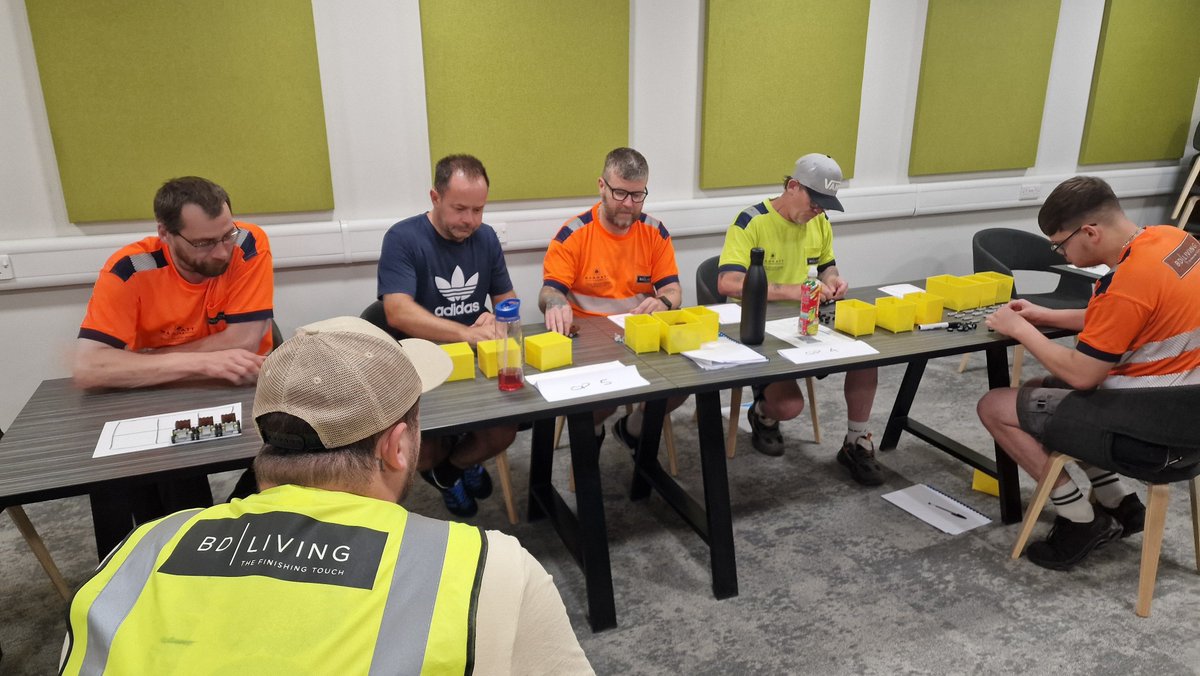
Ever felt your factory's heartbeat? 🏭💚 Lean Coaching ignites a rhythm of growth & efficiency. Ready for change?
👉 Transform with us! buff.ly/2J4Rn3Z
#LeanCoaching #ManufacturingExcellence #OperationalTransformation #LeanManufacturing
2
7
47

5 Apr 2024
🌟 Spark transformation across your operations with the integrated expertise of $BLOCK, $BEYOND, $TRIP, and $PARAM. Transform at @ParamLaboratory, @PlayOverTrip, @GetBlockGames, and @PlayGroundCorp. #OperationalTransformation ✨
4
6

30 Nov 2023
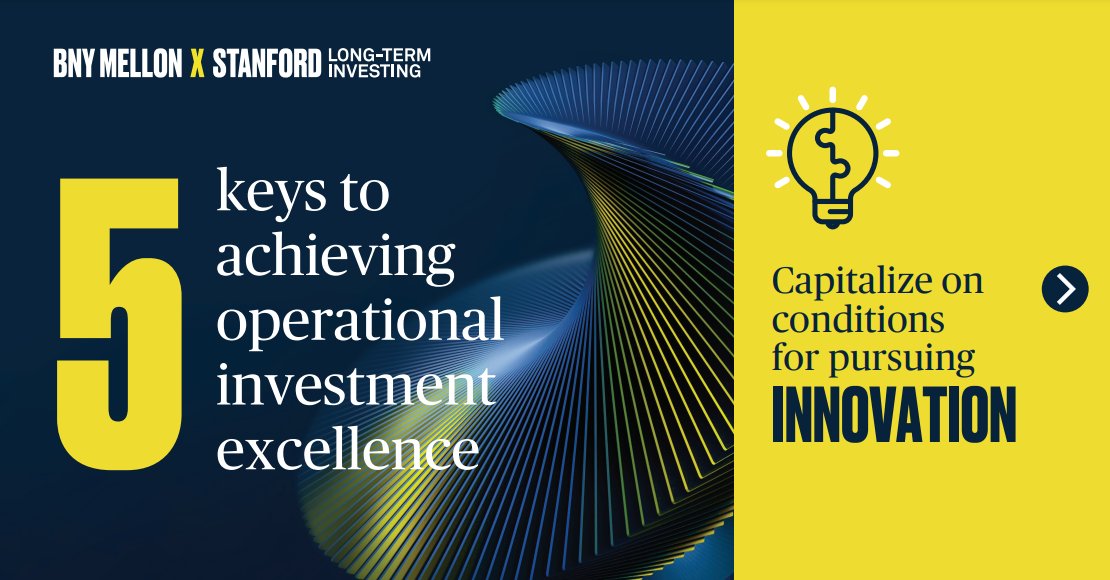
We tackled bold ideas at our inaugural Asset Owner Leadership Summit in London this year.
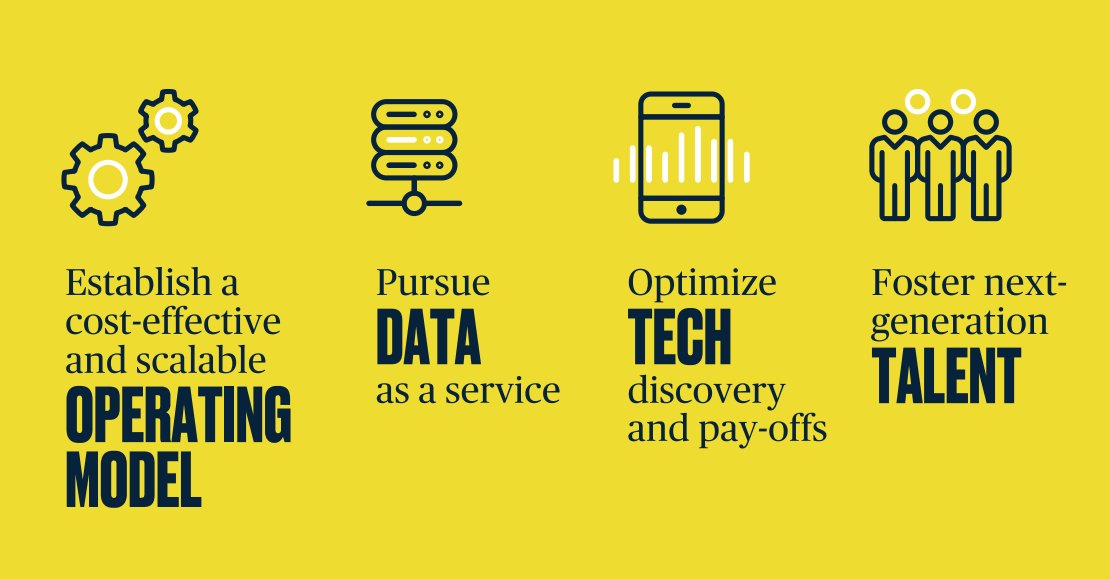
Global asset owners wanting to enhance efficiency should look to transform their operating models by:
➡️Realigning priorities across the organization
➡️Reevaluating investment strategy assumptions
➡️Rethinking processes
Dive deep on these and the five key themes industry leaders identified for achieving operational investment excellence. ow.ly/MMsY50QcSPa
#coo #operationaltransformation #investmentstrategy
3
808

14 Sep 2023
Steer your operations driven by customer location and context with Jodo Digital's Location-share.
From KYC to vehicle assistance
and insurance surveys, redefine efficiency.
#OperationalTransformation #JodoDigital #LocationShare #avhan #digitaltransformation #futurebusiness
2
4
18

9 Sep 2023
Uncover how businesses can magnify efficiency, skyrocket profits, and move beyond mundane tasks.
extractum.io/tpost/2220yfj85…
#AIAutomation #BusinessEfficiency #MachineLearning #CustomAutomation #OperationalTransformation #ProfitMaximization #DataPipelines #EXTRACTUM
1
3
29

Our new #EngineeringBlog series starts today!
In the first episode, Software Engineer Alexander Mundiñano gives you insights on how he is making our Calendar collaborative in real-time using #Redux and #OperationalTransformation:
Read more: blog.optibus.com/how-im-maki…
#developers
2
2
184

26 Sep 2022
We recently helped Prayagraj Power Generation Company Limited set forth on the path of digitalization & generate value out of it. Contact us for Digitization. ecubix.com/
#ecubix #OperationalTransformation #PowerIndustry #PowerGeneration #digitaltransformation #IOT

3
9 Feb 2022
#NelsonHall’s #Pharmaceuticals/#LifeSciences #OperationalTransformation Report focuses on how vendors delivering industry-specific services to pharmaceuticals/life sciences clients meet their requirements...
#PharmaLSOps
9 Feb 2022

Just published a market analysis for my "Pharmaceuticals / Life Sciences Operational Transformation project". Subscribers can access it here: tinyurl.com/2p9aeuve #PharmaLSOps @NHInsight
1
3
3 Feb 2022
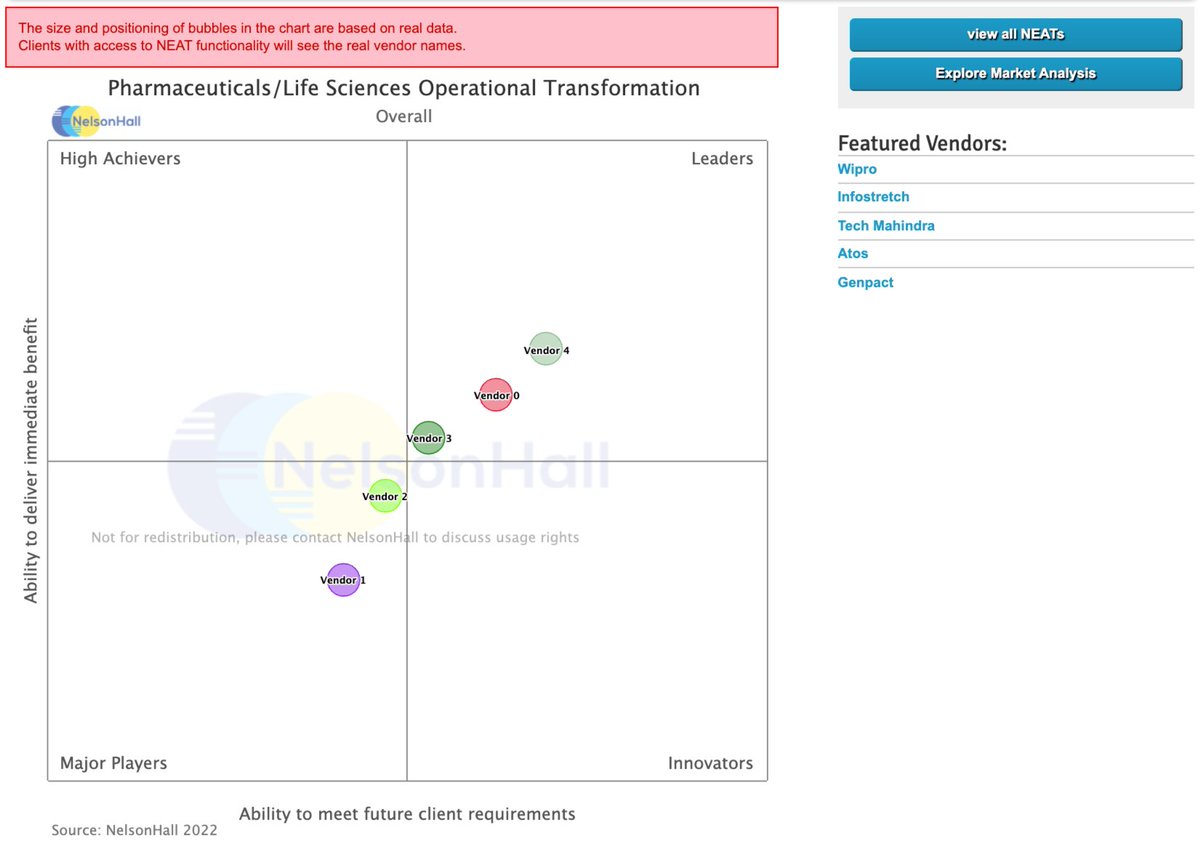
A new #NelsonHall Vendor Evaluation & Assessment Tool (#NEAT) by @AlisaS_NH analyzes the performance of vendors offering #operationaltransformation services in the #pharmaceuticals/life sciences sector:
research.nelson-hall.com/sou…
2
2

28 Jul 2021
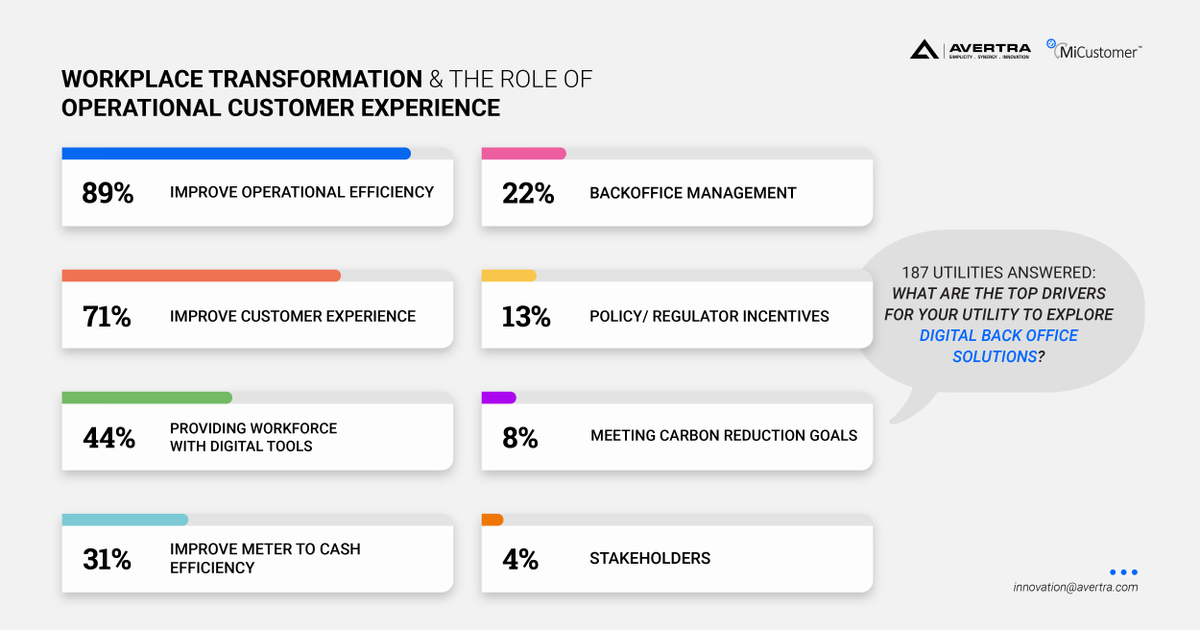
For our latest #report, @Zpryme and #Avertra surveyed 187 #utilities to further explore how these #digital utilities will harness the power of #workplace and #operationaltransformation. Take a sneak peek at one of the most powerful figures👇
#MiCustomer #cx #ux #AI #partner
2

1 Jul 2021
Architas, a London headquartered global asset manager, has selected NeoXam’s DataHub platform to support an IT and operational transformation programme
Details: ow.ly/5pV450FmAmi
#ITTransformation #operationaltransformation #assetmanagement @architasmm @neoxamsoftware
2
2

5 Apr 2021
Interested in realtime-able text editors like SlateJS or @quilljs?
Hacked this project together to show myself that they can be run on a total order broadcast.
* Apply ops 1 by 1
* Play with transformation order
github.com/SamBroner/Quill_I…
#Realtime #OSS #OperationalTransformation
1
1

10 Nov 2020
Our @AlvarezMarsal #PrivateEquity #PerformanceImprovement website is live! Learn more about who we are, what we do, & our unique differentiators as a team: alvarezandmarsal-PEPI.com #FinancialServices #OperationalTransformation #Leadership #ValueCreation
5

ETCIO | Commvault Expands Global Center of Excellence in India #OperationalTransformation #DataRecovery #GlobalCenterOfExcellence #MicrosoftAzure #Commvault #CloudComputing cio.economictimes.indiatimes…
2
2

6 Oct 2020
Curious to know how we drive operational excellence and cost savings for #financial services firms?
Email us at transform@epiqglobal.com to learn more.
#operationaltransformation
3