
Generally Happy. Founder @bettermoney_co | prev: investor @a16zcrypto, MIT, eng @Microsoft
Joined January 2018
- Tweets 2,681
- Following 1,643
- Followers 8,611
- Likes 11,852
193 Photos and videos








Pinned Tweet

Apr 1
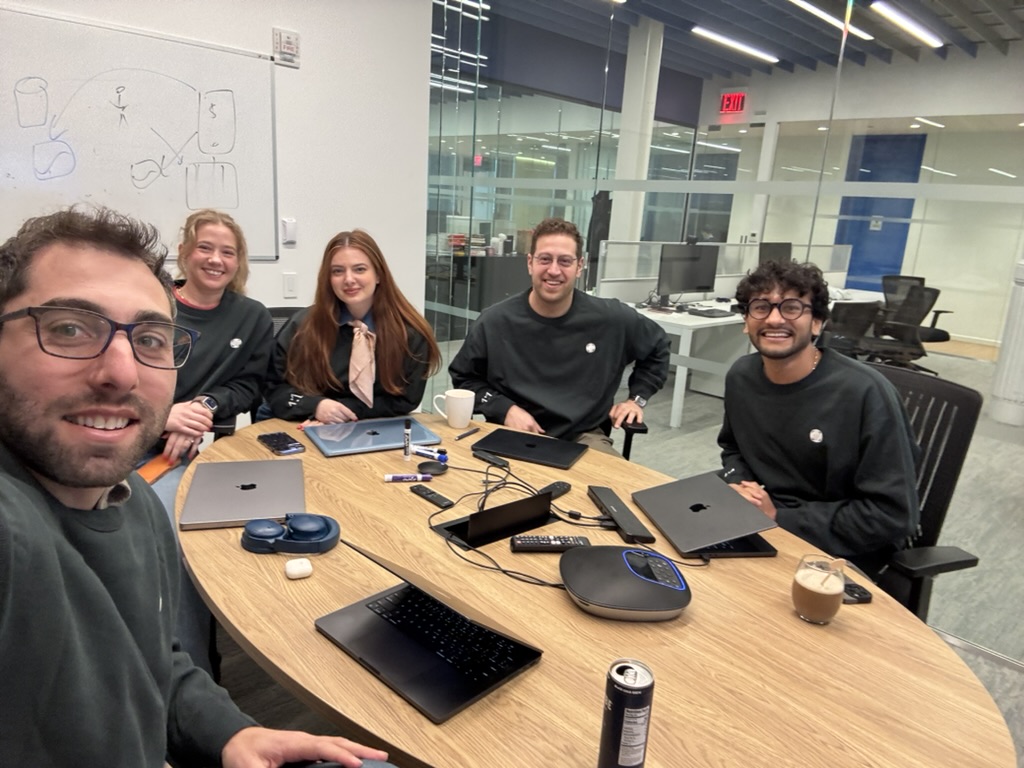
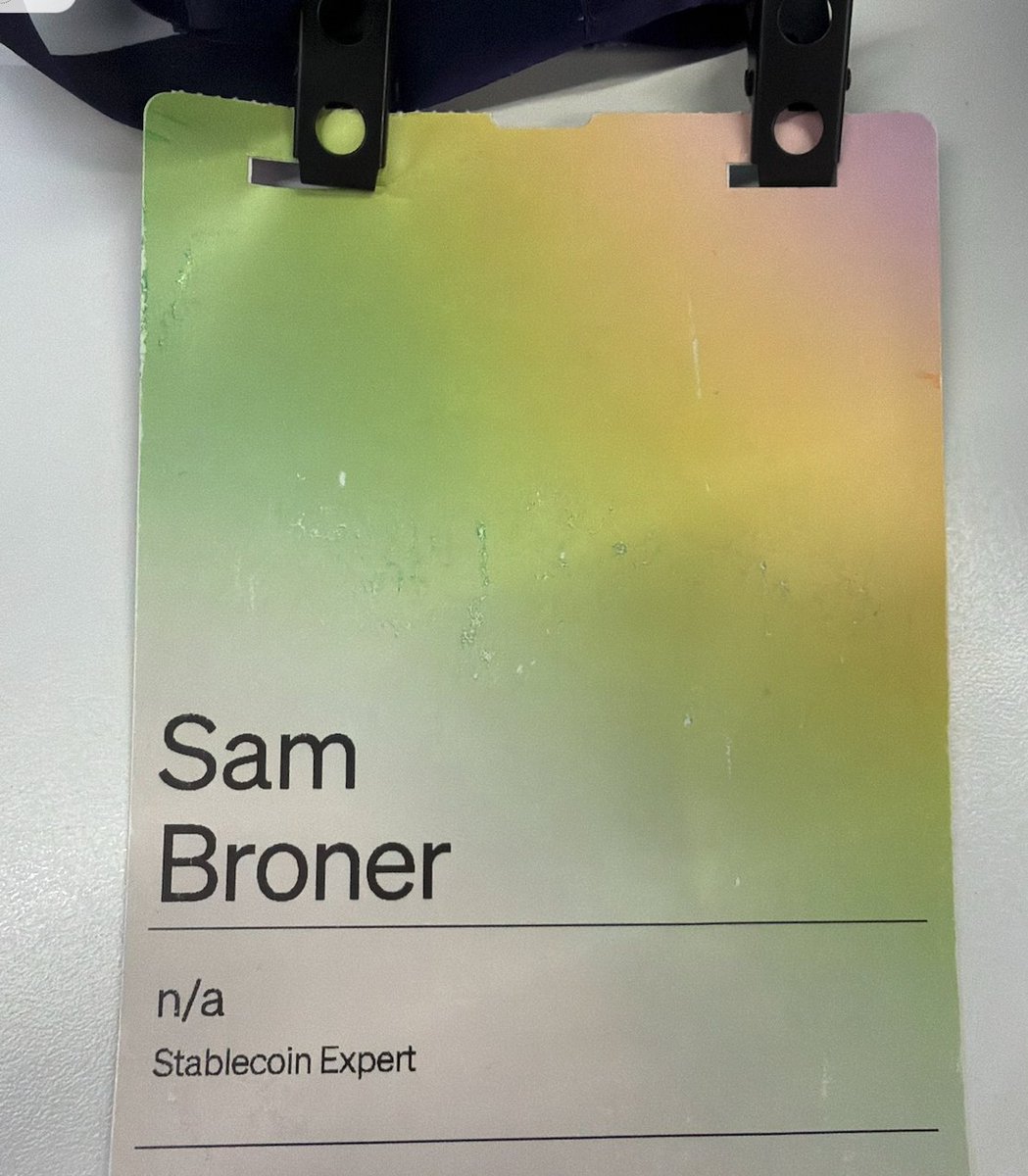
Well, stablecoin expert was short lived. We're building @bettermoney_co and it's been a long time coming.
We're hiring across the board - especially engineers with payments, ledgering, and distributed systems experience. DM me if you want to build better money.
ALT Sam Broner leaves a16z to become a stablecoin expert, with recent news highlighting his new role and the company's hiring efforts.
24
5
164
11,787
Jun 11
Has anyone found the perfect father stretch my hands edit to the OG put back?
Need to watch it 20 or 30 times.
1
320
Sam Broner retweeted

We're looking for a Security Engineer to own code and operational security as we scale. Come talk to us if you have experience in payments or fintech, and want to help bring better money to the world.

2
2
11
1,325
Jun 7
Someone just hit me with "hello fellow coder" while I was explaining a project to my wife. Was a very nice guy, wife loved it.
1
15
1,361
Jun 6
Apple needs "DND except this one person" I'm expecting a call from... available without 10 clicks and screens.
1
8
1,071
Jun 3
Couldn’t agree more.
Jun 3

classic crypto users were fine with fees and slippage in order to do cross-chain swaps and transfers
but everyday fintech users don't want fees for moving USD-denominated stablecoins from one chain to another either for payins, payouts or internal transfers
1:1 stables or die
4
14
3,626
May 31
I have a pretty visceral reaction against people calling Manhattan "the city" or referring to going to manhattan as "going into town" Maybe cuz I grew here? Everyone knows we count all 4 boroughs.
126
7
223
72,072
May 29
Welcome Connor!
May 29

This is a good opportunity to share that I’ve joined The Better Money Company to help build and scale their stablecoin clearing platform. We’re a small team with huge ambitions - rightfully so, in the Age of Opus. It’s been a blast, and we’re just getting started!
1
22
3,746
May 29
We're officially 200 days into building The Better Money Company. There's much I can't share yet, but plenty I can. We're moving money, clients are onboarding, the team is *growing* and *cooking*. I've never had more fun at work.
Build baby build!
12
3
105
9,110
May 26
Many such cases
May 25

Many don't understand how expensive good liquidity for a stablecoin is rn
Paypal paid about $2M in fees to @sparkdotfi in Q1 for its liquidity pairs with major stables, which annualized to about $10M in liquidity fees
That nukes almost all $3.5B TVL $PYUSD profit
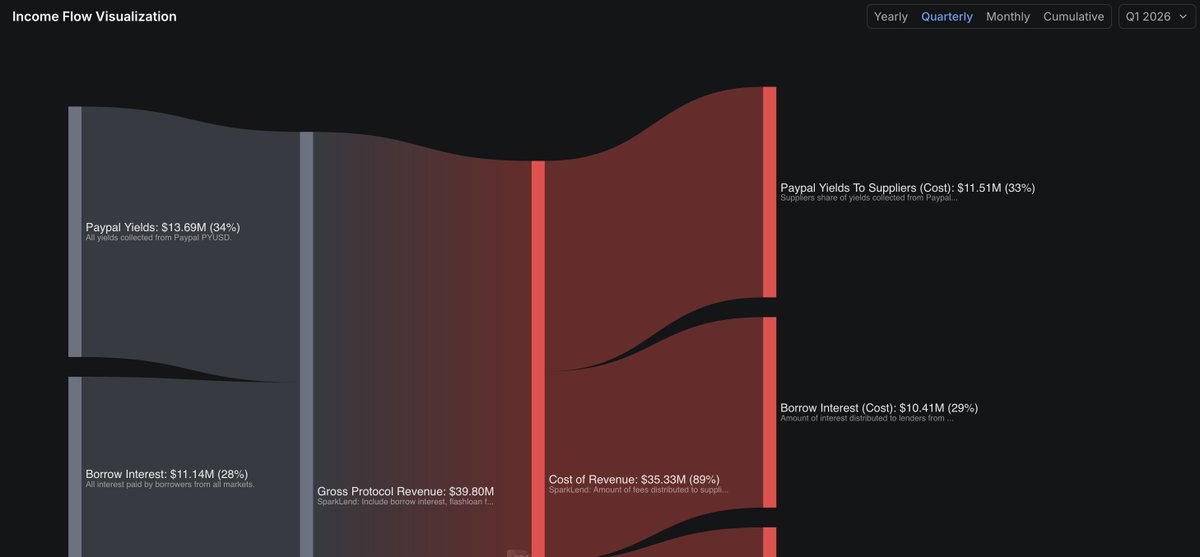
1
1
30
7,602
May 22
I think a lot about agentic payments and have written about it before. My framing is typically, "Will agents be tourists or locals in the bazaar?"
But there's another question: will business or individual customers will spend more at the bazaar? The business can grow with you, but the individual operates off their budget.
Both can be great customers, but the business has growing revenues to spend from.
May 22

Enterprise agent payments will be a far bigger market than consumer says @SamBroner, Founder at @bettermoney_co:
"In the enterprise scenario, you could have an agent that is buying stuff in order to increase revenue. A business development agent that autonomously buys a gift for a lead in order to close more deals. You both have increased revenue and you have agentic payments involved."
Consumer agents spend from a fixed budget. Enterprise agents grow the budget by generating new revenue, then spend more. The compounding loop only exists on the enterprise side.
2
3
42
5,009
May 21
Stablecoin infrastructure was designed for trading, not payments. If you want payment guarantees, reach out to me about @bettermoney_co
May 21

For the past decade, crypto infrastructure has been designed around trading. Exchanges, liquidity pools, and market makers were built to support assets that move in price around the clock. That architecture was necessary to grow the industry, but it does not match how businesses think about payments.
When a company sends money, it cares about certainty. The sender wants to know the exact amount that will arrive and when it will arrive. Treasury teams build forecasts, manage liquidity, and reconcile transactions based on predictable outcomes.
In my conversation with @SamBroner , he explained why this distinction matters.
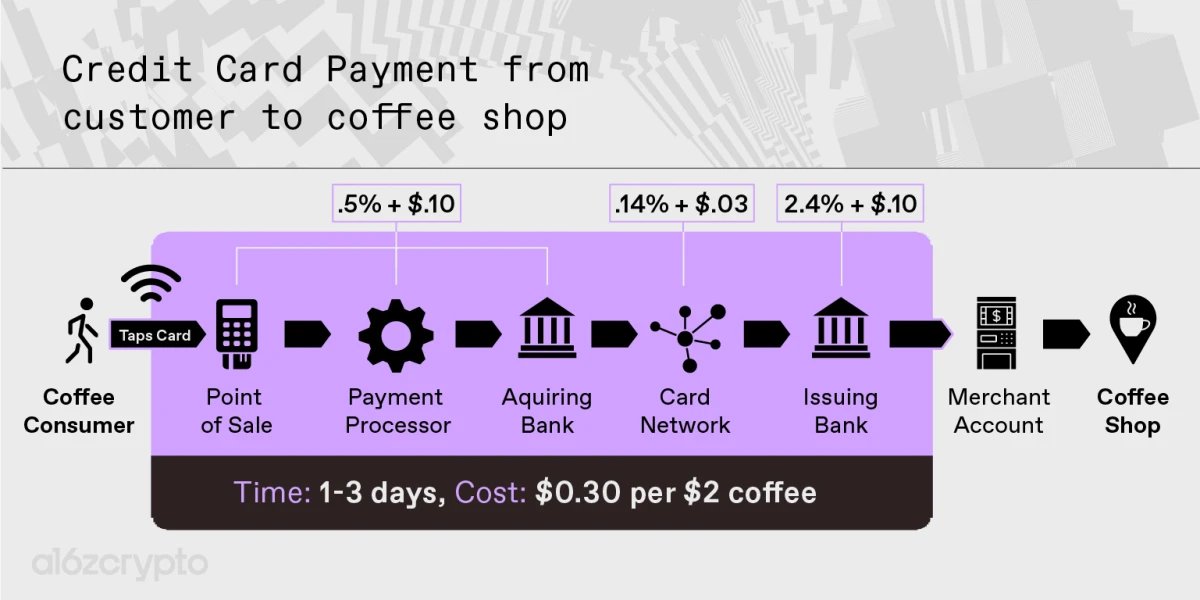
Traditional payment companies are uncomfortable with the idea that moving value between stablecoins should require a trade. Their expectation is much simpler. Money should move from one institution to another in the same way bank transfers work today, with conversion handled in the background according to predefined rules.
His analogy was memorable.
Asking a payments company to swap one stablecoin for another feels unnatural, much like asking someone to exchange Wells Fargo dollars for Bank of America dollars before sending a transfer.
Businesses do not want to think about market mechanics every time they move money. They want infrastructure that absorbs that complexity and delivers a predictable result.
This is why interoperability may become one of the most important layers in the stablecoin ecosystem.
The companies that solve clearing and settlement between stablecoins could play a foundational role in bringing digital dollars into mainstream payments.
@bettermoney_co
3
1
21
2,340
May 19
Two weeks ago I gave a talk at Consensus called "Stablecoins are Better Money." Here's the core of the argument:
Stablecoins adjusted transaction volume reached $9T in 2025, up 87% YoY. They settle in seconds, cost a fraction of a cent to send cross-border, and work 24/7. But why don't they work like money yet?
By almost every measurable dimension, they're an upgrade to how money moves!
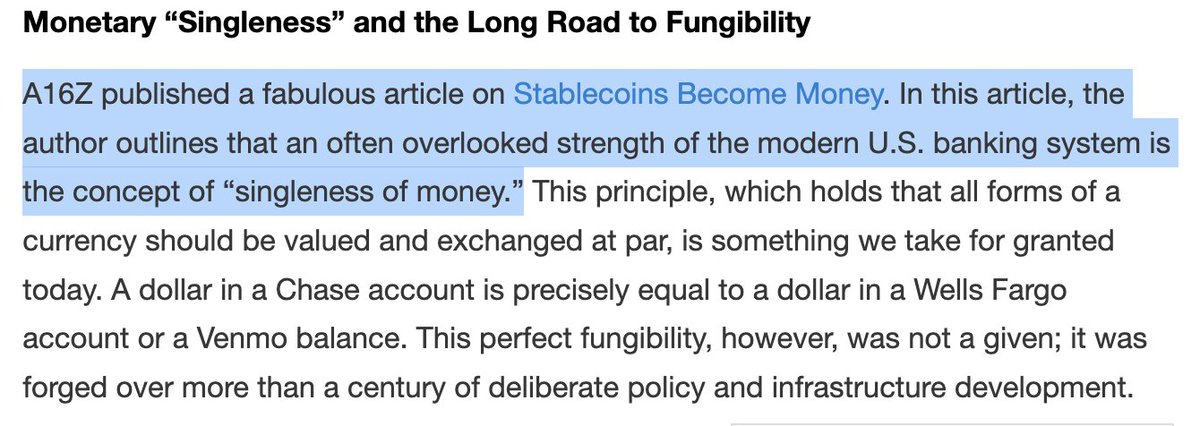
Because they're missing something we take for granted with traditional dollars: the fact that US customers don't *have* to care where they bank! The idea that a dollar is a dollar no matter who issued it or where it lives. Your Chase dollars and your BofA dollars feel identical.
That took decades of infrastructure to achieve.
Stablecoins don't have that yet. New issuers are launching all the time, and that's a good thing. More competition, more innovation, more use cases. The challenge is that each one operates on different chains with different standards, and we still treat dollar-to-dollar stablecoin movement like an FX trade. Payments should be about payments, not trading.
This is not a new problem. Every form of money has gone through this. Banknotes, checks, cards. Each one fragmented, then someone built the infrastructure to make them interoperable. FDIC insurance, regulation, and clearinghouses gave traditional money its singleness. The GENIUS Act is solving for insurance and regulation. The clearinghouse is what's missing.
I love the story of Five Bells Tavern. In the 1770s, London bank clerks were running across the city to settle each other's checks. After realizing this wasn't scalable, and as I can only imagine, a workout, they found a more better solution and started meeting at a pub instead. That informal coordination became the first clearinghouse.
Stablecoins are hitting their Five Bells moment. More issuers are coming. We talk to them every day. Banks, fintechs, and other companies all have reasons to issue their stablecoin: security, compliance, economics, brand. This is the right direction, but it'll count for nothing if we lose the singleness of money.
That's what we're building at @bettermoney_co. Issuers integrate once, reach a network of builders. Builders integrate once, access every supported stablecoin. One piece of the stack that let's people treat stablecoins like money.
Stablecoins are better money.
8
2
64
3,845
Sam Broner retweeted

May 19
The Fastest Path to Agentic Commerce Runs Through Stablecoins
One idea from my conversation with @SamBroner that keeps coming back to me:
One of the biggest questions in agentic commerce is how AI agents will actually move money.
In a recent conversation with Sam Broner, he framed the issue in a very practical way.
When building payment systems for agents, there are two realities to consider. The first is the long-term architecture: what payment model will make the most sense once the ecosystem matures? The second is much more immediate: what can developers use right now?
Today, stablecoins are emerging as the most practical option.
Developers can integrate them quickly, transactions settle around the clock, and payment can be exchanged for goods or services in a single atomic transaction. Once the transfer happens, both sides know the transaction is complete.
That simplicity is extremely valuable in the early stages of agentic commerce.
A developer building an AI agent does not need to design around banking hours or delayed settlement. The infrastructure is already available and programmable.
What I found particularly insightful is that this may only be the starting point.
As the ecosystem matures, agents may be able to access credit and deferred settlement models. An agent could make a purchase immediately while the underlying settlement occurs later between the merchant and the customer, similar to how Net 30 terms work in B2B transactions.
That would allow agents to operate with far greater flexibility than they do today.
Stablecoins are gaining traction because they solve an immediate problem for developers who need a reliable and programmable payment rail. The long-term market may evolve toward more sophisticated models, but stablecoins are giving builders a working foundation today.
This is often how new infrastructure emerges. Adoption starts with the tools that are easiest to use, and those tools create the foundation for more advanced systems.
For anyone following AI, payments, and digital assets, this is an important development to watch.
The systems that enable machines to exchange value could become as foundational as the systems that enable them to exchange information.
@bettermoney_co
3
3
9
901
May 16
Imagine how good Alexander Hamilton would have been at twitter? 51 federalist papers? That's like 50 trillion tweets
3
33
1,848
May 15
Progress: at Consensus 4 people asked me how stablecoins are different than bitcoin 🤦
But BUT!! about a dozen banks asked me how they should shape their stablecoin strategy. Interoperability was one of their biggest open questions. Of course, Better Money can help.
6
41
1,846
Sam Broner retweeted
May 15
What happens when every bank, fintech, and enterprise launches its own stablecoin?
In this episode of the WRAP UP Podcast, I sit down with @SamBroner, the CEO of @bettermoney_co, a former investor at @a16z, and a former engineer at Microsoft, to discuss why he left venture capital to build a stablecoin company.
Sam is building what he calls a stablecoin clearinghouse infrastructure that allows banks, fintechs, and payment companies to swap between stablecoins at guaranteed 1:1 pricing, without relying on thin market liquidity or costly trading venues.
We discuss:
Why stablecoin infrastructure has been built primarily for trading, not payments
How a stablecoin clearinghouse works
Why large companies are launching custom branded stablecoins
The economics behind stablecoin issuance
Stablecoins vs CBDCs
Why stablecoins may become the default payment rail for AI agents
What Sam learned moving from investor to founder
One of the most important takeaways from this conversation is that the future of money may look less like a handful of dominant stablecoins and more like thousands of interoperable digital dollars issued by banks, fintechs, and enterprises. Better Money Company is building the infrastructure to make that possible.
2
5
12
1,612

May 14
I believe my first time telling the story of when I pitched Bill Gates and then Satya on the Fluid Framework in product reviews. Still probably the coolest algorithmic and systems work I've done.
Bill called what we were working on "the dumbest fucking thing he'd ever heard". I sat just to his left and proudly watched as he wrote my name down at the top of a yellow legal pad. Ultimately he supported our work.
Satya was much more forgiving. I must have looked like hell when we first met, although it seemed he remembered me in subsequent meetings. 36 hour sprint to a working demo, but I had sit cross legged, sweaty below a glass podium (why glass??) so I could modify a couple of configs live during the demo to get the thing working. I remember him asking me if it was a good idea to demo the thing, and I think I said, "Yeah, it's pretty cool"
Anyway, great to join @dr3wrogers and the @stabledash team to do the deep dive on @bettermoney_co. I'm doing stablecoin payments now, but the problems of sync, consensus, and correctness remain core to the solution. As well as a love of things that make a big impact through small improvements to every day experiences.
Listen in below!
May 14
.@SamBroner spent years at @a16zcrypto studying hundreds of stablecoin-focused startups.
Mature fintechs, banks weighing their stablecoin strategy, early teams pitching infrastructure plays. The one pattern that kept surfacing: stablecoins were built for trading, not payments.
Before a16z, Broner was an engineer at @Microsoft, where he built the Fluid Framework that helped re-platform Word from desktop to browser. He demoed for Bill Gates two weeks into the project.
Spent time at the Boston Fed's stablecoin initiative during MIT Sloan, angel invested in Cursor before most people had heard of it, and kept circling back to the same problem: moving from one stablecoin to another still works like a trade, not a payment.
That's when he founded @bettermoney_co - a stablecoin clearinghouse. Any stablecoin in, any stablecoin out, at a fixed price, with a guaranteed time of delivery.
Its member issuers include @Stablecoin, @paxoslabs, @withAUSD, @m0, @moonpay, @brale_xyz, and @fraxfinance. Clients include @tryramp, @privy, @turnkeyhq, and @ModernTreasury.
The Better Money Company raised $10 million from @a16zcrypto, @BoxGroup, and @seedtosunflower, and came out of stealth last week.
Broner's point is simple. You don't sell Wells Fargo dollars at a variable price to get Bank of America dollars. Stablecoins shouldn't work that way either.
@SamBroner sat down with @dr3wrogers in Brooklyn.
00:00 - "I was living in Beijing in 2017"
02:24 - Paperwork in payments, and why engineers find it ridiculous
06:49 - MIT Sloan, the Boston Fed, and the stablecoin research scene
09:07 - The Fluid Framework: coding under a podium while Satya watched
13:10 - Why making payments a little bit better matters at massive scale
15:08 - Stablecoins are optimized for trading pairs, not payment flows
17:20 - What a clearinghouse is: from London taverns to hub-and-spoke
21:46 - Guaranteed pricing, guaranteed settlement, compliant clearing
25:41 - "Better money needs to be one to one"
31:52 - Instant payouts for gig workers: a weekend build on stablecoin rails
33:49 - Tourists in the Bazaar: how agents will transact
39:58 - Atomic payments and why faster settlement changes everything
44:01 - Why enterprise agent payments dwarf consumer agent payments
47:38 - Selling shovels vs. going for gold
53:24 - What's next for The Better Money Company
Episode 0048, Presented by @altitude
5
3
70
11,890
May 13
New fav micro-AI optimization... ask Claude to color code your schedule for you by meeting category.
1
6
957