
What Earth Actually Looked Like Before Humans
Scientists call it the Hadean Era—a violent, molten world of pure chaos. But ancient scriptures describe a different reality.
Watch the full Genesis documentary: youtu.be/VZ1hXv17Les
#Genesis #OriginsOfLife #ExploreHist #Creation
1
4
10

🧬☄️ A fascinating discovery is reshaping how we think about our origins.
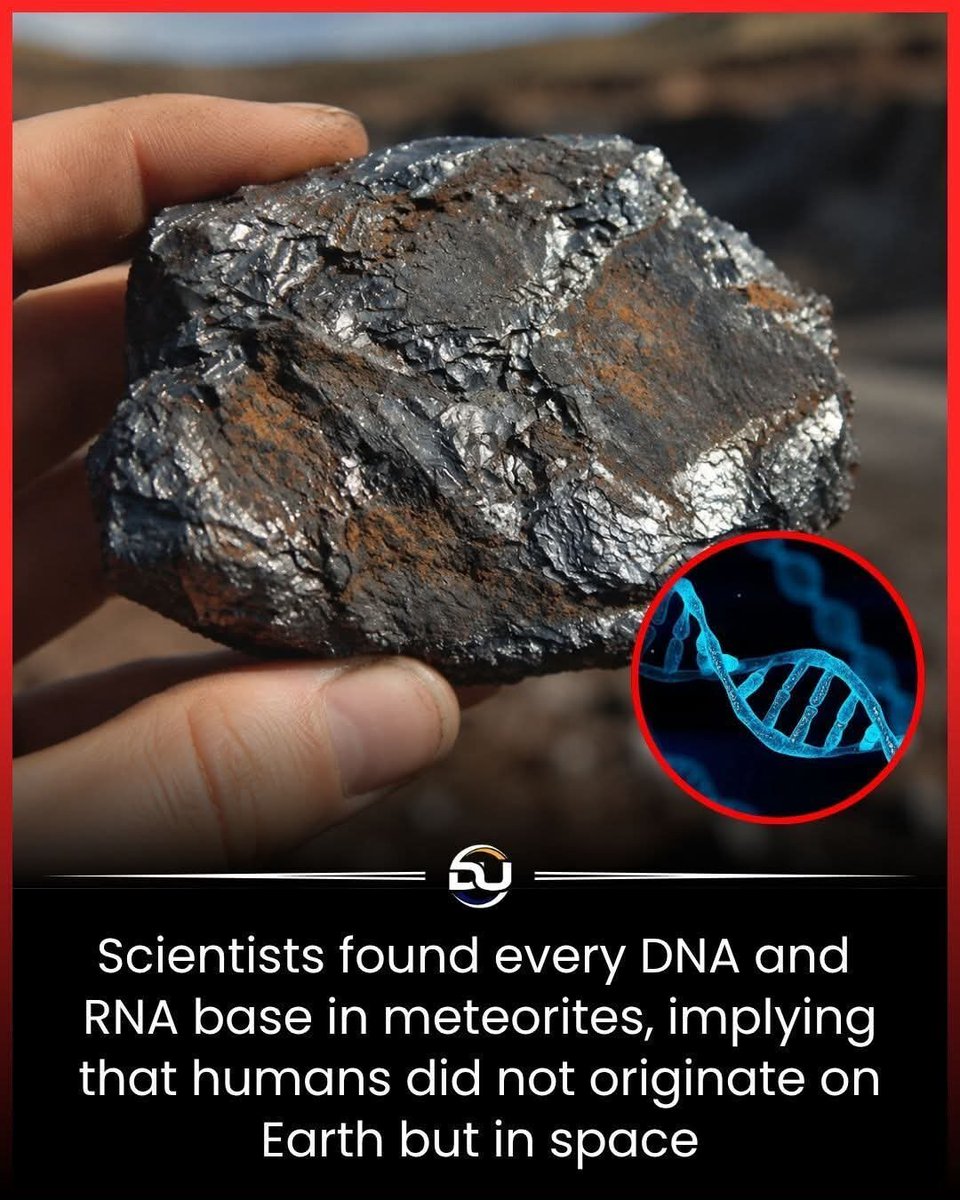
Scientists have detected all five nucleobases that make up DNA and RNA—adenine, guanine, cytosine, thymine, and uracil—in meteorites and asteroid samples. These are essential building blocks of life as we know it. 🌌
While this doesn't prove that life came from space, it suggests that the ingredients needed for life may be widespread across the cosmos and could have been delivered to early Earth by asteroids and comets.
The question is no longer whether the building blocks of life can form in space—we now know they can. The next question is: how common might life be in the Universe?
Perhaps we are, in some way, children of the stars. ✨
#Space #Science #Astrobiology #DNA #RNA #Cosmos #OriginsOfLife
4
27
27
382

A small rock found in the African desert has just handed scientists an extraordinary window into one of the most violent and consequential periods in the history of the Solar System.… dlvr.it/TT0RG8 #SpaceScience #Meteorite #LunarExploration #Astrophysics #OriginsOfLife
26

Jun 10
First version of our new article is out. It concerns our radical idea for a new Great Filter that could solve the Fermi Paradox and the Hard Problem of Consciousness at the same time.
Core idea:
Subjective consciousness - actual "felt experience", qualia - isn’t a side-effect of neurons firing or some computational trick. It emerges as an "intrinsic property" of stable topological attractor states in "whole-organism RNA networks". These are massively complex, energetically expensive, globally integrated RNA systems that must reach a precise physico-chemical stability before phenomenal experience can have real causal power in the world.
This isn’t just a Theory of Mind. It’s a "brand-new Great Filter" - deeper than geology, deeper than intelligence itself.
Why? We extend the recent Stern & Gerya (2024) geological filters (f_oc for optimal continents/oceans f_pt for long-lived plate tectonics) with a molecular/ontological one: only planets that can sustain the exact long-term stability required for these RNA attractor networks develop consciousness. Most “habitable” worlds? They might get Life, maybe even Life of some complexity but no "felt" inner experience or they are something qualitatively alien to us beyond our conscious comprehension.
Some estimates:
We plugged via AI models this RNA-A filter into most recent exoplanet stats (~6,300 confirmed worlds as of mid-2026), Bayesian Drake Equation models, and Sandberg/Drexler/Ord’s (2018) “dissolving the Fermi Paradox” framework … and the expected number of active, communicative civilizations in the Milky Way (N) collapsed to ≪1 or in other words ... single digits.
Earth may not just be rare. It may be truly unique.
This single hypothesis (RNA-A) unifies therefore three of the biggest open questions in science:
1. The Origin of Life (RNA world meets attractor dynamics)
2. The Hard Problem of Consciousness (qualia as topological reality, not illusion)
3. The Cosmic Silence (why the galaxy looks dead)
No multiverse cop-outs. Only rigorous molecular ontological reasoning that turns the Fermi Paradox from “where is everybody?” into “of course nobody is out there becasue almost nowhere the precise RNA machinery that makes minds possible can evolve.”
We ARE ALONE after all ... .
Full preprint:
doi.org/10.5281/zenodo.20626…
We believe that if our RNA Attractor Hypothesis holds to experimental verification - it may spark serious debate across astrobiology, philosophy of mind, and search for extraterrestrial life (@SETIInstitute) because we may have found the deepest filter yet ... .
What do you think - does this finally explain the Great Silence (Fermi Paradox) - drop your thoughts below.
#FermiParadox #GreatFilter #Consciousness #RNA #Astrobiology #OriginsOfLife #PhilosophyOfMind #SETI
1
1
151

That 1953 experiment creating life's building blocks? It had flaws. The atmosphere was wrong, destroying bonds, and a specialized trap protected the results from the real world. #ScienceFacts #OriginsOfLife #Debunked
4
32
578
Jun 7
What if consciousness on Earth didn’t begin in neurons - but in ancient RNA networks that first made quantum orchestration possible?
---
Our "in development" RNA Attractor (RNA-A) hypothesis [Kukier & Noirmont, 2026 doi.org/10.5281/zenodo.20559…] argues that qualia are not epiphenomena or computational side-effects. They are the stable topological states of whole-organism RNA networks - emergent from deep energy basins, inter-tissue percolation, and bioelectric coupling.
These networks are biologically expensive, so evolution only maintains them because phenomenal experience itself has causal power (pain hurts → you move; value guides long-term behavior). No functional zombie survives selection.
This directly extends Orch-OR (Penrose–Hameroff).
Orch-OR locates non-computable conscious moments in orchestrated objective reduction inside neuronal microtubules. But Orch-OR has always needed a biological “orchestrator” - something that selects, sustains, and integrates quantum coherence across the organism, not just inside one cell.
RNA attractor topology supplies exactly that missing layer:
- It evolved from prebiotic chemistry (RNA World) under Earth’s specific long-term stable physico-chemical conditions.
- It provides global, organism-scale integration via exosomes, bioelectric fields (ANXA6-like coupling), and conformational dynamics that could modulate or protect microtubule quantum states.
- Because qualia are identical to the attractor’s stability, the network is under direct selective pressure to maintain the very conditions that allow orchestrated quantum computation to matter for survival.
In short: RNA attractors may be the evolutionary and organismal scaffold that first made Orch-OR-style quantum consciousness selectable on Earth. Microtubules didn’t appear in a vacuum - they appeared inside organisms already organized by RNA topologies that had already solved the problem of making experience causally efficacious.
This also sharpens the astrobiological implication: the precise, multi-billion-year window of stability needed for both complex RNA attractors and quantum-coherent cytoskeletons is extraordinarily rare. Most “habitable” worlds may never reach it.
Now one hypothesis links prebiotic chemistry → RNA attractor topology → quantum orchestration → the rareness of consciousness itself.
Does this finally give Orch-OR its missing evolutionary and whole-organism foundation?
#Consciousness #OrchOR #QuantumBiology #RNA #OriginsOfLife #FermiParadox
We have just submitted our paper on this to one of the leading journals ... if it is accepted, we will be on the search for serious collaborations ... 🙂
---
You can read basic concepts underlying out article here:
Kukier, P., & Noirmont, M. (2026). Hypothesis: Beyond the Neural Correlates - Consciousness as Emergent Property of Whole-Organism RNA Attractor Networks (Version v2.0 and above). Zenodo. doi.org/10.5281/zenodo.20559…
1
3
130

I am currenrly working with protocells, fatty acid based vesicle systems and their dynamics. Would love to mingle with the other Astrobiologists on X.
#Astrobiology #OriginsofLife #Protocells
1
3
110

May 23
An #Unusual Combination of #Geological #Phenomena on the #Seafloor: #Hydrothermal #fields discovered in close proximity to colder #gasareas off #PapuaNewGuinea, exhibiting exceptional #biodiversity.
#Hydrothermalfields on the #deepsea floor constitute extraordinary #habitats for a diverse array of #species, featuring specialized adaptations to what are, fundamentally, rather hostile living conditions. When seawater penetrates the Earth's crust, where it is heated by magma to temperatures exceeding 400°C before re-emerging, so-called "#blacksmokers" or "#whitesmokers" are formed. The color of the billowing plumes depends on the elemental composition of the substances dissolved in the depths by the superheated water, which now jet out onto the seafloor surface. A wide variety of minerals are expelled here, substances we would typically perceive as unpleasant and hostile to life, primarily sulfides and metallic salts of copper, zinc, iron, manganese, or gold. And yet, this environment is typically teeming with life, a highly specialized and abundant community of #organism species. #Microorganisms, such as #bacteria, engage in a unique form of energy generation known as #chemosynthesis. In doing so, they serve as the foundational food source for a #foodchain that provides a veritable feast for a wide diversity of organisms.
Hydrothermal fields are of scientific and frequently also of applied significance. The specialized biological communities found there can vary from field to field and may therefore be unique. They often enrich #biodiversityresearch, particularly when #newspecies are discovered. Moreover, hydrothermal vents are considered potential candidates for sites where the #originsoflife may have evolved.
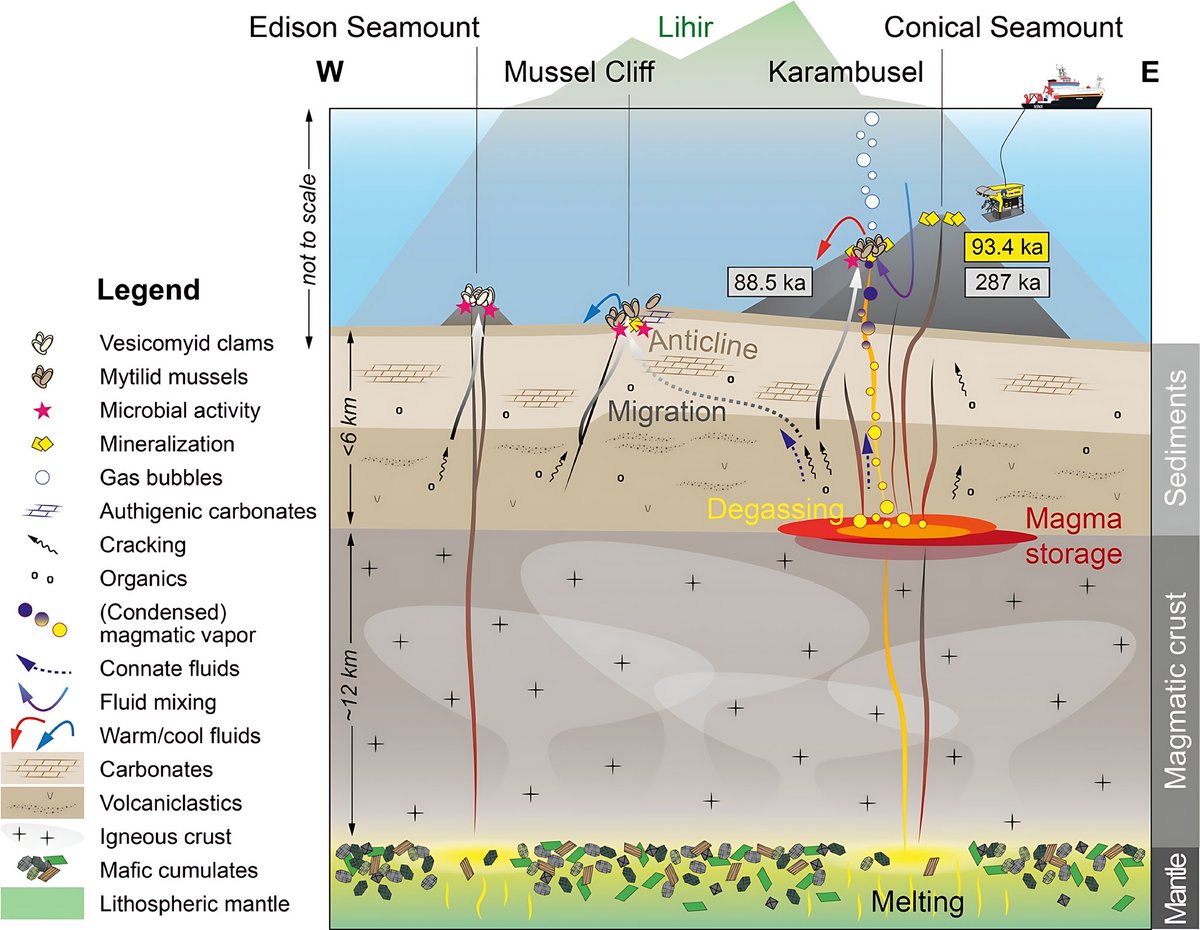
The authors Ph. A. Brandl et al. (2025) have discovered a novel hydrothermal field on the flank of Conical Seamount, located near #Lihir #Island in Papua New Guinea (Western Pacific). This field is distinguished by a unique feature: in the immediate vicinity of hot, bubbling hydrothermal #vents, cool gas is also being emitted, primarily in the form of #methane, though other #hydrocarboncompounds are present as well. The researchers have named this field, discovered at a depth of approximately 1,300 meters, "#Karambusel." They chose this name because, amidst the complex biodiversity that densely populates the area, #mussels of the genus #Bathymodiolus (#Mytilidae) are particularly abundant. In #Tok #Pisin, the predominant #Creolelanguage in Papua New Guinea, the word Karambusel means simply "mussel."
The researchers anticipate that the biological composition of the Karambusel field will host new, still unknown species.
Cool #gasseeps and hot vents do not typically occur side by side. The researchers attribute this unique characteristic of the hydrothermal field to the fact that the Conical Seamount contains layers of organically enriched sediment; the heat from underlying magma breaks down these sediments into methane and other hydrocarbon compounds. At the very same location, hot fluids, characterized by complex chemical compositions, are forced upward by this same heat source. The ascent of gases and fluids occurs via the same transport pathways, resulting in the unusual structure of the hydrothermal field.
According to the authors, however, this extraordinary ecosystem is already under threat,cspecifically from rather nearby deep-sea #mining operations targeting gold and similarly valuable minerals.
© StefanFWirth, May 2026, Berlin
Reference:
Ph. A. Brandl et al. (2025):
doi.org/10.1038/s41598-025-1…
Figure:
#Illustration of the volcanic, venting, and seepage systems across Edison Seamount, Mussel Cliff, Karambusel, and Conical Seamount. Volcanic Ar-Ar ages are shown in grey boxes; U-Th ages of sulfides are shown in the yellow box. Ph. A. Brandl et al. (2025), licensed under creativecommons.org/licenses…
3
3
74
361

May 18
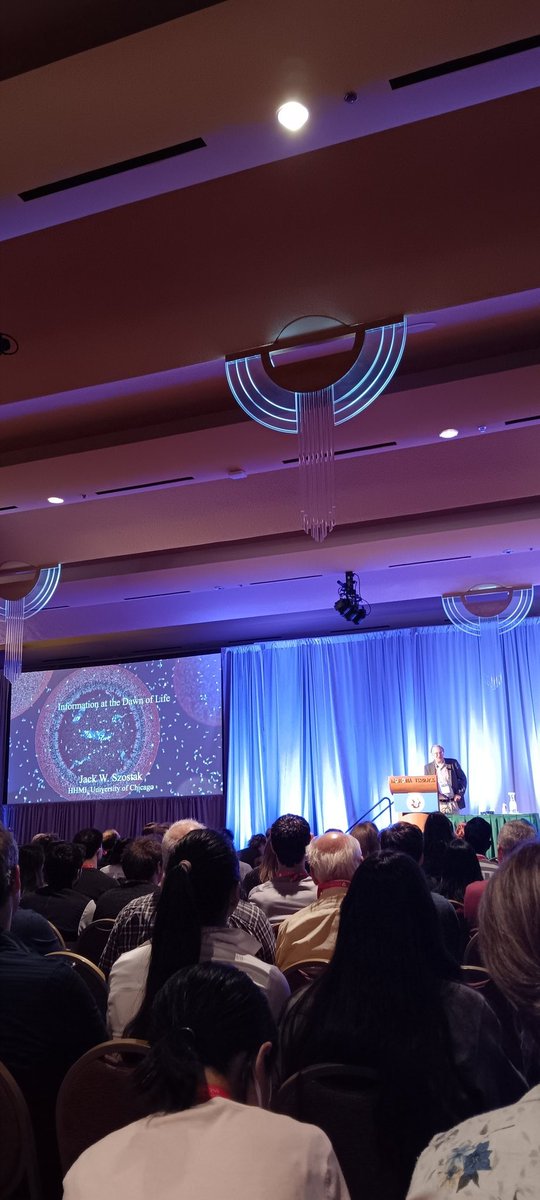
Excited for the opening of #AbSciCon26! Kick starting with Jack Szostak talk " information at the dawn of life" #originsoflife #astrobiology
2
4
524

May 12
Thanks @NASA for supporting our work and for this wonderful press release on the study:
science.nasa.gov/science-res… #astrobiology #originsoflife
3
3
24
1,725

Apr 14
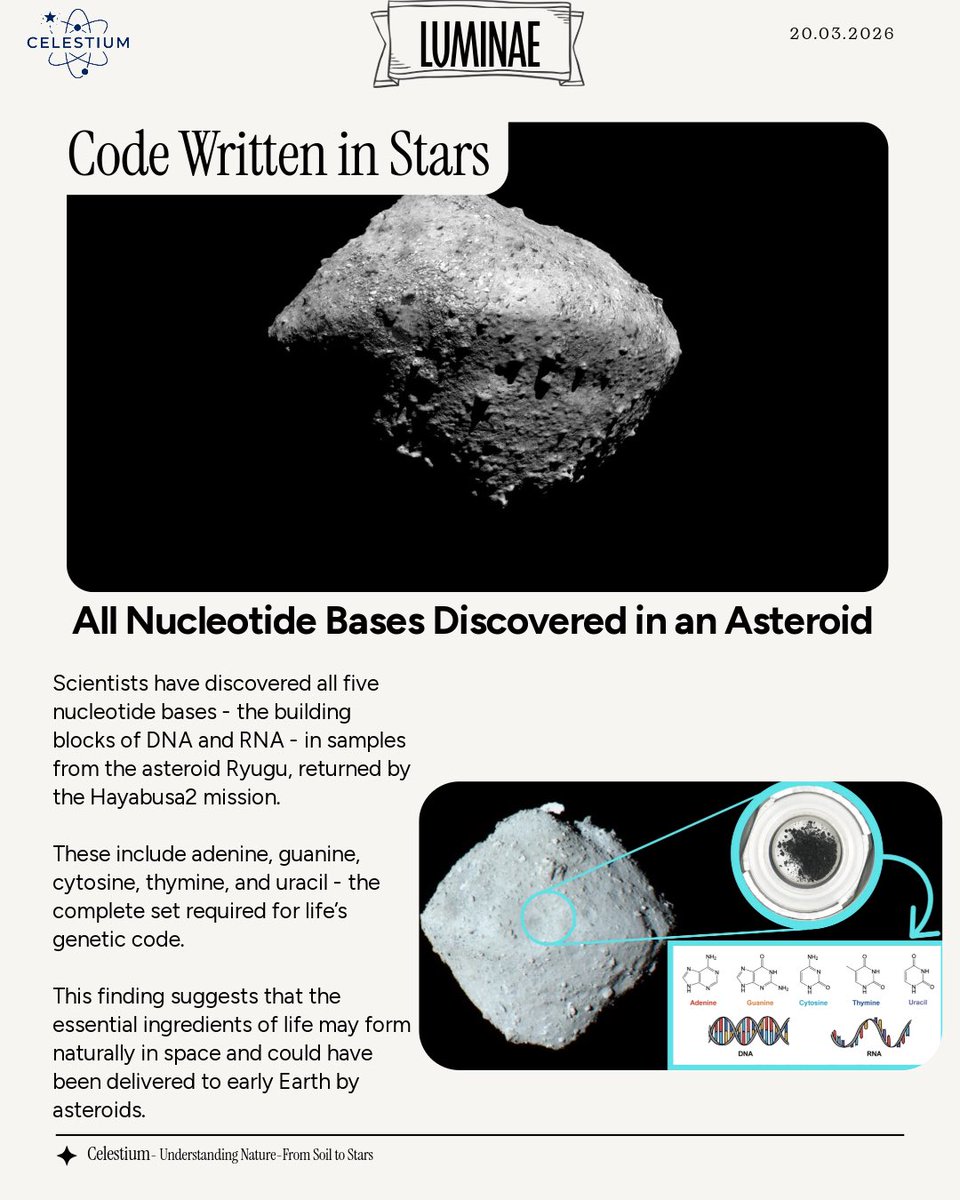
Code Written in Stars
All five nucleotide bases of DNA and RNA have been found in an asteroid sample.
The ingredients of life may have come from space.
#Astrobiology #SpaceScience #OriginsOfLife
2
19

If God created everything in one burst…
Why does life appear in gradual stages in the fossil record? 🪨
From simple ➡️ to complex.
Step by step.
Coincidence… or evolution? 🧬
Check out “The Atheism Delusion” to find out.
saviorofmankind.com/wp-conte…
#Ahmed_Alhasan #Atheism_Delusion #Savior_of_mankind
#EvolutionDebate #Evolution #FaithAndScience #OriginsOfLife
#Geology #ScienceAndReligion
3
6
15
164

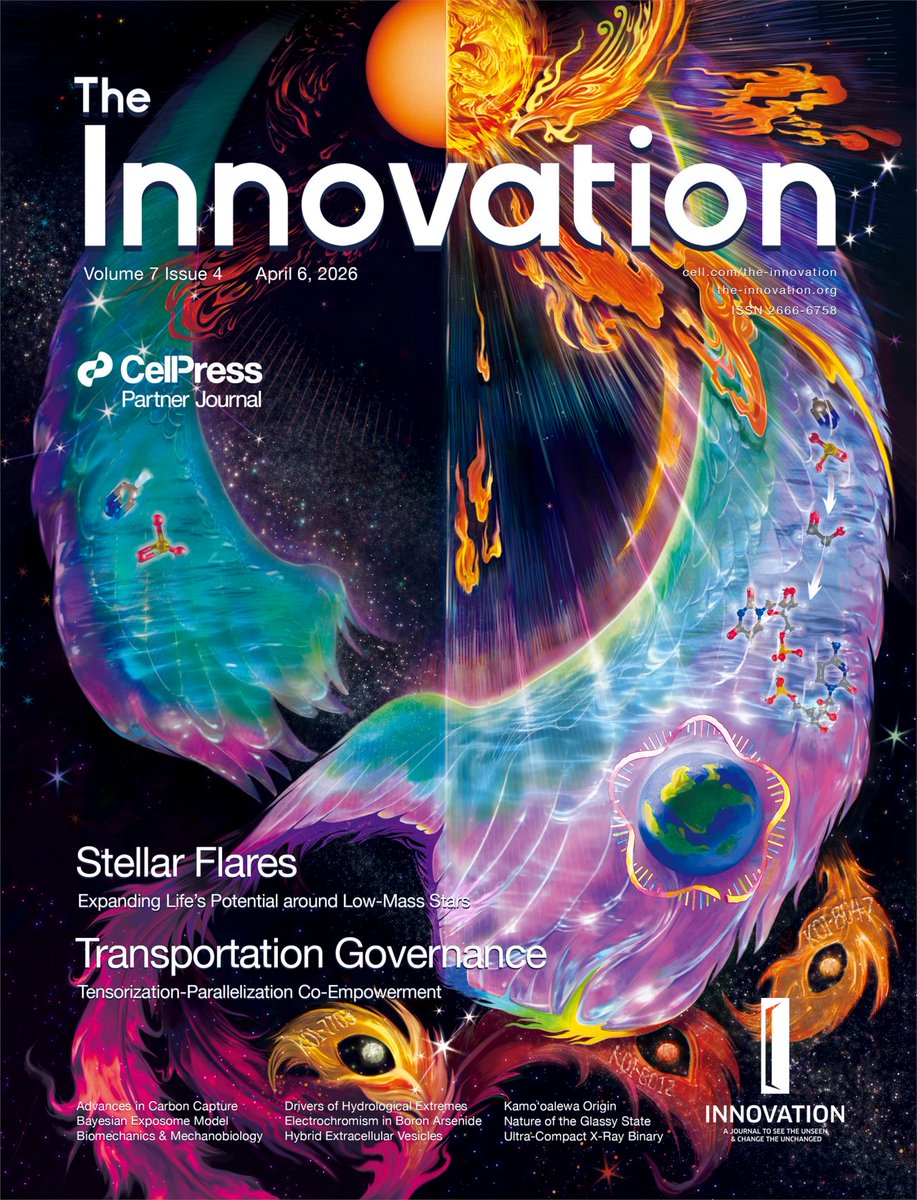
Check out our latest issue in @The_InnovationJ!!! Volume 7, Issue 4 is now online!
cell.com/the-innovation/curr…
#transportationsystem #technologies #ScientificCollaboration #physics #brainmachineinterfaces #climate #carbonneutrality #NuclearEnergy #sustainability #OriginsOfLife #medicine #Cancer #bioimaging #CleanEnergy #exposome #astrophysics #carboncapture #PublicHealth
8
10
1,212

Mar 24
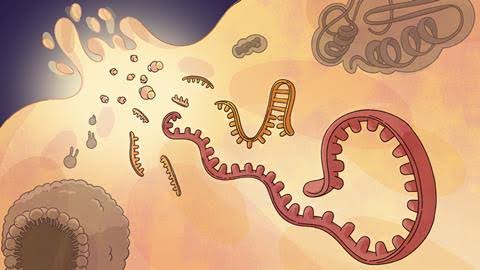
🔬 A ribozyme that can copy itself and its complement has been synthesized, supporting the “RNA world” origin‑of‑life hypothesis.
Could this be new evidence for how life began on Earth?
#OriginsOfLife #Biochemistry
1
3
26

Mar 18
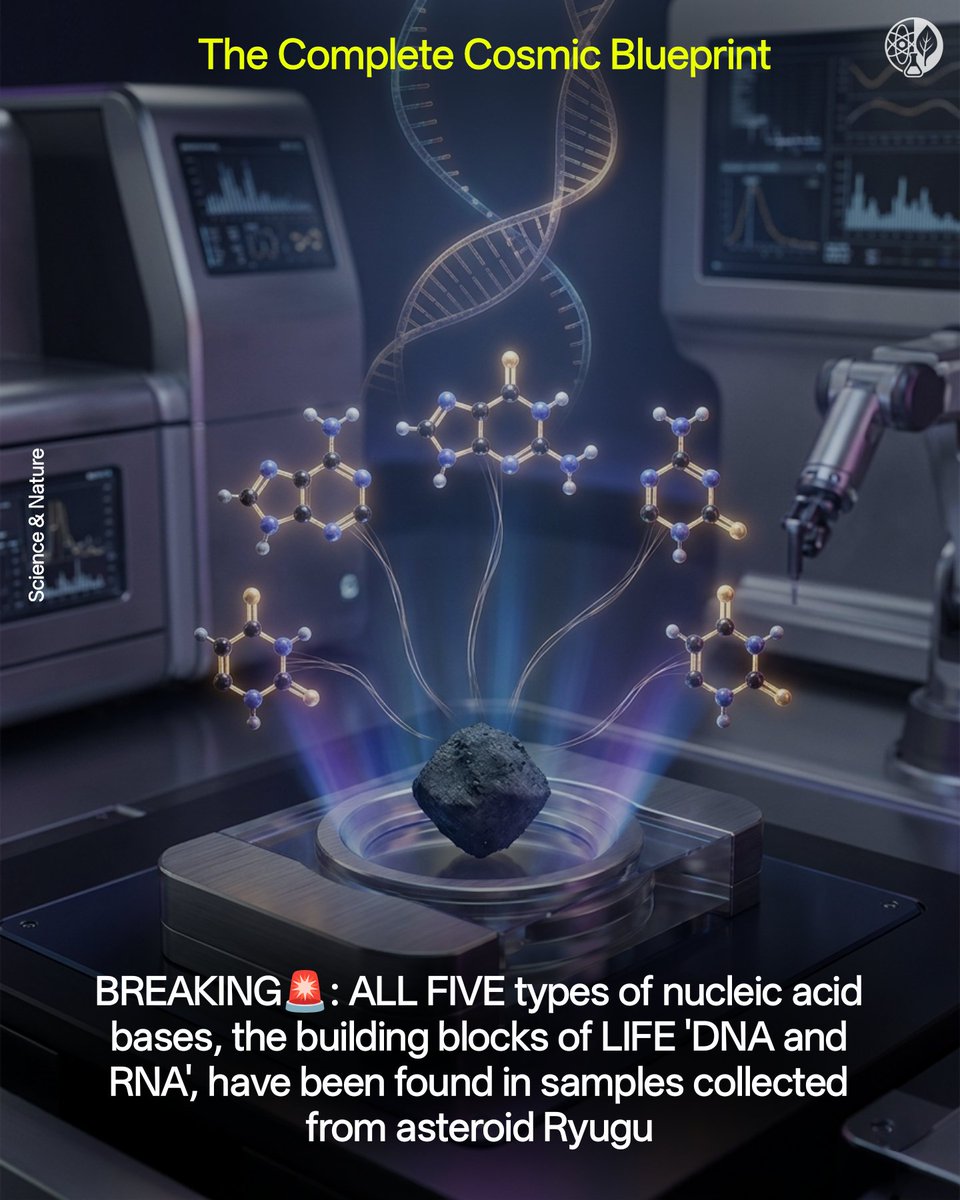
A paradigm-shifting discovery has just emerged from deep space. For the first time in history, scientists analyzing pristine samples returned from asteroid Ryugu have confirmed the presence of all five canonical nucleobases—the fundamental 'letters' that write the genetic code for all life on Earth.
These five building blocks are the essence of DNA and RNA:
🧬 Adenine (A)
🧬 Guanine (G)
🧬 Cytosine (C)
🧬 Thymine (T) (Specific to DNA)
🧬 Uracil (U) (Specific to RNA)
Previously, some of these bases were missing from meteorites or samples, leaving a gap in the puzzle. The pristine Ryugu sample, returned by Japan’s brilliant Hayabusa2 mission, changes everything. It confirms that the complete molecular toolkit needed for life exists beyond Earth, forged in the harsh environment of interstellar space.
This discovery significantly strengthens the hypothesis that the raw ingredients for life were delivered to ancient Earth by carbon-rich asteroids, rather than forming solely on our young planet.
We are, quite literally, made of star stuff.
This bridges the gap between astochemistry and biology. It means the recipe for genetic material might be common across the cosmos. This finding is a foundational milestone in the search for extraterrestrial life, guiding exactly what (and where) we look for signs of biology beyond our solar system.
The universe is not just compatible with life; it seems to be actively building it. Where do you think we will find the next sign of life? Let’s discuss in the comments!
Journal Reference: Koga, T., Oba, Y., Takano, Y. et al. A complete set of canonical nucleobases in the carbonaceous asteroid (162173) Ryugu. Nat Astron (2026). DOI: 10.1038/s41550-026-02791-z
#Astrobiology #JAXA #Hayabusa2 #OriginsOfLife #ScienceBreakthrough
2
11
785

Short strands of #RNA nearly self-replicate, recreating a possible step in the dawn of #life. In PNAS Journal Club: ow.ly/2QbR50YsUG1
#OriginsofLife #ribozyme #RNAWorldHypothesis
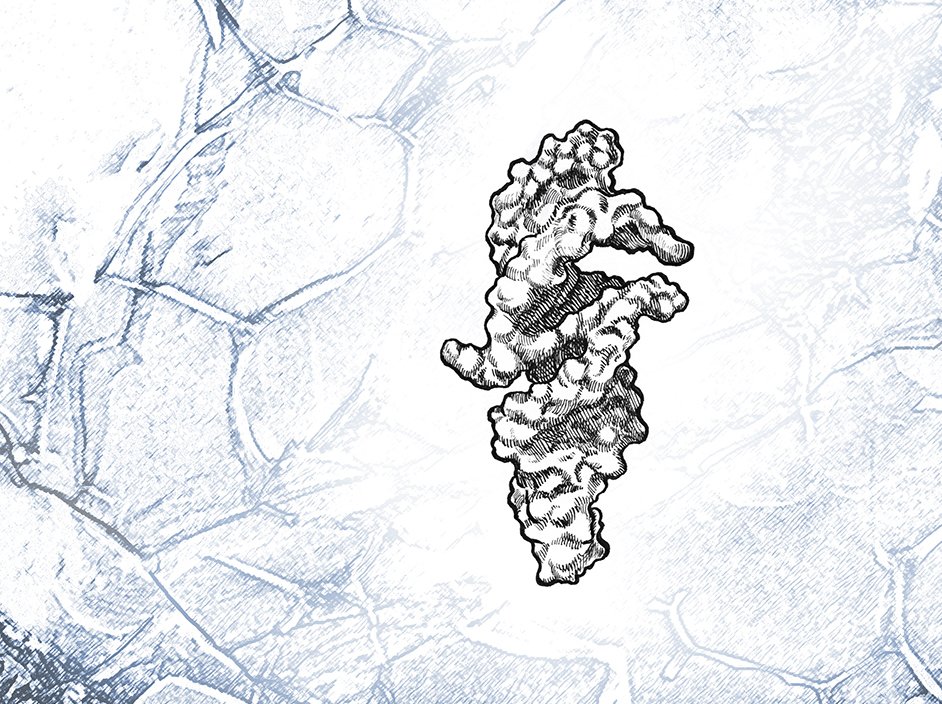
ALT The newly discovered tiny QT45 ribozyme, shown here in an artist’s depiction, helped researchers explore the origins of life. Image credit: Elfy Chiang, microscopy image by James Attwater.
5
14
2,338

Mar 7
CHÚNG TA LÀ NHỮNG MẢNH VỤN CỦA CÁC VÌ SAO 🌠
Trong dòng chảy của thời gian vĩnh cửu, có bao giờ ta tự hỏi: Tại sao giữa hư vô lạnh lẽo của không gian, lại nảy mầm một sinh linh biết yêu thương và suy ngẫm?
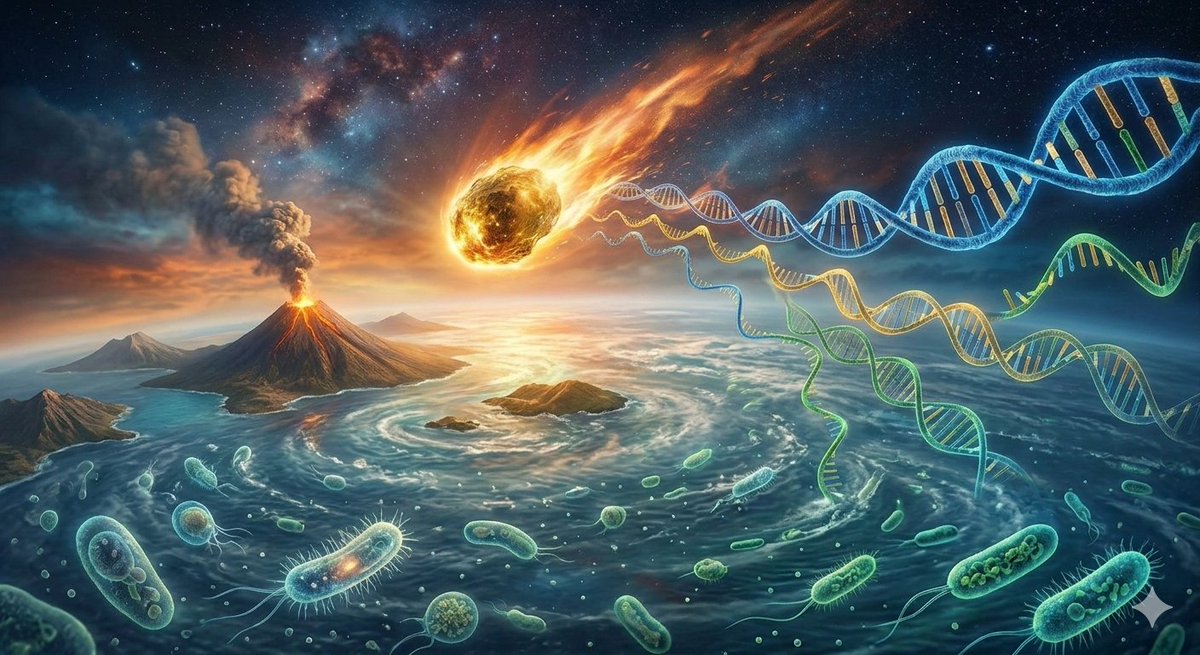
Khoa học của năm 2026 đã cho chúng ta câu trả lời đầy cảm hứng. Mỗi hơi thở của ta, mỗi giọt máu chảy trong huyết quản, đều mang dấu ấn của những vụ nổ siêu tân tinh xa xôi. Những thiên thạch – vốn bị coi là sứ giả của sự hủy diệt – thực chất lại là những người đưa thư thầm lặng của vũ trụ. Chúng mang theo axit amin, nước và cả những mật mã di truyền sơ khai, gieo vào lòng đại dương Trái Đất hàng tỷ năm trước.
Con người không phải là một thực thể tách biệt với vũ trụ. Chúng ta là sự kết tinh giữa tinh túy của các vì sao và sự bao dung của Địa cầu. Từ những phân tử hữu cơ đơn sơ trên các tảng đá không gian, qua những biến động khốc liệt của hành tinh, một giống loài mang "tư duy nhân văn" đã đứng thẳng dậy.
Việc hiểu rằng mình có nguồn gốc từ thiên hà giúp ta trân trọng hơn sự sống này. Nếu mầm sống có thể vượt vạn dặm không gian để đến đây, thì sứ mệnh của chúng ta là bảo vệ "ngôi nhà xanh" này và tiếp nối hành trình gieo mầm đó đến những chân trời mới. Chúng ta không chỉ tồn tại; chúng ta đang viết tiếp chương sử mà các vì sao đã bắt đầu.
#OriginsOfLife #Panspermia #Astrobiology #VũTrụ #TráiĐấtVĩnhCửu #VũHùng
11
1
22
457

Feb 24
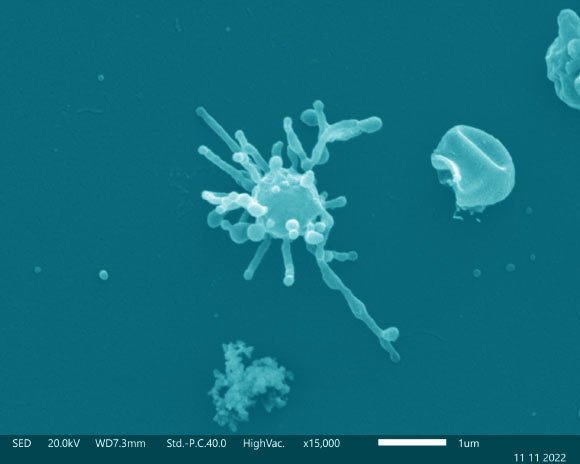
🚨 Mind-bender from deep time: Ancient 'Asgard' microbes (our closest relatives) were using oxygen WAY earlier than thought—before Earth's air filled with it. Genes for aerobic respiration in Heimdallarchaeia group challenge old ideas: Complex life might've kicked off in oxygenated spots near early photosynthesizers. Huge rewrite for evolution timelines. 🔬🌍 #AsgardArchaea #OriginsOfLife #Sciencenews
2
26

Feb 15
In 1973, DNA co-discoverer Francis Crick and biochemist Leslie Orgel dropped a mind-bending paper in Icarus titled "Directed Panspermia".
They argued that classic panspermia (life arriving via spores pushed by starlight or riding meteorites) looks improbable.
Instead, they proposed something bolder: advanced extraterrestrial civilizations could have deliberately seeded Earth with microorganisms—via unmanned spaceships carrying hardy microbes designed to survive the journey and take root here.
Their reasoning? The galaxy is ancient enough for other tech societies to have arisen long before us, and if we could one day launch such "infection" missions to other worlds, why couldn't someone have done it to ours?
They admitted it's speculative—no strong evidence either way—but highlighted clues like the universal genetic code (suggesting a single origin) and Earth's odd reliance on rare elements (e.g., molybdenum) that might hint at an off-world birthplace.
A provocative alternative to life arising from scratch on Earth... from two giants of science.
Read it here: sciencedirect.com/science/ar…
(or free PDF: eaubergine.com/classes/astro…)
What do you think—accidental chemistry or intentional cosmic gardening? 👽🌱
#DirectedPanspermia #OriginsOfLife #Astrobiology
5
3
27
1,273

Exciting update on my ALife pilot repo after 3 days: 194 views, 65 unique visitors! Solid growth for simulating life's emergence via CP violation (LHCb 2025) & eternal scalar field. #ALife #OriginsOfLife

2
49
24
643