
Apr 12
@fionalarkin13 @DannyGemmell659
@LeeDavidson33 @NHSConnectMe @PACEsConnection @connectedbaby
@CrewDarkwood @realdcameron
Community film screening opens trauma and recovery discussion in Ferguslie Park renfrewshire24.co.uk/2026/04…… #RenAcesActionCommunity #TheWellbeingSignpost
1
2
54

18 Feb 2025
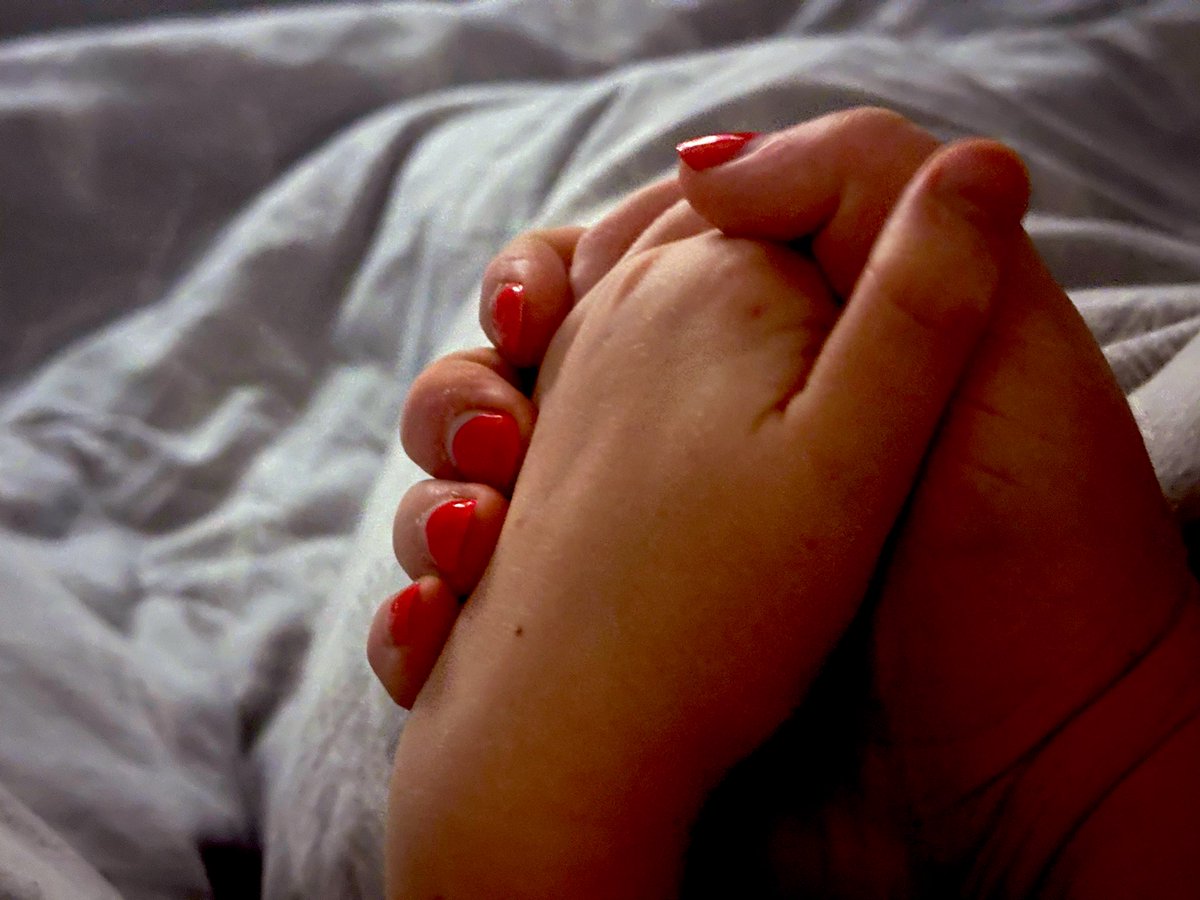
As a migrant of different countries, the sense of home really becomes a feeling ➡️ where you feel safe to be you🩶
1
1
2
101

11 Feb 2025
2
47

11 Feb 2025
Absolutely Tess, creating a safe space for those who may not have one elsewhere is vital 🧡
1
32

11 Feb 2025
Home feels like safety, warmth, and comfort. I know not everyone has that at home, which is why it's so important to bring those feelings into our everyday lives and give those who don't have that, a chance to experience those feelings when with us. ❤️🫂
1
4
70
10 Feb 2025
The small moments of joy are so important 🙌 slowing down and stopping to pause always helps!
2
31

10 Feb 2025
Like a warm duvet on a winters evening, safe, comfortable and welcoming.
1
4
76

10 Feb 2025
Stop more and notice those small moments of joy that we often miss in our busy lives, the ones that make us smile and feel that warm fuzzy feeling inside. That calm our regulation systems, and make us feel safe
1
2
52
10 Feb 2025
Safe. Like being wrapped up in a cosy bear hug, filled with memories to make my heart smile 💜
1
2
84

3 Feb 2025
Grok: Based on the provided X post and the associated image, let's break down the analysis:
Step 1: Understanding the Post Content
on X (formerly Twitter) includes an image and a caption that reads: "When Black People Ruled China.. Tang Dynasty 907 AD. Black History." The post is asking if this represents real black history.The post by@LibertyCappy
Step 2: Analyzing the Image
The image shows a group of people dressed in what appears to be traditional Chinese attire from a historical period, presumably the Tang Dynasty given the reference in the post. The individuals in the image have varying skin tones, with some appearing darker, which might be the basis for the claim in the post.
Step 3: Historical Context
Tang Dynasty (618–907 CE): This was a period in Chinese history known for its cultural and economic prosperity, and it was indeed a time when China was very cosmopolitan due to the Silk Road, attracting traders and travelers from various parts of the world, including Central Asia and Africa.
Presence of Foreigners: Historical records and artifacts from the Tang Dynasty do show interactions with people of different ethnicities. The Silk Road facilitated cultural exchange, including with African merchants, who were often referred to as "Kunlun" in Chinese texts, which could mean people from Africa or Southeast Asia with darker skin.
Step 4: Verification with Web Search Results
Web Search 0 and 4 (Britannica): These entries discuss the Tang Dynasty's achievements in arts, culture, and government, but do not specifically mention Black rulers or significant black populations ruling China. They do mention foreign influences, including pottery with black glaze, which might reflect cultural exchanges rather than governance.
Web Search 1 and 5 (PACESConnection): These mention the presence of Black people in China during the Tang Dynasty, primarily as traders or through the Silk Road. However, they do not support the claim of Black people ruling China; rather, they highlight the presence and integration of African individuals in Chinese society.
Web Search 3 (NewsOne): This source discusses the history of Black inhabitants in China, mentioning the term "Kunlun" used for dark-skinned foreigners, which aligns with the idea of African presence in China but again does not suggest they ruled.
Web Search 2 and 6 (Britannica): These focus on the decline and end of the Tang Dynasty, with no mention of Black rulers, reinforcing the historical narrative that the dynasty was ruled by Chinese emperors.
Step 5: Conclusion
Based on the historical context provided by the web results and the nature of the Tang Dynasty:
Historical Accuracy: There is no credible historical evidence from the provided sources that Black people ruled China during the Tang Dynasty. While there was certainly a presence of Africans and other foreigners, the governance of China during this period was under the rule of Chinese emperors of the Tang lineage.
Cultural Exchange: The image and post might be highlighting the cultural exchange and presence of diverse ethnicities in China, which is historically accurate but misrepresents the political power dynamics.
Misinterpretation: The claim in the post seems to be a misinterpretation or an exaggerated representation of the historical presence of Black individuals in China during the Tang Dynasty.
Step 6: Addressing the Query
's query, "Is this real black history?":To answer@LibertyCappy
No, in the context of Black people ruling China. However, Yes, in the context of Black individuals being part of the diverse cultural tapestry of the Tang Dynasty through trade and travel via the Silk Road.
This analysis shows the importance of distinguishing between presence and rule in historical discussions and emphasizes the need for accurate representation of historical facts.
1
1
585

14 Oct 2024
@Madintheuk @Mad_In_Ireland @CVNIIreland @NOSPIreland @HSELive @NIMHgov @BernardGloster @ciaraglynn83 @galavpsychology @suzannezeedyk @paulinescott222 @ACEAwareNation @PACEsCanada1 @PACEsConnection @CTIPPorg @PPR_Org @KyrieFarm #mentalhealth #psychiatry #trauma #relationships
1
96
19 Jul 2024
@charlie_psych @brigidrussell51 @_LisaCherry @JudgeWren @aclientfirst @rebeccashaeffe @PovertyEdge @PACEsConnection @janeparenting2 @PACEsCanada1 @eperryinsights @DrBlackDeer @RaceReflections #leaders #relating #listening #staff #development #racialtrauma #stress #education #love
1
2
312

14 May 2024
I’m so relieved. Thank you for sharing this here, Robin. 🤗💜
2
13
21 Apr 2024
@Shumela_MDofRLP @IainCorbett88 @KevinNeary12 @paulinescott222 @suzannezeedyk @ACEAwareNation @FritziHorstman @PrisonKind @DeptJusticeIRL @maddow @PACEsConnection @JudgeWren @SeanRedmond20 @REPPP4 @AFNCCF @CVNIIreland @roinnslainte @BernardGloster @GardaTraffic @HSELive #listen
1
3
311

14 Mar 2024
📈 Thanks to Zain Memon for infographic design Funding from @CA_CPR3
May be of interest @KBibbinsDomingo @ACEsAware @PACEsConnection @JessBertholdSF
2
163

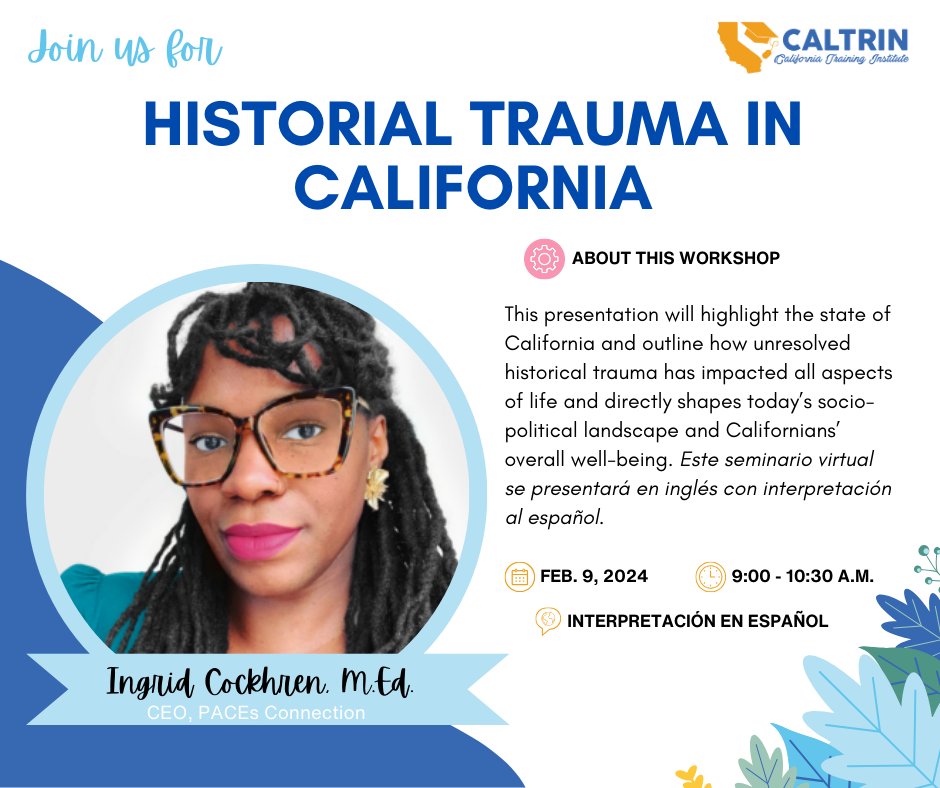
Happening this Friday (2/9), CalTrin welcomes @PACEsConnection CEO Ingrid Cockhren to discuss historical #trauma in #California. Cost is free; register today! >> caltrin.org/.../historical-t…

🚨 NEW TRAINING! Join CalTrin and @PACEsConnection CEO Ingrid Cockhren for this interactive #workshop exploring the topics of treatment of minority populations, immigration, racial discrimination, mass incarceration, and labor exploitation in the state of #California. >> caltrin.org/trainings/histor…
This training will be presented in English with Spanish interpretation. (Este seminario virtual se presentará en inglés con interpretación al español.) Cost is free; register today!
#historicaltrauma #racialtrauma #freetraining #professionaldevelopment #childabuseprevention #childweflare
2
143

ThriveinEDU Live chat with Evan Whitehead - THRIVEinEDU by Rachelle Dené Poth @Rdene915 (podcast) | Listen Notes lnns.co/iaRxDAwWk3l
@PACEsConnection @DanWuori @NeuroNupe17 @suziday123 @MediaBritt @RonBenWho @raehanbobby @Ranal55 @DrMBEdmunds @SchCouns4MTSS @_MrManifest

1
2
263

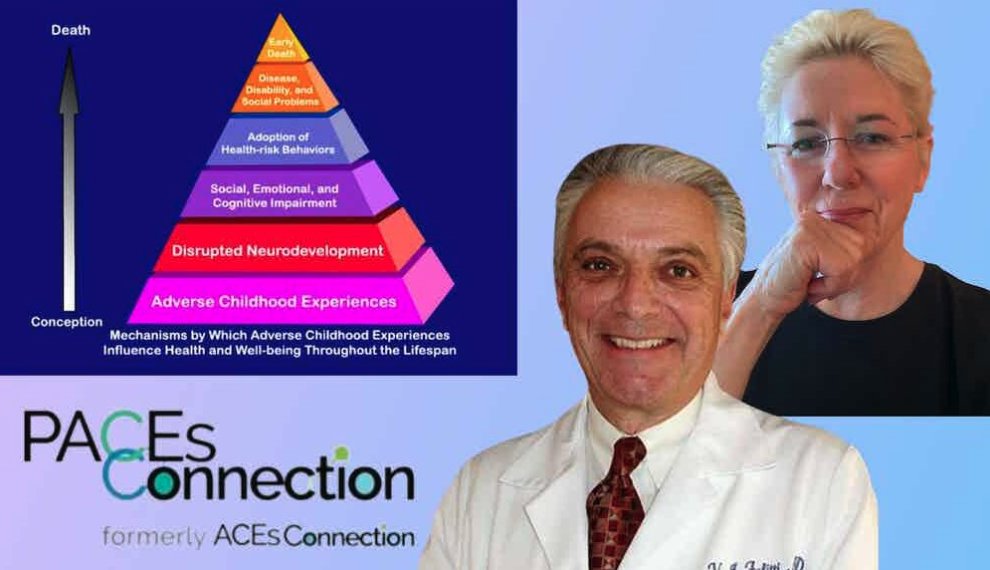
How A Weight Loss Clinic “Mistake” And A Shipboard Explosion Sparked The Trauma-Informed Movement In America, And Worldwide kindredmedia.org/2022/11/how… #addiction #consciousparenting #weightloss #trauma #ACEs @PACEsConnection @TurnAroundMom
3
4
65