
Jun 16
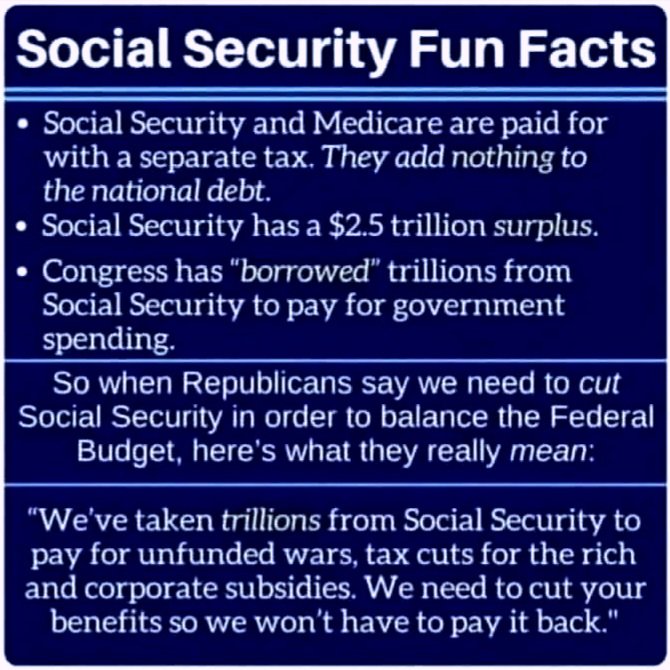
We know, we've always known; don't know why the rest haven't figured it out. Guess they just believe whatever a liar may tell them. So Sad. It's OUR social security, OUR money -- @GOP: #PayUSBack

2

May 10
I hope your kids steal a bunch of your money and go on a spending spree, so you know how Virginians feel about the way you just wasted millions of taxpayer dollars on something totally unconstitutional and illegal. 🖕🏼
#PAYUSBACK
5
24
May 10
I hope your kids steal a bunch of your money and go on a spending spree, so you know how Virginians feel about the way you just wasted millions of taxpayer dollars on something totally unconstitutional and illegal. 🖕🏼
#PAYUSBACK
11
118
May 10
I hope your kids steal a bunch of your money and go on a spending spree, so you know how Virginians feel about the way you just wasted millions of taxpayer dollars on something totally unconstitutional and illegal. 🖕🏼
#PAYUSBACK
1
4
49

May 8
SOUTH AFRICA’S SHAME: THE NATION THAT THE WORLD FREED IS NOW HUNTING THE AFRICANS WHO FREED IT
When the grateful become the executioners, Africa must demand its reckoning
Those of us who fought apartheid — who sacrificed treasure, oil, dignity and decades to free Black South Africans from the boot of white supremacy — are looking at what is enveloping that country today and asking ourselves one question: why did we bother?
My father sat me down once, years before I fully understood what he was telling me. Chief Godfrey Kio Jaja Amachree QC — Nigeria’s first Solicitor-General, the first African Under-Secretary-General of the United Nations, the man General Gowon trusted as his personal envoy to Washington during the Civil War — looked at me with the weight of a man who had seen too much and said: never buy property in South Africa. As a former UN Under-Secretary-General who had direct dealings with the South African struggle, he had earned the right to that warning. I looked at him and wondered why such negative words about a country that had just been liberated and seemed to hold such a bright future.
He went further. He told me of his meetings with Ian Smith — the Rhodesian Prime Minister, long vilified as the most racist white man in Africa. My father went into that room expecting to meet a monster. Instead, he told me, he met a man who had studied the Africans of Southern Africa with unsettling precision. During those meetings, conducted in my father’s capacity as UN Under-Secretary-General for Trusteeships, Smith told him things about the future of Zimbabwe and South Africa that my father did not want to hear and refused to believe. He predicted that when Mandela was freed and the liberation struggle was over, the violence would not disappear — it would merely change its target. He told my father: do not invest there, you don’t know these people.
Now. I did not like white South Africans and Rhodesians and I did not trust them. I found them to be evil — seriously evil — the natural enemy of the African. So anything coming from Ian Smith was rubbish to me. I dismissed it then. I dismiss the source still. A man who locked an entire people in a cage of racial oppression has no standing to pronounce on the character of those he imprisoned. But what troubled me, what I could not entirely shake, was what I myself observed over the years: South African diplomats I encountered in Europe — sober, composed men by day — who, when they drank, transformed into something else entirely. Something dark.
Something that could no longer see right from wrong. My father had seen the same thing. And he noted it. Not as prejudice. As pattern.
I thank God I never invested in that country. I never bought property there. My reasoning at the time was simple: I did not want to deal with racist whites. What I did not know — what I could not have imagined — was that it would be the Black South Africans I should have been worried about.
Because I am watching it unfold in real time. And it is beyond anything I could have predicted.
Two Nigerian men are dead. Amamiro Chidierbere Emmanuel died on April 25, 2026, from injuries sustained when South African National Defence Force soldiers beat him in Port Elizabeth five days earlier. Nnaemeka Matthew Andrew was found at the Pretoria Central Mortuary on April 20, 2026, following what the Nigerian government describes as an interaction with Tshwane Metro Police. Dead. Beaten. Discarded. On the soil of a country that Nelson Mandela himself described as having been liberated through Nigerian sacrifice.
Nigeria’s Foreign Minister Bianca Odumegwu-Ojukwu had to pick up the telephone and call her South African counterpart to demand justice for our dead. Ghana has formally petitioned the African Union to place this crisis on the agenda of the June 2026 continental summit. The African Commission on Human and Peoples’ Rights has issued a formal condemnation. Vigilante movements called Operation Dudula and March and March are marching through Johannesburg and Tshwane with organised, deliberate, protected impunity — blocking African migrants from entering hospitals, burning businesses, hunting human beings in the street — not for criminality, not for illegality, but simply for being African on African soil.
While this happens, the whites sit in their segregated estates, drinking red wine, watching it all — and laughing. They still control eighty-five percent of the economy. They still own seventy-five percent of the land. And they are regaining their political power every single day, because these same people — the ones burning Nigerian shops and beating Ghanaian traders — are voting the architects of apartheid back into relevance. Former apartheid supporters are retaking South Africa, encouraged by the very people whose freedom was purchased with Nigerian oil, Ghanaian sanctuary, and continental sacrifice. The oppressor never left. He just waited.
Let me say what I know, because I have earned the right to say it.
Nigeria spent over sixty billion dollars supporting the liberation of South Africa. The Nigerian government was the first on the continent to provide direct financial aid to the African National Congress — in the early 1960s, when Nigeria itself had just been born from the rubble of colonialism and could barely feed its own people. Nigeria chaired the United Nations Special Committee Against Apartheid for thirty years. Nigerian civil servants, students and market traders contributed through the Southern African Relief Fund. Nigeria imposed a decades-long oil embargo on apartheid South Africa that cost this country approximately forty-one billion dollars in lost revenue — revenue we desperately needed for our own schools, hospitals and roads. Nelson Mandela came to Nigeria in 1990 and received ten million dollars for the ANC from a country in the throes of its own struggles.
We gave you everything. We gave you blood and treasure and decades of diplomatic capital. We gave you our oil. We gave you our voice at the United Nations. My own father helped build the international architecture that isolated and ultimately dismantled apartheid. And two of our sons are now dead in your streets, killed by your soldiers and your police.
I want every dollar Nigeria gave South Africa repaid in full, with interest. The original sum — direct aid, oil embargo losses, institutional costs — runs well beyond ninety-one billion dollars. With accumulated interest, that figure today exceeds one hundred and twenty-six billion dollars. Pay us back our money. Pay us back and we will leave you to your madness.
Because here is what I see coming, and those in Pretoria would do well to hear it clearly: you are uniting millions of Africans across this continent who are watching the videos, reading the reports, and growing not just angry but organised. The goodwill that the world bestowed upon South Africa for eighty years has been squandered. The moral credit of Mandela’s rainbow nation is exhausted. And if the killing and beating and harassment of fellow African nationals continues — of people who have every legal and moral right to live and work within South Africa — there will come a day when those tanks rolling across your borders from every African country you have insulted will not be a metaphor. It will be a reckoning.
Such is the brainwashing. Such is the hollowness at the centre of a community that has never developed true self-confidence, never built institutions of self-reliance, never learned to stand as adults in the world without leaning on either white approval or manufactured rage. Such is the addiction — to alcohol, to drugs, to the violence that seems to awaken with one whiff of either. I have no other way to explain what they have done to themselves and to their reputation across every African, Caribbean and Black American community in the world. They have made themselves the most hated people in their own diaspora. They have turned brothers into enemies. They have taken everything Mandela built and urinated on it.
God does not appear to like us. I say this not in despair but in bewilderment. No book, no history, no artificial intelligence has been able to reveal to me what the Black man did to deserve this particular curse — of being his own worst enemy, of tearing down with his hands what others died to build for him. To hear in Europe “go back to Africa” is painful enough. To arrive in Africa and hear “go back to your own country” from the people we freed — that is a wound that does not close.
South Africa, you were once a symbol. You were proof that the world could move. That solidarity was real. That African brotherhood was more than rhetoric. You were the crown jewel of the anti-apartheid movement, paid for in Nigerian oil, in Ghanaian diplomacy, in the blood of liberation fighters from every corner of this continent. And this — this savagery in the streets of Johannesburg, this organised hunting of Nigerians and Ghanaians, this murder of our sons by your soldiers — this is what you have done with that crown.
I am calling on every African head of state to convene an emergency session at the African Union summit in June and place South Africa on notice. I am calling on Nigeria to formally table a financial accountability claim for every dollar spent on South Africa’s liberation. I am calling on ECOWAS to impose coordinated economic measures against South African businesses operating across West Africa until Pretoria takes concrete, prosecutable action against the killers of our people.
And I am calling on South Africans themselves to sober up. To drink coffee instead of whatever it is that turns them into what we are seeing on our screens. To understand that they are running out of African goodwill and running out of time. White Israelis are buying up the Cape. Ukrainians fleeing war are settling in a country with a perfect climate and an economy still dominated by white capital. The Afrikaner is not gone — he simply waited, while South Africa’s Black majority burned its own future and alienated its own family.
My father was right. He usually was.
I am glad I did not go. Because the widest thing I know — wider even than a white Afrikaner — is an Uncle Tom doing the oppressor’s work with a smile. And I would have lost my mind.
Pay us our money, South Africa. One hundred and twenty-six billion dollars. With interest.
And until you do — until you stop the killing, stop the burning, stop the hunting of our people — Africa is watching. And Africa is done being silent.
Kio Amachree | Stockholm, Sweden | President, Worldview International
#KioAmachree #WorldviewInternational #TheKioSolution #SouthAfricaXenophobia #NigeriaDemandsJustice #AfricaIsWatching #AfricanSolidarity #PayUsBack #OperationDudula #XenophobiaIsACrime #ApartheidsChildren #NigerianLivesMatter #PanAfricanism #SouthAfricaAccountability #AfricanDiaspora
4
8
11
1,438

Apr 9
The Media has it wrong. They need to stop attaching the word 'royal' to these two losers. They dipped out, the responsibilities and those damn titles! 😡 MM needs to handed an INVOICE for all the shit she has stolen from the BRF and the fake business. #payusback
#goforbroke
1
23
310

Mar 17
How much is the BS costing Canadians? You are the biggest waste of money in the country.
#payusback
4
25
Mar 17
You and your "wife" squatted in Stornoway after you were fired. Pay Canadians the thousands of dollars we spent on your salary housing, servants, chef and chauffeur. That money could help families.
#payusback
#stornowaysquatter
2
24
Feb 11
Projection: coming from the obstructing-convoy-insurrection
supporting-party of Canada. Stop lying to Canadians, stop obstructing parliament, stop leeching off of tax payers and #payusback for being the fired #stornowaysquatter
4
28
Feb 9
Guy who squatted in govt mansion with staff, all paid for by Canadian tax payers, is pretending to care about people's severance pay
#payusback
#stornowaysquatter
1
5
29
Jan 26
No you lying pos, the PM is not responsible for food inflation.
Why don't you talk to to the oligarchs who own and control Canada's food supply and retail
#payusback #stornowaysquatter
1
10
51
Jan 19
You are the #stornowaysquatter
Who refused to leave the govt funded home after you were fired. Cdns have paid thousands for your upkeep including for the staff in your mansion. Why don't you put on your big boy pants and #payusback
9
4
19
273
Jan 15
What an absolute load of garbage. Stop lying. Oh never mind, that's literally ALL. THAT. YOU. DO.
#stornowaysquatter
#payusback
2
23
Jan 5
You don't give a shit about seniors or any other Cdn. You squatted in a govt paid mansion with your staff and chef while Cdns went to food banks. We paid your exorbitant monthly allowance while you had cocktail parties & made a backroom deal to take a seat in Alberta #payusback
5
68


American taxpayers deserve reparations from Somalian immigrants, the Democrat party, and any politicians who helped them pull this off. #PayUsBack
19
34
303
4,830

7 Oct 2025
We The People want the money back. #Sedition is illegal. Illegally acquiring funding is fraud. #PayUSBack
@realDonaldTrump

Want your blood to boil?
The Jack Smith Investigation cost taxpayers over $50 million.
$50,000,000
All based on a scam.
To target their enemies.
With 70% of that $50 million paying their salaries.
Think about that.
The Jack Smith investigators got rich for sedition.
Sick.
1
23

18 Apr 2025
Never doubted it. #payusback
17 Apr 2025

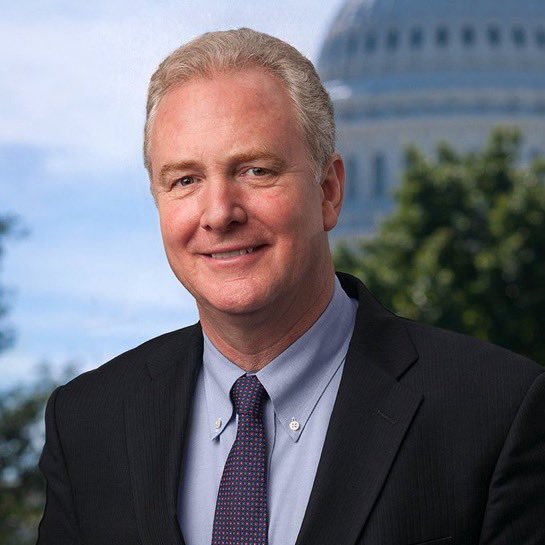
REPORT: Senator Van Hollen’s trip to El Salvador yesterday was taxpayer funded, per the Daily Caller.
2
138


23 Mar 2025
Open your eyes people they blinded sided us. #Retribution #Prison #Corruption #Karma #Repent #PayUsBack #Embezzlement
2
18