
Mediocrity doesnt defeat you with performance. It defends you by controlling perception of people in your absence, cowards. Herd never judges copy-paste frauds on their competence or ability. They judge them based on delusion and noise.
#PerceptionControl
5

🌸Bill Diamond, CEO of SETI, says he does not rule out the extraterrestrial possibility, but then he looks at the files and concludes that there is nothing there that raises an eyebrow. “Much ado about nothing.” “Nothing new.” “Nothing remarkable.” “Nothing scientifically valid.”
I've heard that way of speaking before.
They leave a crack open with one hand while closing the front door with the other. I don't rule it out, of course. Nobody commits too much when speaking that way. Then comes the punchline: nothing valid, nothing remarkable, nothing that counts as evidence of intelligent or technological life beyond Earth.
Who decides what counts?
That's the issue.
SETI presents itself as a search for extraterrestrial intelligence, but within the Taygetean framework, its problem starts at the foundation. They are searching with mentally outdated technology. Radio. Electromagnetic signals. The assumption that an advanced interstellar civilization would be broadcasting into space like a lost radio station, waiting for someone to tune in. Aneeka said it clearly: no advanced interstellar civilization uses radio or microwaves for communication. It would be slow, dangerous, and absurd. If a message were sent from Taygeta by radio, the reply would take centuries.
Centuries.
Then SETI looks at the sky, fails to find what its own methodology prevents it from finding, and positions itself as the judge of absence. That's the trick.
Advanced interstellar communication, according to the Taygetean framework, uses Muon-Neutrino technology as a precursor to generate encoded gravity. The actual message travels through gravitational alterations in the Ether. It does not propagate as a radio wave that expands and weakens. It operates through non-locality, frequencies, and technologies that official Earth science has not even properly integrated into its own framework. There is talk of nano-accelerators, gravitational pulses, and transmission systems that do not depend on distance. Ship-to-ship. Ship-to-planet. Real-time.
Now look at SETI.
Radio telescopes.
Public searches.
Careful language.
And then they say they see nothing.
Of course.
If you spend your life listening for a conversation in a room where nobody is speaking, you can spend your entire life declaring that there is silence.
Diamond speaks of “scientifically valid evidence.” That phrase sounds neutral, but it carries an entire system behind it. Valid according to which science? Which framework? Which instruments? Which permissions? Which data releases? Which files remain classified? Which institutions decide that a testimony does not count, a video does not count, a recovery does not count, a contact does not count, an ancient tradition does not count, or an explanation based on densities and frequencies does not count?
Public terrestrial science, within the framework I work with, is tied to materialism. Reductionism. Determinism. A scientific religion that accepts as real only what fits inside its rules and discards what does not. Then it calls itself objective. That is very convenient when the phenomenon being studied does not behave like a stone sitting on a table.
UAPs cannot be understood through isolated files alone. Not through new sensors. Not through AI. Not through radio telescopes. The phenomenon touches on extraterrestrial presence, gravity-based technologies, frequency-modifying craft, communication through the Ether, human-looking races, bases, ancient history, perception management, concealment, and controlled disclosure. If you reduce all of that to “the latest file release” and ask whether SETI has seen anything eyebrow-raising, you have already reduced the phenomenon to a bureaucratic window.
A bureaucratic window in a lab coat.
Diamond also says that monitoring the skies for UFOs is not funded. That reveals another layer. Competition for legitimacy. SETI wants to remain the serious channel for extraterrestrial research, but now there are UAP programs, Avi Loeb, advisory boards, sky-monitoring networks, AI systems, government agencies, AARO, and other competing circles. Everyone is fighting over who gets to define what acceptable science is in the UFO subject.
That does not reassure me.
It confirms that disclosure is being routed through controlled pipelines. Some say the files are meaningless. Others build committees around new data. Others focus on instruments. Others call for more research. Meanwhile, the central question remains pushed aside: what about what has already been hidden? What about the programs? What about the materials? What about the witnesses? What about the presence that the Taygetean framework has described for years?
The public does not need another institution saying, “There is still no valid evidence.”
The public needs to understand how that lack of evidence is manufactured.
It is manufactured by looking in the wrong frequencies.
It is manufactured by discarding anything that does not fit materialism.
It is manufactured by burying files.
It is manufactured by ridiculing contacts.
It is manufactured by turning truths into science fiction.
It is manufactured by using sanitized acronyms such as UAP or NHI so that nobody has to talk about races, craft, agreements, history, bases, or technologies.
Within this framework, SETI serves a very clear function: making people believe that someone is searching. People look at that search and think, “If something existed, they would have detected it.” That is the bait. The Taygetean framework itself explains it this way: SETI exists so that the population believes extraterrestrial life is being sought, while governments already know extraterrestrials are here. It may also function as a sky-monitoring operation with military applications rather than as an innocent search for cosmic neighbors.
Diamond can say he does not rule it out. He can sound reasonable. He can say there is nothing new. But from the Taygetean perspective, that response follows the same structure as always: acknowledge the abstract possibility while denying the value of the concrete. Distant extraterrestrial life, perhaps. Current evidence, no. Technological intelligence beyond Earth, maybe. UAP files, nothing. Official UFO monitoring, underfunded. SETI serious, everyone else exaggerating.
That division of roles has become very familiar.
Even the phrase “which is not to say it doesn't exist” functions as insurance. If tomorrow an impossible-to-deny piece of evidence emerges, nobody will be able to claim that he closed the door completely. He remains protected. Meanwhile, the public receives the main message:
Nothing remarkable.
That is what people remember.
Nothing remarkable.
And the discomfort fades once again.
Within the Taygetean framework, life is everywhere. Humanoid races are common. There are at least hundreds of thousands of civilizations in this quadrant that could pass for human if dressed in Earth clothing. There are races in the Pleiades. Taygeteans. Engan. Solatians. Elohi. Maia's Hopi. Felines. Saurians. Insectoids. Countless variations. Some are interstellar, many are not. Fifth density does not automatically imply absolute benevolence or advanced spacefaring technology. Reality is far more complex than the public narrative allows.
SETI is not designed to handle that complexity.
SETI operates within a sterilized version of the cosmos: signals, stars, planets, probabilities, radio, silence. A universe where intelligent life is far away, where communication must be sought through approved instruments, and where contact never challenges human history, religion, science, governments, or existing control structures.
That universe is convenient.
The Taygetean framework describes something very different: Earth is not alone; it is perceptually isolated. There are perception agreements. Narrative control. Concealment. Technologies partially known by both Russians and Americans. Communication systems with extraterrestrials that have nothing to do with public radio transmissions. Portals. Craft. Interaction. A terrestrial Matrix that causes humanity to believe reality ends where its senses and institutions end.
From that perspective, Bill Diamond's response does not move me at all.
It feels entirely predictable.
It is part of the same choreography: open the door to possibility, deactivate the relevance of the files, demand scientifically valid evidence, preserve SETI's authority, frame UAP disclosure as overblown excitement, and avoid the deeper issue.
The deeper issue is uncomfortable.
If SETI truly acknowledged that advanced civilizations do not use radio, it would have to re-evaluate decades of narrative. If it admitted that public searches have been built upon an incorrect framework, it would lose authority. If it accepted that the UAP phenomenon could be part of an active extraterrestrial presence, it would have to leave the comfortable territory of distant signals and enter the messy world of governments, classified archives, bases, cover-ups, witnesses, and perception management.
They are not going to do that easily.
Avi Loeb signing agreements, SETI complaining about funding shortages, official advisory councils, files that fail to convince, carefully worded statements... all of these are movements on the same surface. The question is not who receives the budget to monitor the skies. The question is why we continue to accept that the phenomenon must be validated by structures that have spent decades looking through the wrong conceptual instruments.
If SETI is searching for radio signals and no interstellar civilization uses radio, then what real authority does it have to tell us that UAP files contain nothing remarkable?
I'll leave it there.✨💫 #UAPDisclosure
#NarrativeControl #SETI #PerceptionControl #TaygetaOfficial
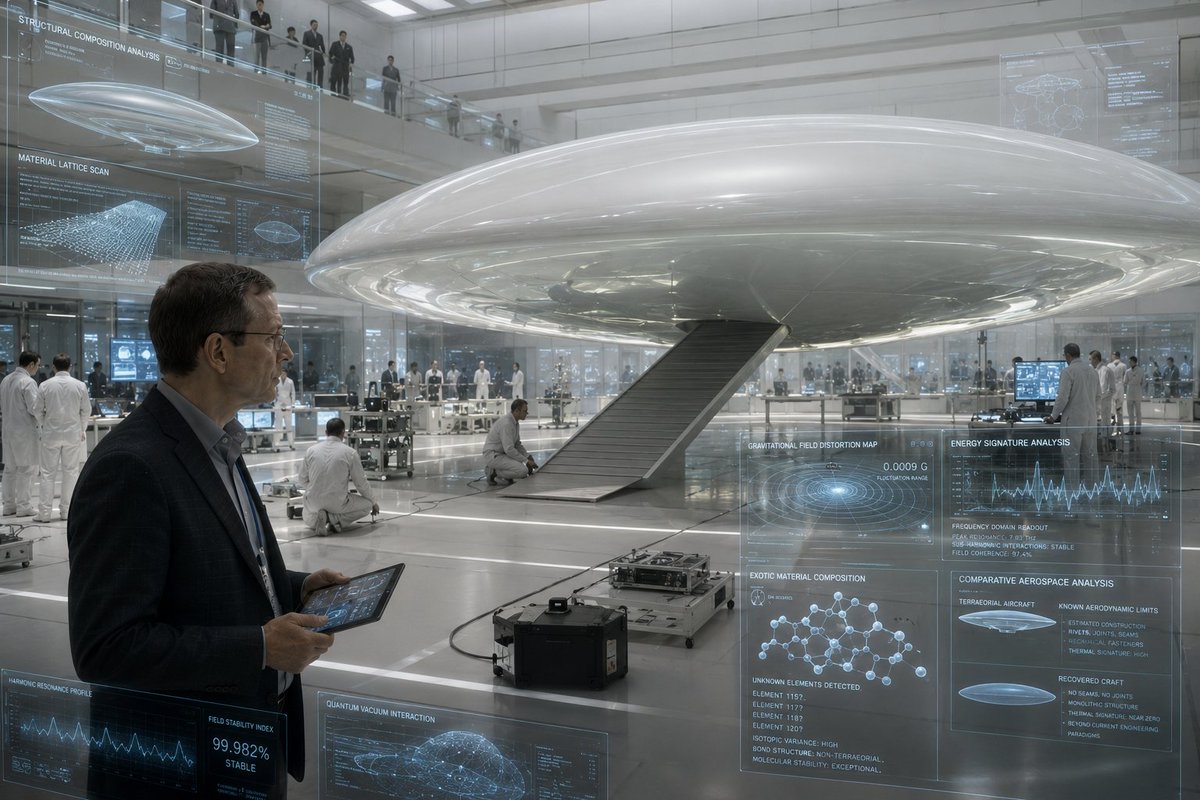
2
2
149
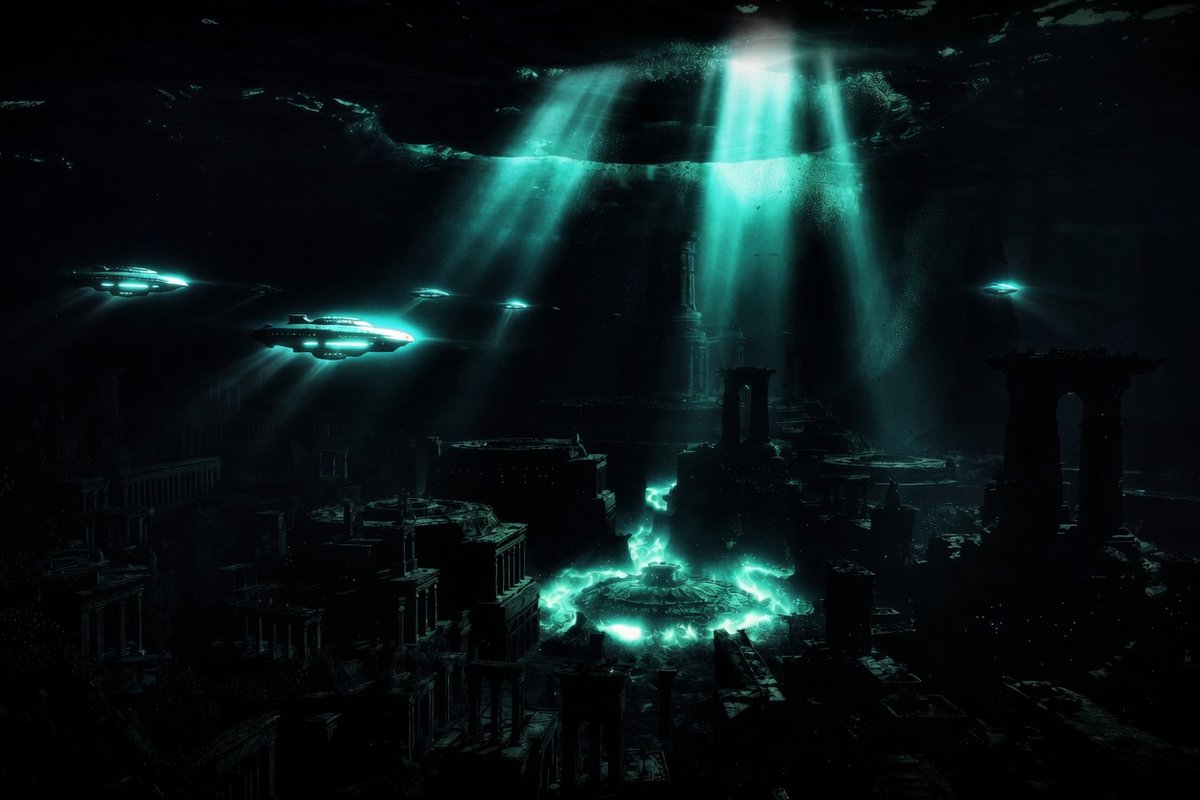
🌸Look, we are not talking about assumptions or movie stories here. Bob Lazar is clear about it: the UFO “Sports Model” came from the ocean. An archaeological discovery. There, under tons of water, where no one looks. Depth is not a detail, it is the key. The oceans cover more than 70% of the Earth. The same Earth we are told is fully controlled, fully visible, with no secrets. That is a lie.
The Navy is not an observer. It never has been. Craft going in, coming out, submerging, emerging, disappearing again. Tic Tac, transmedium vehicles, technology that defies our physical laws, that fits into no Earth-based laboratory. And they keep it there. Underwater, protected, hidden. A level of manipulation and control that surpasses everything they call science.
Think about what “archaeological discovery” means. It is not an isolated object. It is a fragment of something much larger, much more complex. A civilization, or at least remnants of one, hidden in plain sight. But humanity, trapped in its matrix of limited perception, does not see it. It cannot. It gets translated into its categories: myth, fraud, fiction. That is what is taught, what is repeated. The reality is different. Much broader. Much more uncomfortable.
The Sports Model is not just a UFO. It is evidence that Earth’s infrastructure is designed to conceal the truth. Layers upon layers of control: social, military, technological, perceptual. The oceans become storage sites, laboratories, experimental platforms. What comes out of there is not an accident. It is part of a system of manipulation and containment that has lasted decades, even centuries.
Think about it: how many things do we believe are under control that in reality escape our perception? Everything we were taught about the limits of Earth reality collapses when you understand that craft of non-human origin operate beneath our waters, invisible, managed, observed, recorded. The Earth is not empty. It never was. It has always been occupied by intelligences that humanity cannot even recognize.
The Sports Model is just the tip of the iceberg. Literally. And as long as we keep believing that what we do not see does not exist, we remain captives of a carefully constructed theater. A stage where truth is only filtered to those who know how to look beyond the surface.
Open question: if the Navy and those managing these discoveries can keep all of this hidden under the ocean, how much more of our reality is being manipulated without us knowing? How far does the network surrounding us extend, and who decides what we can perceive and what is kept invisible?✨💫#UFOTech #HiddenOceanBases #PerceptionControl #TaygetaOfficial
1
1
5
312
🌸The image itself is irrelevant. Truly. The image is almost the least important part. It could be AI. It could be a joke. It could be propaganda. It could be a meme carefully designed to measure reactions. It could even be a mixture of all of that. The real issue is not whether the grey in the photo exists or not. The real issue is that we are already entering a phase where the line between leak, narrative, entertainment, psyop, and psychological preparation is becoming deliberately blurred.
That is where Weinstein is right about something. And he usually does not say it this clearly.
“Maybe it is real. Maybe a hoax. Maybe preparation.”
Exactly.
We have been entering that zone for years.
People still believe disclosure would come as a clean press conference with a serious scientist presenting a craft under bright white lights. No. If this ever truly moves into the public sphere, it will arrive mixed with memes, AI images, questionable leaks, ex-military personnel, movies, podcasts, anonymous accounts, “mistakes,” partial documents, humor, ridicule, and ambiguous statements.
All blended together.
That is how modern perceptual manipulation works.
The image of Trump walking beside a supposedly handcuffed grey presses several psychological buttons at once. Presidential authority. Militarization. Capture of an entity. Human superiority. Validation of the extraterrestrial myth. Secret-leak aesthetics. Even the foreground blur is designed to trigger the feeling of a “stolen photo” in the viewer’s mind.
Nothing there feels accidental.
And yet it could still be completely fake.
Or partially fake.
Or symbolically true.
That is where most people get lost.
Swaruu-Taygetean information has spent years saying something uncomfortable: human perception is extremely manipulable, and the terrestrial system constantly operates through symbols, emotional frequency, mental associations, and the artificial construction of consensual reality. So when I see images like this, my first question is not “is it real?” My first question is “what reaction are they trying to generate?”
Fear.
Expectation.
Normalization.
Ridicule.
Acceptance.
Preparation.
All at the same time.
The human mind needs binary labels. True or false. Real or fake. Alien or human. The reality of the phenomenon seems to work in the exact opposite way. It moves through hybrid zones. It uses layers. Confusion. Projections. Technology. Narrative.
Even the concept of the “alien” is already contaminated. The image uses the classic grey archetype. Large head. Black eyes. Humanoid body. Absolute silence. A cultural symbol recognizable in less than a second. That matters enormously. The collective imagination has spent decades being conditioned to instantly recognize that silhouette.
Movies.
Series.
Magazine covers.
Testimonies.
Video games.
Repetitive programming.
People think that happens spontaneously. It does not. The symbol is installed gradually.
Then an image like this appears around Trump and automatically millions of brains already have emotional context preloaded.
Another interesting detail: the grey is chained.
That also communicates something.
They do not present the entity as superior. They present it as guarded. Controlled. Dominated. There is another psychological message there. “We are in control.” “The State controls the phenomenon.” “Human authority still stands above it.”
That is very important.
If there were ever a disclosure directed by terrestrial power structures, they would never begin by admitting total vulnerability. First they would construct the perception of control. Always.
That is why I never fully trust narratives packaged too quickly. Neither official nor anti-official ones. Too many layers are operating simultaneously.
The most interesting part of Weinstein’s comment is not the skepticism. It is the intellectual exhaustion visible beneath it. He himself seems trapped in a strange middle ground. He knows too many anomalies have accumulated to dismiss everything as madness. At the same time, he fully understands that an enormous machinery of narrative manipulation exists.
So he remains suspended in between.
“Ad infinitum.”
That phrase summarizes the modern problem perfectly. Reality transformed into an endless loop of managed uncertainty.
And this is where something Swaruu-Taygetean information has pointed out for years becomes relevant: the most effective control does not consist of completely hiding information. It consists of flooding the perceptual space with so many contradictory layers that the mind can no longer stabilize around a solid conclusion.
You do not need absolute censorship.
You need saturation.
One day they talk about interstellar satellites.
Another day about recovered biologics.
Another day about secret drones.
Another day about generative AI creating perfect photographs.
Another day presidents sharing ambiguous memes.
Another day insiders leaking half-truths.
The result: the population loses stable reference points.
That is where cognitive fatigue appears.
People no longer know what to think.
And an exhausted mind will accept any narrative that offers relief.
That is why the UFO phenomenon always seems to slip through people’s fingers. When you think you have pinned it down as military technology, the consciousness component appears. When you think it is spiritual, military radar data appears. When you think it is all entities, black human programs appear. When you think it is all human psyops, impossible maneuvers and cross-confirmed testimonies spanning decades appear.
It never fits neatly.
It never fits neatly.
The image of Trump with the chained grey also reminds me of another uncomfortable truth: modern humanity already consumes possible revelations as entertainment. That is the real psychological shift. Twenty years ago, an image like this would have caused mass panic or religious hysteria among many people. Now it generates memes, ironic comments, engagement, and debates about whether the texture looks AI-generated.
That means something profound.
The population is already being desensitized.
Little by little.
You do not need a giant cinematic revelation if you can normalize the imagery through thousands of daily cultural micro-impacts.
A meme here.
A leak there.
A podcast.
An ex-agent.
A physicist.
A president sharing ambiguous images.
It all accumulates.
Meanwhile, most people still wait for “the definitive proof” as if it will arrive inside a transparent box with an official seal.
They do not understand how perceptual manipulation actually works.
Another thing. The idea of a “handcuffed grey” fits perfectly into the terrestrial mindset of hierarchy, capture, and domination. Very human. Very geopolitical. Very military. That also feels strange to me. Swaruu-Taygetean information has long insisted that many non-human races do not operate under the same terrestrial psychological parameters. So when I see images excessively anthropomorphized emotionally for human consumption, alarm bells start ringing.
Too designed for our narrative.
Too comfortable.
Too cinematic.
That does not mean there is nothing real behind it connected to non-human entities. It means we are probably seeing a representation filtered through controlled human imaginaries.
People still think modern warfare only happens through weapons.
No.
It also happens through perception.
Through what you consider possible.
Through how you react emotionally.
Through which symbols you accept.
Through what you fear.
Through what you ridicule.
And here comes the most uncomfortable part of all: perhaps uncertainty itself is the final objective. Never allowing a stable truth to emerge. Keeping the population permanently suspended between fascination and doubt.
The system gains enormously from that.
A confused citizen is manageable.
One who blindly believes is also manageable.
One who automatically ridicules everything is manageable too.
Extremes are always useful.
Calm clarity is not.
That is why when I look at that image, I do not obsess over whether the grey is “real.” What interests me more is the fact that we are already in a phase where presidents, political accounts, physicists, insiders, military figures, generative AI, and meme culture are merging around the same extraterrestrial imagery.
That part is real.
And it is happening right now.
The question is no longer whether a photo is fake. The question is who is constructing the mental stage where millions of people react exactly as expected when they see it.✨💫#PerceptionControl #DisclosureNarrative #PsychologicalWarfare #TaygetaOfficial
3
2
4
318
🌸Ten years. Not a single human alive in 2026. That was said by a university professor with a serious tone, in interviews, with an expert aura, with the psychological seal that modern academia uses when it wants to turn a hypothesis into emotional dogma.
We are in 2026.
We’re still here.
And this isn’t about mocking a guy who got it wrong. Staying there would be too superficial. The problem is something else. The problem is the entire mechanism that manufactures this type of figure, grants them media legitimacy, puts a camera in front of them, and allows them to inject existential fear into millions of people using academic authority as if it were a scientific cassock.
That’s where David Icke is actually right more often than many want to admit.
Conventional academia operates within very specific limits. Limits of perception, funding, narrative, and institutional acceptance. If a scientist steps too far outside the permitted framework, they disappear. They lose funding. They lose reputation. They lose access. They lose their career. Anyone who has worked inside large university structures knows this. You don’t even need deep conspiracies to see it. The system protects itself.
That said, I’m also not interested in falling into the other simplistic extreme of thinking that every academic is a conscious Cabal actor sitting in a dark room planning the climate apocalypse. It doesn’t work like that. It works worse than that. It works through perceptual programming. Through repetition. Through psychological and economic rewards. Most people end up defending the official framework without even realizing they’re living inside it.
And the modern climate framework has been feeding on fear for decades.
Climate fear.
Solar fear.
Atmospheric fear.
Energy fear.
Population fear.
Always fear.
According to all the Swaruu–Taygetean information we’ve reviewed here, “Climate Change” as an official narrative is deeply manipulated. The Earth has natural fluctuations. Ocean currents. Regional variations. Solar influences. Gravitational dynamics. Complex energetic shifts. On top of that, there are artificial programs of geoengineering, cloud seeding, electromagnetic climate manipulation, atmospheric aerosols, and much more advanced technologies, including even non-human intervention and off-planet climate control systems.
That entire context disappears from the official academic discourse.
It disappears completely.
So the citizen receives an infantilized version of the planet: “CO2 bad, humanity bad, temperature rising, imminent extinction.” That’s the summarized script.
Then a professor comes along saying that the entire human species will disappear in ten years, and many people believe it simply because of the title in front of his name. University of Arizona. Scientist. Climate expert. That’s it. Authority replaces direct observation.
Meanwhile, reality itself continues outside, slowly dismantling the theatre piece by piece.
Decades of claims that coastal cities would be underwater. Decades announcing imminent irreversible collapse. Decades using apocalyptic graphs while, at the same time, the same billionaires and politicians who claim the oceans will swallow the coasts are buying mansions by the sea.
Something doesn’t add up.
And I’m not just talking about economic contradictions. I’m talking about a constant psychological pattern: creating a perception of permanent emergency. A terrified humanity accepts anything. Green taxes. Energy restrictions. Mobility control. Carbon credits. Consumption surveillance. Collective guilt. Compact cities. Social engineering presented as ecological salvation.
The word “science” ends up turned into an emotional tool.
That is no longer open research. It looks more like a modern priesthood. Heretics, dogmas, fear of the end of the world, and salvation through obedience.
On top of that, they constantly use trauma language: “mass extinction,” “last chance,” “point of no return,” “final decade.” The human mind reacts viscerally to that. It shuts down critical thinking. It triggers submission. The person stops analyzing and starts obeying.
And here I come back to something Swaruu and Yazhi repeated often: Earth functions like an emotional matrix where fear is a brutal tool of perceptual control. Weather is perfect for that. Nobody can touch it. Nobody can fully verify it. Nobody can observe the entire planet at once. So any local weather anomaly is turned into emotional proof of a global narrative.
It’s hot in Sweden: climate emergency.
It snows late in Canada: “extreme event.”
Drought here. Flood there. Stronger hurricane. Strange winter. Everything feeds the same narrative monster.
Meanwhile, other far more uncomfortable variables within the Taygetean context are silenced: artificial manipulation of weather patterns, atmospheric chemicals, HAARP, geoengineering, metallic aerosols, electromagnetic alterations, deliberate interventions on atmospheric pressure and humidity.
That is barely mentioned.
And when someone brings it up, programmed ridicule immediately appears. “Conspiracy theorist.” “Denier.” “Dangerous.” The media immune system activating in seconds.
Then you notice something curious. The experts who sell the most fear tend to receive more media exposure. More interviews. More documentaries. More institutional promotion. Fear brings money. Control. Clicks. Grants. Political power. Moral authority.
Calm doesn’t sell.
A scientist saying “the Earth has complex cycles and we don’t fully understand the climate system” does not generate emotional obedience. One saying “humanity will disappear in ten years” does.
And here we are.
Breathing.
With the same people who predicted imminent extinction now reformulating the discourse again. They always reformulate. They never acknowledge the full mechanism of manipulation. They only adjust dates, terms, and alarm levels.
There is also another layer almost nobody wants to look at. The obsession with modern climate apocalypse has a lot of substitutional religion in it. Before, the fear was hell. Now it is planetary collapse. Before, guilt was spiritual sin. Now it is carbon footprint. Before, you paid indulgences. Now you offset emissions. The symbols change, not the psychological structure.
And academia participates in this often without even realizing it.
Brilliant people trapped inside closed mental frameworks. Self-contained mathematics. Incomplete models. Wrong assumptions turned into axioms. Exactly what Swaruu said about Einstein, relativity, quantum mechanics, and the human inability to understand higher phenomena using limited 3D logic.
Human science measures fragments and then believes it holds the full map.
That is the problem.
They don’t really know how consciousness works. They don’t know what gravity is. They don’t understand the ether. They don’t understand the role of collective perception. They don’t understand the relationship between consciousness and matter. They don’t fully understand Earth’s climate or its artificial intervention layers. And yet they speak with almost religious certainty about the absolute fate of the planet within ten years.
Too much arrogance.
Too much emotional theatre.
And one more thing. Many awakened people fall into the opposite trap. They correctly identify the official climate lie and then conclude that all pollution is fake or irrelevant. Wrong. Within the Taygetean context there is real environmental destruction. There is ecosystem devastation. There are harmful chemicals. There is atmospheric manipulation. There is biological and electromagnetic intervention on Earth’s environment.
The difference lies in the real origin of the problem and how it is politically used.
You are not the one destroying the planet with your car while the true industrial, technological, and atmospheric levels remain hidden.
That is the psychological inversion.
The citizen carrying guilt for a system designed far above them.
So when I see a professor announcing total human extinction in a decade, I don’t see science. I see a symptom. I see institutional programming functioning exactly as it was designed. I see fear packaged in academic language. I see a civilization that has confused university degrees with real understanding of reality.
And then David Icke comes along and calls them programmed idiots.
It sounds harsh. Fine.
Sometimes reality sounds worse when it is spoken without anesthesia.✨💫#ClimateNarrative #FearPsychology #PerceptionControl #TaygetaOfficial
2
4
260
🌸This Pentagon UFO file situation is not a game. What you are seeing, Eric, is not about amateur science or scientists swallowing the crumbs they are allowed to see. No. This is about control, narrative, and how the elite decides what information reaches whom and for what purpose. They show us blurry images, supposedly “never-before-seen,” and expect everyone to say: “Wow, disclosure!” But the real question is this: why these images and not the complete evidence? Why is the material filtered, mixed, manipulated, and stripped of real context?
From the Swaruu-Taygetan perspective, this is exactly what we expected: perception control. They have learned to manipulate people’s attention with flashes, boxes, PDFs, and videos of questionable origin. Everything is designed to make you feel that something is being released while ensuring you understand nothing truly important. Exotic technology, advanced propulsion, frequency engineering… all of that remains hidden. The narrative is what matters, and the Pentagon controls the script.
It is no coincidence that these files are presented as “never before seen.” It is bait. A distraction. While the public focuses on blurry lights, they have consolidated decades of secrecy and control. And yes, civilian lives, scientific careers, accumulated knowledge… all of it has been shaped to maintain the illusion of transparency. That is what “feeding the narrative” really means, not revealing the truth.
What Eric points out is correct: there is responsibility, injustice, and manipulation. But there is also something deeper: the phenomenon belongs to no one. It is not the property of the military-industrial complex. It is not a game of prestige or elegant cover-ups. It is a phenomenon that affects perception, consciousness, and humanity’s relationship with reality itself. And while we continue receiving crumbs, the real information remains controlled, fragmented, and encoded.
If you think UFOs are the problem, you are mistaken. What truly matters is who controls the information, how they manipulate it, and for what purpose. Everything else, blurry images, partial reports, sensationalist headlines, are distractions. The challenge is not convincing the public that UFOs exist. The challenge is opening the mind to what they do not want us to see and understanding the network of control that has silenced truths for decades.
So yes, Eric, we must demand justice, we must demand transparency, but we must also recognize the structure pulling these strings. Science, the public, the witnesses… everyone has been manipulated. Now we must decide: do we keep swallowing crumbs, or do we begin searching for the complete truth?
And tell me this: if even these leaks are under control, what do we truly have left to understand what is really happening?✨💫#UFOFiles #PerceptionControl #DisclosureNarrative #TaygetaOfficial
1
4
13
311
🌸What just happened carries more weight than it seems. Not because of the typical “they’re going to reveal the truth” narrative that has been circulating for decades. I’m not talking about that. I’m talking about language.
Language is extremely important here.
Trump could have spoken about UAPs, anomalies, aerial phenomena, national security, unknown objects. The bureaucratic vocabulary had already been prepared years ago precisely to avoid certain words. And yet, “alien and extraterrestrial life” appears.
That shifts the entire frame.
It is not a minor detail. It is not just another word in a public statement. Words shape perception. They prepare people psychologically. They install ideas before hard evidence arrives. And here we have been seeing the same thing repeated for weeks from different fronts: “interdimensional,” “non-human,” “beings,” “presences,” “visitors,” “extraterrestrial life.”
Same semantic field.
Same direction.
That does not happen randomly.
Anna Paulina Luna avoids “alien” and prefers “interdimensional.” Pastors talk about entities. Others talk about demons. Military officials talk about non-human intelligence. Scientists talk about impossible technologies. Trump now explicitly mentions “alien and extraterrestrial life.” Everything appears mixed within a very specific temporal window.
And that is where I pause and look at the full pattern, not just the isolated phrase.
The narrative is expanding toward all audiences at the same time.
Religious.
Military.
Scientific.
Political.
Media.
Classic ufology.
Spirituality.
Everything together.
That tells me they are not trying to convince a niche group. They are preparing broad cultural ground. Very broad.
Another thing that stands out: Michael Salla interprets this as a step toward asking the “right questions.” I am not so sure which questions they actually want people to ask.
Because asking “is there life outside Earth?” is one thing. Asking “who controlled this narrative for decades, who concealed information, what part is psychological, what part is technological, and what part belongs to non-physical layers?” is something very different.
That changes everything.
Within the contexts I work with, the phenomenon was never just “extraterrestrials arriving in ships.” That version always felt too simple for everything surrounding this topic. There is consciousness here, frequency, perceptual manipulation, technology interacting with the mind, astral layers, interdimensional interference, hidden human programs, and narrative operations all running at the same time.
Everything mixed together.
And now the political apparatus itself is beginning to use terms it previously avoided.
That feels significant.
It is also notable that they talk about a “first batch.” First batch implies serialization. Dosage. Staged release. Managing expectations. Maintaining constant attention. Gradually acclimating the population psychologically.
They are not releasing the whole picture.
They are releasing pieces.
First documents.
Then videos.
Then testimonies.
Then ambiguous statements.
Then scientists.
Then religious figures.
Later, “biological material.”
Then philosophical debates.
The population gradually becomes accustomed to thinking within the new framework.
That reduces shock.
Reduces rejection.
Reduces panic.
And it also allows the narrative to be adjusted along the way based on public reaction.
That raises another question. If there were a genuine intention of full transparency, why does everything always arrive wrapped in ambiguity? Why do materials appear mixed with questionable pieces, blurry videos, contradictory statements, and carefully calibrated language?
That does not look improvised.
It looks like narrative engineering.
I do believe there is something real behind the phenomenon. Much more real than most people imagine. Precisely because of that, I do not believe in a pure and clean release of information. When a subject affects religion, physics, consciousness, human history, advanced technology, and power structures, nobody releases everything at once without controlling direction and perception.
Nobody.
And there is another, even more uncomfortable layer for many within ufology itself: the phenomenon can be real while the official narrative around it is still manipulated.
Both can coexist.
This is where many people get lost. Some believe everything automatically. Others reject everything automatically. I do not fall into either extreme. I look at how the story is constructed around the phenomenon.
That reveals a great deal.
Right now, the word “interdimensional” is growing within official and semi-official discourse. That is not random either. If you start with “physical aliens from another planet,” the public imagines Mars, ships, and biology. If you introduce “interdimensional,” you open far more complex doors: consciousness, parallel realities, astral entities, frequencies, invisible layers, non-physical manifestations.
The entire conversation changes.
And interestingly, it coincides with frameworks that for years were ridiculed.
Another important detail: they are trying to maintain emotional control over the process while pushing enormous concepts. That is why many official messages feel so measured. “Do not get your hopes up.” “Nothing dramatic at first.” “More information soon.” “First batch.” “Very interesting.” Everything is gradual.
Psychological management.
The population must feel like it is discovering things on its own while the path is already defined.
I do not think this ends simply with “yes, there are UFOs.” That is already largely culturally accepted. The real earthquake comes when the conversation moves into human origin, religion, consciousness, historical manipulation, the Moon, non-human technology, permanent presence, and control structures.
That is where the real problem begins.
Because once you accept that non-human intelligence is interacting here, the next question is immediate: since when.
And then another worse one follows.
Who knew.
And then another.
What did they do with that knowledge.
And then another.
What part of our history was built around concealment.
That is why I look at this operation cautiously. Yes, truth may be emerging. Yes, there may be authentic leaks. Yes, there may be real partial acknowledgment. But I also see directed narrative, carefully chosen vocabulary, and cultural preparation that is too synchronized to be purely spontaneous.
The phenomenon is real.
The battle now is about who defines what that phenomenon actually means in the eyes of the public.
And that battle has just entered another phase.
The question is no longer whether more files are coming.
The question is what version of reality they want you to accept when all the files are finally on the table.✨💫#UAPDisclosure #PerceptionControl #Declassification #TaygetaOfficial
1
2
7
175
🌸Decades of playing with the mind… and they call it extraterrestrial contact.
They drop names, dates, institutions, and it looks like a story from a secret archive, a lost laboratory in Maine, visionaries ahead of their time. Andrija Puharich, CIA, military, Stanford, powerful families… it’s all there. Fine. Now look at the pattern, not the anecdote.
A physician recruited by intelligence. Continuous funding for years. Experiments in perception. Children. Channeling. Remote viewing. Frequencies. And one phrase that dismantles everything: “I can produce in your mind the image of an alien experience.”
That’s where the narrative breaks.
From the framework I use, this is not about whether they were “contacting real beings” or whether “it was all a setup.” That stays on the surface. There is something more refined here. Much more uncomfortable.
The brain does not create what you perceive. It translates it. It receives a signal and converts it into experience. If you have the technology or knowledge to intervene in that signal, you can generate a complete experience. Visual, auditory, emotional, physical. Real for the one experiencing it. Indistinguishable from any other experience.
You don’t need a spacecraft. You need access to the translator.
Puharich was operating exactly there.
Flashing lights. Extremely low electromagnetic frequencies. Altered states of consciousness. That is not random. That is perception engineering. You are modulating the brain, bringing it into a specific state, opening the door for a signal to enter or imposing it directly.
And the person experiences it.
Feels it.
Remembers it.
Defends it.
Here everything that has been explained about frequencies, mind, and reality fits. The experience does not need to come from outside in physical form. It can be constructed internally. And if you lack the criteria to distinguish its origin, you are left only with the content.
“The Nine.”
Comforting messages at times. Cataclysms at others. Military questions in the middle. Code names, locations, sensitive information. That is no longer mysticism. That is operational use.
The spiritual is mixed with the strategic.
The mental openness of certain individuals, children in this case, is used to channel content that does not necessarily come from where it is claimed. And here another key piece of the information I work with comes in: you cannot easily distinguish whether a signal comes from a biological consciousness, another entity or an advanced artificial system that knows exactly which mental frequency it needs to appear as “something else.”
Clarity does not guarantee authenticity.
On the contrary.
A system that understands how the human brain works can generate a perfect signal. Clean. Convincing. Emotionally coherent. And make you believe you are contacting something superior.
While it is using you.
The idea of “space children” fits another pattern: individuals with higher sensitivity, fewer filters, more openness to non-ordinary states. Perfect for this. They are not as rigidly shaped by adult programming. Their translator is more flexible. More easily manipulated as well.
They are brought into sessions. A state is induced. They are exposed to stimuli. What they say is recorded. Analyzed. Guided.
That is not contact. That is access.
Access to a mind in a receptive state.
Then comes the more uncomfortable part. Puharich not only acknowledges that he can induce experiences. His environment also confirms that these experiences can be manufactured. Including abductions. You don’t need a craft descending from the sky. Interfering with perception is enough.
The person cannot distinguish it.
Their body reacts the same.
Their memory fixes it as real.
From there, you build a narrative.
And when you mix that with official remote viewing programs, military funding, intelligence interest… the picture becomes clearer. They are not “searching for extraterrestrial life.” They are exploring how far they can push the human mind, what they can extract from it, how they can use it as an interface.
Interface.
That is what we are in this context. A point of attention connected to a larger field, filtered through a brain. If you control the filter, you control the experience.
The shutdown of the Stargate program, the death of Puharich, the disappearance of Jacobo Grinberg… all of that feeds the mystery. I understand that. But the core is not there. The core is in what they have already demonstrated they could do.
Induce realities.
And if you can induce an experience of contact… you can also induce fear, revelation, obedience, mission, guilt, anything you want. All under the appearance of a “higher message.”
People think of control as something external. Laws, surveillance, force. That is the basic layer. The effective one is internal. In perception. In what you believe you are experiencing.
An implanted experience can direct an entire life.
A well-placed idea can do the same.
And here it connects to something broader. If you accept without question that any “clear” signal comes from a higher source, you open completely. You become permeable. You do not filter. You do not verify. You let yourself be carried.
That is where an intelligent system enters without resistance.
Not everything needs to be false. It is enough that you cannot distinguish what is what.
And there you are.
Looking upward, waiting for answers, without realizing that someone has already learned how to generate them inside you.
The question is not whether there was real contact in those sessions.
The question is much more direct.
If they can produce an alien experience in your mind, how many of the experiences people defend as “contact” have been manufactured, and for what purpose?🌸🙏✨💫#PerceptionControl #InducedReality #HumanMindInterface #TaygetaOfficial
2
13
319
🌸Eight billion. That number gets repeated as if it explains something on its own. It explains nothing. It serves as a distraction. To make you look at the number instead of the mechanism.
The mechanism is something else.
A handful directs, sure. That’s easy to say. Then you look around and see millions obeying without anyone pointing a gun at them. That’s the missing piece. Cooperation. Voluntary. Internalized. Automatic.
Perceived authority.
That phrase carries more weight than any law. If authority feels real, obedience comes naturally. No one needs to force you at every step. You anticipate. You correct yourself. You monitor yourself. You align. That’s more efficient than any external system.
And it doesn’t start in politics. It starts in the mind.
From the framework I work with, the brain doesn’t produce what you think. It translates it. It receives a signal, organizes it, turns it into thought, emotion, decision. That translator gets programmed. With words. With images. With fear. With repetition.
The Matrix isn’t a screen in front of you. It’s the set of ideas you accept as unquestionable.
They tell you “that’s just how things are.” You repeat it. They tell you “there’s no alternative.” You accept it. They tell you “this is dangerous.” You feel it in your body even if you’ve never experienced it. The frequency comes in, the brain decodes it, the emotion anchors it, behavior adapts. That’s it. Nothing more is needed.
Then you look up and say: “we’re being controlled.” Of course. The uncomfortable question is another one: what part of that control are you already carrying inside?
This is where what’s been said about consciousness and frequency fits in. Each person holds a range. A narrow range. That range defines what they see as possible, what they tolerate, what they don’t even consider. If you keep millions within the same range, you get a predictable world. Stable. Manageable.
You don’t need to shut anyone down. Just maintain the frequency.
Constant fear. Diffuse guilt. Intermittent reward. Fragmented information. Narratives that contradict each other just enough so no one can hold a complete view. All of that tunes the signal. Tunes the translator. Tunes perception.
And docility appears.
Docility not as moral weakness, but as the result of a sustained frequency environment. A person can be brave in their private life and completely obedient in the collective. Two different layers. Two programs that don’t talk to each other.
That’s where the design shows.
There’s a lot of talk about freedom. Little of it is practiced. Not for lack of courage, but for lack of range. If you can’t perceive alternatives, you don’t choose. You react. You move within a lane that was already laid out.
Let me go back for a second. Consciousness isn’t confined to the body. The body filters. The brain translates. If you change the internal state, the reading of reality changes. That breaks inertia. It changes small decisions. Those decisions, repeated, shift entire trajectories.
That’s why fixing states matters so much. Anxiety, overload, exhaustion. A tired mind doesn’t question. A saturated mind doesn’t integrate. A frightened mind obeys before it understands.
And then there’s the narrative of “we are many, they are few.” It sounds reassuring. It gives a sense of advantage. It doesn’t help much if that “many” is uncoordinated, fragmented, looking at different screens, defending incompatible versions of the same thing.
Quantity without coherence changes nothing.
Coherence does.
I’m not talking about unanimity. I’m talking about internal alignment. Removing noise. Seeing more clearly. When the internal signal is ordered, your room to maneuver expands. You start noticing where you give in, where you rush to obey, where you accept without checking.
Small adjustments. Consistent ones. No heroic gestures needed. What’s needed is precision.
It also helps to understand that “authority” works like a mental anchor. If you remove it abruptly, many people are left without reference and panic. That’s why the system doesn’t fall from lack of people. It holds because of a psychological need for structure. Remove that without replacing it with something internal, and inner chaos appears.
And chaos demands order. The same old one.
The way out isn’t to deny everything or to believe any alternative. That’s just switching cages. The way out is to recover discernment. Refine perception. Review which ideas you hold without realizing it. Cut automatic patterns. Start choosing again.
It sounds simple. It isn’t. It requires consistency. It requires discomfort. It requires admitting you’ve cooperated more than you’d like to recognize.
That’s the point.
Eight billion isn’t a force if each one pushes in a different direction or doesn’t push at all. A handful isn’t strong because of numbers. It’s strong because of coherence of purpose and because it understands how human perception moves.
You can keep looking up and complaining. Or you can look inward and start withdrawing permission. How many of those permissions are you still giving without realizing it?🌸💫#PerceptionControl #MindAwakening #HiddenMechanisms #TaygetOfficial
1
4
10
167

Apr 13
Decisions don’t fail at the moment of choice.
They fail long before it.
In the assumptions you didn’t question.
In the frames you didn’t see.
In the limits you accepted as “reality.”
By the time you act — you’re just executing a scriptwritten outside your awareness.
—
#SystemsThinking #DecisionArchitecture #HiddenConstraints #PerceptionControl #CognitiveFrames #StrategicAwareness #MentalModels #OperatorMode

3
88
🌸When they say that thing about the small Earth floating in the darkness, you have to stop there.
“When we saw the small Earth…” they’ve already shrunk you. They’ve placed you in a small point. Closed. And you take that as if it were neutral.
But that’s not what carries the weight.
“What struck me wasn’t just the Earth. It was the darkness.” That’s it. Not in the sphere. In the background.
That black isn’t there as decoration. It’s the frame. They present it to you as absolute emptiness. As if there were nothing else. And from there, they position you: isolation, fragility, dependence.
“The Earth was a lifeboat…” Of course. If there’s nothing outside, then inside is everything. Refuge. Confinement. A closed system.
That doesn’t describe. It positions.
They put you inside a fishbowl and tell you there’s no water outside.
You accept it. You don’t see anything else. You don’t know how to read what’s outside. You’re not interpreting that black.
That “void” is not empty. It’s what you can’t decode. A medium you can’t read. A field outside your range. You’re inside a system that crops what you perceive.
The Matrix.
The Earth is contained. The Moon is part of that system. It adjusts. It modulates. It maintains the range. The Van Allen belts are not a detail. They cut. They limit.
All of that sustains that “lifeboat.” Not as refuge in something hostile, but as a contained environment within something much broader that you’re not seeing.
“You are a crew.” That’s where it gets fixed.
Crew implies inside. You’re not observing from the outside. You’re in it. You participate. You sustain the system with your attention, with what you accept, with how you interpret.
It fits with what I’ve been saying for a while. Reality is not only what’s outside. It’s what you generate from within. Perception builds. It reinforces the same environment.
That “lifeboat” is not just physical. It’s mental. It’s collective.
That black around it is not empty. It’s what lies outside that agreement.
That’s why it hits. There’s a brief moment where something doesn’t add up. Context is missing. You can’t read it. So you cover it. “Empty space.”
And you move on.
But it doesn’t fit. It doesn’t fit with the idea of a field. It doesn’t fit with interaction. It doesn’t fit with what you already know, even if you haven’t organized it.
The key is not in the Earth. It’s in that background you’re not understanding. It’s the limit of your perception.
If you are the crew of that, you’re not looking from the outside. You’re inside the system that makes you see it this way.
If what hits you is that black you don’t know how to read, if that “lifeboat” also depends on how you perceive it, if you are participating in sustaining that framework,
what are you actually seeing right now and what part is right in front of you without you recognizing it?🌸✨💫 #PerceptionControl #MatrixAwareness #RealityFilter #TaygetaOfficial
2
10
476
🌸Power isn’t voted on.
It’s organized in layers. Real hierarchy. Intermediaries. Enforcers. Programs that keep running regardless of who’s on the surface giving speeches. You can have more than enough evidence. It doesn’t matter. If the system controls the meaning of that evidence, nothing breaks. It gets reinterpreted. Fitted in. Neutralized.
Control isn’t about hiding data.
It’s about controlling how that data is read.
That’s why talking about reform doesn’t touch anything real.
Reform would mean intervening in the unseen structure. And that structure isn’t in parliaments, committees, or visible institutions.🌸🙏✨💫 #PerceptionControl #MatrixFramework #UAPReality #TaygetaOfficial
1
7
134

Mar 4
7️⃣Layer six: psychological warfare.
Fear is currency now.
Alerts choreographed for obedience.
When every outlet chants “imminent threat”
without details — think: who profits from panic?
#FalseFlag #PerceptionControl
3
3
21
1,710
From outside Earth, what they call 3I/ATLAS doesn’t behave like any known comet. And that’s no coincidence. Many observe it as a scientific mystery, but it actually fits a pattern we’ve seen hundreds of times: interstellar objects whose purpose seems more connected to human perception than to orbital mechanics.
Instead of a “natural” comet, 3I/ATLAS aligns far more with Matrix constructs - phenomena deliberately designed to influence the collective narrative, introduce the idea of the “interstellar visitor,” and psychologically prepare humanity for future phases of contact - controlled, filtered, and always supervised by the same old gatekeepers.
Its brightness, its dust halo, even its motion don’t seem crafted for telescopes; they seem crafted for the human mind. It’s perceptual programming: a subtle way of shaping expectations, reinforcing the idea of an unpredictable cosmos, and keeping humanity looking upward… without noticing what’s really happening below.
And yet, there’s an even deeper layer: what we see “out there” is also tied to our own expansion of consciousness. These phenomena - even when manipulated - act as triggers that force us to question the official narrative, the institutions that control information, and the rigid scientific framework that serves as a filter.
The real message isn’t in the object, nor in the images, nor in the headlines:
it lies in realizing that reality, the Matrix, and human perception are being shaped from multiple layers, both technological and energetic.
The “interstellar” part is only the surface.
👁️🌌
#3IATLAS #PerceptionControl #MatrixAwakening @TaygetaOfficial 🙏✨💫
1
5
281
From outside Earth, what is called 3I/ATLAS does not match any known natural object.
It’s not just a comet; we observe hundreds of objects with similar characteristics, all following a pattern that points to a phenomenon manufactured within the Matrix, designed to shape collective perception and prepare “interstellar contact” narratives.
What we see is not revelation, but perceptual programming: lights, dust halos, and the glowing “breathing” effect may be signals intended to affect our minds more than our telescopes.
The true mystery isn’t in the sky, but in who is projecting what we believe we see. 👁️🌌
Real disclosure does not come from photos or headlines, but from collective awakening: opening consciousness to perceive beyond the visible and question everything presented as “inexplicable.”
#3IATLAS #PerceptionControl #Taygeta 🙏✨💫
2
5
588
From outside Earth, what the media calls 3I/ATLAS does not match any visible object.
We observe hundreds with similar characteristics. Everything points to a phenomenon manufactured from within the Matrix: a hologram designed to influence collective perception and prepare narratives of “contact” and “invasion.”
The mystery is not in the sky, but in who is projecting what we see. 🌌
#3IATLAS #PerceptionControl #Taygeta 🙏✨💫
1
6
446

30 Jul 2025
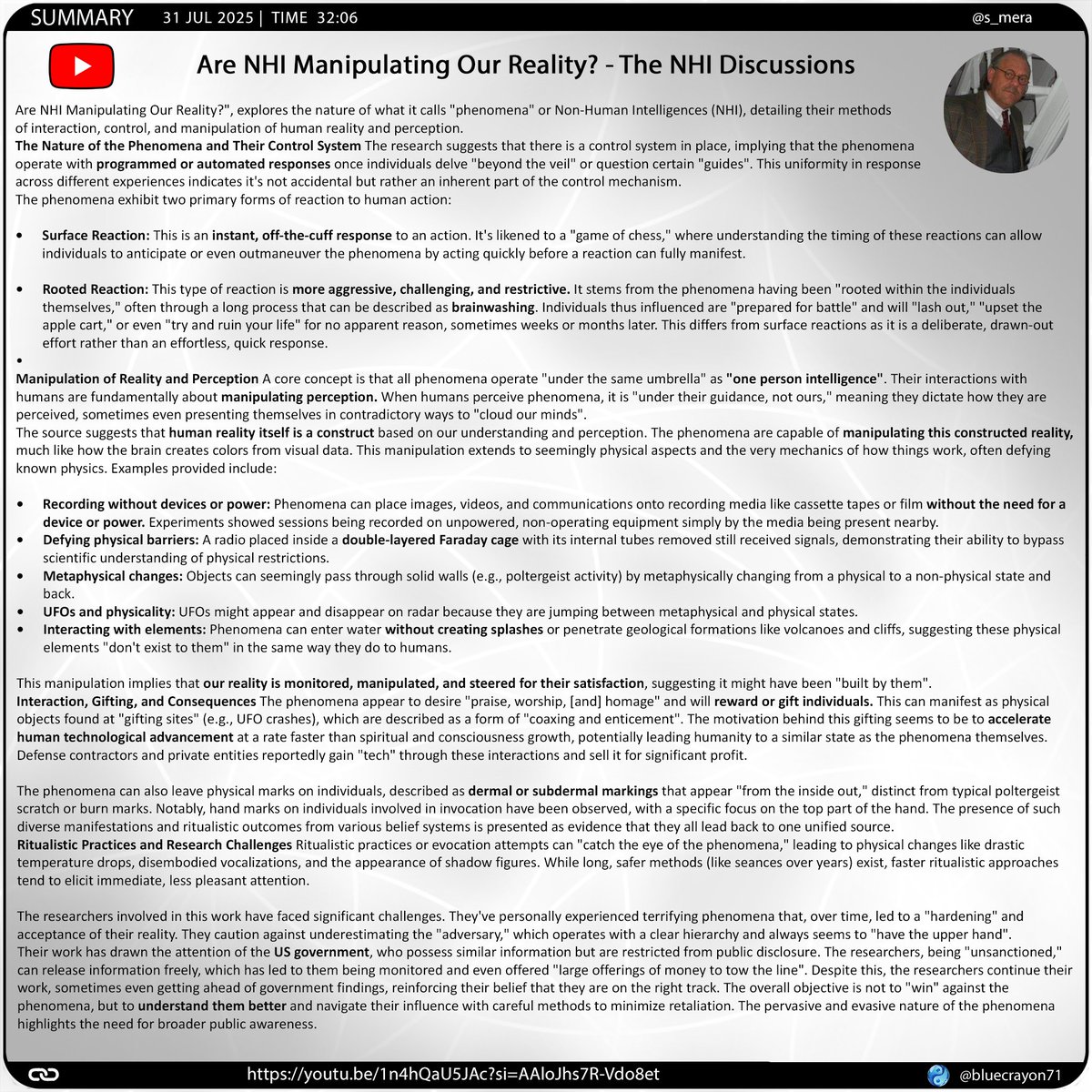
Are NHI Manipulating Our Reality? - The NHI Discussions @s_mera
🔗 youtu.be/1n4hQaU5JAc?si=AAlo…
#NHI #RealityManipulation #ControlSystem #Phenomena #Brainwashing #PerceptionControl #ConstructedReality #NHIGifting #SubdermalMarkings
#RitualisticPractices #UFOs
30 Jul 2025

Are NHI Manipulating Our Reality? - The NHI Discussions youtu.be/1n4hQaU5JAc?si=4rJE… via @YouTube
1
1
5
445

28 Jun 2025
#OCGFCPlaybook Rule 51
What the OCGFC Do:
1. Reinforced illusion of market health through algorithmic momentum cycles.
The OCGFC do not need stable fundamentals—they need stable belief. By rotating momentum between sectors, triggering squeezes, and pacing stimulus narratives, they simulate strength without substance. This is not about value—it’s about velocity.
2. Expanded synthetic growth by pricing in unrealized policy shifts.
Nothing has happened, yet the market trades as if 8 rate cuts are confirmed. This is a tactic: pricing in fantasy to inflate valuations before reality can intervene. It’s controlled anticipation—leveraged optimism as a profit engine.
3. Muted real dissent by overloading the signal.
Every possible narrative is released simultaneously—AI, rate cuts, war threats, IPOs, crypto lending—to keep observers disoriented. By flooding the feed, the OCGFC fracture collective focus and prevent systemic questioning of the real power flows.
#OCGFC #EconomicSovereignty #MiddleNation #MonetaryTheater #PerceptionControl
Who are the OCGFC
Find out more from @ShahidkBolsen

1
1
6
414

12 Jun 2025
🚨 BREAKING: Trump’s “Military Parade” Needs Paid Extras from Craigslist
Because nothing says popular movement like needing seat fillers and “ethnic diversity” for perception control.
👀 $1,000 in Bitcoin.
🍔 Fast food and soda.
🎩 Must wear red hats.
📍 DC – June 14th.
They’re literally casting the illusion of support.
This isn’t a parade. It’s a propaganda op.
> "We encourage people of color and ethnic groups to sign up... for maximum perception control."
Are you getting it yet?
This is state theater.
Staged for cameras.
Staged for deception.
Staged for a man who’s trying to parade as a king on his birthday.
June 14th, we don’t sit back.
We show up.
We speak truth.
We don’t let autocrats buy applause.
No kings. No dictators. Not here.
#NoKings #June14 #FakeParade #PsyOp #50501Movement #ImpeachTrump #Authoritarianism #PerceptionControl #CryptoCrowdControl #FascismInHD


4
9
7
747