☮️ @paddington@mastodon.social retweeted
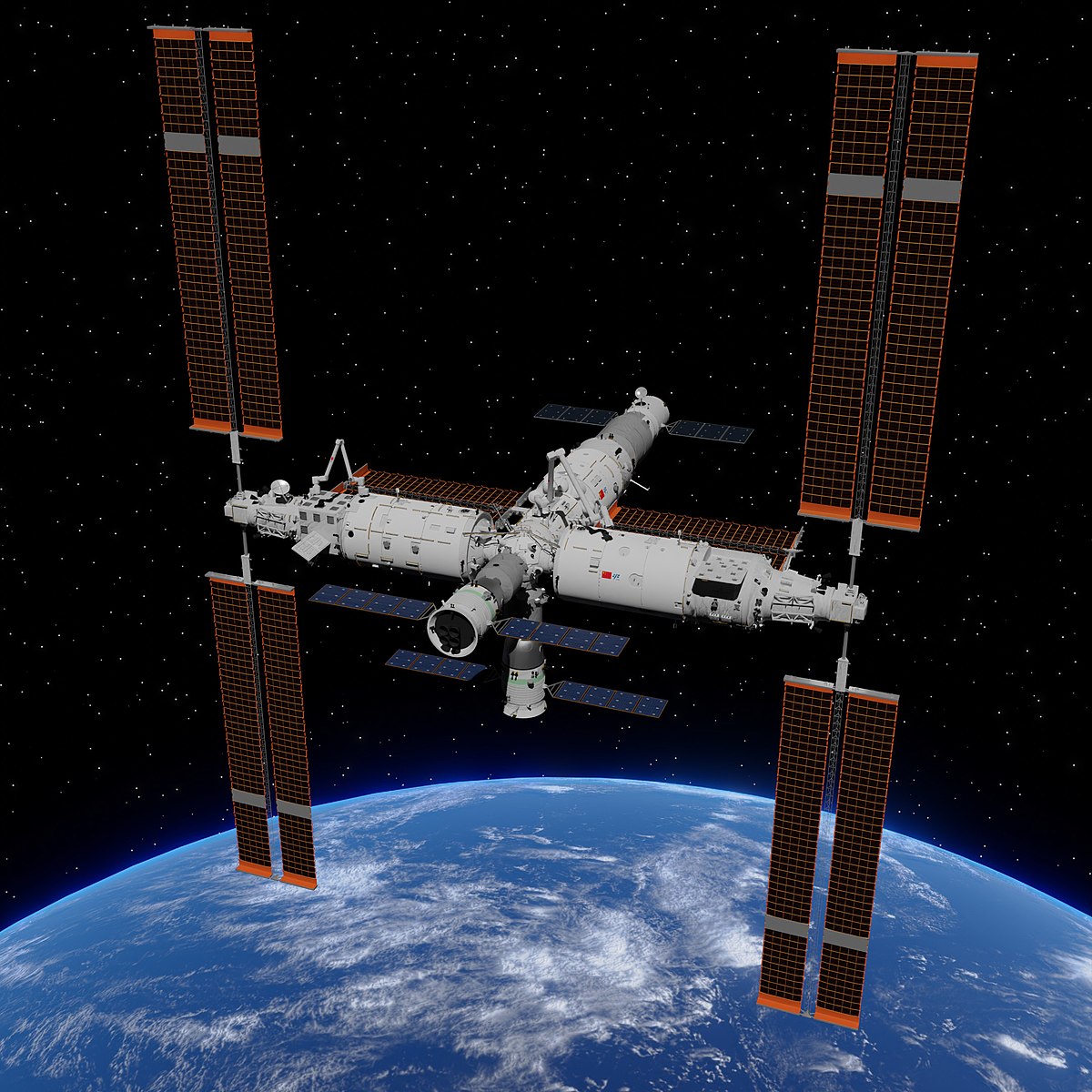
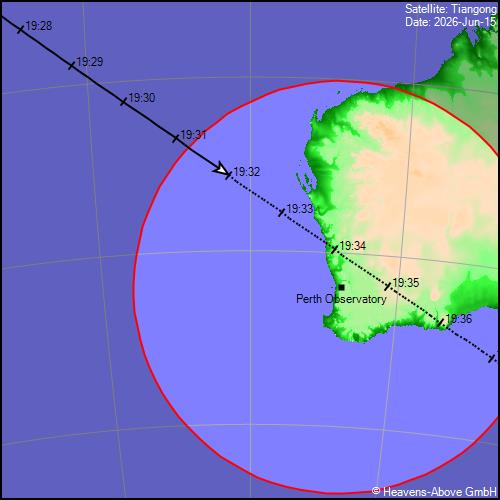
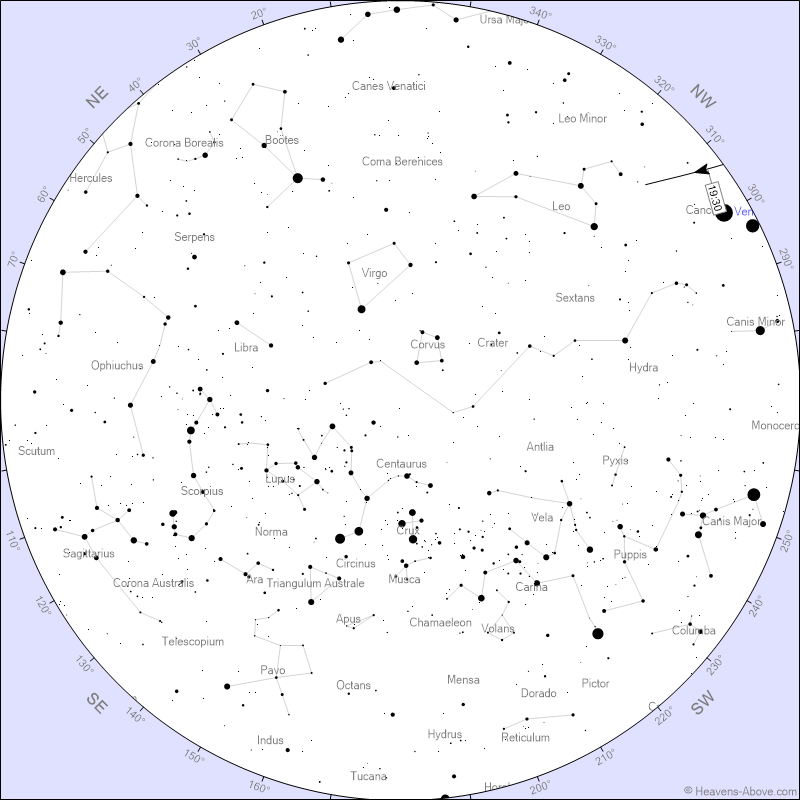
#Perth #WA the Chinese Tiangong Space Station will fly over at 7:31 pm
#perthnews #perthevents #wanews #communitynews #westernaustralia #perthlife #perthtodo #perthhappenings
1
4
100

Jun 12
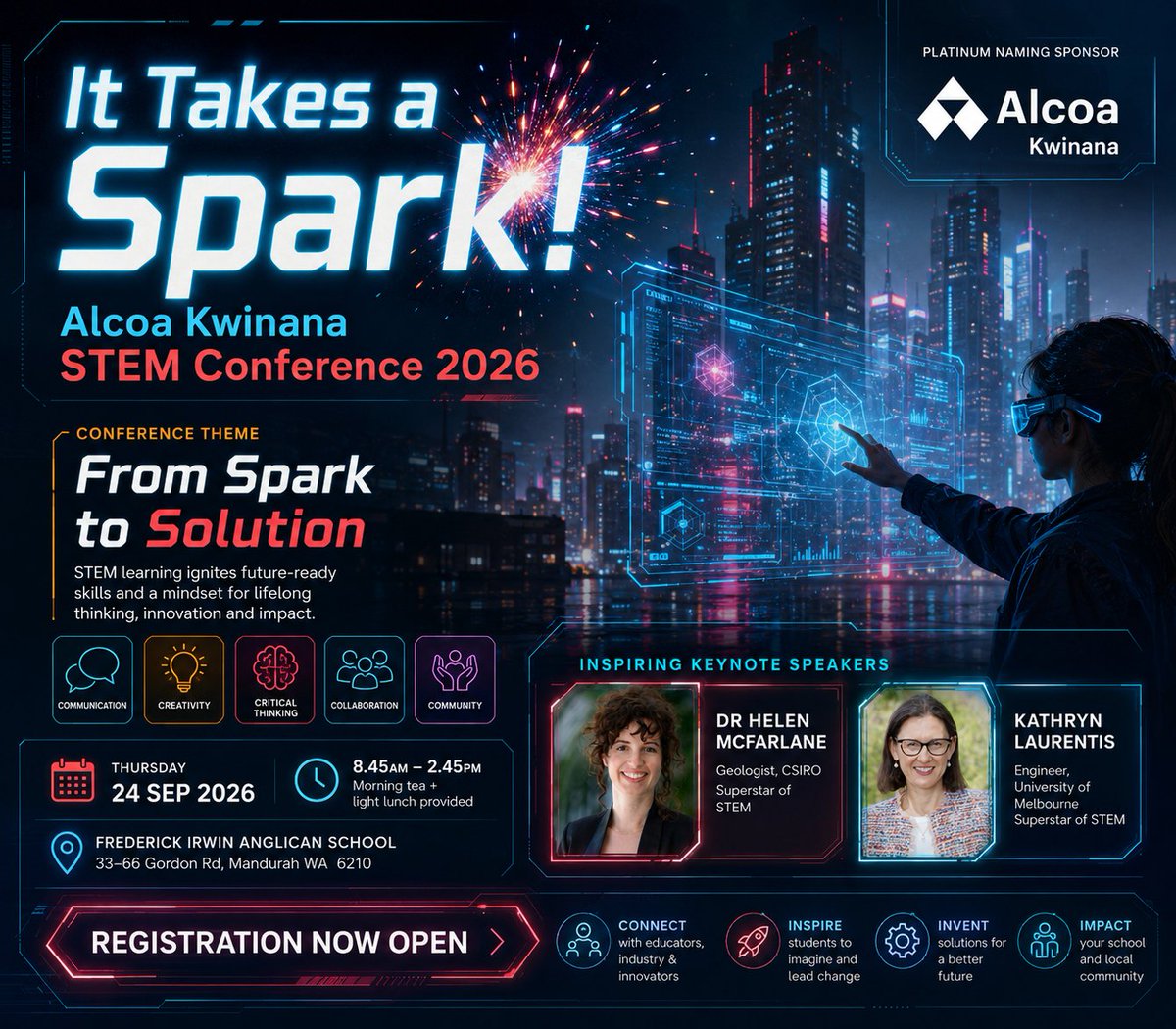
🚀⚡ FROM SPARK TO SOLUTION: WA'S BIGGEST STEM CONVERSATION IS BACK! ⚡🚀
What starts as a spark of curiosity can become the next great invention, breakthrough, or solution to a real-world challenge.
Join educators, students, industry leaders, and STEM organisations from across Western Australia for the 2026 It Takes a Spark! Alcoa Kwinana STEM Conference, a day dedicated to inspiring the next generation of thinkers, creators, innovators, and problem-solvers.
This year's theme, "From Spark to Solution", explores how STEM education develops the future-ready skills that matter most: communication, creativity, critical thinking, collaboration, and community. These are the skills that empower young people to become lifelong learners and change-makers.
We're also excited to welcome Alcoa Kwinana as our Platinum Naming Sponsor, supporting a conference that continues to grow and strengthen connections between schools, educators, students, and industry.
🌟 Keynote Speakers
👩🔬 Dr Helen McFarlane
Geologist, CSIRO and Superstar of STEM
👩🔬 Kathryn Laurentis
Engineer, University of Melbourne and Superstar of STEM
Whether you're looking to discover innovative STEM programs, connect with like-minded educators, showcase your school's achievements, or be inspired by leaders in science, technology, engineering, and mathematics, this conference is for you.
📅 Date: Thursday, 24 September 2026
🕘 Time: 8:45am – 2:45pm
📍 Location: Frederick Irwin Anglican School, Mandurah WA
☕ Morning tea and a light lunch included
🎟️ Early Bird registrations close 14 August 2026
Book now: loom.ly/PDrXGWg
🎤 Presenters Wanted!
Are you a teacher, educator, school leader, or student doing something amazing in STEM or STEAM?
We're looking for:
✨ Problem-solvers
✨ Change-creators
✨ Innovative educators
✨ Student leaders
✨ Schools with inspiring STEM programs
Presenting teacher registrations are free (up to two presenters), while student presenters receive discounted registration, a certificate, and a special gift.
Let's celebrate the incredible STEM learning happening across Western Australia and inspire the next generation to turn today's sparks into tomorrow's solutions.
#perth #wa #perthnews #wanews #communitynews #westernaustralia #perthlife #perthgram #perthevents #perthhappenings #perthisok #eventsinperth #perthlocal #perthcreatives #PerthTeachers #WATeachers #STEMWA #STEMEducation #STEAMEducation #STEMTeachers #TeacherPD #AustralianTeachers #ProfessionalDevelopment #STEMConference #InnovateTogether #EducationInnovation #CuriosityCreativityCommunity #FutureReady #perthobservatory #perthobs
1
134
Ag Oxidative Response vegas luna (UGLY) ⚛️👿 retweeted
Jun 9
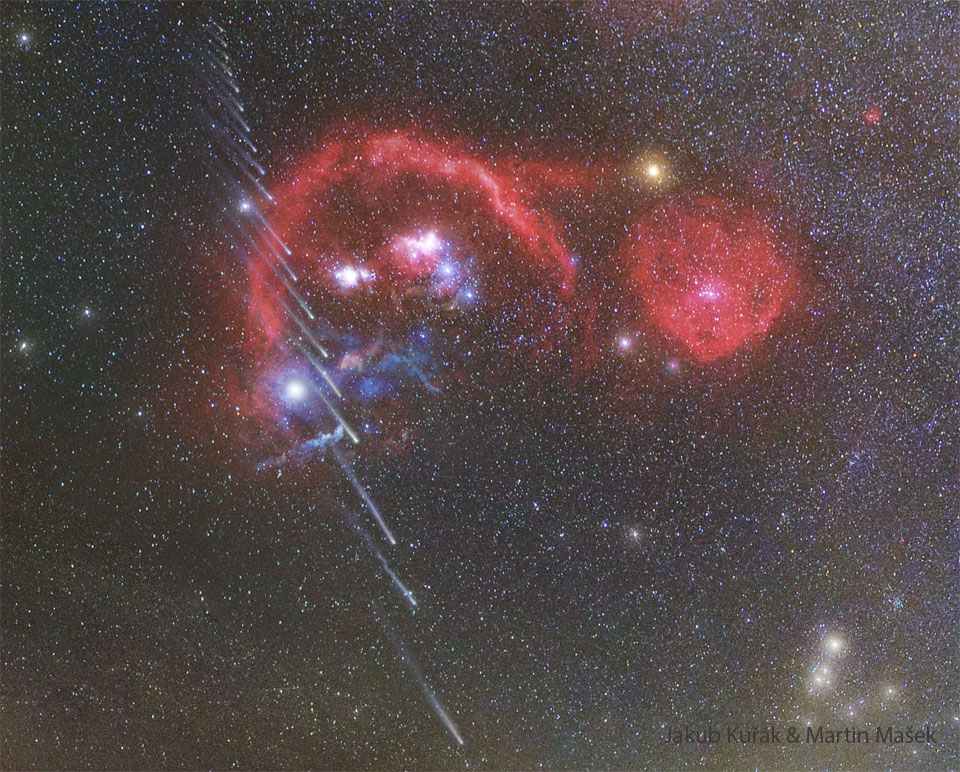
#SpaceImageOfTheDay: Comet R3 PanSTARRS Through Time
Image Credit & Copyright: Jakub Kuřák & Martin Mašek (FZU of the Czech Academy of Sciences)
#APOD #Perth #WA #space #spacenews #perthnews #wanews #communitynews
2
7
124

❀Angelady❀ 🇦🇺 retweeted
Jun 8
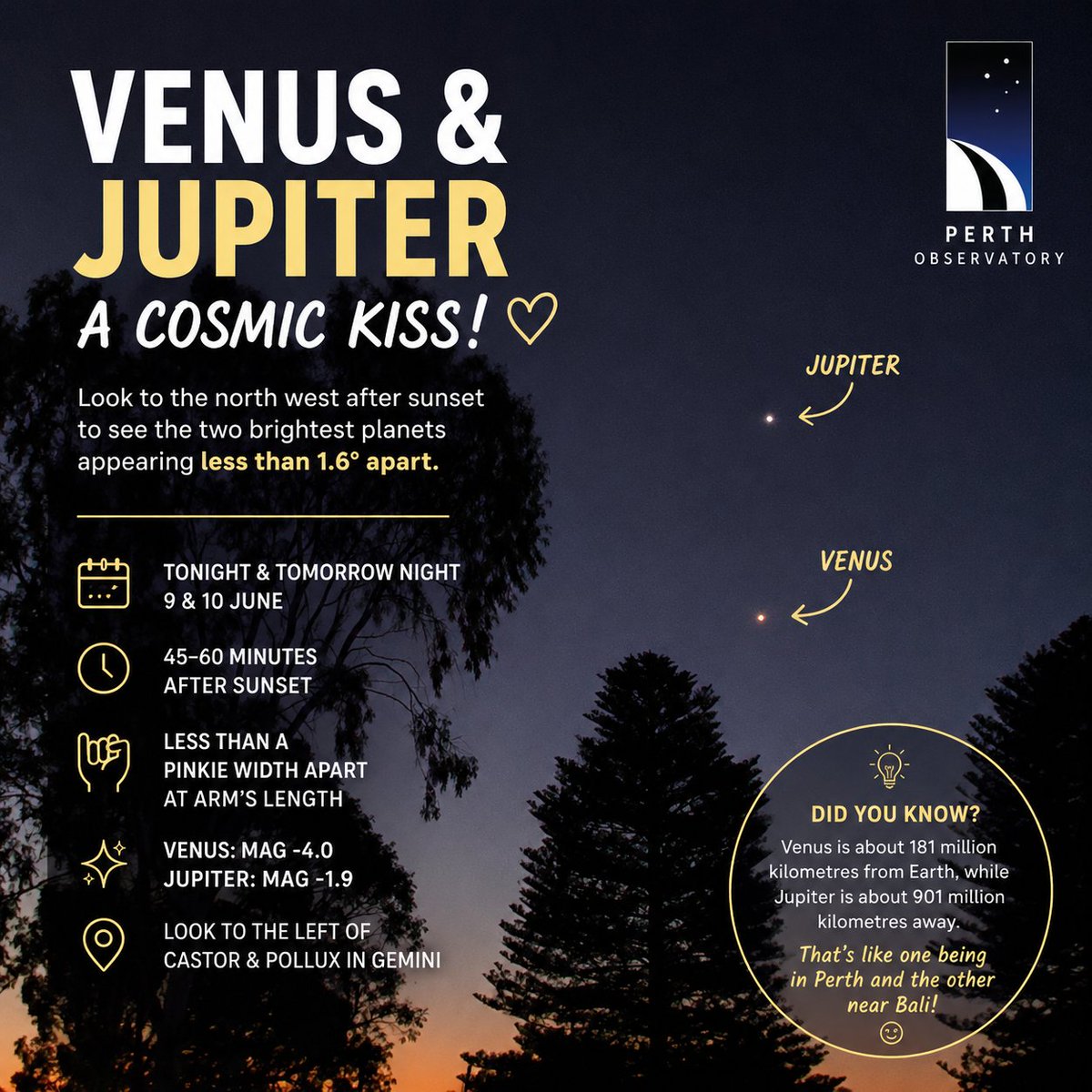
😂🪐💕 BREAKING: Venus and Jupiter Caught Canoodling Over Perth! 💕🪐😂
If you've been looking towards the north west after sunset and wondering why two bright "stars" seem to be getting uncomfortably close to each other, you're not imagining things. Venus and Jupiter are having a very public celestial meetup.
Tonight and tomorrow night (9 and 10 June), the two brightest planets in our evening sky will appear less than 1.6° apart, making them look like they're sharing a romantic moment in the night sky.
This event is known as a planetary conjunction, an apparent alignment of objects in the sky. While Venus and Jupiter appear side by side from our perspective here on Earth, they're actually nowhere near each other in space. Venus is currently about 181 million kilometres from Earth, while Jupiter is about 901 million kilometres away.
That's a bit like two people appearing to stand next to each other in a photo, except one is in Perth and the other is somewhere near Bali.
For the best view of this cosmic canoodling:
🌅 Look towards the north west about 45 to 60 minutes after sunset.
🤏 The pair will be separated by less than a pinkie finger's width when held at arm's length.
✨ Venus will be dazzling at magnitude -4.0.
✨ Jupiter will be glowing nearby at magnitude -1.9.
⭐ Look to the left of Castor and Pollux in Gemini.
So if you're outside tonight, take a moment to enjoy one of the sky's most charming sights.
Just remember:
❤️ They're not actually close.
❤️ They're not dating.
❤️ Jupiter already has 95 moons and doesn't need any more attention.
❤️ Mercury is definitely feeling left out.
📸 If you manage to photograph this cosmic romance, share your pictures below!
#Perth #WA #westernaustralia #perthnews #wanews #communitynews #astronomynews #spacenews #astronomy #space #perthevents #perthlife #perthgram #perthhappenings #AstronomicalEvents #CelestialEvents #Venus #Jupiter #Conjunction #PlanetaryConjunction #NightSky #Stargazing #SolarSystem #AstronomyCommunity #photography #astrophotography #nightphotography #nightscape #perthobservatory #perthobs
1
1
11
271
Jun 7
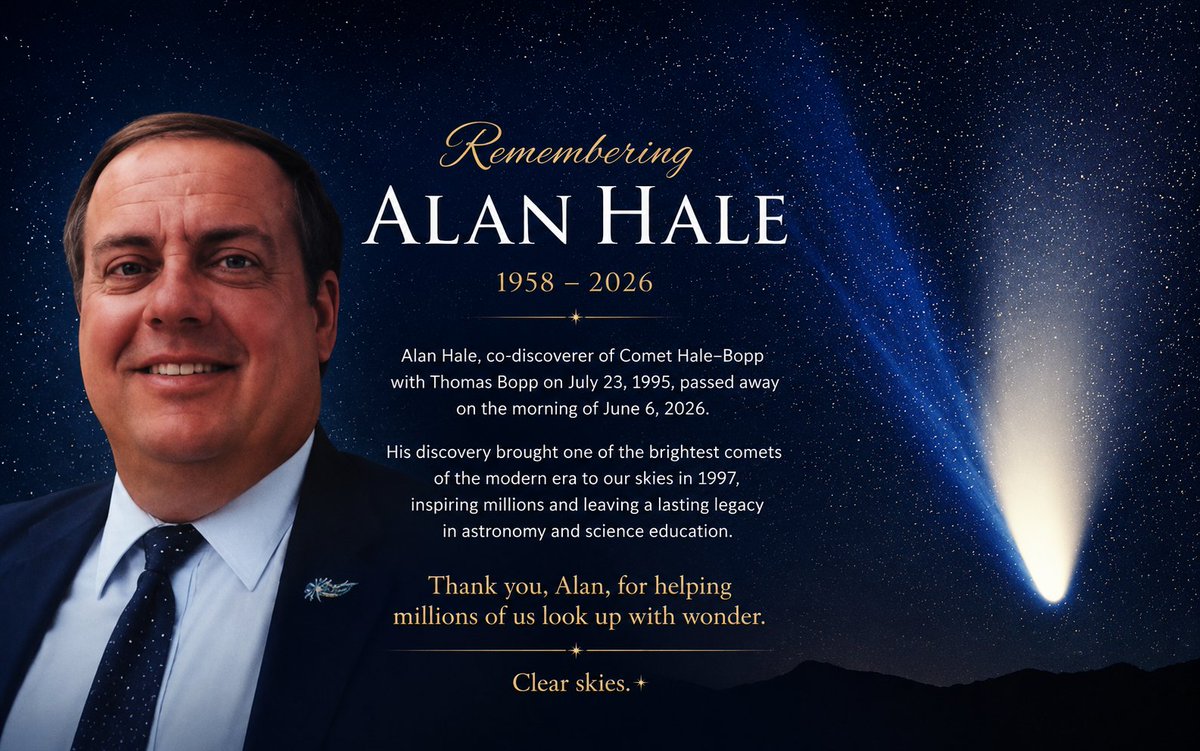
Vale Alan Hale (1958–2026) 🌠
It is with great sadness that we acknowledge the passing of astronomer Alan Hale.
Alan's wife, Vickie, announced that he passed away on the morning of 6 June 2026.
Alan Hale will forever be remembered as one of the co-discoverers of the magnificent Comet Hale–Bopp, one of the brightest and most widely observed comets of the modern era. On 23 July 1995, Alan Hale and Thomas Bopp independently discovered the comet that would later bear both of their names.
When Comet Hale–Bopp swept across our skies in 1997, it became a once-in-a-generation celestial spectacle. Visible to the naked eye for a record 18 months and captivating millions of people around the world, it inspired countless future astronomers and rekindled a sense of wonder about our place in the Universe.
Beyond his famous discovery, Alan was a passionate advocate for astronomy and science education. He authored numerous books and articles, gave talks around the world, and dedicated much of his life to sharing the night sky with others. His enthusiasm, knowledge, and generosity helped make astronomy more accessible to people from all walks of life.
For many astronomers, both professional and amateur, Comet Hale–Bopp was their first unforgettable celestial event. Alan's discovery left an enduring mark on astronomy and created memories that will last a lifetime.
Our thoughts are with Vickie, his family, friends, colleagues, and the global astronomy community during this difficult time.
Clear skies, Alan. Thank you for helping millions of us look up with wonder. 🌠💫
"The stars belong to all of us, and through your work, you helped bring them a little closer."
#Perth #WA #westernaustralia #perthnews #wanews #communitynews #astronomynews #spacenews #astronomy #space #AlanHale #ValeAlanHale #RIPAlanHale #astronomer #Comets #CometHaleBopp #HaleBopp #AstronomyLovers #AmateurAstronomy #AstronomyLife #ScienceEducation #Skywatching #AstronomyCommunity #ForeverInOurHearts #ClearSkies #RememberingAlanHale #RestInPeace #GoneButNeverForgotten #perthobservatory #perthobs
5
13
338
Jun 4
Vale Geoffrey Thomas ✈️
It is with great sadness that we learn that aviation journalist Geoffrey Thomas has taken his final flight.
For decades, Geoffrey was one of the most respected and recognisable voices in aviation journalism. Whether it was a major airline announcement, a new aircraft entering service, an aviation safety issue, or breaking news from anywhere in the world, Geoffrey was often the first person journalists, broadcasters, industry leaders, and aviation enthusiasts turned to for expert insight.
As the Editor-in-Chief of AirlineRatings.com, he built a reputation for explaining complex aviation topics in a way that everyone could understand. His knowledge of the industry was extraordinary, but it was his passion for aviation that truly set him apart. Geoffrey could speak with equal enthusiasm about the latest airliner technology, airline history, or the future of flight.
For many Australians, Geoffrey became the face and voice of aviation reporting. His calm, measured analysis was a regular feature on television, radio, and in newspapers whenever aviation made headlines. He was trusted because he combined deep expertise with integrity and a genuine love of the industry.
Beyond his professional achievements, Geoffrey was simply a wonderful person. Generous with his time, encouraging to aspiring journalists, and always willing to share his knowledge, he left a lasting impression on everyone fortunate enough to meet him. In an industry built around connecting people across vast distances, Geoffrey connected people through his storytelling, insight, and enthusiasm.
The aviation community has lost one of its greatest advocates, and Australia has lost one of its finest journalists.
Our thoughts are with Geoffrey's family, friends, colleagues, and the countless people whose lives he touched throughout his remarkable career.
Blue skies and tailwinds, Geoffrey. Thank you for helping us all understand and appreciate the wonder of flight. ✈️🌏💙
#Perth #WA #perthnews #wanews #communitynews #westernaustralia #GeoffreyThomas #ValeGeoffreyThomas #AviationJournalist #AviationLegend #AviationCommunity #AviationNews #AviationExpert #AviationLife #AviationLovers #PilotLife #AirlineIndustry #AviationMedia #Journalism #CommercialAviation #AviationHistory #BlueSkies #LegacyOfFlight #WingsOfMemory #ForeverInOurHearts #RestInPeace #GoneButNeverForgotten #perthobservatory #perthobs

3
11
32
1,063
May 21
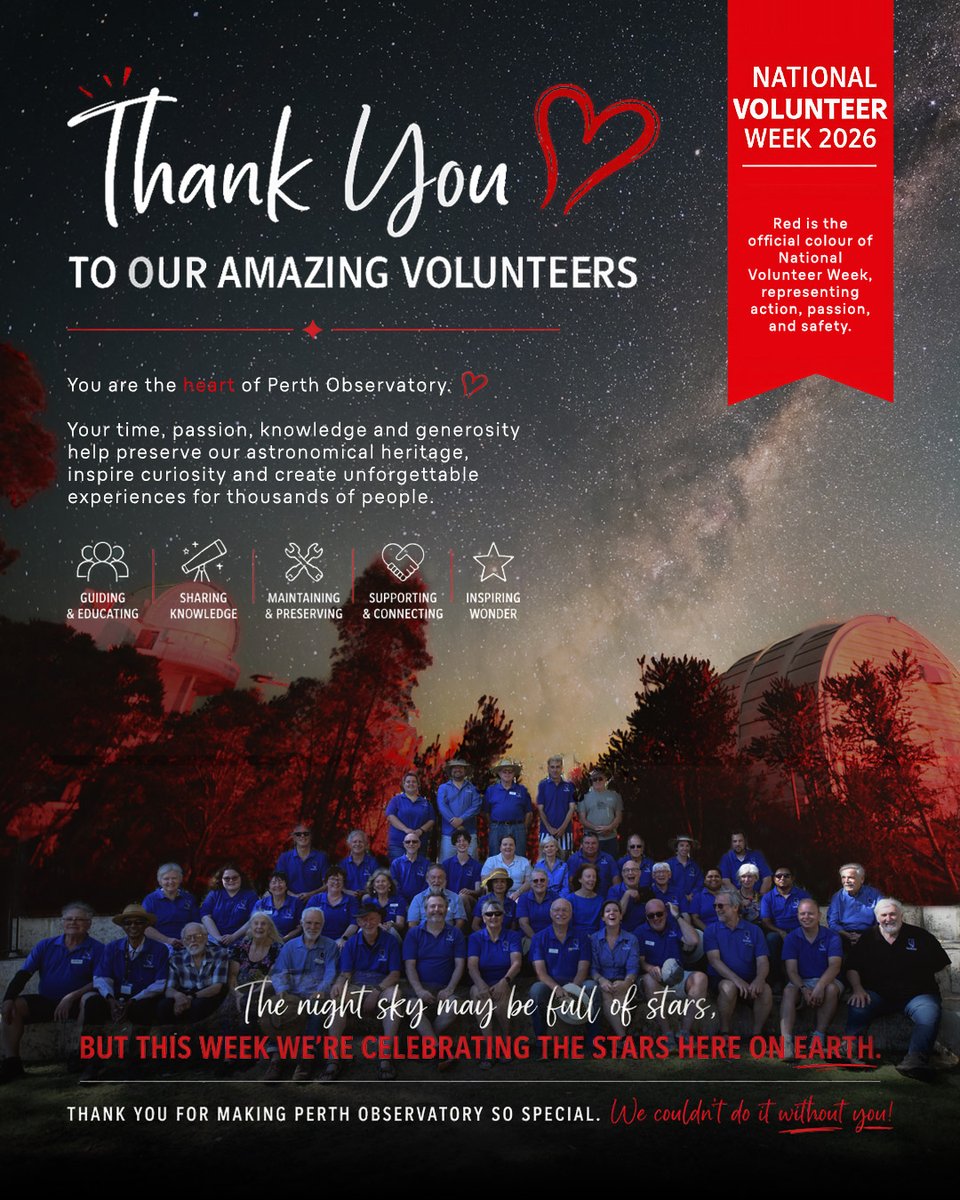
This National Volunteer Week, we want to say a heartfelt thank you to the incredible volunteers who keep Perth Observatory shining.
From welcoming visitors and guiding tours, to sharing their knowledge through telescopes, maintaining our historic buildings and equipment, helping behind the scenes, supporting events, and inspiring thousands of people to look up in wonder, our volunteers are the heart of everything we do.
Last year alone, our volunteers donated over 25 thousand hours of their time, helping us preserve Western Australia's rich astronomical heritage while creating unforgettable experiences for visitors from across Australia and around the world.
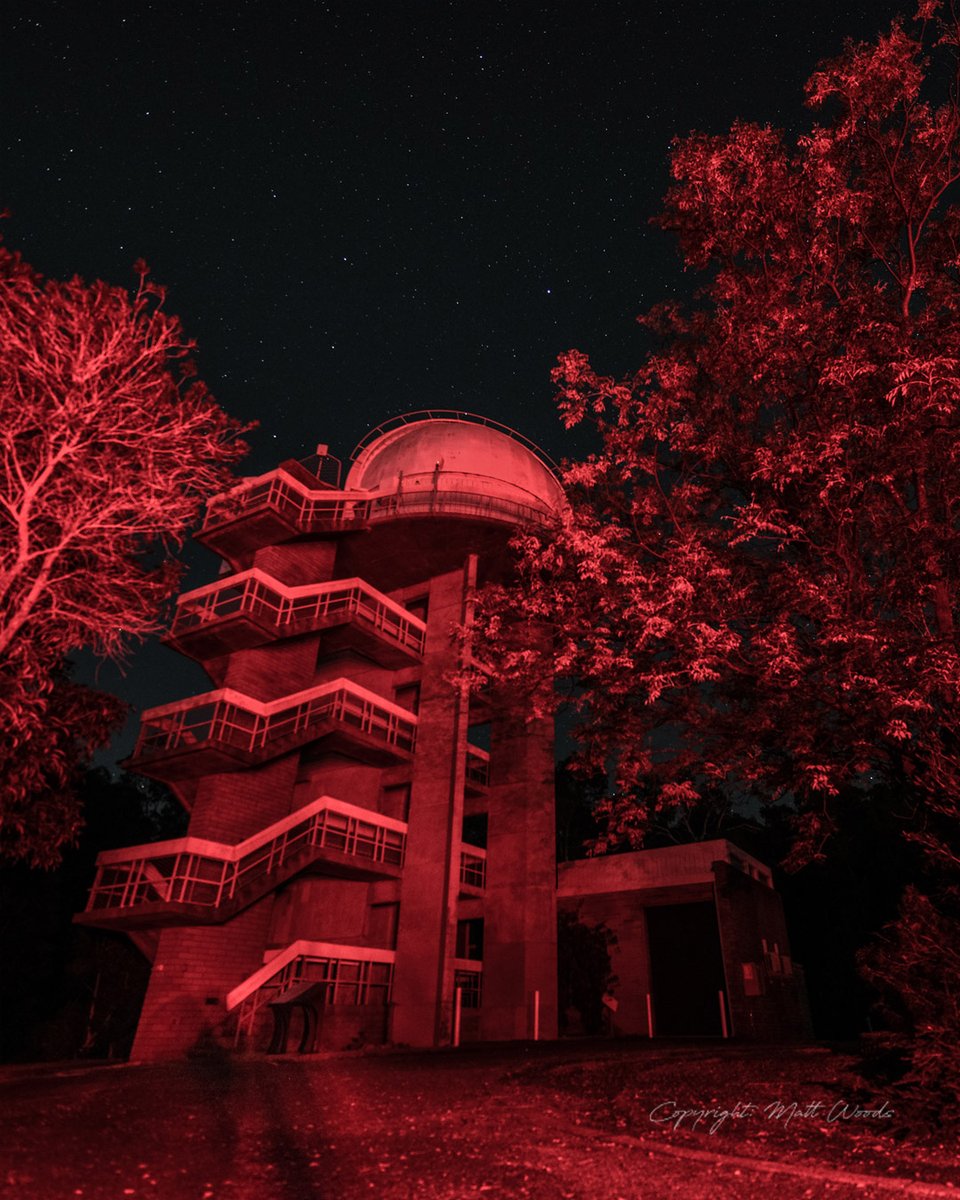
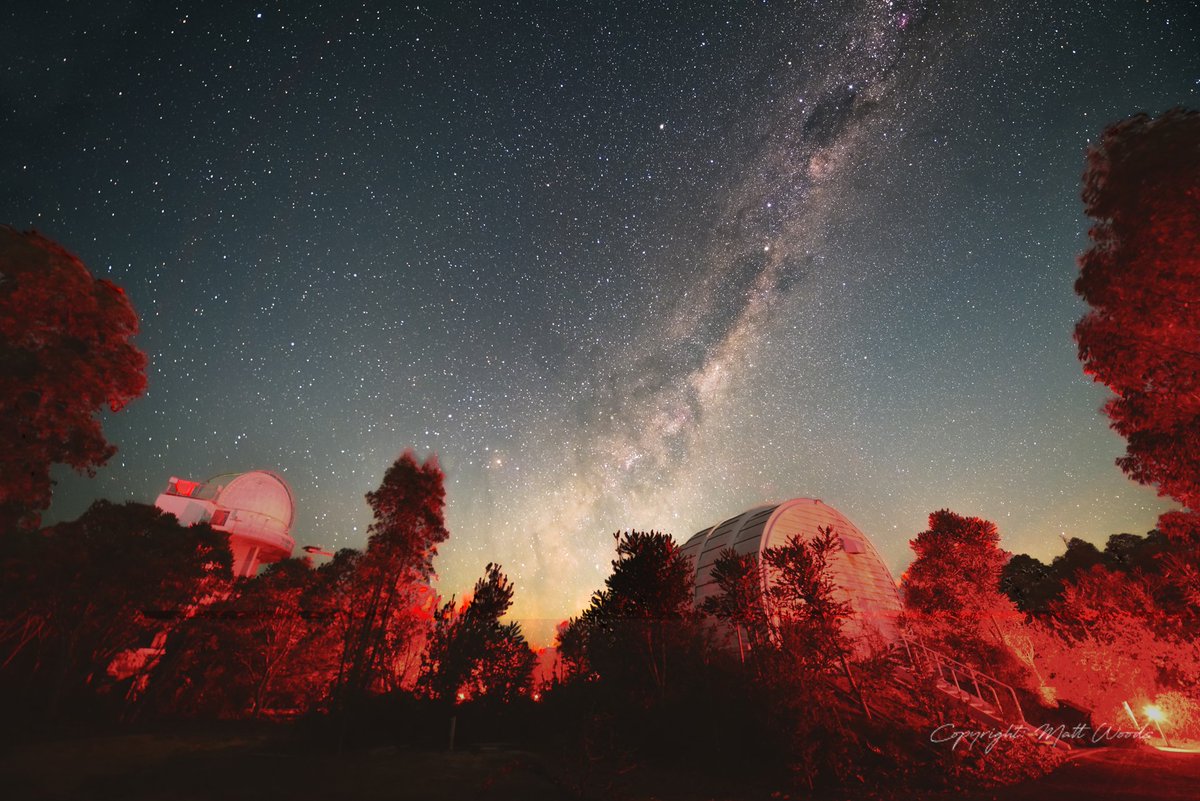
To mark National Volunteer Week, we've illuminated our historic Perth-Lowell Telescope Dome and Meridian Dome in red. Red is the official colour of National Volunteer Week, representing action, passion, and safety. It seemed the perfect way to celebrate the people whose passion, dedication and generosity make so much of what we do possible.
Whether you've been volunteering with us for decades or have only recently joined the team, thank you for your enthusiasm, commitment, friendship and countless contributions.
The night sky may be full of stars, but this week we're celebrating the stars here on Earth.
Thank you to each and every one of our volunteers. Perth Observatory simply wouldn't be the same without you. ❤️
#Perth #WA #perthnews #wanews #communitynews #westernaustrlaia #NationalVolunteerWeek #NVW2026 #ConnectingCommunities #Volunteers #ThankYouVolunteers #PerthHills #VolunteerAppreciation #volunteeringWA #WAvolunteers #CommunitySpirit #Stargazing #SpaceEducation #WesternAustralia #VolunteerWeek #perthobservatory #perthobs
4
107
May 20
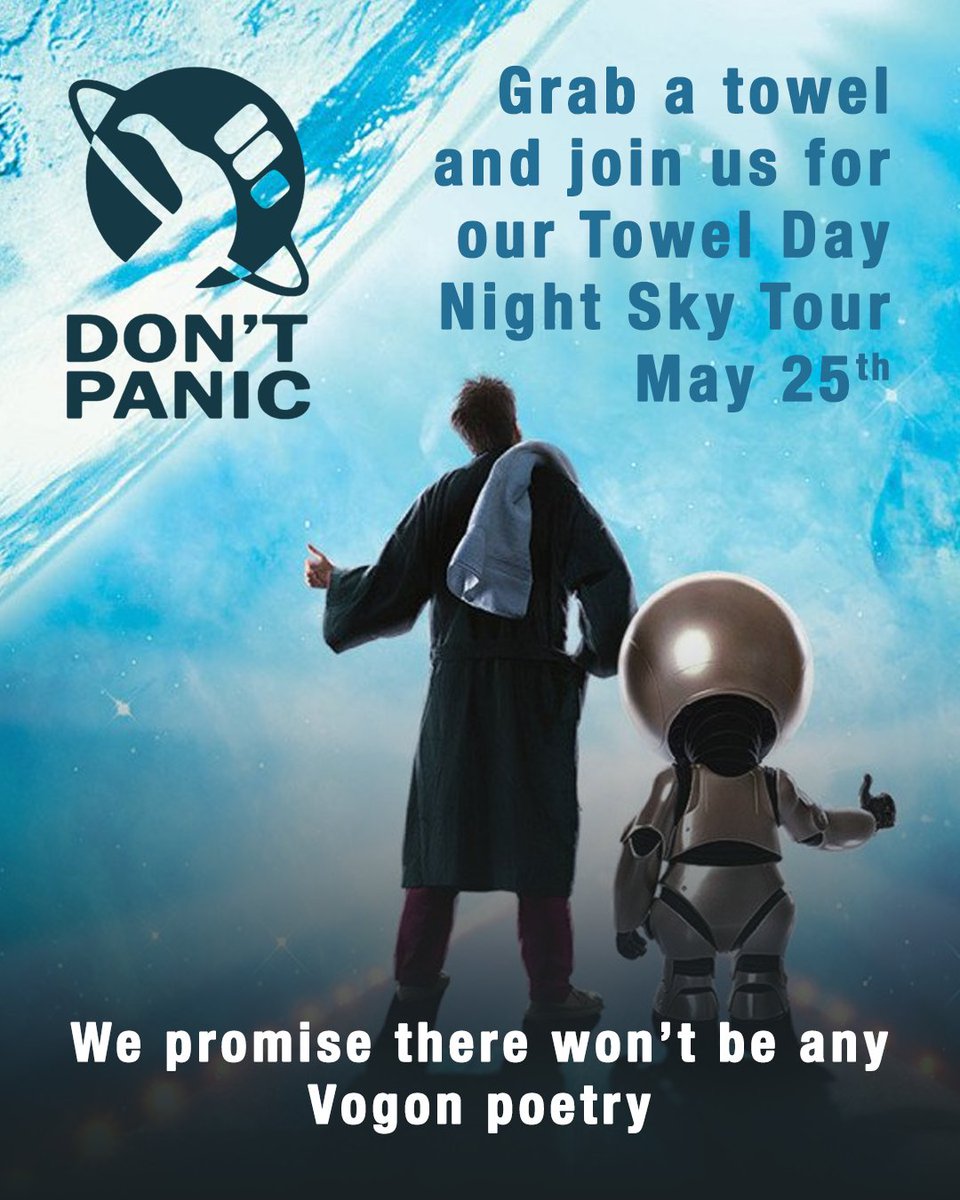
🛸 DON'T PANIC. JUST BRING A TOWEL. 🛸
The answer to life, the universe and everything is 42.
The answer to what you're doing on Monday, 25 May at 7:30 pm should be much easier.
Join us at Perth Observatory for our annual Towel Day Night Sky Tour, a celebration of the legendary The Hitchhiker's Guide to the Galaxy and the most important piece of equipment any interstellar hitchhiker can possess: a towel.
Why a towel?
Because according to the Guide, a towel has immense practical value. It can keep you warm while gazing at the stars, be used as a makeshift cape while fleeing a Vogon poetry recital, or simply help fellow travellers recognise that you are a hoopy frood who really knows where their towel is.
Expect:
🌌 A guided tour of the night sky
🔭 Telescope views of the Moon, Jupiter, star clusters, and nebulae
🏆 Prizes for the best dressed costumes
🧺 Excessive towel ownership
💫 A statistically insignificant chance of being mistaken for the President of the Galaxy
Whether you arrive as Arthur Dent, Ford Prefect, Zaphod Beeblebrox, Trillian, Marvin, a bowl of petunias, or simply as someone who remembered their towel, we'd love to see you there.
Remember: Space is big. Really big. You just won't believe how vastly, hugely, mind-bogglingly big it is. So you may as well come and look at some of it through our telescopes.
📖 Book now before the Vogons demolish your plans: loom.ly/JCh1Kpo
We promise there won’t be any Vogon poetry
Don't Panic. Bring a Towel. 🚀🧺✨
#Perth #WA #perthnews #wanews #communitynews #westernaustrlaia #perthevents #perthlife #perthtodo #perthhappenings #experienceperthhills #experienceperth #experiencewa #justanotherdayinwa #ThisisWA #wanderoutyonder #whatsonwa #TowelDay #TowelDay2026 #DontPanic #HitchhikersGuideToTheGalaxy #DouglasAdams #AnswerIs42 #BringATowel #HoopyFrood #PerthHills #BickleyValley #VisitPerth #Stargazing #perthobservatory #perthobs
2
85
May 14
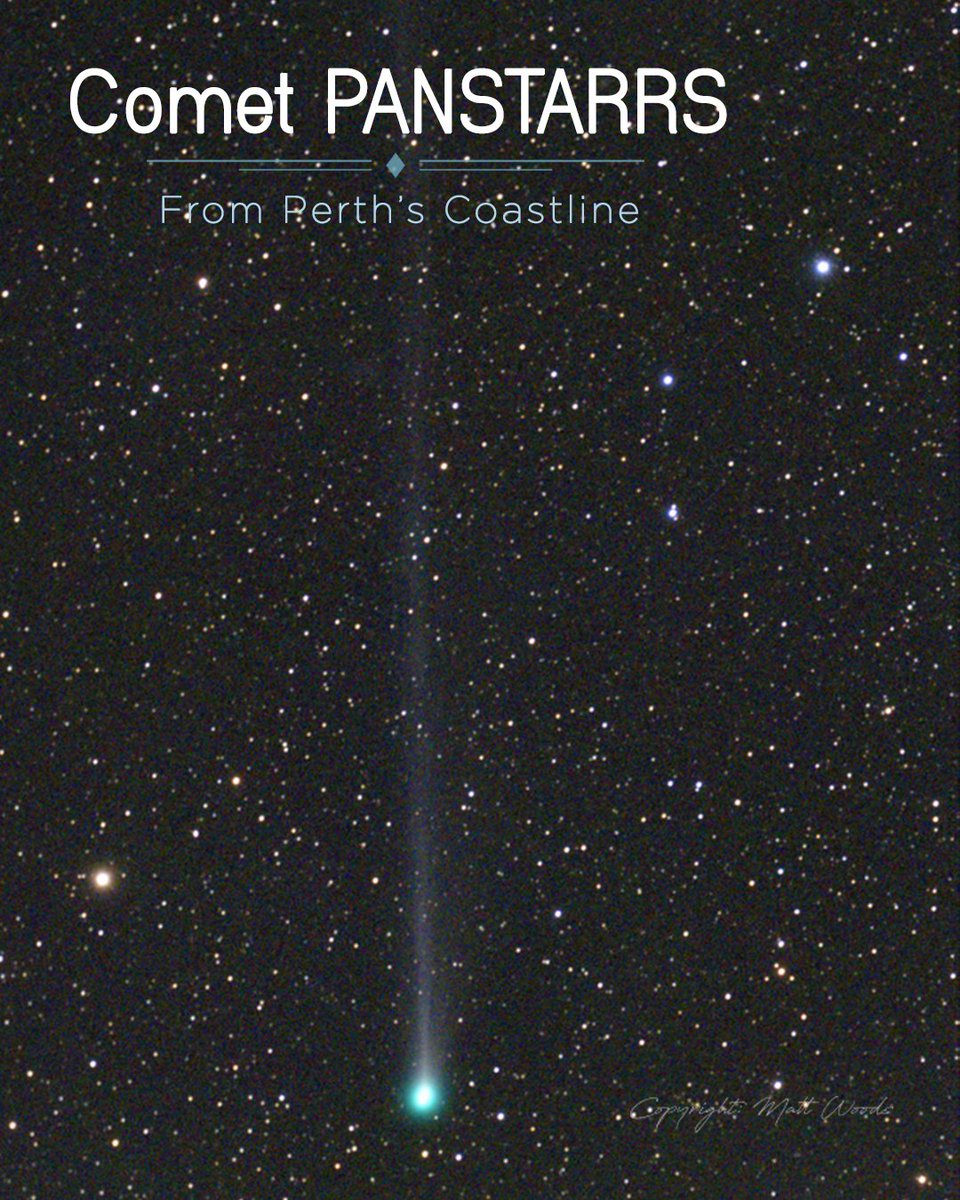
Last Saturday night at around 7 pm, our own Matt Woods headed down to the coast and captured this stunning image of Comet C/2025 R3 (PanSTARRS) using a Seestar S30 Pro telescope. This image is made up of a total of 16 one minute exposures, revealing the faint glow and delicate tail of this ancient icy visitor.
C/2025 R3 (PanSTARRS) is a distant traveller that has paid a brief visit to our corner of the Solar System before continuing its long journey back into the depths of space.
The comet was discovered in 2025 by the Pan-STARRS survey telescope in Hawaii. Pan-STARRS, short for the Panoramic Survey Telescope and Rapid Response System, spends its nights scanning the skies for near-Earth asteroids, new comets, and anything else unexpected… including, hypothetically, the occasional Goa’uld Ha’tak warship.
Since May, the comet has been appearing low in the western sky within the constellation of Orion, currently sitting near the bright star Saiph just after sunset.
For the best chance of spotting it:
🔭 Head out around 7 pm
🌅 Look low toward the western horizon
⭐ Find the constellation Orion and the star Saiph
🏖️ Choose a location with a clear horizon, such as a beach or open coastline
Unfortunately, the comet is no longer visible to the naked eye. However, it may still be glimpsed with binoculars under dark skies, and a camera with a 100 mm lens and tripod will greatly improve your chances of capturing this faint cosmic visitor.
With an estimated orbital period of around 170,000 years, C/2025 R3 (PanSTARRS) likely originated from the distant Oort Cloud, a vast spherical shell of icy objects surrounding the Solar System. Long before humans built pyramids, invented writing, or argued online about whether Pluto is a planet, this comet was already silently making its way through deep space.
#Perth #WA #spacenews #space #astronomynews #astronomy #perthnews #wanews #communitynews #westernaustralia #perthlife #perthgram #perthhappenings #whatsinthesky #stargazing #astrotourism #astrotourismwa #nightphotography #astrophotography #nightscapes #astrophoto #comet #comets #CometWatch #CometC2025R3 #CometPanSTARRS #perthobservatory #perthobs
3
8
317
May 10
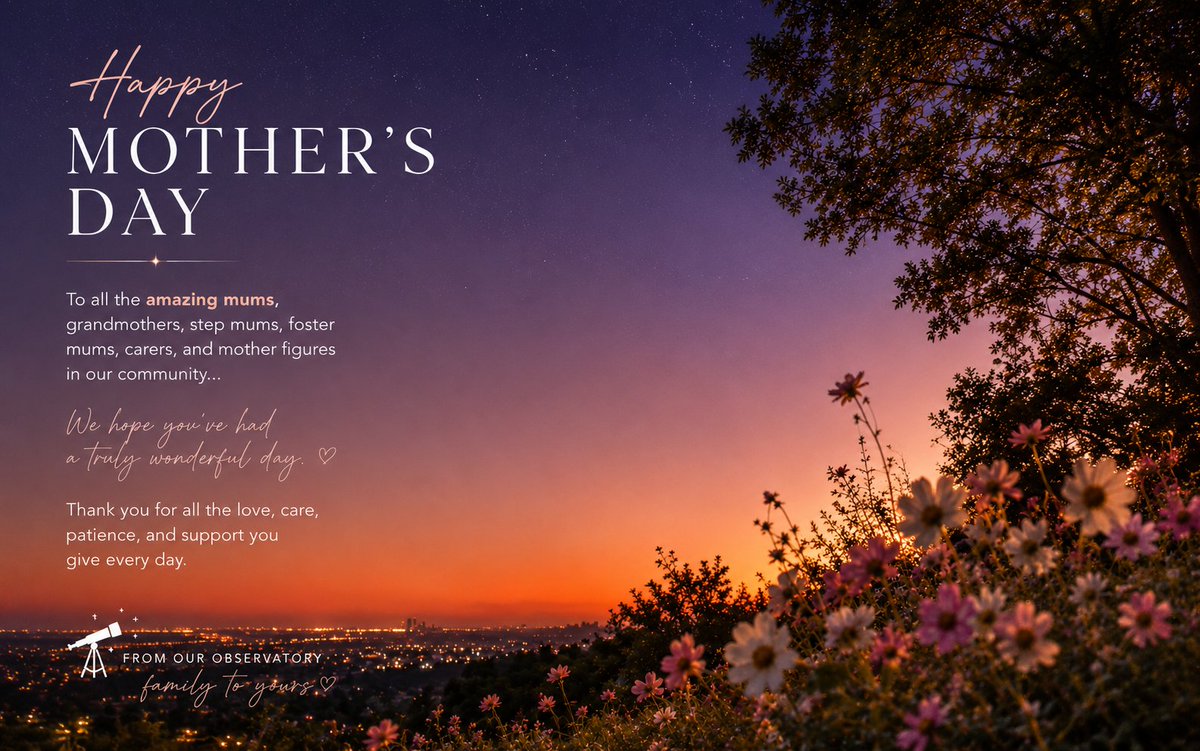
To all the amazing mums, grandmothers, step mums, foster mums, carers, and mother figures in our community, all of us here at Perth Observatory hope you’ve had a truly wonderful Mother’s Day 💐✨
Whether your day was filled with family gatherings, quiet moments under the stars, phone calls from loved ones, or simply a well-earned cup of tea and some peace and quiet, we hope you felt appreciated for everything you do.
Mums are often the first people to encourage curiosity, imagination, and wonder about the world around us. You help inspire the next generation of dreamers, explorers, scientists, and stargazers 🌌
Thank you for all the love, care, patience, and support you give every day.
From our Observatory family to yours, Happy Mother’s Day ❤️🔭
#perth #WA #WesternAustralia #MothersDay #HappyMothersDay #MothersDay2026 #WomenInSTEM #Family #Community #Love #ThankYouMum #MumLife #PerthObs #PerthObservatory
3
104
May 4
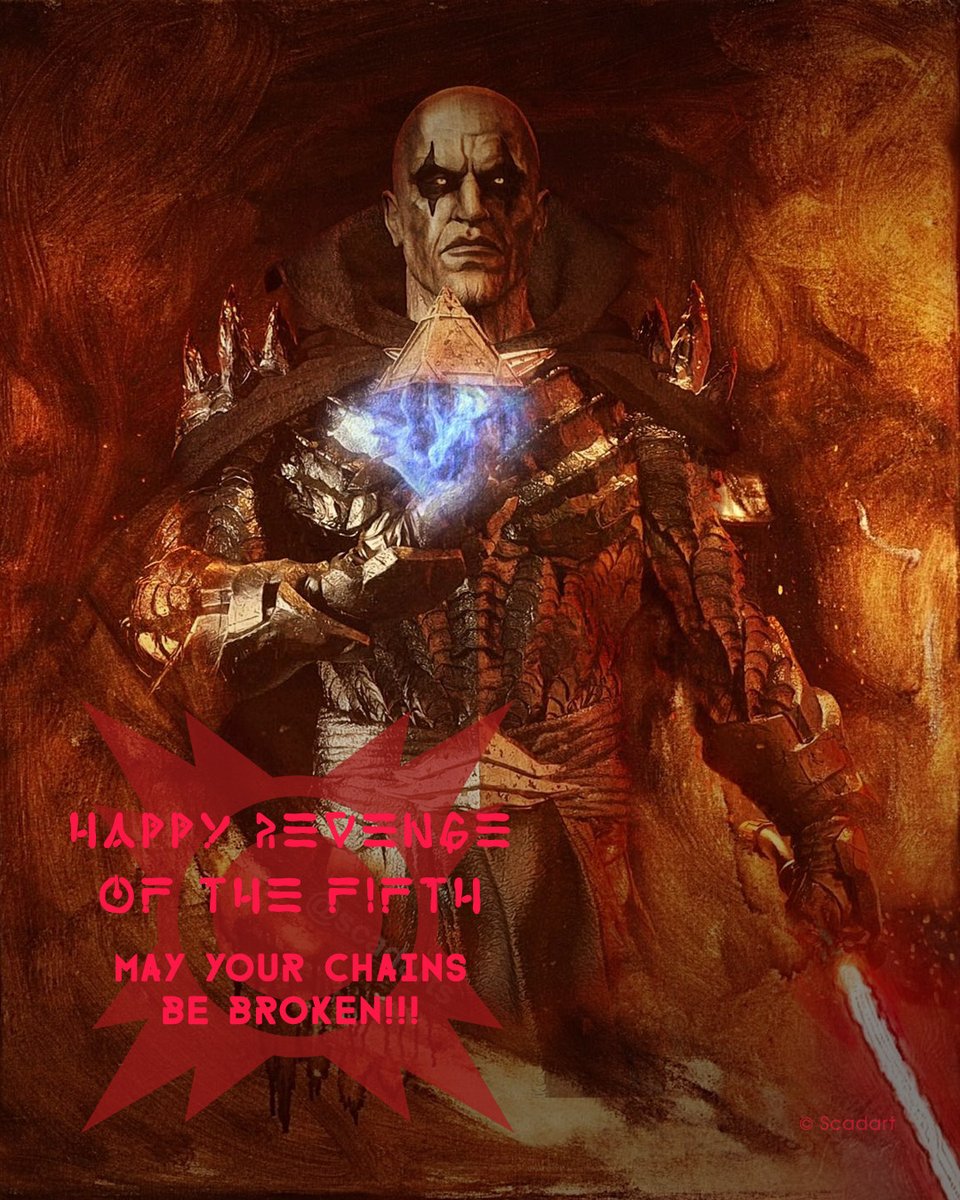
Happy Revenge of the Fifth everyone
May your chains be broken!!!
#MayThe4thBeWithYou #DarthBane #StarWars #StarWarsDay #StarWarsDay2026 #starwarsfan #starwarsfans #sith #maytheforcebewithyou #starwarsnerd #starwarsnerds #lucasfilm #darkside #revengeofthefifth #revengeofthesith #sithlord #Perth #WA #westernaustralia #perthnews #wanews #communitynews #perthhappenings #whatsoninperth #empire #perthobservatory #perthobs
2
140
May 4
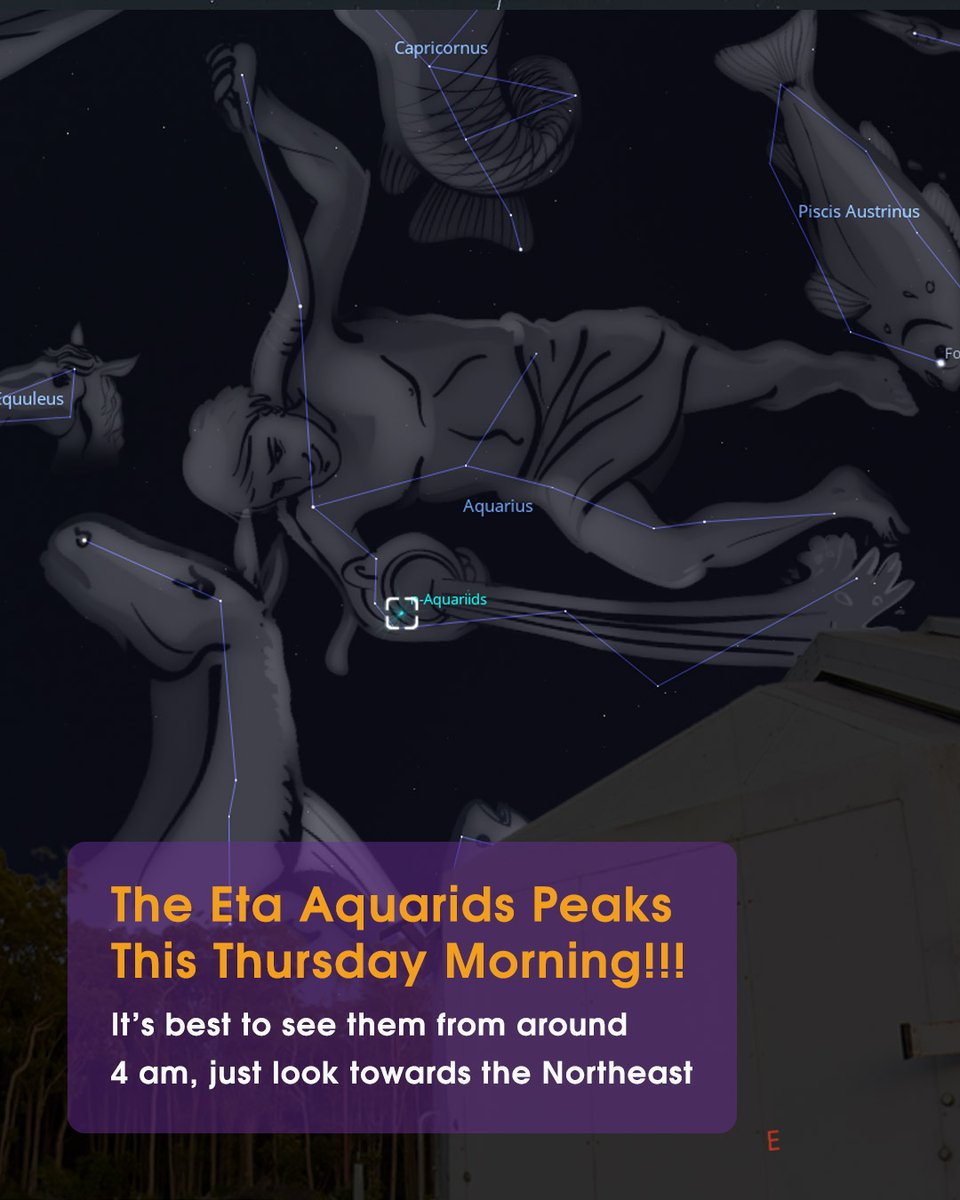
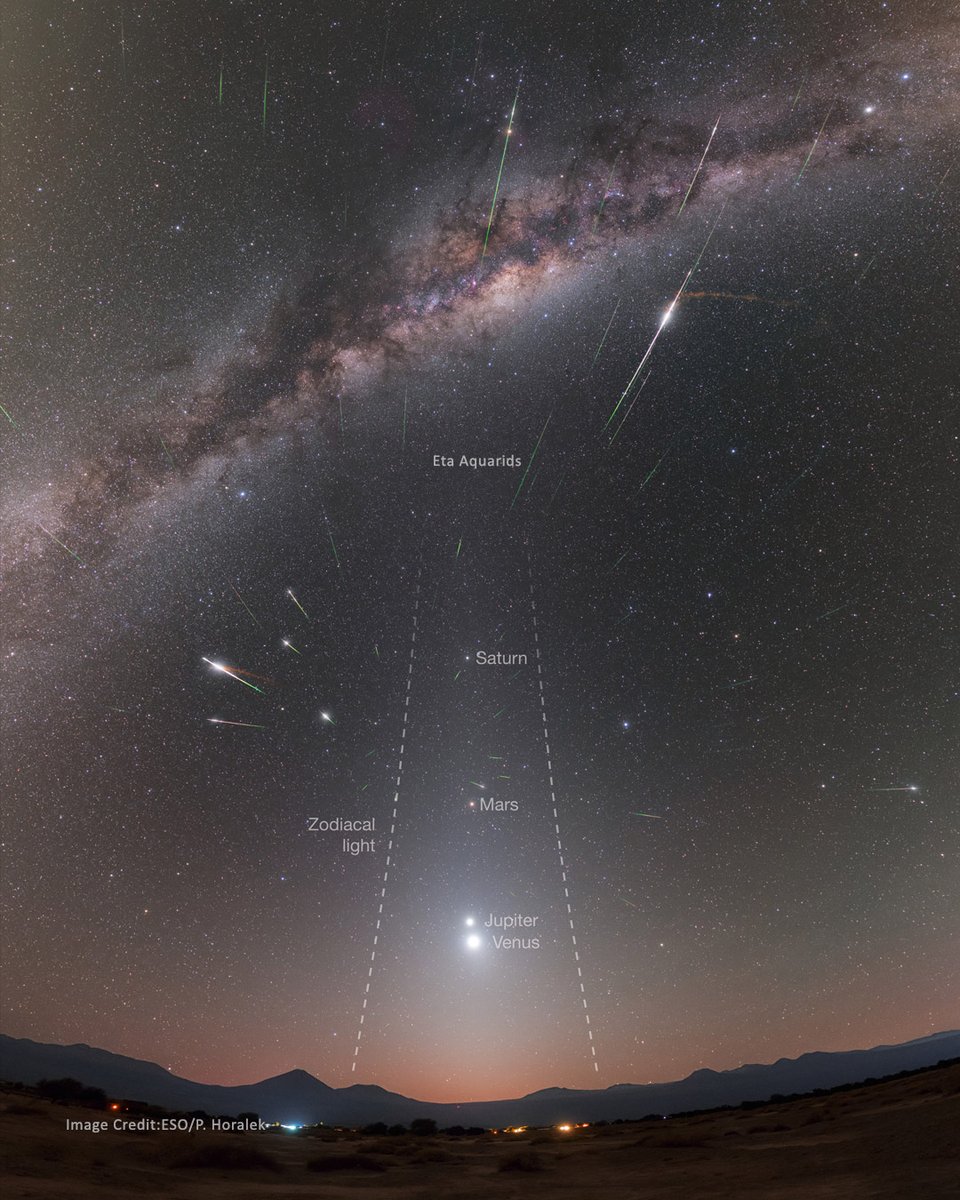
The Eta Aquarids Meteor Shower peaks on the morning of Thursday May 7th!!!
The cosmic crumbs left behind by Halley’s Comet tail, they happen each year around this time of year as Earth passes through this leftover trail. The tiny dust and ice particles collide with our atmosphere at 66 kilometres per second—burning up in brilliant streaks of light.
The meteor shower is named after the star Eta Aquarii, part of the constellation Aquarius, which marks the region of the sky where the meteors appear to radiate from.
While Halley's Comet won’t return until 2061, its dusty trail continues to create not one, but two annual meteor showers—the Eta Aquarids in May, and the Orionids in October, with the Eta Aquarids being first documented by Western astronomers in the 19th century.
In 2026, the Eta Aquarids are expected to peak before dawn on Thursday, May 7th, but you can see meteors from late April through to about 10 May. The best time to look is from 2:30 am to sunrise, while Aquarius is in the eastern sky. The Moon will be near the last Quarter phase so the light pollution from it, will cause the fainter meteor to be hard to see.
During peak, observers in dark-sky areas can expect to see up to 20 meteors per hour, with long, fast trails—some even leaving glowing trains that linger for a few seconds. In the City we may only see a few per hour due to the light pollution.
Tips to see:
• Find a dark location.
• Give your eyes 15 minutes to adjust to the dark.
• Lie back to see as much sky as possible.
• You just need your eyes and a bit of patience.
• Dress warmly
Best Places to Watch in Perth:
• Rest stops in the Central Wheatbelt
• Golden View Lookout at Mundaring Weir
• Herron Point, and Island Point Reserve
• Bold Park (near Reabold Hill)
#perth #wa #perthnews #wanews #communitynews #westernaustralia #perthlife #perthgram #perthhappenings #EtaAquarids2026 #EtaAquarids #Halley #meteors #meteorshowers #shootingstars #astrophotography #photography #nightphotography #nightscapes #astrotourism #astrotourismwa #astronomynews #astronomy #spacenews #space #AstronomyEvents #FamilyFun #roadtrip #perthobservatory #perthobs
2
7
186
May 3
Happy Star Wars Day, everyone. May the 4th be with you!!!
Image: Kyle Katarn
#MayThe4thBeWithYou #MayThe4th #StarWars #StarWarsDay #StarWarsDay2026 #starwarsfan #starwarsfans #jedi #sith #mandalorian #maytheforcebewithyou #starwarsnerd #starwarsnerds #lucasfilm #lightside #darkside #Perth #WA #westernaustralia #perthnews #wanews #communitynews #perthhappenings #whatsoninperth #perthobservatory #perthobs

6
153
May 2
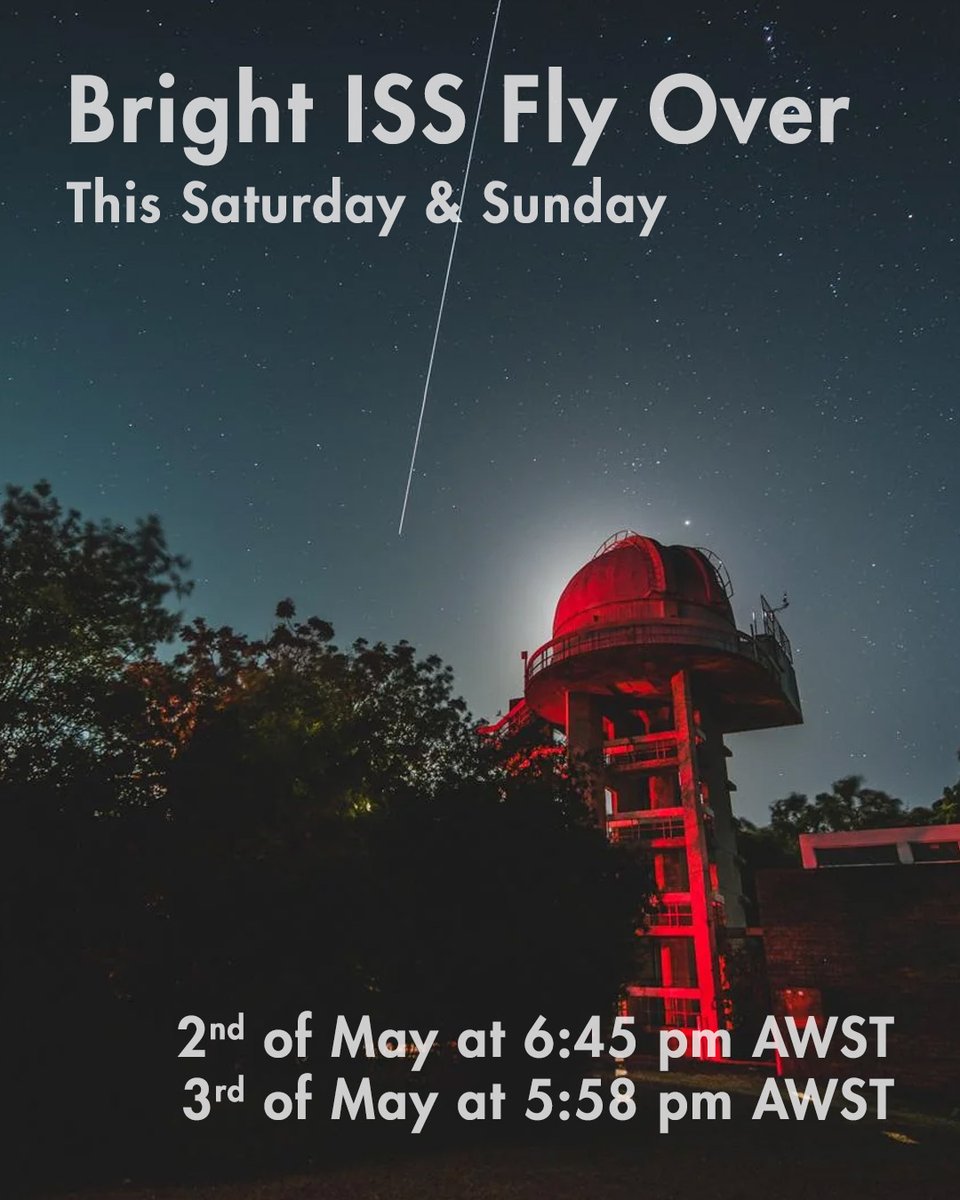
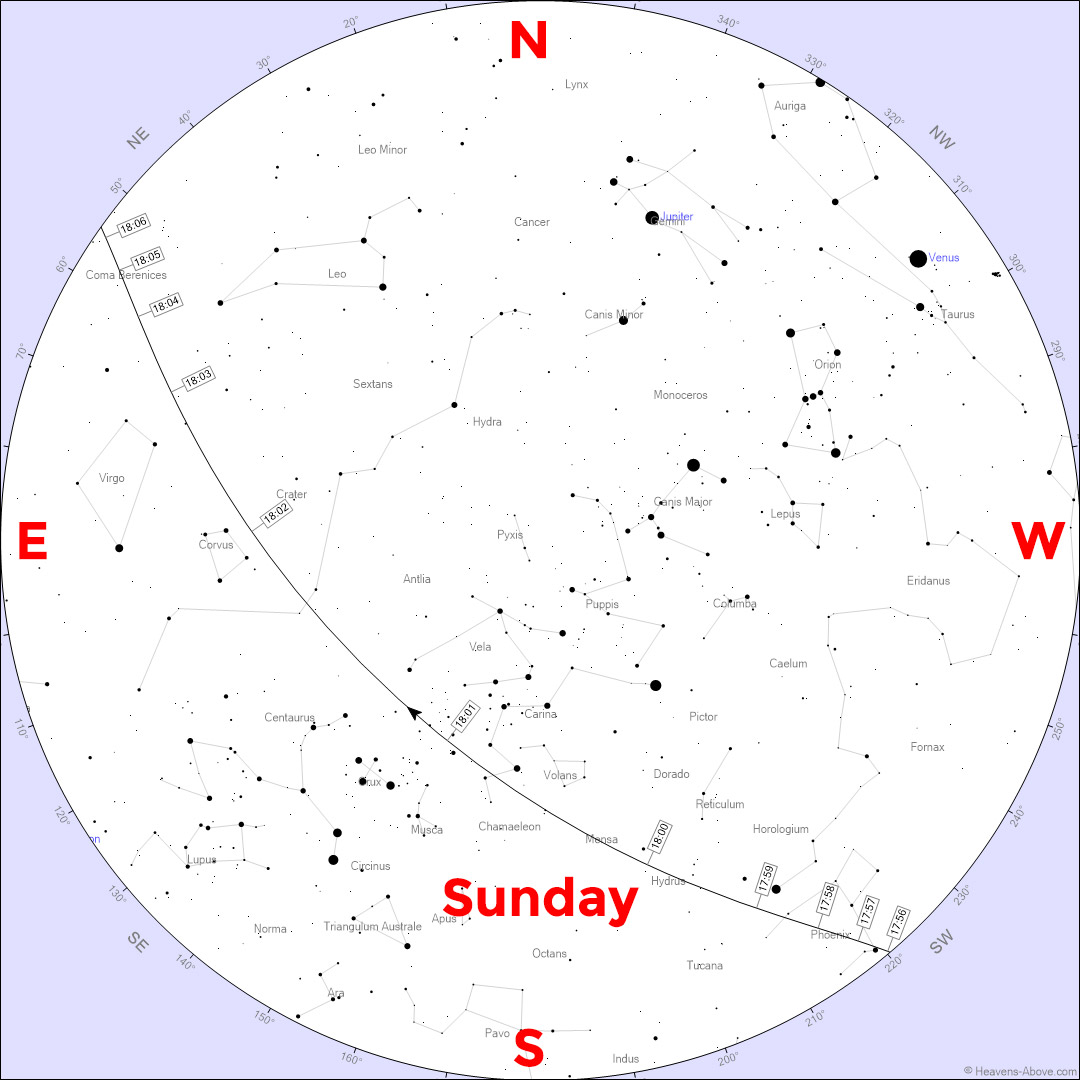
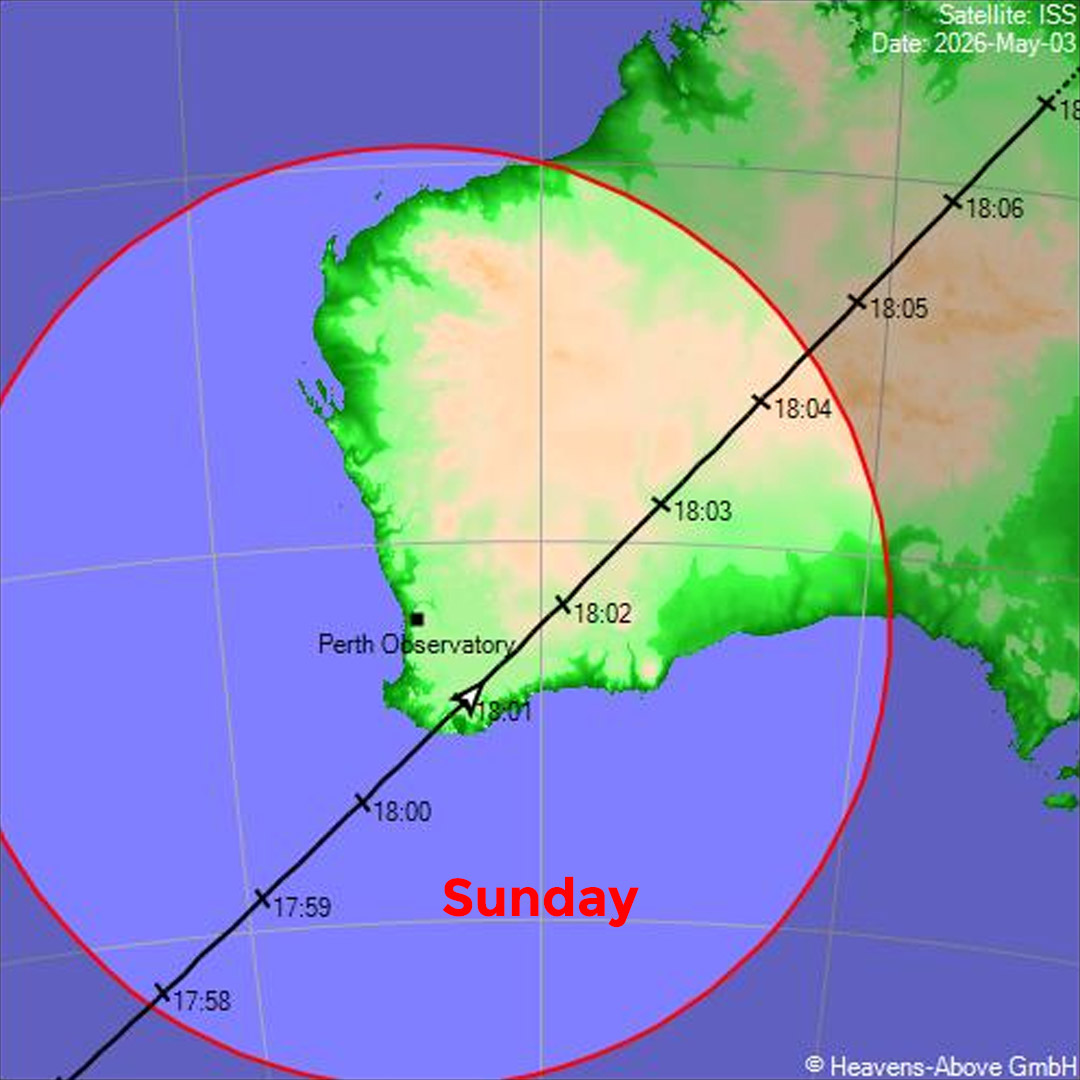
The International @Space_Station will fly over extremely bright tonight at 5:58 pm (Mag -3.6). To use the attached maps, face south and hold the map above your head, and you'll see the path of the flyover.
#spotthestation #internationalspacestation #spacestation #iss #Perth #WA #perthnews #wanews #communitynews #westernaustralia #perthnow #perthgram #perthevents #perthlife #perthtodo #perthhappenings #ThisisWA #wanderoutyonder #perthhills #perthisok #perthlife #experienceperthhills #experienceperth #perthentertainment #seeperth #whatsoninperth #stargazing #nightsky #perthobservatory #perthobs
1
6
295
May 1
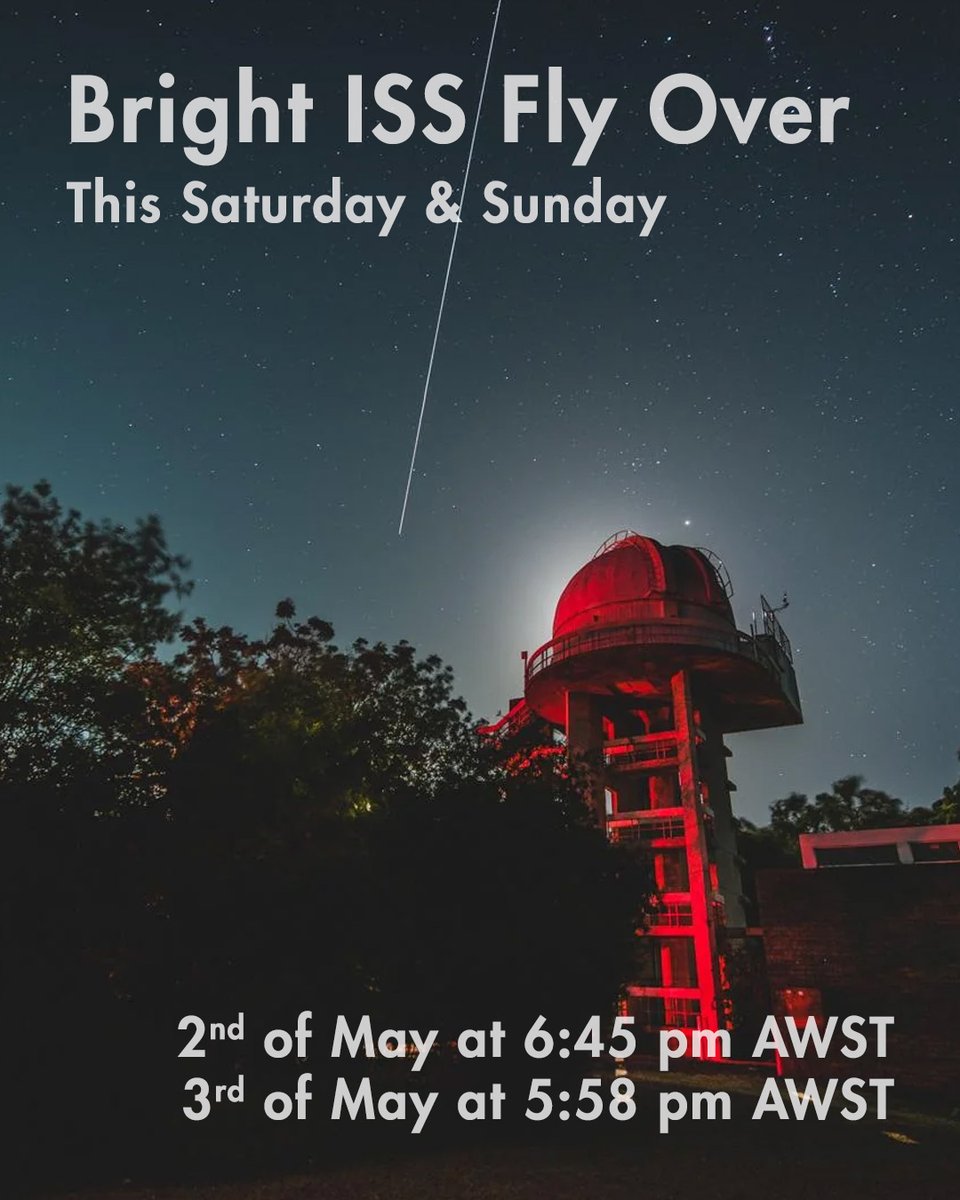
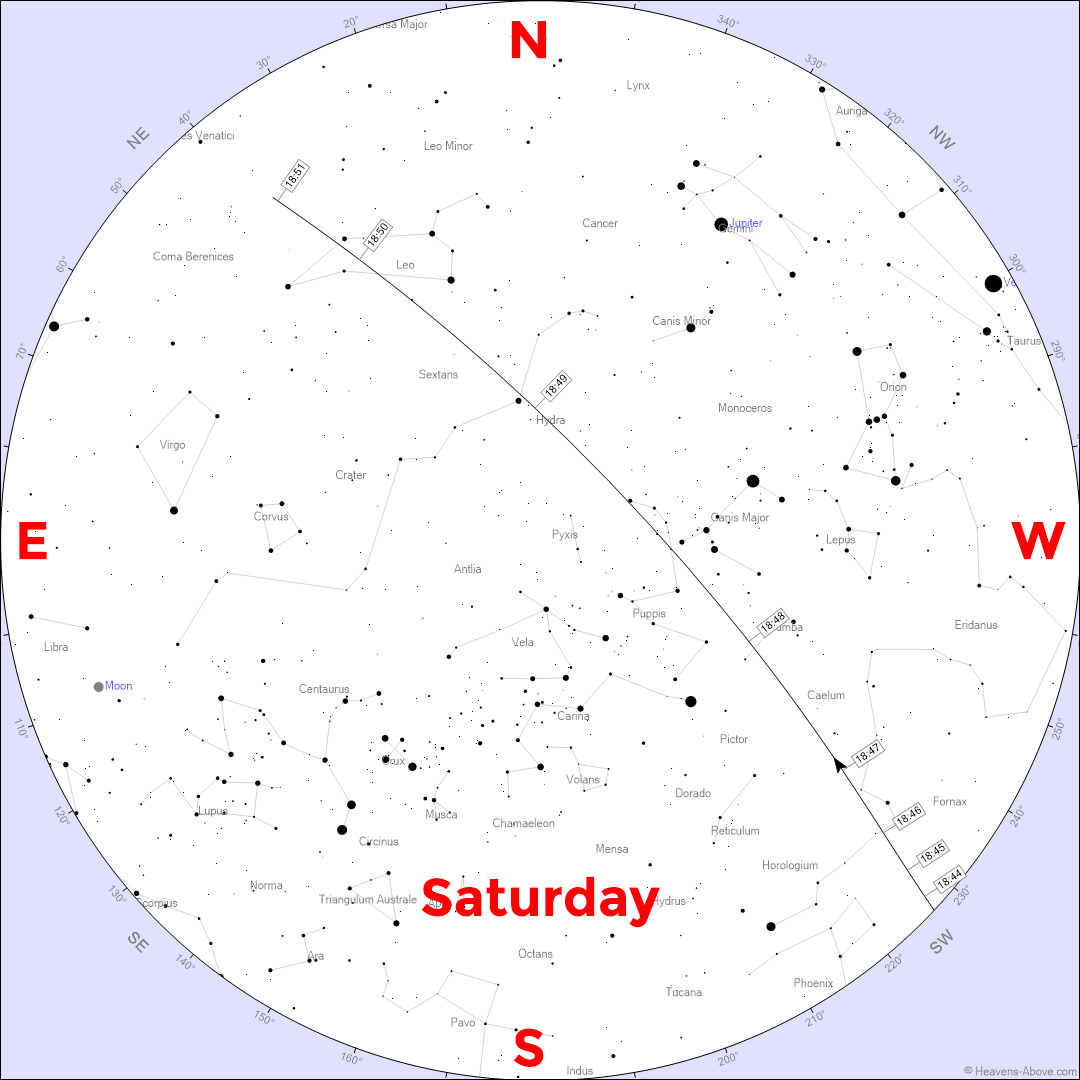
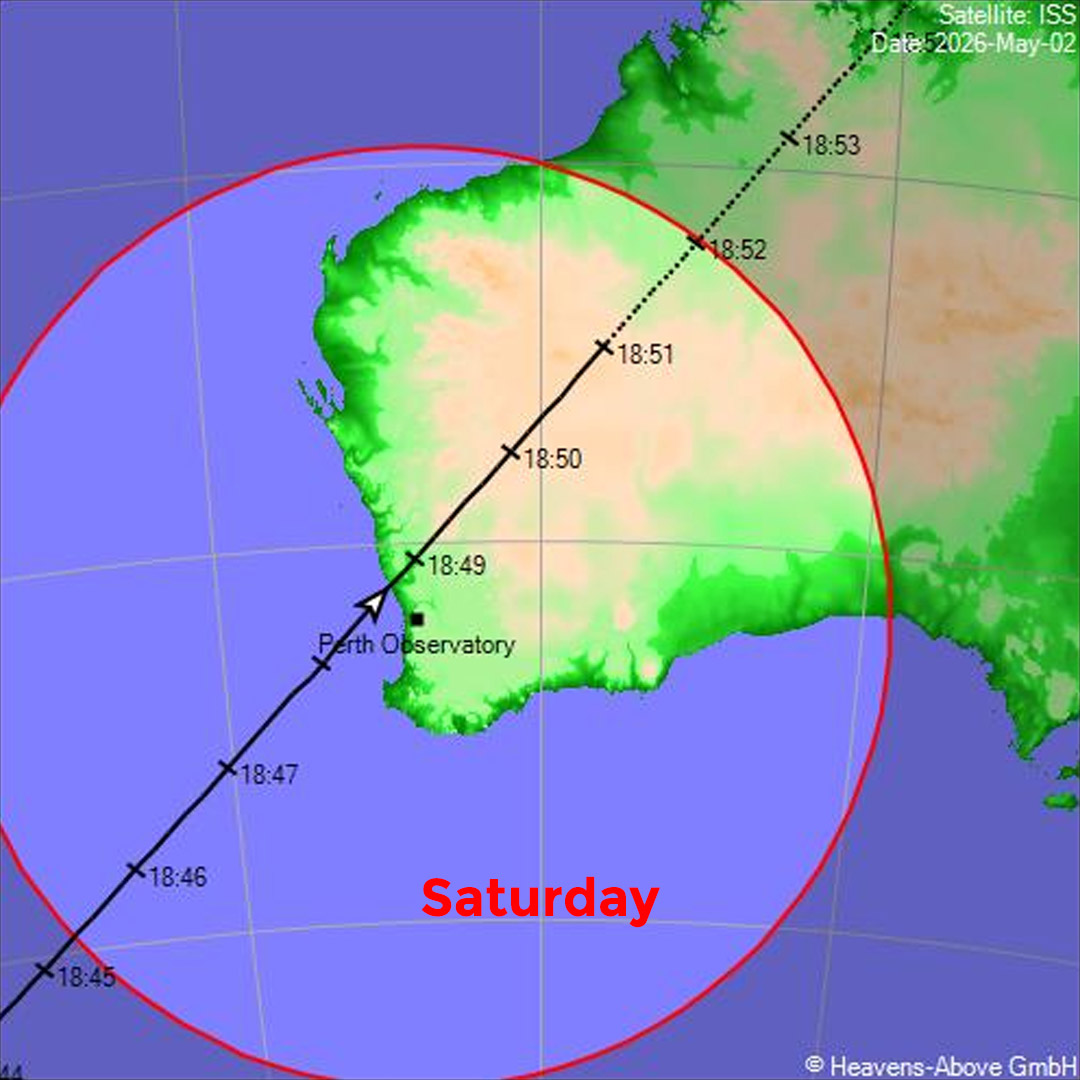
The International @Space_Station will fly over extremely bright tonight at 6:45 pm (Mag -3.6).
To use the attached maps, face south and hold the map above your head, and you'll see the path of the flyover.
#spotthestation #internationalspacestation #spacestation #iss #Perth #WA #perthnews #wanews #communitynews #westernaustralia #perthnow #perthgram #perthevents #perthlife #perthtodo #perthhappenings #ThisisWA #wanderoutyonder #perthhills #perthisok #perthlife #experienceperthhills #experienceperth #perthentertainment #seeperth #whatsoninperth #stargazing #nightsky #perthobservatory #perthobs
2
8
172
May 1
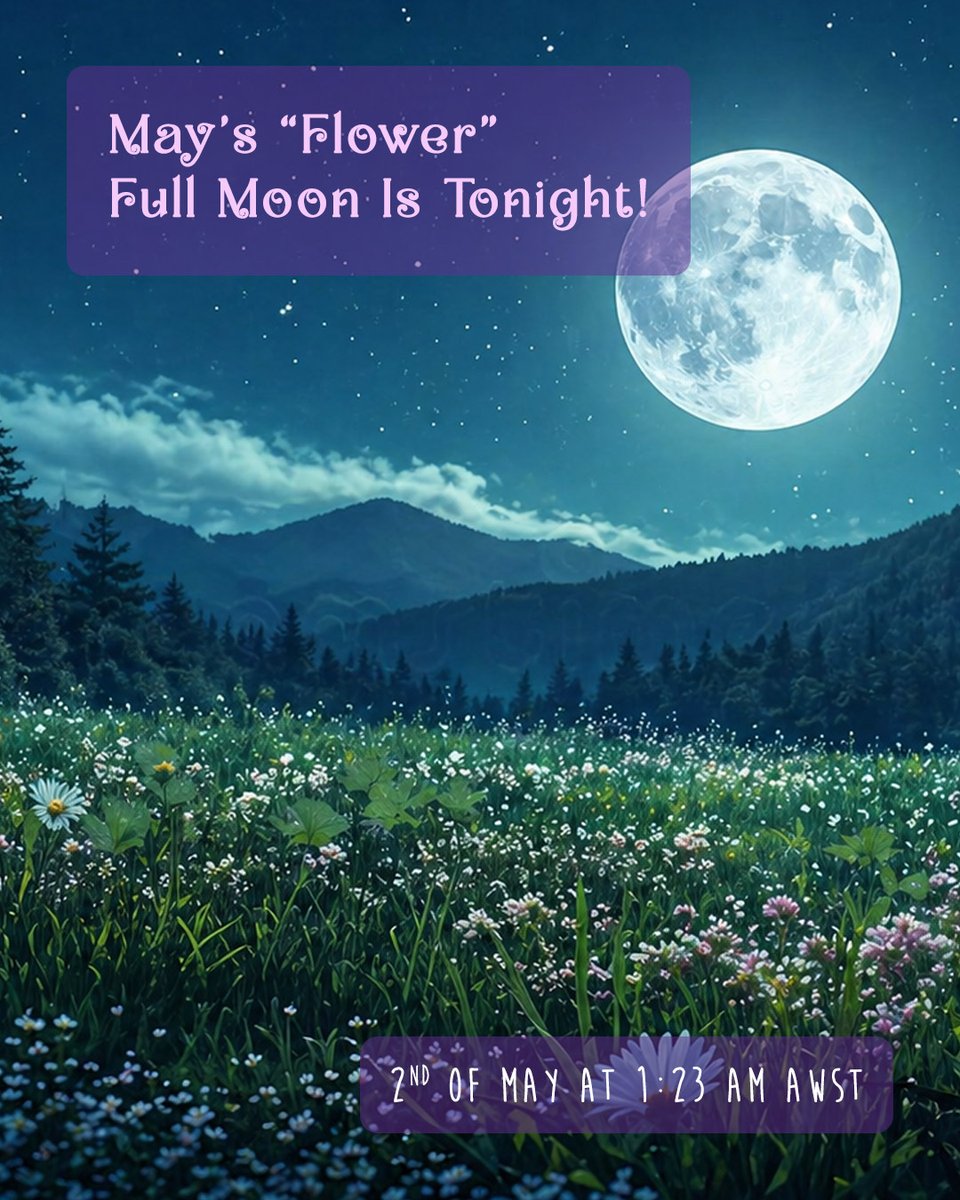
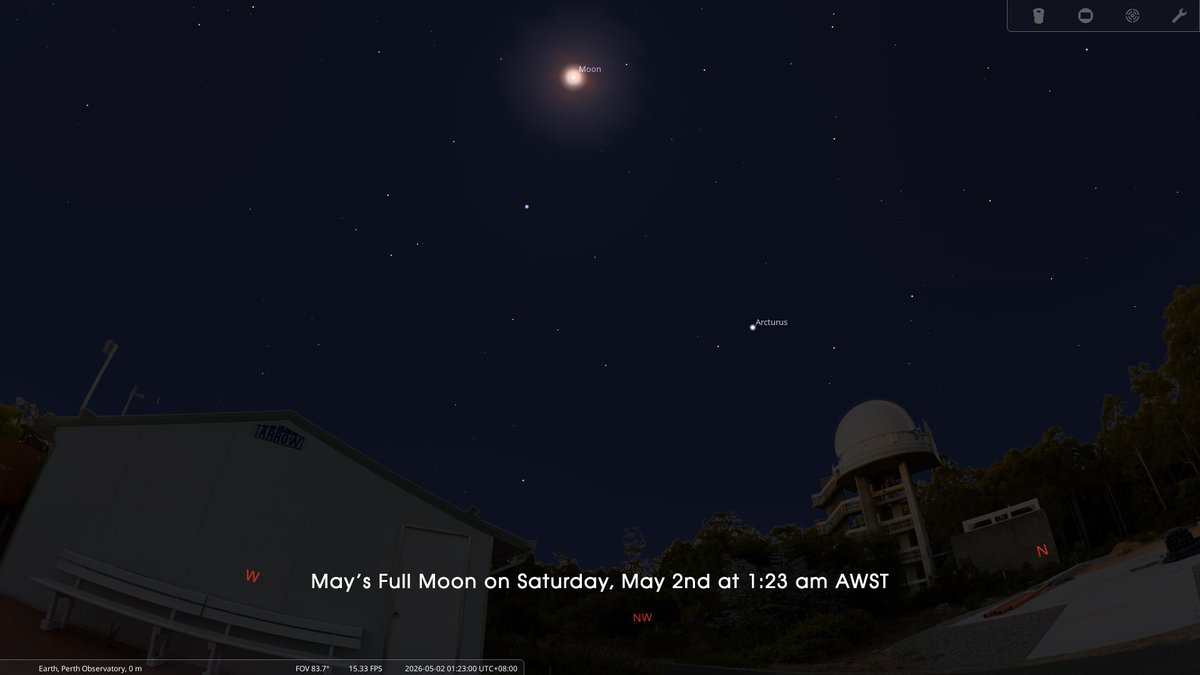
The Moon will reach its Full Moon phase on May 2nd at 1:23 am in Perth, which is a very civilised time if you’re a vampire, an insomniac, or someone who accidentally opened TikTok at midnight and lost control of their life.
And just when you think the Moon has done enough… surprise! There’ll be an additional “Blue Moon” on May 31st. That’s right, two full moons in one month, because even the Moon knows how to overbook its calendar.
The primary name for May’s Full Moon is the Flower Moon, which sounds lovely and poetic, and honestly feels like the Moon has just stepped out of a spa day surrounded by blooming flowers. It signifies the abundant blooming of flowers and the height of spring in the Northern Hemisphere. Other traditional names include the Budding Moon, Corn Planting Moon, Egg Laying Moon, Hare Moon, and Milk Moon… which together sound less like Moon names and more like a very confusing breakfast menu.
These names come from North American Indigenous traditions, with May’s Full Moon name coming from the Algonquin, Cree, and Ojibwe peoples. They were later popularised in the 1930s when the Old Farmer’s Almanac in the US published traditional names used by Algonquin peoples of north-eastern North America, which were then adopted by colonial Americans. Meanwhile, the Celtic and Old English names include Mothers’ Moon, Bright Moon, Hare Moon, and Grass Moon, which all sound like they belong in a fantasy novel where someone is about to go on a very important quest.
Now, about that “Blue Moon”… it’s not actually blue. I know, shocking. Bit of a marketing issue there. A Blue Moon is either the second full moon in a calendar month with two full moons, or the third of four full moons in a single season. It typically happens every 2–3 years, which is where the phrase “once in a blue moon” comes from. The idea dates back to 1940s folklore, and honestly, it’s stuck around far longer than it probably should have, considering it’s basically a Moon identity crisis.
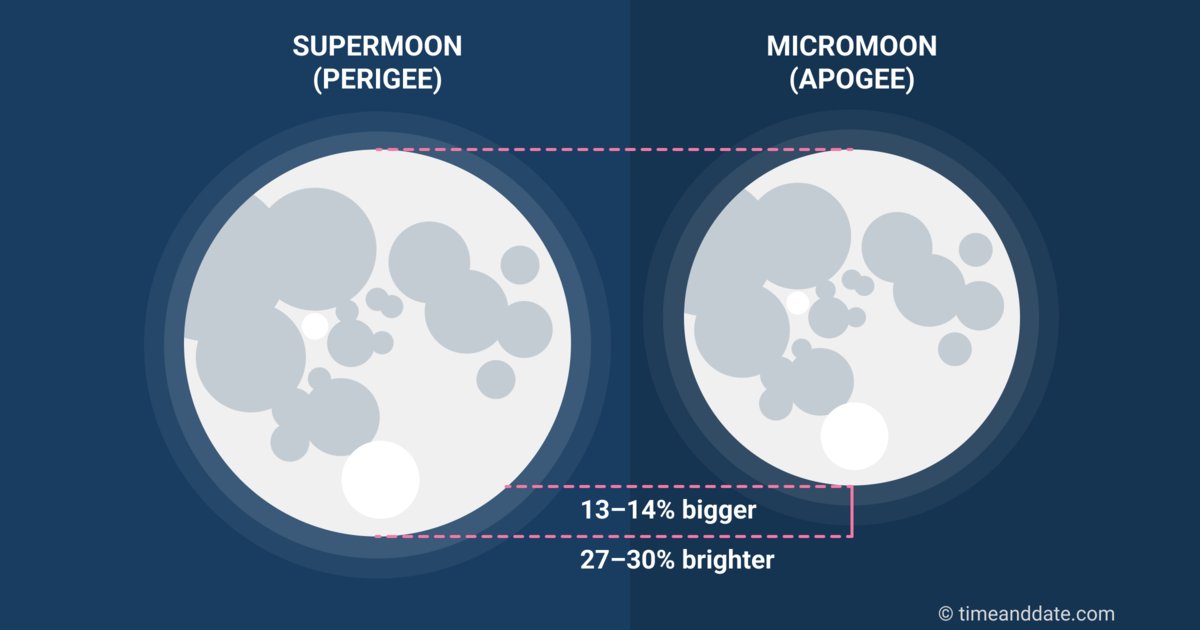
This particular Full Moon is also what we call an Apogee-Syzygy Moon, also known as a Micro Moon. Translation: it’ll look slightly smaller than usual, like the Moon has quietly taken a step back and said, “No no, you go ahead, I’ll just hang back here.”
That’s because the Moon’s orbit isn’t a perfect circle. Its furthest point from Earth is called Apogee, and its closest point is called Perigee. And then there’s “syzygy”, which sounds like a word you’d make up in Scrabble, but actually means the straight-line alignment of three celestial bodies. In this case, the Sun, Earth, and Moon all line up nicely, like a cosmic group photo where no one blinked.
So if you’re out and about tonight or tomorrow night, look up. It might be a tiny bit smaller, but it’s still doing its thing… showing off, running a double feature this month, and absolutely refusing to turn blue despite the name.
#Perth #WA #perthnews #wanews #communitynews #space #spacenews #astronomy #astronomynews #westernaustralia #perthlife #perthgram #perthhappenings #astrophotography #lunarphotography #moonphotography #astronomicalevent #flowermoon #flowermoon2026 #moon #fullmoon #luna #moonlovers #astrophoto #stargazing #perthobservatory #perthobs
1
11
191
Apr 30
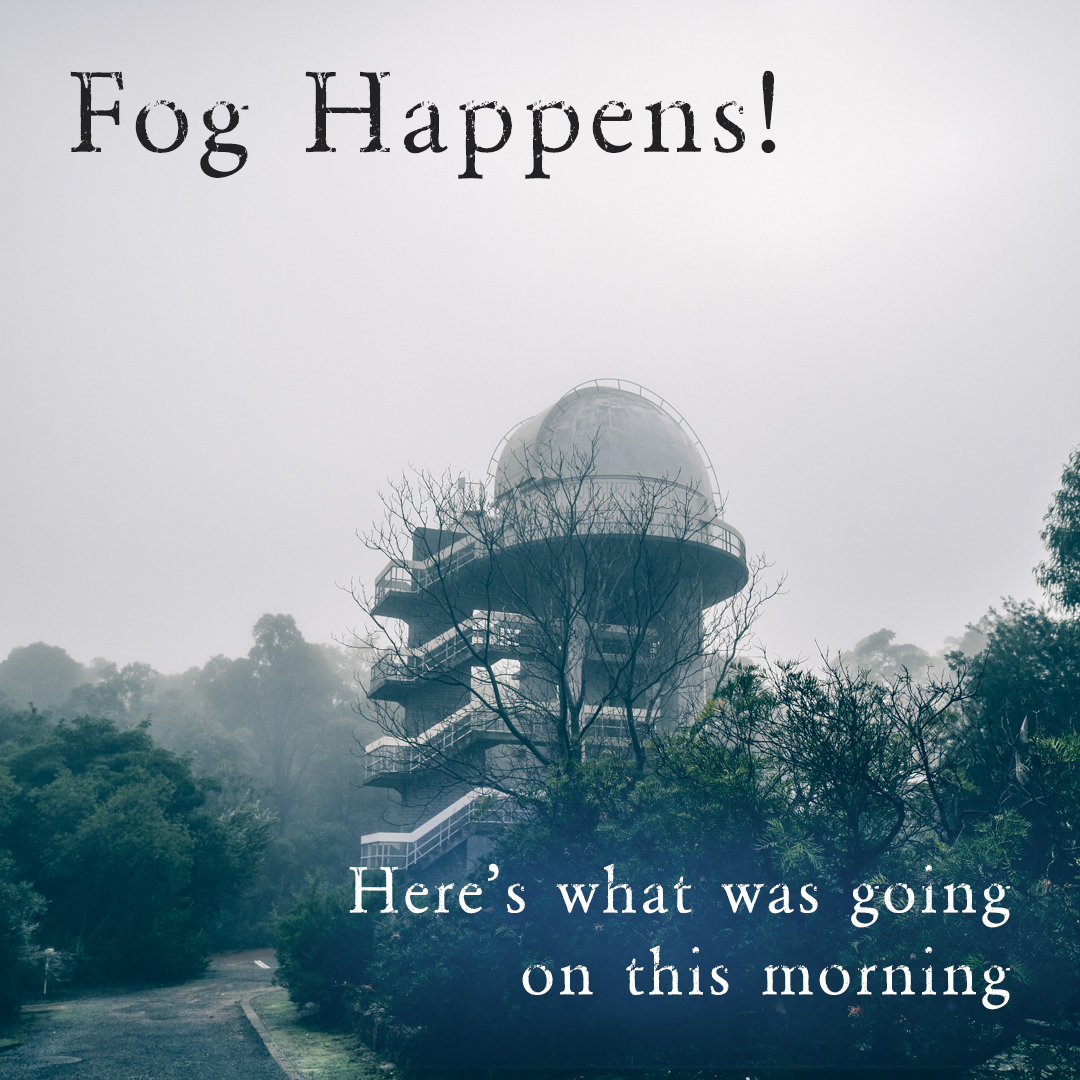
Boy, it was foggy this morning!
Have you ever wondered what fog is? Have we ever walked through a cloud? That’s basically what fog is.
Fog is a cloud at ground level, made up of tiny water droplets suspended in the air. Each droplet is incredibly small, about 10 to 20 micrometres wide, but together they scatter light and reduce visibility.
Officially, it’s called fog when you can’t see more than 1 km ahead. If you can see a bit further, it’s called mist.
🌡️ How does fog form?
Fog forms when air cools to its dew point, meaning it can’t hold all its water vapour anymore, so that invisible moisture turns into visible droplets.
You just need three things:
💧 Moisture in the air
❄️ Cooling temperatures
🍃 Calm or light winds
There are a few common types you might experience:
🌄 Radiation fog: Forms overnight as the ground cools, chilling the air above it. Common in valleys and rural areas.
🌊 Advection fog: Warm, moist air moves over a cooler surface like the ocean. Very common along coastlines.
🏞️ Valley fog: Cold air sinks into low-lying areas and traps moisture.
♨️ Evaporation fog (steam fog): Cold air over warmer water, giving that “steaming lake” look.
😎 Cool fog facts:
🌈 Fog can create a rare rainbow called a fogbow, which looks white and ghostly
🌁 Some of the world’s most famous fog rolls through San Francisco
💂 The phrase “pea soup fog” comes from historic smog events in London
🌱 Fog can actually help plants survive by adding moisture in dry environments
🎧 Sound behaves differently in fog, sometimes quieter, sometimes oddly amplified, thanks to temperature layers and moist air
🪐 Fog isn’t just an Earth thing…
🌕 Titan: Saturn's moon has probably the most Earth-like fog, but made of methane, not water. It forms around lakes of liquid natural gas at a chilly −180°C.
🔴 Mars: Yes, Mars gets fog too. It’s thin and ghostly, made of water ice particles, often seen at sunrise by rovers.
☁️ Venus: Fog on steroids. Thick, permanent haze made of sulfuric acid droplets, and hot enough to melt lead.
#Perth #WA #perthnews #wanews #communitynews #westernaustralia #perthlife #perthgram #perthhappenings #fog #mist #foggy #foggyday #foggyweather #weather #weatherwatch #meteorology #earthscience #didyouknow #learnsomethingnew #solarsystem #titan #mars #venus #spacefacts #science #sciencefacts #sciencelovers #perthobservatory #perthobs
1
6
192