
Mar 26
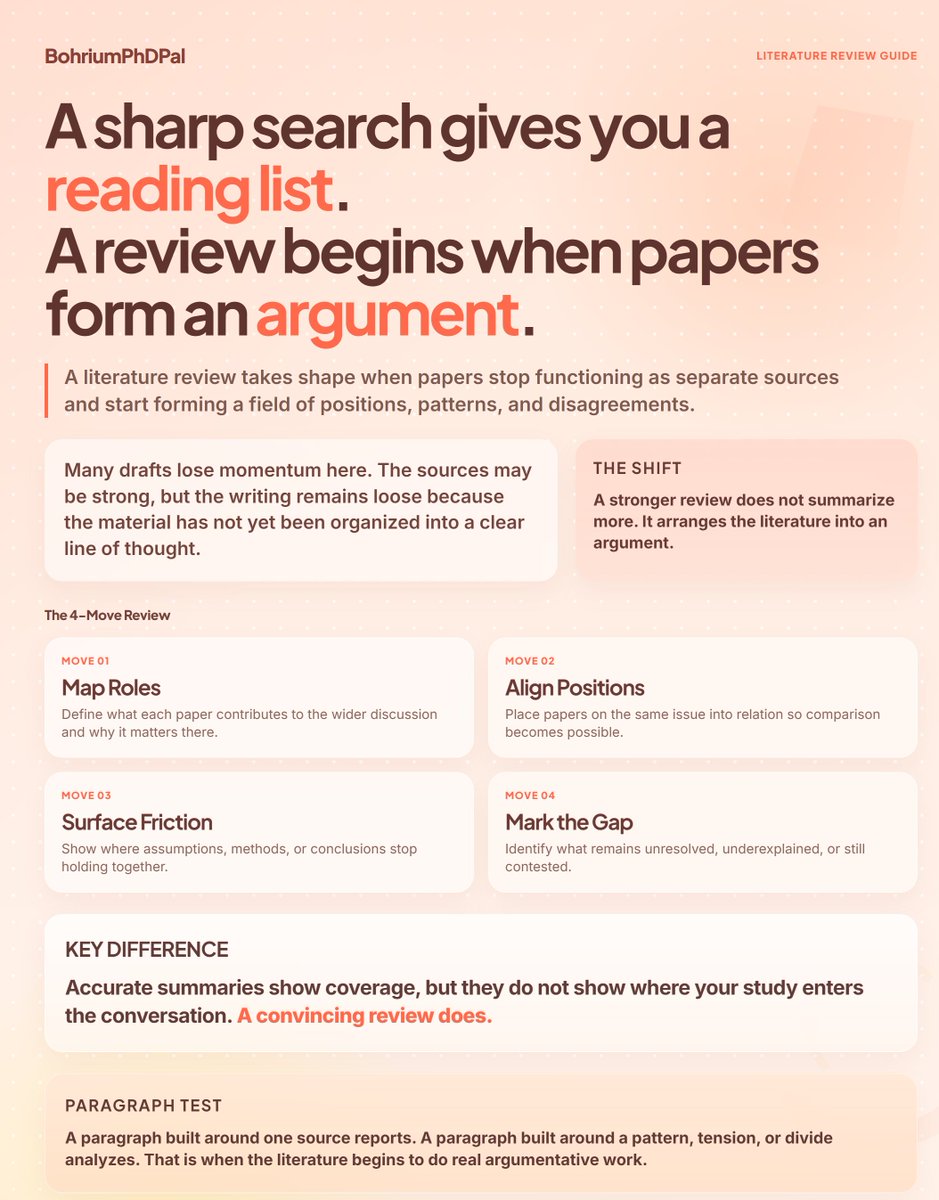
I see the same mistake constantly: mistaking a sharp search for a finished review.
A search yields a reading list, but a review begins only when papers stop being isolated sources and start forming patterns, positions, and friction.
This is where drafts stall.
A convincing review should takes shape in four moves:
1️⃣ Map each paper’s role in the wider discussion.
2️⃣ Align papers addressing the same issue from related angles.
3️⃣ Surface the friction where assumptions, methods, or conclusions clash.
4️⃣ Mark the opening where questions remain unresolved or underexplained.
Summaries prove you have read widely. Synthesis shows where your study enters the conversation.
#PhDLife #LiteratureReview #AcademicWriting #ResearchWriting #ResearchSkills #GradSchool #PhDTips
2
4
138
Mar 19
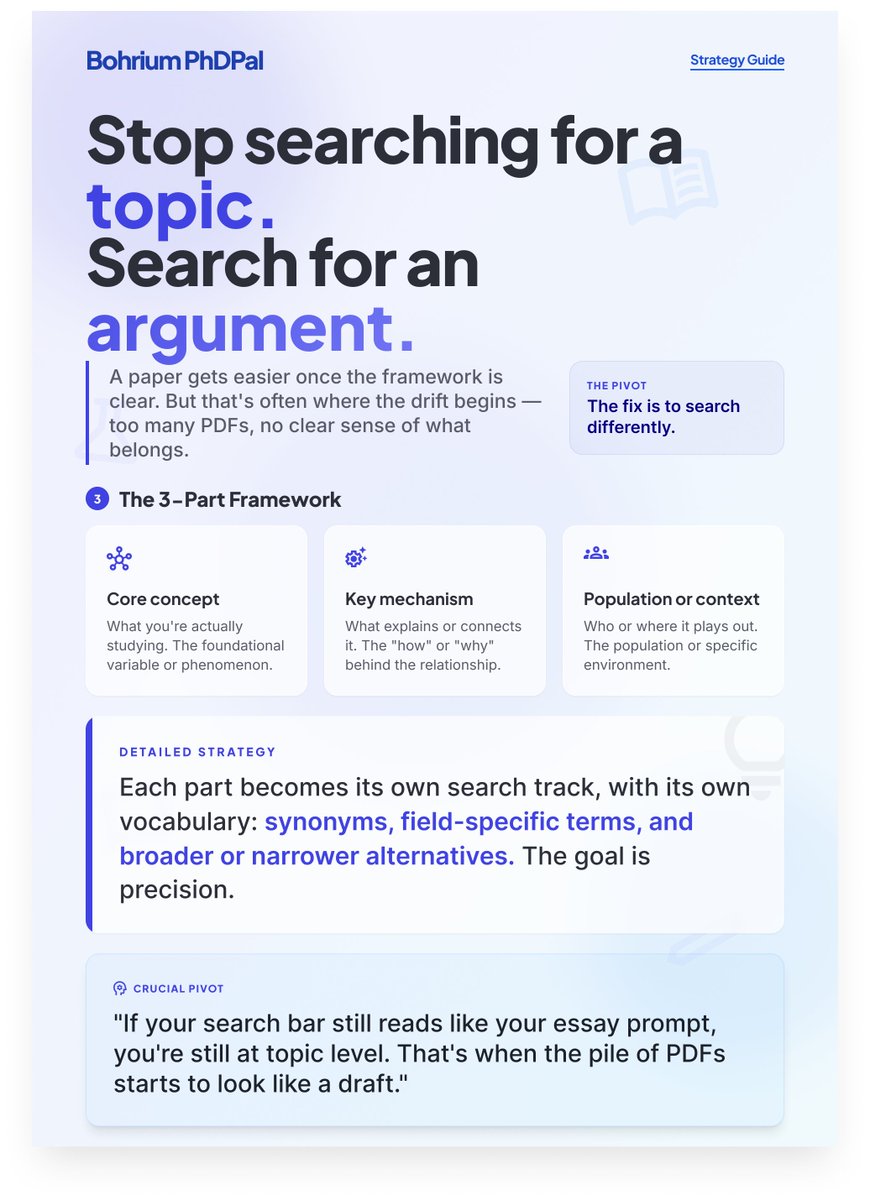
A paper gets easier once the framework is clear. The next step seems obvious: find the literature.
But that is often where the drift begins — too many PDFs, and no clear sense of what belongs.
The fix is to search differently.
What helps is breaking the framework into three parts:
1️⃣ core concept — what you are actually studying
2️⃣ key mechanism — what explains or connects it
3️⃣ population or context — who or where it plays out
Each part becomes its own search track, with its own vocabulary: synonyms, field-specific terms, and broader or narrower alternatives.
The goal is precision.
That shift matters because you are no longer looking for papers on a topic, but for literature that can do a specific job in the argument.
A quick test: if your search bar still reads like your essay prompt, you are still searching at topic level. Once you see how the field names the issue, the search sharpens fast.
That is when the pile of PDFs starts to look like a draft.
#PhDLife #AcademicWriting #LiteratureReview #ResearchSkills #GradSchool #PhDTips #StudyWorkflow
2
5
192
40 Tips to Improve Your Academic Writing
1️⃣ Read academic papers to understand structure
2️⃣ Write every day, even if it’s just a few sentences
3️⃣ Keep your sentences clear and concise
4️⃣ Avoid jargon unless necessary
5️⃣ Use active voice instead of passive voice
6️⃣ Outline your ideas before writing
7️⃣ Read your work aloud to spot awkward phrasing
8️⃣ Use transition words for better flow
9️⃣ Edit ruthlessly—cut unnecessary words
🔟 Always proofread before submitting
1️⃣1️⃣ Follow a logical structure (intro, body, conclusion)
1️⃣2️⃣ Use simple words instead of complex ones
1️⃣3️⃣ Avoid repetition—use synonyms strategically 🔄
1️⃣4️⃣ Support arguments with evidence
1️⃣5️⃣ Cite sources properly to avoid plagiarism
1️⃣6️⃣ Use Grammarly or ProWritingAid for grammar checks
1️⃣7️⃣ Break long paragraphs into shorter ones
1️⃣8️⃣ Vary sentence length to maintain interest
1️⃣9️⃣ Be mindful of tense consistency
2️⃣0️⃣ Use bullet points or lists for clarity
2️⃣1️⃣ Avoid contractions in formal writing (e.g., "do not" instead of "don’t")
2️⃣2️⃣ Use parallel structure for readability
2️⃣3️⃣ Keep your thesis statement clear and specific
2️⃣4️⃣ Start with an engaging hook in the introduction
2️⃣5️⃣ End with a strong conclusion, not just a summary
2️⃣6️⃣ Use examples to illustrate key points
2️⃣7️⃣ Avoid vague words like “thing” or “stuff”
2️⃣8️⃣ Be precise with word choice
2️⃣9️⃣ Take breaks before editing for fresh perspective
3️⃣0️⃣ Read widely to improve vocabulary
3️⃣1️⃣ Don’t overuse quotes—paraphrase when possible
3️⃣2️⃣ Write in a way that even a non-expert can understand
3️⃣3️⃣ Avoid filler words (e.g., "very," "really")
3️⃣4️⃣ Use citation managers like Zotero or Mendeley
3️⃣5️⃣ Be consistent with formatting (APA, MLA, Chicago)
3️⃣6️⃣ Join a writing group for feedback
3️⃣7️⃣ Keep a personal style guide for frequent mistakes
3️⃣8️⃣ Learn from peer-reviewed articles and their writing style
3️⃣9️⃣ Develop a habit of rewriting and refining your work
4️⃣0️⃣ Believe in your voice—your research matters!
📌 Save & Share with fellow researchers!
#AcademicWriting #PhDTips #WritingSkills
2
32
153
25,219

Jan 9
𝗧𝗼𝗼 𝗠𝗮𝗻𝘆 𝗧𝗮𝗯𝘀? 𝗧𝗵𝗶𝘀 𝗦𝗶𝗺𝗽𝗹𝗲 𝗖𝗵𝗿𝗼𝗺𝗲 𝗛𝗮𝗯𝗶𝘁 𝗖𝗼𝘂𝗹𝗱 𝗦𝗮𝘃𝗲 𝗬𝗼𝘂 𝗛𝗼𝘂𝗿𝘀 𝗶𝗻 𝟮𝟬𝟮𝟲
𝗠𝗼𝗿𝗲 𝘁𝗵𝗮𝗻 𝗮 𝗯𝗶𝗹𝗹𝗶𝗼𝗻 𝗽𝗲𝗼𝗽𝗹𝗲 𝘂𝘀𝗲 @googlechrome 𝗮𝗹𝗺𝗼𝘀𝘁 𝗲𝘃𝗲𝗿𝘆 𝗱𝗮𝘆.
Yet surprisingly, many #researchers and #professionals still don’t know about one simple feature that can save hours of time, reduce frustration, and keep work far more organised.
If you’ve ever lost important tabs after a crash or restart, spent time scrolling through browser history, or broken your concentration trying to “𝒇𝒊𝒏𝒅 𝒕𝒉𝒂𝒕 𝒂𝒓𝒕𝒊𝒄𝒍𝒆 𝒂𝒈𝒂𝒊𝒏,” this will help.
𝗖𝗵𝗿𝗼𝗺𝗲 𝗧𝗮𝗯 𝗚𝗿𝗼𝘂𝗽𝘀 with 𝗦𝗮𝘃𝗲 𝗚𝗿𝗼𝘂𝗽 can turn your browser into a structured workspace. Here’s how:
1️⃣. 𝗖𝗿𝗲𝗮𝘁𝗲 𝗬𝗼𝘂𝗿 𝗥𝗲𝘀𝗲𝗮𝗿𝗰𝗵 𝗛𝘂𝗯
✦ Right-click any tab → Add Tab to New Group
✦ Name it something useful like “Literature Review 2026” and pick a colour.
2️⃣. 𝗔𝗱𝗱 𝗠𝗼𝗿𝗲 𝗧𝗮𝗯𝘀 𝘁𝗼 𝘁𝗵𝗲 𝗚𝗿𝗼𝘂𝗽
✦ Right-click new tab → Add Tab to Group → select your group.
✦ Everything stays neatly organised.
3️⃣. 𝗦𝗮𝘃𝗲 𝘁𝗵𝗲 𝗚𝗿𝗼𝘂𝗽(𝗠𝗼𝘀𝘁 𝗜𝗺𝗽𝗼𝗿𝘁𝗮𝗻𝘁)
✦ Right-click the group label → Save Group, depending on your Chrome version).
✦ Your tabs stay safe and sync across devices, even after shutdowns or crashes.
4️⃣. 𝗜𝗻𝘀𝘁𝗮𝗻𝘁 𝗥𝗲𝗰𝗮𝗹𝗹
✦ Click the saved group and all your tabs reopen at once.
⏳ 𝗧𝗶𝗺𝗲 𝗦𝗮𝘃𝗲𝗱= 𝗕𝗲𝘁𝘁𝗲𝗿 𝗧𝗵𝗶𝗻𝗸𝗶𝗻𝗴
This means less searching, fewer interruptions, better focus, and a much calmer workflow.
👉 𝗝𝗼𝗶𝗻 𝘁𝗵𝗲 𝗰𝗼𝗻𝘃𝗲𝗿𝘀𝗮𝘁𝗶𝗼𝗻
𝗜𝗳 𝘆𝗼𝘂 𝘀𝘁𝗮𝗿𝘁 𝘂𝘀𝗶𝗻𝗴 𝘁𝗵𝗶𝘀 𝗖𝗵𝗿𝗼𝗺𝗲 𝗵𝗮𝗯𝗶𝘁, 𝘁𝗲𝗹𝗹 𝘂𝘀:
• 𝗛𝗼𝘄 𝗺𝗮𝗻𝘆 𝘁𝗮𝗯 𝗴𝗿𝗼𝘂𝗽𝘀 𝗱𝗼 𝘆𝗼𝘂 𝘀𝗲𝗲 𝘆𝗼𝘂𝗿𝘀𝗲𝗹𝗳 𝗰𝗿𝗲𝗮𝘁𝗶𝗻𝗴?
• 𝗔𝗻𝗱 𝗵𝗼𝘄 𝘄𝗼𝘂𝗹𝗱 𝘆𝗼𝘂 𝗹𝗮𝗯𝗲𝗹 𝘁𝗵𝗲𝗺?
🔗 𝗣𝗹𝗲𝗮𝘀𝗲 𝗰𝗵𝗲𝗰𝗸 𝗳𝘂𝗹𝗹 𝗯𝗹𝗼𝗴 𝗽𝗼𝘀𝘁 𝗵𝗲𝗿𝗲 👇:
phdscanner.com/blog/too-many…
✅ Please 🔃 Repost/tag to help fellow researchers
➕ Follow @PhDScanner and join WhatsApp for updates: whatsapp.com/channel/0029Vb5…
🌐 Visit our website for more #PhDtips : phdscanner.com
📬Subscribe to our newsletter and get 2,000 openings delivered straight to your inbox—no spam, just your next big opportunity!
#Productivity #TimeManagement #WorkSmarter #DigitalTools #Phdtips #GoogleChrome #ChromeTips #ResearchLife #PhDLife #AcademicWriting #HigherEducation #Workflow #FutureOfWork #Phdscanner
@phdhardtalk
youtube.com/watch?v=RG9ugmoz…
2
3
249

28 Dec 2025
6
89
404
19,418

7 Dec 2025
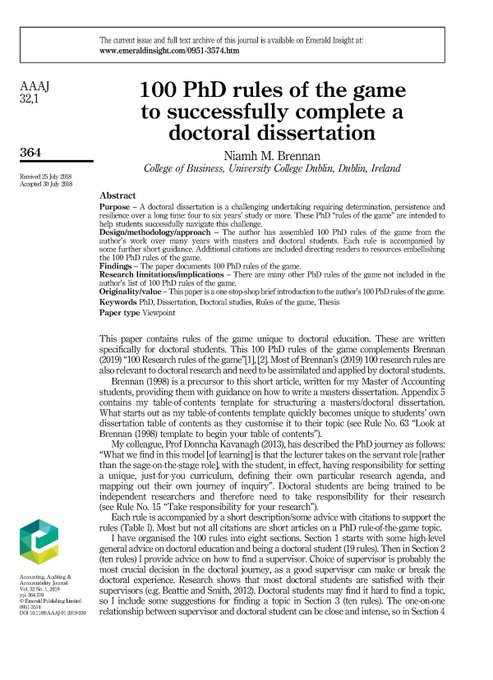
100 Rules for Successful Completion of PhD.
Here are the 100 essential rules that can make the difference.
1. Enjoy your doctoral studies
2. Open your mind
3. Develop your critical thinking skills
4. Have confidence
5. Be determined, dogged, and persistent
6. Be resilient
7. Manage the highs and lows
8. Focus
9. Be disciplined
10. Be methodological
11. Understand your philosophy
12. Don’t do too much teaching or grading
13. Look for help
14. Learn the literature
15. Take responsibility for your research
16. Talk to other doctoral students in your university
17. Find a study buddy
18. Learn from others
19. Understand the importance of finishing
22. Pick a research-active supervisor
23. Choose a supervisor who shares your research interests
24. Choose a supervisor you will get on with
25. Work with your supervisor for a time before registering
26. Maintain a good relationship with your supervisor
27. Check whether your supervisor is likely to stay in your university
28. Check out your supervisor
29. Understand the role of supervisor
30. Find a topic/research question that interests you
31. Avoid fad-du-jour topics
33. Put three bricks on the wall of knowledge
35. Choose a topic in an area you are likely to teach
36. Write a dissertation proposal
37. Write ten dissertation proposals
38. Summarise ten articles
39. Avoid the flounder factor
40. Have regular meetings with your supervisor
42. Take notes of your supervisor’s advice
43. Play tennis with your supervisor
44. Listen and respond to your supervisor’s advice
45. Have a doctoral-completion plan
46. Make sure your plan is comprehensive
47. Meet your own deadlines
48. Identify key milestones in your plan
49. Complete your course work as fast as possible
50. Become a world expert on your theory
52. Be familiar with your university’s policies on research
53. Find opportunities to present your work
54. Find opportunities to get feedback
56. Attend departmental seminars
58. Learn to write
59. Know how to make an argument
62. Start your dissertation with a table of contents
63. Look at Brennan’s (1998) template to begin your table of contents
65. Prepare a dissertation master document
66. Keep backup copies of your dissertation
67. Read a bit, write a bit; Write a bit, read a bit
68. Read other dissertations
69. Write (almost) every day
70. Choose a great title
72. Write a great abstract
73. Provide lots of signposts for your readers
76. Pay special attention to the first and last chapters
78. Complete a literature review
79. Judge what to put into appendices
80. Write to tell a story
82. Copy edit and proofread your dissertation
85. Your PhD examiner can help you to get published
87. Know your audience
88. Understand the purpose of a viva voce
90. Do a mock viva voce
91. Take notes of the questions
92. Be confident and authoritative
93. Defend but don’t be defensive
95. Publish your doctoral research
96. Play snakes and ladders
97. Enjoy your doctoral studies
#phdlife #phdtips
5
168
725
41,135

22 Oct 2025
💡 Understanding Research Gaps
Before you write, read! Identify what’s missing in existing studies — that’s your gap. A clear gap makes your research valuable and unique.
Hashtags: #ResearchGap #LiteratureReview #PhDTips #ResearchSimplified

3
28

2 Oct 2025
Writing your conclusion and introduction should feel connected, not disjointed. Here’s how to bring everything together. #PhDTips #GradLife zurl.co/G3Vx2
2
72
8 Aug 2025
40 Tips to Improve Your Academic Writing 📖🖊️
1️⃣ Read academic papers to understand structure
2️⃣ Write every day, even if it’s just a few sentences
3️⃣ Keep your sentences clear and concise
4️⃣ Avoid jargon unless necessary
5️⃣ Use active voice instead of passive voice
6️⃣ Outline your ideas before writing
7️⃣ Read your work aloud to spot awkward phrasing
8️⃣ Use transition words for better flow
9️⃣ Edit ruthlessly—cut unnecessary words
🔟 Always proofread before submitting
1️⃣1️⃣ Follow a logical structure (intro, body, conclusion)
1️⃣2️⃣ Use simple words instead of complex ones
1️⃣3️⃣ Avoid repetition—use synonyms strategically 🔄
1️⃣4️⃣ Support arguments with evidence
1️⃣5️⃣ Cite sources properly to avoid plagiarism
1️⃣6️⃣ Use Grammarly or ProWritingAid for grammar checks
1️⃣7️⃣ Break long paragraphs into shorter ones
1️⃣8️⃣ Vary sentence length to maintain interest
1️⃣9️⃣ Be mindful of tense consistency
2️⃣0️⃣ Use bullet points or lists for clarity
2️⃣1️⃣ Avoid contractions in formal writing (e.g., "do not" instead of "don’t")
2️⃣2️⃣ Use parallel structure for readability
2️⃣3️⃣ Keep your thesis statement clear and specific
2️⃣4️⃣ Start with an engaging hook in the introduction
2️⃣5️⃣ End with a strong conclusion, not just a summary
2️⃣6️⃣ Use examples to illustrate key points
2️⃣7️⃣ Avoid vague words like “thing” or “stuff”
2️⃣8️⃣ Be precise with word choice
2️⃣9️⃣ Take breaks before editing for fresh perspective ☕
3️⃣0️⃣ Read widely to improve vocabulary
3️⃣1️⃣ Don’t overuse quotes—paraphrase when possible
3️⃣2️⃣ Write in a way that even a non-expert can understand
3️⃣3️⃣ Avoid filler words (e.g., "very," "really")
3️⃣4️⃣ Use citation managers like Zotero or Mendeley
3️⃣5️⃣ Be consistent with formatting (APA, MLA, Chicago)
3️⃣6️⃣ Join a writing group for feedback
3️⃣7️⃣ Keep a personal style guide for frequent mistakes
3️⃣8️⃣ Learn from peer-reviewed articles and their writing style
3️⃣9️⃣ Develop a habit of rewriting and refining your work
4️⃣0️⃣ Believe in your voice—your research matters!
📌 Save & Share with fellow researchers!
#AcademicWriting #PhDTips #WritingSkills
2
46
211
16,028

24 Jul 2025
Welcome to 𝐎𝐧𝐝𝐞𝐳𝐱 – your ultimate PhD partner!
Struggling with Thesis or Dissertation Writing?
We offer expert help in:
✅ Conceptualization
✅ Structure Guidance
✅ Editing & Publishing
Simplify your research journey with Ondezx!
#AcademicTwitter #phdtips #phdlife #phd
1
373
22 Jul 2025
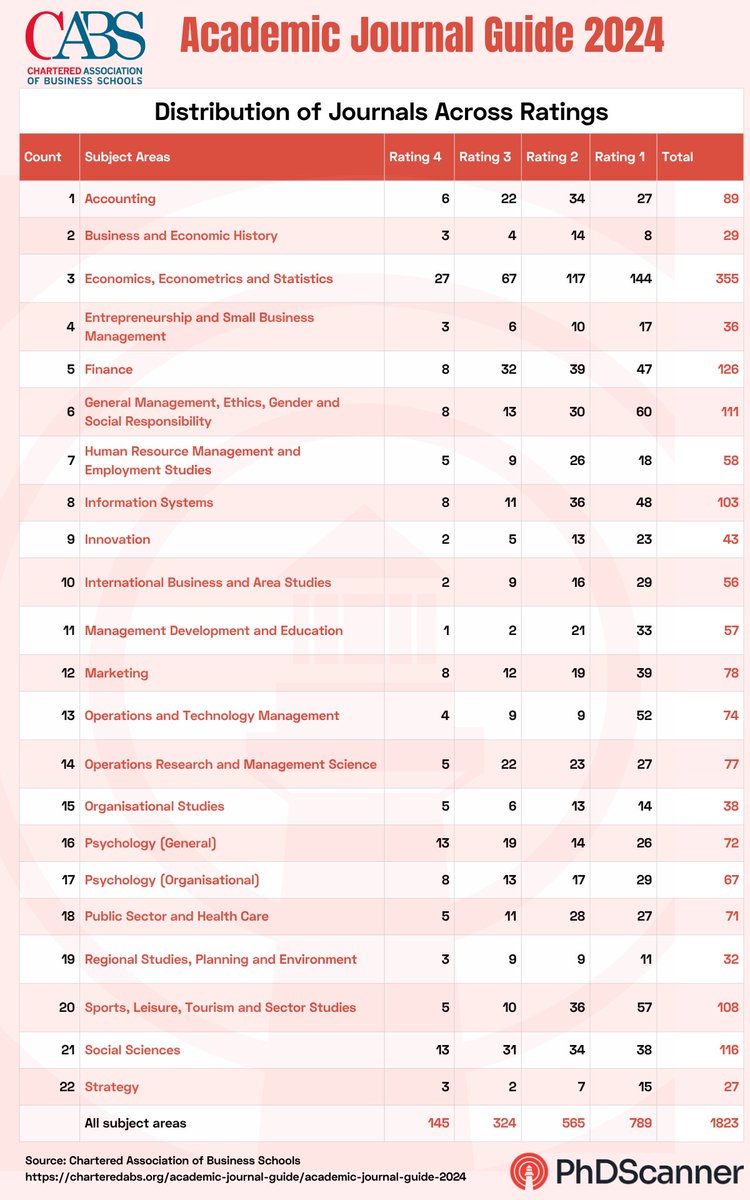
📊 𝗦𝗶𝗺𝗽𝗹𝗶𝗳𝘆𝗶𝗻𝗴 𝗔𝗰𝗮𝗱𝗲𝗺𝗶𝗰 𝗝𝗼𝘂𝗿𝗻𝗮𝗹 𝗚𝘂𝗶𝗱𝗲 #𝗔𝗝𝗚𝟮𝟬𝟮𝟰 #𝗔𝗕𝗦𝗟𝗜𝗦𝗧 𝗳𝗼𝗿 𝗕𝘂𝘀𝘆 𝗥𝗲𝘀𝗲𝗮𝗿𝗰𝗵𝗲𝗿𝘀 📥 𝗢𝗻𝗲-𝗰𝗹𝗶𝗰𝗸 𝗱𝗼𝘄𝗻𝗹𝗼𝗮𝗱
Struggling with navigating the #AJG2024? Here's a brief breakdown:
📊 Dive into Journal Distribution by Subject Area
✅ Ratings range from 4★ to 1
✅ Available in PDF & Excel for convenience
⏱️ Streamline your process and focus on writing, reviewing, and publishing!
𝗔𝗰𝗰𝗲𝘀𝘀 𝗮 𝗰𝗼𝗻𝗰𝗶𝘀𝗲 𝘀𝘂𝗺𝗺𝗮𝗿𝘆 𝗶𝗻 𝗣𝗗𝗙 & 𝗘𝘅𝗰𝗲𝗹 𝗳𝗼𝗿𝗺𝗮𝘁𝘀 𝗵𝗲𝗿𝗲👇 :
🔗 phdscanner.com/blog/29393b99…
📌 𝗪𝗵𝗮𝘁 𝗜𝘀 𝘁𝗵𝗲 𝗔𝗰𝗮𝗱𝗲𝗺𝗶𝗰 𝗝𝗼𝘂𝗿𝗻𝗮𝗹 𝗚𝘂𝗶𝗱𝗲 (𝗔𝗝𝗚)?
The AJG, or #ABSList, crafted by the Chartered Association of Business Schools, aids global business schools. It offers a rating scale (1 to 4★) to assist academics in assessing journal quality, publication strategies, and research impact.
🧠 𝗨𝗻𝗱𝗲𝗿𝘀𝘁𝗮𝗻𝗱𝗶𝗻𝗴 𝗔𝗝𝗚 𝟮𝟬𝟮𝟰 𝗝𝗼𝘂𝗿𝗻𝗮𝗹 𝗥𝗮𝘁𝗶𝗻𝗴𝘀:
⭐️⭐️⭐️⭐️ 𝟰★ – Journals of Distinction: Leading in citations and field advancements
⭐️⭐️⭐️⭐️ 𝟰 – Top-tier journals: Rigorous with high impact
⭐️⭐️⭐️ 𝟯 – Highly regarded: Strong reputation and quality
⭐️⭐️ 𝟮 – Solid journals, peer-reviewed with moderate impact
⭐️ 𝟭 – Recognized: Lighter review, lower impact
💡 𝗜𝗳 𝘁𝗵𝗶𝘀 𝗵𝗲𝗹𝗽𝗲𝗱 𝘆𝗼𝘂 𝘀𝗮𝘃𝗲 𝘁𝗶𝗺𝗲 — 𝘀𝗵𝗮𝗿𝗲 𝘁𝗵𝗲 𝗸𝗻𝗼𝘄𝗹𝗲𝗱𝗴𝗲
🔃 𝗥𝗲𝗽𝗼𝘀𝘁/𝘁𝗮𝗴 𝘆𝗼𝘂𝗿 𝗣𝗵𝗗 𝘀𝘁𝘂𝗱𝗲𝗻𝘁𝘀, 𝗰𝗼-𝗮𝘂𝘁𝗵𝗼𝗿𝘀, 𝗰𝗼𝗹𝗹𝗲𝗮𝗴𝘂𝗲𝘀, 𝗼𝗿 𝗥𝗲𝘀𝗲𝗮𝗿𝗰𝗵 𝗖𝗼𝗺𝗺𝘂𝗻𝗶𝘁𝘆 & 𝗢𝗽𝘁𝗶𝗺𝗶𝘇𝗲 𝗧𝗶𝗺𝗲 𝗧𝗼𝗴𝗲𝘁𝗵𝗲𝗿 🤝📂
For updates and detailed methodology, refer to the official Academic Journal Guide 2024 @CharteredABS
➕ Follow @PhdScanner for more such updates
#ABSList #AJG2024 #ResearchTools #PhDLife #ResearchProductivity #AcademicPublishing #HigherEd #AcademicJournalGuide #CABS #Researchguide #ABSList2024 #PhDTips #HigherEducation #AcademicTwitter
@phdhardtalk @PhDfriends
3
163

18 Jul 2025
Don’t hide your study’s limitations—highlight them with confidence.
✅ Small sample?
✅ Time constraints?
✅ Methodological challenges?
Being transparent shows credibility and maturity as a researcher.
#ResearchWriting #PhDTips
1
2
62

30 Jun 2025
Three years ago, I was wrapping up my Master’s thesis: two years of research on convolutional networks’ interpretability.
Back then, I was deep in both writing and research, crafting thesis drafts while also scripting YouTube videos to explain research papers. I lived in research-mode.
And honestly? I wish tools like @answerthisio had existed.
Formulating a thesis statement took me weeks. Then came revisions, more feedback, more rewriting... not to mention searching through hundreds of papers to find gaps and build a coherent narrative.
All before the experiments section, built over 1.5 years of work.
Still, writing was the hardest part. Connecting ideas clearly, crafting a cohesive story, and making it all "good."
Today, tools can cut through that pain.
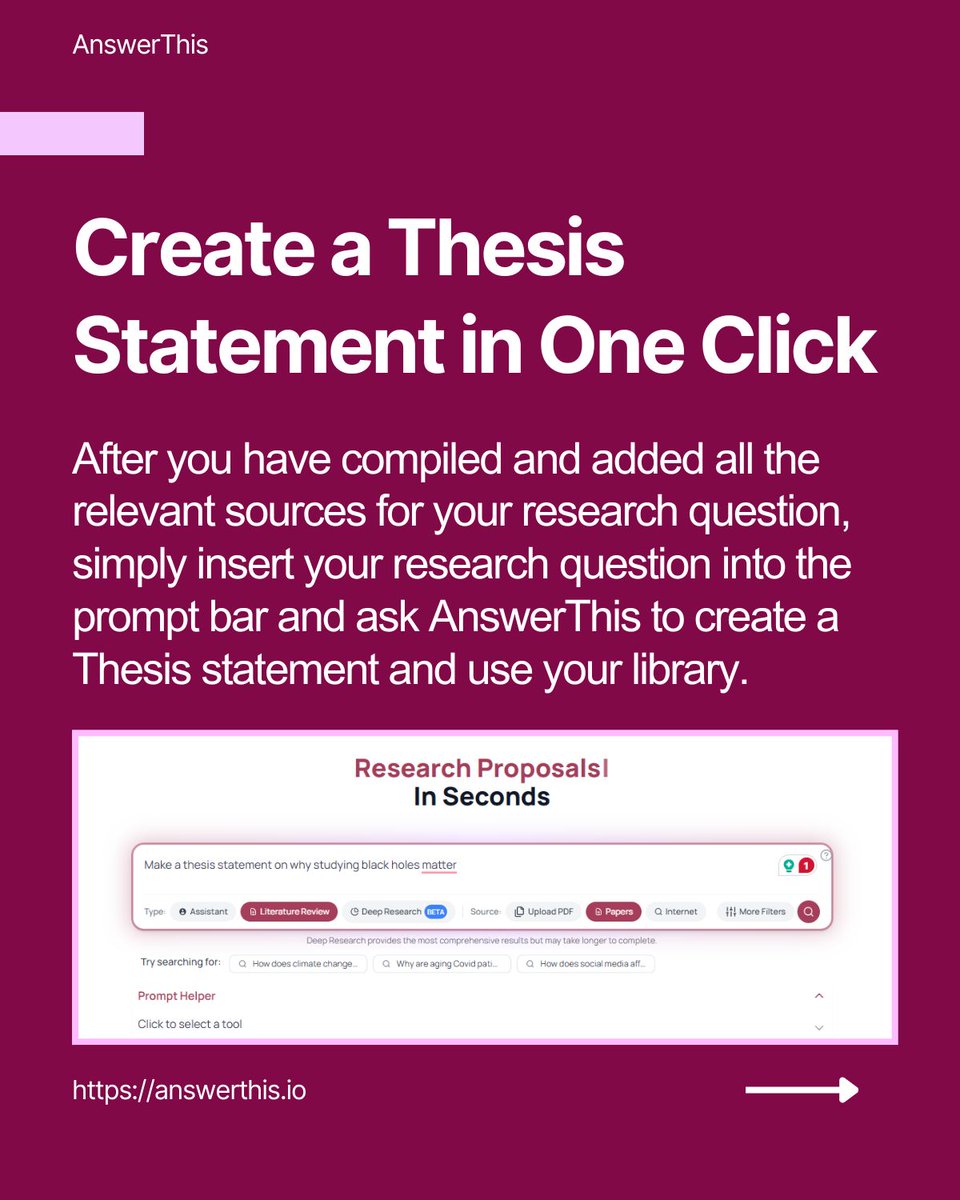
Here’s how @answerthisio (link below) can help you write a thesis statement 10x faster:
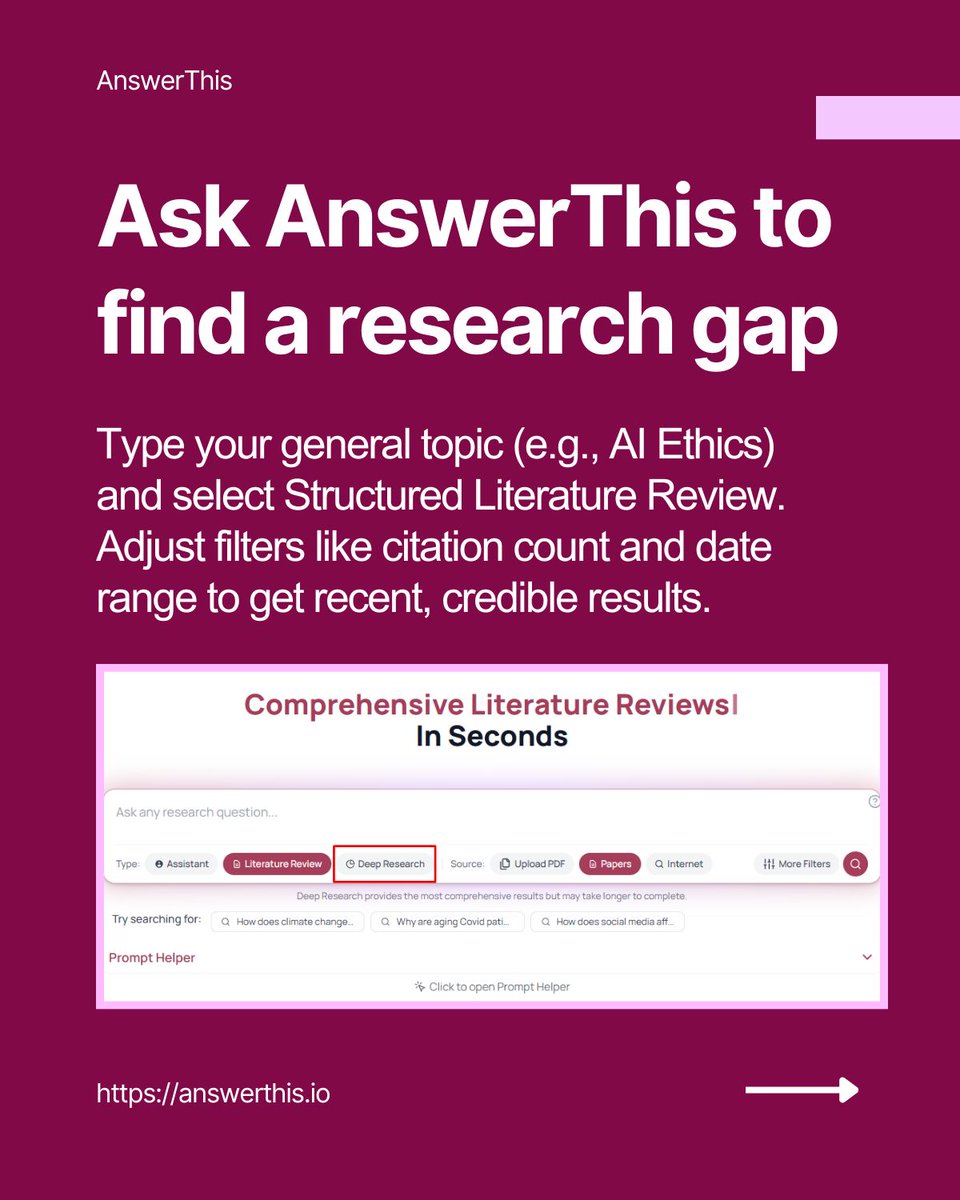
1. Start with your general topic, e.g., “AI Ethics.”
2. Head to the Structured Literature Review tool.
3. Adjust filters like citation count or date range to narrow down high-quality, recent work.
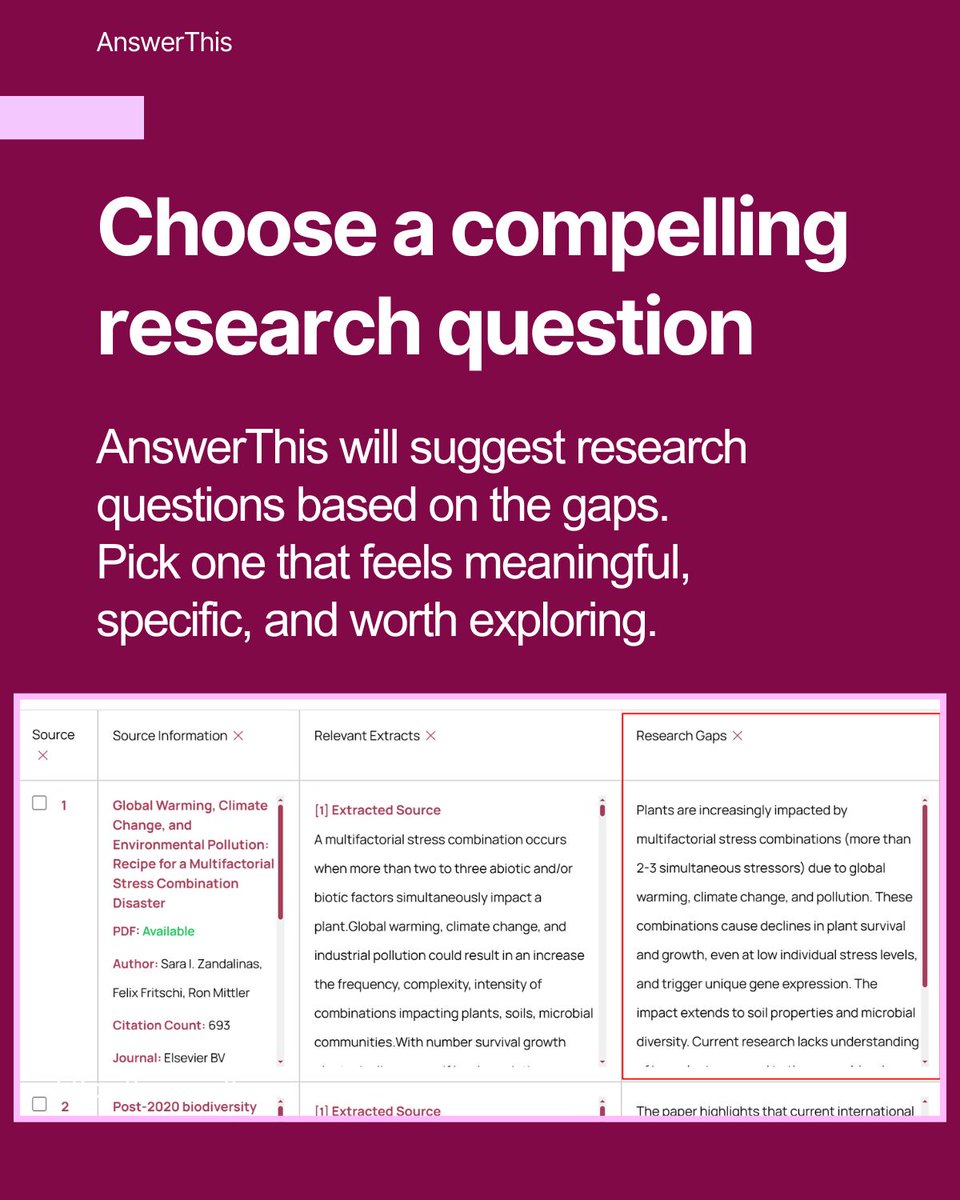
4. Ask AnswerThis to identify a research gap (super useful to new students!).
5. Browse the list of suggested research questions by using the xtract data feature and pick one that feels focused, meaningful, and relevant.
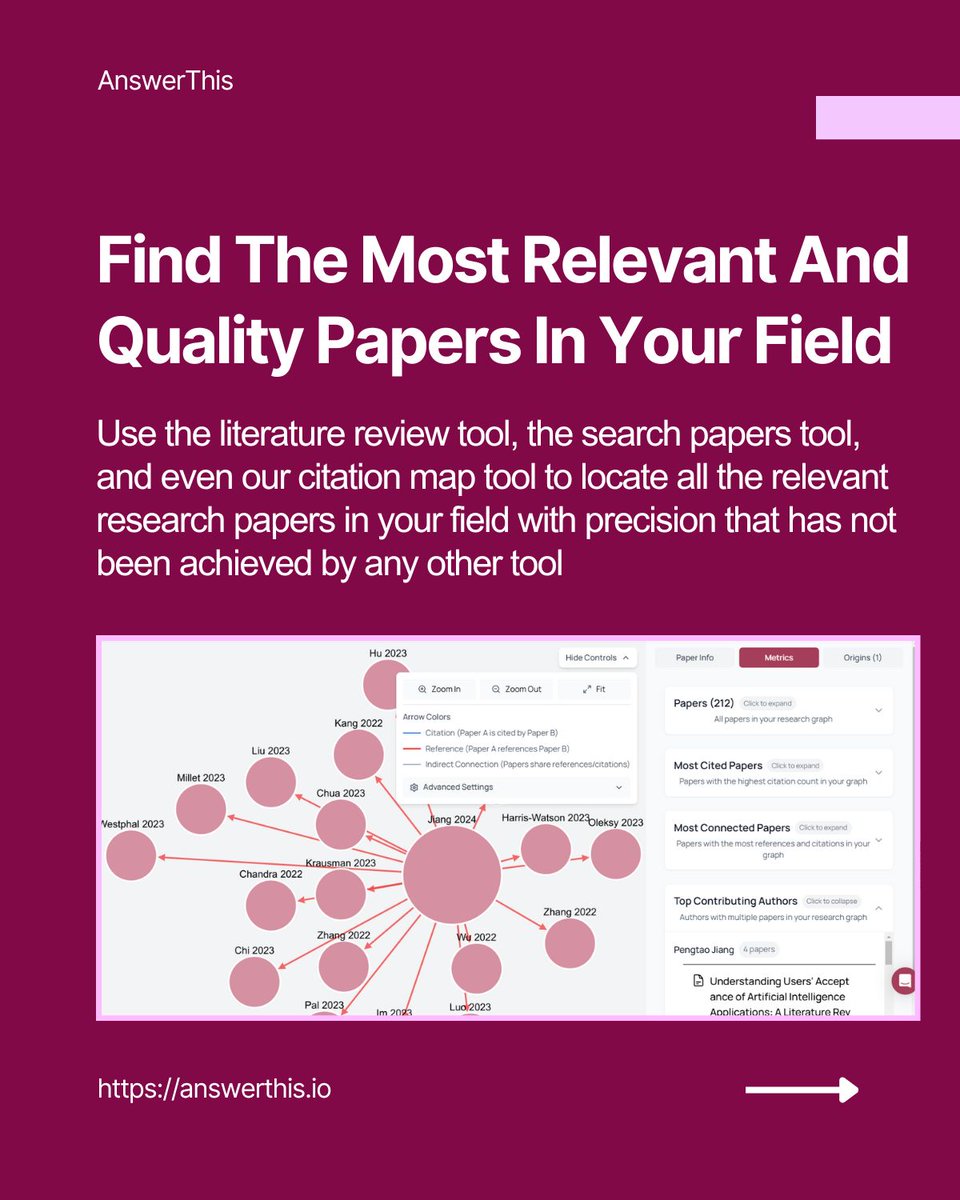
6. Use the Search Papers and Citation Map tools to locate the most relevant studies on your topic.
7. Once you’ve got a strong library of sources, plug your research question into the prompt bar and make sure to specify that you want a thesis statement and add any additional requirements that you would like the thesis statement to meet…
8. And just like that, @answerthisio will generate a full thesis statement backed by credible sources.
9. Use the AI Editor to refine your statement, insert citations in any format, and polish everything to perfection.
This means:
No more writer’s block
No more bouncing between tabs
No more guessing if your thesis is solid or what to add
Just an AI complete pipeline that helps you clarify, brings confidence, and keeps the momentum going, from the start. Definitely a game changer for all students or researchers, even!
Try @answerthisio for yourself. I’ve linked it in the first comment with a 10% discount thanks to them :)
#academicwriting #phdtips #phdstudent #answerthis #aiwritingtools #phdresearch
1
2
237
26 Jun 2025
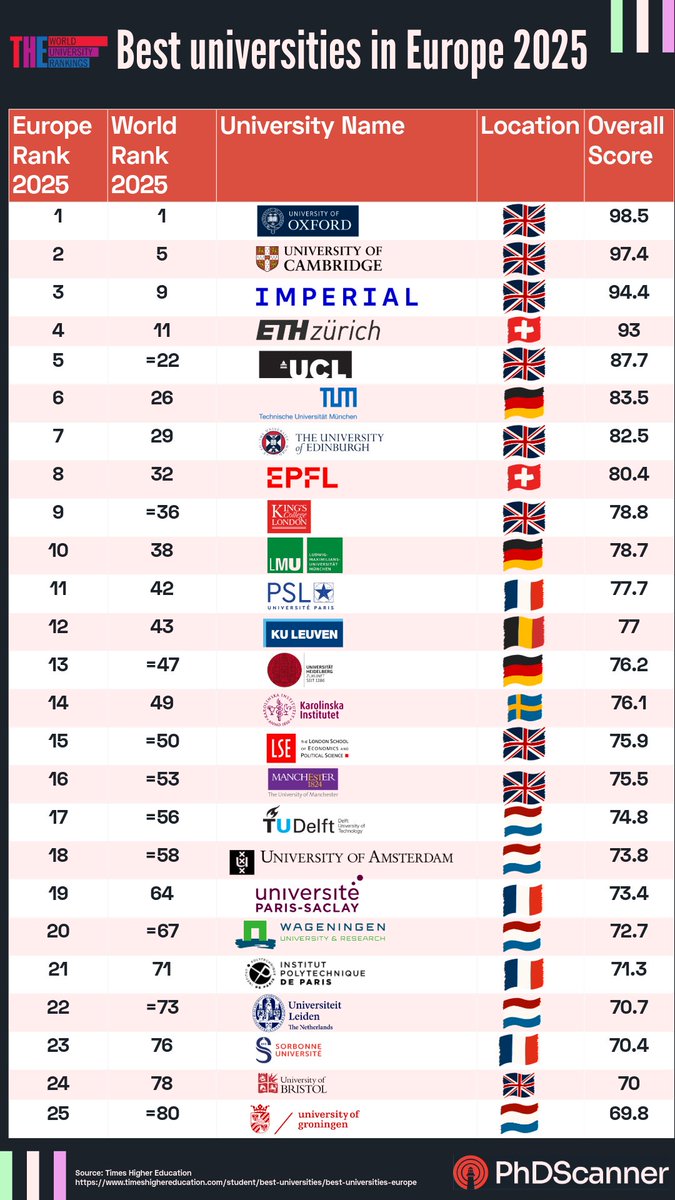
🚨 𝗘𝘂𝗿𝗼𝗽𝗲’𝘀 𝗧𝗼𝗽 𝟮𝟱 𝗨𝗻𝗶𝘃𝗲𝗿𝘀𝗶𝘁𝗶𝗲𝘀 𝗳𝗼𝗿 𝗣𝗵𝗗 𝗦𝘁𝘂𝗱𝗲𝗻𝘁𝘀– 𝟮𝟬𝟮𝟱 𝗘𝗱𝗶𝘁𝗶𝗼𝗻
𝗟𝗼𝗼𝗸𝗶𝗻𝗴 𝘁𝗼 𝗽𝘂𝗿𝘀𝘂𝗲 𝗮 #𝗣𝗵𝗗𝗶𝗻𝗘𝘂𝗿𝗼𝗽𝗲?
The @timeshighered , @THEworldunirank, Best Universities in Europe 2025 Rankings, offer a trusted guide for prospective #PhDstudents. Over 700 institutions are assessed across teaching, research, international outlook, industry links, and knowledge transfer.
🔍 A must-read for those seeking world-class supervision, strong research cultures, and globally recognised institutions.
📈 These top universities excel in #research quality, industry collaboration, and international engagement—key ingredients for #PhDsuccess.
🌍 𝗧𝗼𝗽 𝟮𝟱 𝗘𝘂𝗿𝗼𝗽𝗲𝗮𝗻 𝗨𝗻𝗶𝘃𝗲𝗿𝘀𝗶𝘁𝗶𝗲𝘀(𝟮𝟬𝟮𝟱) – 𝗕𝘆 𝗢𝘃𝗲𝗿𝗮𝗹𝗹 𝗦𝗰𝗼𝗿𝗲:
1. @UniofOxford 🇬🇧
2. @Cambridge_Uni 🇬🇧
3. @imperialcollege 🇬🇧
4. @ETH_en
5. @ucl 🇬🇧
6. @TU_Muenchen 🇩🇪
7. @EdinburghUni 🇬🇧
8. @EPFL_en 🇨🇭
9. @KingsCollegeLon 🇬🇧
10. @LMU_Muenchen 🇩🇪. Latest PhD Openings: 🔗phdscanner.com/phd-vacancies…
11. PSL Research University 🇫🇷
12. @KU_Leuven 🇧🇪. Latest PhD Openings: 🔗phdscanner.com/phd-vacancies…
13. @UniHeidelberg 🇩🇪
14. @karolinskainst 🇸🇪. Latest PhD Openings: 🔗phdscanner.com/phd-vacancies…
15. @LSEnews 🇬🇧
16. @OfficialUoM 🇬🇧
17. @tudelft 🇳🇱. Latest PhD Openings: 🔗phdscanner.com/phd-vacancies…
18. @UvA_Amsterdam 🇳🇱. Latest PhD Openings: 🔗phdscanner.com/phd-vacancies…
19. @UnivParisSaclay 🇫🇷
20. @WUR 🇳🇱. Latest PhD Openings: 🔗phdscanner.com/phd-vacancies…
21. @IP_Paris_ 🇫🇷
22. @UniLeidenNews 🇳🇱. Latest PhD Openings: 🔗phdscanner.com/phd-vacancies…
23. @Sorbonne_Univ_ 🇫🇷
24. @BristolUni 🇬🇧
25. @univgroningen 🇳🇱. Latest PhD Openings: 🔗phdscanner.com/phd-vacancies…
🧪 Whether your focus is STEM, Social Sciences, Health, or Policy. These institutions offer best options in Europe for #doctoralstudies.
✅ Please 🔃Repost/tag like/share/comment to help others
➕ Follow @PhdScanner for more such updates
🌐 Visit <phdscanner.com> for latest #Phdopportunities
#UniversityRankings #StudyInEurope #EuropeanUniversities #TopUniversities #StudyAbroad #ResearchExcellence #DoctoralStudies #PhDCandidates #PhDLife #PhdScanner #PhDApplication #Phdtips
@ThePhDoing @PhDfriends @phdhardtalk @stats_feed
3
10
444
21 Jun 2025
70. Choose a great title
72. Write a great abstract
73. Provide lots of signposts for your readers
76. Pay special attention to the first and last chapters
78. Complete a literature review
79. Judge what to put into appendices
80. Write to tell a story
82. Copy edit and proofread your dissertation
85. Your PhD examiner can help you to get published
87. Know your audience
88. Understand the purpose of a viva voce
90. Do a mock viva voce
91. Take notes of the questions
92. Be confident and authoritative
93. Defend but don’t be defensive
95. Publish your doctoral research
96. Play snakes and ladders
97. Enjoy your doctoral studies
Subscribe @ScholarshipfPhd for more Premium Content/tips
#phdlife #phdtips
1
3
16
3,821
10 Jun 2025
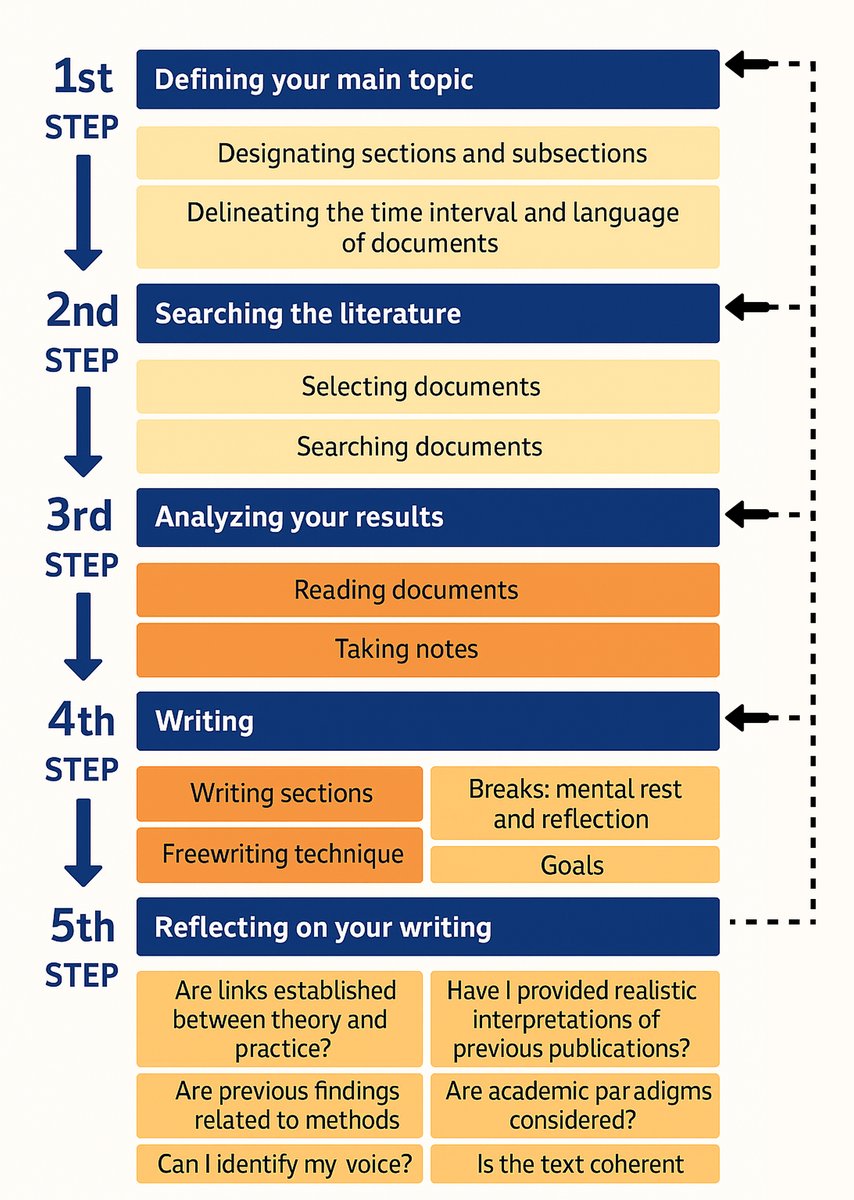
The five steps in performing a solid LR for dissertations or thesis.
#PhDposition #AcademicTwitter #PhDlife #phdtips
3
806
8 Jun 2025
PhD Interview Guide
🎓 Got a PhD interview coming up? Here's what you need to know!
Landing a PhD interview is a huge achievement - it means they already see your potential. Now it's time to show them you're the right fit.
The interview isn't about catching you out. It's a conversation to see if:
✅ You can commit to 3 years of research
✅ You'll work well with their team
✅ This university is the right match for you
They'll ask about 3 main areas:
🔹 About YOU: Your motivation, career plans, strengths/weaknesses
🔹 Your PROJECT: Why this research excites you, what challenges you expect
🔹 The UNIVERSITY: Why you chose them, what you'll contribute
My top tips:
🔹Do your homework - research the department and supervisors
🔹Show genuine enthusiasm for your research topic
🔹Be honest about weaknesses but frame them as growth opportunities
🔹Ask thoughtful questions back - this is YOUR interview too!
Remember: they invited you because you're already qualified
Most importantly: Be yourself. They want to see your authentic passion and personality, not a rehearsed performance.
The PhD journey is challenging but incredibly rewarding. You've got this! 💪
Want the full breakdown? I've written a detailed guide covering all the common questions and how to answer them effectively.
Read more: phdscanner.com/blog/b5206ad0…
#PhD #PhDLife #AcademicCareer #GraduateSchool #PhDTips #Research #HigherEducation #AcademicInterview #PhDJourney #GradSchool
1
3
159
11 May 2025
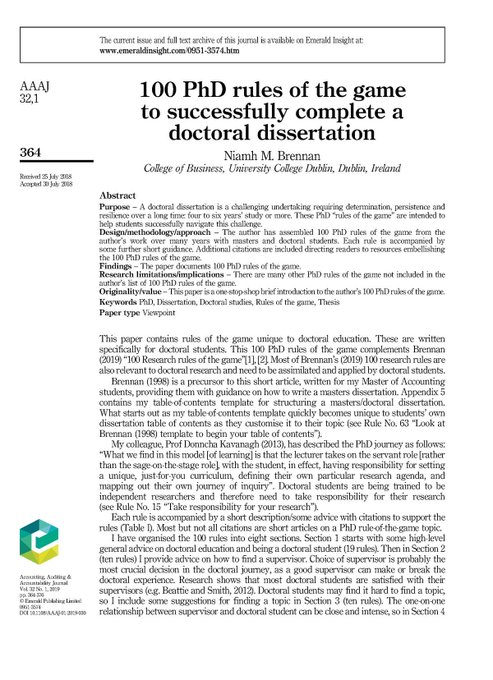
100 Rules for Successful Completion of PhD.
Here are the 100 essential rules that can make the difference.
1. Enjoy your doctoral studies
2. Open your mind
3. Develop your critical thinking skills
4. Have confidence
5. Be determined, dogged, and persistent
6. Be resilient
7. Manage the highs and lows
8. Focus
9. Be disciplined
10. Be methodological
11. Understand your philosophy
12. Don’t do too much teaching or grading
13. Look for help
14. Learn the literature
15. Take responsibility for your research
16. Talk to other doctoral students in your university
17. Find a study buddy
18. Learn from others
19. Understand the importance of finishing
22. Pick a research-active supervisor
23. Choose a supervisor who shares your research interests
24. Choose a supervisor you will get on with
25. Work with your supervisor for a time before registering
26. Maintain a good relationship with your supervisor
27. Check whether your supervisor is likely to stay in your university
28. Check out your supervisor
29. Understand the role of supervisor
30. Find a topic/research question that interests you
31. Avoid fad-du-jour topics
33. Put three bricks on the wall of knowledge
35. Choose a topic in an area you are likely to teach
36. Write a dissertation proposal
37. Write ten dissertation proposals
38. Summarise ten articles
39. Avoid the flounder factor
40. Have regular meetings with your supervisor
42. Take notes of your supervisor’s advice
43. Play tennis with your supervisor
44. Listen and respond to your supervisor’s advice
45. Have a doctoral-completion plan
46. Make sure your plan is comprehensive
47. Meet your own deadlines
48. Identify key milestones in your plan
49. Complete your course work as fast as possible
50. Become a world expert on your theory
52. Be familiar with your university’s policies on research
53. Find opportunities to present your work
54. Find opportunities to get feedback
56. Attend departmental seminars
58. Learn to write
59. Know how to make an argument
62. Start your dissertation with a table of contents
63. Look at Brennan’s (1998) template to begin your table of contents
65. Prepare a dissertation master document
66. Keep backup copies of your dissertation
67. Read a bit, write a bit; Write a bit, read a bit
68. Read other dissertations
69. Write (almost) every day
70. Choose a great title
72. Write a great abstract
73. Provide lots of signposts for your readers
76. Pay special attention to the first and last chapters
78. Complete a literature review
79. Judge what to put into appendices
80. Write to tell a story
82. Copy edit and proofread your dissertation
85. Your PhD examiner can help you to get published
87. Know your audience
88. Understand the purpose of a viva voce
90. Do a mock viva voce
91. Take notes of the questions
92. Be confident and authoritative
93. Defend but don’t be defensive
95. Publish your doctoral research
96. Play snakes and ladders
97. Enjoy your doctoral studies
#phdlife #phdtips
4
123
490
32,537

30 Apr 2025
💥📄 𝙉𝙤 𝙋𝙖𝙥𝙚𝙧𝙨? 𝙎𝙝𝙤𝙪𝙡𝙙 𝙄 𝙅𝙪𝙨𝙩 𝙂𝙞𝙫𝙚 𝙐𝙥 𝘼𝙥𝙥𝙡𝙮𝙞𝙣𝙜?
The question of having research papers often creates confusion, especially for 𝙗𝙖𝙘𝙝𝙚𝙡𝙤𝙧’𝙨 𝙨𝙩𝙪𝙙𝙚𝙣𝙩𝙨. "𝗜𝘀 𝗶𝘁 𝗲𝘀𝘀𝗲𝗻𝘁𝗶𝗮𝗹 𝘁𝗼 𝗵𝗮𝘃𝗲 𝗽𝗮𝗽𝗲𝗿𝘀? 𝗖𝗮𝗻 𝗜 𝗮𝗽𝗽𝗹𝘆 𝘄𝗶𝘁𝗵𝗼𝘂𝘁 𝗼𝗻𝗲? 𝗦𝗵𝗼𝘂𝗹𝗱 𝗜 𝗷𝘂𝘀𝘁 𝗴𝗶𝘃𝗲 𝘂𝗽 𝗶𝗳 𝗜 𝗱𝗼𝗻’𝘁 𝗵𝗮𝘃𝗲 𝗮𝗻𝘆?" If these thoughts sound familiar, this post is for you.
✅️ 𝗤𝘂𝗶𝗰𝗸 𝗔𝗻𝘀𝘄𝗲𝗿
Yes, you can apply for 𝗺𝗮𝘀𝘁𝗲𝗿’𝘀 𝗮𝗻𝗱 𝗣𝗵𝗗 𝗽𝗿𝗼𝗴𝗿𝗮𝗺𝘀 𝗶𝗻 𝘁𝗵𝗲 𝗨𝗦 𝗮𝗻𝗱 𝗘𝘂𝗿𝗼𝗽𝗲 𝘄𝗶𝘁𝗵𝗼𝘂𝘁 𝗽𝘂𝗯𝗹𝗶𝗰𝗮𝘁𝗶𝗼𝗻𝘀. While it might reduce your chances slightly, it’s not a dealbreaker. Let’s dive into the details:
⁉️ 𝗔𝗽𝗽𝗹𝘆𝗶𝗻𝗴 𝗳𝗼𝗿 𝗮 𝗠𝗮𝘀𝘁𝗲𝗿’𝘀 𝗪𝗶𝘁𝗵𝗼𝘂𝘁 𝗣𝗮𝗽𝗲𝗿𝘀
For master’s programs, 𝘁𝗵𝗲 𝗳𝗼𝗰𝘂𝘀 𝗶𝘀 𝗼𝗻 𝗚𝗣𝗔, 𝘀𝘁𝗮𝗻𝗱𝗮𝗿𝗱𝗶𝘇𝗲𝗱 𝘁𝗲𝘀𝘁 𝘀𝗰𝗼𝗿𝗲𝘀 (𝗹𝗶𝗸𝗲 𝗚𝗥𝗘 𝗼𝗿 𝗧𝗢𝗘𝗙𝗟), 𝗺𝗼𝘁𝗶𝘃𝗮𝘁𝗶𝗼𝗻 𝗹𝗲𝘁𝘁𝗲𝗿𝘀, 𝗮𝗻𝗱 𝗿𝗲𝗰𝗼𝗺𝗺𝗲𝗻𝗱𝗮𝘁𝗶𝗼𝗻𝘀. Having papers isn’t mandatory but can be helpful, especially for scholarships or top-tier universities. Most bachelor’s students aren’t expected to have high-level publications anyway, so don’t stress too much.
⁉️ 𝗔𝗽𝗽𝗹𝘆𝗶𝗻𝗴 𝗳𝗼𝗿 𝗮 𝗣𝗵𝗗 𝗪𝗶𝘁𝗵𝗼𝘂𝘁 𝗣𝗮𝗽𝗲𝗿𝘀
PhD applications are more 𝗿𝗲𝘀𝗲𝗮𝗿𝗰𝗵-𝗳𝗼𝗰𝘂𝘀𝗲𝗱. Professors look for students with research potential and proven skills, which is where having papers helps. 𝗜𝗻 𝘁𝗵𝗲 𝗨𝗦, 𝗱𝗶𝗿𝗲𝗰𝘁 𝗣𝗵𝗗𝘀 𝘄𝗶𝘁𝗵𝗼𝘂𝘁 𝗽𝗮𝗽𝗲𝗿𝘀 𝗮𝗿𝗲 𝗰𝗼𝗺𝗺𝗼𝗻, 𝗯𝘂𝘁 𝗶𝗻 𝗘𝘂𝗿𝗼𝗽𝗲, 𝗶𝘁 𝗰𝗮𝗻 𝗯𝗲 𝘁𝗼𝘂𝗴𝗵𝗲𝗿.
🔴 𝗪𝗵𝗮𝘁 𝗜𝗳 𝗬𝗼𝘂 𝗗𝗼𝗻’𝘁 𝗛𝗮𝘃𝗲 𝗣𝗮𝗽𝗲𝗿𝘀?
Don’t lose hope. Competitive resumes have made papers more important, but alternative ways like joining research projects, internships, or writing a strong research proposal can work. Use your motivation letter to address the lack of papers and highlight other strengths.
📌 𝗕𝗼𝘁𝘁𝗼𝗺 𝗟𝗶𝗻𝗲
𝗔 𝘀𝘁𝗿𝗼𝗻𝗴 𝗚𝗣𝗔, 𝗵𝗶𝗴𝗵 𝘁𝗲𝘀𝘁 𝘀𝗰𝗼𝗿𝗲𝘀, 𝗶𝗺𝗽𝗮𝗰𝘁𝗳𝘂𝗹 𝗿𝗲𝗰𝗼𝗺𝗺𝗲𝗻𝗱𝗮𝘁𝗶𝗼𝗻𝘀, 𝗮𝗻𝗱 𝗮 𝘀𝘁𝗲𝗹𝗹𝗮𝗿 𝗺𝗼𝘁𝗶𝘃𝗮𝘁𝗶𝗼𝗻 𝗹𝗲𝘁𝘁𝗲𝗿 𝗰𝗮𝗻 𝗰𝗼𝗺𝗽𝗲𝗻𝘀𝗮𝘁𝗲 𝗳𝗼𝗿 𝘁𝗵𝗲 𝗮𝗯𝘀𝗲𝗻𝗰𝗲 𝗼𝗳 𝗽𝗮𝗽𝗲𝗿𝘀. 𝗙𝗼𝗰𝘂𝘀 𝗼𝗻 𝗽𝗿𝗲𝘀𝗲𝗻𝘁𝗶𝗻𝗴 𝘄𝗵𝗮𝘁 𝘆𝗼𝘂 𝗱𝗼 𝗵𝗮𝘃𝗲!
🔥 Check out the latest scholarships and professors with grants in your field on Kite. Click the link below and log in with Google: 🔥
🌐 dashboard.applykite.com
#ApplyKite #PhDposition #PhDResearch #FundedPhD #FullyFundedPhD #Scholarship #GradSchool #GraduateStudies #MastersApplication #PhDApplication #NoPublications #ResearchLife #PhDTips #ScholarshipOpportunities

3
98
28 Apr 2025
𝗙𝗿𝗲𝗲 𝗔𝗜 𝗧𝗼𝗼𝗹𝘀 𝗳𝗼𝗿 𝗥𝗲𝘀𝗲𝗮𝗿𝗰𝗵; 𝗦𝗮𝘃𝗲 𝗧𝗶𝗺𝗲 & 𝗪𝗼𝗿𝗸 𝗦𝗺𝗮𝗿𝘁𝗲𝗿! 🚀
Lately, we’ve been focusing on application documents, but this post is for those of you deep into your research—whether reading papers, exploring your research interests, or just looking for an easier way to scan abstracts and find relevant work. Here are some free AI-powered tools to help:
🔹 Typeset.io – Answers questions based on papers, assists with reading, and helps rewrite text.
🔹 ResearchRabbit.ai – Categorizes papers and finds related studies.
🔹 Glasp.co (Extension) – Lets you take notes directly from research papers.
🔹 SemanticScholar.org – Helps with paper searches and finding similar research.
🔹 Consensus.app – Answers research questions using academic sources.
🔹 Elicit.com – Extracts key concepts, summarizes papers, and retrieves relevant information.
🔹 Scite.ai – Helps with citations and literature reviews.
🔹 ConnectedPapers.com – Visualizes connections between related papers.
🔹 Scholarcy.com – Summarizes academic papers.
🔹 Paperpal.com – Assists with academic writing.
📌 A Quick Heads-Up: While AI tools can save time and improve efficiency, always fact-check and review their outputs critically. For general AI assistance, you can also use ChatGPT, Gemini, Bing, or Jasper—but be even more cautious with their results.
Know a great AI tool that’s helping you? Drop it in the comments! 👇
🔥 𝙁𝙞𝙣𝙙 𝙩𝙝𝙚 𝙡𝙖𝙩𝙚𝙨𝙩 𝙛𝙪𝙣𝙙𝙚𝙙 𝙥𝙤𝙨𝙞𝙩𝙞𝙤𝙣𝙨 𝙖𝙣𝙙 𝙥𝙧𝙤𝙛𝙚𝙨𝙨𝙤𝙧𝙨 𝙬𝙞𝙩𝙝 𝙧𝙚𝙨𝙚𝙖𝙧𝙘𝙝 𝙜𝙧𝙖𝙣𝙩𝙨 𝙤𝙣 𝙆𝙞𝙩𝙚! 𝘾𝙡𝙞𝙘𝙠 𝙩𝙝𝙚 𝙡𝙞𝙣𝙠 𝙗𝙚𝙡𝙤𝙬 𝙖𝙣𝙙 𝙡𝙤𝙜 𝙞𝙣 𝙬𝙞𝙩𝙝 𝙂𝙤𝙤𝙜𝙡𝙚:
🌐 dashboard.applykite.com/
#ApplyKite #PhDResearch #GradSchool #Research #AcademicTools #PhDLife #PhDTips #ResearchTools #ArtificialIntelligence #AcademicWriting #LiteratureReview

2
136