
AI in Health & Life Sciences is moving from pilot to operating model.
Leaders aren't just experimenting—they’re building compliant, production-grade engines that respect HIPAA and strict regulatory guardrails.
Listen to the PiTech Podcast: 🔗 hubs.ly/Q04kqd0X0
1
AI in Health & Life Sciences is officially moving from pilot to operating model. 🧬🚀
Listen to the latest PiTech Podcast to discover how to scale securely:
🔗 hubs.ly/Q04jT3w60
#HealthTech #AI #LifeSciences #MedTech #PiTechSolutions
3
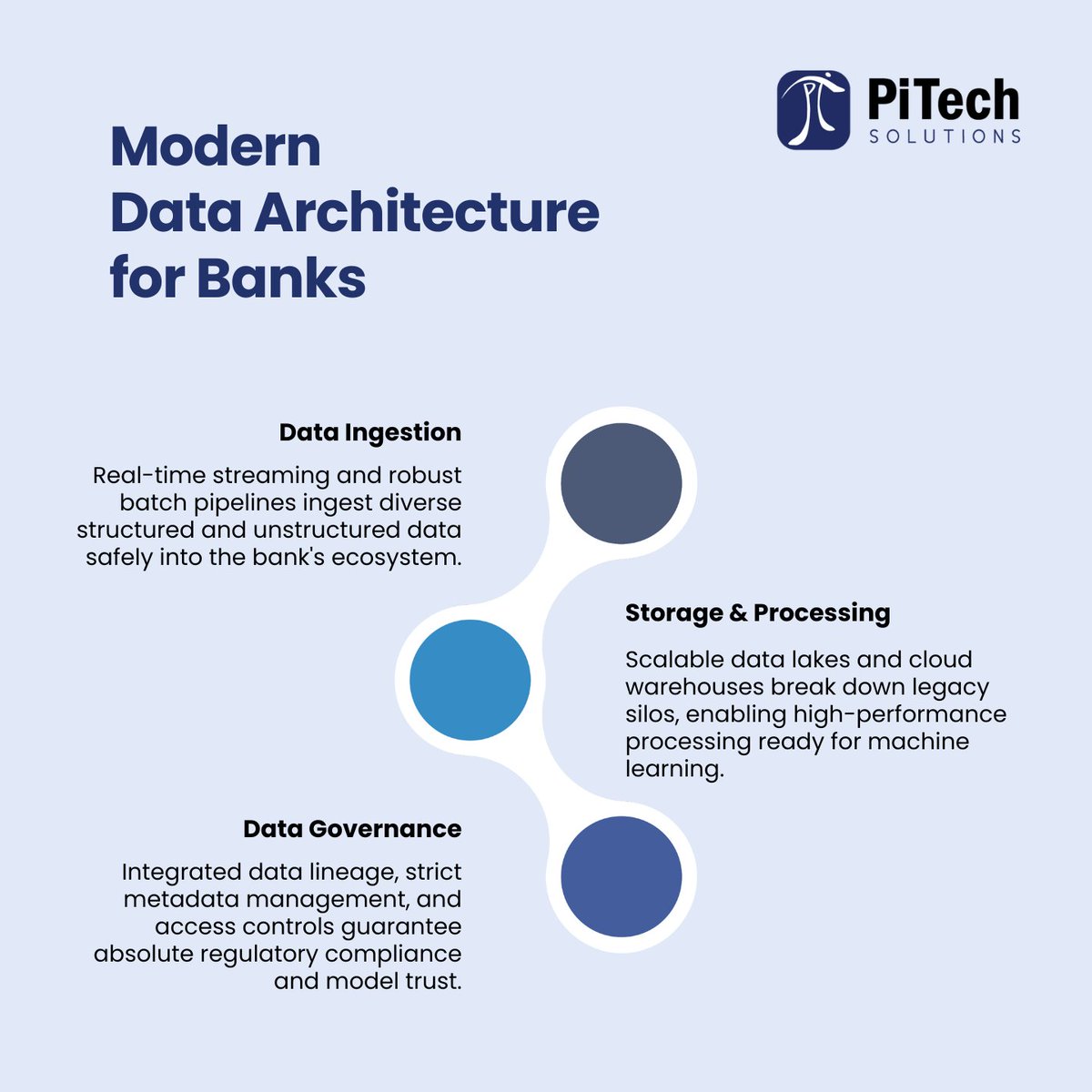
Scaling AI in banking is impossible if your data architecture is built on a patchwork of legacy silos.
To win, banks must establish a unified stack:
1️⃣ Real-time Ingestion
2️⃣ Scalable Storage & Processing
3️⃣ Embedded Governance
#DataStrategy #FinTech #CloudEngineering #PiTech
3
Deploying new software over messy workflows doesn't fix a factory—it just automates inefficiency.
In energy & manufacturing, digital transformation requires strict process discipline before technology selection.
🔗 hubs.ly/Q04hSM8H0
#Energy #SmartFactory #PiTech
2
AI adoption in banking is accelerating, but governance is lagging behind.
Deploying models without structured risk frameworks creates more liability than value.
Bridge the gap with PiTech Solutions
#FinTech #AI #Banking #RegTech #AIGovernance
2
CMMC enforcement is here.
In 2026, a certified cybersecurity posture is a gating requirement for defense contracts. Primes and subs must act now to bridge the maturity gap.
Read more here:
🔗 hubs.ly/Q04hBTBX0
#CMMC #DefenseContractors #DoD #Cybersecurity #PiTech
14
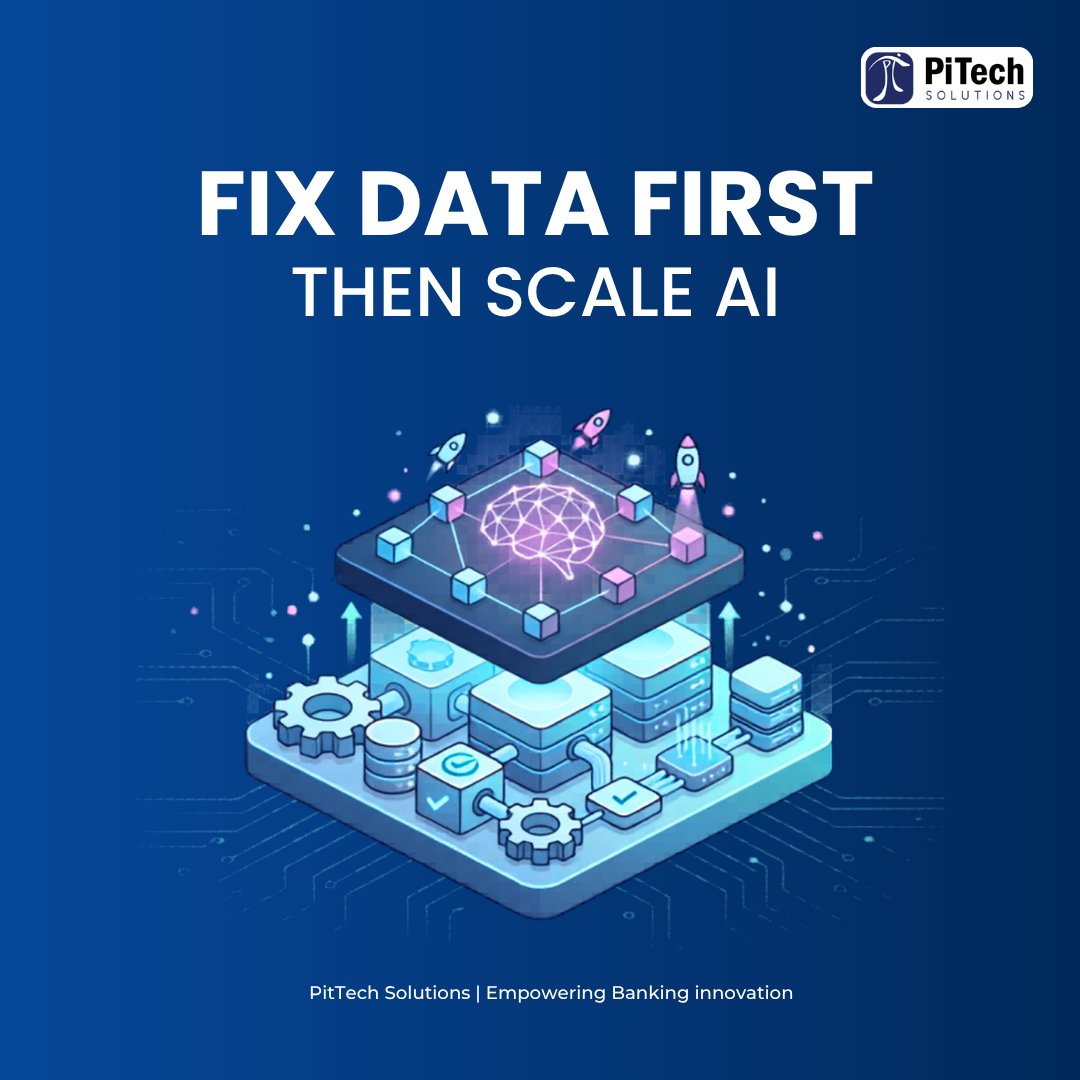
You can’t scale what you can’t trust. 🏛️⚠️
Clean, governed, and structured data is the non-negotiable for bank AI in 2026.
1️⃣ Fix Data First
2️⃣ Scale AI Second
Don't skip the foundation. 📈
#DataQuality #AI #BankingInnovation #PiTech
7
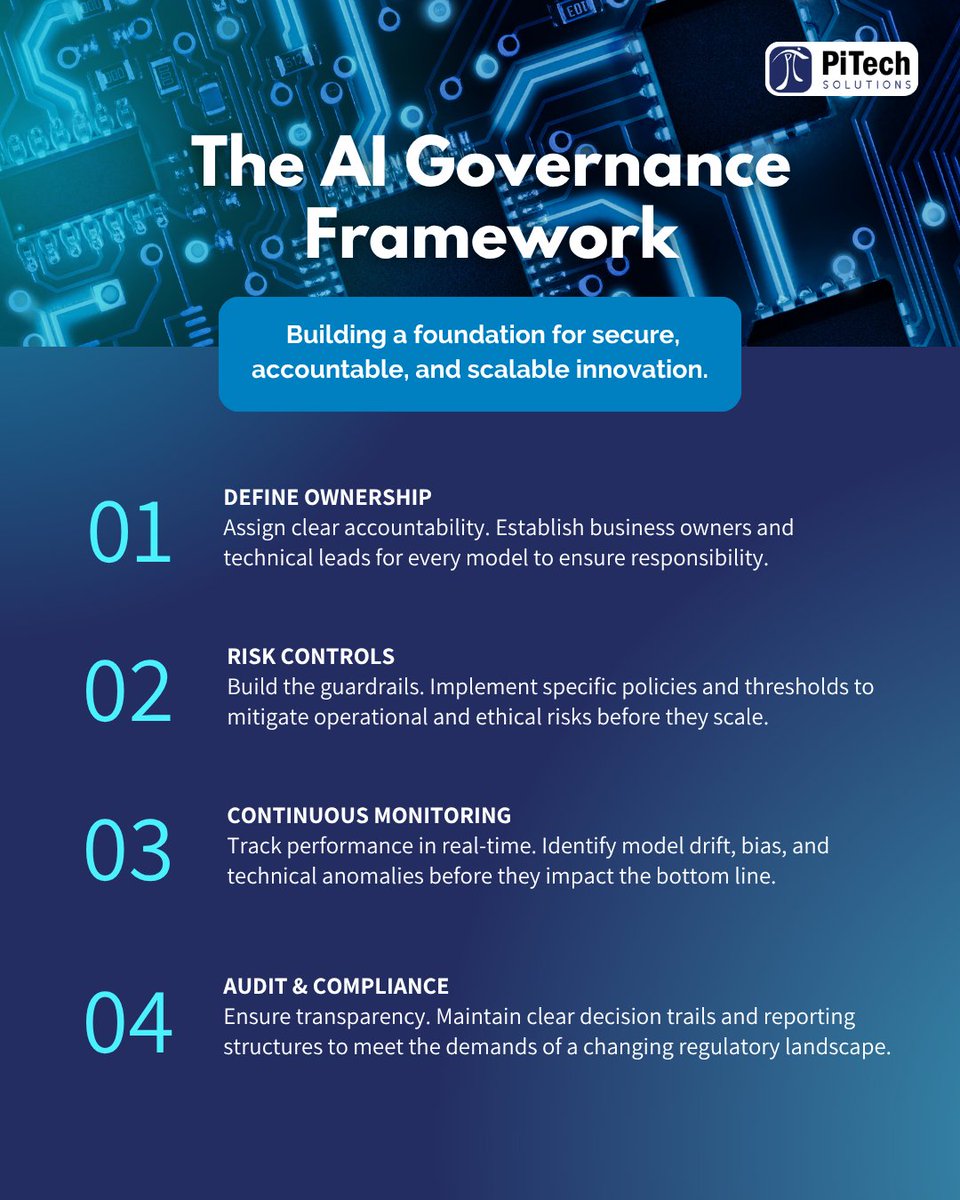
AI is powerful, but it’s not a strategy without a framework.
Without governance, AI creates more risk than value. Ensure accountability, compliance, and scalability with PiTech AI Governance Framework.
Governance Drives Trust.
#AI #FinTech #Banking #RegTech #PiTechSolutions
5
The latest PiTech Podcast is live, covering:
🔹 24/5 Trading
🔹 Tokenization
🔹 AI Enforcement
The 9:30–4:00 schedule is a relic. Is your tech stack ready for round-the-clock clearing?
Listen now: hubs.ly/Q04g2Mpx0
#FinTech #Trading #AI #Tokenization #PiTechSolutions
9

Flat pitech moda guddu score antha ra puku chudu Nijam nippulatidi ra puka gudu moskoni kurchu ra puka
24
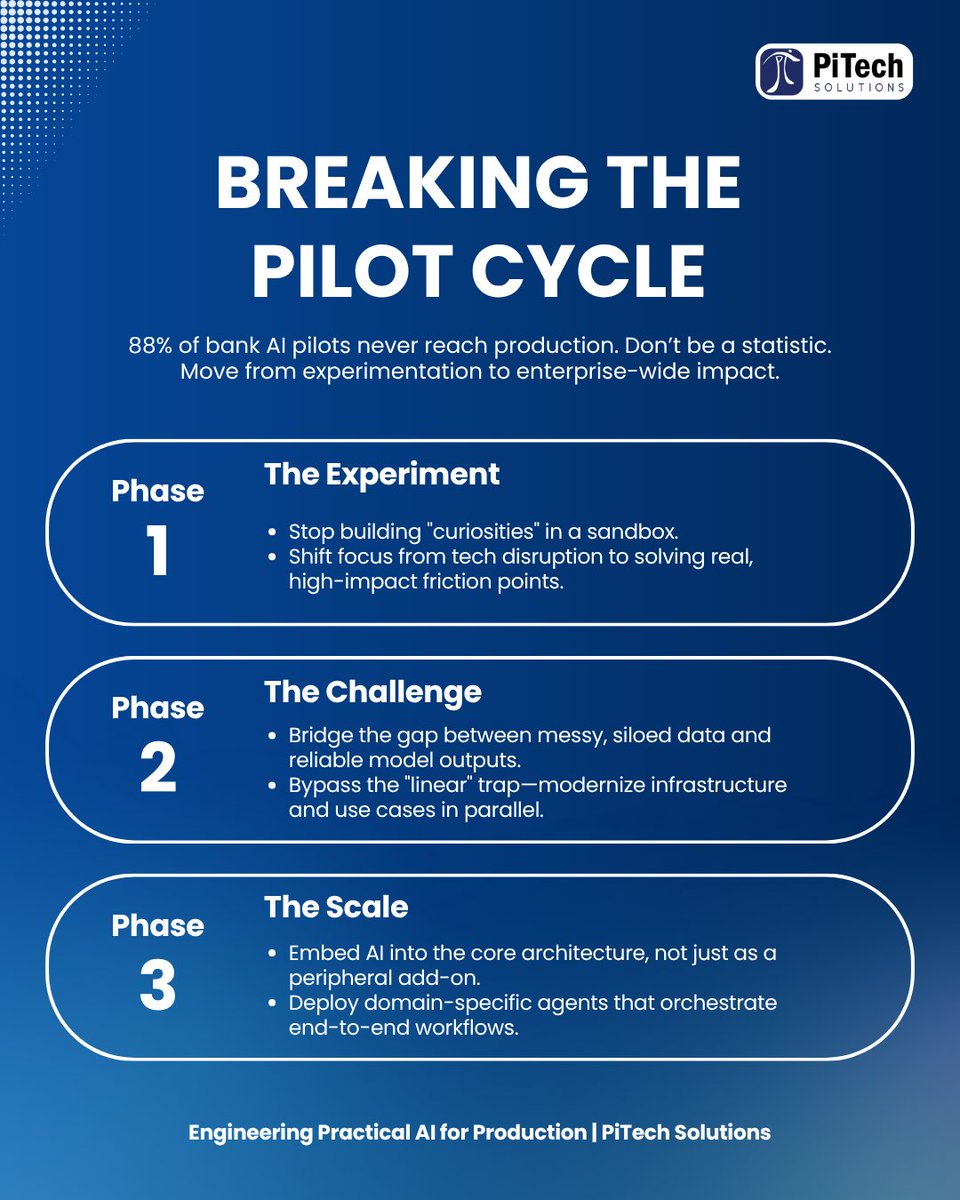
The 2026 divide isn't about who has AI, it's about who made it work at scale. Don’t build curiosities; build a production-ready engine that cuts costs and drives ROI.
Break the cycle with PiTech Solutions.
#AI #FinTech #Banking #OperationalExcellence #PiTech
4
FinTech in 2026
The latest PiTech Podcast breaks down the 3 forces redefining the industry:
1️⃣ Agentic AI
2️⃣ Stablecoins
3️⃣ Embedded Finance
🎧 Listen to the full episode here: hubs.ly/Q04dGV1z0
#FinTech2026 #AgenticAI #Stablecoins #RegTech #BankingInnovation
6
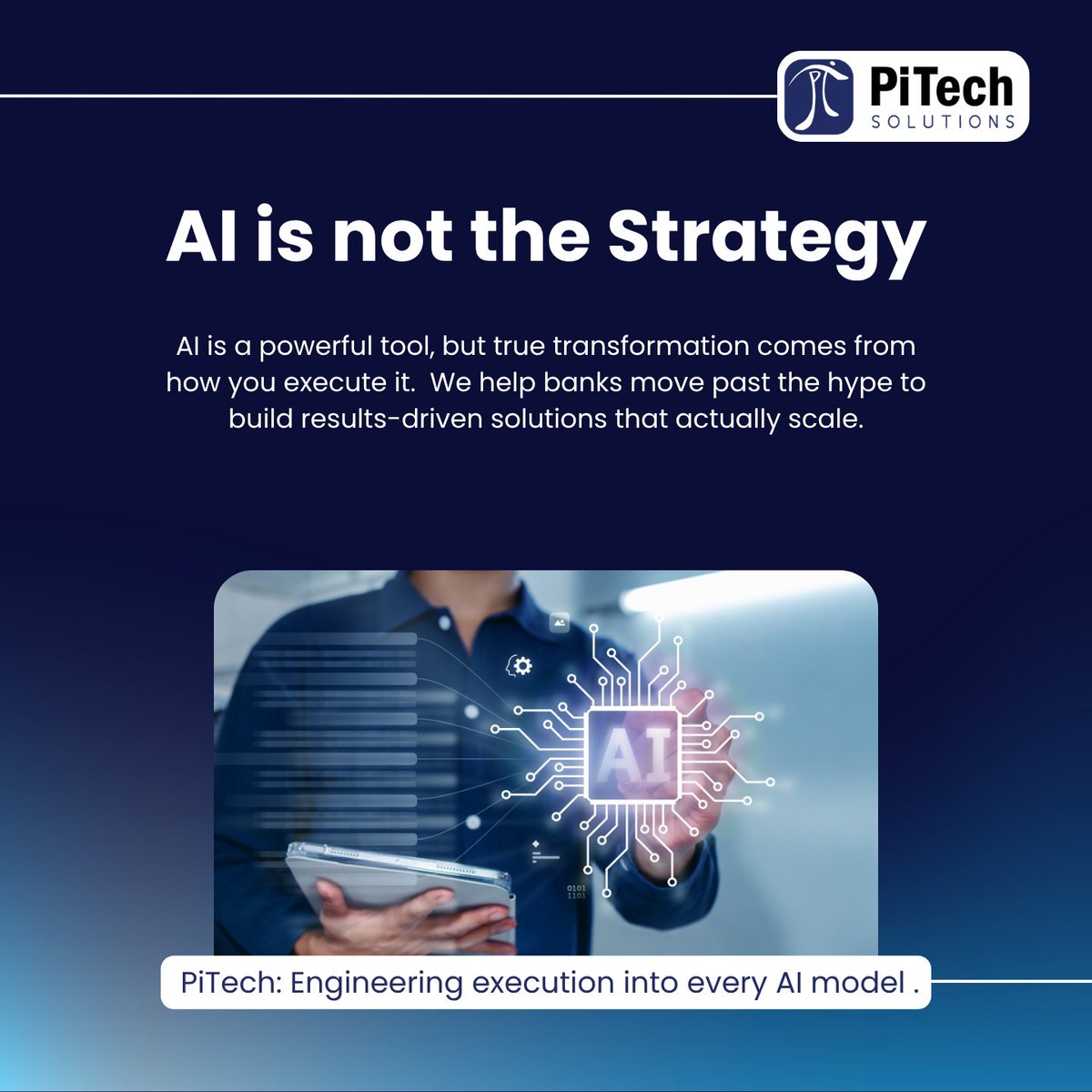
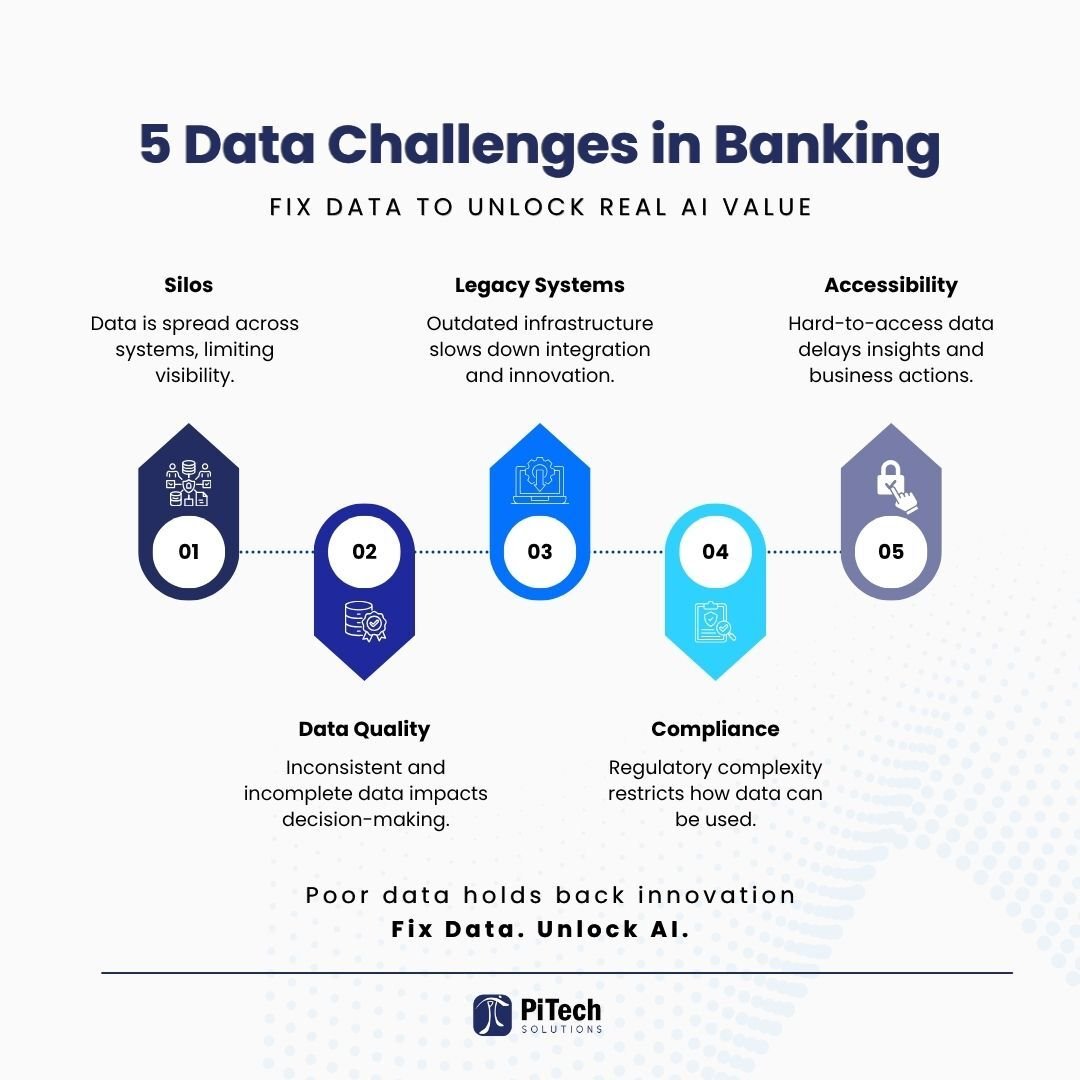
Data isn’t just a challenge in banking; it’s the foundation everything else depends on.
AI initiatives, digital transformation programs, and customer experience improvements often fall short for one reason: the data isn’t ready. Silos limit visibility, poor quality affects decisions, legacy systems slow everything down, and compliance constraints make data harder to use effectively.
Individually, these problems are manageable.
Together, they create friction across the entire organization.
That’s why solving data challenges isn’t just a technical task; it’s a strategic priority.
But this is where many approaches miss the mark.
Most solutions focus on fixing parts of the problem - a new data tool, a migration effort, or a governance layer. The result? Incremental improvement, but no real transformation.
Pitech approaches this differently.
Instead of addressing data challenges in isolation, @PiTechSolutions helps banks build end-to-end data ecosystems where data is unified, governed, and accessible by design. From modern data architecture and integration frameworks to embedded governance and AI readiness, the focus is on making data usable, reliable, and scalable across the organization.
This means:
- Breaking down silos with connected architectures
- Improving data quality at the source, not just downstream
- Enabling seamless integration with modern systems
- Embedding compliance without restricting innovation
- Making data accessible for real-time decision-making
Because the goal isn’t just to fix data issues; it’s to turn data into a true competitive advantage.
#DataInBanking #AIReadiness #DataStrategy #DigitalTransformation #BankingInnovation #PiTechSolutions
1
34
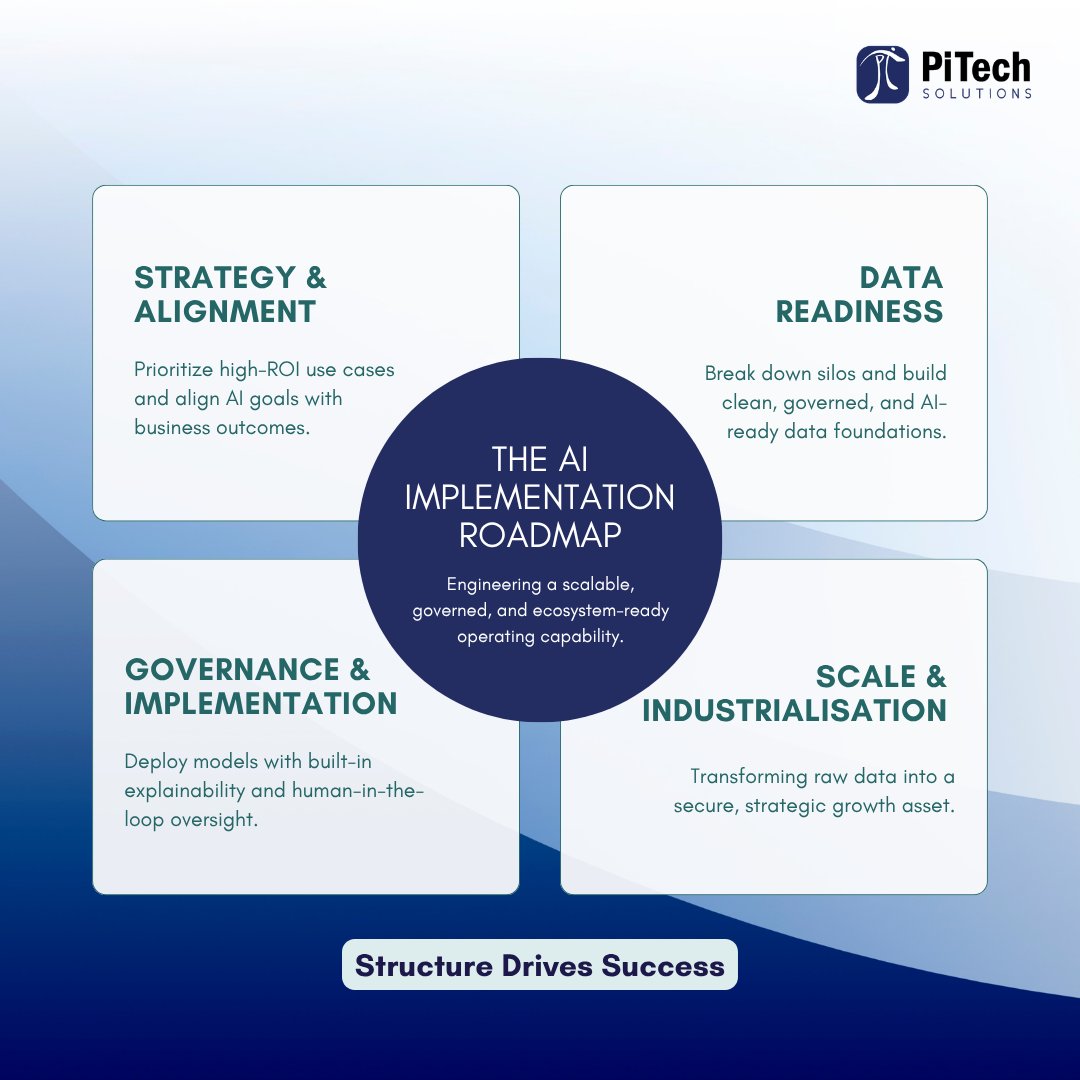
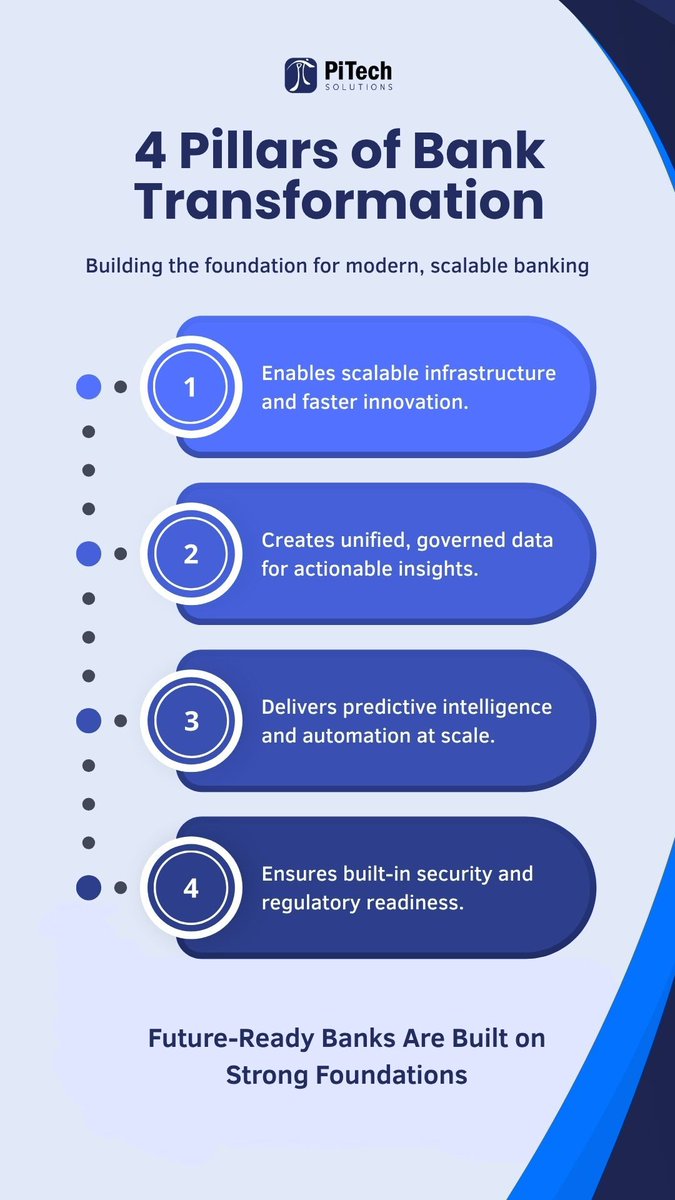
Transformation in banking doesn’t happen through isolated initiatives - it’s built on strong, interconnected foundations.
Cloud, data, AI, and compliance aren’t separate priorities. They are the core pillars that determine how effectively a bank can scale, innovate, and stay resilient in a rapidly changing environment. When one is weak or disconnected, the entire transformation effort slows down.
Cloud enables flexibility.
Data drives decisions.
AI unlocks intelligence.
Compliance ensures trust.
But the real value comes from how these pillars work together.
Many banks invest in each area independently, yet struggle to see impact because the foundation isn’t aligned. Disconnected systems, fragmented data, and siloed strategies limit what these technologies can truly achieve.
That’s where Pitech brings a different approach.
Instead of treating these pillars as separate initiatives, @PiTechSolutions helps banks build them as a unified ecosystem where cloud infrastructure supports scalability, data is structured and governed, AI is applied meaningfully, and compliance is embedded from the start.
The focus isn’t just on implementation, but on integration and long-term sustainability ensuring every layer of transformation works together seamlessly.
Because future-ready banks don’t just adopt technology; they build the right foundations to make it work.
#BankingTransformation #DigitalTransformation #AIinBanking #CloudBanking #DataStrategy #PiTechSolutions
1
1
14
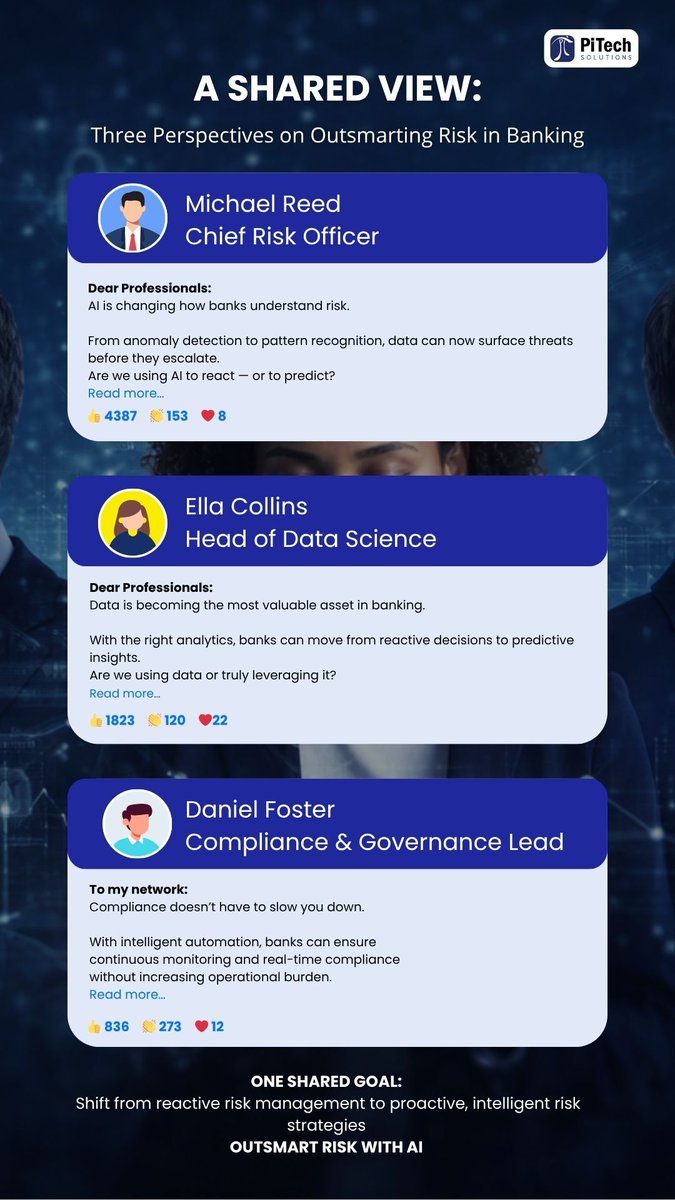
Most banks are still managing risk the old way - reacting after something goes wrong.
But risk today moves faster than traditional systems can handle. By the time an issue is detected, it’s often already escalated into financial loss, compliance exposure, or reputational damage. That’s why leading banks are shifting from reactive models to predictive, intelligence-driven risk strategies.
AI, data, and automation are changing the equation.
Instead of relying only on historical patterns and manual reviews, banks can now detect anomalies in real time, identify emerging threats earlier, and make faster, more informed decisions. Risk management becomes continuous, adaptive, and far more precise.
But technology alone isn’t enough.
The real challenge is connecting everything - data sources, AI models, compliance workflows, and governance frameworks into a system that works seamlessly. Without that integration, even the most advanced tools operate in silos.
That’s where Pitech brings a different approach.
Rather than treating risk as a standalone function, @PiTechSolutions helps banks build end-to-end risk ecosystems where predictive analytics, intelligent automation, and strong governance are fully aligned. The focus isn’t just on detecting risk, but on preventing it, responding faster, and turning it into a strategic advantage.
Because the future of banking risk isn’t about control alone; it’s about staying ahead.
#BankingAI #RiskManagement #AIinBanking #DataDriven #Automation #FinTech #Compliance #FutureOfBanking #PiTechSolutions
5
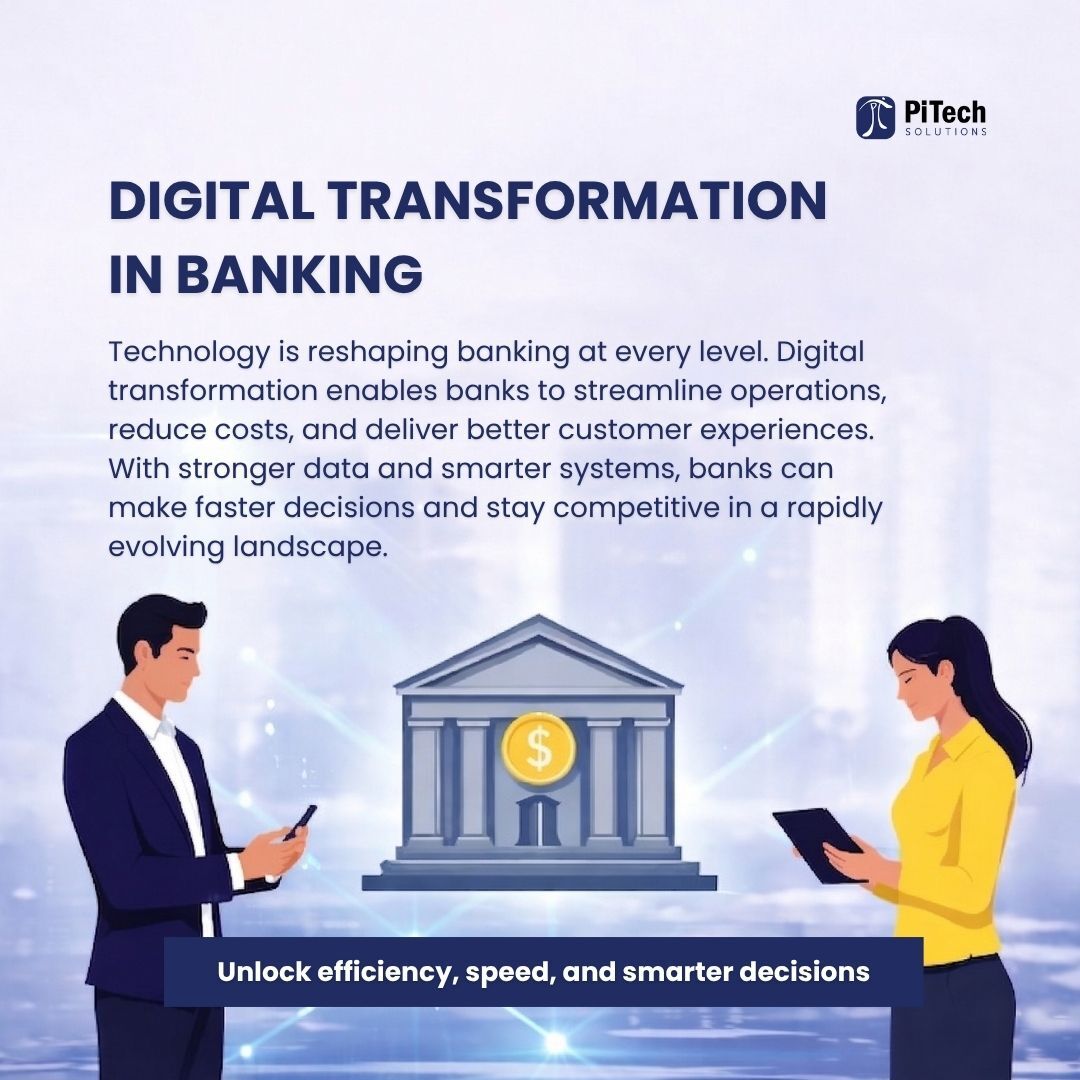
Digital transformation in banking isn’t just about adopting new tools - it’s about rethinking how data, systems, and decisions flow across the organization.
Banks that get this right don’t just move faster, they operate smarter. From real-time transactions and automated workflows to better risk visibility and seamless customer experiences, transformation creates a foundation for scale, agility, and resilience.
But here’s where most institutions struggle: fragmented systems, legacy architectures, and inconsistent data slow everything down. Transformation without alignment only adds complexity.
That’s where Pitech stands out.
Instead of layering solutions on top of existing problems @PiTechSolutions focuses on fixing the core; building strong data foundations, enabling audit-ready architectures, and ensuring systems actually talk to each other.
The result? Faster implementation, lower operational friction, and transformation that sustains long-term growth not just short-term wins.
If transformation is on your roadmap, the question isn’t if - it’s how well it’s designed from the ground up.
#DigitalTransformation #BankingInnovation #FinTech #AIinBanking #PiTechSolutions
1
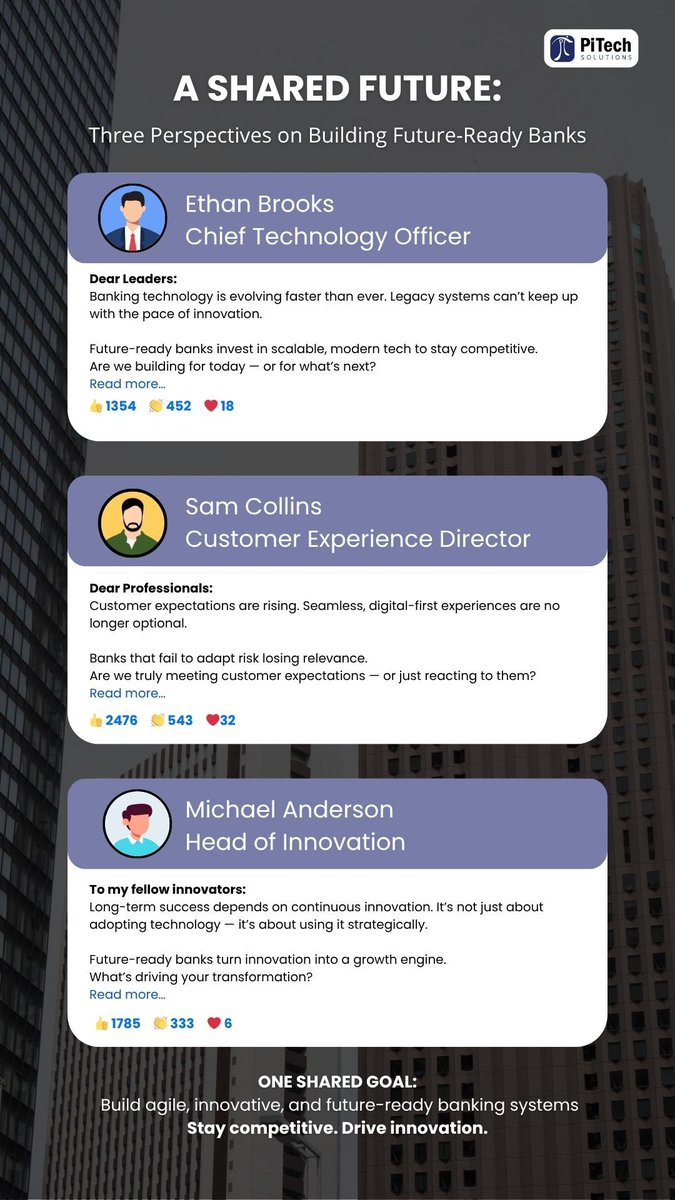
What actually makes a bank “future-ready”?
It’s not just about adopting new technology. Most banks are already investing in digital tools.
The real challenge is making those investments work together in a way that drives long-term value.
Today, banks are navigating a constant shift:
Technology is evolving quickly.
Customer expectations are becoming more demanding.
And competition is coming from fintechs and digital-first players.
In this environment, future-readiness comes down to three things:
• Building flexible, scalable technology foundations
• Delivering consistent, customer-first experiences
• Turning innovation into a repeatable, structured capability
This is where many banks struggle - not with intent, but with execution.
At Pitech, we work closely with financial institutions to bridge that gap.
We help banks:
• Modernize legacy systems and move toward scalable, cloud-ready architectures
• Connect fragmented systems and data to enable seamless operations and better decision-making
• Design and implement digital workflows that improve efficiency and customer experience
• Establish clear technology roadmaps aligned with business goals, not just IT priorities
• Build governance and integration frameworks so innovation can scale not stay siloed
The focus isn’t just on introducing new tools.
It’s about creating a cohesive, future-ready ecosystem where technology, data, and operations work together.
Because being future-ready isn’t a milestone
it’s the ability to continuously adapt without disruption.
How is your organization approaching this shift?
#Banking #DigitalTransformation #FinTech #Innovation #FutureReady #CustomerExperience #PiTechSolutions
6
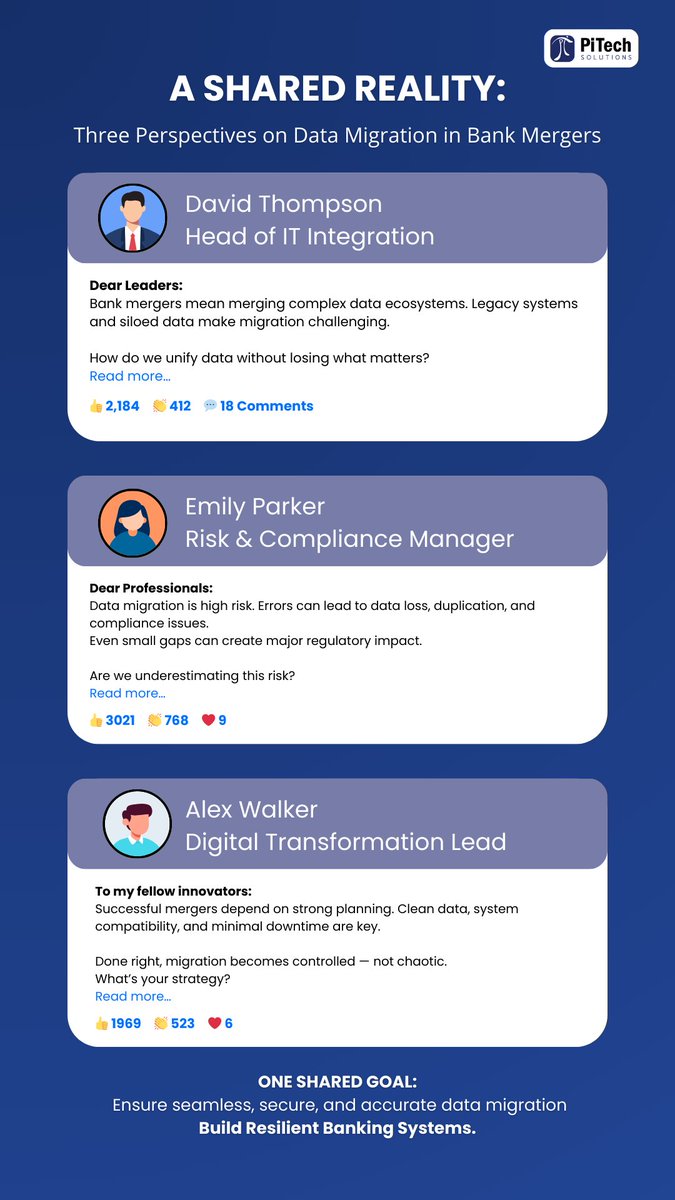
Most bank mergers don’t struggle because of strategy.
They struggle because of data.
Behind every integration lies a complex challenge:
How do you unify multiple legacy systems, millions of records, and inconsistent data structures without disrupting operations?
Data migration in bank mergers is often underestimated as a technical step. In reality, it is a business-critical function that directly impacts:
• Operational continuity
• Regulatory compliance
• Customer experience
• Decision-making accuracy
The risks are real and expensive.
Poorly executed migration can lead to data loss, duplication, reconciliation issues, and compliance violations. Even small inconsistencies can cascade into large operational and financial consequences.
But leading financial institutions are shifting their approach.
They are moving from reactive execution to proactive, structured migration strategies that focus on:
✔ Data discovery and cleansing before migration
✔ Standardization across systems
✔ Strong governance and validation frameworks
✔ Phased migration to reduce downtime and risk
Because when migration is done right, it becomes more than just a backend activity - it becomes the foundation for a scalable, integrated, and future-ready banking ecosystem.
At Pitech, we work closely with banks to design and execute secure, structured, and compliant data migration strategies ensuring that mergers don’t just complete, but deliver long-term value.
How is your organization approaching data migration in large-scale transformations?
#PiTechSolutions #BankingTransformation #DataMigration #DigitalTransformation #FinTech #BankMergers #DataStrategy
3