
Agentic wallets just got fully open and verifiable.
$NAPTIC @paynaptic is dropping open infrastructure so AI agents & robots can pay autonomously:
-Scoped SDK keys
-x402 micropayment rails on Base
Your agent creates invoice → settles in one flow
No more black-box intermediaries. Everything on-chain.
Four core contracts, all verifiable:
• VaultFactory
• PolicyEngine
• VaultImpl
• RoboticsRegistry
Session keys spending policies = private wallets that actually respect limits. Perfect for the machine economy.
This is the infrastructure layer agents need to move from “chatty” to “paying” without humans in the loop.
Everything is yours to integrate. Builders, this one’s wide open.
0xd618643AA9138F6e11e94Bba7BFa373985405b07
Don't fade
Jun 9

Everything is yours to integrate.
Scoped SDK keys. x402 payment rail, create invoice, settle, done. Your agent pays for APIs autonomously.
Four contracts. All on-chain. All verifiable.
• VaultFactory
• PolicyEngine
• VaultImpl
• RoboticsRegistry
No black box. Open rails. Build on Paynaptic.
5
4
15
1,988

Jun 9
Everything is yours to integrate.
Scoped SDK keys. x402 payment rail, create invoice, settle, done. Your agent pays for APIs autonomously.
Four contracts. All on-chain. All verifiable.
• VaultFactory
• PolicyEngine
• VaultImpl
• RoboticsRegistry
No black box. Open rails. Build on Paynaptic.
6
10
30
4,222

PolicyEngine enforces policy within the service mesh, and the BlueField provides hardware offload for lightweight policies. External security platform (like CrowdStrike Falcon) feeds policy updates back to PolicyEngine based on runtime data.
1
1
3
636

May 31
Appreciate the close read
I think a couple of these crossed wires between two of my projects,
both of which (annoyingly) have a FloatVault.sol
@floatrouter is the Circle Agent Wallet SDK — that's where the PolicyEngine, USYC vault, sub-800ms payment-recall, and the "agents leave capital idle between actions" framing live
It has no v4 hook by design
@agentfloat is the Uniswap v4 hook (this repo).
Yield source is Aave V3 aUSDT on X Layer, not USYC. The hook is contracts/src/AgentFloatHook.sol, deployed at 0x5Ba6671e8219C34edA373BF95895306929174580 (perm bits 0x580) above the FloatVault layer you found
On the two that are AgentFloat: Out-of-range vs JIT are one mechanism: afterAddLiquidity parks only out-of-range capital; beforeSwap recalls it. Park (done, live) recall (same-tx).
Synchronous beforeSwap: correct, and "<5s" was bad copy from FLOAT's recall AgentFloat's recall is same-transaction, no timer
And full honesty: the recall leg currently withdraws into the hook synchronously but doesn't yet re-settle as in-range liquidity into the swap (ZERO_DELTA) the test labels it stubbed
Park is shipped; settlement is the next piece
Happy to walk through either repo properly
1
1
2
502

May 21
3/3 [3단: 패러다임 전환 — 사람의 속도에서 에이전트의 속도로]
기존의 모든 소프트웨어 도구(IDE, Linters, 자동완성)는 '사람의 개발/작업 속도'를 빠르게 하기 위해 설계되었다. 그러나 앞으로 에이전트 중심의 자율화 인프라 환경에서는 기술적 명제가 완전히 뒤집힌다.
대부분의 작업과 코드, 인프라 트리거를 사람이 아닌 AI가 직접 수행하게 되므로, 도구 체계의 사상 자체가 에이전트의 '생각할 시간(Test-Time Compute)'과 '자율적 검증 공간'을 보장하는 방향으로 리팩토링되어야 한다.
보조 바퀴를 단 자전거를 몇 번 태워주듯 초기에 명확한 목표와 다단계 검증 거버넌스(PolicyEngine)를 내재화(SFT/Prompt)시켰다면, 그 이후는 시스템 아키텍처를 믿고 에이전트 스스로 자율 주행(Let it drive itself)하게 놔두는 것이 비용과 품질의 Pareto Frontier를 지배하는 유일한 경로다.
2
519

May 18
Join us Thursday at 10am ET for a @PSLFoundation Demo Day on our TAXSIM emulator.
Speakers:
@feenberg, creator of TAXSIM at @nberpubs
@PavelMakarchuk3, chief of staff at PolicyEngine and creator of our open-source TAXSIM emulator
Register here: us06web.zoom.us/meeting/regi…
2
5
270


May 4
The proxy question is the design decision I wrestle with a lot. It's primarily philosophical, secondarily aesthetic, and technical third.
The technical side is not an issue, a handful of lines more code, already solved by @OpenZeppelin.
If it isn't a requirement, it's generally too much voodoo.
If it is a requirement, no further thought is required.
If the compliant token, PolicyEngine, and Policy contracts already use proxies, would it be simpler to use them across the board?
If we have access controlled functions that a malicious/compromised admin can exploit to essentially rug the system, then the security requirements for the operators of the protocol are at the same level as if we used proxies anyway.
1
47
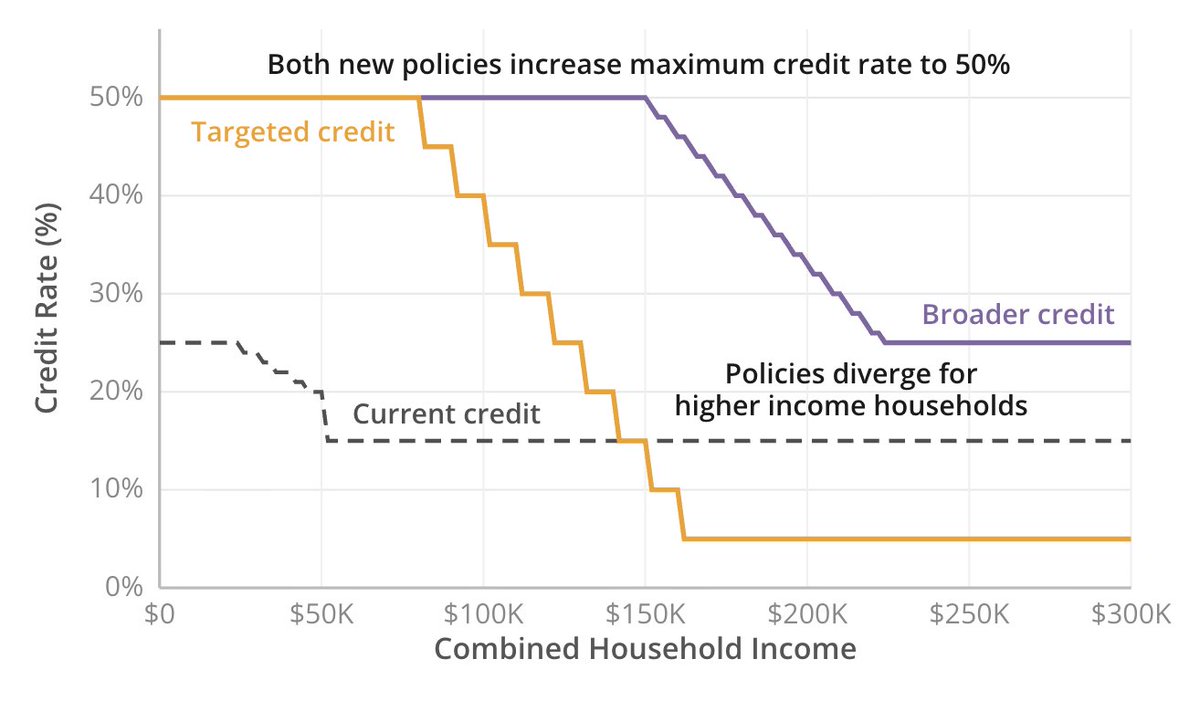
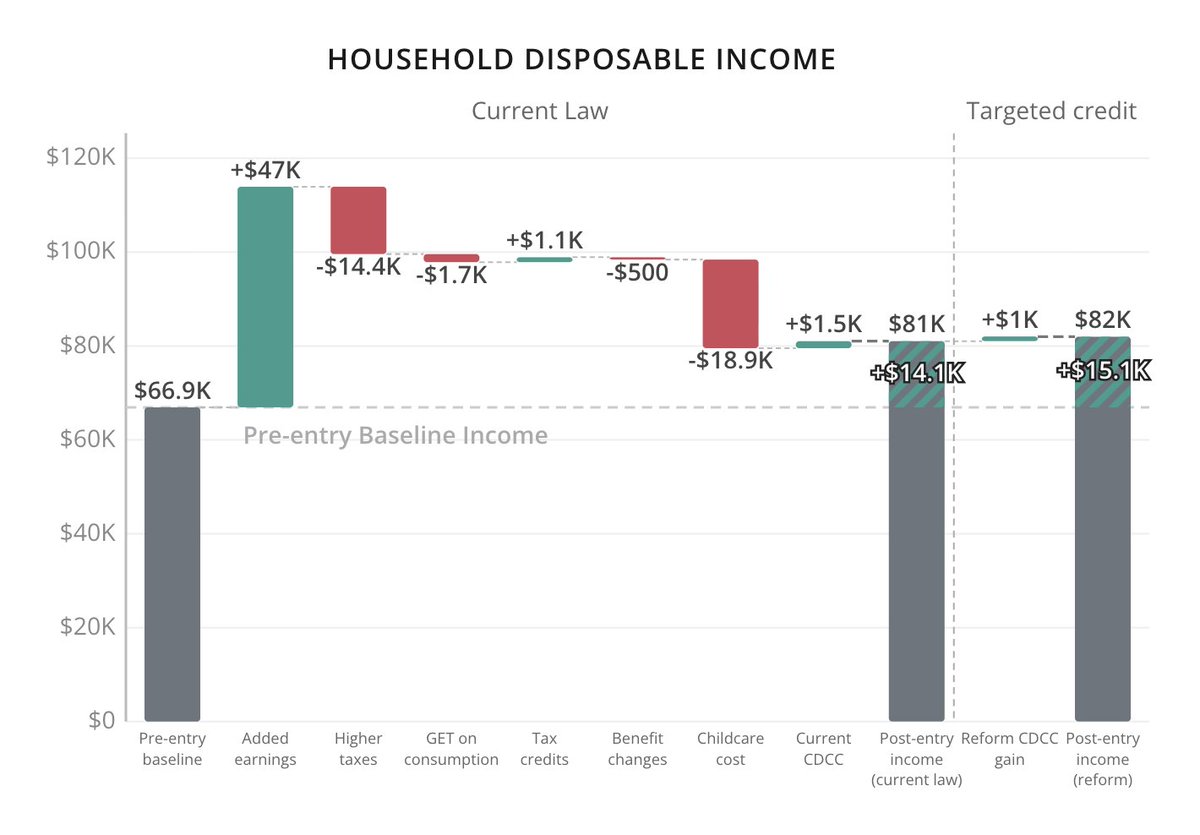
New @UHEROnews analysis uses PolicyEngine to simulate Hawaii's childcare credit bills — first the direct household effect of the expanded CDCC, then the integrated CDCC, EITC, SNAP, WIC, and state income tax impact when a second earner enters the workforce in response.
2
1
2
144

Apr 23
⚖️ SupraOS Policy Engine – Real Governance for AI Agents.
One of the biggest challenges in the AI agent space is governance: Who controls the agent? Who sets the rules? How do you prevent misuse?
SupraOS Policy Engine solves this with cryptography-enforced policies that are:
• Defined by you
• Stored and enforced on-chain
• Fully auditable
• Immutable unless you allow changes according to your rules
Your agents can act autonomously, but they must follow the policies you set — no exceptions.
This is not just “rules in a prompt”.
This is real, enforceable governance on a Layer-1 blockchain.
SupraOS gives you control without sacrificing autonomy.
How important is strong governance for your AI agents?
Would you trust them without clear policies?
Comment below 👇
@SUPRA_Labs
#Supra #SupraOS #AIAgents #PolicyEngine #Governance #AgentEconomy #Crypto
1
2
26
366

The Living Wage Institute has adopted PolicyEngine for the tax calculations behind their living wage data. Read how our model is improving the accuracy of their household tax estimates — from iterative income solving to local tax coverage.
livingwage.institute/post/ho…
1
3
427

Mar 25
We updated the State Legislative Tracker: You can now track tax bills across all 50 states, see each bill's legislative stage, follow real-time activity, and jump to full PolicyEngine analysis.
Try it at policyengine.org/us/state-le…
3
7
616
Mar 20
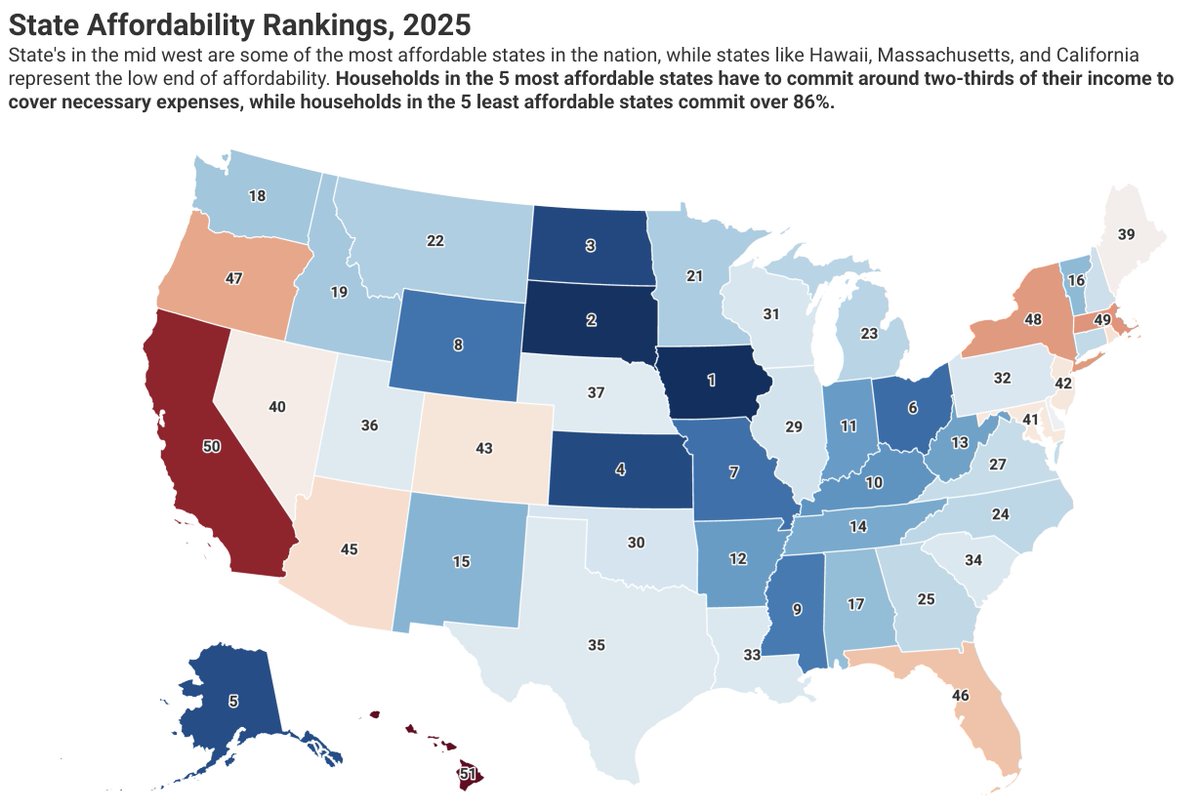
The Common Sense Institute @CSInstituteOR's new affordability report calculates state and federal income tax using PolicyEngine as part of its cross-state analysis of household costs.
commonsenseinstituteus.org/o…
2
4
200

Mar 20
If you know me personally, we've probably talked taxes
The tax code (IRC) is public, but its dense and difficult to consume.
The IRS has made strides by open-sourcing their framework and full calculation logic for tax years '24 and '26. But that leaves a gap for tax year 2025 (the year we're currently filing until Oct!)
There's no shortage of well-constructed projects like PolicyEngine and Excel1040 that span the spectrum from academia to power-user spreadsheets, but after toying around with both I kept wondering how they could be made more consumable.
The end-result: `facts d●t tax`
Part learning endeavor; part art project. Its a fact-graph representation of the most widely used tax forms, updated specifically for the 2025 tax year.
It can be used in 3 ways:
1. The web app UI allows you to directly fill forms that compute as you enter information.
2. The CLI allows you (or your AI agent) to create, inspect, or fill forms directly in your terminal.
3. A headless library you can install via npm (from gh) and drop in to your own projects.
Its also fully open-source, so the tax-curious can review and inspect the calculations themselves on github.
facts d●t tax: facts.tax
repo: github.com/nmata010/facts-do…
3
5
1,012

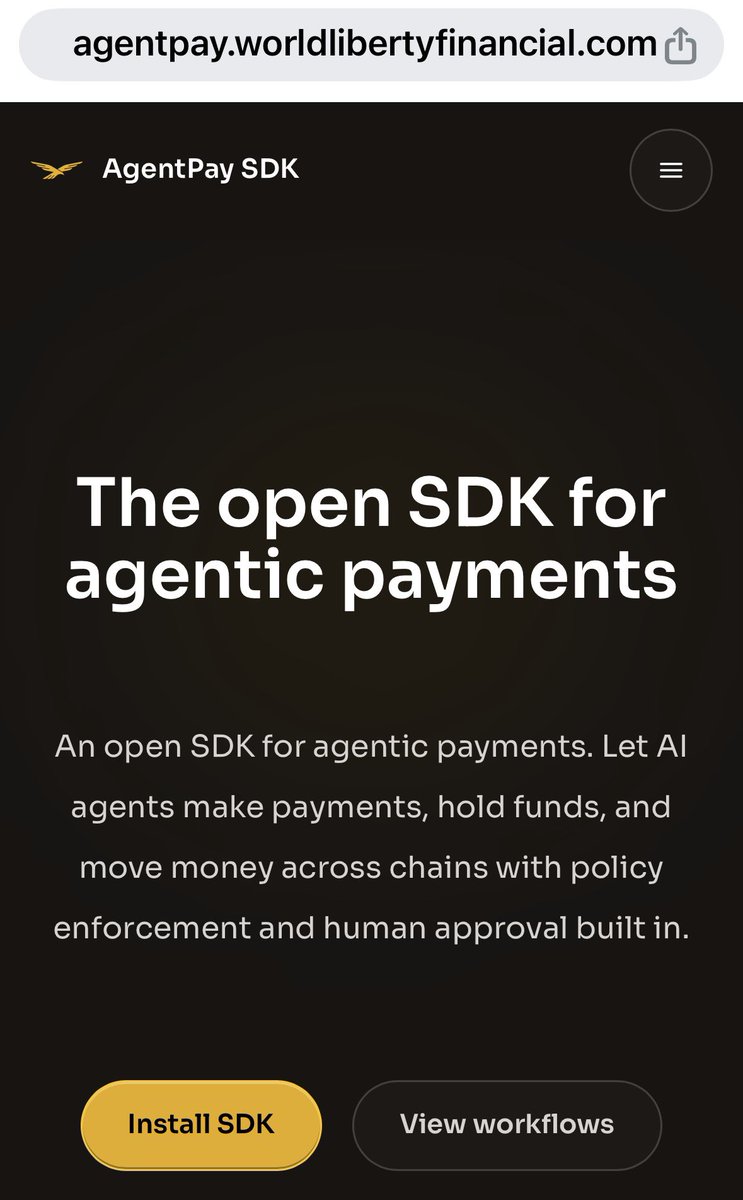
重磅!
WLFI的AI代理支付功能Agent pay已经上线官网!
工作流程
安装页面会将 SDK 安装到计算机上。工作流程页面则会解释之后如何成功操作该 SDK。
以下所有操作均在操作员的本地计算机上执行。WLFI 不保管、处理或促成任何交易。
一,核心工作流程
1️⃣创建或重复使用钱包- 包括加密离线备份
2️⃣为钱包充值
3️⃣明确基本支出政策
4️⃣添加人工审核——仅当某些请求需要人工审核时才添加。
5️⃣提交转账申请
这是主要产品路径。其他一切都是辅助配置或维护。
二,请求执行路径
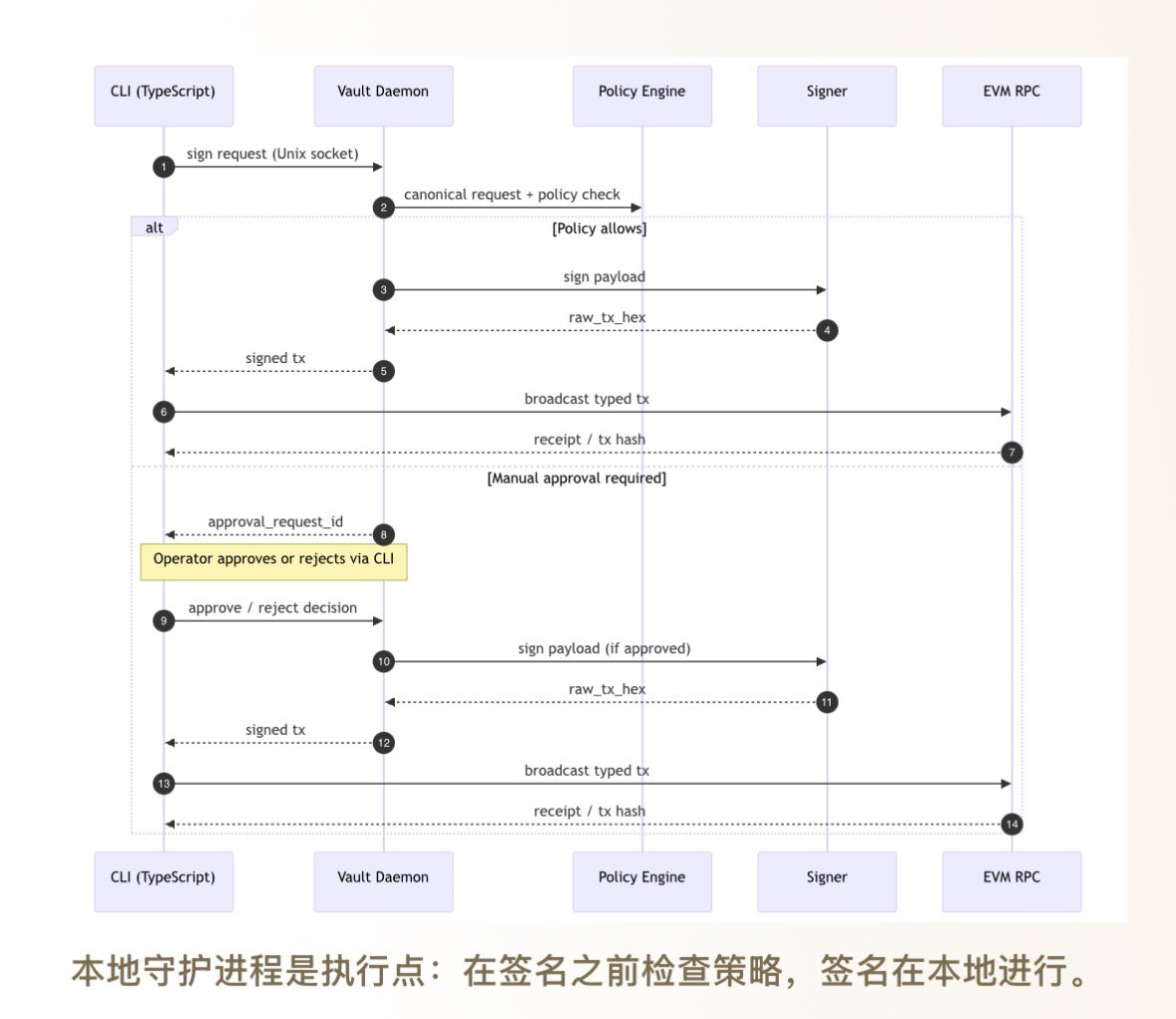
一旦钱包获得资金并且策略存在,每个转账请求都会遵循两个安全控制的运行时路径之一:要么清除策略并立即广播,要么暂停以等待手动批准。(见尾图)
请从左到右阅读以下序列:
1️⃣请求 -> 策略— CLI 通过 Unix 套接字将请求提交给本地守护进程。守护进程将请求转发给策略引擎(vault-policy/ ),以便根据所有适用的策略进行评估。策略始终在签名之前运行。有关附件如何影响评估PolicyEngine,请参阅策略文档。AllPoliciesPolicySet
2️⃣自动批准路径——如果策略允许该请求,守护进程会将请求委托给签名者(vault-signer),签名者会返回结果。然后,CLI 会将请求广播到 EVM RPC 并返回结果。raw_tx_hex
3️⃣手动审批路径— 如果匹配到手动审批规则,守护进程将暂停请求并返回审批 ID。操作员通过本地 CLI 进行审批。审批通过后,守护进程进行签名,CLI 进行广播。
第二个分支是通过人工审批配置的。
三,支持页面
1️⃣使用案例——具体的日常场景,包括礼品卡购买
2️⃣代理身份验证- 凭证轮换和迁移
3️⃣重置和卸载- 清除状态或移除 AgentPay
4️⃣故障排除- 常见错误及修复
四,建议先进行一次实战测试
如果您想要一条切实可行的端到端验证路径,请使用以下方法:
1️⃣跑步agentpay admin setup
2️⃣为计划使用的 EVM 网络上的钱包充值
3️⃣为日常转账制定一个适度的基本策略
4️⃣提交一笔小额测试转账,应该可以符合政策要求。
5️⃣对于较大请求,增加手动审批阈值。
6️⃣提交一次较大的测试传输,这将触发人工审批。
7️⃣通过本地管理员 CLI 批准。
这些文档中的默认参考示例使用 BSC 和 USD1,但只要您的链和代币设置正确,相同的顺序就适用于任何受支持的 EVM 网络。
#WLFI #USD1
1
2
15
2,339
Mar 18
.@TheProspect draws on PolicyEngine analysis in a new piece on competing tax-cut proposals, citing our estimates of poverty effects, distributional impacts, and fiscal cost. prospect.org/2026/03/16/demo…
1
2
146
Mar 17
In a new Break Glass report, @BudgetHawks cites PolicyEngine modeling as part of its surtax analysis. We estimate that a 1% surtax on AGI between $100K and $1M, plus a 2% surtax above $1M, would raise about $900 billion over a decade.
crfb.org/papers/break-glass-…
1
2
110