
May 28
From Extremism to Equality for Women in Afghanistan
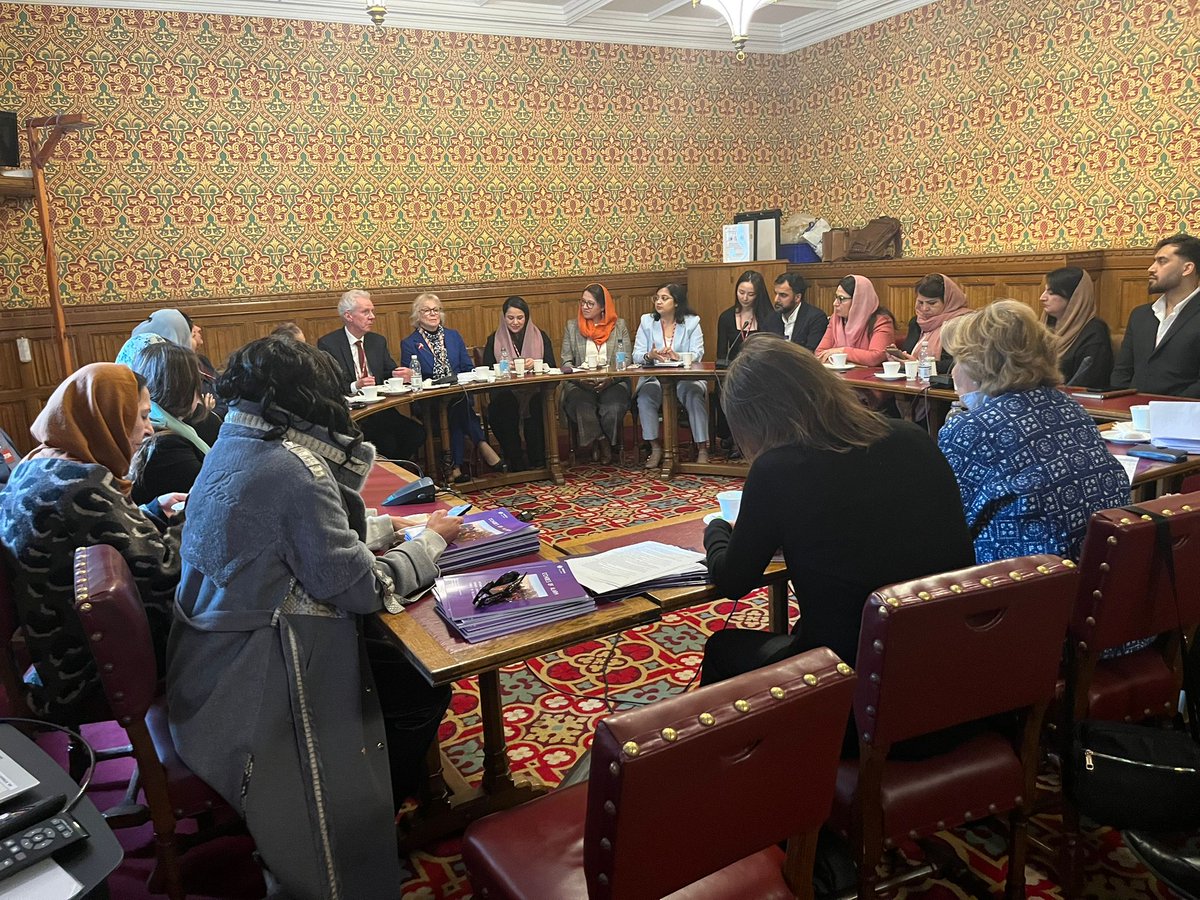
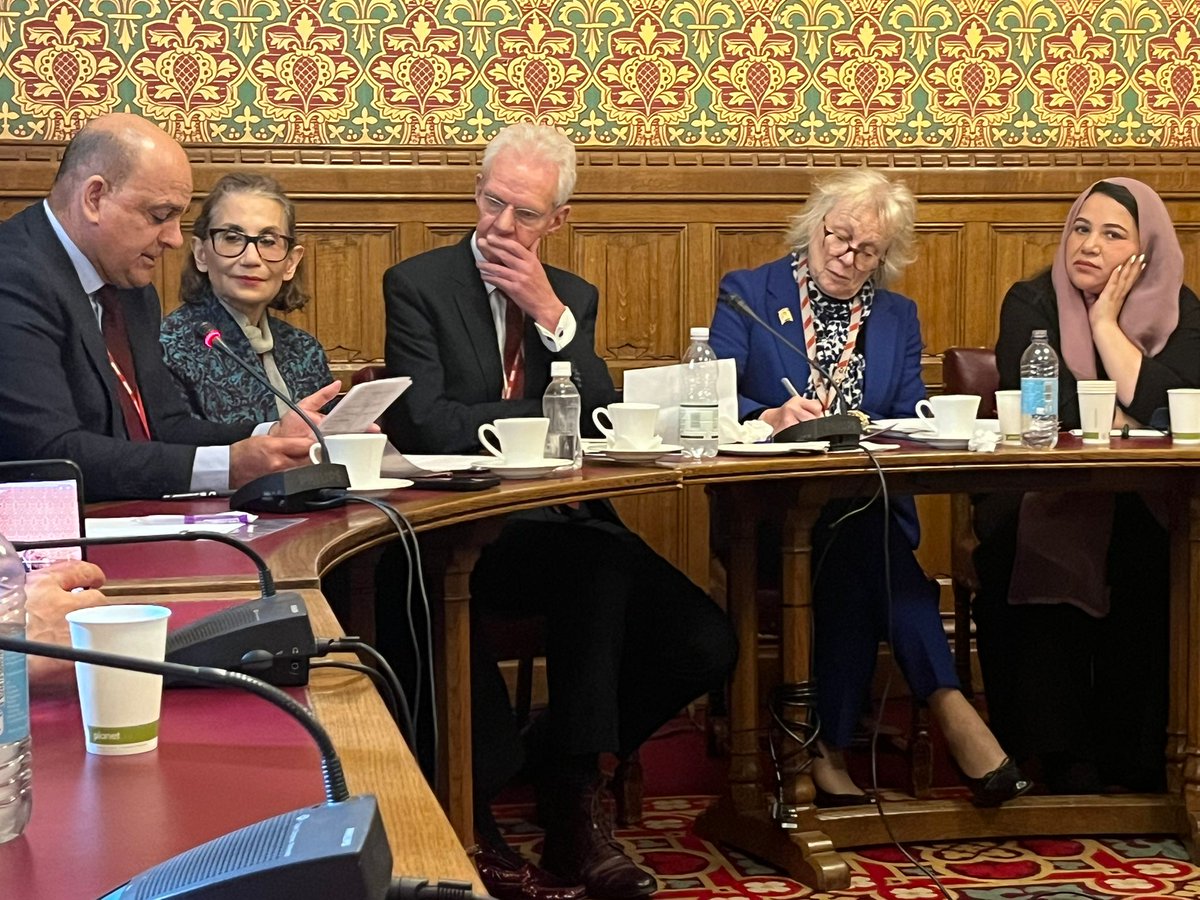
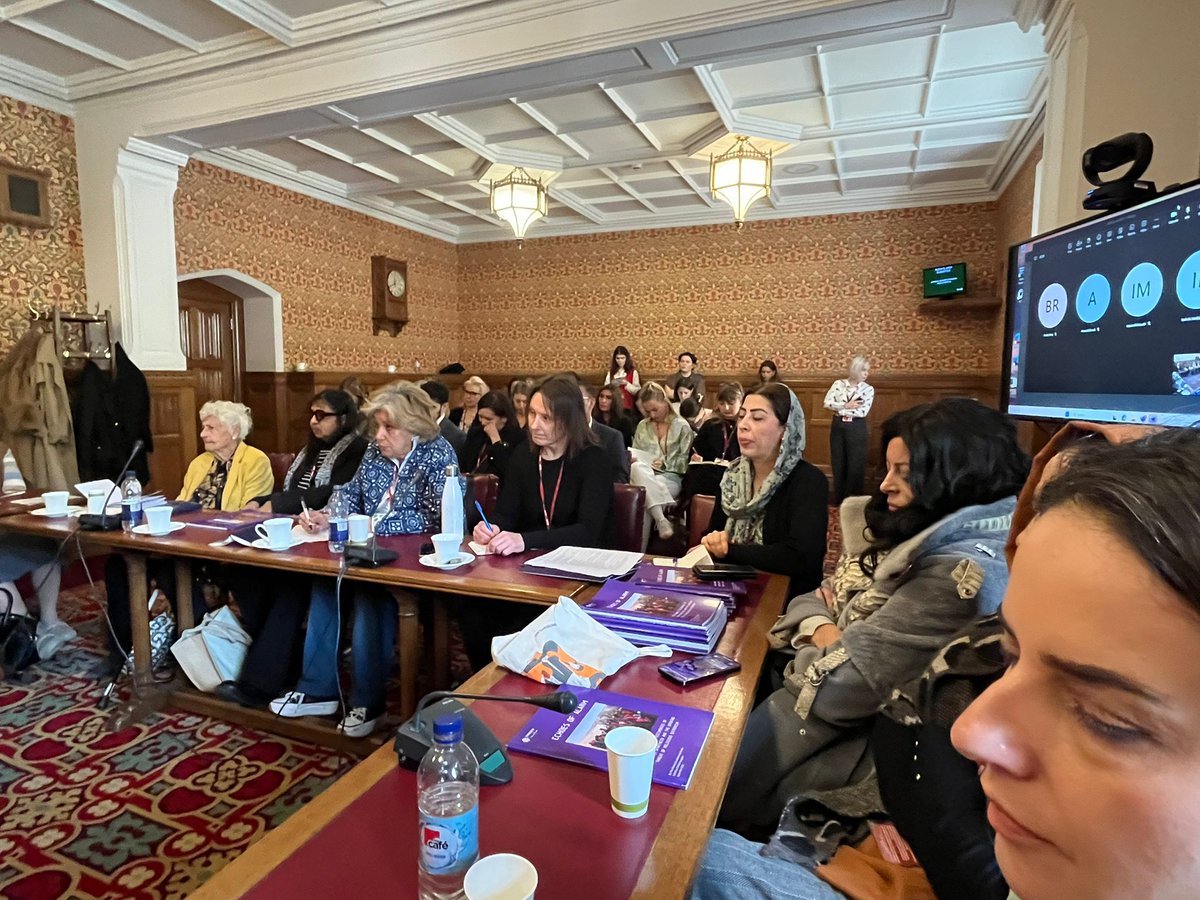
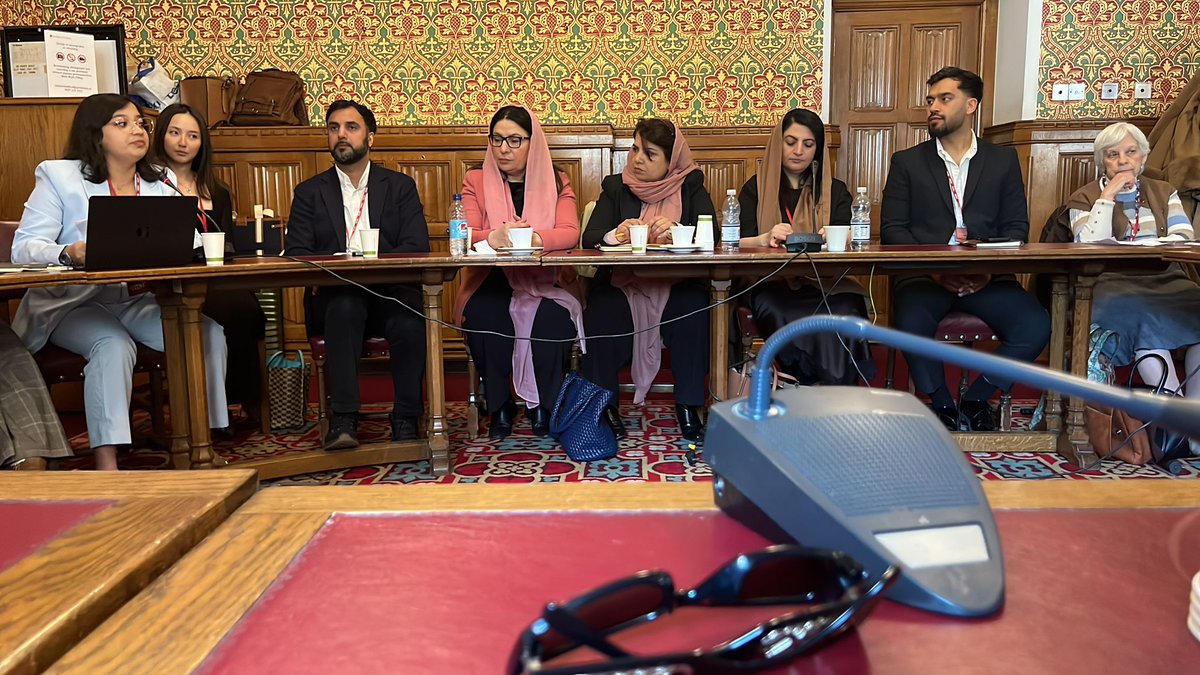
All-Party Parliamentary Group on Women - #APPG, Peace & Security in collaboration with #FARAGEER held a Parliamentary session to discuss the multi-dimensional impact of Taliban’s policies on women in Afghanistan and beyond on the 18th of May from 11am to 12.30pm at the #HouseofLords, #UK
#Baroness Fiona Hodgson while opening the session, stated the urgency and importance of discussing the ongoing crisis in Afghanistan while citing her and the APPG steadfast commitment to standing beside Afghan women and fighting for their rights.
@NehanNargis, the founder of #FARAGEER highlighted the dire situation in Afghanistan and the urgent need for coordinated action to restore the rights of Afghan women. She expressed the #hopelessness and despair that has gripped Afghan advocates who have been witnessing international attention shift away from the country with the #normalization of the Taliban group’s system of Gender Apartheid in the country.
#AnanyaKundu, Senior Researcher at FARAGEER presented findings from FARAGEER’s latest research studies, conducted by consulting 800 women inside Afghanistan across 20 provinces. She highlighted that it is not just experts but ordinary Afghan men and women who see in their everyday lived reality, the centrality of women’s #subjugation in the Taliban group’s #politicalproject, explaining that the Taliban have used the suppression of women’s rights as a tool to control Afghan society, careful manipulating religious ideology and feminist theory to mobilize support for their system of Gender Apartheid.
Afghanistan expert and FARAGEER’s board member @DavidLoyn opened the panel discussion by introducing the imminent speakers for the day.
As the first speaker on the panel, Dr. @Orzala Nemat, founding director of Development Research Group explained the socio-political and humanitarian implications of religious extremism and Gender Apartheid system on Afghan society, warning that the continued systematic subjugation of women would lead the country into a very alarming and dark future.
“The family is a sacred unit in any society. But the Taliban are engineering the family unit by turning the men against the women and creating an atmosphere of fear, domestic tension and complete structural violence.”
She pointed to the long term impact of Taliban’s “self sabotaging” disastrous economic policies, warning that the impact of these systems of oppression and radicalization will reach people and places beyond Afghanistan’s borders.
Mr. @waisbarmak , former Minister of Interior Affairs of Afghanistan stated that in the current situation in Afghanistan, the Taliban has silenced the voices of Afghans with guns. There is a systematic suppression of all forms of dissent within the country. He pointed out that the Taliban in the last almost five years have become more rigid, more exclusionary and ideologically extremist inside Afghanistan while showing a softer face externally. He remarked that this situation shows that the international community’s inaction on these issues and their continued un-principled engagement with the Taliban have emboldened the group who have realized that there are no consequences to any of their actions and violations.
Dr. Ziba Mir Hussaini @mir_ziba , Scholar Specializing in Islamic Law, Gender and Development, in her address stated that the Taliban presents its policies or stance as the only Islamic standing, ignoring the fact that there is no “one” Islamic position on women’s rights. She further pointed out that Islamic law has always been shaped by human interpretation and by societies in which they developed. She highlighted that what the Taliban is doing is taking up one selective patriarchal interpretation of Islam and using that to justify their system of Gender Apartheid.
“The Taliban claims that they are purifying Afghan society from Western influences, especially when it relates to women’s rights. But what they call western influences is actually human influences and my response to this claim is that it is historically false, religiously unfounded and politically dangerous.”
Building on this argument, Dr. Mustapha Sheikh @mustysheikh , Co-Director of the #IqbalCentre for the Study of Contemporary Islam at the University of Leeds, in his statement asserted that gender-based subjugation being an intrinsic part of Taliban’s governance structure means that dismantling the former will lead to the regime’s collapse. He decoded parts of the new Criminal Code brought in by the Taliban in January 2026, stating that it goes against Islamic law and ideology. He argued that Islamic jurisprudence has tools to challenge the Taliban’s interpretation and resistance to the regime can be mobilized through religion.
“The Taliban cannot dismiss an internally grounded Islamic critique as mere western interference. They cannot easily answer a challenge made in their own language, made in their own terms, using their own sources by scholars with equivalent or greater authority.”
As the final speaker, @KhawariMasooma, Former Minister of Communications, shared recent ground updates on worsening situation in the country, highlighting the curtailing of #Shia's religious freedom and forcing them to accept Taliban’s #Hanafi education and push towards forcefully imposing one identity across the diverse Afghan population. She shared issues of forced land grabbing in Northern Afghanistan leading to forced displacement and demographic change along with heightened surveillance attacks on local identities and social fabric of the country.
The session closed with a collective call to action on principled engagement with the Taliban, supporting the codification of Gender Apartheid as Crime Against Humanity and calling on the #UK government along with all other states to have principled engagement with the Taliban, to consult Afghan civil society and WHRDs and base their decisions on Taliban, informed by their international obligations and concerns of Afghan women. The session closed with a vote of thanks delivered by Baroness Fiona Hodgson.
4
10
587

**“Exactly. Epstein calling Imran Khan ‘bad news’ wasn’t praise — it was a warning from one corrupt network about another.
PTI was never about governance.
It was engineered emotional manipulation wrapped in ‘reform’ slogans while the real power was superstition, cult psychology, and handlers behind the curtain.
Let’s be honest 👇**
🔮 Bushra Bibi wasn’t spirituality — she was political remote control
🪬 Pakistan was run on omens, dreams, and rituals, not policy
🏛️ Institutions were sidelined for a personality cult
📉 Every governance claim collapsed on impact
🔥 May 9 showed how deep the manufactured cult trance had gone
Epstein’s network saw the same problem the rest of the world did:
Pakistan doesn’t need magic, myths, or messiahs. It needs competence, justice, and real leadership.
A nuclear nation of 240 million cannot be run like a drama serial. 🇵🇰✋
#Pakistan #PTI #ImranKhan #BushraBibi #EpsteinFiles #PoliticalProject #Accountability #TruthMatters #RuleOfLaw #WakeUpPakistan
1
2
56
Absolutely 💯 — another political project agenda unfolding under the mask of “national reform.” 🎭🇵🇰
This so-called 27th Amendment isn’t about patriotism — it’s about control. It targets overseas Pakistanis, silences dissent, and blocks accountability from those living abroad who expose corruption and looted wealth. 💸⚠️
Dual nationals are the lifeline of Pakistan’s economy, sending billions in remittances every year. Yet the corrupt elite — sitting with foreign bank accounts, offshore assets, and fake iqamas — are the ones writing this law! 🤦♂️
They fear overseas truth-tellers more than enemies across borders. Because these are the Pakistanis who can’t be bought. 🕊️
This is not constitutional reform — it’s constitutional revenge.
#Pakistan #27thAmendment #PoliticalProject #OverseasPakistanis #Accountability #TruthOverControl #Topgun0512
1
2
2,347
Exactly 💯 — this entire narrative fits the classical “political project” playbook: amplify selective outrage, weaponize faith, and divide communities along religious lines to justify intervention.
While innocent Muslims and Christians alike bleed in Nigeria, external actors twist the tragedy into propaganda — one that fuels anti-Islam sentiment and paves the way for foreign military intrusion under the banner of “protection.”
This isn’t compassion — it’s orchestration.
Real justice means condemning every attack, on every faith, without political manipulation.
#DivideAndRule #PoliticalProject #TruthOverPropaganda #Nigeria
3
789
This isn’t bravery — it’s staged provocation from the same political project that thrives on division. 🎭
When hate is scripted and outrage is manufactured, it’s not “freedom of speech,” it’s propaganda in costume.
Real courage is living together with respect — not performing hate for cameras. 🕊️
#PoliticalProject #DivideAndRule #UnityNotHate #Truth
1
7
629
This is exactly what I mean by the Political Project leadership narrative — weaponizing religion to justify geopolitical control. ⚠️
When faith becomes the cover for intervention, it stops being spirituality and turns into strategy.
The “Great Christian population” line isn’t compassion — it’s the language of empire wrapped in belief. 🕊️
#PoliticalProject #DigitalWorldOrder #Geopolitics #FaithNotPolitics
1
2
1,732
💯 Exactly what I’ve been saying — this is the Political Project of the Digital World Order in full display. 🌐⚠️
When a sitting president can’t access his own salary because he opposed Washington’s agenda or condemned genocide, it’s no longer diplomacy — it’s digital domination through financial control. 💳🧠
They’re not just freezing accounts — they’re freezing sovereignty.
#DigitalWorldOrder #PoliticalProject #Colombia #GustavoPetro #Sanctions #Geopolitics
3
12
1,302

21 Sep 2025
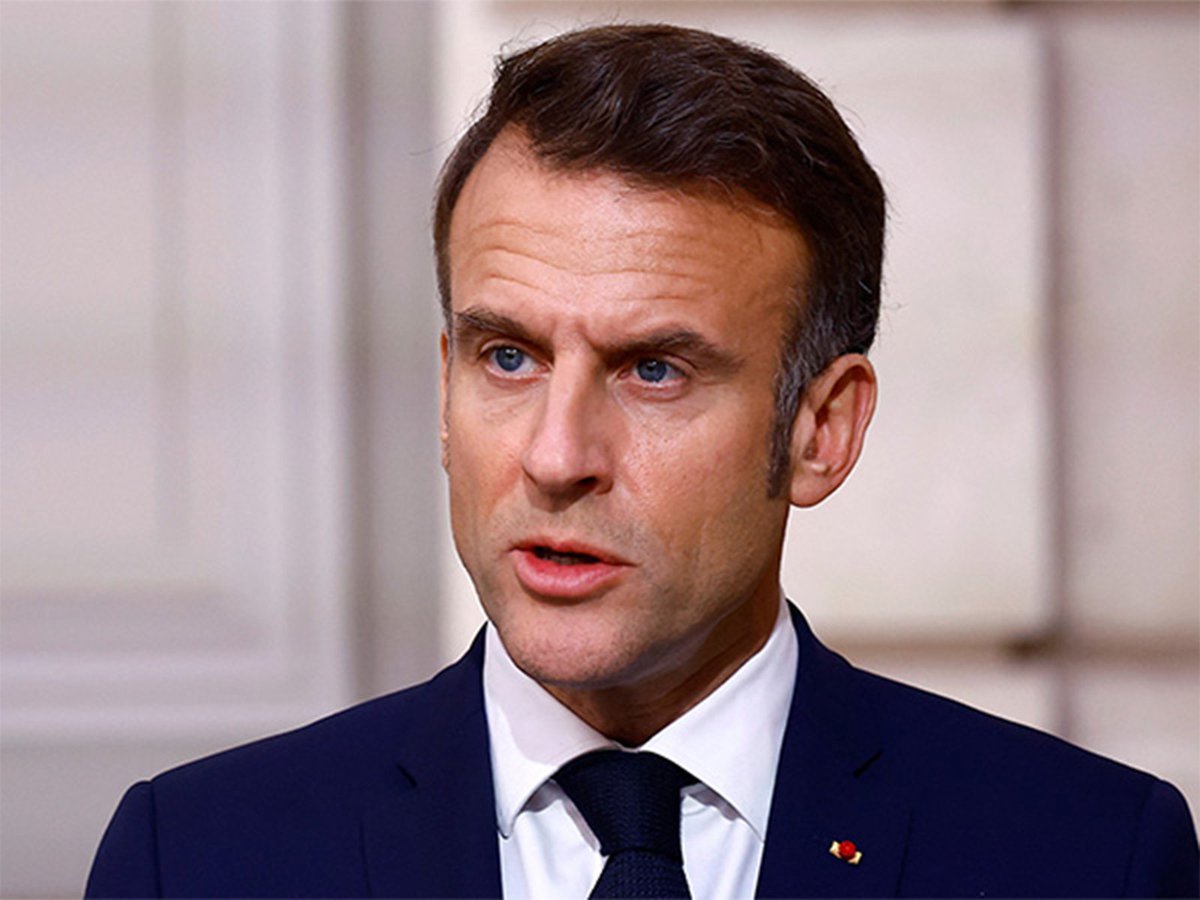
Macron slams Israel's settlement plans in West Bank, calling it "political project" that kills possibility of two states
Read @ANI Story |
aninews.in/news/world/middle…
#Macron #Israel #settlementplans #WestBank #politicalproject #twostates
5
947

17 Nov 2022
#OutlookMagazine: #Secularism, like any other modern ideal, is an ongoing #politicalproject that requires a robust leadership to cultivate the value among the people.
✍️ @ashubh
Read more at:
outlookindia.com/national/do…
1

10 Jun 2021
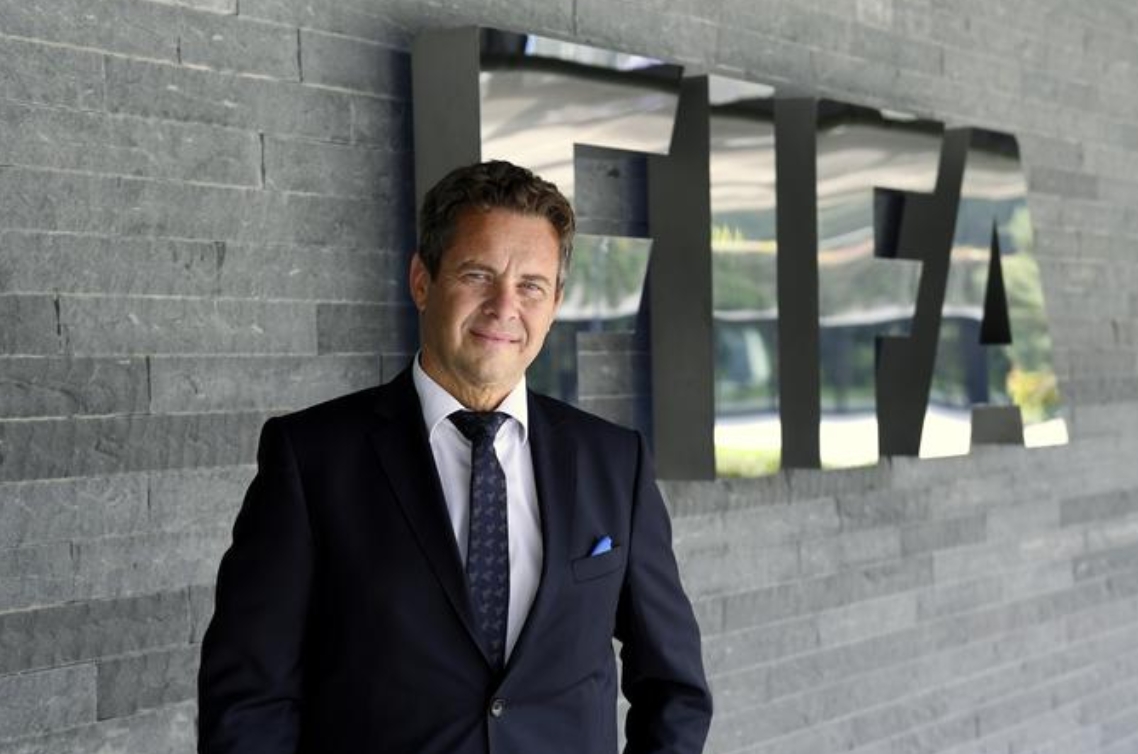
It is clear now: the #CPC has covered #Vesel’s huge afternoon earnings for a planned #politicalproject! demokracija.eu/2021/06/10/it…
1
5
12

28 Oct 2020
It was always clear. #RamMandir was not a goal born out of religious fervour or devotion. it was always a #PoliticalProject to serve as
a) a false showy talisman of #HinduSupremacy
b) a weapon with which to browbeat Muslims/ Minorities
b) a dog whistle to mobilise Hindu votebank
5

4 Nov 2019
#PoliticsLive #NHS is not an organic natural occurence or an Act of God
It is a #PoliticalProject
It has been starved of investment and funds since 2010
A large spend now go's part way to rebalance the budget
Weaponising the #PeoplesNHS is legitimate in fighting the class war
1
3

30 Apr 2019
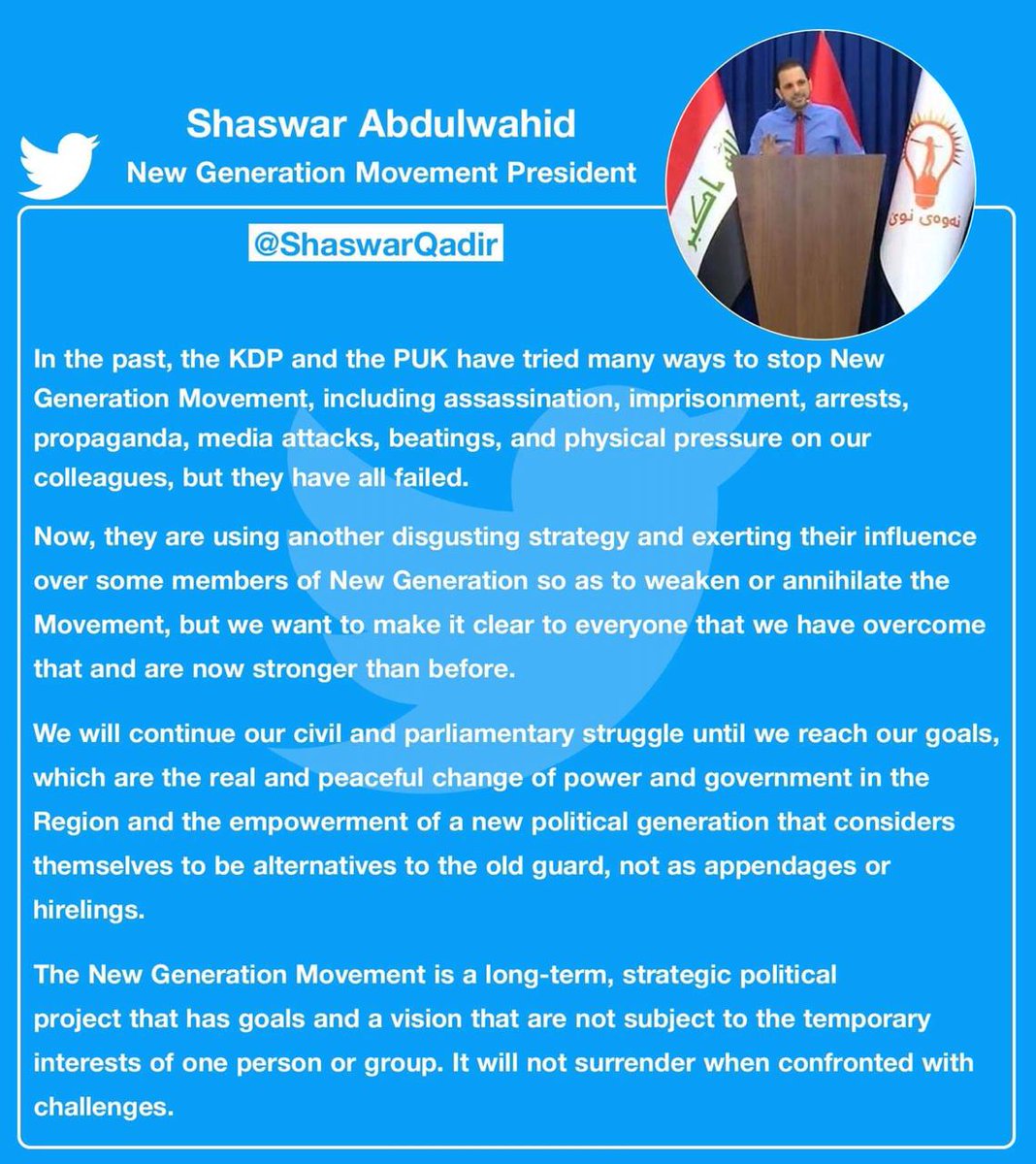
The New Generation Movement is a long-term, strategic politicalproject that has goals and a vision that are not subject to the temporaryinterests of one person or group. It will not surrender when confronted withchallenges.
4
3
52

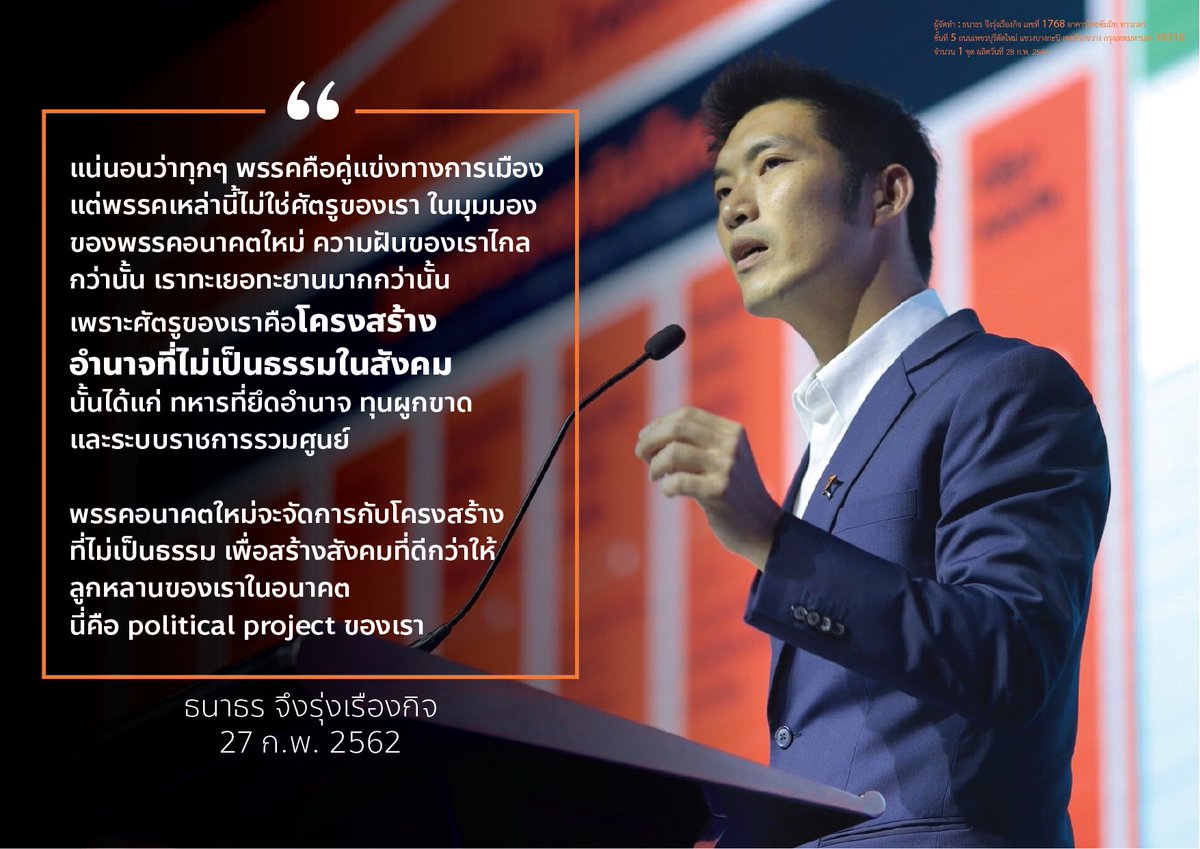
เป้าหมายที่ชัดเจน ทำให้การต่อสู้มีจุดหมายที่แน่นอน #politicalproject #พรรคอนาคตใหม่ #ทีมธนาธร #เลือกตั้ง62 #futurista 🙏🇹🇭🔻👊🏻🦖 TJ เป็น project manager 😉😇😄

1
3

11 Dec 2018
🔵Our 🇫🇷member @ESS_France publishes its #PoliticalProject unanimously adopted by its members "For a new alliance of #SocialEconomy enterprises" to shape the future #EnergyTransition #Innovation #Democracy #Cooperation #Sustainability #Transparency #Autonomy
11 Dec 2018

[PROJET POLITIQUE] Pour une alliance nouvelle des entreprises de l'#ESS, texte adopté à l'UNANIMITE lors de l'AG d'@ESS_France du 05 décembre 2018. Les 10 principes refondateurs d'un mouvement collectif pour des actes concrets ! ▶️goo.gl/dZmFWu
2
12

25 Jan 2018
பிப் 21 @ikamalhaasan மேற்கொள்ளவுள்ள பயணத்தின் பெயர்.
"நாளை நமதே"
@mkstalin குறில்ல (நமக்கு) ஆரம்பிச்சு நெடில்ல (நாமே) முடிச்சாரு.
உலகநாயகன் நெடில்ல (நாளை) ஆரம்பிச்சு குறில்ல (நமதே) முடிக்குறாரு... அவ்ளோதான். @madhavpramod1
#KamalHaasan
#PoliticalProject
#NaalaiNamadhae
1
1

19 Oct 2016
.@anitakntweets @elmulcahy @TootingJo Indeed, most of you don't know who invented them or that it was an egalitarian politicalproject.
4

14 Jul 2016
Subsidy for Hinkley nuclear power station now X5 original estimates to £30bn. #badforconsumers #politicalproject ft.com/content/b8e24306-48e5…
1
1


1