

May 22
do you know how you are able to bridge your funds from one chain to another ?
if you don't, walk with me.
the simplest way to describe a cross-chain bridge is a product that moves value between blockchains that cannot talk to each other directly.
there are 2 parties, the origin chain and the destination chain.
when you bridge $50 from @arbitrum to @base , the bridge does not literally pick up your $USDC and carry it across chains.
blockchains cannot see or verify each other by default. Arbitrum has no native way to read Base balances, and Base cannot automatically trust what happened on Arbitrum.
so the bridge creates coordination between both chains.
so it goes like this
- you send your $50 USDC into the bridge contract on Arbitrum.
- that money is either (1) locked inside the bridge or (2) deposited into liquidity pools controlled by the bridge system
- once the bridge detects that deposit happened successfully, it tells the destination side on Base to release or mint the equivalent amount there.
so after the process finishes
- your original $50 is sitting on the origin side
- and a corresponding $50 appears for you on Base
from you and i's perspective, it feels like the money moved chains but technically, one side locked value while the other side unlocked the corresponding value elsewhere (the elsewhere being Base in this situation).
that coordination layer is the actual bridge.
𝘵𝘩𝘪𝘴 𝘤𝘰𝘰𝘳𝘥𝘪𝘯𝘢𝘵𝘪𝘰𝘯 𝘭𝘢𝘺𝘦𝘳 𝘪𝘴 𝘢𝘭𝘴𝘰 𝘸𝘩𝘦𝘳𝘦 𝘳𝘪𝘴𝘬 𝘭𝘪𝘦𝘴.
oh yes. if it fails, users can lose access to funds. gone.
this situation is called a bridge failure and bridge failures usually fall into three buckets.
1 > contract failure. bugs in bridge contracts can allow attackers to fake transfers or drain funds. that is how PolyNetwork lost over $610 million in 2021.
2 > validator compromise. some bridges rely on multisigs or validator sets to approve messages. if those keys are taken over, attackers can approve fake withdrawals. that’s exactly what happened with the Ronin bridge hack in 2022. (roughly $615 million)
3 > operational or liquidity failure. modern bridges often depend on relayers, liquidity providers, or custodial systems. if those break or lose solvency (no money to carry our user withdrawals) , users can't redeem their assets. (because every bridged token/asset is backed 1:1 and if those reserves lose solvency, the bridge becomes insolvent.) Multichain went down this way in 2023 after they were drained of $126 million.
> 𝘸𝘩𝘢𝘵 𝘺𝘰𝘶 𝘮𝘶𝘴𝘵 𝘬𝘯𝘰𝘸
speed = tradeoffs because slower bridges wait for stronger final settlement between both chains.
and faster bridges feel "fast" because relayers/liquidity providers front funds before final settlement.
> 𝘣𝘦𝘧𝘰𝘳𝘦 𝘶𝘴𝘪𝘯𝘨 𝘢 𝘣𝘳𝘪𝘥𝘨𝘦
- check who approves transfers
- how settlement works
- how liquidity is sourced, and
- whether the protocol has failed before.
Apr 21

i used to think flash loans were just free money.
until last week i learned that a flash loan is money you borrow, use, and repay within a single transaction and you don't need any collateral. if the repayment isn’t completed before the transaction ends, the entire transaction is automatically reverted.
here’s another reason this tek is brilliant.
the lender faces zero risk. the loan is either paid back in full or the transaction will be reverted.
you, the borrower, also face zero risk. no collateral, no liquidation, no debt.
> the legitimate use case
let’s say you see $ETH priced at $2,000 on @Uniswap but priced at $2,020 on Curve.
this is how you can use a flashloan in this instance.
you borrow 1,000 ETH via a flash loan on @CurveFinance → buy on Uniswap and sell on Curve to capture the spread minus fees → repay the loan → everything ia settled in one transaction.
the flash loan helped you act on the price gap with zero capital.
> how this tek can be manipulated (north korea is among us 😑)
an attacker's best target for this tek is a protocol that reads its prices from just one liquidity pool.
in a single transaction they can
1 - take a flash loan
2 - use the borrowed funds to temporarily distort the price in that pool
3 - interact with the vulnerable protocol while the fake price is active (withdrawing far more value than they should)
4 - repay the flash loan before the transaction ends
when the price comes back to normal, the attacker walks away with the profit and this is because everything happens atomically in one block.
a famous incident like this occurred in October 2020 when Harvest Finance lost approximately $34 million in a flash loan manipulation attack.
the attacker borrowed funds via a flash loan (from Uniswap), temporarily distorted the price of stablecoins in a Curve Finance pool that Harvest Finance relied on for pricing, then exploited the fake price to drain value from Harvest’s vaults. When the prices returned to normal, the attacker had already cashed out the profit.
> 𝘩𝘰𝘸 𝘺𝘰𝘶 𝘤𝘢𝘯 𝘴𝘵𝘢𝘺 𝘴𝘢𝘧𝘦 𝘢𝘴 𝘢 𝘥𝘦𝘧𝘪 𝘶𝘴𝘦𝘳
always check where a protocol gets its prices from.
if it gets its prices from a single on-chain liquidity pool with no time-weighted protection, it is vulnerable to this exact attack.
in simple terms, make sure the protocol uses either
- a TWAP (Time-Weighted Average Price) from a DEX like Uniswap v2/v3, or
- a reputable external oracle like @Chainlink.
both options are much safer because a single-block price swing can’t distort them. the attacker’s transaction will simply revert with no funds extracted and users money stay safe.
13
1
39
779


Apr 26
😱 Il vole 600 millions de dollars… puis rend TOUT sans garder un seul centime
Revenons sur cette histoire incroyable d'août 2021, où un hacker exploite une faille de PolyNetwork et réalise à l’époque le plus gros hack DeFi de l’histoire : 273 M$ sur Ethereum, 253 M$ sur BSC et 85 M$ sur Polygon !
Panique totale chez PolyNetwork. Les réseaux s'enflamment...
Mais contre toute attente, le hacker commence à répondre publiquement à PolyNetwork via des mémos inscrits sur la blockchain. La discussion devient publique.
Le hacker affirme qu’il n’avait pas l’intention de voler les fonds.
Il explique qu’il voulait « exposer la faille » et « protéger les fonds avant qu’un autre ne le fasse ».
« Je voulais juste m’amuser. Tester vos défenses. Je vous rends l’argent si vous promettez de vous améliorer. »
PolyNetwork lui offre 500 000 $ de récompense (bug bounty), puis même un poste de Chief Security Advisor… qu’il refuse.
Finalement, il rend l’intégralité des fonds.
Qui était il ? Quel était réellement son but ?
2
16
72
10,702

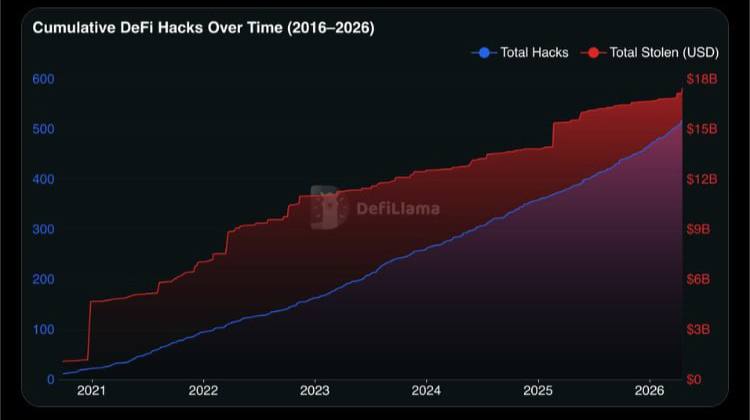
🚬 518 hacks, $17B lost
Over the past 10 years, crypto has seen massive losses from hacks, including:
➖ #RoninNetwork — ~$612M
➖ #PolyNetwork — ~$611M
➖ #Bybit — ~$1.4B
Add scams on top — and it’s basically the budget of a small country 😅
$BTC #BTC #Bitcoin #CryptoMarket #CryptoNews #Web3 #Investing #Trading #Markets #MarketUpdate #Hacking #CyberSecurity #Risk #Blockchain #Crypto #Bullish #SCAM #hackers
1
5
17
59


This isn’t unique to Circle
@PolyNetwork in July 2023 had the exact same issue: compromised keys, and it took them 7 hours to pause contracts.
Slow reactions seem to be an industry-wide problem when big money moves fast
The entire cross-chain game - bad actors
#Defi #Web3 #BTC
1
2
234

Apr 2
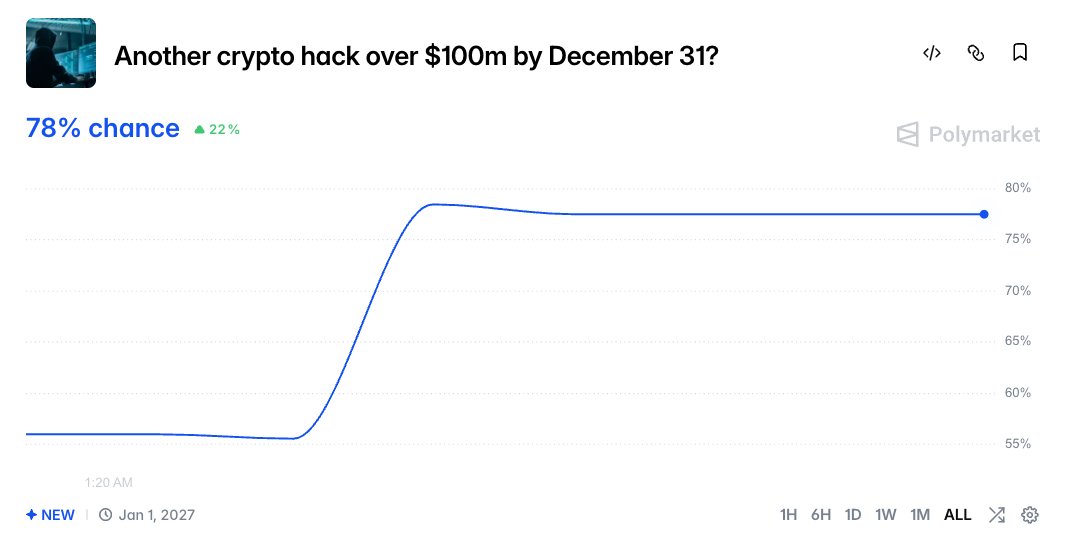
Polymarket 上线了一个新市场:「今年年底之前还会不会有加密货币的项目被黑超过 1 亿美金?」
加密行业从 21 年到现在,平均每年有 4 个项目被盗超过一亿美金
21年:
PolyNetwork :$611M
BitMart:$196M
Compound:$147M
Vulcan Forged :$140M
Cream Finance II :$130M
22年:
Ronin Network:$624M
BNB Bridge:$586M
SBF (FTX):$477M
Wormhole:$326M
Beanstalk:$181M
Nomad Bridge:$190M
Wintermute II :$162M、
Harmony Bridge :$100M
23年:
Euler Finance:$197M
Mixin Network:$200M
Poloniex:$126M
Multichain:$126M
24年:
DMM Bitcoin:$304M
WazirX:$235M
Gala Games:$216M
25年:
ByBit:$1,436M
Cetus:$223M
Balancer II:$128M
26年:
Drift:$285M
Defillama 上 TVL 超过 1亿美金的项目有 155 个,Polymarket 今年币圈项目被盗一亿美金的概率是 78%

2
19
5,161

Apr 2
guys most of us think that a crypto theft
can happen due to bugs?
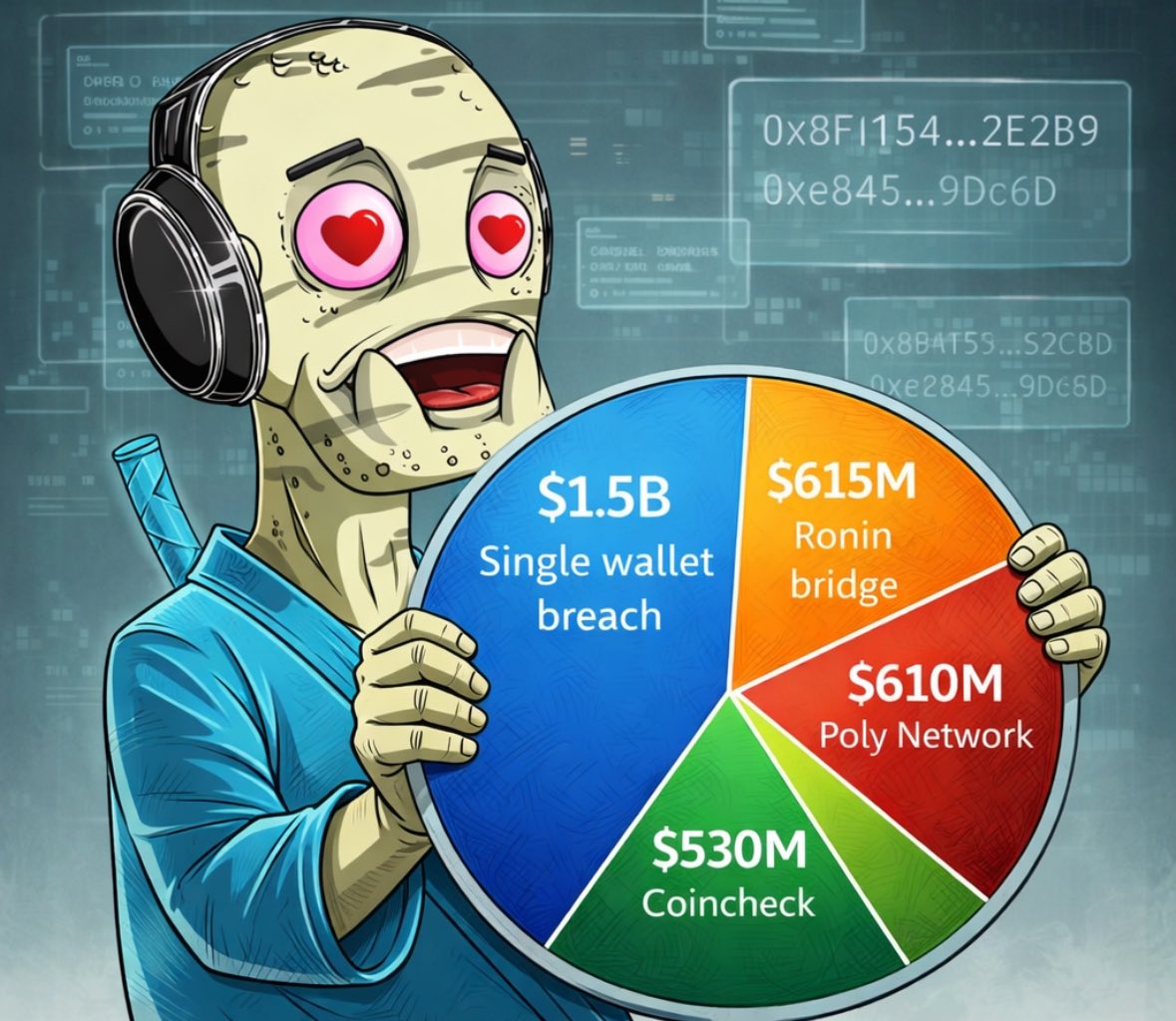
but the largest losses in crypto history didn’t come from simple code errors
they were literal system failures
- $615M Ronin (validator keys compromised)
- $610M PolyNetwork (design flaw exploited)
- $530M Coincheck (hot wallet exposure)
it was security breaking at multiple levels where crypto didn’t fail but the systems built around it did.
4
1
5
146


Feb 20
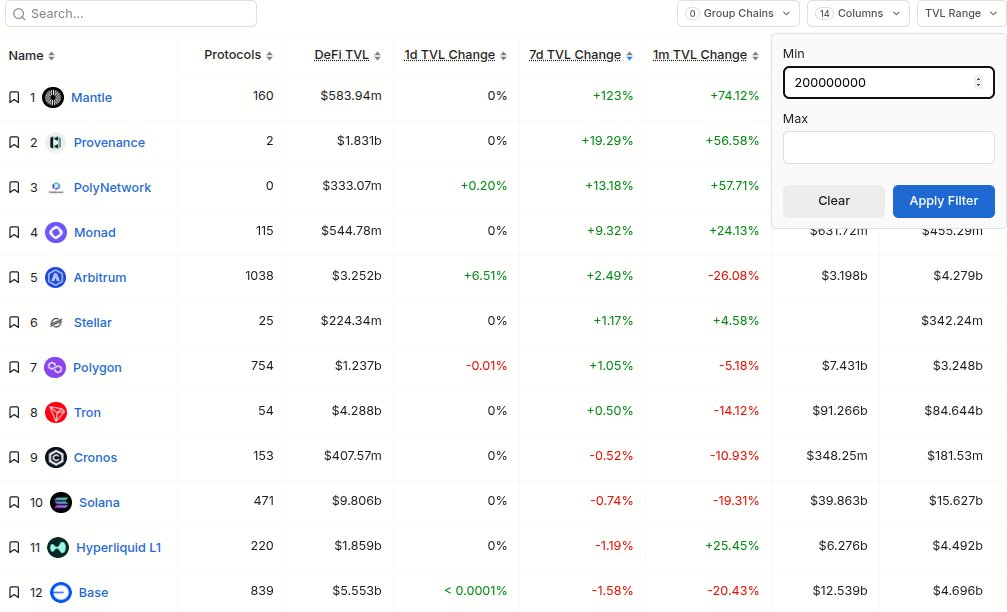
Mantle dominating the TVL battle among major chains this week due to Aave deployment incentives...
They are up 123% on the weekly and now the 15th largest chain by TVL...
On the monthly they are up 74.12%...
Only other major chains up considerably on the monthly are:
Hyperliquid (#9) - which continues to do well...
Provenance (#10) and PolyNetwork (#19) - which don't really count...
And then BreadChain aka MegaETH (wholesome chain, I must admit) is up a ton, but is still only in spot #40 as of right now, at $75M TVL...
But yeah... think this sort of sums up my bull case for Mantle though, which is that while much of the crypto space looks eerily silent, they are actively making moves and really earnestly trying to gain ground and conquer territory within blockchain's overall subsumation of the global financial architecture...
Mantle has an absolutely enormous treasury, which gives the team significant resources with which to fuel growth, and they've been putting these resources to excellent use as of late in all sorts of different areas...
Some recent happenings:
- Big focus on RWA's and collaborations with a bunch of interesting RWA protocols
- @xStocksFi especially continues to be a success story in the above area (will link to more info on it below)
- Tons of campaigns and other stuff going on with Bybit and Byreal
- mETHProtocol continues killing it
- Bybit/Mantle synthesis continues to see success, basically replicating existing Binance/BSC and Coinbase/Base playbooks
- Mantle Global Hackathon winners just announced last week (very wholesome - my bro @Nomaticcap was one of the judges 💪🇨🇦)
- ERC-8004 just deployed on Mantle
- @Ur_global success in fintech/neobanking sector
- Launch of AlloraNetwork mainnet on Mantle
- Arrival of $wrsETH by KelpDAO and Tether's USDT0 version of its USDT
- $MNT <> Solana integration via Super Portal
- And tons of other stuff as well!
So yeah, I remain a proud $MNT holder and drum-banger as 2026 rolls on... and am very excited to see what happens with all of the above once the long-awaited bull market arrives :)
Will link to some more info in subsequent tweets!
39
13
102
9,087

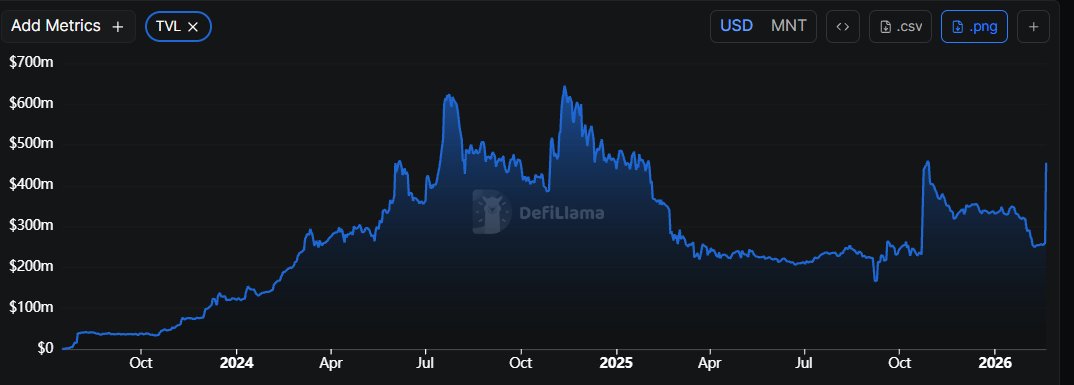
Just In:‼️#Mantle blockchain overtook #PolyNetwork in TVL! 🚀
The TVL in Mantle surges 75.95% to $456.38 million in the past 24 hours.
Track here: markets.coinpedia.org/blockc…
3
287
Feb 13
Crypto Macro Stuff I'm Looking At Today
...
- Feb 20th is next date Supreme Court could rule on Trump tariffs
- 72% chance on Polymarket that they rule against Trump
- Again, I think this will spook markets lower (due to perceived chaos from ruling, though those fears will likely be overblown)
- That will be the last great generational dip-buying opportunity before we rocket to Valhalla 💪
- Current total crypto market cap is $2.43T, 45% below ATH's
- $QQQ is just over $600 about 5% below ATH's
- Continued discussion about 10/10 contagion and also whether $MSTR represents a risk factor (good link on this below)
- New $AAVE proposal/news is sparking contentious debate within their community
- Aave also just launched on Mantle (more on this below)
- $COIN earnings call yesterday was mixed, but its up 17% today interestingly
- Continued public disagreement/tension between Brian Armstrong and Scott Bessent re: Clarity Act
- USDai announces TGE for March (good video on these folks below)
- The Netherlands is apparently passing some crazy new 36% tax on unrealized capital gains
- AI mindshare is the highest its been for the last 12 months (link below)
- Provenance (the chain that Figure Markets is on) has been climbing the TVL rankings like crazy and is now the 10th largest chain by TVL on DefiLlama
- PolyNetwork has also been shooting up as of late, and is now the 19th largest chain by TVL
- Top TVL gainers among protocols with at least $1M TVL on DefiLlama are SectorOne on MegaETH and Mosaic and Canopy on Movement
- Big LayerZero announcement re: new Zero chain catalyzed a bunch of attention earlier this week
- MegaETH is now live
- Superformxyz has TGE'd its $UP token
- Tomasz Stańczak is stepping down as co-Executive Director of the Ethereum Foundation
- egirlcapital released a blog post expressing bullishness on Stable (the Tether-linked payments-focused chain), but it is unclear if DegenSpartan wrote the article or is connected (he is one of the main folks at egirl)
- Sui/Ethana collaboration stablecoin $suiUSDe goes live
- BlackRock x $UNI collaboration and token buy is generating discussion
- DefiLlama launched a new search tool (link below)
- Polymarket filed trademark for $POLY ticker apparently (can you trademark a ticker?), and am seeing smart accounts I follow argue its still worth it to use the platform in hopes of an airdrop
- Tokenless perps dex Hibachi getting attention in airdrop circles
- US real estate continues to struggle, multifamily delinquencies are at highest level since 2010 during the GFC
- Tether's Bo Hines said they hope to be a top-10 buyer of US treasuries this year
- Vitalik and others have been talking about "making Ethereum the home for AI", which is very interesting
- Was lots of talk this week about BlockFills halting withdrawals but am not sure just how significant this was
- Currently 92% odds on Polymarket that the Fed leaves interest rates unchanged in March, as Powell seems intent on obstructing Trump's agenda all the way until the end of his term in May
- SBF angling for a new trial (I intensely dislike everything SBF represents and did so way back before the FTX collapse, HOWEVER I do think its clear his trial was a bit of a sham and he was grossly over-sentenced, though it doesn't seem like he was 'innocent' either)
- The job numbers earlier this week were interesting in that it appears nearly all the new jobs were in elder care and similar industries
- Stablecoin usage is at all-time high’s on ETH Mainnet and gas fees are at all-time lows. Wild just how much things have changed from 4 years ago when people were paying $500 in gas to buy $400 worth of some memecoin or mint an NFT lol...
Conclusion
The above scenario is legitimately what I think will happen - Supreme Court ruling will push us lower... then markets quickly recover, we start spiking upwards, regain prior ATH's later this year, and then absolutely moon past $5T total crypto market cap, then potentially hit $10T and higher.
I am starting to buy the dip a bit now but will really go all-in after that ruling.
And then yeah, other that is just crazy times lads...
New AI stuff on the TL every day...
Geopolitics is crazy...
Everything feels existential, basically :)
Glad to be navigating the insanity alongside you all, my dear internet friends 💪

25
6
65
3,229

Feb 10
if you've survived:
> Luna/UST
> FTX
> Celsius
> 3AC
> Iron Finance
> Polynetwork hack
> Cream Finance exploit
> multiple rug pulls
and you're still yield farming...
you've earned the right to be skeptical of everything
including us.
so here's the deal:
> audit: public (@zellic_io)
> strategies: transparent onchain, trackable on our dashboard
> reserves: overcollateralized
> yield source: fully onchain
up to 15% APY.
for those who learned the hard way.
2
2
20
757

Neo has a permanent stain from the polynetwork hack. No one will ever trust the developers until the wallets are reimbursed.
1
3
60

Feb 7
一个国都不敢回的人,在这研究什么?
笪鸿飞@dahongfei 你在扯什么犊子?
准备把你这么多发的项目、收割的情况都跟中国大陆做报备么?
先把你的税款补齐了再说。
分布科技的财务吴怡弢Eline被判刑,你身上的税款刑事案子搞得定?
@Neo_Blockchain @OntologyNetwork @FlamingoFinance @OMOSwapX @PolyNetwork2
@SpoonOS_ai
@NEOnewstoday
@PDChinese @XinhuaChinese @XHNews
@NewsCaixin @caixin @ChineseWSJ @thepapercn @CNS1952 @Echinanews @globaltimesnews @Shanghai_City @shanghaidaily @ChinaDaily @zaobaosg
@SpokespersonCHN @zlj517 @chinascio
@IRSnews
#笪鸿飞 #NEO #ONT #FLM #O3 #Polynetwork #EON
Feb 7

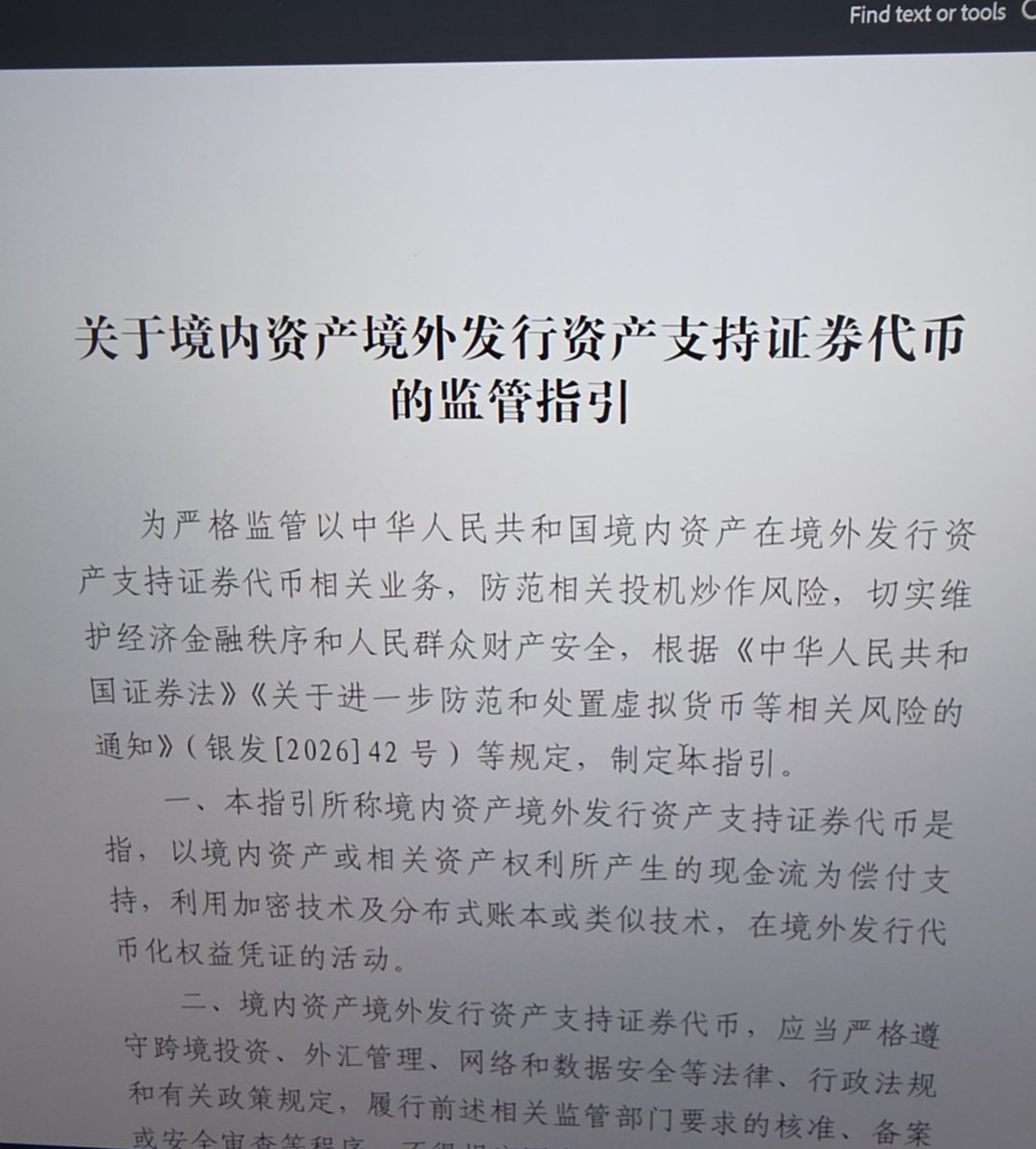
I've read the CSRC's (China SEC) Regulatory Guidelines on the Offshore Issuance of Asset-Backed Security Tokens Based on Domestic Assets, and discussed it with our team and experts close to the CSRC. Writing up my take on China's RWA/ABS token landscape now.
2
5
42
14,207
Feb 6
1
百科后续会实时披露笪鸿飞在中国大陆的NGD的办公地点及主要办公人员。
之前自从百科披露NGD原位于中国大陆上海市杨浦区民府路587号406和407的办公室之后,那边已经不续租,目前整个NGD已经搬至新的办公场所:
中国大陆上海市杨浦区霍山路398号光大安石中心T2栋5楼 WeWork。
这是一个共享办公场所,方便随时跑路换地方。
笪鸿飞@dahongfei ,你是在怕被一锅端么?
你换一个百科披露一次。
2
自22年开始,笪鸿飞就刻意在排挤张铮文:
禁止张铮文参与NEO年会,并对其全方面严防死守。
3
在张铮文首次提及笪鸿飞新项目EON之前,NGD内部仅小部分人知道有个新项目但不知道新项目名字,绝大多数人并不知晓新项目的情况。
笪鸿飞对于EON这个由谈元主导开发的新项目,做了全面的信息封锁与开发资金的切割。
4
整个NGD内部目前是这样的局面:
从意气上,绝大多数是挺张铮文的;
从利益上,绝大多数是站笪鸿飞的。
严格来说,整个NEO核心体系,远比外界所看到的,更加得割裂与抽象。
奉劝NGD得各位,不要做笪鸿飞的陪葬品。
百科明确告诉各位,笪鸿飞已经在被调查中。
@Neo_Blockchain @OntologyNetwork @FlamingoFinance @OMOSwapX @PolyNetwork2
@SpoonOS_ai
@NEOnewstoday
@PDChinese @XinhuaChinese @XHNews
@NewsCaixin @caixin @ChineseWSJ @thepapercn @CNS1952 @Echinanews @globaltimesnews @Shanghai_City @shanghaidaily @ChinaDaily @zaobaosg
@SpokespersonCHN @zlj517 @chinascio
@IRSnews
#笪鸿飞 #NEO #ONT #FLM #O3 #Polynetwork #EON
Jan 23

中国的下一个陈志 — 笪鸿飞
太子集团董事长陈志被引渡回中国大陆,同时被美国司法部收缴了12.7万个的 $BTC 。
这个事情,等于打开了潘多拉魔盒。
大量发行过诈骗项目且身价不低于陈志的加密圈所谓大佬不在少数,今后将会陆续伦为各个国家争抢的香馍馍。
比如笪鸿飞。
笪鸿飞主要资产有四部分组成:
1 $NEO 及 $ONT
(砸ONT 是笪换大饼的主要来源,从 800亿人民币的FDV砸到了现如今的4亿人民币FDV)
各位可以去看下2018-2019年 大饼的价格,就能明白百科为什么会这么说。
2 笪鸿飞有个习惯,每次都是在行情最好的时候出来发几个垃圾项目。通过发 $FLM $O3 等收割完之后,都会把收割获利换成 $BTC ,是个绝对的屯饼党(参照 上述 $ONT 的方式)。
按此操作的还有,@aelfblockchain $aelf 创始人马昊伯 及 币圈捞人一哥 @GXChainGlobal 公信宝创始人 黄敏强等 。
3 另外,笪鸿飞 (实际是 $NEO 基金会)跟 火星人许子敬 等都是 BN 的早期投资人,手上有相当的BN股份,每年都有五百万至数千万美金的巨额分红。
4 笪所控制的 $NEO 基金会相关资产。
据知情人士透露,笪鸿飞个人至少有 100000 $BTC 。
故,笪鸿飞的真实身价跟陈志一样,至少是千亿人民币级别。
@dahongfei @Neo_Blockchain @OntologyNetwork @FlamingoFinance @OMOSwapX @PolyNetwork2
@SpoonOS_ai
@NEOnewstoday
@PDChinese @XinhuaChinese @XHNews
@NewsCaixin @caixin @ChineseWSJ @thepapercn @CNS1952 @Echinanews @globaltimesnews @Shanghai_City @shanghaidaily @ChinaDaily @zaobaosg
@SpokespersonCHN @zlj517 @chinascio
@IRSnews
#笪鸿飞 #NEO #ONT #FLM #O3 #Polynetwork #EON

3
1
37
21,740
How can people trust this process when you did not refund their hacked funds on polynetwork?
2
1
113