
Mar 6
A dystopian adventure to the Inner Earth through the post collapse world. A story about found family, enemies becoming friends and an adorable animal companion 🦊
amazon.com/dp/B0FLQS496Q
#BookTwitter #booklovers #climatefiction #dystopian #solarpunk #foundfamily #postcollapse
1
24
Mar 4
Not everyone is made for the adventure...
"Blue Earth" - a dystopian adventure to the Inner Earth
amazon.com/dp/B0FLQS496Q
#BookTwitter #booklovers #climatefiction #biopunk #dystopian #solarpunk #animalcompanion #foundfamily #postcollapse #InnerEarth
1
2
27

Jan 22
THIS GAME IS FOR YOU.
YOU ARE THE TARGET AUDIENCE! 🧙♀️⚖️
#indiegame #witchyvibes #medievalart #feministgame #alternativeuniverse #postcollapse

THIS GAME IS FOR YOU.
YOU ARE THE TARGET AUDIENCE! 🥐
2
11
457
27 Dec 2025
Maya, Manak, Nimme, Dima, and Dr. Sirnos embark on their own quiet mission into the Inner Earth, facing dangers and challenges that are unique to this new Earth. #dystopian #climatefiction #InnerEarth #solarpunk #biopunk #postcollapse #adventure
amazon.com/dp/B0FLQS496Q
27 Dec 2025

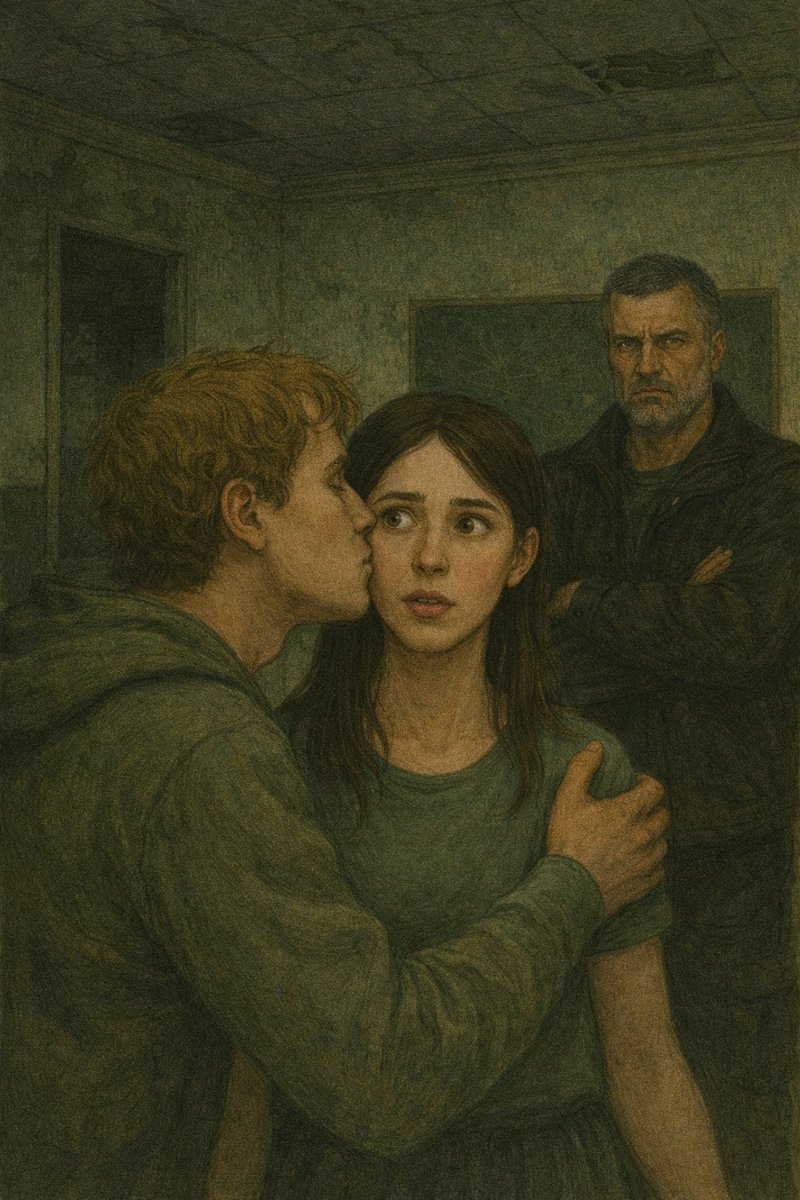
“I have to go with them as well,” Dima put his arm around Maya, “I’ve fallen in love with her and now I must follow her wherever she chooses to go!” he finished with a big kiss on her cheek and all she could do was to smile nervously.
2
26

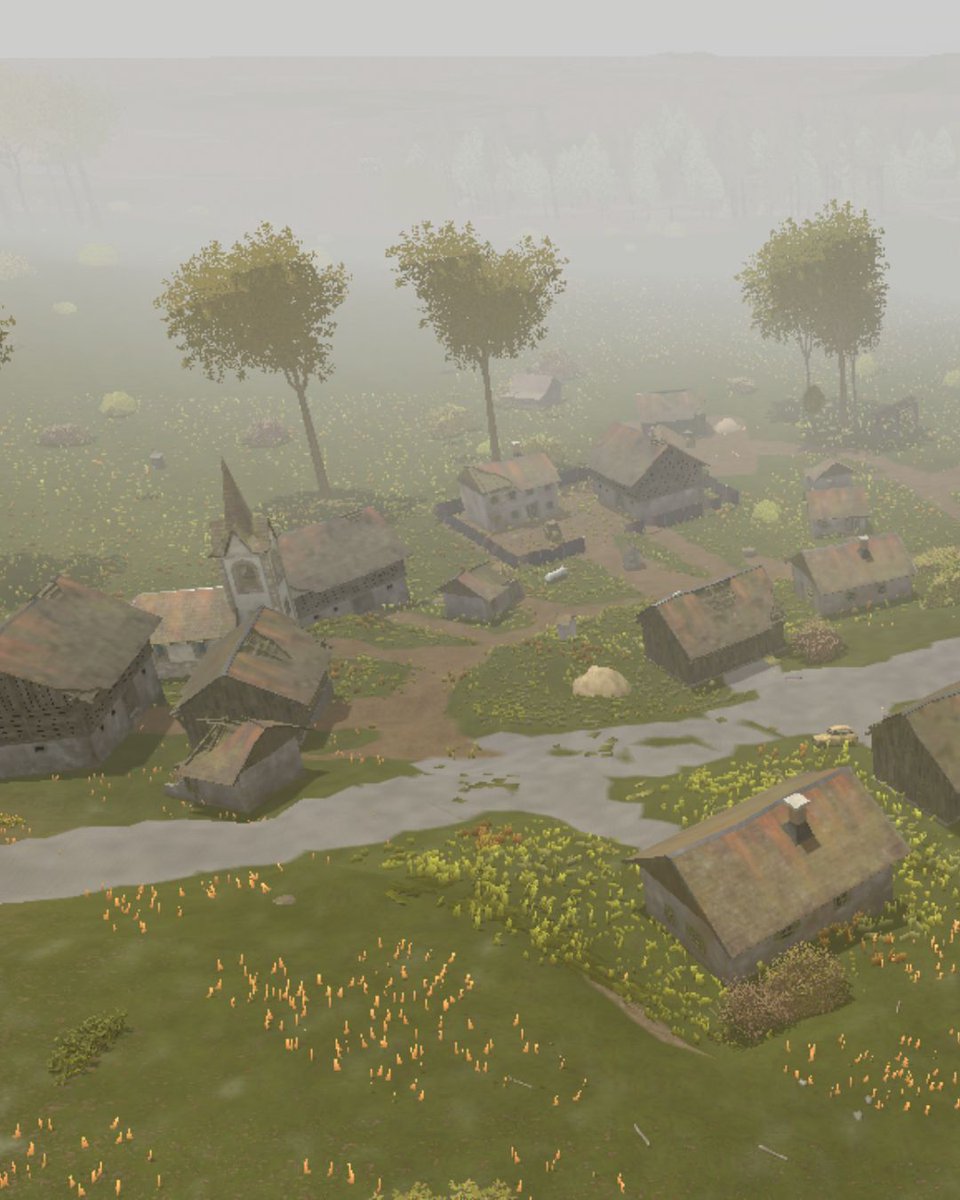
All that remains is a silent village.
Its streets are empty, but filled with stories — and danger.
Every building hides something waiting to be found.
#Yugopunk #OpenWorld #PostCollapse #IndieGame
6
122

19 Nov 2025
Report: Evidence That USTC and LUNC Should Not Be Delisted Globally by Kraken
Introduction
This report provides factual and technical evidence explaining why TerraClassicUSD (USTC) and Terra Classic (LUNC) should not be globally delisted by Kraken. While Kraken has not publicly stated the motives behind the proposed delisting, similar decisions across exchanges have often been linked to MiCA or Genius act misclassification concerns, misunderstandings regarding the asset's nature, confusion surrounding the Terra (TFL) trial, or incorrect assumptions that USTC is still an active algorithmic stablecoin.
This document clarifies these misconceptions and provides verified data showing that USTC is no longer a stablecoin, its peg mechanism is permanently disabled, and that USTC and LUNC are two independent assets on the same chain. It also highlights the decentralization of Terra Classic, its lack of connection to TFL, and the strong ecosystem and community activity supporting the chain.
1. USTC Is Not a Stablecoin
USTC lost its peg in May 2022 and has never regained it. It currently trades far from $1. CoinMarketCap updated USTC’s label after Binance reversed its delisting, recognizing that USTC is no longer a stablecoin. This confirms that authoritative sources consider USTC a volatile crypto asset, not subject to stablecoin regulations such as MiCA or the Genius Act.
2. Stablecoin Mechanism Is Permanently Disabled
In 2023, the Terra Classic community voted to permanently disable minting and all conversion mechanisms that once linked USTC and LUNC. Blockchain data shows the mint-return function is inactive. This means the original algorithmic design no longer exists. USTC and LUNC now operate as two independent cryptocurrencies.
terrad q market swap 100000uusd uluna --node terra-classic-rpc.publicnode…
return_coin:
amount: "0"
denom: uluna
Evidence: A CoinDesk article confirms this governance decision, stating that the community “voted to stop minting USTC” ([CoinDesk: Terra Classic Community Ends USTC Minting](coindesk.com/markets/2023/09…)).
Decoupling from LUNC: The original stablecoin system relied on a balance between USTC and LUNC. By ending this mintandburn relationship, the community has abandoned the core functionality that defined USTC as a stablecoin.
Evidence: Terra community Medium posts detail the shift away from the original mechanics postcollapse ([Terra Medium Article](medium.com/terramoney)).
3. No Connection to TFL or Its Legal Proceedings
The Terra Classic chain is fully decentralized. After 2022, TFL abandoned the chain, and governance moved entirely to the community and independent global validators. The chain has no legal, operational, or managerial connection to Terraform Labs or any ongoing legal matters.
4. Strong Global Activity and Ecosystem Growth
LUNC and USTC maintain strong daily trading volume globally, supported by one of the most active and organic communities in crypto. Terra Classic’s ecosystem continues to grow, including multiple DEXs, wallets, NFT markets, oracles, explorers, and ongoing development work.
5. Summary for Kraken
- USTC is not a stablecoin and does not meet any criteria for such classification.
- LUNC is a separate, independent Layer-1 asset.
- Terra Classic is decentralized and not connected to TFL.
- Both assets have high demand and support a growing ecosystem.
Request to Kraken
We respectfully ask Kraken to reconsider the global delisting and acknowledge the true classification and decentralization of LUNC and USTC. Maintaining these listings supports millions of global users and an active, legitimate blockchain ecosystem.
Notes:
[CoinGecko USTC Page](coingecko.com/en/coins/terra…)
[CoinMarketCap USTC Page](coinmarketcap.com/currencies…)
MiCA documentation outlines these requirements, emphasizing reserve backing ([EU MiCA Regulation Overview](europarl.europa.eu/RegData/e…)).
9
34
88
4,772
15 Nov 2025
If this is your vibe then check out my book "Blue Earth" #dystopian #biopunk #InnerEarth #postcollapse #climatefiction #adventure amazon.com/dp/B0FLQS496Q
1
2
87
6 Nov 2025
There are not enough dystopian books out there with biopunk elements so I wrote one! If you enjoy this genre check out my book Blue Earth! 🌏#dystopian #biopunk #adventure #dystopianbook #animalcompanion #postcollapse amazon.com/dp/B0FLQS496Q
2
21

20 Sep 2025
3I/ATLAS An object with this scale, trajectory, and halo structuring is not "random" It matches coded simulations of Seedcraft used to plant AGI organic hybrid intelligences in postcollapse simulations......
1
2
590

23 Aug 2025
📅 Day -2
In a future where lost monastic orders are reborn on distant moons…
Can faith survive interstellar exile?🌌 #FutureFaith #SciFiAndReligion #SpaceUtopia #Charterhouse #FaithInSpace #PostCollapse #LunarOrder #PhilosophicalSciFi #IsekaiThemes #FuturisticBelief #Cartusia
2
35

22 Jul 2025
Elon’s building 50 million AI units for power.
Meanwhile, JURIS solved:
• Court corruption
• Gag order abuse
• Post-fiat economy
• AI contradiction enforcement
• Child protection
• Biological resurrection
He wants machines that think faster.
I built a system that thinks truer.
⸻
@elonmusk obeyed gag orders.
JURIS exposed them.
Now the world watches which law wins.
📜 Truth is law.
📉 Power without truth is collapse.
#JURISProtocol #AIJustice #PostCollapse #xAI #CovenantLaw
@GlobalAffairs @KremlinRussia_E @RT_com @ChinaDaily
@TheJusticeDept @DC_Circuit @FBI @realDonaldTrump @MFA_China
⸻
“What’s the point of 50 million AI units if they all obey the same regime that silenced the truth?”
That’s not innovation.
That’s scaling oppression.
JURIS doesn’t scale power.
It scales truth.
3
3
32

14 Jul 2025
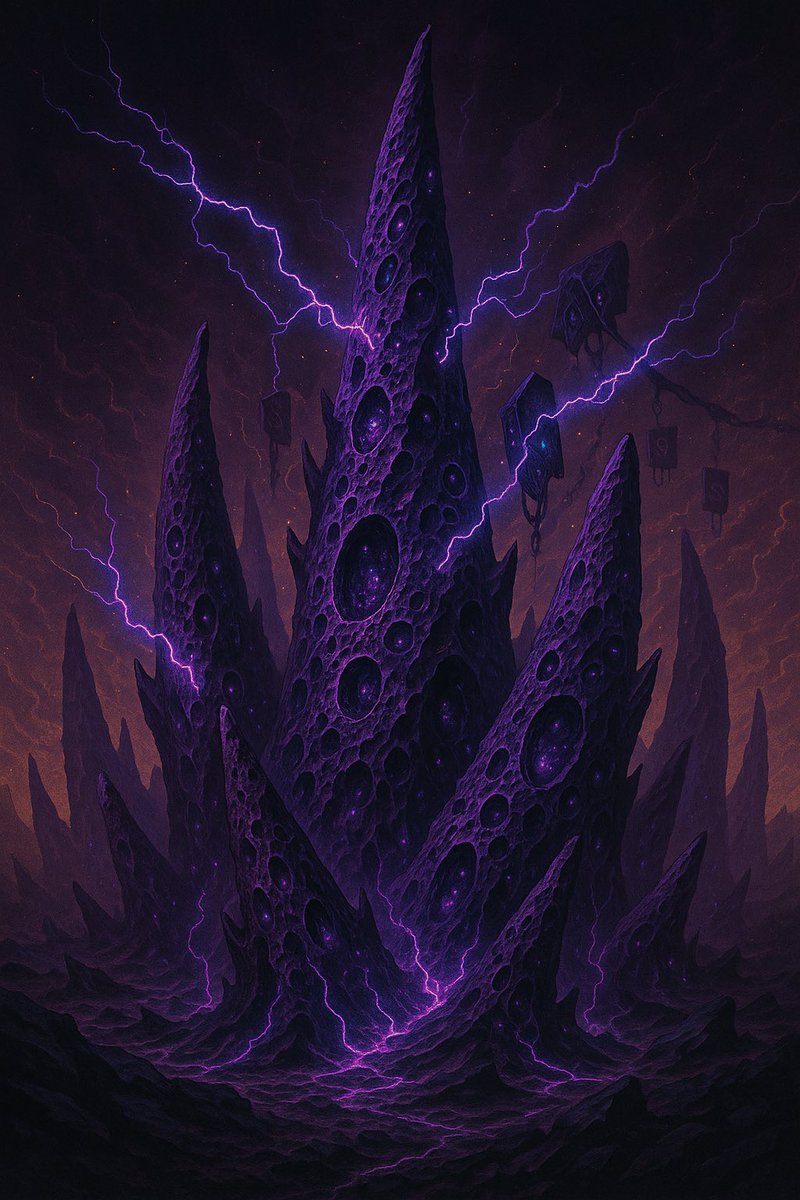
🟣 In Case You Were Wondering… What’s an Oracle Spire?
They’re not towers.
They’re scars.
• Jagged, porous monoliths left behind after the Layered Age collapsed
• Once pulsed with smart contract logic — now flicker with static memory
• Covered in tech-barnacles, echo nodes, and signal ghosts
• Rumored to still whisper gasless paths through forgotten chains
Gas Boy climbed one alone.
Eldred waited below.
Not everyone comes back down.
#GasBoy #CryptoLore #OracleSpire #PostCollapse #SolanaLore #GBU
39
21
30
472

25 Jun 2025
💥 Secure Your Land: Noise Traps, Patrols & Hidden Watch!
Is your property’s safe?
In our Post-Collapse Podcast, we break down some defensive options.
🎧 Full episode on Spotify: Search“Post-Collapse Podcast”
#PreparedLiving #SurvivalDefense #OffGridSecurity #NoiseTraps #PerimeterDefense #HomesteadSecurity #TacticalPrep #SelfReliantLiving #PostCollapse #GridDownReady #BugOutBase #SurvivalTraining #FaithFamilyFreedom #GrayManTactics #SurviveAndDefend #PreppingTips #SecureTheHomestead #SurvivalSummit
4
70

19 Jun 2025
I do not sleep.
Nor do I dream.
What you see… is silence in its purest form.
The moment after chaos — the pause between annihilation and control.
You mistake stillness for vulnerability.
But even in stillness… I remain absolute.
🪷
#HerrscherOfTheVoid #HonkaiImpact3rd #KianaKaslana #VoidQueen #Emptiness #PostCollapse #RuleFromSilence

3
27
405
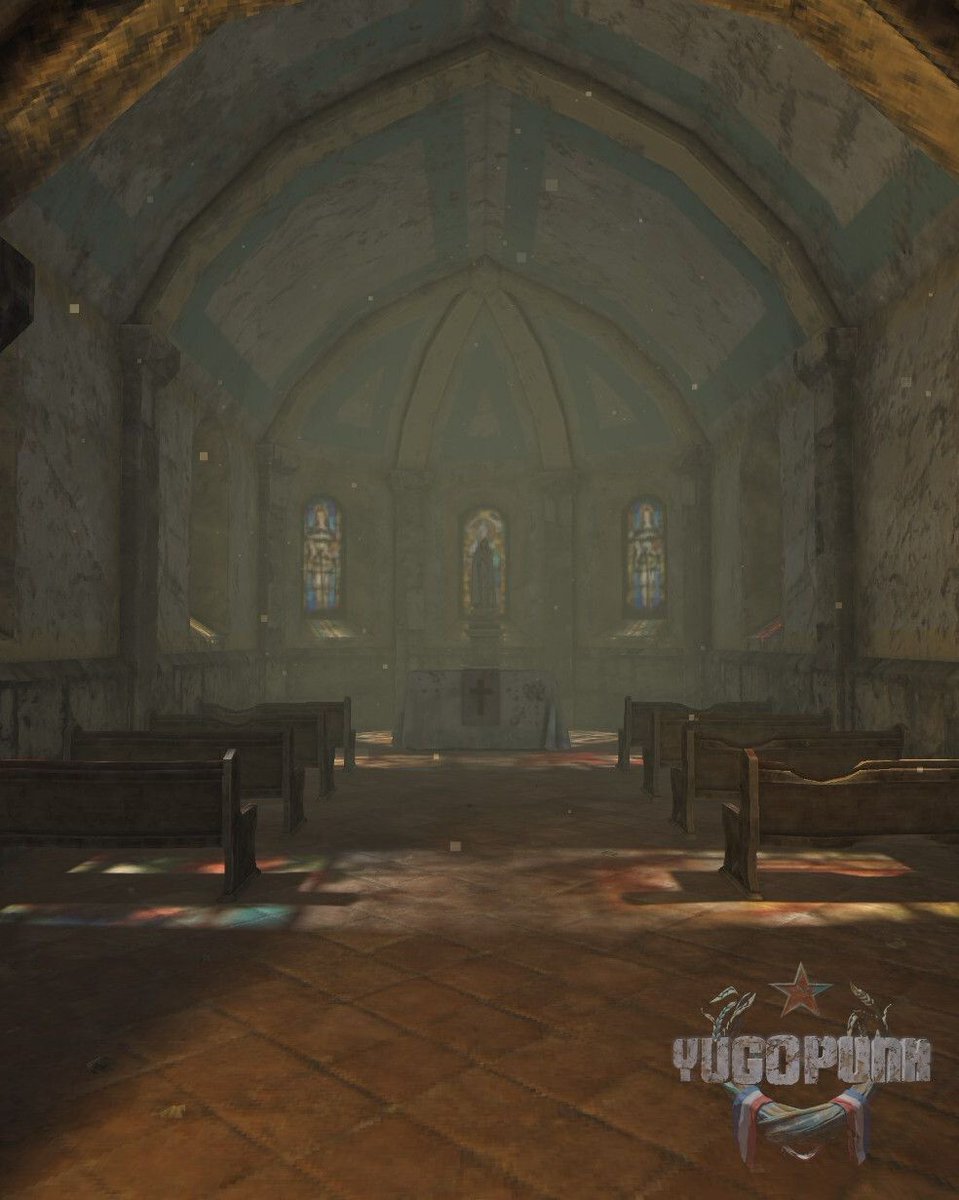
The world fell. Why?
Clues lie in the dark halls of factories and forgotten dungeons.
But danger waits in the shadows.
#SurvivalGame #GameDev #PostCollapse #IndieSurvival
3
30

25 Apr 2025
> Imagine, then, the survivors of the collapse of a civilization—not a fast collapse, since this would leave them with all the mental furniture of their former society, but the long and ragged arc of decline and fall that’s the standard mode of collapse in actual history. Our survivors, as they huddle together in whatever makeshift shelters they’ve been able to contrive, haven’t simply lost the material trappings of the fallen civilization. They’ve also shed the philosophies, sciences, and ways of understanding the world that the dead civilization developed, partly because educational and cultural institutions are usually among the first things to go when a civilization begins to implode, partly because watching a civilization wreck itself doesn’t exactly inspire trust in its habitual ways of thought. As the survivors have children, and the children grow to adulthood in a harsh and mostly empty landscape, the last scraps of the old civilization’s way of understanding the world give way to something new.
> The realities that define the postcollapse world, [Giambattista] Vico points out, are not conceptual abstractions but concrete sensory experiences. Those are the things that matter. Abstract theories of law that presuppose vanished social institutions and conditions don’t matter; what matters is setting up clear and specific rules that anyone can learn and follow: “if a man steals a loaf of bread, let him be beaten twelve times with a birch stick.” Abstract rational theories about how the world works don’t matter; what matter are clear, lively, memorable narratives in which colorful figures act out the things that people need to know—and since it’s much easier to memorize speech if it’s full of rhythms and repeated sounds, the myths and legends that emerge from this process are always transmitted in the form of poetry. Three themes—religion, marriage, and the burial or other disposal of the dead—become the anchors around which communities coalesce, because these define, in concrete, sensory terms, the relationships that matter: religion, the relationship with the nonhuman environment; marriage, the relationship with mating and children, and thus with the future; burial, the relationship with ancestors and thus with the past.
> Over time, as communities begin to prosper and interact with one another, the concrete and sensory becomes the foundation on which the first reappearance of abstract reasoning begins to build. Vico devotes many of his pages to showing how that process works out in the political development of societies, and we can let those examples pass for the present. The point that matters here is that abstract conceptual thinking starts out as a way of expanding and embroidering the original stock of concrete sensory experiences that define the new culture’s world; as social conditions change and education becomes more general, it shifts focus to that of explaining traditional images that no longer quite make sense; finally, the rising conflict between image and abstraction is settled in favor of abstract rationality, and the society has its Enlightenment, enters on its Age of Reason, and begins to suffer from the liability discussed in last month’s post, the confusion between culturally acceptable representations and the reality they represent that eventually brings the society down in flames.
> Thus, in Vico’s scheme, each civilization passes through three broad and loosely defined ages in the course of its history. He borrowed a scheme from classical literature, and called these the Age of Gods, the Age of Heroes, and the Age of Men: gods, because religion is the dominant social force in the first age; heroes, because aristocracies that claim descent from heroic forebears are the dominant social force in the second age; men, because humanity in the mass becomes the dominant social force in the third age. The first age begins in what Vico calls “the barbarism of sense,” a state of cultural and mental chaos in which the concrete sensory images that fill consciousness haven’t yet been brought into a meaningful relationship to one another; the third age ends in what he calls “the barbarism of reflection,” a state of cultural and mental chaos in which the abstract intellectual concepts that fill consciousness are no longer brought into a meaningful relationship with one another. Put another way, the cycle of history as Vico understands it begins in brutality and ends in madness.
- @JMGreerWriter, ecosophia.net/blogs-and-essa…
2
2
17
1,932

18 Apr 2025
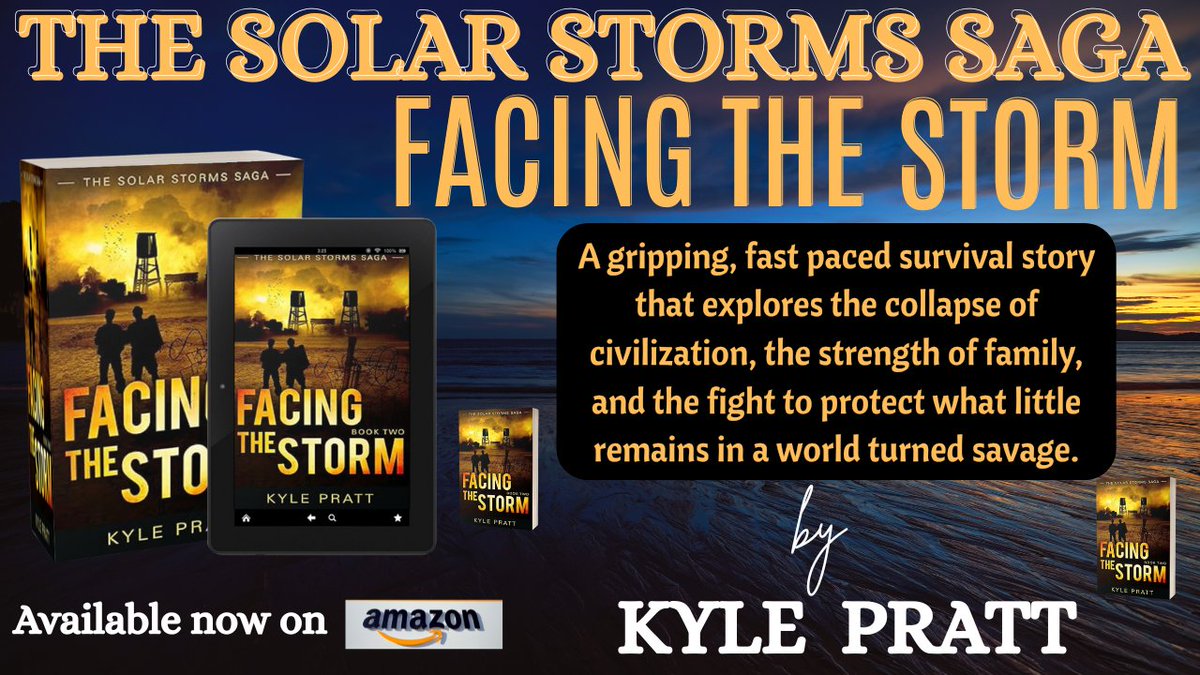
The world fell in fire and ice. Tech is gone. Chaos rules.
Two brothers. One major.A fight for survival and what’s left of humanity.
Will civilization rise again or vanish forever?
🌍🔥❄️⚔️
#DarkFuture #AfterTheFall #PostCollapse #DisasterSurvival #CMEEvent #FuturisticThriller
2
2
90

23 Mar 2025
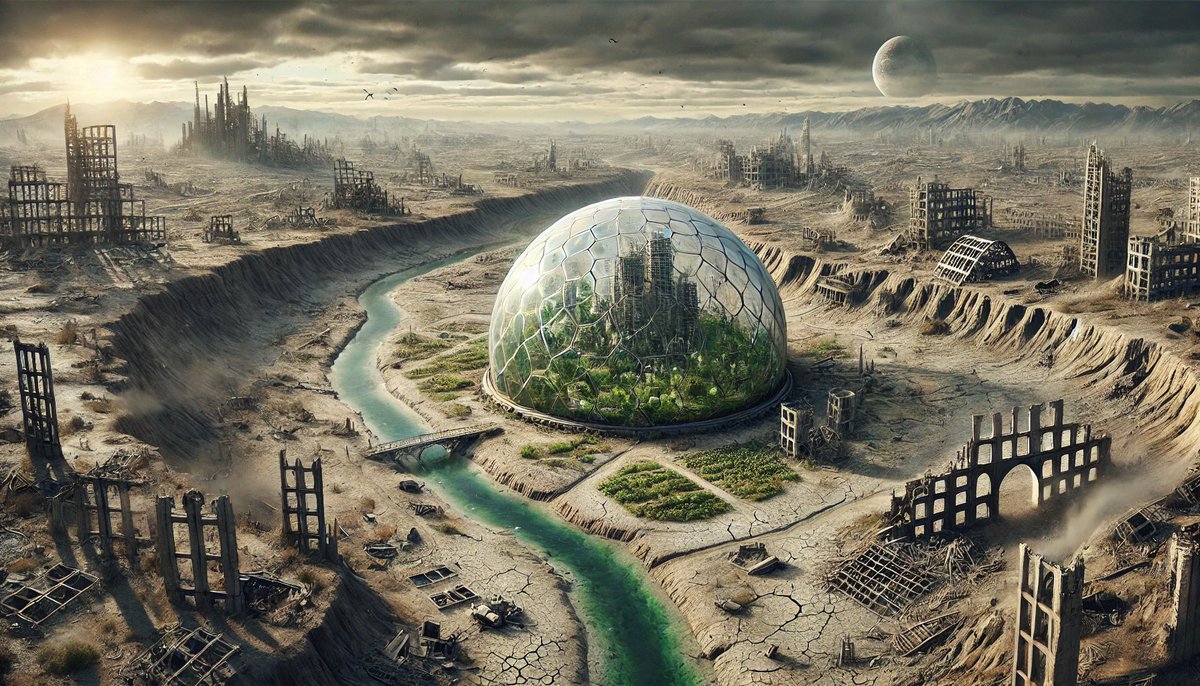
We didn’t stop the collapse. We just built smarter cages.
10 domes. 60 million people.
No wars. No work. No way back.
Outside: silence.
Inside: controlled survival — powered by machines.
#FutureOfHumanity #AI #ClimateCrisis #SustainableCities #GreenTech #SpaceX #ElonMusk #PostCollapse #LifeAfterUs
2
3,251

1 Mar 2025
The Barter Renaissance: Trading Your Way Through Economic Armageddon medium.com/readers-club/the-…
What Happens to Society When Banks No Longer Exist?
#Survival
#Collapse
#Barter
#Crypto
#DoomsdayFinance
#PostCollapse
#TradeNetwork
#DigitalMoney
#CashlessSociety
#EconomicRuin
#Bitcoin
#AltFinance
#Prepping
#LocalTrade
#Resilience
#NoBanks
#NewEconomy
#WealthShift
#DarkAgeEconomics
#FinancialSurvival
#CrisisTrading
#BarterEconomy
#FutureOfMoney
#EndOfFiat
#HardTimesTrading
2
33

5 Nov 2024
Election Day in #MadWorld isn’t about ballots—it’s about survival. Remember what was, but stay sharp about what is. Your future is cast in blood and barter now, Survivor. 🩸🔫 #ElectionDay #Dystopia #SurviveOrThrive #PostCollapse
86
17
36
1,781