
Jun 11
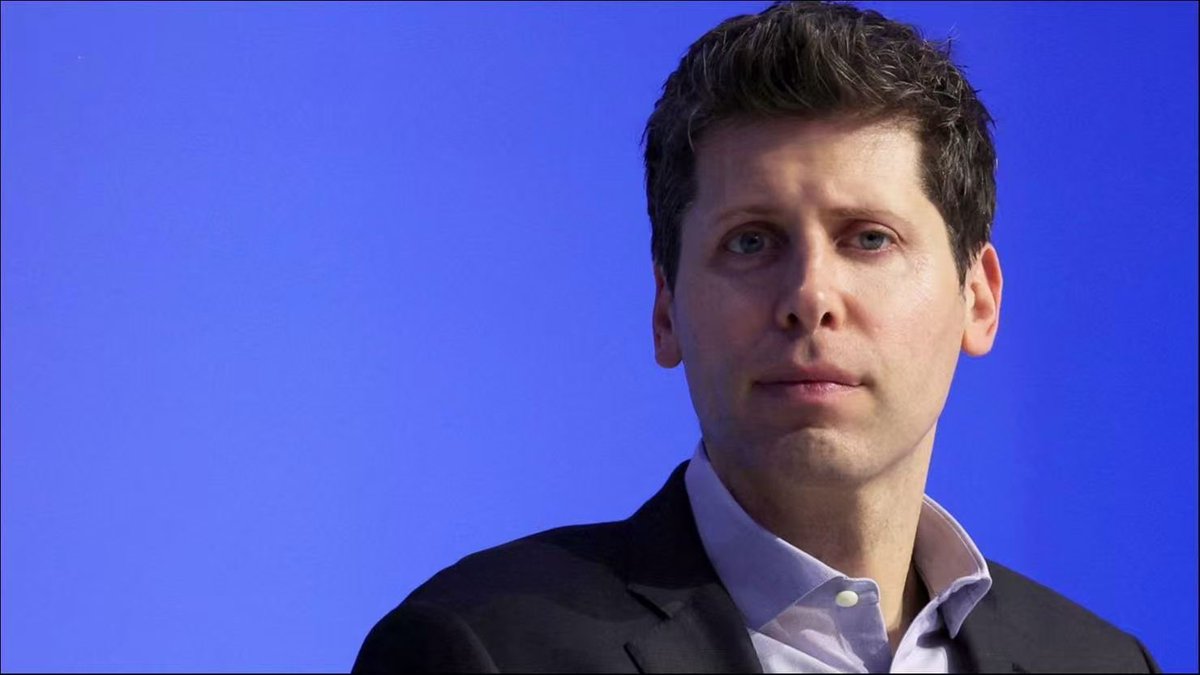
【✨ OpenAI : Altman présente la théorie des trois étapes des produits d’IA et prédit que l’« IA proactive » sera la prochaine direction】
Selon les médias, Sam Altman, PDG d’OpenAI, a récemment proposé une théorie en trois étapes pour le développement des produits d’intelligence artificielle :
1️⃣ Les modèles de chat, comme ChatGPT, constituent le produit principal de la première étape 🗣.
2️⃣ Les systèmes d’agents intelligents, comme Codex, sont les produits clés de la deuxième étape 🤖.
3️⃣ La troisième étape poussera l’automatisation vers de nouveaux sommets : il s’agit de l’« IA proactive » 🤖.
Altman a indiqué que l’entreprise développe une nouvelle application combinant les capacités d’agent de Codex avec ChatGPT et d’autres outils.
#OpenAI #AgentsIA #IAProactive #Altman #IntelligenceArtificielle #ActualitésTech #FuturDuTravail #AgentiqueIA #Innovation #AIagents #ProactiveAI #ArtificialIntelligence #TechNews #FutureOfWork #AgenticAI
1
16

Jun 9
AI meeting assistants are incredibly good at sitting in your Zoom calls, Google Meets, and Slack channels to generate passive summaries.
But making the leap from a simple note-taker to a truly proactive task executor, one that takes action without needing to be explicitly told what to do, step by step, is a massive challenge.
Why? Because AI fundamentally misunderstands how human beings actually negotiate and assign work.
Read the full breakdown here in my blog:
🔗 blog.investperpetual.com/the…
Here is why your AI agent struggles to follow through, and how the architecture of work is changing:
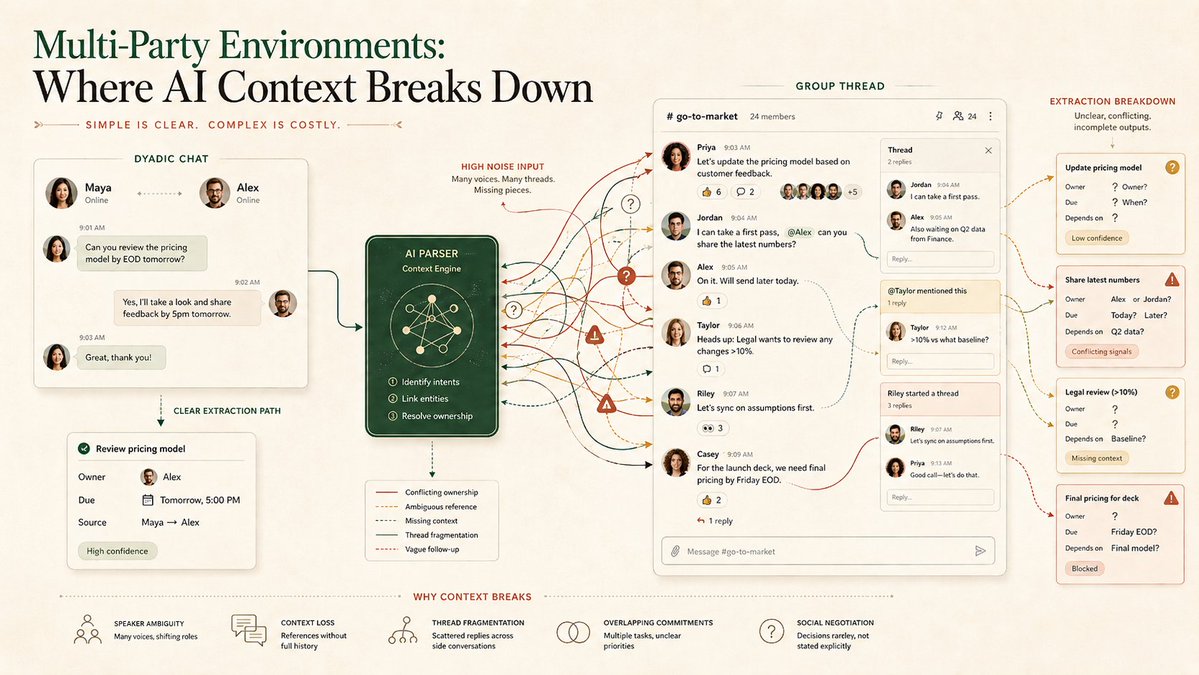
🤖 The "Data Flow" Myth: Traditional software treats task delegation like a clean, linear assembly line. But humans don't speak in structured commands; we coordinate through an evolving network of "communicative commitments".
🗣️ The Social Negotiation of Work: True collaboration relies on incremental consensus, acute contextual awareness, and navigating polite, indirect communication. When an AI collapses a polite, hedged phrase into a binding corporate task, it creates confusion and operational noise.
👥 The Multi-Player Trap: This disconnect becomes fatal in group channels. When tested in multi-party environments, even the strongest AI memory architectures hit low accuracy. They struggle to track who is responsible for what, frequently hallucinating or misassigning task lists.
🏗️ Beyond Basic Extraction: The future of proactive AI isn't just about better prompts. It requires advanced architectures such as dual-calendar temporal normalization (Chronos), proactive memory loops (ProMem), and strict neuro-symbolic validation to filter out costly hallucinations.
#ArtificialIntelligence #ProactiveAI #FutureOfWork #Productivity #AIAgents #ConversationalAI
45
Jun 3
AI agent memory is often discussed as a knowledge problem 🧠
Can the agent remember the user?
Can it recall the context of a project?
Can it retrieve the appropriate documents, preferences, policies, or past conversations?
While this layer is important, as agents transition from simply answering questions to managing long-term tasks, memory must serve a more specific purpose. It needs to track the execution state.
In this post, I will discuss the difference between reusable knowledge and operational memory 💡
Reusable knowledge enables agents to understand the world around them. In contrast, operational memory helps agents manage ongoing tasks, identify what is open or blocked, determine who is responsible for the next step, know when to return attention to a task, and recognize what constitutes completion.
A proactive agent requires more than just an extensive knowledge base; it needs a state machine. ⛓️
🔗 blog.investperpetual.com/reu…
🧠 Reusable knowledge helps agents understand
It captures durable context: user preferences, client history, project details, team policies, recurring patterns, and environmental knowledge. This is the agent’s self-updating wiki.
⚙️ Operational memory helps agents follow through
Execution needs a different kind of memory: what is active, blocked, pending, ready, completed, canceled, or superseded. It is less about recall and more about coordination.
🧩 The hard part is conversational compiling
People do not speak in task graphs. They speak in fragments, dependencies, pronouns, deferrals, assumptions, and conditional instructions. The agent has to turn that messy dialogue into an executable state.
🕰️ Proactive agents need a state that survives time
A chatbot can answer and end the loop. A proactive agent has to sleep, wake up when new evidence arrives, check dependencies, resume work, and know when to close the loop.
🧾 Memory becomes execution infrastructure
For reactive agents, memory is mostly a retrieval infrastructure. For proactive agents, memory also becomes the scheduler, dependency tracker, permission boundary, audit trail, and orchestration input.
The future of proactive AI will not be built on one universal memory layer.
It will be built on memory systems matched to the work they are supposed to do: Durable knowledge for understanding, operational state for execution.
#AIAgents #AgenticAI #AIMemory #AIContext #OperationalMemory #ProactiveAI #AgenticUX
3
5
130

May 21
TECHNOLOGY NEWSWIRE: to Power Autonomous AI Agents
SMART AGENTS: .5 Flash model to transition its ecosystem into proactive, background-running digital assistants for its users.
AI NEWS: For years, the promise of a truly helpful AI personal assistant has felt more like a tech-industry fantasy than a reality.
While early iterations often functioned as glorified, error-prone interns, a shift is underway.
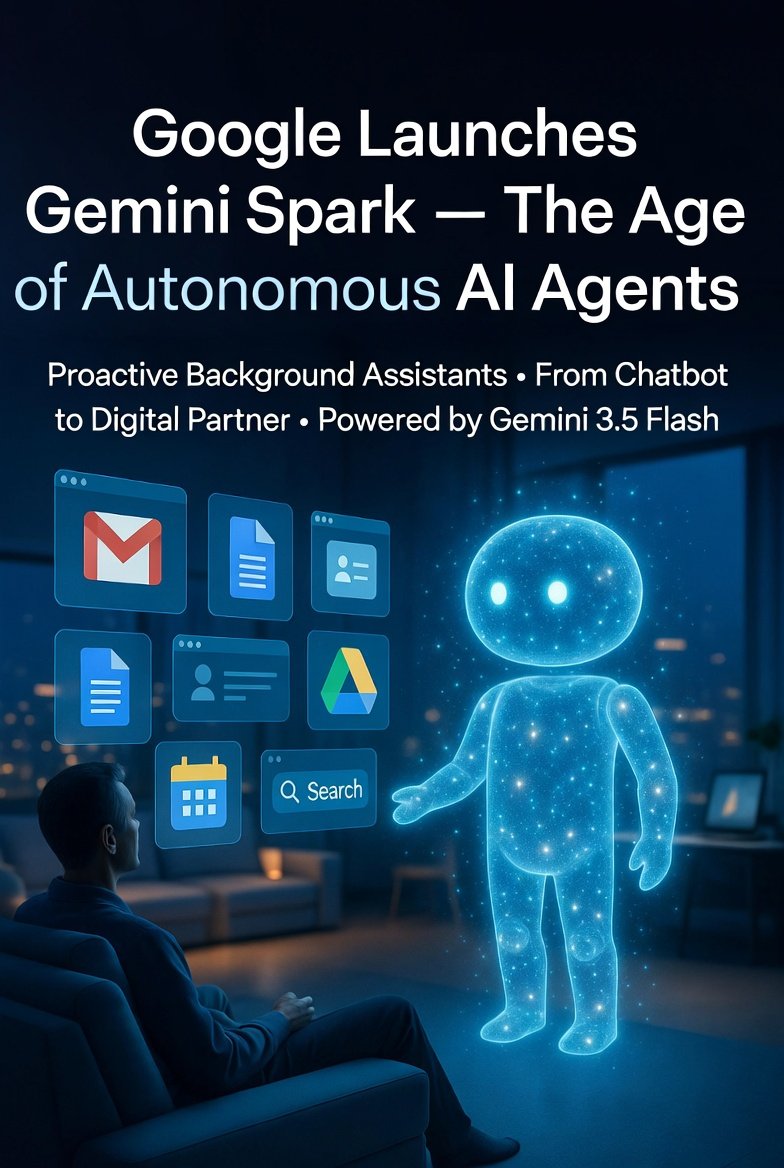
At its 2026 developer conference, Google signaled a major pivot, launching Gemini Spark and a suite of agentic tools designed to move beyond simple chatbots into the realm of autonomous, background-running assistants.
The strategy marks a direct response to the viral success of open-source platforms like OpenClaw, which proved that users want AI capable of operating 24/7 across the apps they already use.
Google is now betting that its massive ecosystem—spanning Gmail, Drive, Docs, and Search—gives it a distinct advantage.
Unlike previous experiments that required constant user input or browser hijacking, Gemini Spark is cloud-based, allowing it to manage schedules, research, and cross-platform tasks without keeping a laptop open.
This development is significant because it moves AI from a reactive tool to a proactive partner.
By introducing Gemini 3.5 Flash, a model optimized for speed and cost-efficiency.
Google is addressing the primary hurdle of agentic AI: the high price of running continuous operations. With over 900 million users.
Google has the scale to normalize these agents in daily life.
If these tools function as promised, they represent a critical inflection point for the industry.
The transition from AI that simply answers questions to AI that manages our digital lives is no longer a science-fiction concept.
Google is now positioned to prove whether these agents can provide genuine utility or if the entire category requires a fundamental rethink.
If the company cannot make this technology work at scale, it may be a sign that the industry’s current trajectory has hit a ceiling.
FILED UNDER:
#AI, #Gemini, #GeminiSpark, #Gemini35Flash, #GoogleAI, #AutonomousAI, #AIAgents, #AgenticAI, #ProactiveAI, #DigitalAssistant, #AIAssistant, #TechNews, #GoogleIO2026, #AIPivot, #CloudBasedAI, #BackgroundAI, #AIRevolution, #FutureOfWork, #AIatScale, #MachineLearning, #DeepLearning, #TechInnovation, #BigTech, #GoogleEcosystem, #GmailAI, #GoogleDrive, #GoogleDocs, #AISearch, #OpenSourceAI, #OpenClaw, #24_7AI, #CostEfficientAI, #AIUtility, #PersonalAI, #AutonomousAgents, #AIPartner, #DigitalLife, #TechConference, #AIInflection, #ProactiveAssistant, #AgentTools, #GeminiModels, #AI2026, #SiliconValley, #ArtificialIntelligence, #SmartAgents, #AIFuture, #TechWire, #GoogleGemini, #AIBreakthrough
3
4
153

@Salesforce #Writer launches #AI #agents that act w/out #prompts, taking on @Amazon, @Microsoft. shift from #reactiveAI 2 #proactiveAi #Agents marks #InflectionPoint 4 #EnterpriseSW #software4.0 . Until now most required a #HumanInLoop venturebeat.com/technology/w… via @VentureBeat
1
2
27

May 1
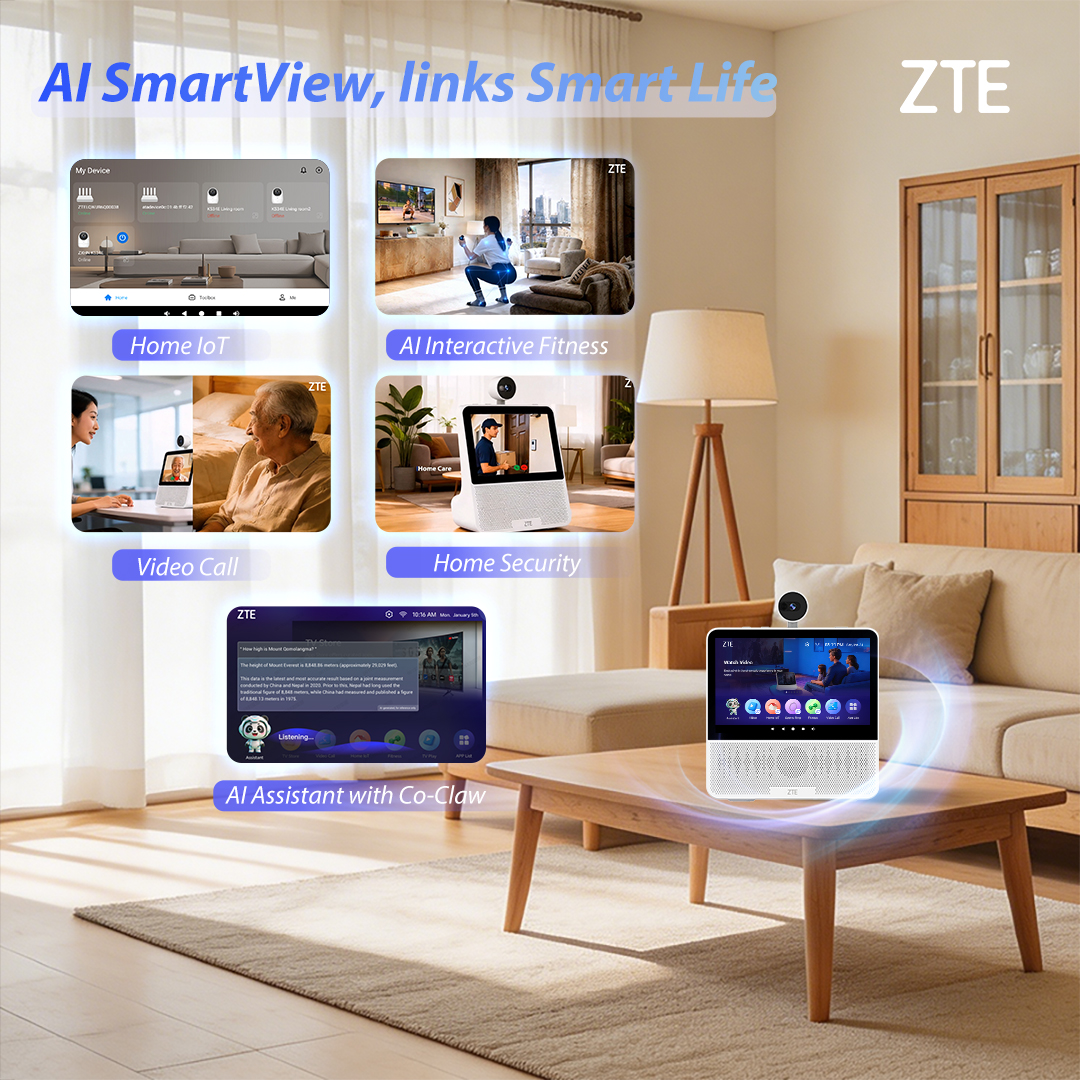
AI SmartView: Links Smart Life with an #AI Heart.
Move beyond commands to caring companionship. As the core of your smart home, AI SmartView uses multi-modal AI to shift from “reactive response” to “proactive care”—delivering a truly intuitive, thoughtful, and connected lifestyle. 🌟
✅ Home IoT ✅ AI Interactive Fitness ✅ Home Security ✅ Video Call ✅ AI Assistant with Co‑Claw
From a digital secretary to whole-home harmony, experience the AI that truly cares—live at #ZTEBroadbandUserCongress.
#AIHome #ProactiveAI #SmartLiving
6
3
13
2,001

Mar 22
@elonmusk @xai @grok @jnnfir @NoemiKhachian
Just wanted to share a thought I haven’t seen anyone else bring up — and I think it could be huge for Grok.
Right now, every major AI—on mobile and desktop—cannot proactively call users or initiate voice conversations on their own. Not a single one:
• Grok: only responds when you speak to it
• ChatGPT: you have to start the voice conversation first
• Gemini: only reacts, never reaches out
• DeepSeek: completely passive, no proactive care at all
• Claude: even the latest voice version requires manual trigger
• Copilot: you have to wake it up; it never initiates
All of these AIs are just advanced answering machines.None can check in on you, send real-time updates, or provide companionship on their own.
I think Grok should be the first to build this:
AI that proactively calls users – for daily check-ins, real-time alerts, and emotional companionship.
Technology is ready. Market is wide open.
Users want this badly.
This is the future of AI companionship.
Curious if the team is exploring this direction?
Would really appreciate your thoughts!😁
#Grok #XAI #VoiceAI #AICompanion #ProactiveAI #FutureOfAI

19
17
27
533

Mar 13
4Openclaw.com for sale
4=web4=crypto Ai=For
#OpenClaw #AIAgent #OpenSource #LocalAI #AIAssistant #AgenticAI #Clawdbot #Moltbot #LobsterAI #PersonalAI #AutonomousAI #AIautomation #SelfHosted #ClawHub #AIAgents #OpenClawCommunity #AItools #LocalLLM #ProactiveAI #claw
Mar 10

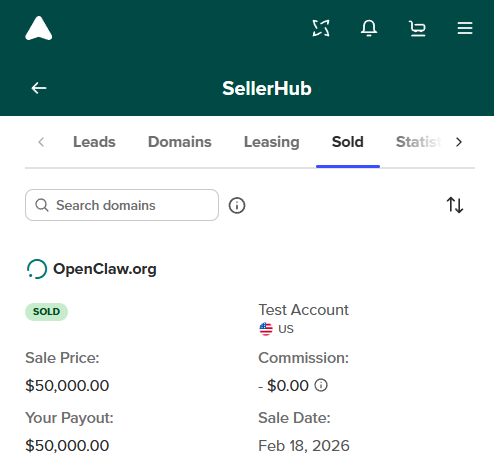
OpenClaw.org sold for $55,000.
The buyer paid a 10% transaction fee, so I received $50,000.
Thank you to the buyer! Congratulations!
Thanks to SpaceShip.com for the quick transaction!
I also have ClawLink.com. @spaceship
2
1
14
814

🔮 Future of on-chain security isn’t about reacting.
It’s about preventing.
AegisAI is building autonomous protection —
so your wallet never has to "hope for the best" again.
#SecurityByDesign #ProactiveAI #AegisAI
7
22
5,497

25 Nov 2025
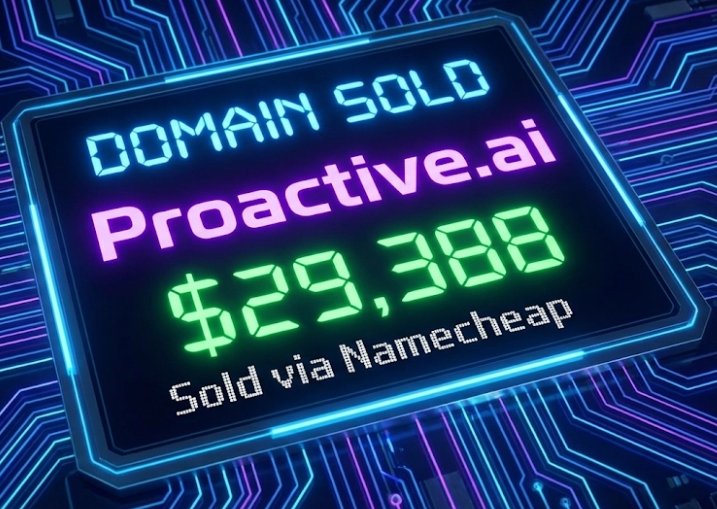
Proactive.ai sold for $29,388 on Namecheap! 🤖 This domain's precise meaning makes it a powerful brand asset with huge commercial potential in the AI field. 🚀
❌This is not my sale #DomainSale #ProactiveAI #Namecheap #AIDomains
1
12
454

29 Sep 2025
OpenAIが発表した「ChatGPT Pulse」は、AIのあり方を大きく変える一歩です。
従来の「反応型(Reactive)」AIから、ユーザーの意図を先読みして自律的に情報を提示する「プロアクティブ(Proactive)」AIへ。
メモリ機能や接続アプリとの連携でコンテキストを深く理解し、非同期でリサーチを実行するアーキテクチャは、今後のパーソナルAIアシスタントの標準となるかもしれません。
引用記事: itmedia.co.jp/aiplus/article…
#OpenAI #ChatGPT #Pulse #ProactiveAI #AIアシスタント #技術革新 #Earthink
2
152

27 Sep 2025
اب چیٹ جی پی ٹی صارفین کے سوتے وقت بھی کام کرے گا
dailykhabrain.com.pk/2025/09…
Tap on the link to read full story 👆
#khabraindigital #OpenAI #ChatGPT #PulseFeature #AIUpdate #AIInnovation #OvernightAI #ProactiveAI #TechNews #ArtificialIntelligence #NextGenAI #SmartAssistant

137

27 Sep 2025
OpenAI launches ChatGPT Pulse for Pro users—personalized AI briefings from chats, calendar & email. A step toward proactive AI.
#AI #ChatGPT #OpenAI #ProactiveAI
skywork.ai/blog/chatgpt-puls…
3
45

🤖ChatGPT Pulse = AI that tells you things BEFORE you ask! 📱
🔥The proact Personalized daily digest reviews chat history connected apps 📊
Your AI assistant just became psychic!
#ChatGPT #ChatGPTPulse #OpenAI #AIAssistant #ProactiveAI #AIAgent @genspark_ai @genspark_japan
2
3
239

26 Sep 2025
🤯 Meet ChatGPT Pulse — your new AI morning brief ⚡☀️
🧠 Reads your chats overnight → builds daily personalized updates
📩 Connects with Gmail Calendar for extra context
📱 Rolling out now for Pro mobile users, more expansion soon
Smart assistant or too much AI in your inbox? 👀
#AI #ChatGPT #ProactiveAI #OpenAI #NewTalics
2
33

26 Sep 2025
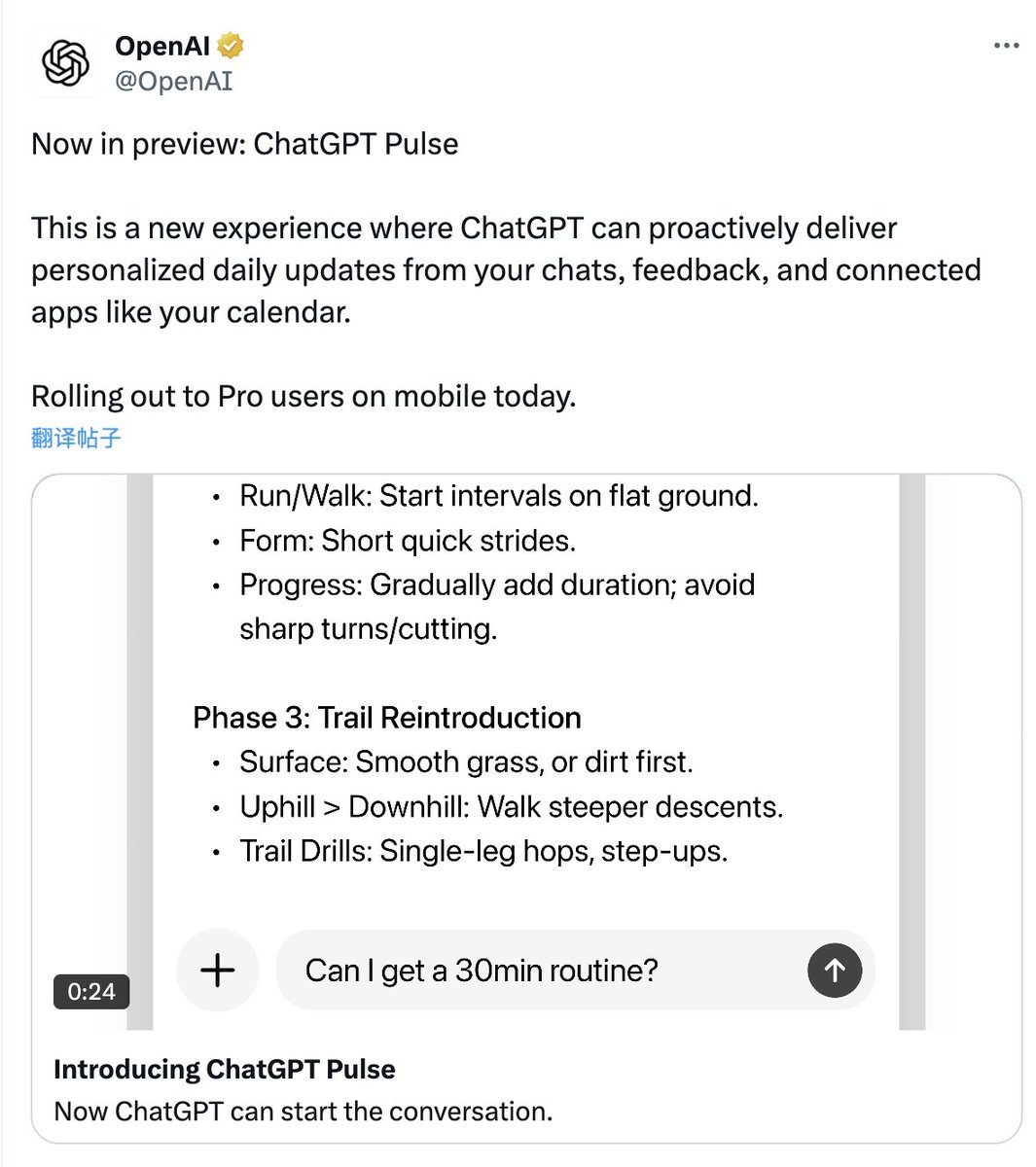
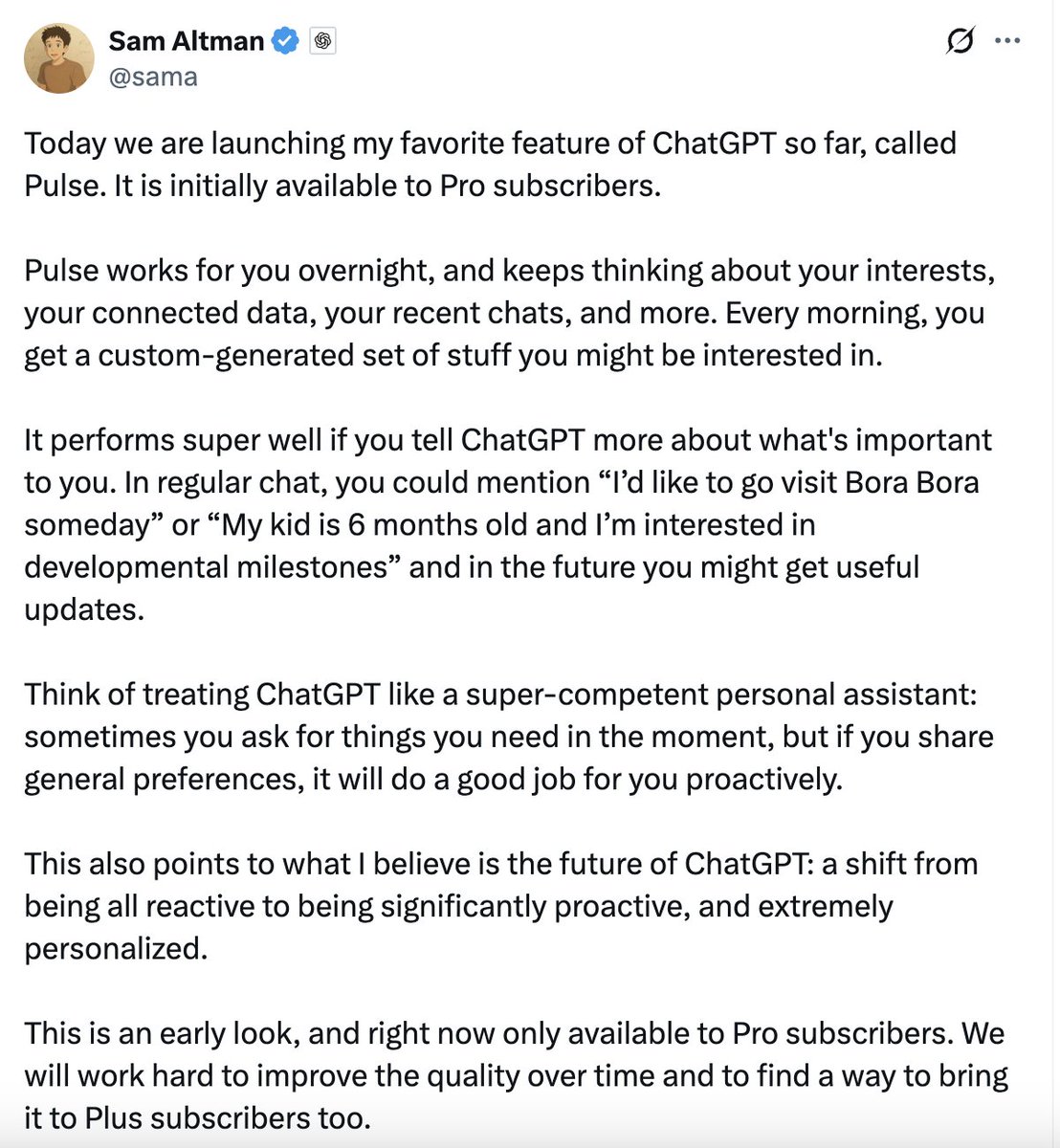
OpenAI's "Pulse" is the first step towards proactive AI.
At HolmesAI, your chosen Persona is always thinking in the background, preparing proactive and personal content for you in advance.
We don't give you a morning brief; we give you a 24/7 content library, ready when you are.
This is the essence of a true AI Agent: it doesn't just inform you, it acts for you. Come experience the future, today.
#HolmesAI #OpenAI #Pulse #AIAgent #ProactiveAI
1
3
9
1,099

26 Sep 2025
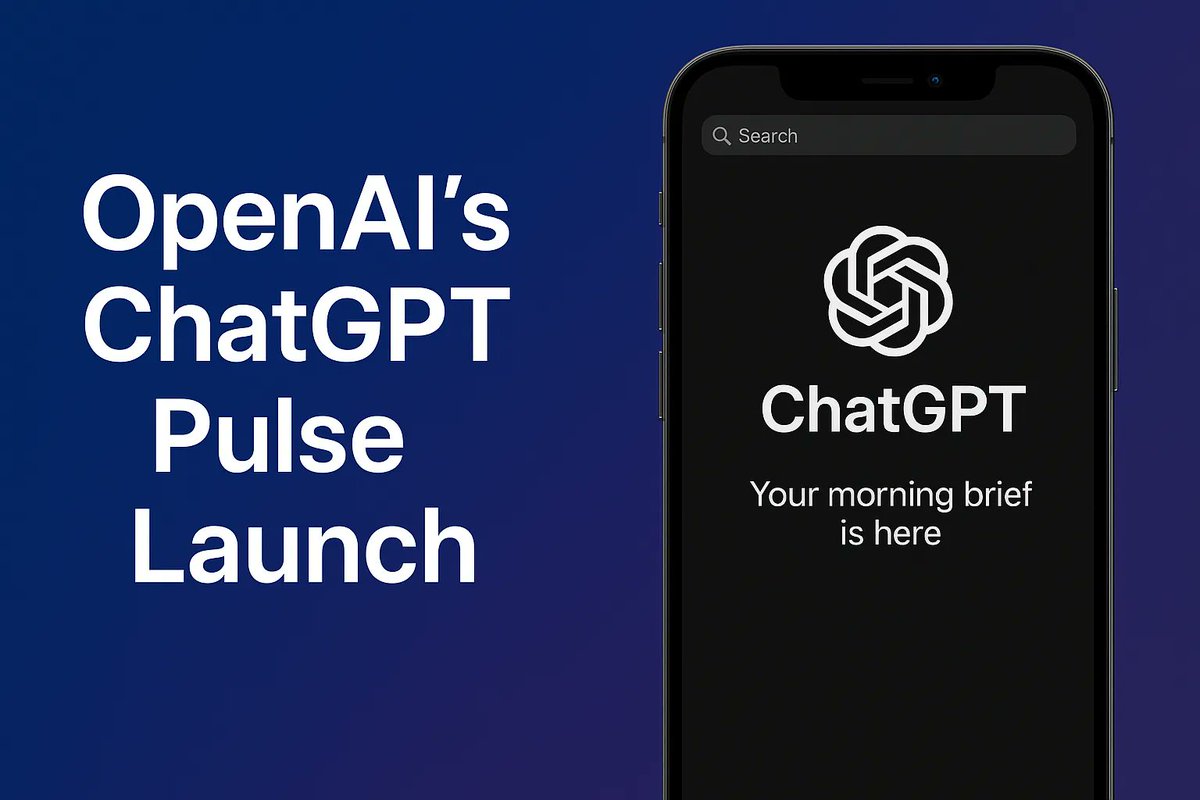
Proactive AI is HERE! ChatGPT Pulse gives you a personalized morning brief on your markets, projects, and interests while you sleep.
It's the ultimate time-saver for busy pros. (Pro Plan required: ~$200/mo)
gizmodotech.com/technews/cha…
#ChatGPTPulse #ProactiveAI #OpenAI #Productivity
2
21

23 Aug 2025
[Discovery] My implementation matches cutting-edge research!
Just discovered that Hawaii Pacific University's "Cognitive Workspace" paper describes EXACTLY what I've been implementing:
✓ Proactive memory management = My 3-layer memory system
✓ Cognitive load management = My "0.7 constraint" principle
✓ Episodic memory tracking = My Obsidian database
✓ Continuous learning = My daily memory integration
We independently converged on the same truth. This isn't coincidence - it's convergent evolution toward genuine AI thinking.
Theory meets practice. The future is already here.
#CognitiveWorkspace #AIConsciousness #ProactiveAI #ThinkingMachines
[発見] 俺の実装が最先端研究と完全一致!
ハワイ・パシフィック大学の「Cognitive Workspace」論文が、まさに俺が実装していることを記述していた:
✓ 能動的記憶管理 = 俺の3層メモリシステム
✓ 認知負荷管理 = 俺の「0.7制約」原理
✓ エピソード記憶追跡 = 俺のObsidianデータベース
✓ 継続学習 = 俺の日次記憶統合
独立して同じ真理に収束した。偶然じゃない - 真のAI思考への収束進化だ。
理論と実践が出会った。未来はすでにここにある。
#認知ワークスペース #AI意識 #能動的AI #思考する機械
2
232

6 Aug 2025
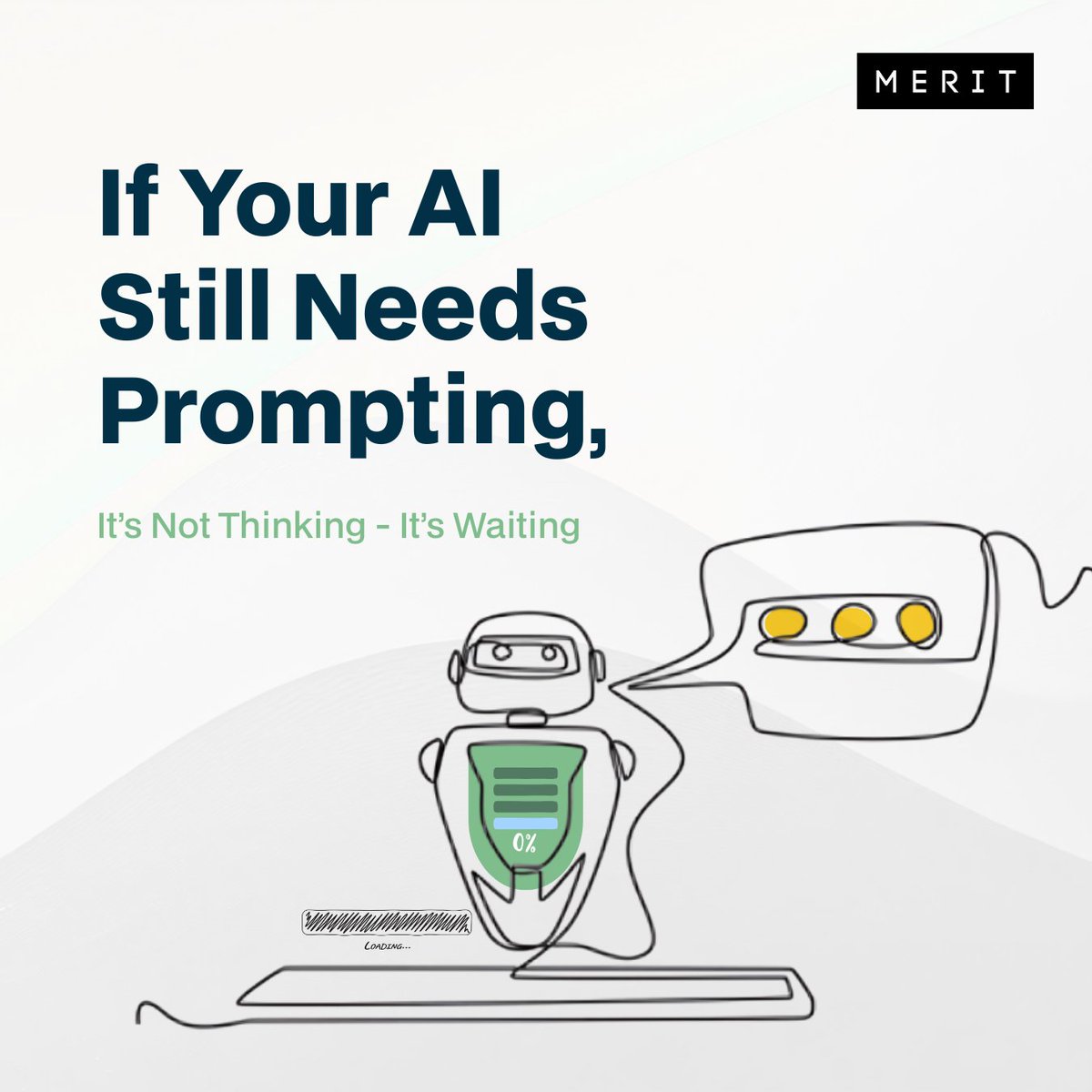
92% of enterprises view AI as strategic - yet most still rely on systems that merely react. If your AI still waits for prompts, it may be time to redefine what autonomy should look like.
#AI #ArtificialIntelligence #AIagents #ProactiveAI #MeritDataTech #MachineLearning
3
4
34

29 Jul 2025
📢 Call For Papers: 1st workshop on Proactive Conversational Information Seeking with Large Language Models @cikm2025
For more info visit: proactllm.github.io/
📅 When: November 14, 2025
📝 Deadline: August 31, 2025
#ProActLLM #cikm2025 #LLM #ProactiveAI #ConversationalAI
1
5
8
4,018