
Apr 17
Today I answer one of the most commonly asked questions usually asked by students who are just starting out their programming journey.
If you'd like to know more about the answer, please watch complete video here:
youtube.com/watch?v=JHoMJN6b…
#ProgrammingForBeginners #Programming
1
4
122
Apr 13
If you’re ready to start from scratch & build a strong foundation in programming, this is where your journey begins.
Join now and start learning coding with clarity, structure, and confidence.
#LearnToCode #ProgrammingForBeginners #CodingJourney #TechSkills #SoftwareDevelopment
3
117

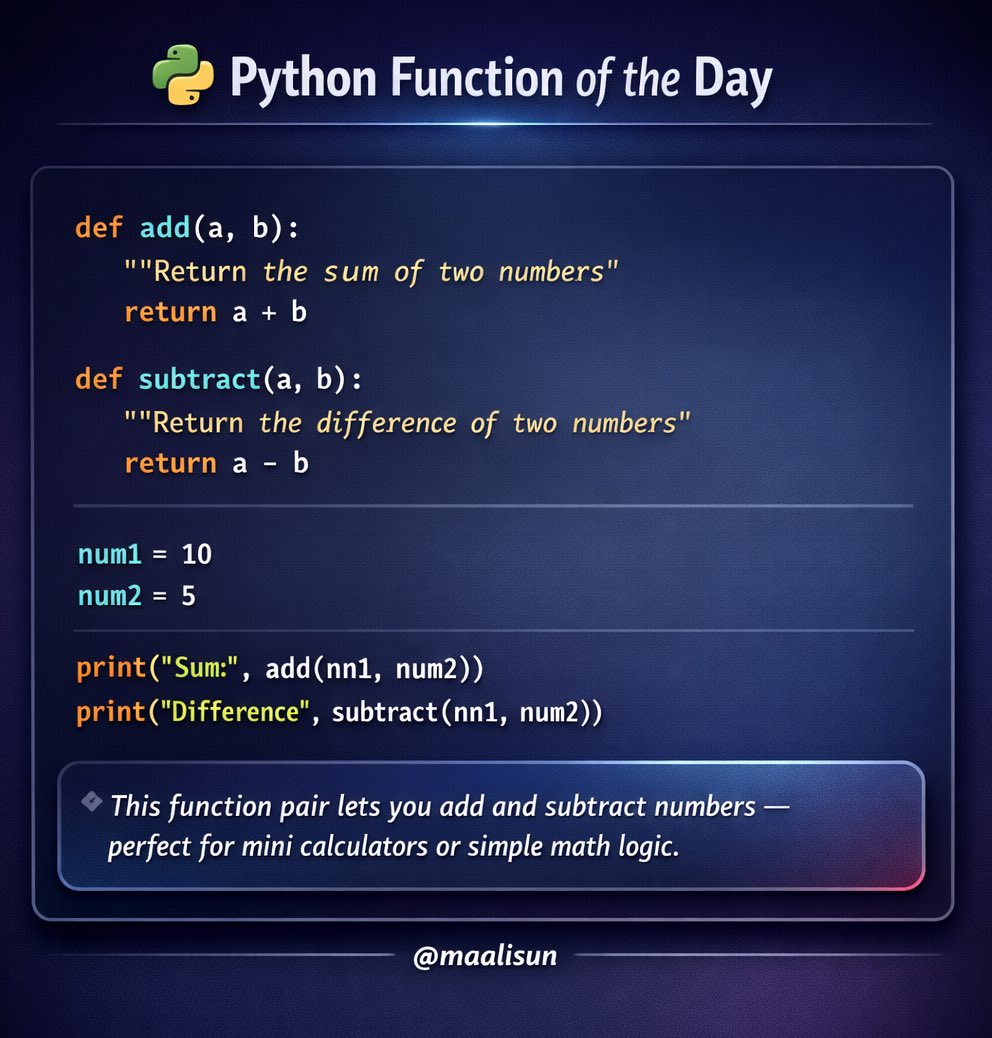
𝐏𝐲𝐭𝐡𝐨𝐧 𝐅𝐮𝐧𝐜𝐭𝐢𝐨𝐧 𝐨𝐟 𝐭𝐡𝐞 𝐃𝐚𝐲 👩💻
Let’s break it down for beginners:
This small program has two simple functions:
1️⃣ 𝐚𝐝𝐝(a, b) → takes two numbers and gives you their 𝐬𝐮𝐦.
2️⃣ 𝐬𝐮𝐛𝐭𝐫𝐚𝐜𝐭(a, b) → takes two numbers and gives you their 𝐝𝐢𝐟𝐟𝐞𝐫𝐞𝐧𝐜𝐞.
We use 𝐧𝐮𝐦1 and 𝐧𝐮𝐦2 as example numbers, and 𝐩𝐫𝐢𝐧𝐭() shows the results on the screen.
𝐖𝐡𝐲 𝐭𝐡𝐢𝐬 𝐢𝐬 𝐮𝐬𝐞𝐟𝐮𝐥:
•Functions like these are the 𝐛𝐮𝐢𝐥𝐝𝐢𝐧𝐠 𝐛𝐥𝐨𝐜𝐤𝐬 of bigger programs.
•You can 𝐫𝐞𝐮𝐬𝐞 them anytime you need to add or subtract numbers.
•Changing the numbers is a fun way to 𝐞𝐱𝐩𝐞𝐫𝐢𝐦𝐞𝐧𝐭 𝐚𝐧𝐝 𝐥𝐞𝐚𝐫𝐧 𝐏𝐲𝐭𝐡𝐨𝐧!
💡 𝐏𝐫𝐨 𝐭𝐢𝐩:
Try changing 𝐧𝐮𝐦1 and 𝐧𝐮𝐦2 to different numbers and see what happens that’s how you start learning Python 𝐬𝐭𝐞𝐩 𝐛𝐲 𝐬𝐭𝐞𝐩!
#Python #CodeDaily #LearnToCode #WomenInTech #ProgrammingForBeginners
3
97

A Java picture book inspired by Kagami Biraki, a Japanese New Year tradition.
Released on Jan 1 — light promotion during the holidays 😊
📘 Kindle Unlimited & purchase:
amazon.com/dp/B0GCM9PZ1T
#MainKun #JavaPictureBook #JapaneseCulture #ProgrammingForBeginners

ALT Cover image of a Java programming picture book themed around Kagami Biraki, a Japanese New Year tradition. It features Main-kun, a yellow square character, and friends in a warm, festive Japanese setting. The book gently introduces programming concepts for beginners through storytelling.
3
28


11 Sep 2025
Introduction to C Programming | C programming Tutorials for Beginners in 2025
👋 Welcome to your first step into the world of coding!
In this lesson, we dive into the Introduction to C Programming — one of the most powerful and foundational languages in computer science.
Whether you're a complete beginner or brushing up your basics, this is where your programming journey begins! 💻✨
🔍 What You’ll Learn in This Lesson:
✅ What is C Programming?
✅ Why C is still relevant today
✅ History and evolution of the C language
✅ Setting up your C development environment (IDE/compiler)
✅ Writing and running your first C program: Hello, World!
🎯 Why Learn C?
C gives you the power to understand how computers really work. It's fast, efficient, and used in systems, games, embedded devices, and more! Learning C sets the stage for mastering all other programming languages.
#CProgramming #LearnC #IntroductionToC #ProgrammingForBeginners #CodingBasics #CProgrammingTutorial #HelloWorld #TechEducation #CS50 #SoftwareDevelopment
youtu.be/CtRQpsGbQRo?si=_QK_…
2
1
2
122

19 Aug 2025
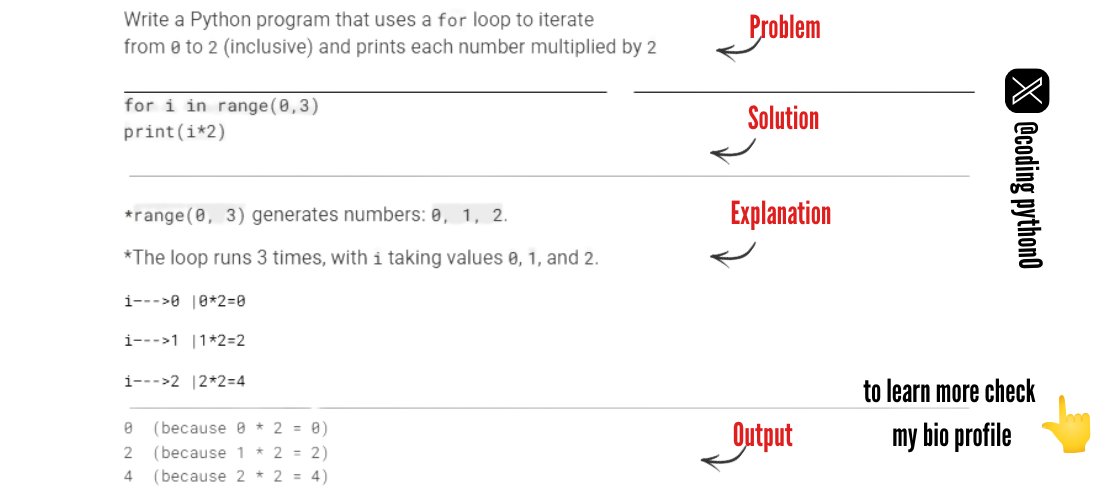
📘 Just shared a quick snippet from my ebook “Code as a Story” – a beginner-friendly guide to Python that makes coding simple and practical.
👉 Get it here (60% OFF): codingpython.gumroad.com/l/C…
#Python #CodeNewbie #LearnToCode #ProgrammingForBeginners #CodingJourney
1
3
239
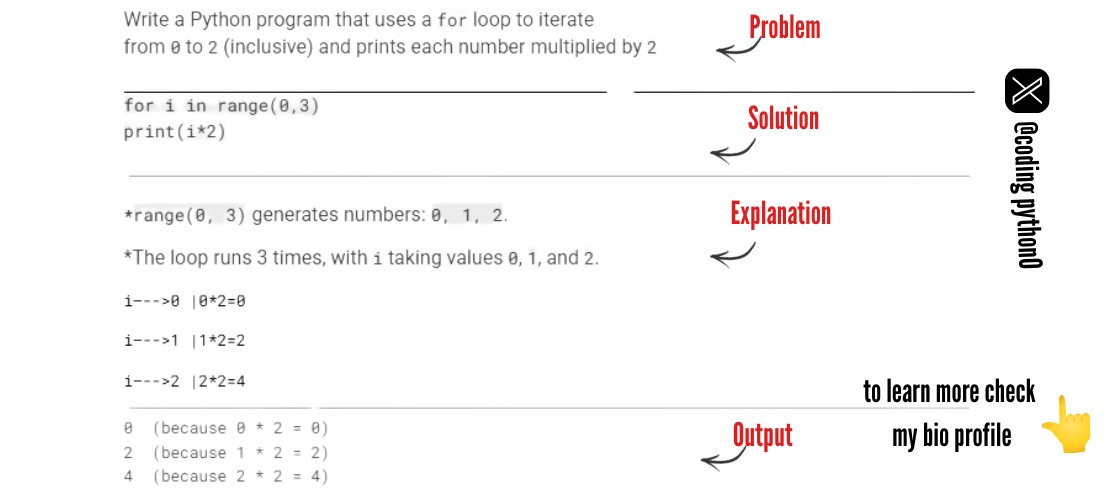
19 Aug 2025
📘 Just shared a quick snippet from my ebook “Code as a Story” – a beginner-friendly guide to Python that makes coding simple and practical.
👉 Get it here (60% OFF): codingpython.gumroad.com/l/C…
#Python #CodeNewbie #LearnToCode #ProgrammingForBeginners #CodingJourney
2
15

14 Jun 2025
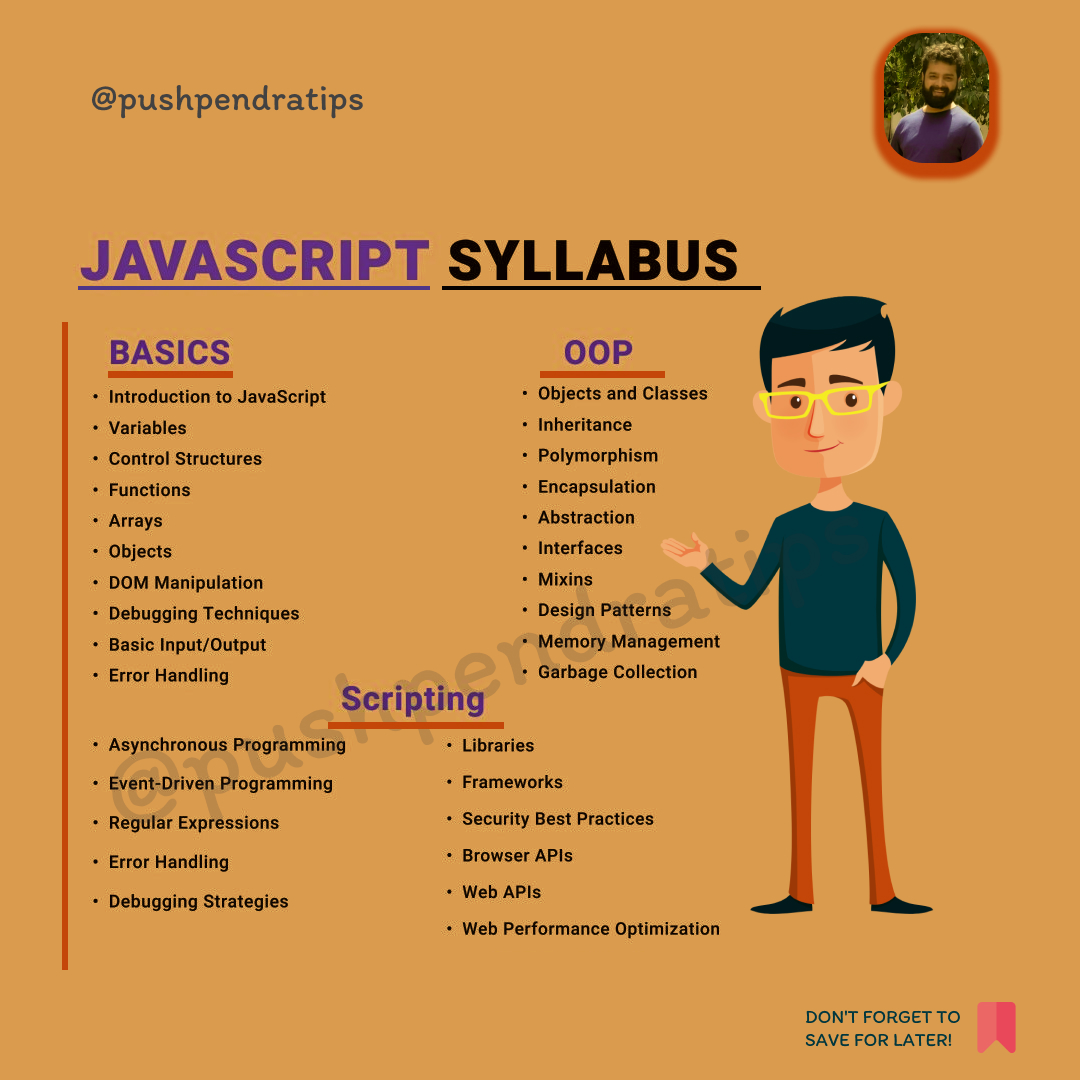
🎯JavaScript syllabus
#JavaScript #JavaScriptTutorial #LearnJavaScript #JavaScriptCourse #JavaScriptSyllabus #coding #JavaScriptRoadmap #JavaScriptForBeginners #JavaScriptLearning #JavaScriptFullCourse #FrontendDevelopment #WebDevelopment
#CodingSkills #JavaScriptDeveloper #coder #ProgrammingForBeginners #100DaysOfCode #CodeWithMe #TechYouTube #CodeNewbie
42
17
57
1,441
15 Apr 2025
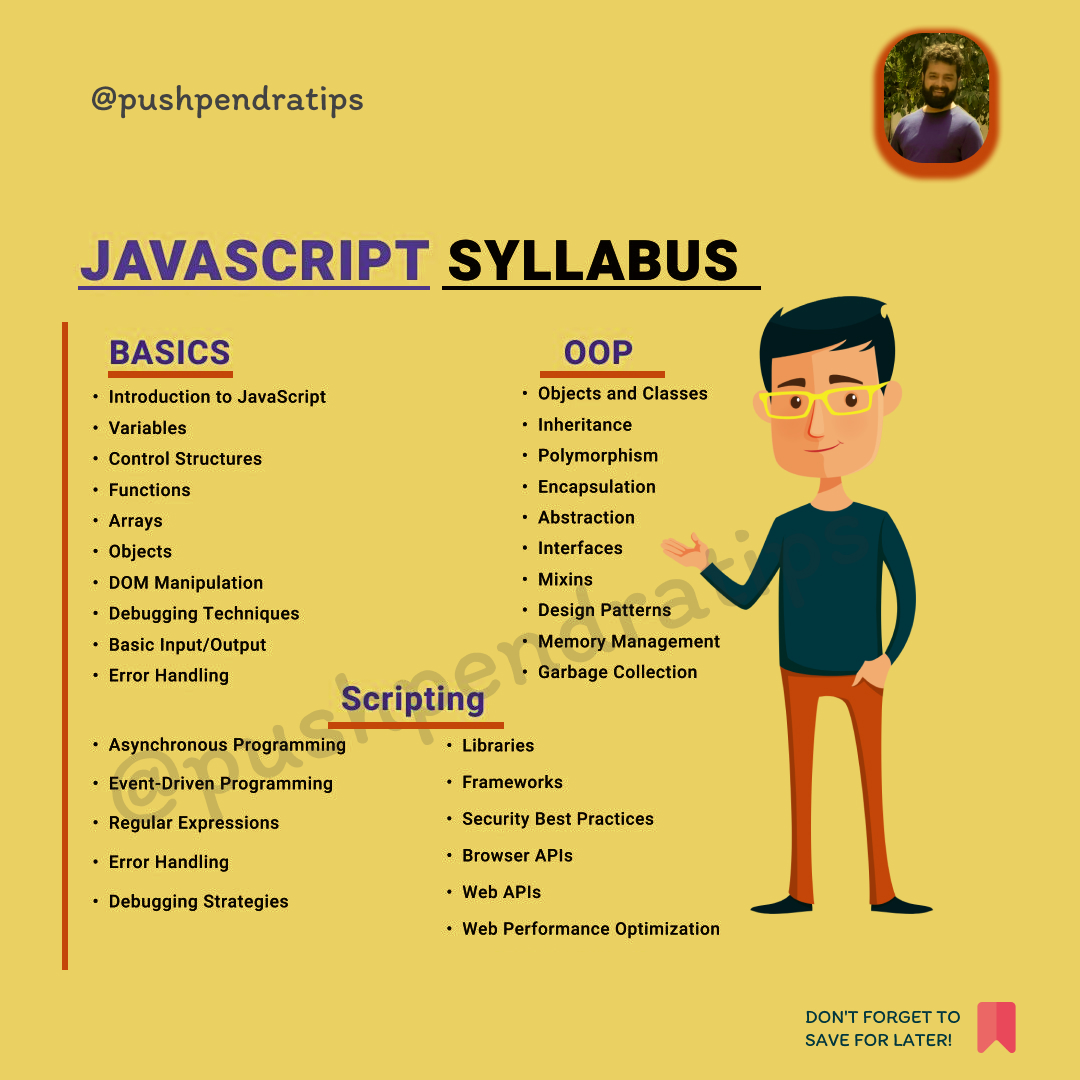
🎯JavaScript syllabus
#JavaScript #JavaScriptTutorial #LearnJavaScript #JavaScriptCourse #JavaScriptSyllabus #coding #JavaScriptRoadmap #JavaScriptForBeginners #JavaScriptLearning #JavaScriptFullCourse #FrontendDevelopment #WebDevelopment
#CodingSkills #JavaScriptDeveloper #coder #ProgrammingForBeginners #100DaysOfCode #CodeWithMe #TechYouTube #CodeNewbie
25
22
139
5,214
25 Mar 2025
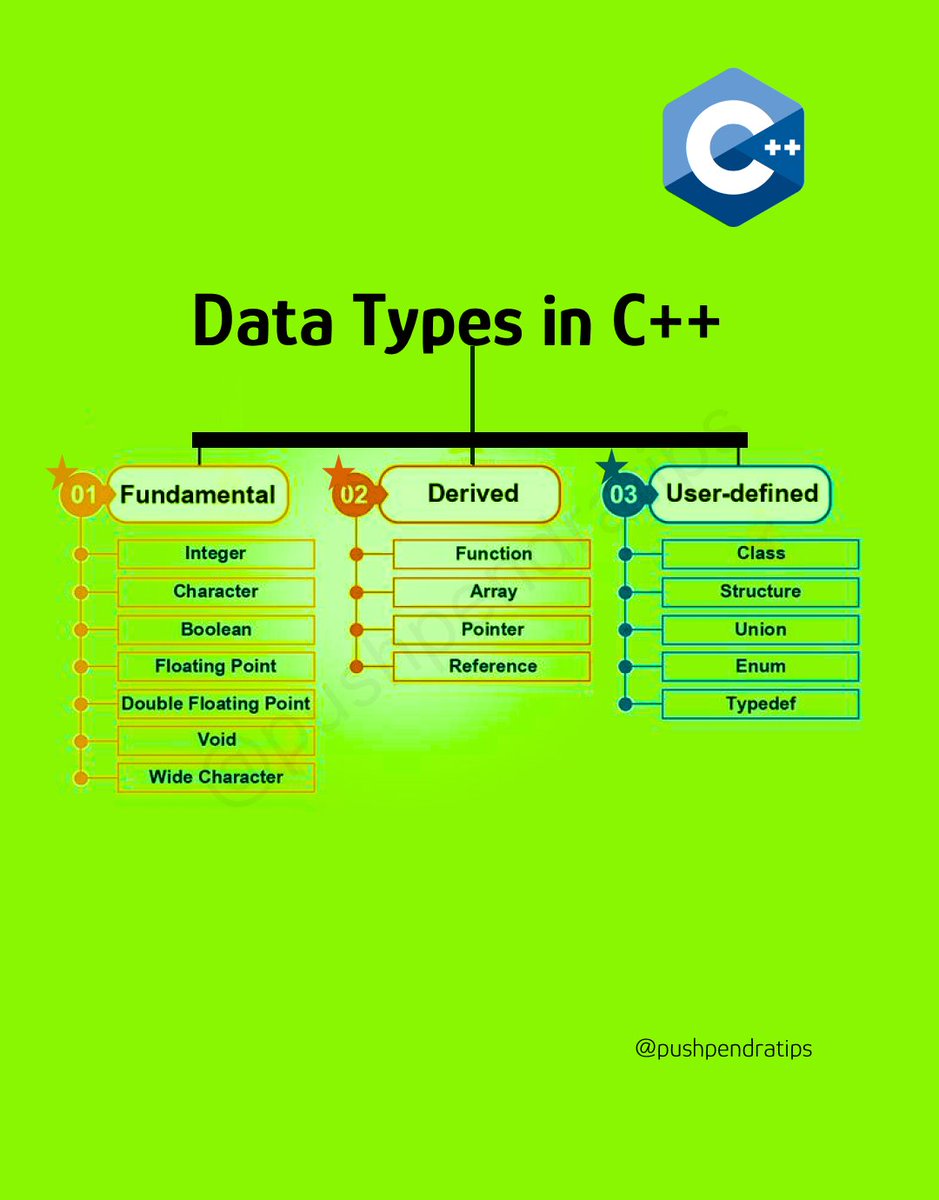
🚀 Data Types in C
------------------------------------
In C , data types specify the type of data that a variable can hold. They are broadly classified into basic, derived, user-defined, and abstract data types.
A thread 🧵👇🏻👇🏻
📌 Don’t forget to:
👍 Like
💬 Comment
🔔 Subscribe for more tech interview content!
👉 Follow us for daily tech tips and coding tutorials!
youtube.com/watch?v=8wHn1ym7…
#CPP #Cplusplus #LearnCPP #CPPProgramming #CPPDevelopment #CPlusPlusTutorial #CPPBasics #CPlusPlusForBeginners #LearnToCode #code #ProgrammingForBeginners #coding #react
#AdvancedCPP #CompetitiveProgramming #CPPAlgorithms #DataStructures #javascript
#CodingChallenges #OOPinCPP #ModernCPP #CPlusPlus20 #CPPTemplates #CPPTips
#GameDev #SystemProgramming #CPPGameDev #UnrealEngine #LowLevelProgramming
41
8
50
1,653

13 Mar 2025
Dive into the essentials of JavaScript, the powerhouse behind dynamic websites and interactive applications.
Learn more: JavaScript Essentials: lnkd.in/dNmVWwqB
#TalkDEV #JavaScript #Coding #WebDevelopment #TechTrends #ProgrammingForBeginners #LearnToCode
2
38
17 Feb 2025
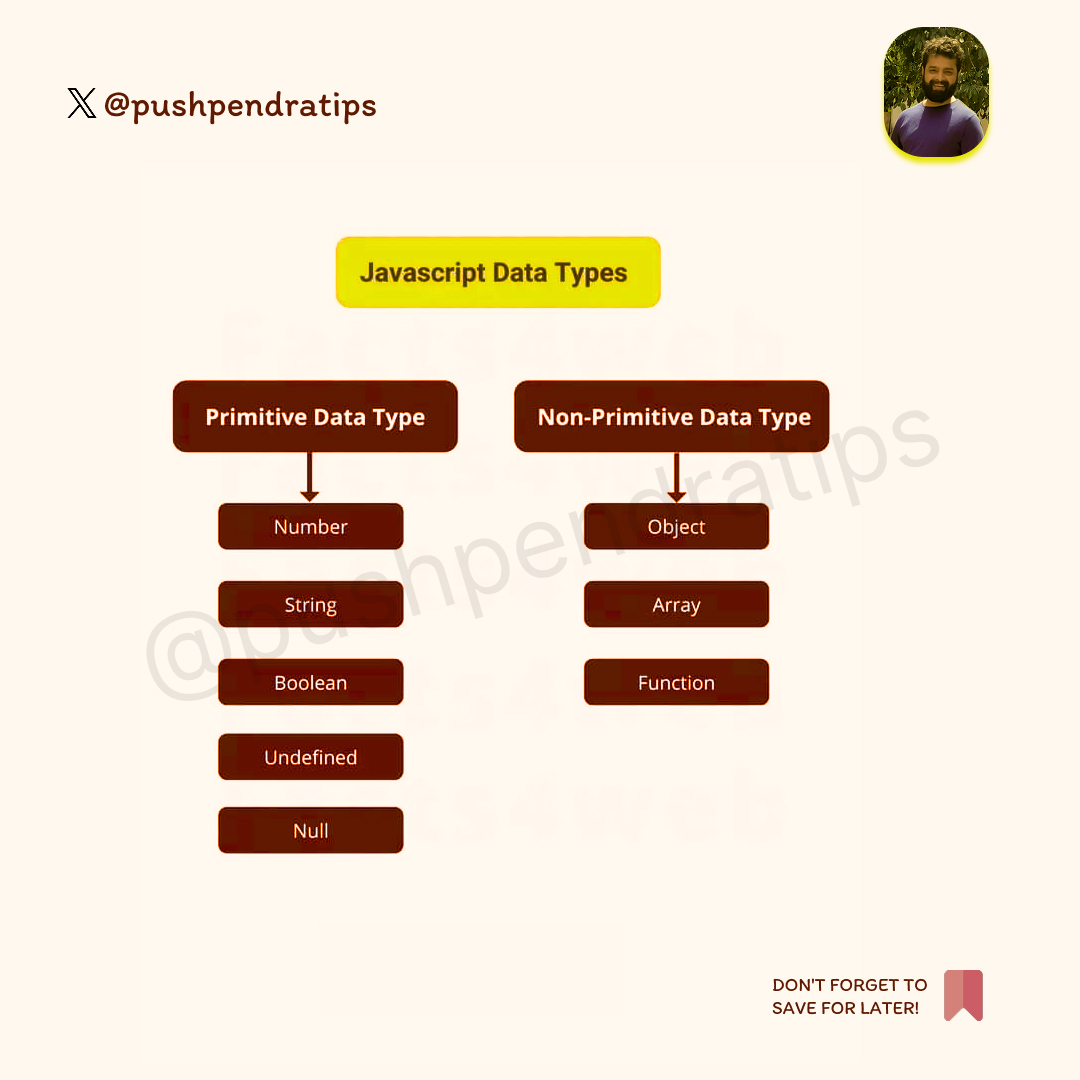
JavaScript has eight fundamental data types, which can be categorized into primitive and non-primitive (reference) types.🎉🚀
🔹Primitive Data Types (Immutable)
1. Number → Represents numeric values (integers and floating-point numbers).
let num = 42;
let price = 99.99;
---------------------------------------
2. BigInt → Used for very large integers beyond Number.MAX_SAFE_INTEGER
let bigNum = 9007199254740991n;
---------------------------------------
3. String → Represents text data
let name = "John Doe";
---------------------------------------
4. Boolean → Represents true or false
let isLoggedIn = true;
---------------------------------------
5. Undefined → A variable that has been declared but not assigned a value.
let x;
console.log(x); // undefined
---------------------------------------
6. Null → Represents an intentional absence of value.
let emptyValue = null;
---------------------------------------
7. Symbol → Represents a unique and immutable identifier (used for object properties).
let sym = Symbol("unique");
---------------------------------------
🔹Non-Primitive Data Type (Mutable, Reference Type)
8. Object → A collection of key-value pairs (arrays, functions, and other objects fall under this).
let person = { name: "Alice", age: 25 };
let arr = [1, 2, 3];
let func = function () { console.log("Hello"); };
---------------------------------------
Special Cases
Arrays ([]) → Special type of object for ordered lists.
Functions (function) → Objects with executable code.
Date, RegExp, Map, Set, WeakMap, WeakSet → Specialized objects.
#JavaScript #LearnJavaScript #JavaScriptTutorial #JSDataTypes #JSBasics #WebDevelopment #CodingTips #FrontendDevelopment #react #FullStackDeveloper #coder #coding #react
#ProgrammingForBeginners #CodeNewbie #100DaysOfCode #TechEducation #tips #SoftwareEngineering #CodingLife #javascript
31
7
39
1,498

6 Jan 2025
Introducing the Ransomware Chat Simulation! 🐍
Simulate negotiations with ransomware groups using real-world behaviour patterns.
✨ Supports @OpenAI and @grok APIs for AI-driven responses.
📊 Color-coded CLI for an engaging user experience. 🔗 Check it out: github.com/toniall/ransomcha…
@ValeryMarchive, thanks for the insights!
(Note: For educational purposes only. Do not use it for malicious activities.)
#Python #CyberSecurity #AI #Ransomware #TechDemo #CyberSecurity #AIInnovation #PythonProjects #TechForGood #EducationalTools #ThreatIntelligence #RansomwareAwareness #SimulationTraining #EthicalHacking #CyberThreats #AIApplications #DataSecurity #TechEducation #ProgrammingForBeginners #OpenSourceTools #CyberDefense #PythonDevelopment #AIResearch #TechCommunity #SecurityAwareness
1
2
234

🚀 Python Cheat Sheet 2025: Your Coding Companion!...
bit.ly/4guXH2O
#PythonCheatSheet #CodingTools #PythonProgramming #LearnPython #ProgrammingTips #PythonCode #ProgrammingLife #CodeLearning #PythonDev #CodingMadeSimple #ProgrammingForBeginners #CodeEfficiently
1
3
133

Dreaming of becoming a programmer but don’t know where to start? Toddler Walks is here to guide total beginners from zero to coding hero! 🚀
@ToddlerWalks
#LearnToCode #ProgrammingForBeginners
1
5
27
478

8 Oct 2024
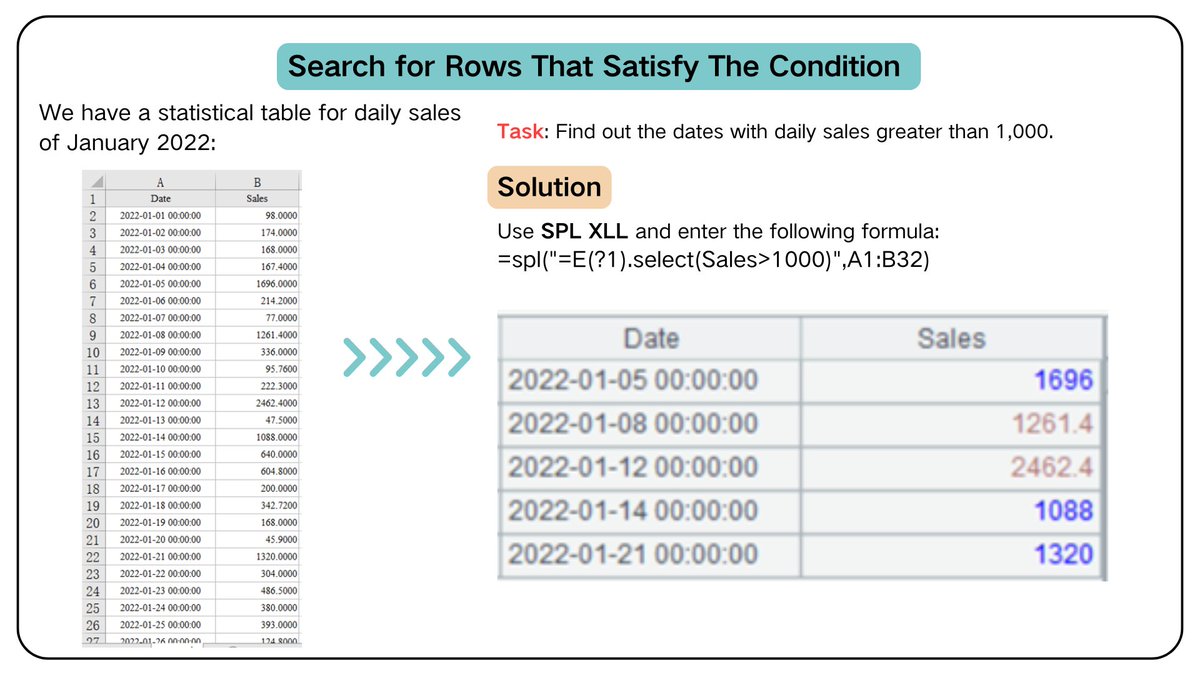
Excel Hack with SPL XLL #108 Need to filter rows with sales > 1,000 in Excel? 📊 Use this SPL formula to get it done in seconds! ⏱️
Maximize productivity with smart data processing in Excel! 💪 #ExcelTips #Productivity #DataScience #ProgrammingForBeginners #SPL #DataAnalysis
3
139
29 Sep 2024
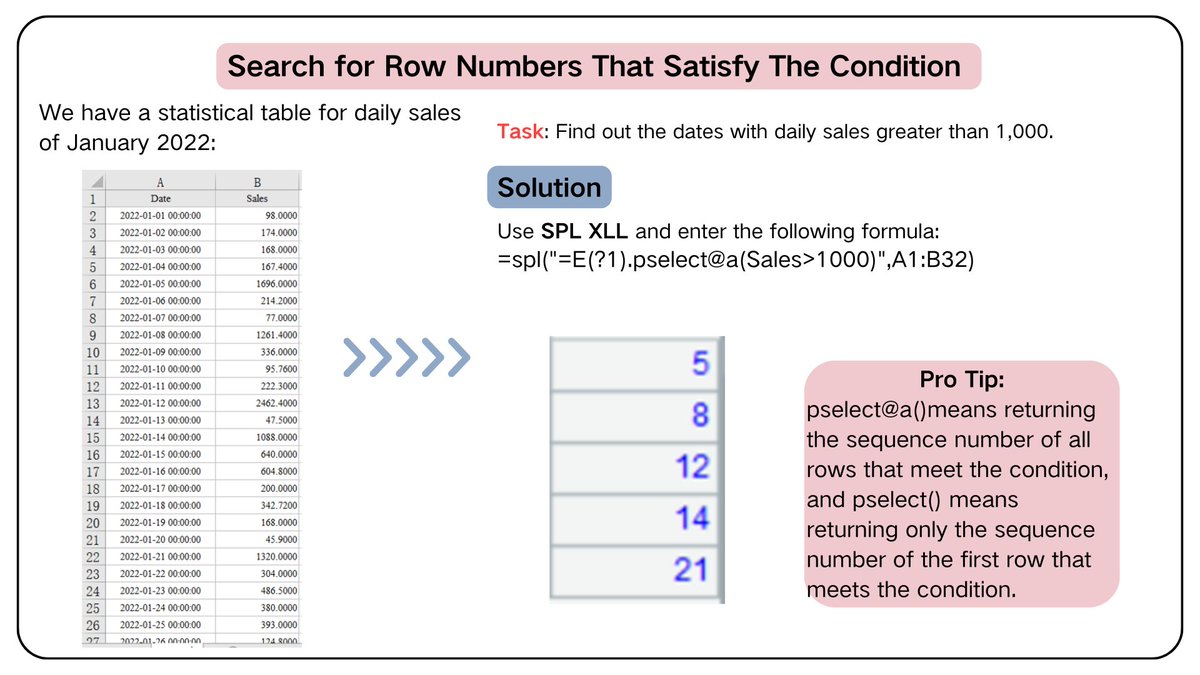
Excel Hack with SPL XLL #107 Want to find row numbers that meet certain conditions in Excel? Here's a quick SPL trick to get the row numbers you need! 🔥
Boost your Excel productivity with SPL XLL 🚀 #ExcelTips #DataAnalysis #Productivity #ProgrammingForBeginners #DataScience
1
3
90
28 Sep 2024
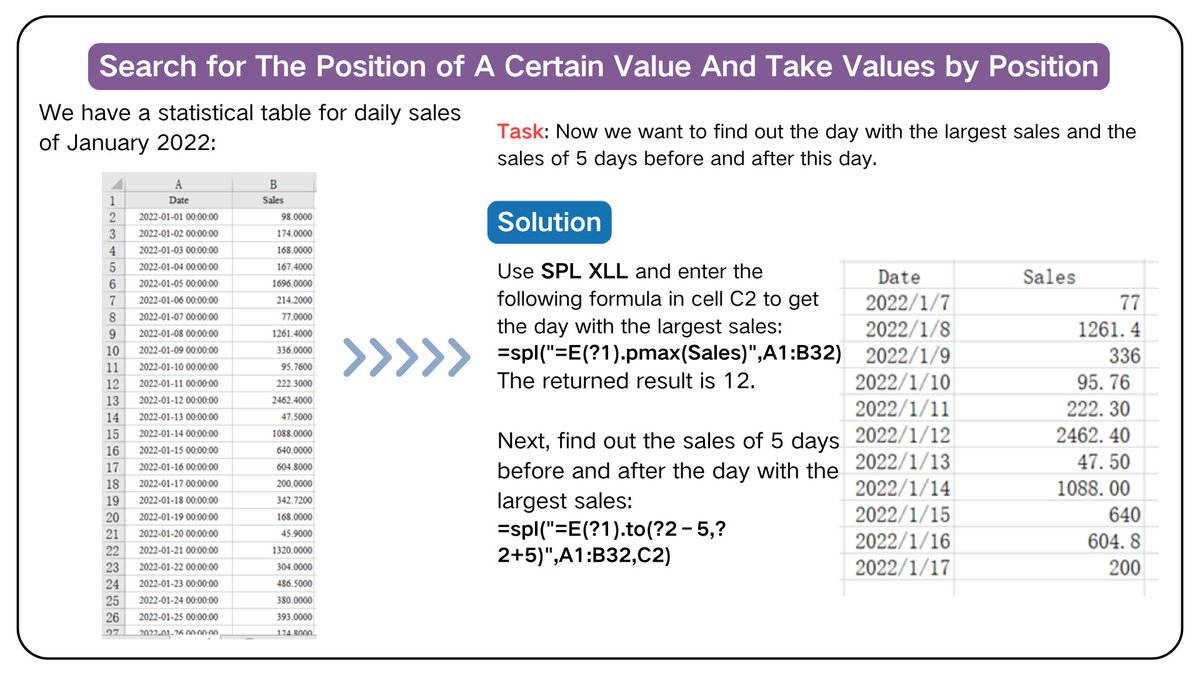
Excel Hack with SPL XLL #106 Looking to boost your Excel skills? 🔥 Find the day with the largest sales and pull data for 5 days before & after with these SPL tricks!
#ExcelTips #ProductivityHacks #DataAnalysis #ProgrammingForBeginners #esProc #VBA #100DaysOfCode #Excel
1
5
80

16 Aug 2024
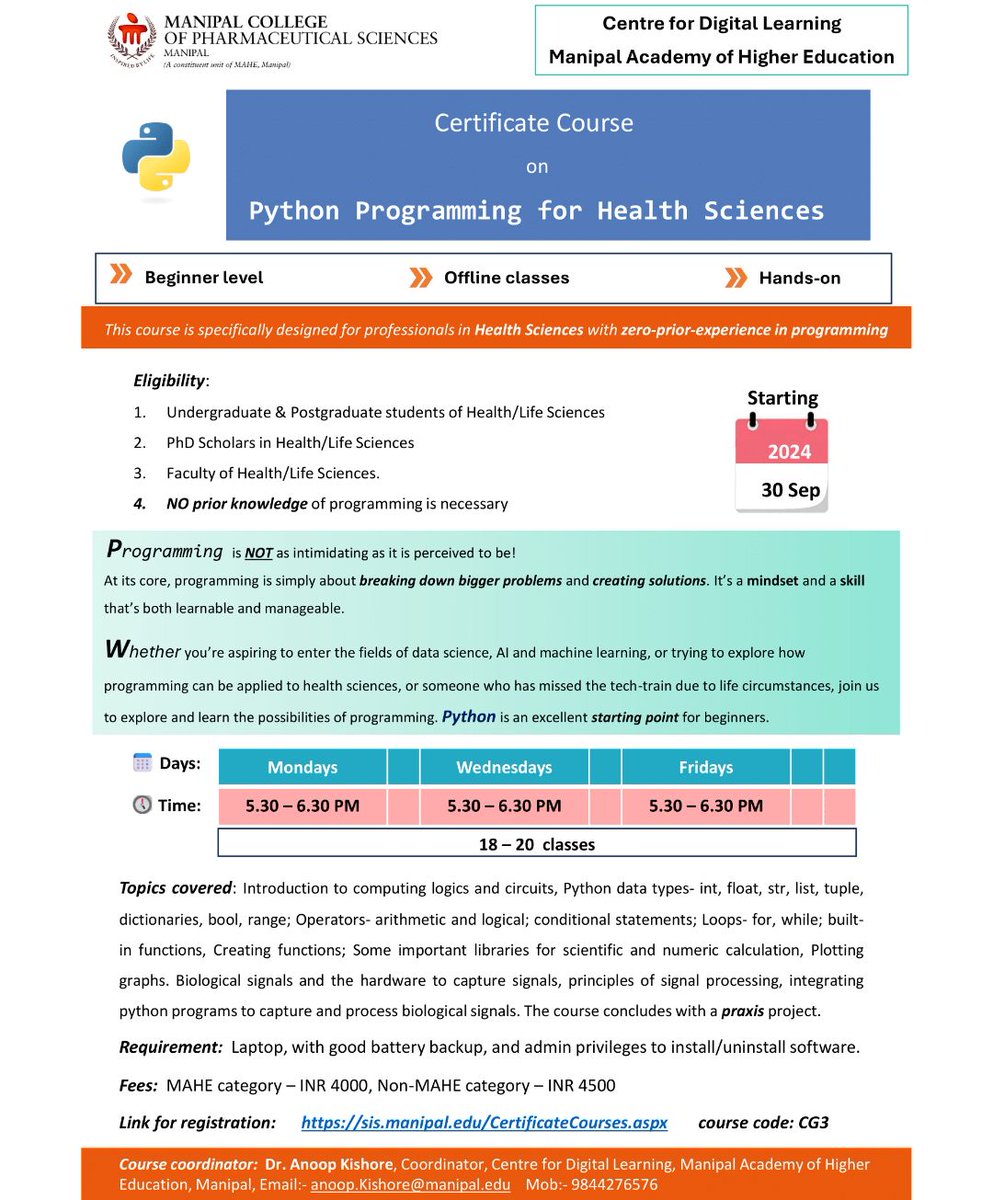
We are thrilled to announce that the 𝗖𝗲𝗻𝘁𝗿𝗲 𝗳𝗼𝗿 𝗗𝗶𝗴𝗶𝘁𝗮𝗹 𝗟𝗲𝗮𝗿𝗻𝗶𝗻𝗴 (𝗖𝗗𝗟), Manipal Academy of Higher Education (MAHE) and the 𝗗𝗲𝗽𝗮𝗿𝘁𝗺𝗲𝗻𝘁 𝗼𝗳 𝗣𝗵𝗮𝗿𝗺𝗮𝗰𝗼𝗹𝗼𝗴𝘆, Manipal College of Pharmaceutical Sciences are offering a 𝐧𝐞𝐰 𝐂𝐞𝐫𝐭𝐢𝐟𝐢𝐜𝐚𝐭𝐞 𝐂𝐨𝐮𝐫𝐬𝐞: "𝑷𝒚𝒕𝒉𝒐𝒏 𝑷𝒓𝒐𝒈𝒓𝒂𝒎𝒎𝒊𝒏𝒈 𝒇𝒐𝒓 𝑯𝒆𝒂𝒍𝒕𝒉 𝑺𝒄𝒊𝒆𝒏𝒄𝒆𝒔"!
𝘚𝘵𝘢𝘳𝘵 𝘋𝘢𝘵𝘦: 30-September-2024
𝘛𝘪𝘮𝘪𝘯𝘨: 5:30 - 6:30 PM (Mondays, Wednesdays, Fridays)
𝘓𝘰𝘤𝘢𝘵𝘪𝘰𝘯: On-site
This 𝐡𝐚𝐧𝐝𝐬-𝐨𝐧 𝐜𝐨𝐮𝐫𝐬𝐞 is perfect for Health Sciences professionals with no prior programming experience. Don’t miss out on this opportunity to enhance your skills and stay ahead in the field!
𝙍𝙚𝙜𝙞𝙨𝙩𝙚𝙧 𝙉𝙤𝙬: sis.manipal.edu/CertificateC…
𝘾𝙤𝙪𝙧𝙨𝙚 𝘾𝙤𝙙𝙚: CG3
Be among the first to join CDL's second-ever course offering!
#CertificateCourse #PythonProgramming #HealthSciences #DigitalLearning #ProgrammingForBeginners #HealthTech #ProfessionalDevelopment #Pharmacology #MCOPS #CDL #MAHE #Manipal
5
167