
Jan 25
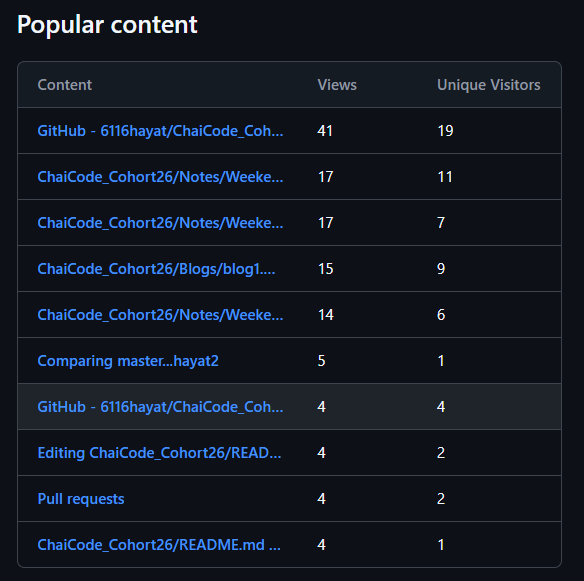
We’re making an impact! 🚀
Huge thanks to everyone using my repo for study notes and resources. Seeing these traffic numbers climb is incredibly motivating. Happy coding! 👨💻🔥
@ChaiCodeHQ
#GitHub #OpenSource #ChaiCode #CodingCommunity #BuildInPublic #ProgrammingNotes
Jan 23

To all the cohort guys,
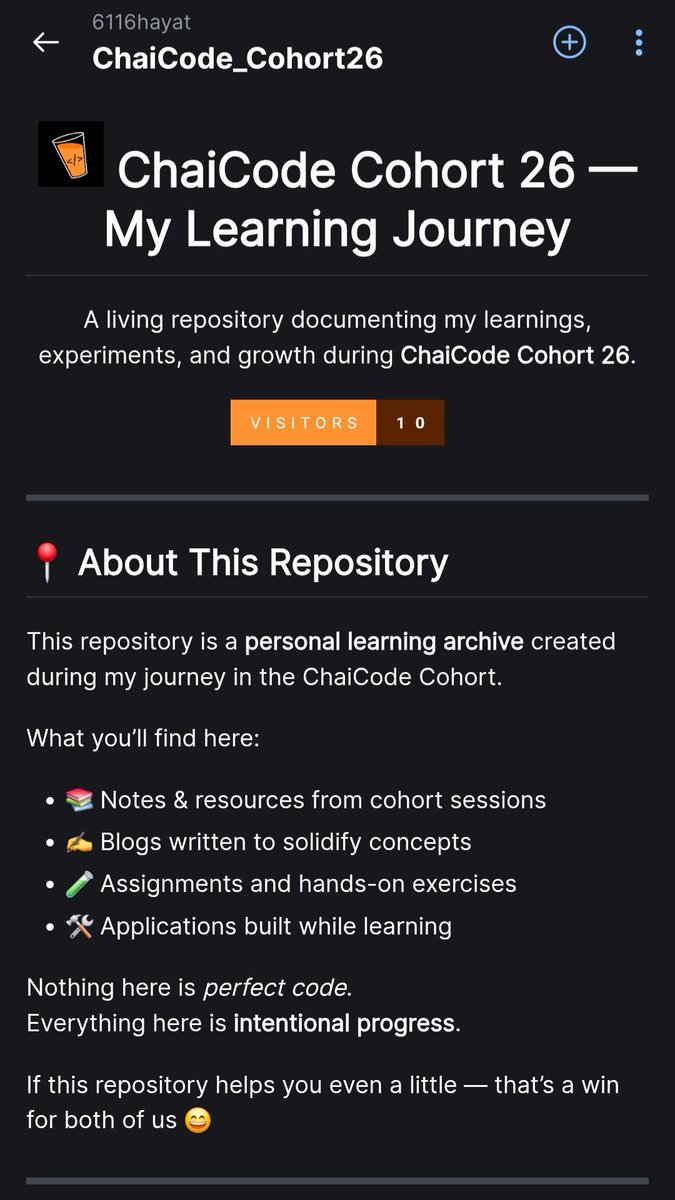
I have made a repo to store my learning, experiments, and growth during Chaiacode Cohort 26.
Those who want to seek notes and other resources check it out
Repo link: github.com/6116hayat/ChaiCod…
@ChaiCodeHQ @nirudhuuu
5
80

2 Jan 2024
📝 Handwritten notes on all programming languages!
🚀 Dive into the code journey with this comprehensive free collection. 🤓
👉 Like & retweet to spread the knowledge!
👉 Follow (So I can DM you)
#ProgrammingNotes #CodeLearning
27
15
39
2,959

19 Dec 2023
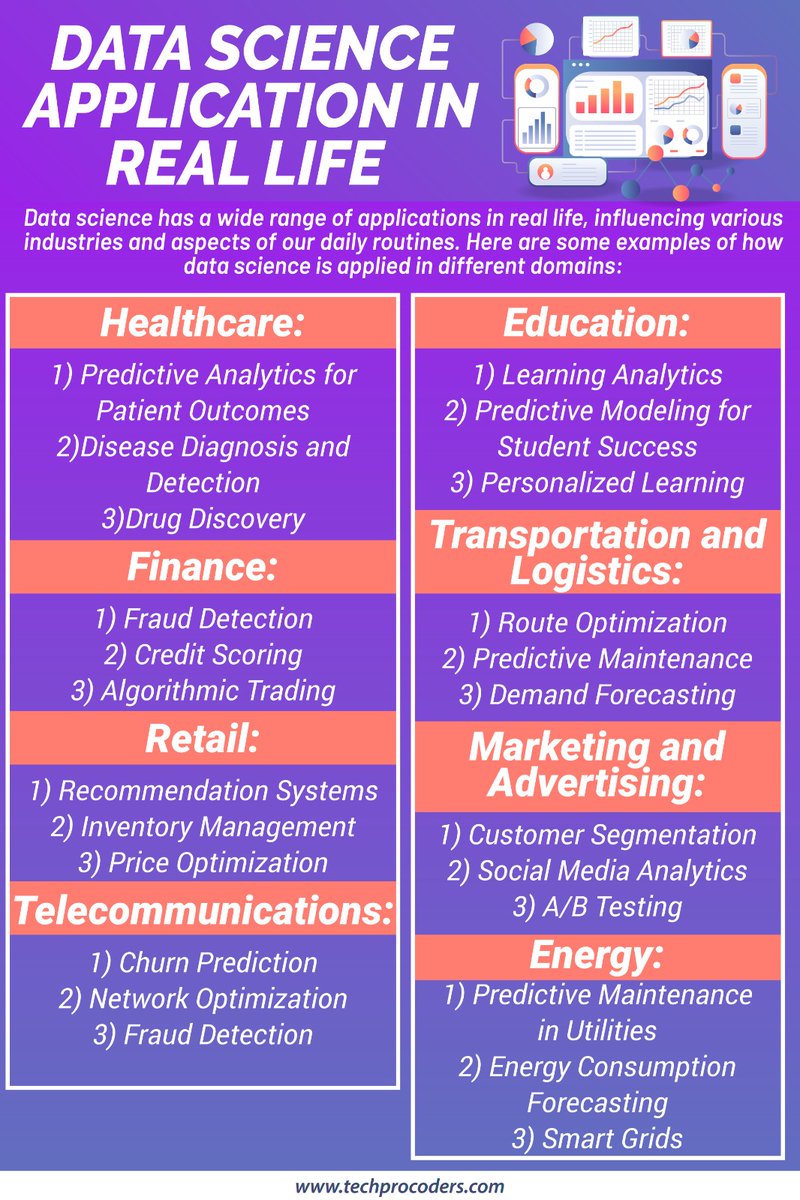
Data Science Application In Real Life .
#DataScience #Application #Reallife #Datascienceapplication #Education #Healthcare #Finance #Marketing #Datasciencenotes #Learndatascience #Programmingnotes #Notes #Programming #programmingwithtechprofree #techprofree
1
19

The Factory Pattern is a versatile design pattern that simplifies object creation, by providing a method that acts as a “factory” for creating objects. It abstracts the instantiation process, allowing the type of object designed to be determined at runtime.
Image creating a user authentication system where users have different roles like Admin, Members or Guest. Each role might have a distinct authentication mechanism and permissions.
Before using the Factory Pattern:
After using the Factory Pattern:
Key points
- Decoupling: Client code is decoupled from the object creation code, promoting modularity.
- Flexibility: New types/functions can be added seamlessly without altering existing code.
- Abstraction: The client code does not need to know about the concrete types or creation logic.
We can see that the Factory Pattern abstracts away the complexity and provides a cleaner, more maintainable and scalable solution. However, as with everything, it is crucial to apply it only where the benefits outweigh the introduced abstraction layer.
#programmingNotes
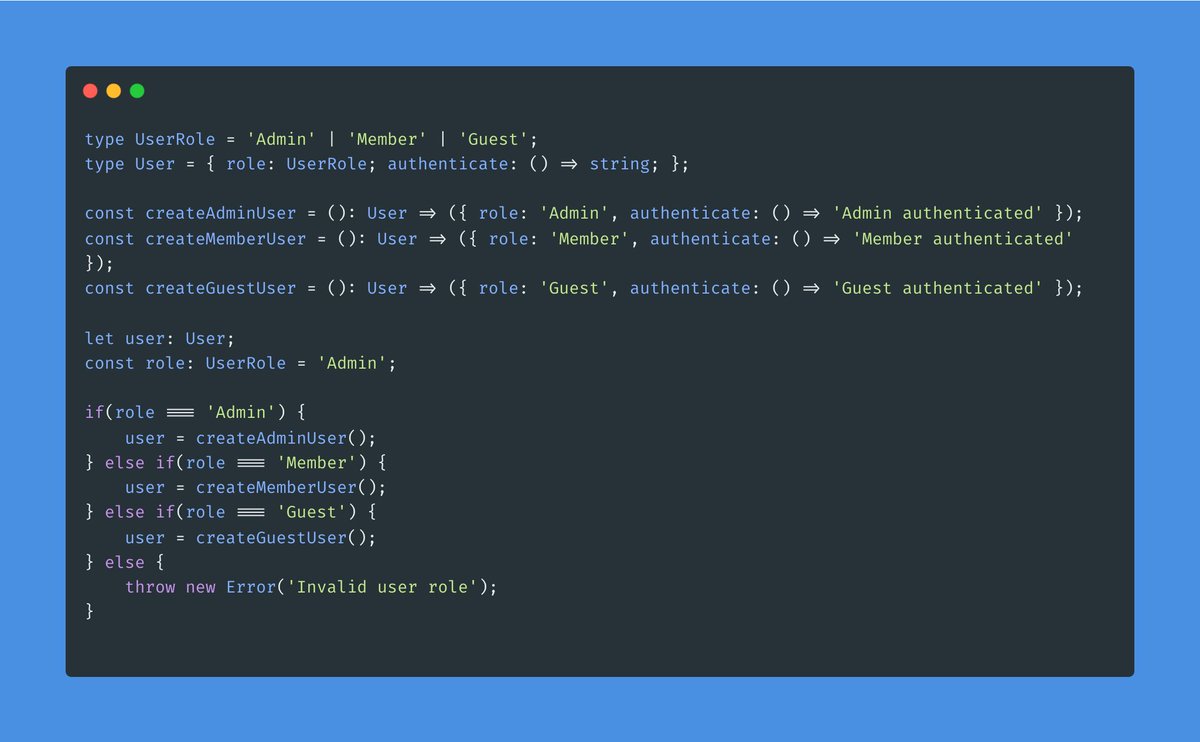
ALT Creating a user by role before using factory pattern
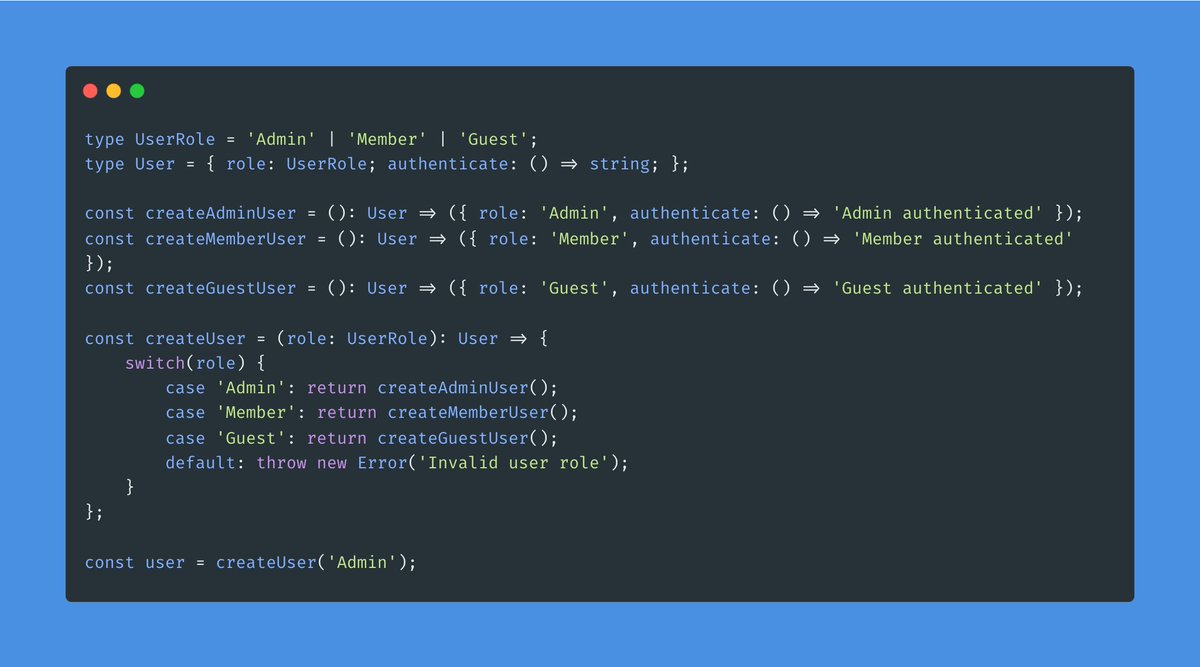
ALT Creating a user implementing the Factory pattern using typescript
3
3
569

30 Jul 2021
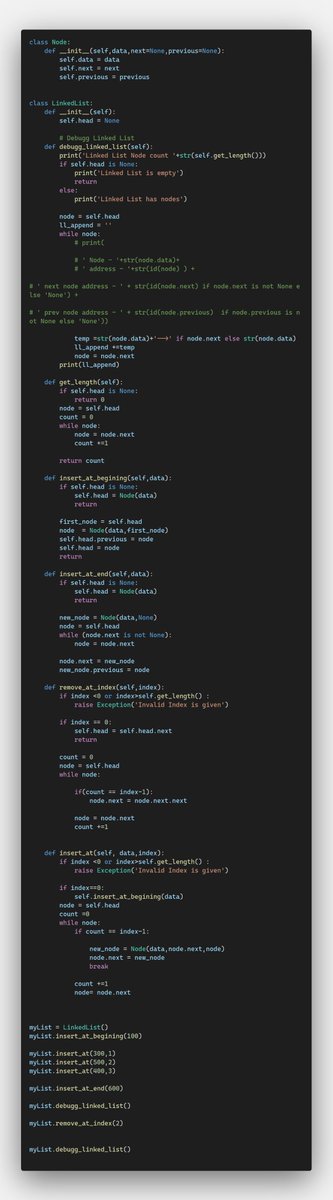
Day 12/100 of #100DaysOfCode DS challange
Following the theory, it is always best to write a code to understand the concepts in depth.
☑ Doubly Linked List
#DataStructure #Python #code #learnData #programming #programmingnotes
3
9

20 Mar 2021
If you aren't already, make sure you're following @CitrusTV on Twitter.
I've gained access to the account and will be tweeting from it. Look for live streams, links to full show clips, previews, show schedules, and of course #ProgrammingNotes.
2
1
10

16 Jan 2019
あとcredentialsについて復習。Rails programにkeyは2種類あって、
1. master.key - credentials.ymlの解読用。NEVER commit to git.
2. credentialsの中のsecret_key_base - production でencrypted cookieなどに使う。
#駆け出しエンジニア #programmingnotes
engineyard.com/blog/rails-en…
2
16 Jan 2019
昨日はCircleCIについて学びました💡まだふわっとした理解だけど、コードの品質を保証するセーフティネットという意味で overcommit に似ている印象。git commit のときはovercommit、merge request ならCircleCI。
#駆け出しエンジニアと繋がりたい #RubyonRails #programmingnotes
4
14 Jan 2019
3連休でたくさん時間が取れて嬉しい🎊
自作アプリにactive adminを追加しましたが、以前導入したdevise_token_authとぶつかるという問題発生⚠️ 解決策は、API専用のcontrollerを別に作り、modelにそちらからinheritさせること。
#駆け出しエンジニアと繋がりたい #RubyonRails #programmingnotes
6
13 Jan 2019
次に、簡素ながらauthentication を作成。初めてdevise_token_auth gemを使いましたが、設定できた時は嬉しかったです😊
新しいgemのdocumentationやtutorialを読む作業にも、前よりは慣れてきた気がする。
#駆け出しエンジニアと繋がりたい #RubyonRails #programmingnotes
2
13 Jan 2019
その後は、taskをcron jobとして自動で定期的に走らせる設定を。
documentationの指示に従うと、production environmentで走らせる設定になってしまうので、developmentに変更必要だったところでつまずいた! #駆け出しエンジニアと繋がりたい #RubyonRails #programmingnotes
1
4

19 Jul 2018
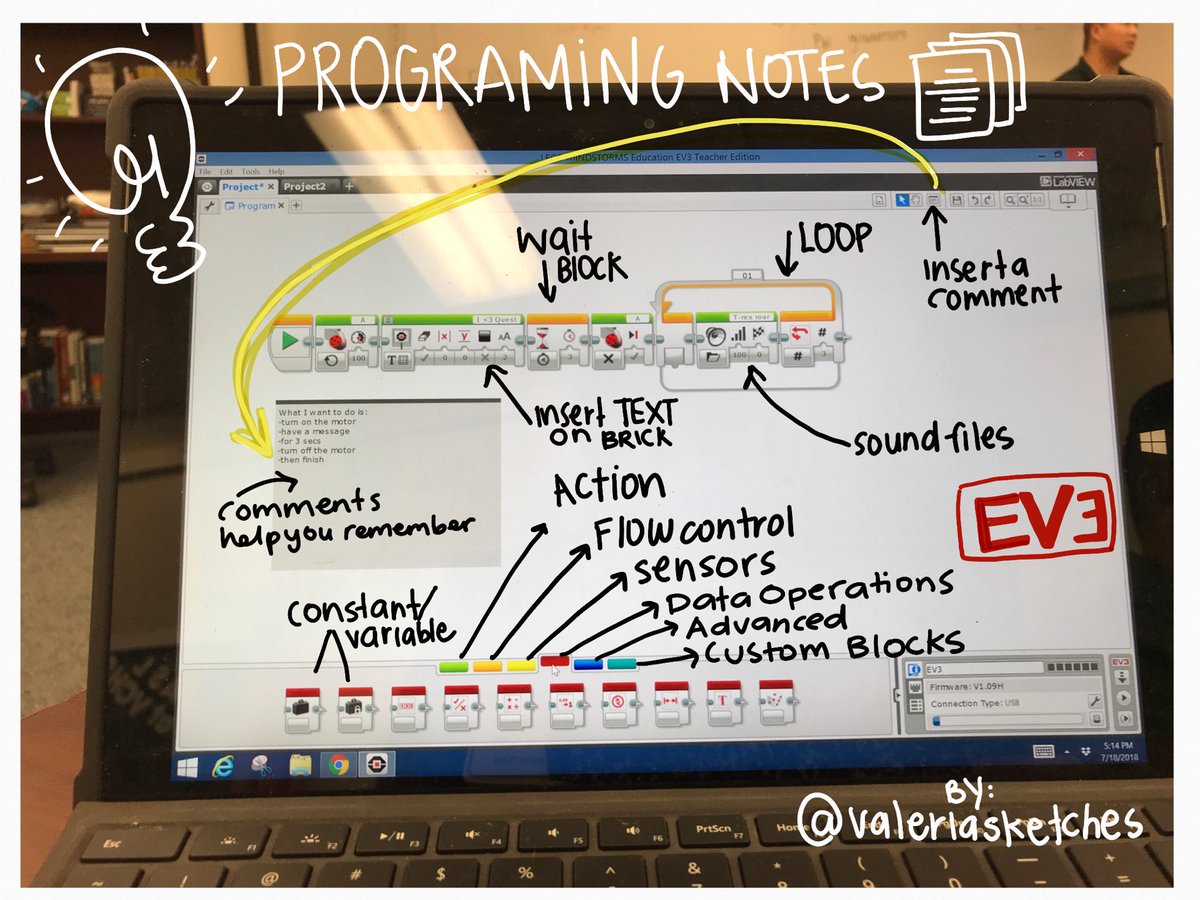
Loving this session with Jenko from @questforspace : #EV3 #programmingnotes #sketchnotes #QuestforSpace
2
5

14 Aug 2017
3
10 Aug 2017
Pierre in the box. Matt on deck. J'Raan in the hole. #17uLineup @DV2k15 #ProgrammingNotes

15 Jan 2017
7th blowout in a row..skiing is on NBC ..all about eve @tcm and billiards on @espn2 #programmingnotes
6
1
6

23 Aug 2015
4

21 Aug 2015
4
16 Aug 2015
1
2

12 Aug 2015
And Wayne chats with Matt Harvey on tonight's @WOR710 Mets Radio Network pregame show. #ProgrammingNotes
1
2