
Jun 16
#ProgressiveDemocrats have run out schools since they were world class.
Now they only generate #TypicalDemocratVoters
2

Jun 11
Thank you to the Texas Progressive Caucus for your support and trust. 🤠
If you'd like to endorse our campaign, fill out our endorsement form:
forms.gle/Dijyovd7CVMeivHu8
#TexasDemocrats #SDEC #CD20 #TexasPolitics #ProgressiveDemocrats #GrassrootsOrganizing
17
Apr 13
The #Experts are evidently also #DepopulationExperts
They are OVERWHELMINGLY
#ProgressiveDemocrats
americanthinker.com/blog/202…
1
2
39

Feb 18
Os EUA é o reino dos mafiosos, assassinos e traficantes.
Como é possível as Leis Estadunidenses permitirem tal interferência externa dos Gángsters Sionistas?
Nas primárias democratas em Chicago: o AIPAC (American Israel Public Affairs Committee), um dos lobbies mais poderosos pró-Israel nos EUA, está usando super PACs "de fachada" e coordenação secreta de doadores para tentar esmagar candidatos progressistas críticos de Israel.
O AIPAC é o principal grupo de lobby que garante bilhões em ajuda militar anual a Israel e influencia políticas externas dos EUA. Em 2024, AIPAC e seu super PAC United Democracy Project gastaram juntos cerca de US$ 127 milhões no ciclo eleitoral federal, intervindo em mais de 80% das corridas (389 de 469 cadeiras), apoiando 362 candidatos (98% de vitória). Nas últimas eleições presidenciais de 2024, grupos pró-Israel (incluindo aliados da AIPAC como a Republican Jewish Coalition) gastaram mais de US$ 230 milhões beneficiando Trump desde 2020, com destaque para a Preserve America PAC de Miriam Adelson (doadora mega-pró-Israel), que despejou mais de US$ 215 milhões em apoio a Trump. No Congresso atual (119º), cerca de 80 membros (15% do total) têm a AIPAC como maior contribuidor histórico — 8 senadores e 72 deputados (36 republicanos, 44 democratas). Quase todos os congressistas receberam algum dinheiro de PACs pró-Israel, com apoiadores de Israel recebendo em média US$ 125 mil.
Principais beneficiados em todos os partidos (valores lifetime ou ciclo recente, via AIPAC e PACs pró-Israel):
📌Democratas (top recipients): Joe Biden (~US$ 4,2 milhões), Hakeem Jeffries (~US$ 1,5 milhão), Ritchie Torres (~US$ 800 mil), Pete Aguilar (~US$ 1 milhão), George Latimer (US$ 15 milhões em apoio para derrotar Jamaal Bowman), Raphael Warnock (~US$ 5,8 milhões), Wesley Bell (milhões contra Cori Bush). Em Chicago 2026: Melissa Conyears-Ervin (IL-07, ~US$ 2,9 milhões), Donna Miller (IL-02, ~US$ 876 mil).
📌Republicanos (top recipients): Ted Cruz (~US$ 500 mil recente), Mike McCaul (~US$ 500 mil), Marco Rubio (~US$ 1 milhão, incluindo US$ 109.800 em 2024 do Pro-Israel America PAC), Nikki Haley (~US$ 17 milhões via super PACs recentes), Mike Pompeo (~US$ 750 mil), Mike Pence (doações menores via PACs, ~US$ 450 mil em ciclos recentes).
📌Independentes/Others: Robert Menendez (~US$ 2,5 milhões lifetime), Kyrsten Sinema (~US$ 1 milhão).
Análise geral na política dos EUA: A AIPAC opera de forma bipartidária, endossando 193 republicanos, 129 democratas e alguns independentes em 2024, com 318 vencedores pró-Israel. Nos republicanos, reforça alianças conservadoras, garantindo suporte incondicional a Israel via Trump e aliados (como Adelson doando bilhões). Nos democratas, gasta mais para derrubar progressistas ("Squad") em primárias, favorecendo centristas que evitam críticas a Netanyahu. Independentes como Menendez recebem para manter equilíbrio. Isso cria um "estrangulamento" no Congresso: quase todos recebem fundos pró-Israel, perpetuando políticas como US$ 3-4 bilhões anuais em ajuda militar, mesmo com violações de direitos humanos em Gaza. Não é só dinheiro — é pressão para silenciar dissidentes, influenciando leis anti-BDS e sanções ao Irã. Em todos os partidos, AIPAC "compra" lealdade, tornando o suporte a Israel "boa política", mas à custa da democracia, com críticos rotulados como "anti-semitas". Progressistas resistem, mas o lobby domina, refletindo poder israelense via doadores ricos.
Isso mostra o poder real de Israel no sistema político americano: um lobby bipartidário que "compra" lealdade, silencia dissidentes e garante apoio incondicional — mesmo em meio ao genocídio em Gaza. Progressistas como Greg Casar estão chamando atenção: se você se importa com o futuro do Partido Democrata, não pode deixar isso passar em branco.
Não é democracia; é influência estrangeira comprando Congresso. #AIPAC #StopAIPAC #PalestinaLivre #DemocraciaComprada #ProgressiveDemocrats #ChicagoPrimaries #GazaGenocide

4
60

24 Nov 2025
Why isn't anyone in #TampaBay talking about #Palantir slowly infecting our city? Why do they want our medical data? Why aren't our leaders speaking up?
I know I'm gonna be VERY vocal about this!
juanarauz.com
actblue.com/donate/juanarauz
#juanarauzforcongress #2026elections #progressive #democrats #democraticsocialism #progressivedemocrats
1
9
25
3,074

18 Nov 2025
One hand washes the other — and a London-style government may be next in NYC
New York City Mayor-elect Zohran #Mamdani has thrown his support behind #AberKawas, a 33-year-old Palestinian-American activist, for the now-vacant 36th District State Assembly seat in #Queens .
Kawas, who moved to Queens last year after completing a master’s degree in Islamic Liberation Theology, is campaigning on affordability, immigrant protections, and combating Islamophobia — priorities that closely mirror Mamdani’s progressive agenda.
The endorsement has intensified tensions among local Democrats. Assemblymember Jessica González-Rojas @votejgr is backing her chief of staff, @Brianr4NY , while critics point to Kawas’ past comments suggesting that systemic issues like capitalism and racism contributed to the conditions surrounding 9/11.
Stay tuned and follow the TJNEWS channel on
WHATSAPP 🔗 bit.ly/Channel_TJV
TELEGRAM 🔗t.me/tjvnews
#ZohranMamdani #AberKawas #NYCPolitics #QueensPolitics
#NewYorkElections #District36 #ProgressiveDemocrats
#NYAssembly #QueensNews #NYCNews
#Islamophobia #ImmigrantRights #AffordabilityCrisis
#DemocraticParty #PoliticalTensions #LocalElections
#USPolitics #TJVNews
2
1
3
241

8 Nov 2025
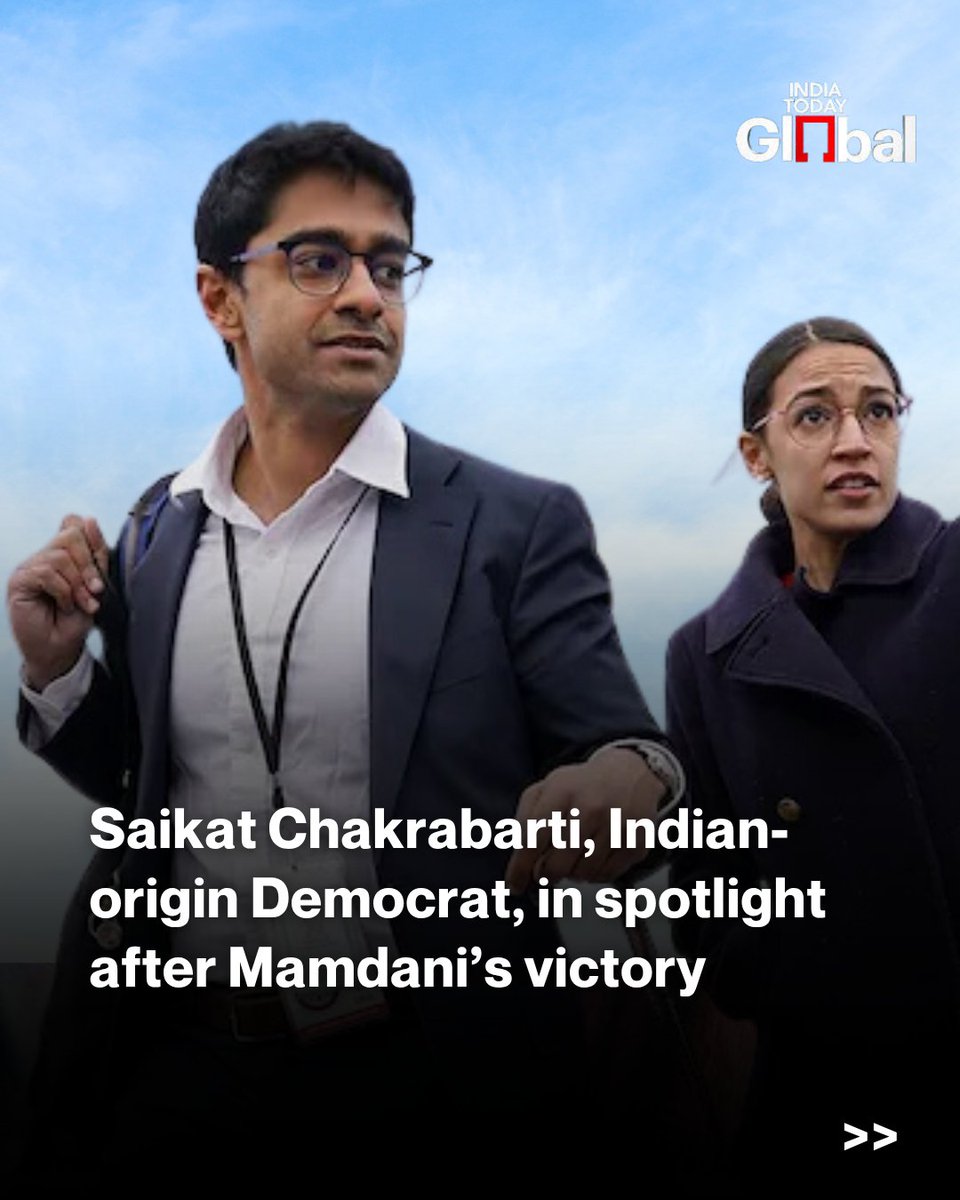
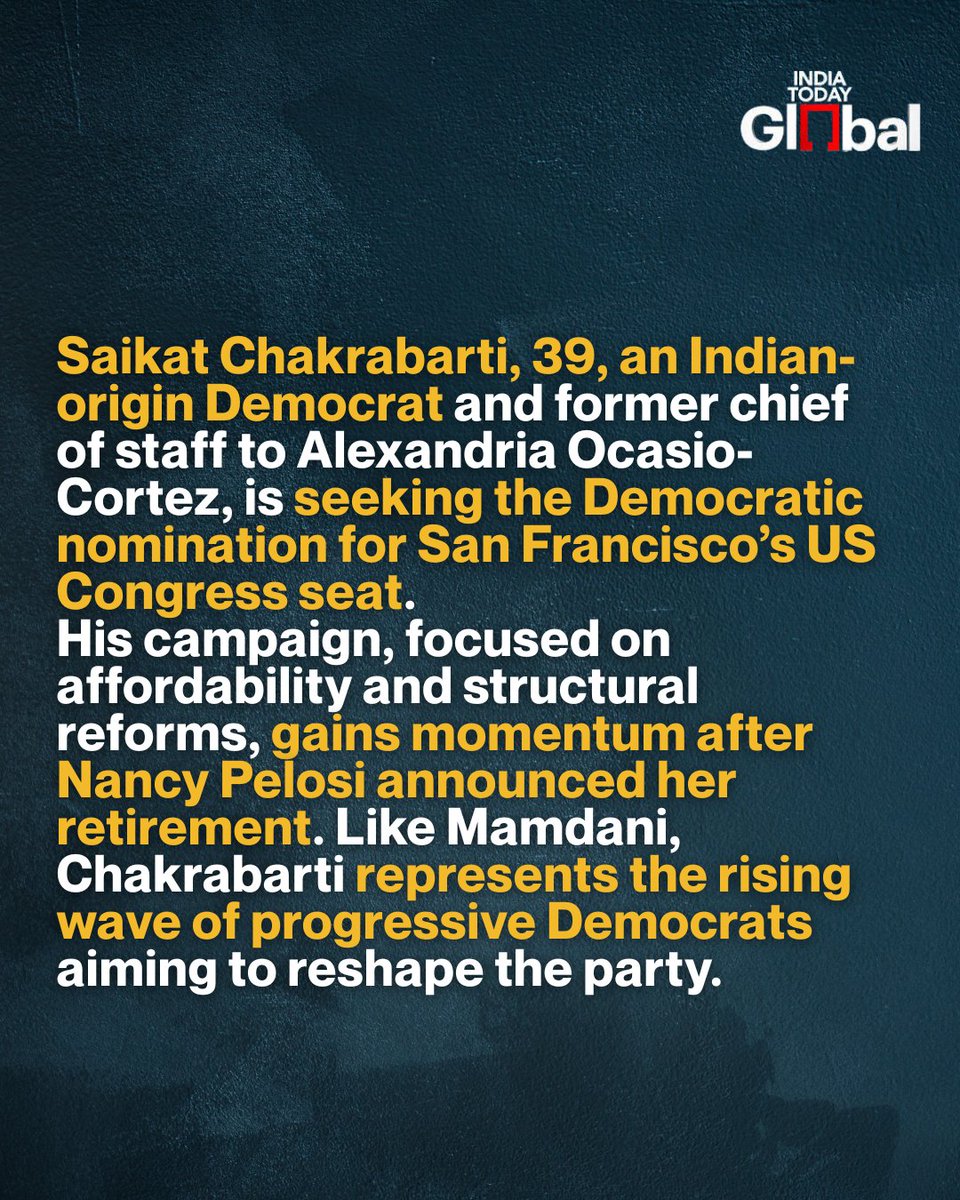
Following Zohran Mamdani’s historic win, Indian-origin Saikat Chakrabarti eyes a milestone in US politics by contesting for Nancy Pelosi’s San Francisco seat. The Harvard-educated progressive, known for bold policies like a wealth tax, aims to transform the Democratic Party. Chakrabarti has previously co-founded Justice Democrats and led Alexandria Ocasio-Cortez’s breakthrough campaign. The election could make him the sixth Indian-American in the US Congress.
Read: indiatoday.in/world/story/wh…
#SaikatChakrabarti #IndianAmericans #USPolitics #ProgressiveDemocrats #SanFranciscoElection #ZohranMamdani #NancyPelosi #IndiaTodayGlobal
4
5
11
2,903

14 Jul 2025
He forgot to add that ProgressiveDemocrats (aka Socialists closely aligned with communism) have been manipulating elections to win elected office and use that power to enact their destructive agenda into law.
Democrats use migration to destroy our public education system, to destroy the healthcare system, to destroy wages and working conditions for the middle class of this country, and in effect to destroy social and community cohesion.”
14 Jul 2025

NEW: Stephen Miller delivers the single greatest explanation of the Democrat Party’s immigration agenda in two minutes flat.
This is a wake-up call.
Miller lays out a strategy decades in the making....a history lesson unfolding in real time.
@StephenM: “The left has been trying to shove marxism, socialism and communism down the throat of the American people for generations now.”
“They ultimately were not able to do this during the Cold War because the middle-class revolted against communism and marxism and social engineering.”
“The Democratic Party shifted their tactics to use migration as a weapon to break down the middle class and to gain political control in this country.”
“They use migration to destroy our public education system, to destroy the healthcare system, to destroy wages and working conditions for the middle class of this country, and in effect to destroy social and community cohesion.”
“In that rubble, in that chaos, in that conflict to then try to articulate the need for ever more government, ever more government redistribution, ever more government power.”
“And then to ultimately import voters to then support that agenda, to import voters who do not believe in limited government, who do not believe in the U.S. Constitution.”
“And that is why you are seeing now this VIOLENT, yes, VIOLENT, insurrectionist revolt by the Democrat Party against immigration and customs enforcement.”
“So we really are at a hinge point here for the West. A fulcrum point.”
3
9
24
763

1 Jun 2025
31 May 2025

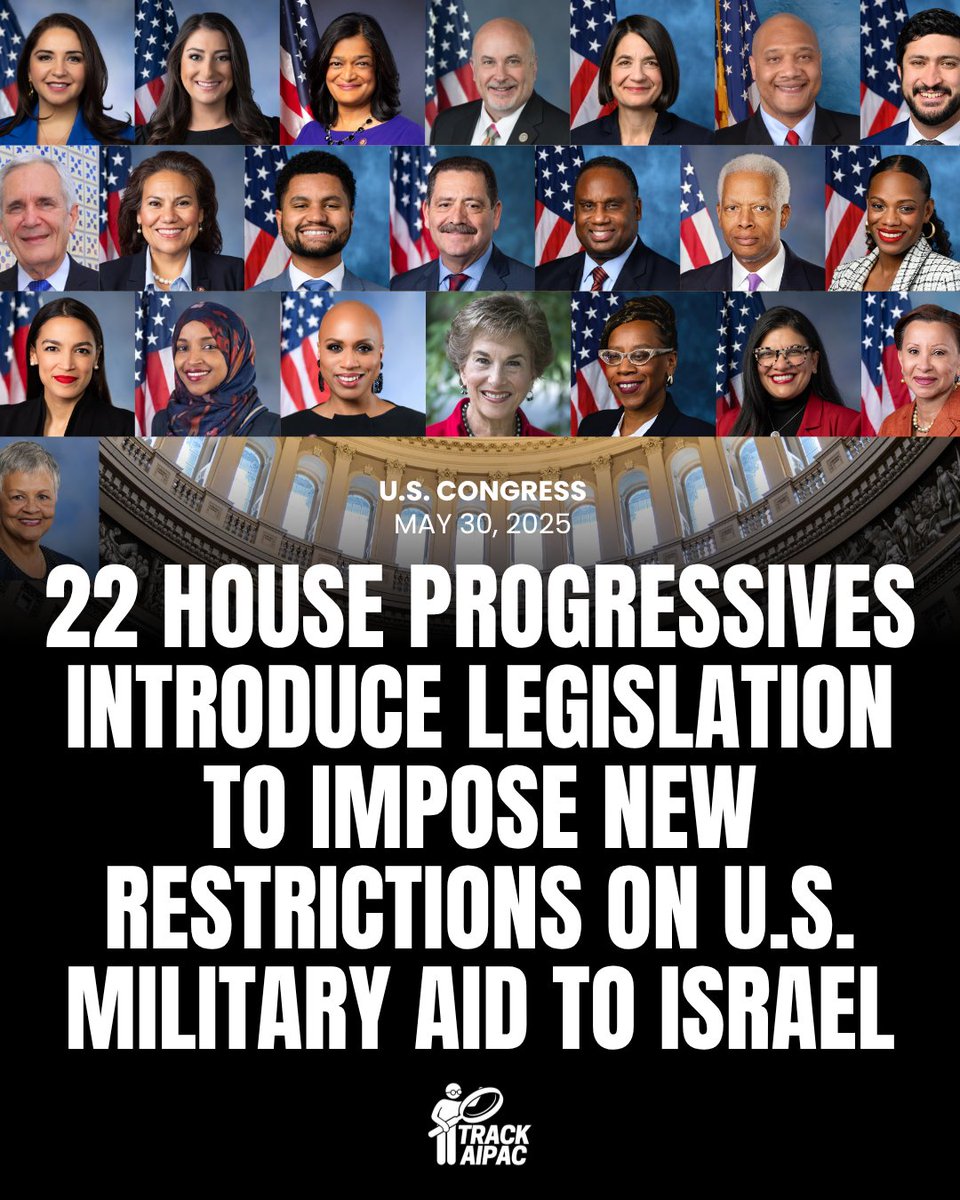
22 House Democrats led by Rep. @DeliaRamirezIL have introduced legislation to impose new restrictions on U.S. military aid to Israel.
Members co-sponsoring:
Jacobs
Jayapal
Pocan
Balint
Carson
Casar
Doggett
Escobar
Frost
Garcia (IL)
Jackson (IL)
Johnson (GA)
Lee (PA)
Ocasio-Cortez
Omar
Pressley
Schakowsky
Simon
Tlaib
Velazquez
Watson Coleman
1
2
80

20 Feb 2025
Blacks have shown resilience throughout history ✊🏾 vs. the chaos of today's #CrazyWhiteLeftist #ProgressiveDemocrats! 💯 #HistoryMatters #StayWoke #Resilience
1
1
29

14 Nov 2024
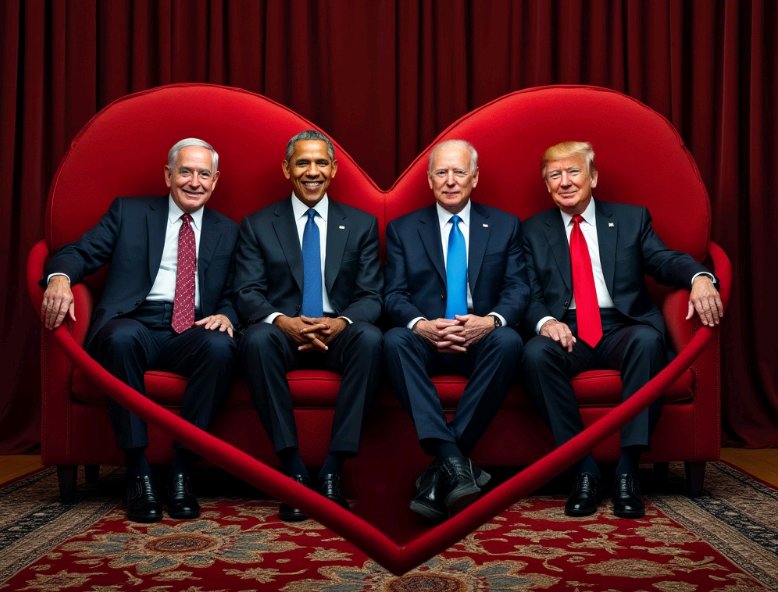
Israeli Influence on U.S. Foreign Policy: A Primer
§. Historical Context
Since the establishment of #Israel in 1948, the U.S. has been one of its staunchest allies. This bond was cemented by mutual interests during the Cold War, with Israel serving as a democratic ally against Soviet-backed Arab nations.
**#HarryTruman** was among the first to recognize Israel, setting the tone for future relations. The mutual support has since evolved through various administrations:
- **#LyndonJohnson** significantly increased military aid to Israel during the Six-Day War.
- **#RonaldReagan** further deepened this alliance, famously stating after the Lebanon bombing in 1983, "Israel is a strategic asset for America."
- **#GeorgeWBush** endorsed Israel's right to defend itself, notably during the Second Intifada and the 2006 Lebanon War.
§. Political Influence
**#AIPAC** (American Israel Public Affairs Committee) has been instrumental in lobbying for pro-Israel policies. While not the only factor, AIPAC's influence is significant:
- **#ChuckSchumer**, **#KevinMcCarthy**, and many other politicians have been openly supportive of Israel, often citing strategic, moral, and religious reasons.
- The annual AIPAC conference is a platform where politicians from both sides of the aisle express their support, aiming to secure votes from the Jewish community and evangelical Christians, who view support for Israel as a religious imperative.
§. Policy Decisions Impacted by Israel
1. **#IranNuclearDeal** - The U.S. withdrawal from the #JCPOA (Joint Comprehensive Plan of Action) under **#DonaldTrump** was influenced by Israeli arguments that the deal did not adequately prevent Iran from developing nuclear capabilities, which Israel sees as an existential threat.
2. **#JerusalemEmbassyMove** - Trump's decision to move the U.S. Embassy to Jerusalem was a clear nod to Israeli policy, despite international criticism and the traditional stance of not recognizing Jerusalem as Israel's capital until a peace agreement was reached.
3. **#GolanHeights** - Trump's recognition of the Golan Heights as part of Israel was another policy shift directly influenced by Israeli security concerns regarding Syria.
§. Military and Economic Aid
- Israel receives significant military aid from the U.S. Under the terms of a **#MemorandumOfUnderstanding** signed during the **#Obama** administration, Israel was to receive $38 billion in military aid over ten years, the largest such agreement in U.S. history.
- The Iron Dome defense system, co-funded by the U.S., exemplifies how military technology cooperation further cements this relationship.
§. Public and Congressional Support
- Polls often show strong bipartisan support for Israel in Congress, with resolutions supporting Israel typically passing with large majorities. **#CongressionalAntiSemitismCaucus** and similar groups underscore the legislative commitment to combating anti-Semitism, which often aligns with support for Israel.
§. Counter-Arguments and Balance
While Israel's influence is significant, it's not without checks:
- **#ProgressiveDemocrats** like **#BernieSanders** and **#AlexandriaOcasioCortez** have pushed for policies more critical of Israel, advocating for Palestinian rights.
- The U.S. State Department occasionally diverges from Israeli policy, especially concerning settlements or peace process frameworks.
**#USIsraelRelations** #ForeignPolicy #MiddleEast #AIPAC #IranDeal #Jerusalem #GolanHeights #GazaHolocaust #GazaGenocide #IraniansStandWithTrump #Netanyahu #MossadMarco #IDFHeroes
1
2
128

17 Aug 2024
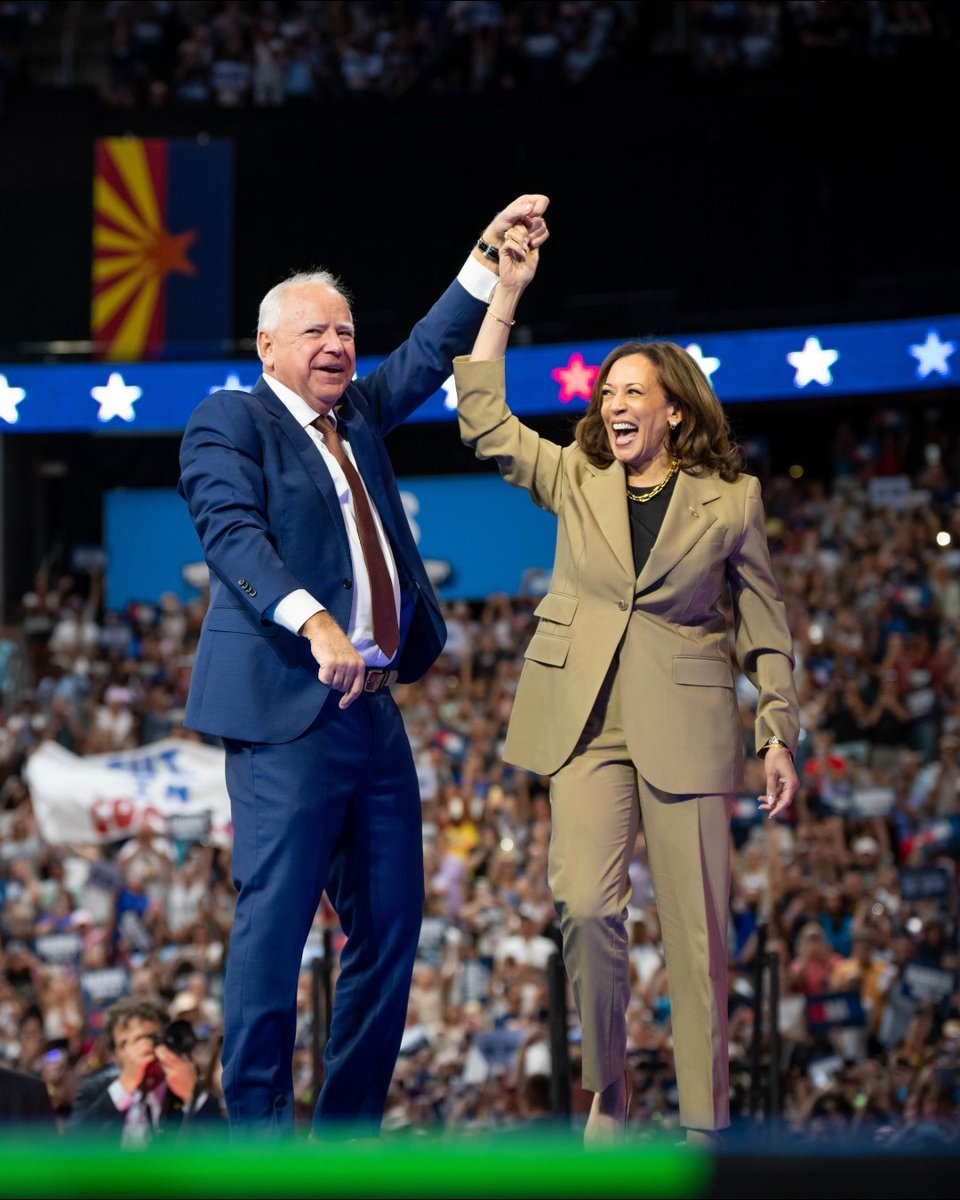
Our Next President Kamala Harris
.
.
#DemocraticParty
#BlueWave
#VoteBlue
#ProgressiveDemocrats
#LiberalValues
#DemocraticValues
#DemocraticUnity
#DemocratPride
#Democrats2024
#DemocraticLeadership
#DemocratStrong
#InclusiveDemocracy
#DemocraticFuture
1
2
35

15 Aug 2024
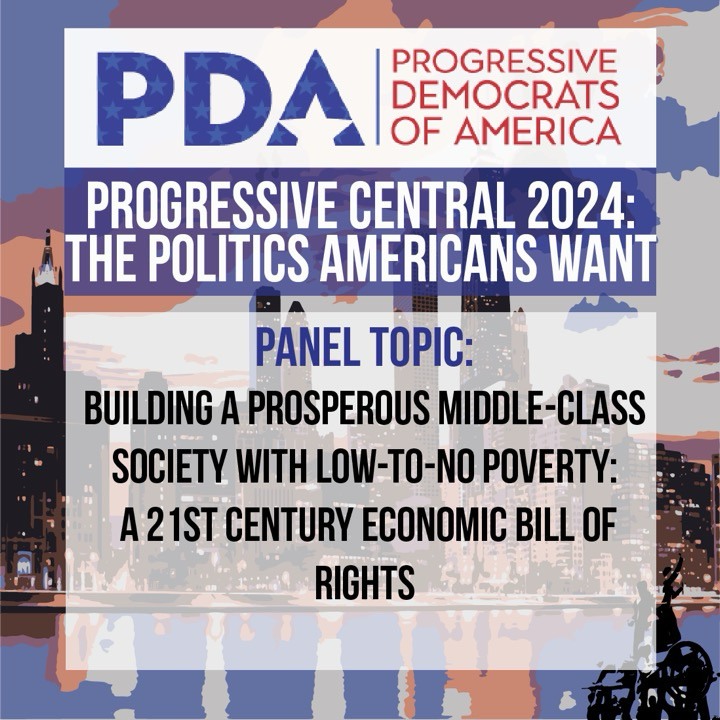
Join us for panels throughout the day featuring experts in politics and organizing.
Building a Prosperous Middle-Class Society with Low-to-No Poverty: A 21st Century Economic Bill of Rights.
Link in bio for more info.
#DNC2024 #Chicago #progressivedemocrats
2
4
5
863
14 Aug 2024
Click this link here to go to the Progressive Central 2024 Website and get tickets: zurl.co/I1eV
#DNC2024 #Chicago #progressivedemocrats
1
1
91
14 Aug 2024
Progressive Democrats of America is Proudly in partnership with the @RPCoalition for Progressive Central 2024!
#DNC2024 #Chicago #progressivedemocrats
30s
3
2
4
130
14 Aug 2024
Progressive Democrats of America is Proudly in partnership with @The Nation Magazine for Progressive Central 2024!
Click this link here to go to the Progressive Central 2024 Website and get tickets: zurl.co/I1eV
#DNC2024 #Chicago #progressivedemocrats
1
3
3
163

14 Aug 2024
Clearly the #Minnesota electorate are either uninformed, illegal or simply not aligned with (or assimilated to) the values of our Constitution and country. #progressivedemocrats #AmericanCommunistParty = #HarrisWaltz2024
1
3
332

6 Aug 2024
Serious question, @KamalaHarris picking @GovTimWalz for her ticket-mate locks in the anti-Israel/pro-terrorist position of the #ProgressiveDemocrats.
Will otherwise Democratic, Jewish voters abandon such a ticket? If so, in which states could it make a difference?
2
2
3
341

20 Jun 2024
Todd Bensman
OVERRUN: How Joe Biden Unleashed the Greatest Border Crisis in U.S. History
@BensmanTodd #Interview #NationalSecurity #OverrunBook #BidensPolicies #BorderCrisis #ProgressiveDemocrats #Immigrants #EconomicMigrants #Collaboration #LegalCrossings #Terrorism #Deportation #HeartsofOakPODCAST
1
15
25
8,675