
Jun 12
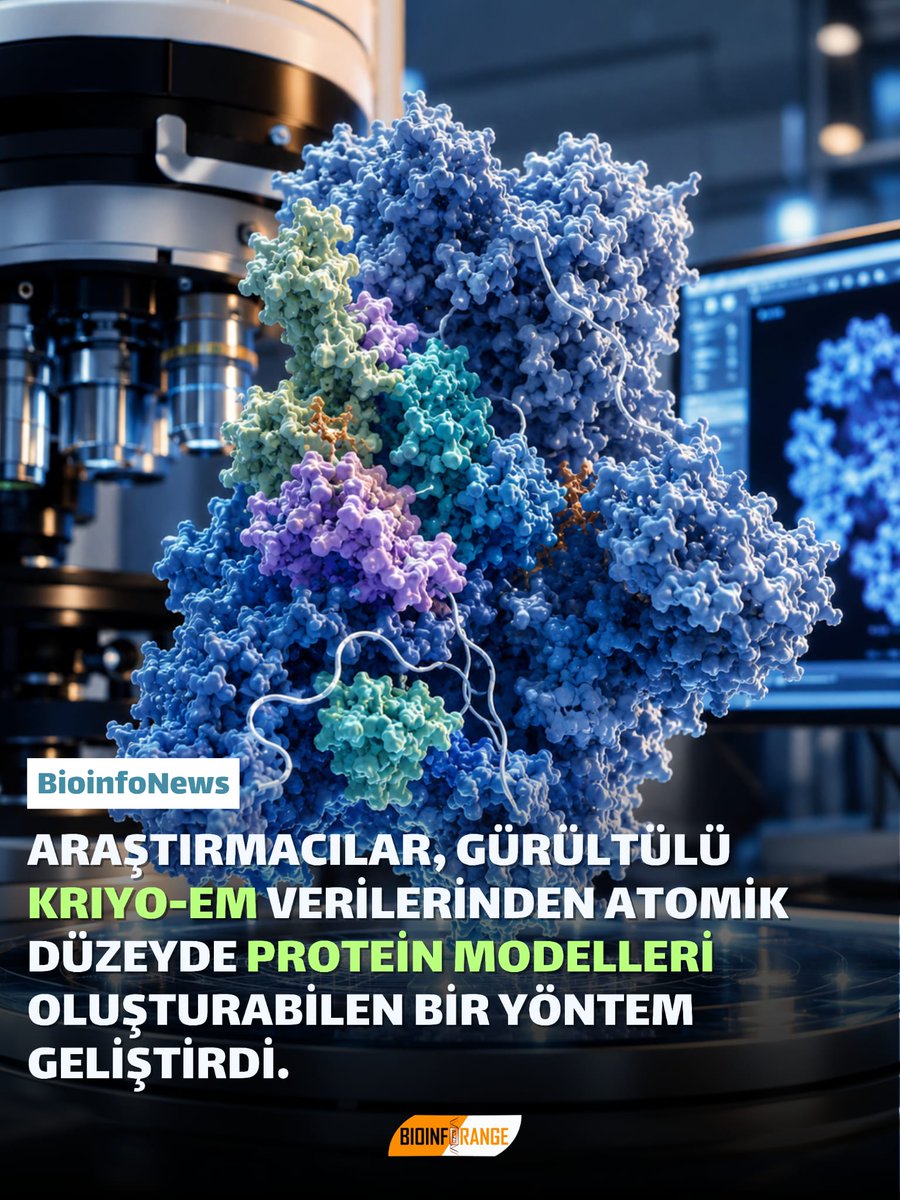
🧬 Yapay zeka ve deneysel veriler birleşerek protein modellemede uzmanların yerini alabilir mi?
Proteinlerin üç boyutlu yapılarını belirlemek, biyolojik süreçlerin işleyişini ve hastalıkların temelini anlamak açısından kritik öneme sahiptir. Ancak proteinlerin dinamik yapısı mevcut yapay zeka modelleri için bir zorluk oluştururken, kriyoelektron mikroskopisi (kriyo-EM) gibi deneysel tekniklerden elde edilen düşük çözünürlüklü verilerin anlamlı modellere dönüştürülmesi de karmaşık ve zahmetli bir süreç olmayı sürdürmektedir.
🔬 Araştırma Yaklaşımı:
Alisia Fadini, Minhuan Li ve çalışma arkadaşları, ROCKET isimli yeni bir hesaplamalı çerçeve tanıttı. Model, AF2'nin güçlü yapısal ön bilgilerini, yeniden eğitime gerek duymaksızın farklı deneysel veri türleriyle birleştiriyor. Sistem, yapısal optimizasyonu Kartezyen koordinatlar yerine Çoklu Dizi Hizalaması (MSA) küme profilleri üzerinde gerçekleştiriyor. Tasarımlar, c-Abl kinazı ve GroEL kompleksi gibi zorlu vaka çalışmalarının yanı sıra düşük çözünürlüklü ZPD filament haritası ile doğrulandı.
📊 Bulgular:
ROCKET modeli, 3 ile 10 Å arasındaki geniş bir çözünürlük aralığında yüksek başarıya sahip modeller üretti. Tasarlanan sistem, 4-5 Å'dan daha düşük çözünürlüklü gürültülü haritalarda mevcut otomatik yaklaşımlardan daha sağlam sonuçlar verdi. Bazı yapay modellerin, uzmanlar tarafından manuel olarak hazırlanan sistemlerle benzer doğruluk gösterdiği belirlendi. Bu çalışma, ROCKET'ın deneysel verileri makine öğrenimi tabanlı modelleme ile entegre etmek için genel ve ölçeklenebilir bir çerçeve sunduğunu ve atomik model oluşturma sürecini otomatikleştirebileceğini göstermektedir.
📙 Düşük Çözünürlüklü Yapısal Verilerden Atomik Modellemeye: ROCKET Yaklaşımı ve diğer bilimsel içerikli yazılarımız için web sitemizi ziyaret edebilirsiniz!
🔗:bioinforange.com/bioinfonews…
Yazar: Berfin Kayabaşı
Editör: Damla Özdemir
Görsel Tasarım: Gizem Akcagündüz
#bioinforange #artificialintelligence #proteinmodelling #structuralbiology #alphafold
1
2
122

6 Sep 2025
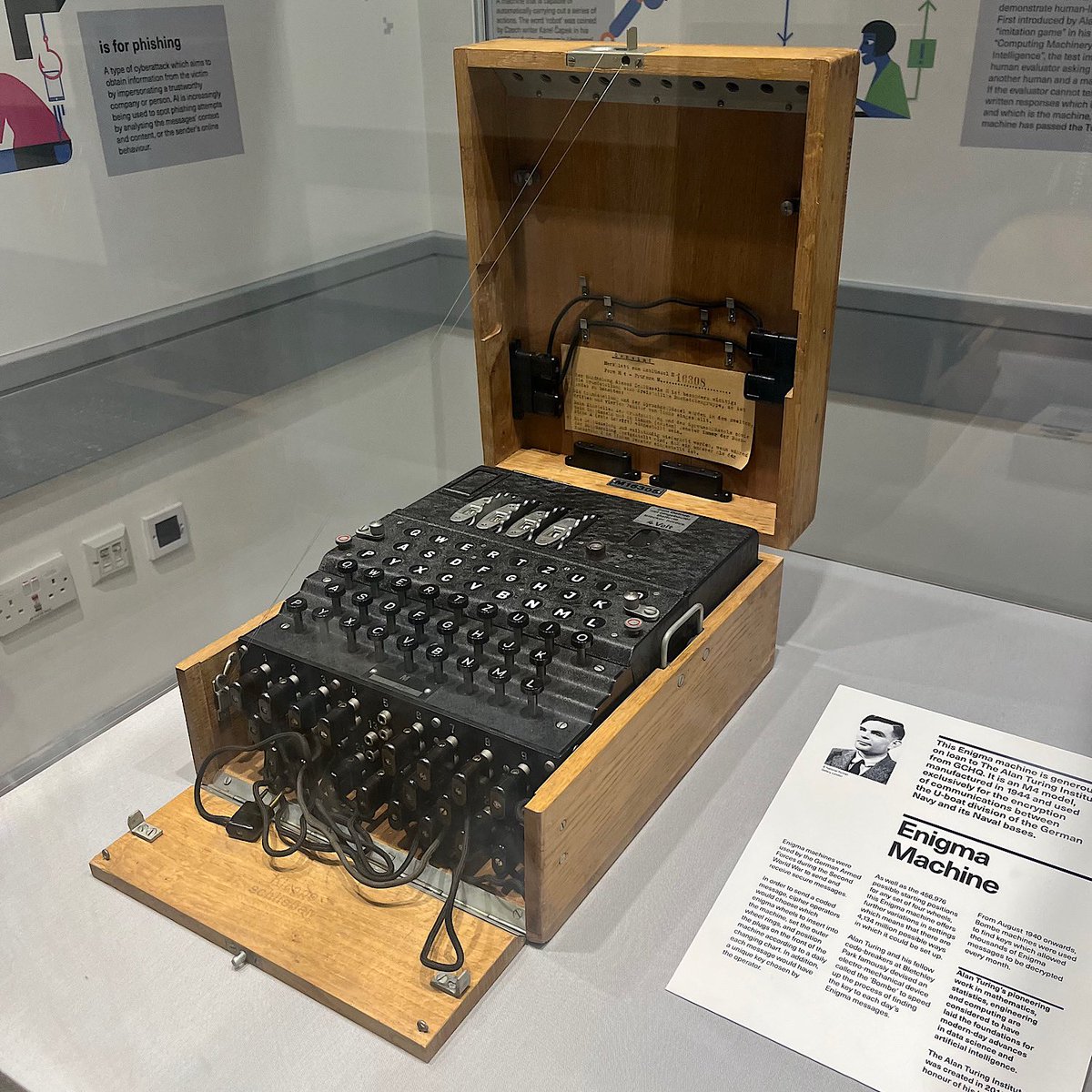
We are assembling a team to compete in a Protein Engineering Tournament. Do you #pythonprogramming ? Come join us as code breaker. Details in openpetase.org/tournament
#proteinmodelling
2
95

25 Mar 2025
Discriminative Protein Sequence Modelling with Latent Space Diffusion @instadeepai
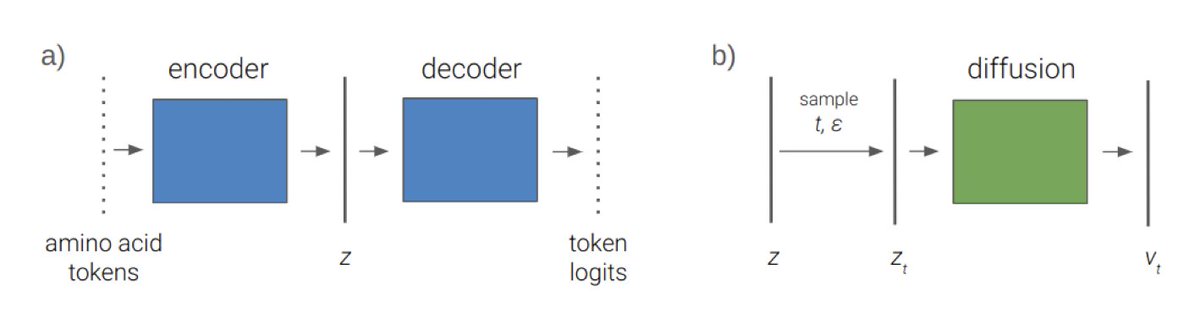
1. This paper introduces a novel Latent Space Diffusion (LSD) framework aimed at improving protein sequence representation learning. The approach combines manifold learning via an autoencoder and distributional modeling using a denoising diffusion model applied to the learned latent space.
2. The LSD framework proposes two architectures: LSD-TN and LSD-NM. LSD-TN employs a homogeneous model where amino acids of the same type are identically distributed in the latent space, enhancing robustness. LSD-NM uses a noise-based variant of masking that applies varying levels of corruption to improve generalization.
3. Unlike conventional masked language models (MLMs), the LSD framework replaces masking with Gaussian noise to produce continuous, structured representations. This allows the model to capture long-range dependencies more effectively.
4. The diffusion model is trained on latent embeddings obtained from the autoencoder, which improves discriminative performance across a variety of protein prediction tasks, including thermostability, human-protein interactions, metal ion binding, and subcellular localization.
5. The model evaluation shows that diffusion representations trained on LSD models (LSD-TN and LSD-NM) outperform those trained on MLM baselines. The LSD-NM model achieves particularly strong performance in predicting human-protein interactions, suggesting complementarity between the two architectures.
6. The study introduces a Token Norm bottleneck for the LSD-TN model, which partitions the latent space embeddings by amino acid type, enhancing interpretability and model robustness. This design choice is particularly effective in improving classification tasks.
7. Noise Masking in LSD-NM is designed to enhance the diffusion model’s performance by varying the corruption level applied during training, making the model more robust to noise and improving its discriminative capability.
8. Evaluations indicate that while the LSD framework shows promising results, the MLM encoder representations still outperform the diffusion representations. This suggests that further architectural improvements are needed to match or exceed traditional MLM-based models.
9. Future work aims to enhance the generative capabilities of the LSD framework, optimize the latent space, and investigate hybrid approaches that combine MLM and diffusion-based methods for improved representation learning.
📜Paper: arxiv.org/abs/2503.18551
#LatentSpaceDiffusion #ProteinModelling #MachineLearning #Bioinformatics #Autoencoders #DiffusionModels #ProteinSequenceLearning #DeepLearning
2
26
2,077
16 Nov 2024
AlphaRING: Missense Variant Classification via Protein Modelling and Residue Interaction Network Analysis
• The study introduces AlphaRING, a publicly available tool combining AlphaFold2 with residue interaction network (RIN) analysis to classify missense variant pathogenicity.
• AlphaRING calculates the structural impacts of missense mutations using physico-chemical properties and changes in non-covalent bond interactions, offering interpretable insights absent in deep learning-based methods like AlphaMissense.
• Key innovation: A novel scoring system based on bond-specific energy and geometry, capturing the disruption caused by missense mutations. The score directly correlates with predicted pathogenicity.
• AlphaRING demonstrates robust classification performance, achieving an AUC of 0.79 on over 1,300 expertly curated ClinVar variants, effectively separating benign from pathogenic mutations.
• Unlike AlphaMissense, AlphaRING provides direct analysis of wild-type and variant structures, leveraging atomic-level interaction data for enhanced precision.
• A user-friendly pipeline, AlphaRING supports high-throughput predictions, empowering researchers and clinicians to analyze structural impacts of genetic variants at scale.
• The study releases a curated benchmark dataset and accompanying code, fostering reproducibility and further research in genetic variation analysis.
• Potential applications include large-scale variant prioritization in clinical genomics and exploring genetic mechanisms in precision medicine.
💻Code: github.com/loggy01/alpharing
📜Paper: biorxiv.org/content/10.1101/…
#MissenseVariants #ProteinModelling #AlphaFold2 #Bioinformatics #Genomics #PathogenicityPrediction

24
84
6,177

📢Students take note! We're looking for a research assistant in #bioinformatics or #ComputationalBiology with @MariSchuster & @mehdi_d_davari
🔗More info: ipb-halle.de/en/career/job-v…
Apply now!
#proteases #proteinmodelling #structuralbiology #StudentJobs #SciJobs #Biochemistry #HiWi

6
7
3,676

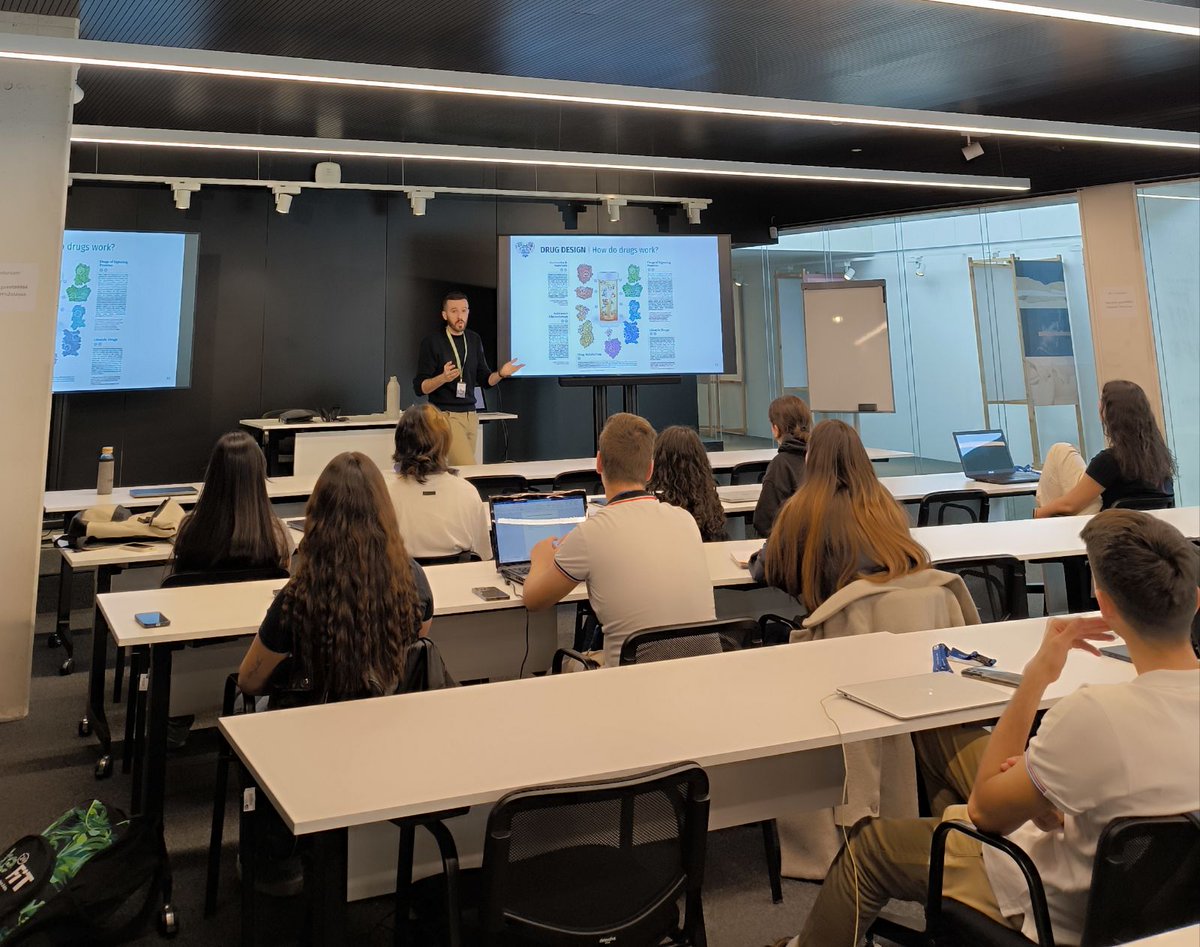
Last Saturday, @FilellaIsaac and Júlia Vilalta presented a #BojosPerLaSupercomputacio seminar (by @FCLP_Fundacio) exploring #ProteinModelling #DrugDesign with both theoretical and practical insights. Their session was truly insightful and rewarding! 🧬💊
3
12
303

7 Mar 2024
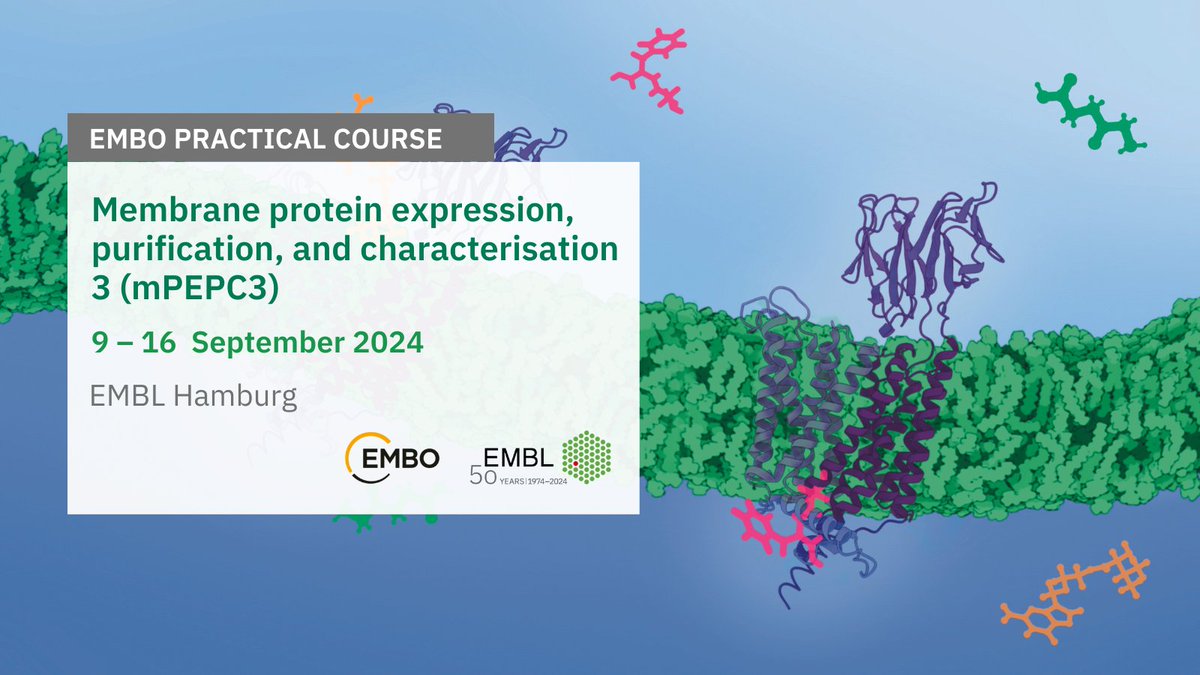
Join #EMBOPEPC to learn how to troubleshoot in the wet lab during solubilisation and reconstitution, and how to conduct experiments at the beamlines and during early stages of cryoEM screening. 🔎⚡️
✍️ Apply by 17 June
📍 EMBL Hamburg
➡️ s.embl.org/pep24-01
🔸 Speakers and Trainers
Lucia Banci, University of Florence
Clement Blanchet, @EMBLHamburg
@Osvalburastero, EMBL Hamburg
@LucasADefelipe, EMBL Hamburg
Juan Du, @VAInstitute
Jens Frauenfeld, @SaliproBiotech
@MelissaPoynor, EMBL Hamburg
@Steve_Harborne, @PeakProteins
@ProfSyK, @UniofOxford
@jankosinski, EMBL Hamburg
@kirkovalev94, EMBL Hamburg
@linamalinama1, @VU_LT
@MarlovitsLab, @UKEHamburg and @CssbHamburg
@Mel_McDowell22, @MPIbp
Pedram Mehrabi,@MPSDHamburg
@stemuench, @UniversityLeeds
Stephan Niebling, EMBL Hamburg
Arwen Pearson, @unihh and @MPSDHamburg
Martin Pelosse, @EMBLGrenoble
@KimRemans, EMBL Heidelberg
Mikhail Savitski, EMBL Heidelberg
Eike Schulz, @UKEHamburg
Markus Seeger, @seegerlab, @UZH_en
@BettinaSiebers, University of Duisburg-Essen
Henning Tidow, @unihh
Maya Topf, Centre for @CssbHamburg and @LeibnizLIV
Charlotte Uetrecht, @uetrechtlab, @CssbHamburgy and @LeibnizLIV
Katharina Veith, EMBL Hamburg
David von Stetten, EMBL Hamburg
Yexin Xie, @EMBLHamburg
🔸 Scientific Organisers
Maria Garcia, EMBL Hamburg
Simon Mortensen, EMBL Hamburg
Kim Remans, EMBL Heidelberg
Angelica Struve, EMBL Hamburg
Henning Tidow, @unihh
#membraneproteins #structuralbiology #cryoem #saxs #macromolecularcrystallography #crystallography #biophysicalcharacterisation #cellbiology #spectrometry #xraydiffraction #enzymaticreactions #proteinmodelling
12
22
8,428

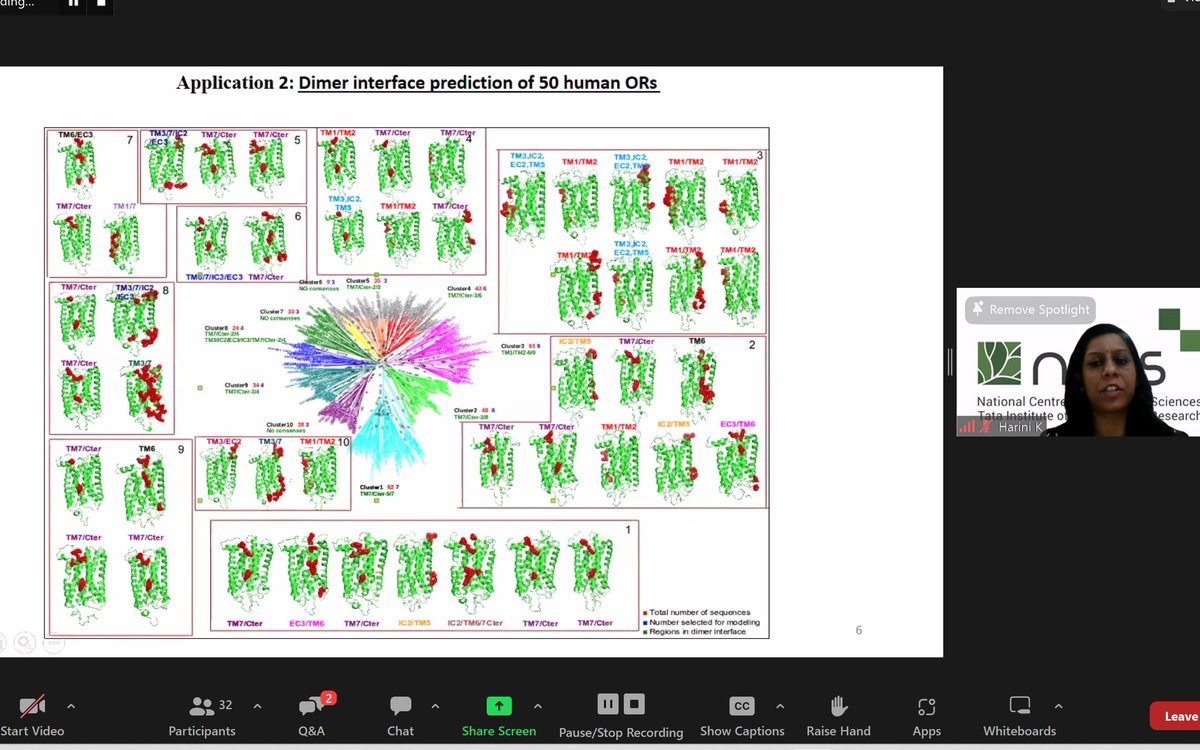
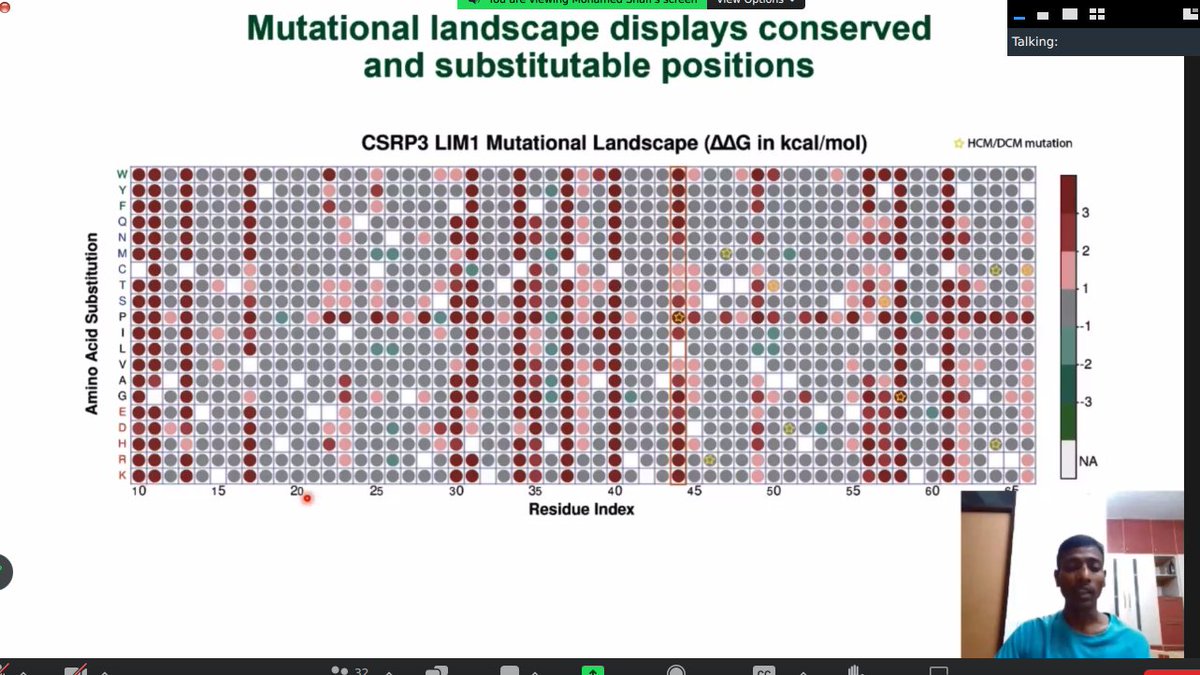
This Thursday, #CAPStalks covered #proteinmodelling of #Olfactory_receptors, #Toll-like_receptors & #Cardiomyopathy related protein.
Next week we shift gears to the #function theme of this series. Join us on, Thursday, 6th Apr at 3 pm!

How dazzling are #proteinmodels?
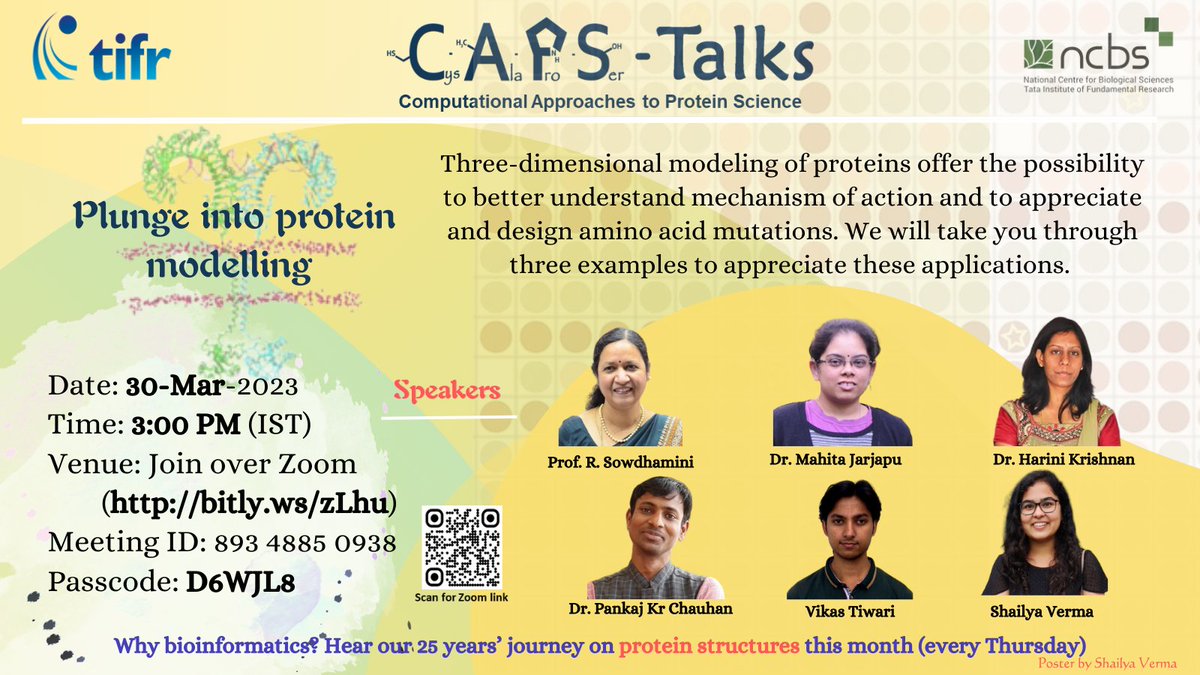
This week #CAPStalks throws light on #residue_interactions, #mutations & #functional_mechanism of protein models from #Cardiomyopathy, #Olfaction & #TLRS.
📅 Thurs, 30th March @ 3 pm
Zoom link: bitly.ws/zLhu
Passcode: D6WJL8
4
10
4,071
Hello world !
We're the EAPM group led by Prof Víctor Guallar at @BSC_CNS. Our research lines involve #proteinmodelling, #enzymeengineering, #drugdesign and #immunoinformatics.
Happy to engage #AcademicTwitter and discuss #science from now on !!
linktr.ee/eapm_bsc
8
14

12 Oct 2022
2 Days Training Program on Protein modelling with Modeller and Molecular Docking
helpbiotech.co.in/2022/10/tw… #bioinformatics #proteinmodelling #homologymodelling #docking #Biotechnology
1
3

19 Aug 2022
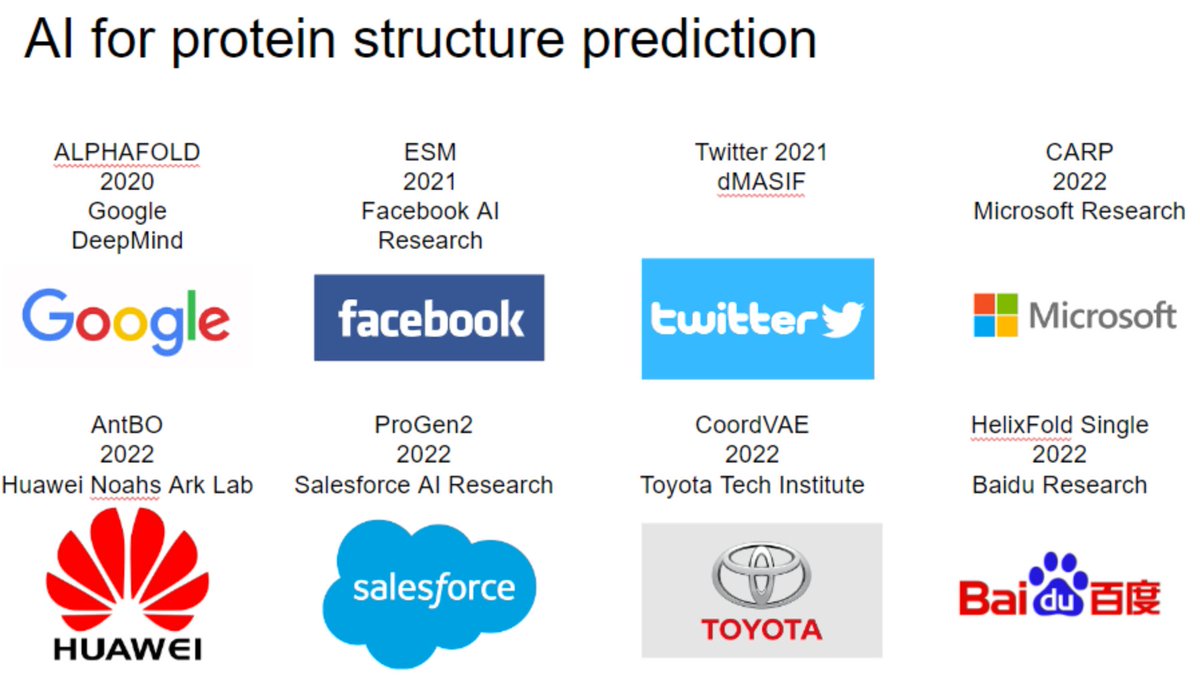
I've mentioned #Facebook #Meta together with #Google and #Microsoft amongst others in previous tweets to do with #AI and #ML applied to #ProteinModelling #ProteinFolding, and this is another example of these large companies endeavours into #Biology.
1
1
2

27 Jul 2022
Join our In Silico and AI Department 🧬💻 In this role, you will lead computational modeling of protein and peptide structures in Nykode’s discovery projects!
lnkd.in/ddsVh5nc
#proteinmodelling #AlphaFold #RoseTTAFold
1
1

20 Sep 2021
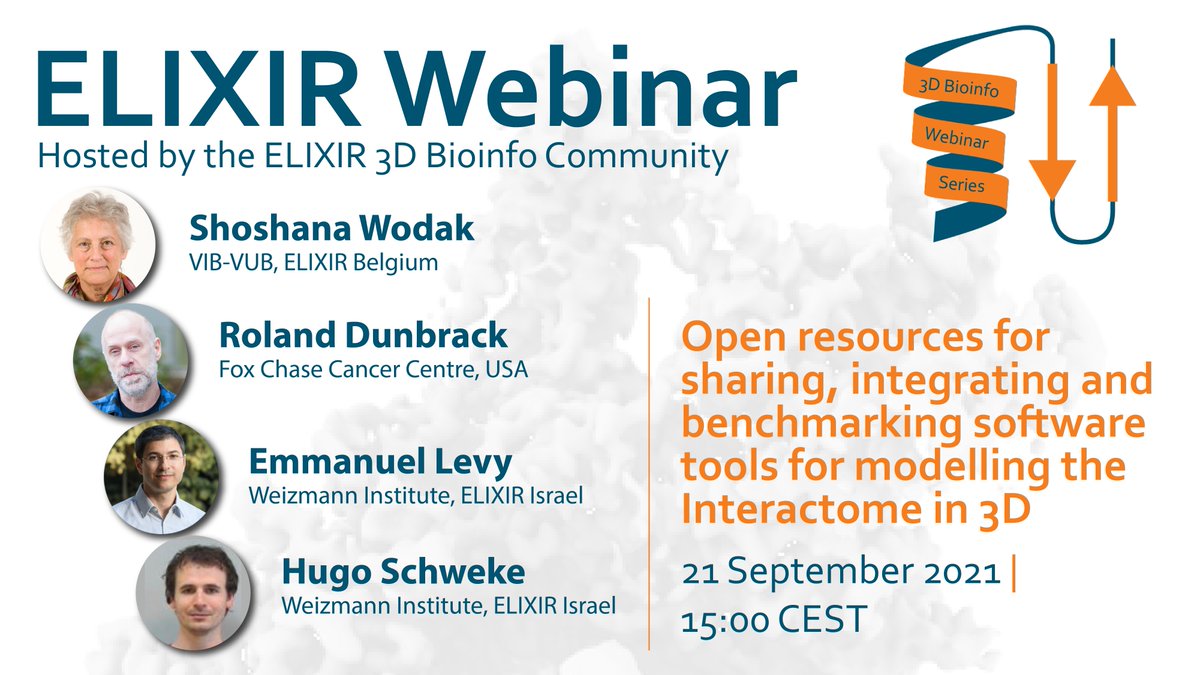
🎥 Don't miss our #webinar tomorrow!
Work with #proteinmodelling tools? Interested in the #interactome?
Join us to find explore #openaccess resources for sharing, integrating & benchmarking #bioinformatics #software tools.
🗓️ 21 Sept
🕒 15:00CEST
🔗 bit.ly/3D_webinar_2
8
11

9 Mar 2020
Check out our new preprint on first characterized bark beetle ORs with experimental evidence for putative ligand-binding site. disq.us/t/3mqkeh6 ##Europeansprucebarkbeetle #Coleoptera #odorantreceptors #proteinmodelling
13
13

30 Jan 2020
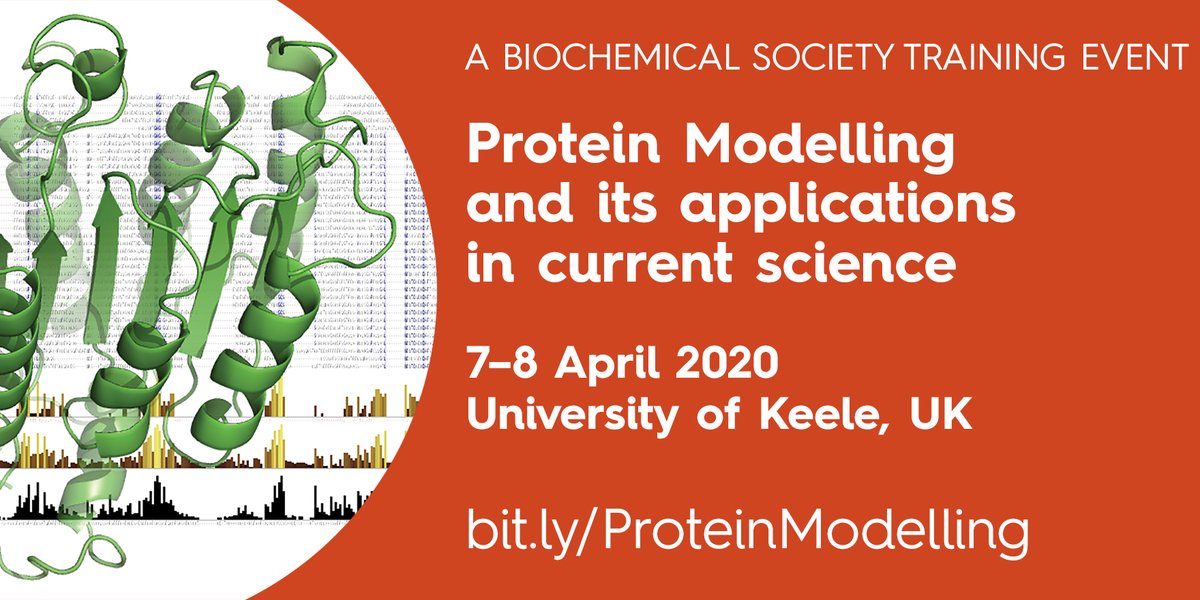
Register for training course Protein modelling and its applications in current science. Learn how to generate 3D models of proteins where no structural data is available. Earlybird registration closes 7 February bit.ly/ProteinModelling #ProteinModelling #protein #structure
7
17

18 Oct 2019
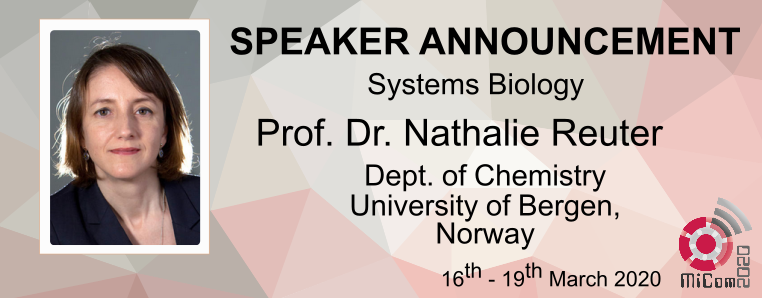
We are happy to announce our second keynote in #systemsbiology @reuter_nathalie from @UiB. Excited to hear you talk about your #research on #proteinmodelling.
@UniJena @JSMC_Info @LeibnizHKI @jenalichtstadt
1
5
7

1 May 2019
Shame to see such a useful service disappear #proteinmodelling
30 Apr 2019

Phyre2 will definitely continue until Dec 2020 when the current grant ends. There will certainly be attempts before then to secure funding. I, however will probably be leaving science at that time. I am so glad the service has been so useful to so many.
2

3 Dec 2018
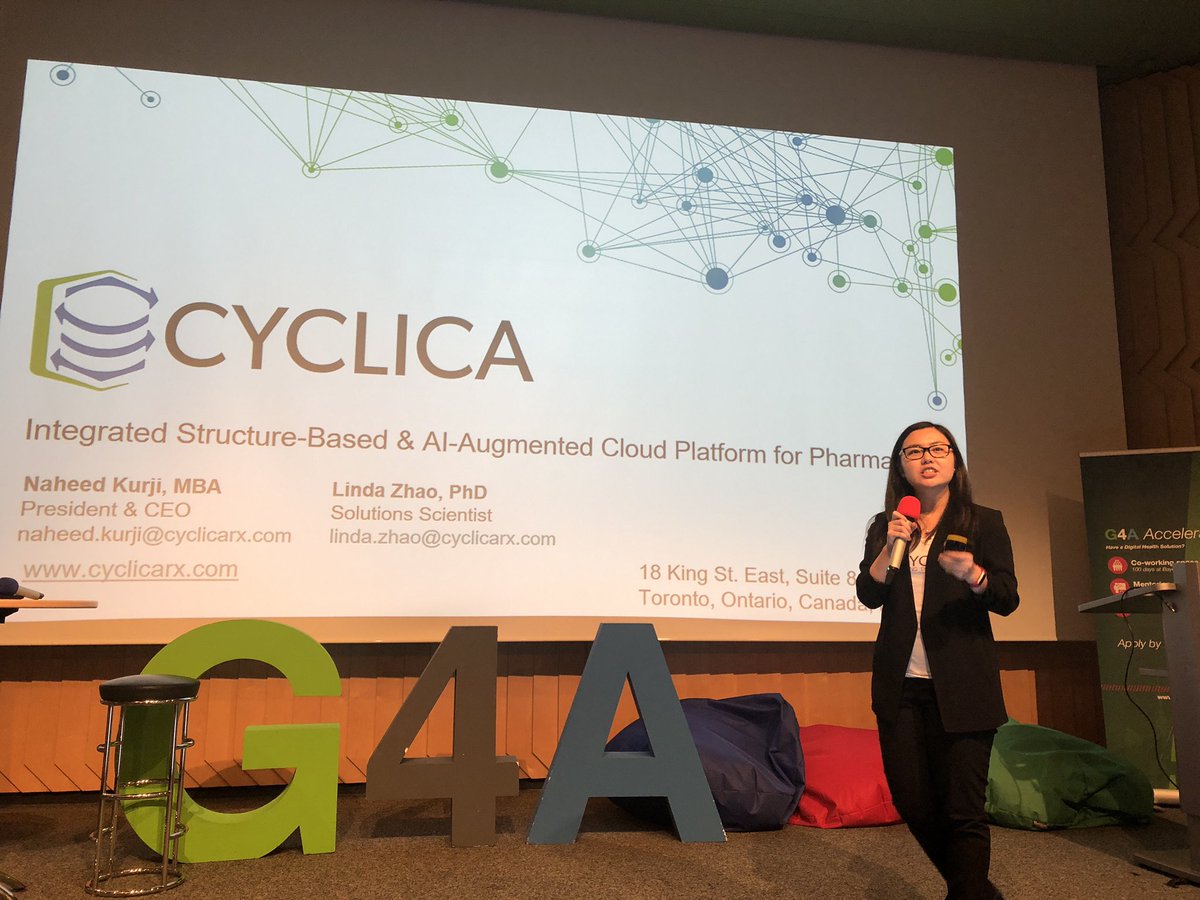
@Cyclica accelerated drug discovery through AI-driven target molecule identification and #insilico de-risking #demoday @grants4apps #drugdiscovery #insilico #proteinmodelling
1