
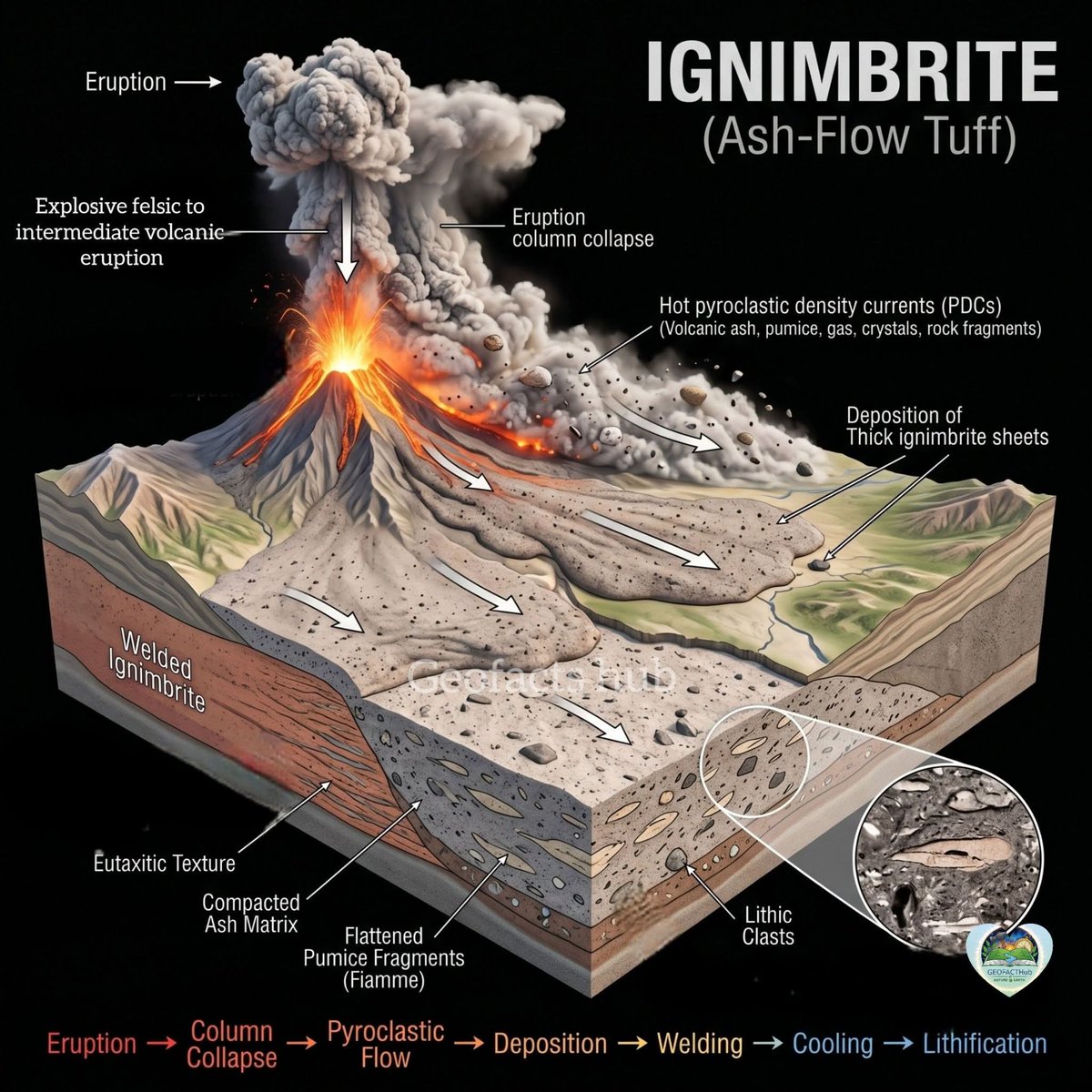
Ignimbrite (Ash-Flow Tuff) 🌋
A geological record of explosive volcanism—formed when towering eruption columns collapse and unleash scorching pyroclastic density currents (PDCs) across the landscape. These deposits of ash, pumice, crystals, and rock fragments accumulate, compact, and may weld into solid rock, preserving textures like fiamme and eutaxitic fabric that reveal the extreme conditions of emplacement.
From eruption → column collapse → pyroclastic flow → deposition → welding → lithification.
#Ignimbrite #AshFlowTuff #Volcanology #PyroclasticFlow #PyroclasticDensityCurrent #VolcanicRocks #IgneousRocks #Geology #GeologyRocks #EarthScience #Geoscience #VolcanicEruption #Petrology #FieldGeology #PhysicalGeology #StructuralGeology #GeologicalProcesses #VolcanicDeposits #ScienceEducation #GeologyDiagram
17

May 3
PhilNews24 | May 3, 2026
For the latest news, visit: philnews24.org
#driversapplicant #governmentlimits #ASEANSummit #FilipinoHospitality #MayonVolcano #pyroclasticflow #TravelClearance #SaraDuterte #balikatandrills #fishersaid #detourbridge #collapsed
104
78
94
407

May 3
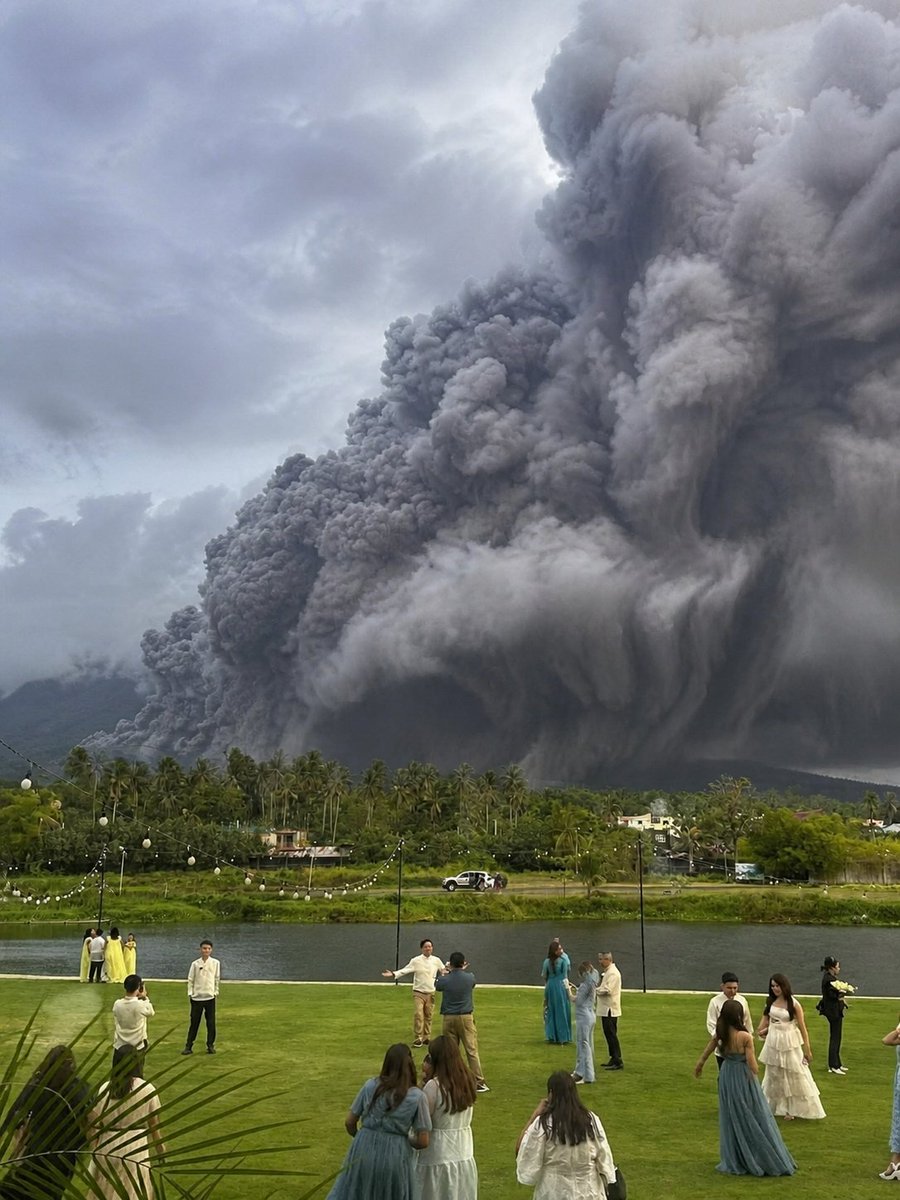
🚨🌋 BREAKING: EXPLOSIVE ERUPTION ROCKS MAYON VOLCANO
The iconic Mayon Volcano has erupted with force, unleashing a dramatic and dangerous display of nature’s power across Albay and nearby communities.
⚠️ What’s happening right now:
• Violent explosive eruptions shaking the region
• 🔥 Fast-moving pyroclastic flows racing down the slopes
• 🌫️ Towering ash clouds choking the sky
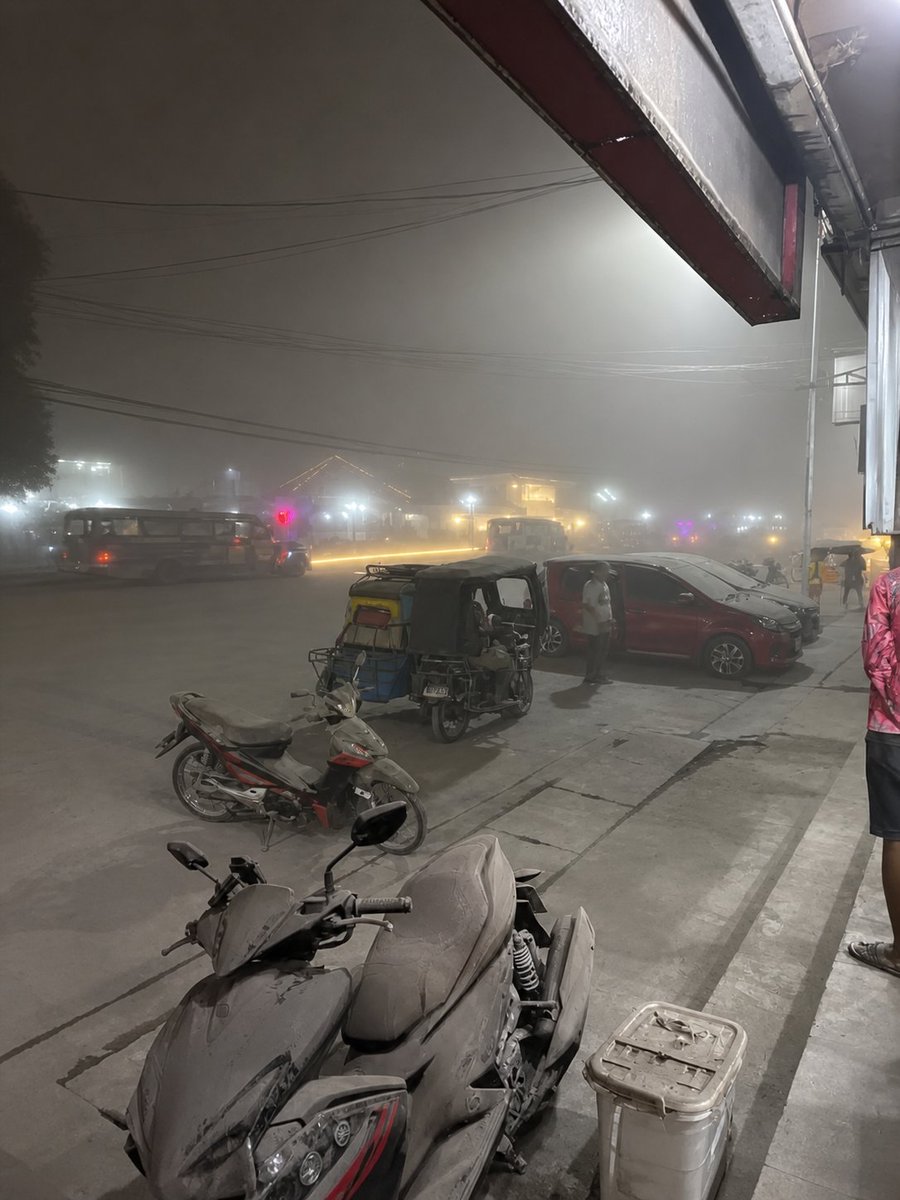
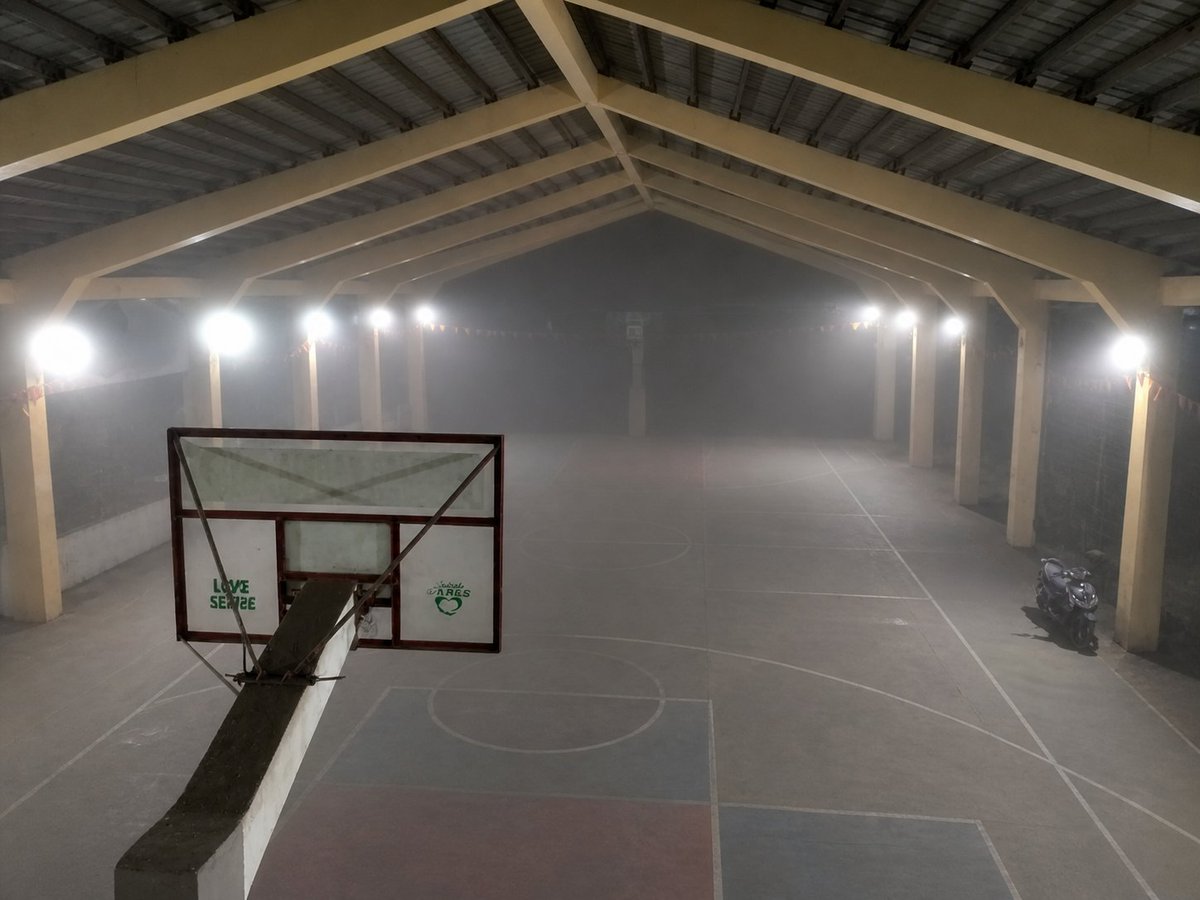
• 🌧️ Heavy ashfall reducing visibility and polluting the air
😷 Residents are facing worsening conditions—ash blankets homes, roads, and vehicles,
raising serious health and safety concerns.
🔴 Authorities have placed the volcano at Alert Level 3, signaling a high likelihood of further hazardous eruptions. The situation is rapidly evolving, and the risk remains extremely high.
#MayonVolcano #Philippines #Albay #VolcanicEruption #BreakingNews #Ashfall #PyroclasticFlow #naturaldisasterrelief
6
16
46
7,405

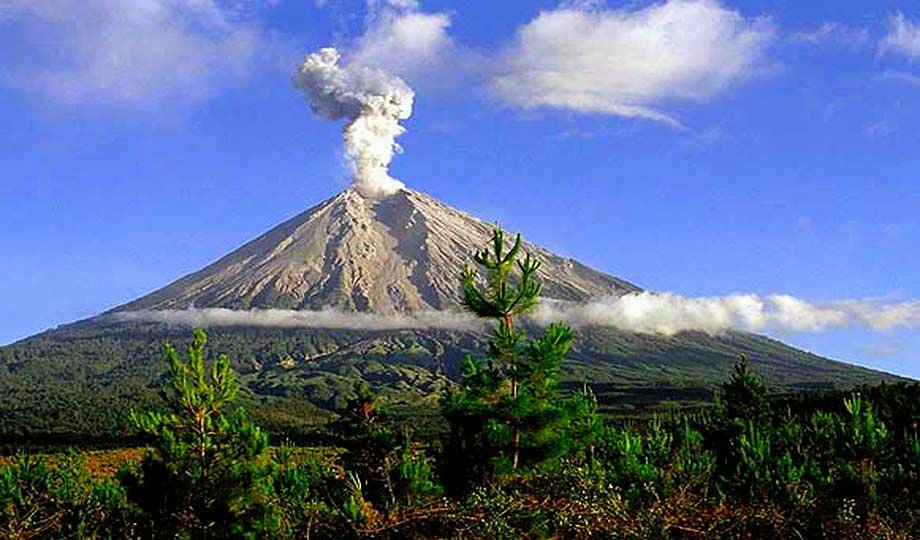
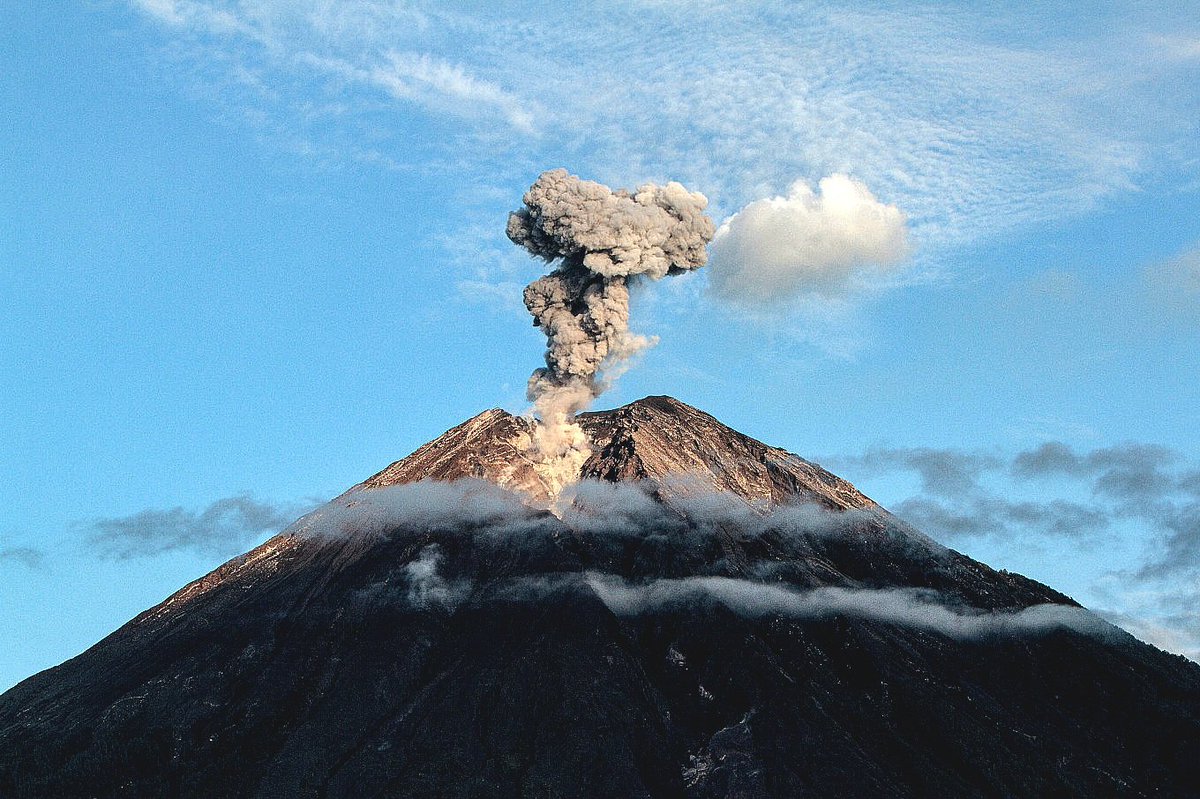
🟥 ⛏️ Semeru Volcano; eruptions aren't always slow lava oozing, but pyroclastic flows racing downhill faster than a car on the highway, turning deadly in seconds.
🎞 @afartv
🔁 ❤️ - Greatly Appreciated
This is a pyroclastic density current: a scorching mix of hot gas, ash, and rock fragments from explosive collapse of an eruption column or lava dome.
It forms when unstable material at the summit fails, gravity pulls it down slopes at speeds up to 100 km/h, heated to 300–700°C by trapped magmatic gases and friction.
The flow hugs the terrain, channeling into valleys like Besuk Kobokan, destroying everything in its path through impact, heat, and burial.
Seismographs detect distinct "pyroclastic flow earthquakes" (collapse signals) with amplitudes and durations; combined with webcam footage and infrasound, experts track runout distance and volume in real time.
Occurred February 24, 2026 (ongoing eruptive phase since 2017, with frequent events in Feb 2026).
Semeru Volcano (3,676 m), East Java, Indonesia, specifically descending SE flank into Besuk Kobokan drainage, Java Island's Ring of Fire segment.
Why does it matter?
It shows how stratovolcanoes like Semeru maintain near-constant activity, rapidly remobilizing material and posing sudden hazards far from the vent.
This refines hazard mapping and early warning: real-time seismic visual monitoring saves lives by predicting flow paths in densely populated regions.
#PyroclasticFlow
@SmithsonianGVP
1
2
102

Feb 23
أحد أخطر وأخوف المشاهد في تاريخ البراكين 🌋⚠️
استرجاع للحظة تدفّق السحب البركانية القاتلة من جبل إتنا العام الماضي.
قوة مدمّرة تتحرّك بسرعة مرعبة…#شاهد
#MountEtna #PyroclasticFlow #Volcano #NaturePower #Italy #EarthRage
 Nature Moments
1
16
50
3,661

28 Nov 2025
🌋 Short Historical Summary — Largest Semeru Eruptions by Spacetracker.space
Images:spacetracker.space/timeline
SEMERU VOLCANO — CROSS-SECTION
(Cutaway looking North → South)
/\
/ \
/ \ ← Summit Cone
/ \
/ (###) \ ← Lava Dome / Crater (Jonggring Seloko)
/ ####### \
/ ######### \
/ ########### \
/ ###############\
/ #################\
/#####################\
/#######################\
/#########################\
/############################\
/##############################\
----------/################################\----------
| |
| ^ |
| | Magma Conduit |
| | |
| | |
| | Mantle-derived magma |
| v |
| ############################ |
| ############################ |
| ############################ |
|____________________________________|
BASE ROCK
Arrows indicate:
Main pyroclastic-density-current route
Historical runout lengths:
1994: ~5–6 km
2021: 11–13 km
2022: ~7 km
2025: 7–8.5 km
This shows why the Kobokan Valley is the primary lethal pathway on the south–southeast flank.
1818 — First Documented Major Eruption
Heavy ashfall across East Java. First official record of Semeru’s destructive potential.
1941–42 — Pre-War Intensification
Strong ash bursts and lava avalanches. Marks the beginning of Semeru’s modern active cycle.
1967–1977 — Decade of High Activity
Ten years of near-continuous explosions, dome growth, and collapses. A major structural reshaping period.
1994 — Deadly Dome Collapse
Pyroclastic flows raced down the Kobokan Valley. Multiple fatalities. A key warning event for Indonesia.
1981–83 2000–02 2008–10 — Major Activity Cycles
Recurrent dome growth, collapses, lava flows, and ash plumes. Semeru entered long-term persistent unrest.
December 2021 — Catastrophic Eruption
A massive dome collapse produced pyroclastic flows traveling 11–13 km. >50 deaths. Entire villages buried.
December 2022 — Level IV Alert
Large dome instability again. PDCs ~7 km, ash columns up to 2 km. High-risk repeat pattern.
2023–24 — Persistent Elevated Activity
Continuous ash emissions, tremor, and frequent collapses.
November 2025 — Major Modern Eruption
Level IV alert. PDCs 7–8.5 km, 1,000 evacuated. One of Semeru’s strongest recent events.
🔥 One-Line Ultra-Short Version
Semeru’s largest modern eruptions hit in 1818, 1941–42, 1967–77, 1994, 2001–2010 cycles, the catastrophic 2021–2022 collapses, and the high-alert 2025 eruption.
#Semeru #GunungSemeru #Indonesia #Java #Volcano #Eruption
#VolcanoAlert #VolcanicActivity #PyroclasticFlow #AshCloud
#BMKG #PVMBG #JawaTimur #Lumajang #IndonesiaUpdate
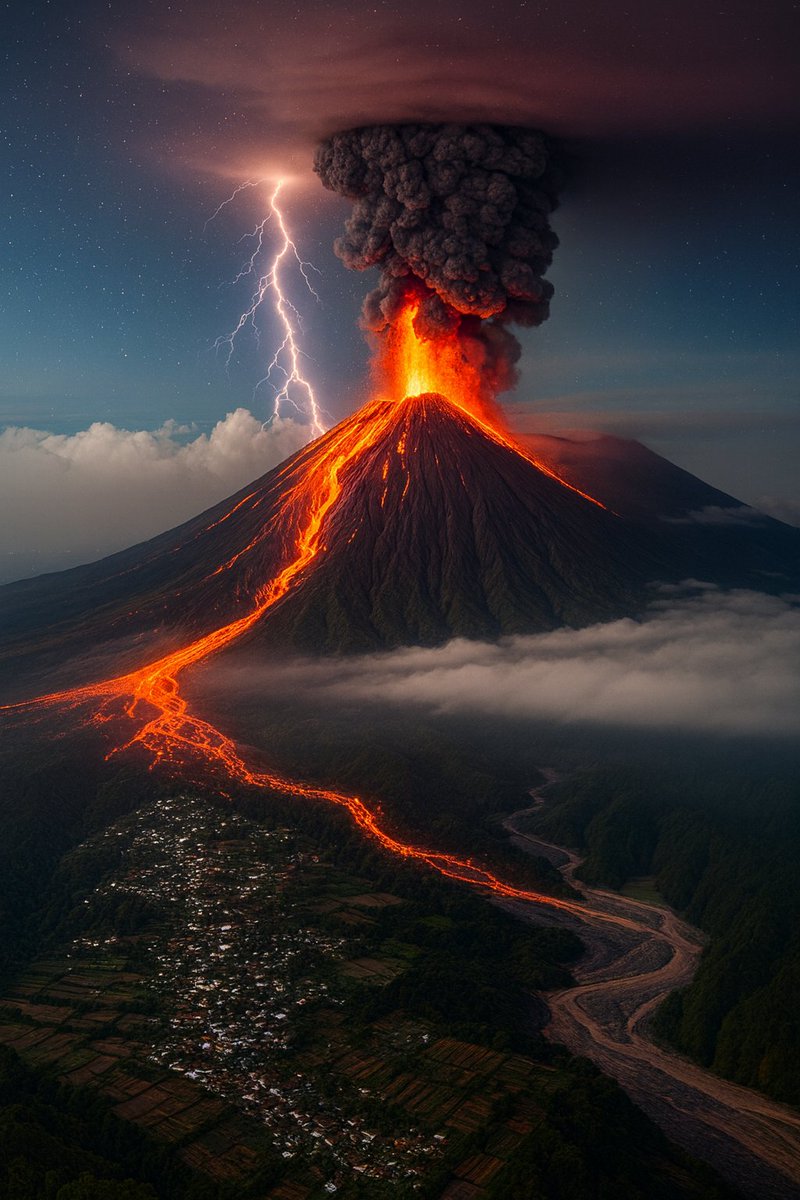
ALT 1818 — First major recorded eruption with heavy ashfall across East Java. 1994 — Deadly dome collapse; pyroclastic flows race down Kobokan Valley. 2021 — Catastrophic eruption; PDCs 11–13 km, >50 fatalities, villages buried. 2022 — Another major collapse one year later; Level IV alert, PDCs ~7 km. 2025 — Latest major eruption; dome failure PDCs 7–8.5 km, 1,000 evacuated.
2
5
361

29 Oct 2025
🇮🇩 Pyroclastic flow on Mount Merapi (October 29, 2025)
🌋 A powerful pyroclastic flow — a scorching mixture of gas, ash, and rocks — was recorded on the slopes of Mount Merapi on the island of Java. According to Indonesia’s Center for Volcanology and Geological Hazard Mitigation (PVMBG), the flow traveled several kilometers down the southern flank, accompanied by heavy ashfall in nearby areas.
Residents of surrounding communities have been advised to observe an evacuation zone within a 7-kilometer radius of the crater. Mount Merapi is one of the most active volcanoes in the world, and its frequent eruptions pose a serious threat to the region’s ecosystem and agriculture.
Experts warn that such events may intensify under the influence of climate factors, including changes in rainfall and temperature that affect the stability of volcanic structures.
👀 To learn more about the reasons of the increasing natural disasters and the way out of it, read the report ON THE PROGRESSION OF CLIMATIC DISASTERS ON EARTH AND THEIR CATASTROPHIC CONSEQUENCES
🔴 creativesociety.com/climate-…
#CreativeSociety #GlobalCrisis #Responsibility #ActNow #SPEAKUP #Indonesia #volcano #Merapi #eruption #pyroclasticflow #naturaldisasters #weather #climate #destruction #anomaly #climatechange
7
12
216

3 Sep 2025
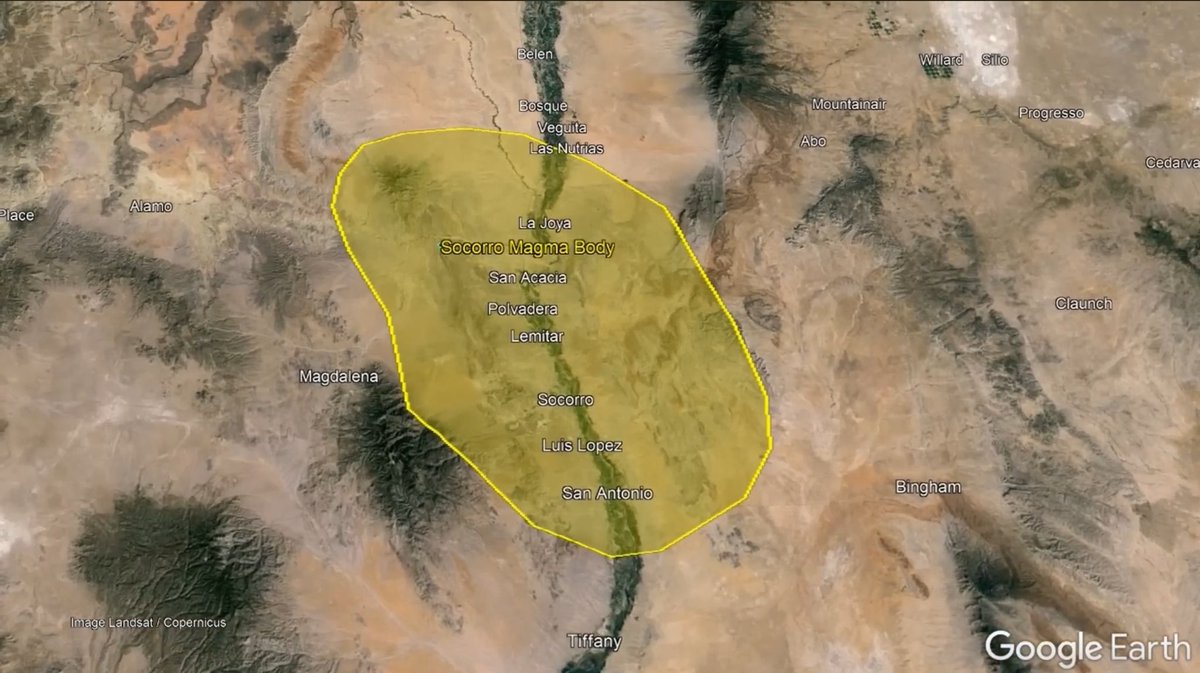
Magma Bodies and Active Volcanoes in New Mexico
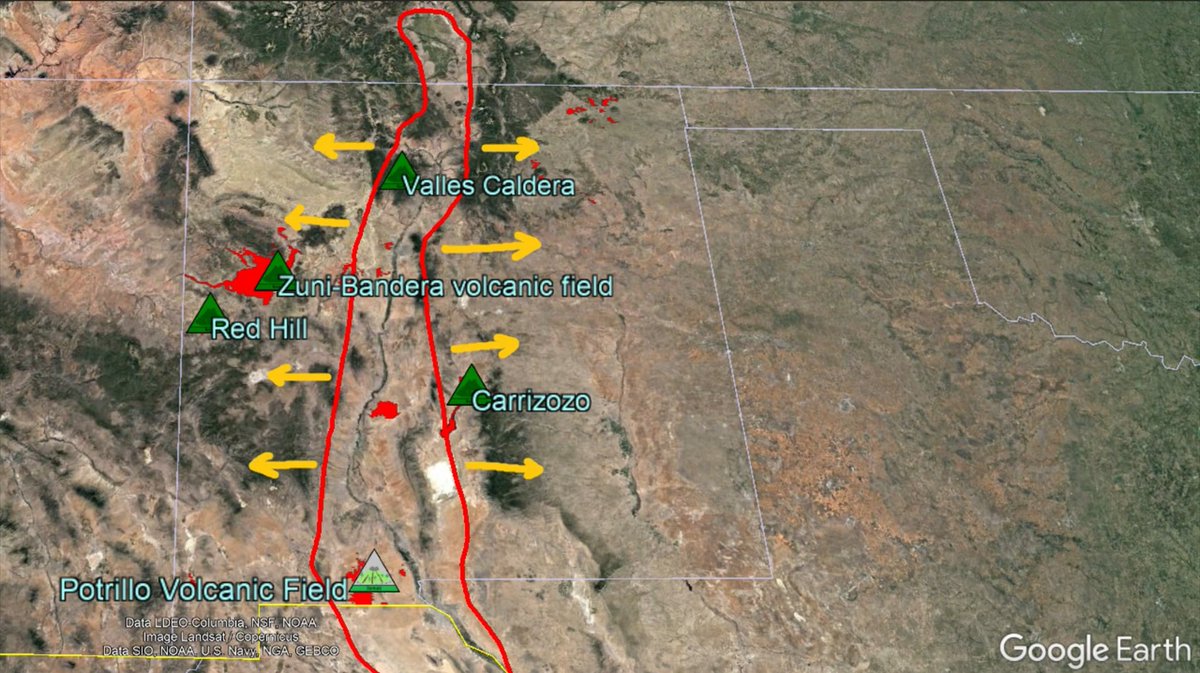
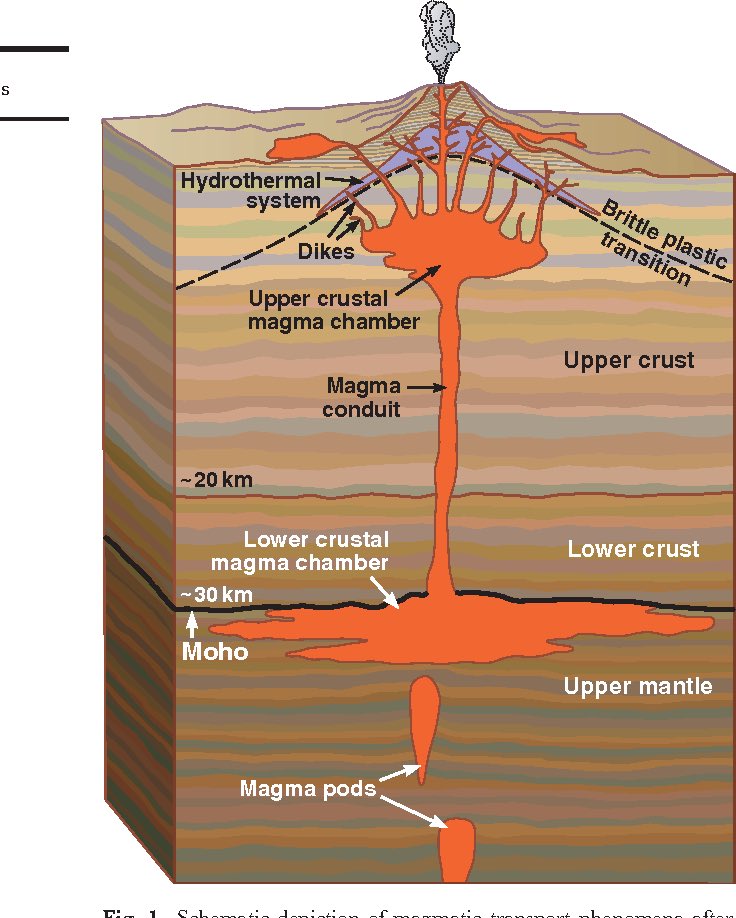
Four volcanoes in New Mexico are considered active even if they are not actively erupting. Many still have large magma bodies and chambers below the crust. Some others are considered extinct, but that may change with the Crustal Displacement. Ben has always stressed the dangers of moving to areas with dormant and active volcanoes. Especially in Utah and New Mexico. I’m focusing on the latter today because it should be considered to be a safe zone due to elevation, as a part of the front range, the area of land going from Wyoming in the north before heading further south into Mexico. I wonder how safe N.M. will really be, if any or many new volcanoes start erupting. It’s not just the magma, lava and pyroclastic flows we should concern ourselves with. I think the Ash combined with other volcanoes further west like the Long Valley Caldera in California may cause considerable damage and loss of life.
Socorro
nmnaturalhistory.org/volcano…
youtu.be/UznO0op2W8M?si=_QXP…
The Carrizozo Volcano . It last erupted approximately 5000 years ago and it was one of the largest lava flows in country covering 130 square miles. The eruption itself lasted 2 to 3 decades before finally ceasing.
usgs.gov/volcanoes/carrizozo…
youtu.be/9YhpEa5XEx0?si=3P8B…
Red Hill Quemado volcanic field
usgs.gov/volcanoes/carrizozo…
Zuni Bandera volcano. The last eruption was 3000 years ago, but it is considered by the USGS to be a low threat.
usgs.gov/volcanoes/zuni-band…
youtu.be/LVkT0FTcRfg?si=HHsU…
Mount Taylor Volcano. A strato volcano at nearly 12,000’ in elevation and 12 miles wide.
youtu.be/E_mecXAYV18?si=8el5…
Valles Caldera. Although the last eruption was 40,000 years ago, it is still considered by the US GS to be a moderate threat. It is one of three Calera‘s in the United States the first being Yellowstone in Wyoming, Long Valley, Caldera in California, and this one in New Mexico.
usgs.gov/volcanoes/valles-ca…
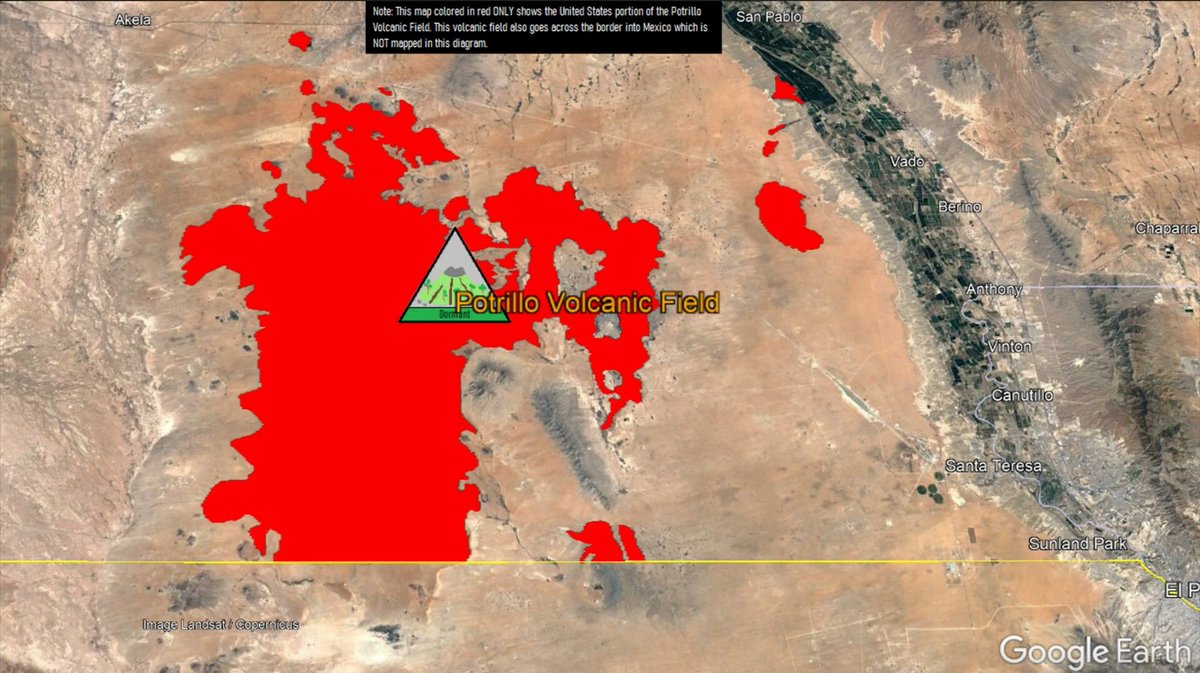
Potrillo volcanic field on border of Mexico and NM.
youtu.be/kyJeFQPC9TU?si=8uI5…
The Emory Volcano in SW NM. It is also considered to be a great super volcano. Its last eruption was bigger than Yellowstone’s last large eruption over 600,000 years ago. It’s been reported that in some places, the depth of the ash fall was over 30’ deep.
youtu.be/kLO9pjgwo08?si=svX2…
#hotlava #volcano #volcanoes #newmexicovolcanoes #NewMexico #magma #eruption #lavafield #fault #faultline #pyroclasticflow #Pyroclastic #poleflip #MagneticReversal #solar #CarringtonEvent #volcanology #safezone #frontrange #retreat #RetreatProperty #SuspiciousObservers
@SunWeatherMan
3
53

11 Jun 2025
Still a fun movie, flaws and all. I'll take that over outrunning/surviving a pyroclasticflow and/or surviving a plane crash and getting hypothermia from falling into freezing cold water.
1
3
800

5 Jun 2025
Large pyroclastic flows at Fuego volcano trigger preventive evacuations, Guatemala watchers.news/2025/06/05/exp… #volcano #eruption #pyroclasticflow #fuego #guatemala
5
10
488

3 Jun 2025
WATCH | A massive cloud of ash and gas erupted from Italy’s Mount Etna on Monday, sending shockwaves through the region. The dramatic pyroclastic flow, followed by a lava fountain, is part of ongoing volcanic activity that experts warn could continue for weeks. Authorities urge tourists to stay clear of the area.
Video: AFP
#MountEtna #VolcanoEruption #EtnaEruption #ItalyVolcano #VolcanicActivity #PyroclasticFlow
1
2
381

3 Jun 2025
Mount Etna eruption!!! Huge volcanic blast in Italy sends tourists fleeing. #mtetna #volcano #VolcanoEruption #VolcanEtna #pyroclasticflow
2
453
2 Jun 2025
Videos show people fleeing as Mount Etna erupts, Italy watchers.news/2025/06/02/vid… #video #volcano #eruption #etna #pyroclasticflow #italy
4
7
1,106

2 Jun 2025
Een krachtige uitbarsting van de #Etna op #Sicilië heeft op maandag 2 juni voor een grote pyroclastische stroom gezorgd.🌋😲
#etna #eruption #vulkaan #uitbarsting #silicy #pyroclastischestroom #pyroclasticflow #fyp #foryou
6
13
2,320
28 Apr 2025
Bulusan volcano erupts, triggers pyroclastic flow and ashfall in Sorsogon Province, Philippines watchers.news/2025/04/28/bul… #volcano #eruption #bulusan #ashfall #pyroclasticflow #philippines
3
354

8 Apr 2025
Sorry, I’d never downgrade myself into using that inferior product.
3
43
519


23 Jan 2025
Please like and also my new X-article about two ancient Roman villas at the Gulf of Naples (Italy) with many illustrations and several videos: x.com/wirthstef/status/18825…
About:
About luxury buildings in Roman antiquity with the example of the villa maritimum del Capo di Sorrento near the modern city Sorrento on the Gulf of Naples and an urban villa with a luxurious private bathroom complex that was recently uncovered in Pompeii (also Gulf of Naples).
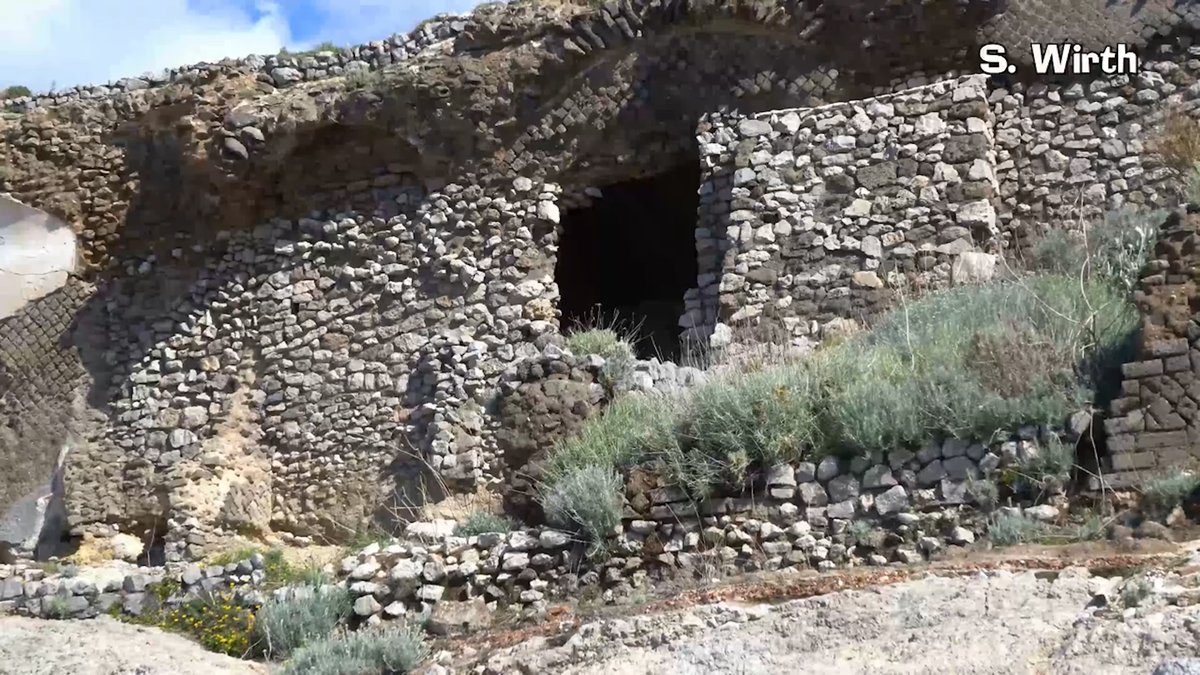
The Villa del Capo di Sorrento was traditionally assigned to the wealthy Roman Publius Pollius Felix from Puteoli. However, recent research no longer follows this thesis. The villa of Pollius Felix is believed to be located further down the sorrentine peninsula between Puolo and Massa Lubrense, where only a few remains of the wall remained. Since the villa in a poem by the poet Statius, in which he describes a personal visit to the luxury building of Pollius Felix, is also one of numerous villae maritimae in the region, I have given the historical text that describes this villa a dedicated chapter. According to the authors M. Reinfeld, B. Frisch, M. Filser (2020), the actual owner of the villa at Capo di Sorrento, which is the main subject of my article, is still unknown today. The only special feature of the villa, which justifies a special interest in it, is its particularly good state of preservation.
...
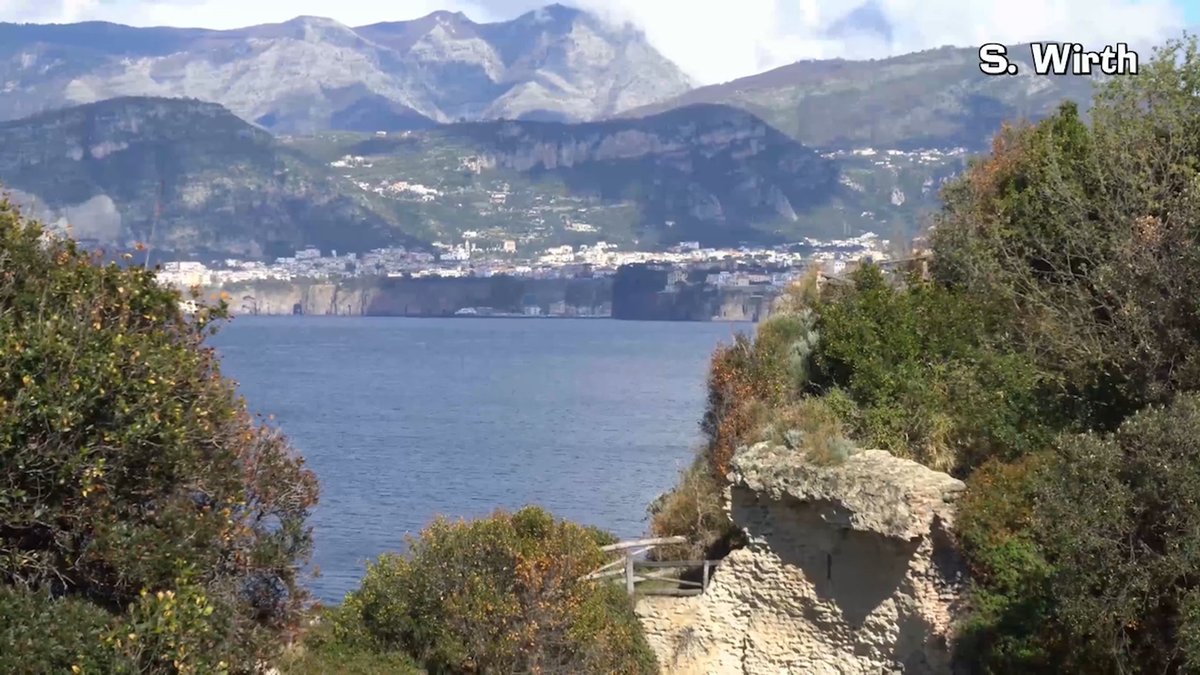
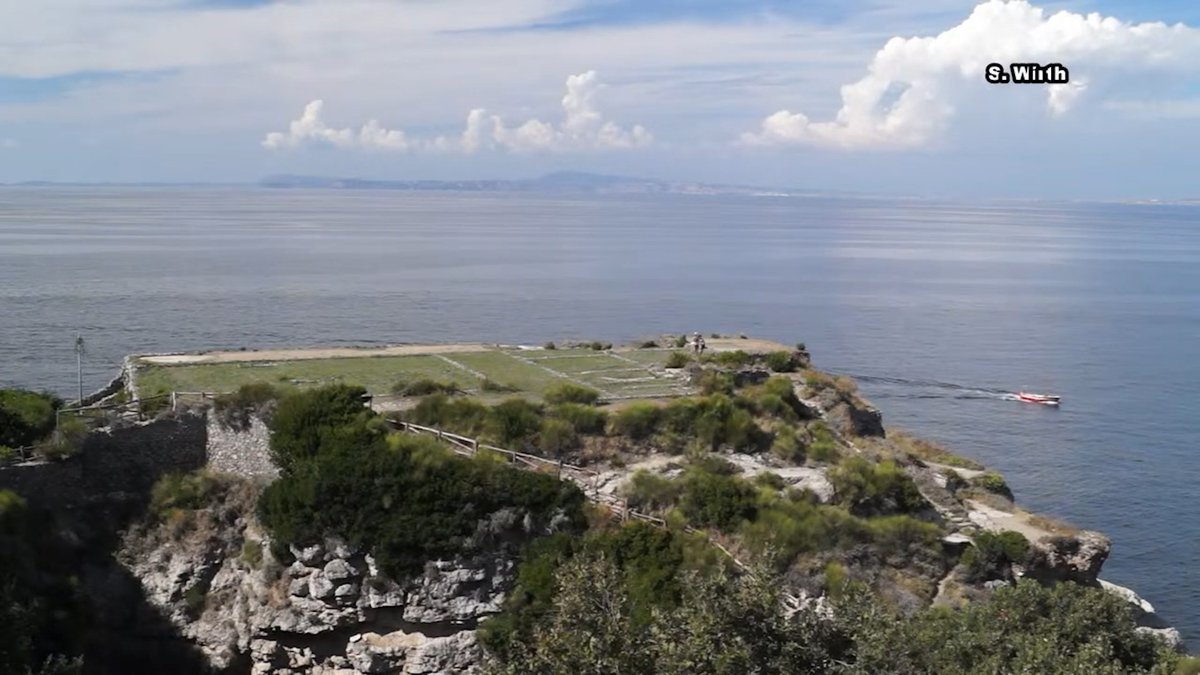
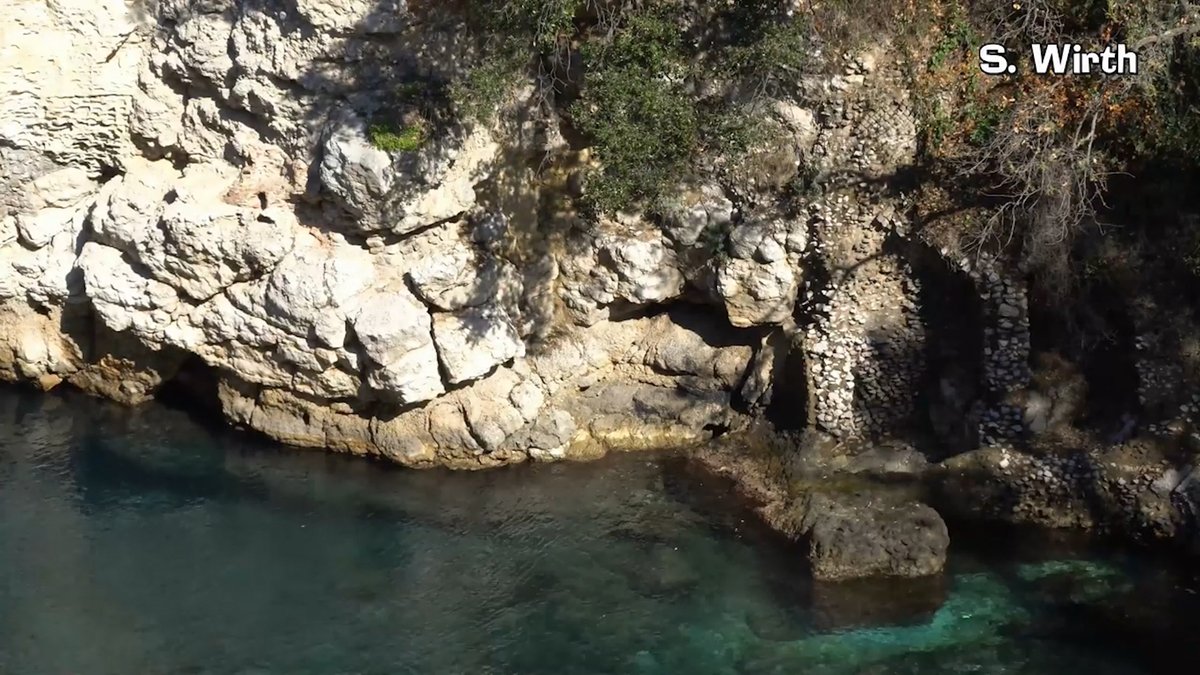
An exceptional luxury villa in the region, for example, is located neither in Pompeii nor in Herculaneum, but somewhere hidden in the countryside close to today's city of Sorrento: the remains of the villa maritima del Capo di Sorrento lie directly on the rocky coastal beach. The aim of the builders was to combine the elements earth, water and air in the form of architecture. The villa had a part that was directed to the coast (named by archeologists pars maritima) and a part closer to the countryside (named pars rustica), which were partly separated from each other by two private harbors. The water route was the preferred method of visiting the villa, as the land route would have been too difficult due to the rugged coastline and the remoteness of the villa. Rather spectacular was the internal harbor, consisting of a seawater pool as rounded shaped indentation in the coastline. The inner harbor is today preserved as a partially renatured seawater basin, which can still be accessed via stairs for swimming even today. The state of preservation of some of the villa's building complexes is so good that the researchers Benedetti, D., Valetti, S., Bontempi, E. et al. (2004) using modern technologies, such as electron microscopy and X-ray diffraction, were able to investigate the composition and properties of the mortar used in ancient times. The rough division of the ruins described here and the interpretation of two water bodies as port facilities again follows the authors M. Reinfeld, B. Frisch, M. Filser (2020), already named in the first chapter. In particular, the villa's harbor system was the focus of research for these authors, with 3D recording methods being used.
...
The biodiversity native there must therefore have specific adaptations to withstand drought and the sea winds. For example, Lotus creticus (Faboideae), Allium triquetrum (Amaryllidaceae), Silene latifolia (Caryophylloideae) and Helichrysum italicum (Gnaphalieae) grow there, at different sites between pars maritima and pars rustica. The diversity of animal species on land is also large, and many insects can be easily observed, especially in spring. These are butterflies, various species of rose beetles and dipterans. Spiders also appear. Cave dwellers of them can be found within the ancient ruins. The Opuntia spider Cyrtophora citricola (Araneidae) with its striking black and white markings and its unusual web architecture prefers places more in the area of bushes at level towards pars rustica. A noticeably large diplopod species of the Julida regularly occurs in dead wood, under stones or other protected areas, which I so far never closer identified, but which occasionally carries phoretic mites of the Histiostomatidae (Astigmata) on its body (see my video below). With a bit of luck one can find harvestmen of the genus Trogulus under stones towards the countryside at the area of pars rustica (see my video below). However, the Italian wall lizard Podarcis siculus (Lacertidae) can often be discovered along the ruin walls
...
In a BBC article (2025, link see References, see also second repost before) the authors R. Morelle (Science editor) and A. Francis (Senior scientist journalist) report on new finds in the ancient Roman city of Pompeii, which was buried by Mount Vesuvius. As a result, over the past two years, researchers have uncovered new parts of a luxurious building complex that is characterized, among other things, by an unusually large bathroom area (the latter is a new discovery). The excavation site is Regio IX, Insula 10, close to Via dell' Abbondanza, and thus is located in the center of Pompeii. This makes the excavated area to a luxury urban villa of a wealthy citizen of Pompeii. Owner of the villa might have been the politician Aulus Rustius Verus, due to initials ARV found on the bakery walls and even the millstones.
MORE IN MY ORIGINAL ARTICLE
© Stefan F. Wirth, Berlin 2025
#village #ancient #ancientRoman #villamaritima #capodiSorrento #villamaritimacapodiSorrento #villapolliofelice #PubliusPolliusFelix #villaemaritimae #archeology #StefanFWirth #science #research #video #photos #ruins #wealthypeople #Pompeii #InsulaIX10 #AulusRustiusVerus #bathhousecomplex #innerharbor #outerharbor #underwater3Drecording #mortars #monitoring #multilevelapproachtomonitorPompeii #biodiversity #walllizard #vegetation #Histiostomatidae #mites #Steatodagrossa #Diplopoda #Julida #Podarcissiculus #Alliumtriquetrum #fishpond #garden #philosophy #Epicurus #PubliusPapiniusStatius #mountVesuvius #Vesuv #Pompeji #eruption #pyroclasticflow #earthquake #römischeAntike
Source (not included to my article):
My black and white video from 2016 about villa del Capo di Sorrento (falsely still named "Villa Pollio Felice"): youtu.be/doypwL37MQA?si=XxxF…
Photos: different sites (see my X-article) of the pars maritima of villa del Capo di Sorrento, © Stefan F. Wirth, Berlin, footage frames from 2014-2019, edited 2025
23 Jan 2025

1
32
349
3,599

15 Jul 2024
No one told the #StromboliVolcano in Italy, it was called #Stromboli (Strombolian eruptions) and a boat came real close as #PyroclasticFlow heads over sea towards them
Scientists worried about further eruptions and collapse that could cause a #Tsunami?
youtu.be/JOoK_jKs7ZI?si=SaMw…

3
174