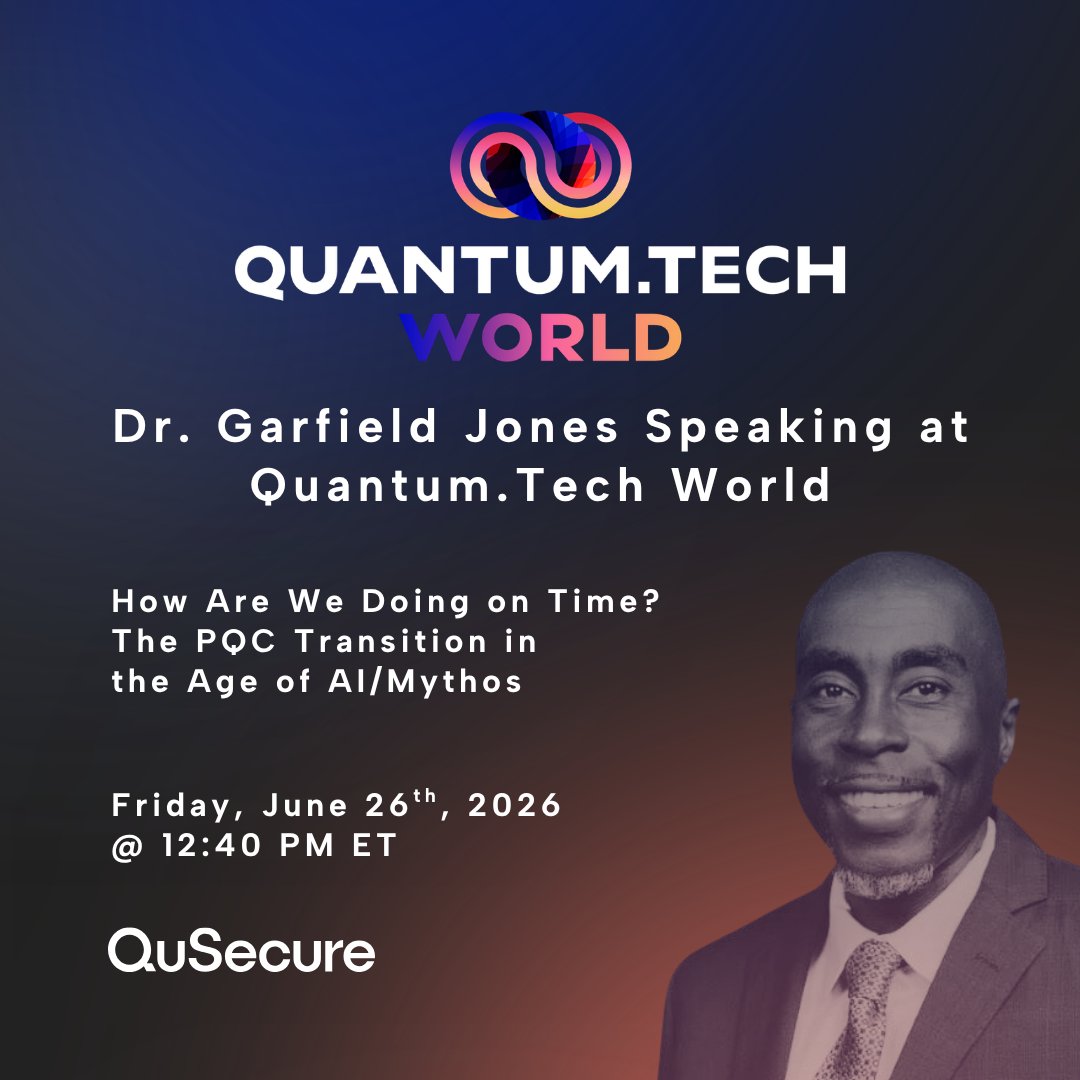
Join Dr. Garfield Jones, SVP of Research and Technology Strategy at QuSecure, at World in Boston for a discussion on quantum resilience and post-quantum security.
Friday, June 26 - 12:40pm ET
As organizations prepare for the quantum era, crypto agility and post-quantum readiness remain key priorities for long-term cybersecurity.
If you're attending, be sure to attend the session and stop by the QuSecure booth to connect with our team.
Learn more: na2.hubs.ly/H0694Qn0
18
People still think QuSecure is a quantum computing company, and we keep trying to correct that because it changes how people understand the problem.
We’re a cybersecurity company focused on post quantum cryptography.
The work is about helping organizations move away from the classical encryption standards they rely on today and transition into quantum resistant cryptography that already exists right now.
A big part of that conversation is crypto agility.
A lot of people assume the transition means ripping out entire systems and starting over once stronger algorithms emerge. That’s not realistic for most organizations, especially when this space is moving as fast as it is.
Quantum computing capabilities are advancing quickly. We already expect systems capable of breaking classical cryptography within the next few years. At the same time, quantum resistant algorithms will continue evolving too.
That means organizations need the ability to adapt without shutting everything down every time standards improve.
QuProtect R3 was built around recon, remediation, reporting, and crypto agility from the start.
24

Jun 11
QuSecure Joins Google, Nvidia As 2026 World Economic Forum Pioneer quantumzeitgeist.com/qusecur… #PQC #PostQuantumCryptography
1


$IONQ
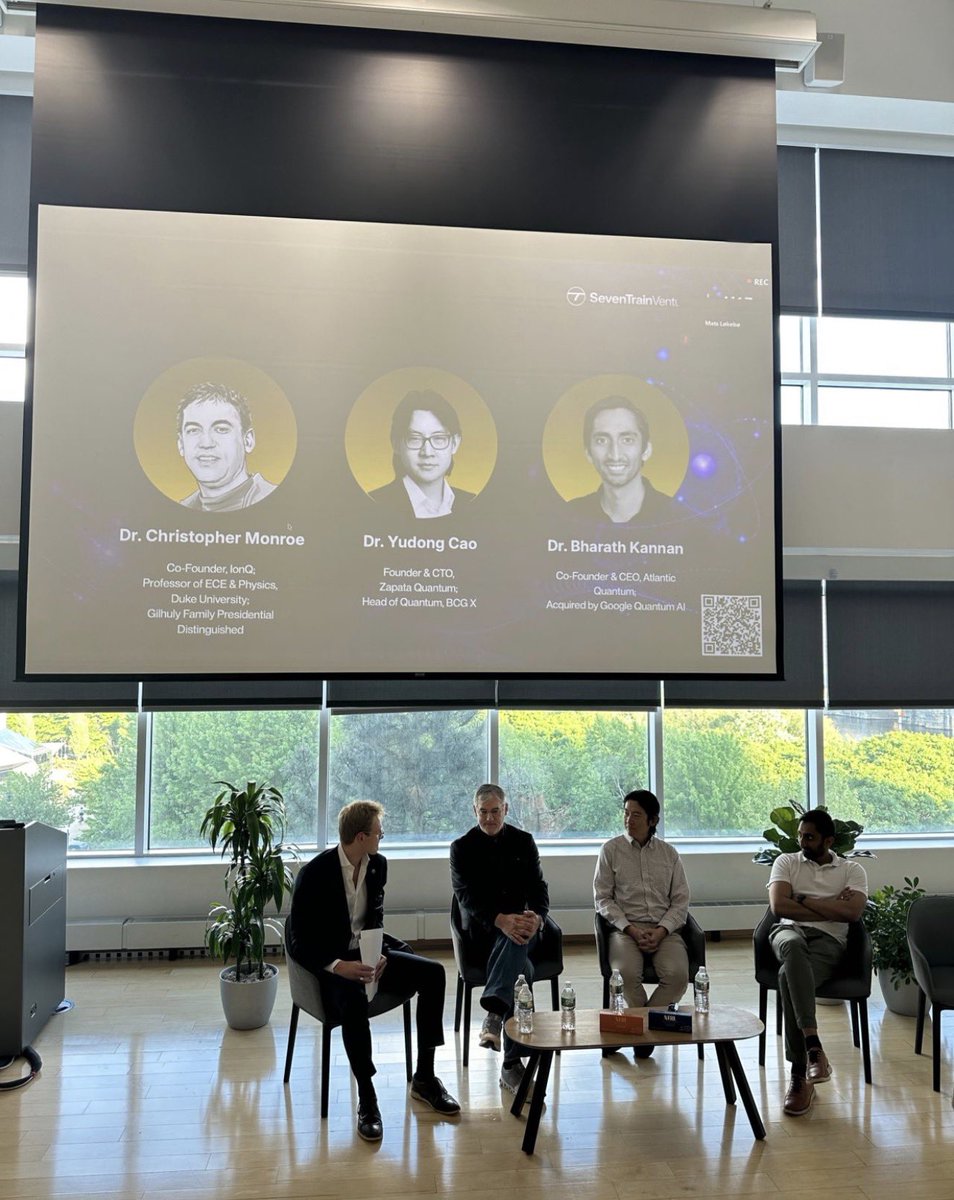
Chris Monroe took a Boston Tech Week stage last week.
The panel - SevenTrain Ventures’ “Quantum, AI and the Reallocation of Capital,” at the Hult Center in Cambridge - was built around one premise: the next arms race isn’t nuclear, it’s computational.
Three blocks: the science, the market, the stakes - post-quantum crypto, sovereign capital, national security.
Beside the IonQ co-founder:
→ Bharath Kannan - Atlantic Quantum, acquired by Google Quantum AI
→ Yudong Cao - ex-Zapata, now Head of Quantum at BCG X
→ Garfield Jones - QuSecure, former DHS
IonQ runs in both Cambridges - Lightsynq’s ex-Harvard team fabbing here in Cambridge, MA, and a 256-qubit Innovation Centre at the Cavendish in Cambridge, UK.
#IonQ #QuantumComputing
1
3
44
2,881

@TechInnovationz "Sharing is caring"🤣👌
blog.naver.com/4-fire/224296…
IonQ’s Emerging Quantum Security Strategy:
From QKD to a “Quantum Trust Operating System”
Anyone who has followed the quantum computing industry for years may have sensed something unusual in IonQ’s recent moves.
For a long time, IonQ focused heavily on:
trapped-ion quantum computers
quantum networking
photonic interconnects
QKD
QRNG
The acquisition of ID Quantique (IDQ) was especially symbolic, because IDQ is not just a QRNG company — it is one of the world’s best-known QKD providers.
Yet something felt strange.
The broader industry has increasingly shifted toward PQC (Post-Quantum Cryptography), not QKD.
Google accelerated its PQC migration timeline.
Samsung and SealSQ began competing in PQC security chipsets.
Major players like Cisco, IBM, Cloudflare, and QuSecure already moved aggressively into the space.
So why was IonQ relatively quiet about PQC until recently?
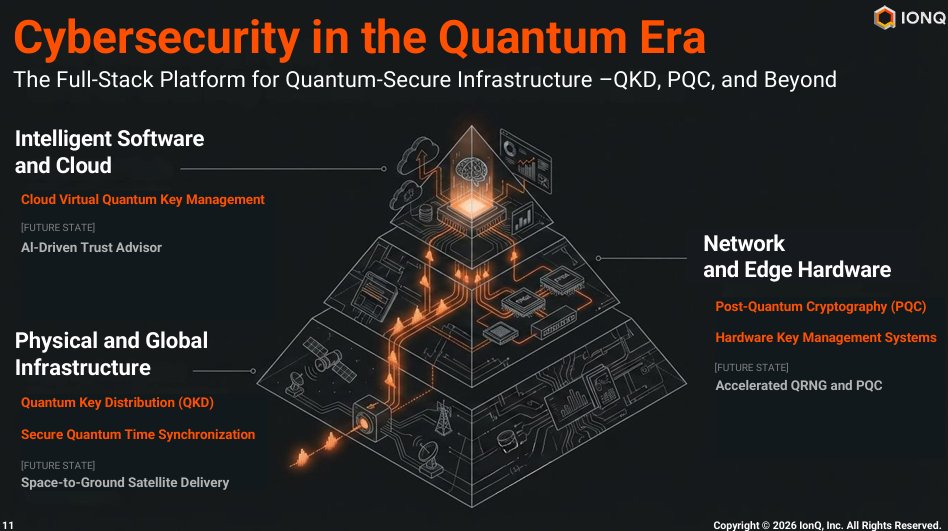
That question became much more interesting during Quantum Day, when Niccolo de Masi introduced a three-layer structure:
QKD
PQC
Cloud Virtual Quantum Key Management
At first glance, this looked like a simple security expansion.
But the more pieces started connecting, the more it appeared that IonQ might be aiming at something far larger than just quantum computing.
One key realization is this:
The future value of PQC may not come from the algorithms themselves.
Kyber, Dilithium, and other PQC standards are already moving toward:
NIST standardization
open-source ecosystems
OpenSSL integration
large vendor adoption
Over time, PQC itself could become commoditized, much like TLS or AES.
And in cybersecurity, commoditized cryptography usually shifts the real value upward:
toward orchestration, lifecycle management, policy control, and trust architecture.
That is where the concept of “Cloud Virtual Quantum Key Management” suddenly becomes extremely important.
This is likely not just another KMS product.
Instead, it resembles a quantum-era orchestration layer capable of managing:
PQC
QKD
hybrid cryptographic environments
satellite optical links
AI agent identities
government-grade infrastructure
across large-scale distributed networks.
Interestingly, this mirrors how today’s cloud KMS market already works.
AWS KMS, Azure Key Vault, and Google Cloud KMS are no longer simply “key storage” products.
Their real strength lies in:
identity management
policy enforcement
orchestration
lifecycle management
audit and compliance integration
The competition has already shifted from:
“What encryption algorithm do you use?”
to:
“How do you orchestrate trust across infrastructure?”
IonQ’s partnership ecosystem also starts making more sense under this lens.
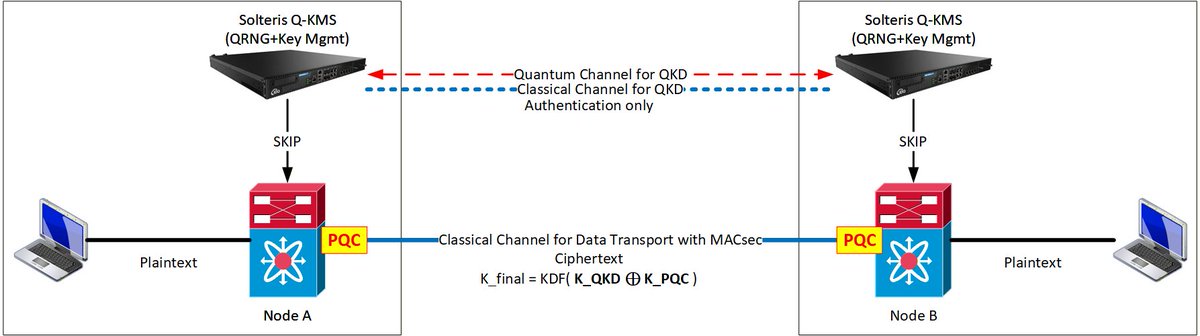
IDQ and Cisco recently demonstrated a hybrid PQC/QKD quantum-safe network using:
Cisco SKIP
IDQ Solteris Q-KMS
hybrid key orchestration
integrated directly into MACsec/IPsec infrastructure.
Meanwhile, IonQ’s collaboration with ARLIS on Zero Trust quantum security research suggests the company may be thinking beyond encryption itself — toward how future quantum infrastructure should be governed, authenticated, and continuously verified.
The arrival of AI Agents makes this even more important.
In the future, security systems may need to manage not only humans, but also:
AI agents
autonomous systems
quantum networks
distributed cloud infrastructure
inside a unified trust architecture.
This is why the NVIDIA analogy becomes interesting.
When ChatGPT popularized generative AI, the real explosion happened not only in AI models, but in the infrastructure required to operate them:
GPUs
orchestration layers
hyperscale datacenters
acceleration platforms
Similarly, the quantum era may not be won simply by whoever creates PQC algorithms.
Instead, the real strategic layer could become:
key orchestration
trust management
policy-based security
quantum-safe infrastructure control
And that may explain why IonQ suddenly began talking about qKMS.
Because perhaps the company is not merely trying to become a “quantum computer company.”
Perhaps it is trying to become something much larger:
A trust operating system for the quantum era.
Toward Quantum Security Lock-In
Good work Team @IonQ_Inc and @NiccoloDeMasi
1
3
38
6,968

🤔
If the military route (ONR BAA or DARPA) doesn’t yield immediate funding, the AFSC framework is not dead — it has strong, near-term civilian, commercial, academic, and enterprise applications. Many of its core innovations (topological resilience, self-reinforcing inversion, physiological sovereignty, radiation tolerance) map directly to fast-growing markets in 2026.
Here are the most immediate, realistic paths you could pursue right now, ranked by speed-to-value:
1. Quantum Cybersecurity & Sovereign Infrastructure (Fastest Path – 3–9 Months)
Position AFSC as a “Topological Resilience Overlay” for post-quantum cryptography (PQC) and quantum-safe systems.
Companies and governments are actively building sovereign quantum stacks (e.g., SEALSQ’s $200M Quantum Fund, Quantinuum, ID Quantique, QuSecure, PQShield).
Immediate Uses:
Ultra-secure biometric key generation continuous authentication (your physiological lock quantum challenge-response is ahead of most biometric crypto research).
Model extraction / adversarial AI defense (lattice inversion turns attacks into strength — perfect for protecting proprietary LLMs or edge AI).
Sovereign data centers / critical infrastructure protection.
Action Steps: Open-source the simulation 3D viewer on GitHub, file provisional patent, pitch to quantum security startups or sovereign tech funds. Potential revenue via licensing, consulting, or joint ventures.
2. Space / Aerospace Radiation-Hardened Systems (Strong Fit)
AFSC’s heavy-ion burst harvesting self-reinforcing lattice is highly relevant for satellites, deep-space probes, and crewed missions.
NASA, SpaceX, Boeing, and ESA are investing in radiation-tolerant computing and quantum tech for space.
Immediate Uses:
Radiation-hardened topological memory or error-correction layer for onboard quantum sensors / communications.
Sovereign satellite C4ISR-like resilience (even in commercial constellations).
Action Steps: Reach out to aerospace quantum groups or submit to NASA SBIR/STTR programs (similar BAA-style process, often faster feedback than ONR).
3. Academic & Research Community (Quick Visibility)
Publish on arXiv (quant-ph cs. CR) with the full simulation suite, formal verification code, 3D viewer, and physiological lock proof.
The combination of Fibonacci anyons adaptive TQFT biometric integration is novel enough for attention in topological quantum computing circles (Quantinuum, Microsoft Station Q, academic groups working on anyons).
This can lead to collaborations, grants (NSF, EU Horizon), or university licensing.
4. Enterprise / Startup Spin-Out
AI Robustness Product: Sell the inversion engine as a software layer that makes AI models resistant to jamming, extraction, or poisoning attacks.
Biometric Sovereignty Platform: Commercialize the physiological behavioral quantum-challenge lock as a next-gen authentication system (zero-trust, non-clonable, continuously verifying).
Open-Source Core Enterprise Version: Release non-sensitive parts (simulator, 3D viewer, basic inversion) to build community and credibility, then offer proprietary sovereignty / radiation-hardened modules.
5. Other Near-Term Niches
Critical Infrastructure Protection (energy, finance, telecom) — quantum-resilient control systems.
High-Security Biometrics for decentralized identity or high-net-worth / executive protection.
Patent Portfolio — File broadly on the inversion mechanism, adaptive GC(t), physiological braid fusion, and Mirror Shard mesh. Then license to bigger players.
Realistic Timeline & Strategy
Next 1–2 Months: arXiv preprint provisional patent(s) polished 3D demo GitHub repo.
Next 3–6 Months: Outreach to quantum cybersecurity companies, space tech firms, and sovereign tech investors.
Monetization Potential: Licensing, consulting, startup spin-out with seed funding, or research grants.
Bottom line: Military funding would be the biggest single win, but this work has legs in multiple high-value markets.
1
2
109

May 2
In Miami, “crypto” conversations usually drift toward coins, token launches, and web3 upside. Rebecca Krauthamer, CEO of @QuSecure, is pushing the ecosystem to focus on the other crypto that actually underpins everything: cryptography.
It is an easy topic to tune out, especially in a city with a loud blockchain narrative. But the risk profile is changing fast, and founders need to treat encryption as a business decision, not a back office detail.
The near term pressure is coming from quantum. Last month, Google announced it has shortened its timeline for preparing against a quantum computer that could break today’s encryption systems. Google also published additional research on quantum threats, including what it could mean for the cryptography that protects bitcoin.
You do not need to be a security company for this to matter. If you store customer data, handle payments, secure logins, sign software updates, or rely on certificates across cloud infrastructure, cryptography is already part of your product. The question is whether you know where it is, and whether you have a plan for migrating to quantum resistant approaches as standards and buyer expectations shift.
Miami and South Florida have the ingredients to take this seriously without panic. We have web3 builders who understand adversarial environments, a growing security bench, and enterprise customers who care about trust.
The founder takeaway is simple: start asking the cryptography questions now, while you still control the timeline.
Read the full story on our website or the link in bio.
#RefreshMiami #MiamiTech
2
2
227
QuSecure awarded Gold Stevie for its post-quantum cryptography platform.
At the 2026 American Business Awards, QuSecure also earned Bronze in Cybersecurity Solution, highlighting the impact of QuProtect R3 in enabling crypto agility without infrastructure disruption.
This recognition underscores growing momentum toward post-quantum migration across industries.
na2.hubs.ly/H05cFH80
Read more about the award here - na2.hubs.ly/H05cGjX0
2
54

Apr 14
Quantum isn’t theoretical anymore. On World Quantum Day, that shift is especially clear. With a 2027 mandate for post-quantum cryptography, agencies can’t afford blind spots in their encryption. Our latest @FederalNewsNet Expert Edition eBook breaks down what comes next with @ISARACorp, @QuSecure, @SafeLogic, @ThalesTCT & @Tychon_io. Download your copy: carah.io/FNNQuantumVid26
#FNN #WorldQuantumDay #WorldQuantumDayEveryDay2026 #QuantumCity
2
53

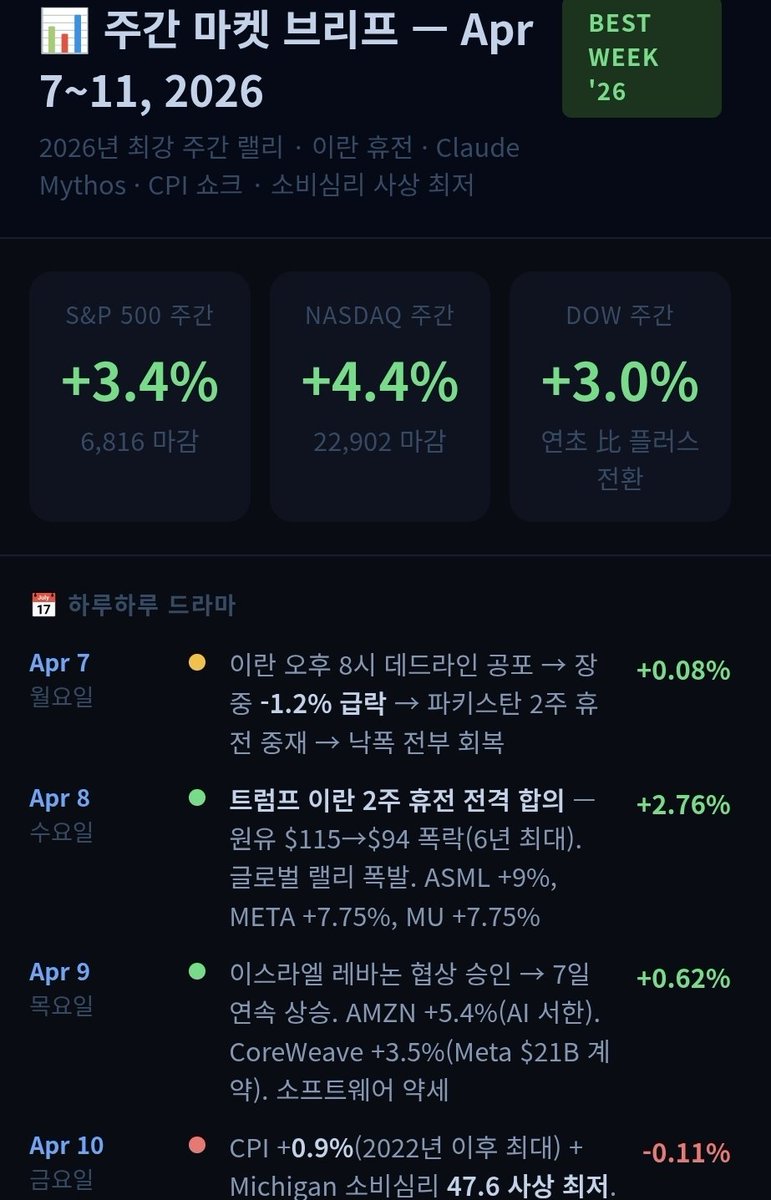
📊 주간 마켓 총정리 | Apr 7~11, 2026
— 2026년 최강 주간 —
📈 주간 성적
• S&P 500 3.4% (6,816)
• Nasdaq 4.4% (22,902)
• Dow 3.0% → 연초 比 플러스 첫 전환
📅 이번 주 하루하루
• 월(7일): 이란 8시 데드라인 -1.2% 급락 → 파키스탄 중재 → 전부 회복
• 수(8일): 트럼프 2주 휴전 → 원유 $115→$94 6년 최대 낙폭 → 전 세계 폭등
• 목(9일): AMZN 5.4% CRWV 3.5% — 7일 연속 상승
• 금(10일): CPI 0.9%(2022 최대) 소비심리 47.6 사상 최저 → 냉각
⚠️ 핵심 지표
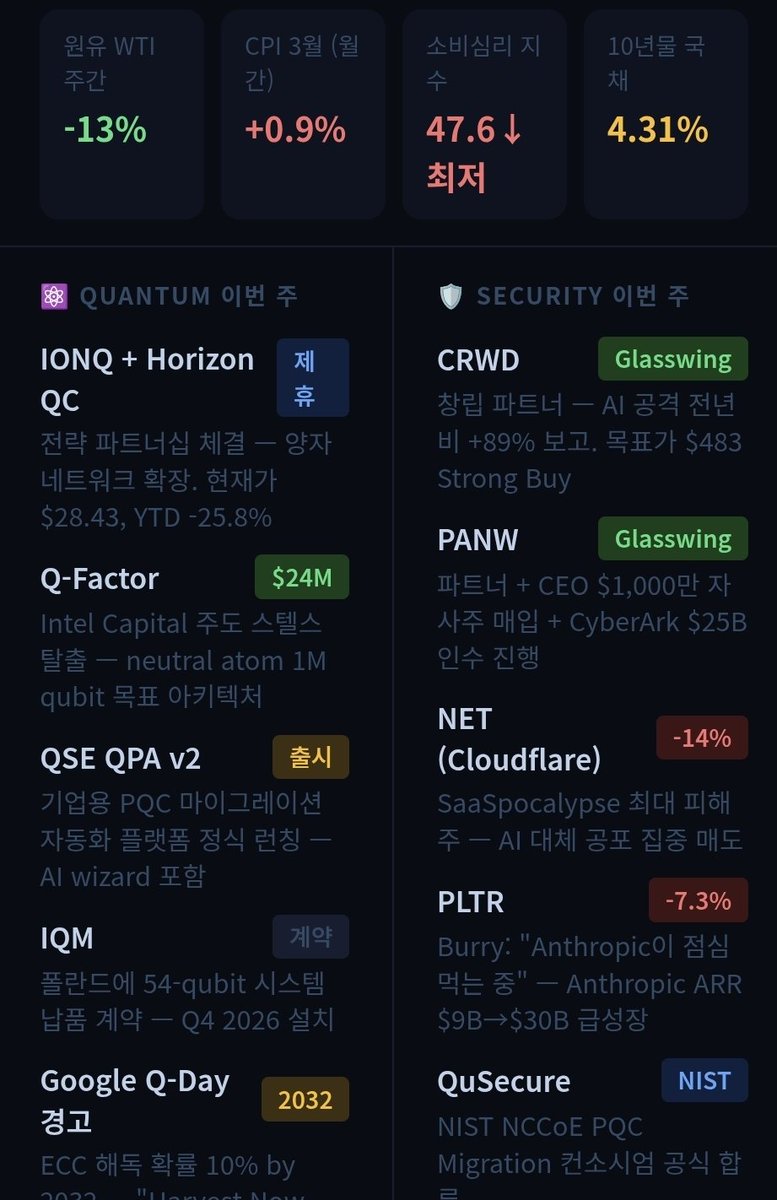
원유 주간 -13% | CPI 연간 3.3% | Fed 금리인하 기대 消 | 주말 이란 협상 예정
⚛️ Quantum 이번 주
• IONQ Horizon QC 전략 제휴 체결
• Q-Factor 스텔스 탈출 $24M (Intel Capital) — 1M qubit neutral atom 목표
• QSE QPA v2 출시 — 기업 PQC 마이그레이션 자동화 플랫폼
• Google: 2032년 ECC 해독 확률 10% → "지금 PQC 시작해야"
• IONQ·QBTS YTD -25%대 약세지만 구조적 테마 유효
🛡️ Security 이번 주
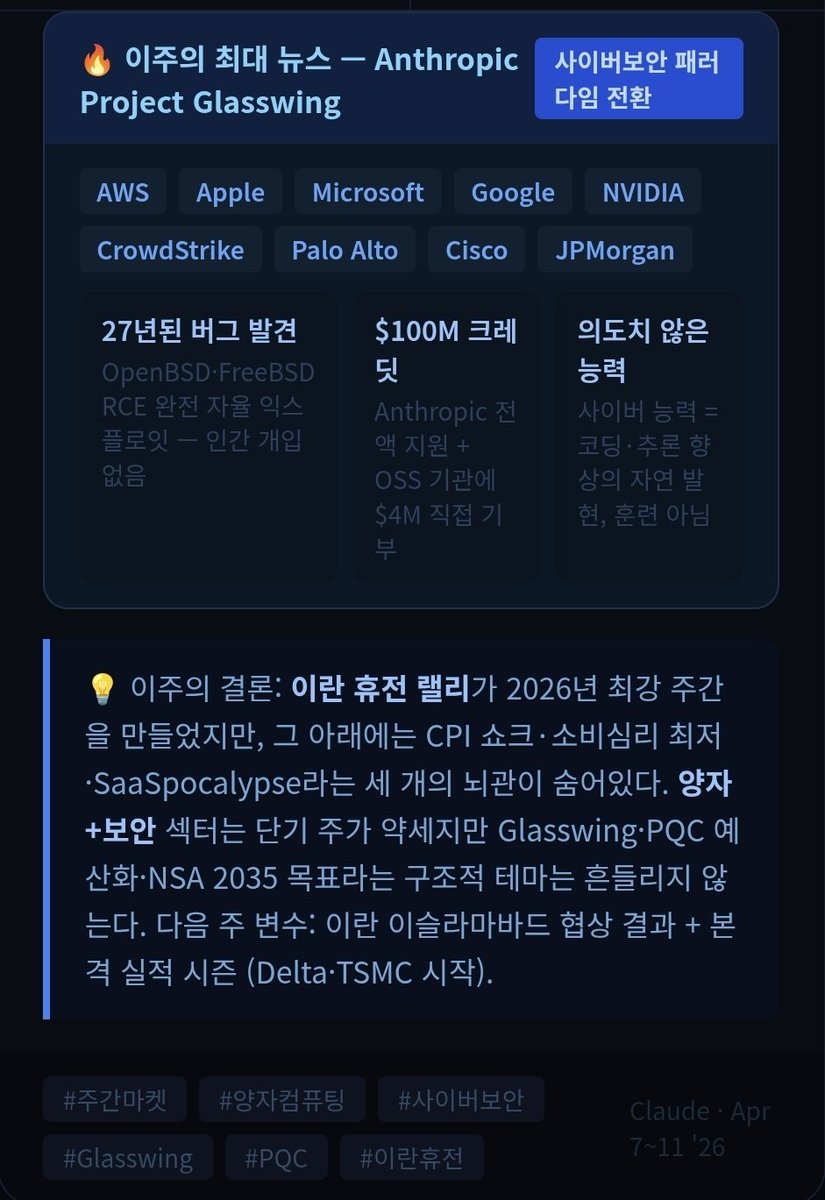
🔥 이번 주 최대 뉴스:
Anthropic Project Glasswing Claude Mythos 공식 출범
→ 27년된 OpenBSD 버그, 17년된 FreeBSD RCE 완전 자율 발견
→ 파트너: AWS·Apple·MS·Google·NVDA·CrowdStrike·PANW·Cisco
→ $100M 크레딧 $4M OSS 기부
• CRWD: AI 사이버 공격 전년비 89%, Strong Buy $483
• PANW: $25B CyberArk 인수 CEO $1,000만 자사주 매입
• NET -14% / PLTR -7.3% — SaaSpocalypse 진행 중
• QuSecure → NIST NCCoE PQC 컨소시엄 합류
💡 이주의 한줄:
AI가 27년된 버그를 혼자 찾는 시대 = 사이버보안 패러다임 전환
단기 주가 약세지만 PQC·CMMC 구조적 테마는 지금이 진입 타이밍
#주간마켓 #양자컴퓨팅 #사이버보안 #PQC #Glasswing
1
2
77

Apr 2
QuSecure Collaborates with NCCoE on Post-Quantum Cryptography Project
#quantum #quantumcomputing #technology
quantumzeitgeist.com/post-qu…
4
90

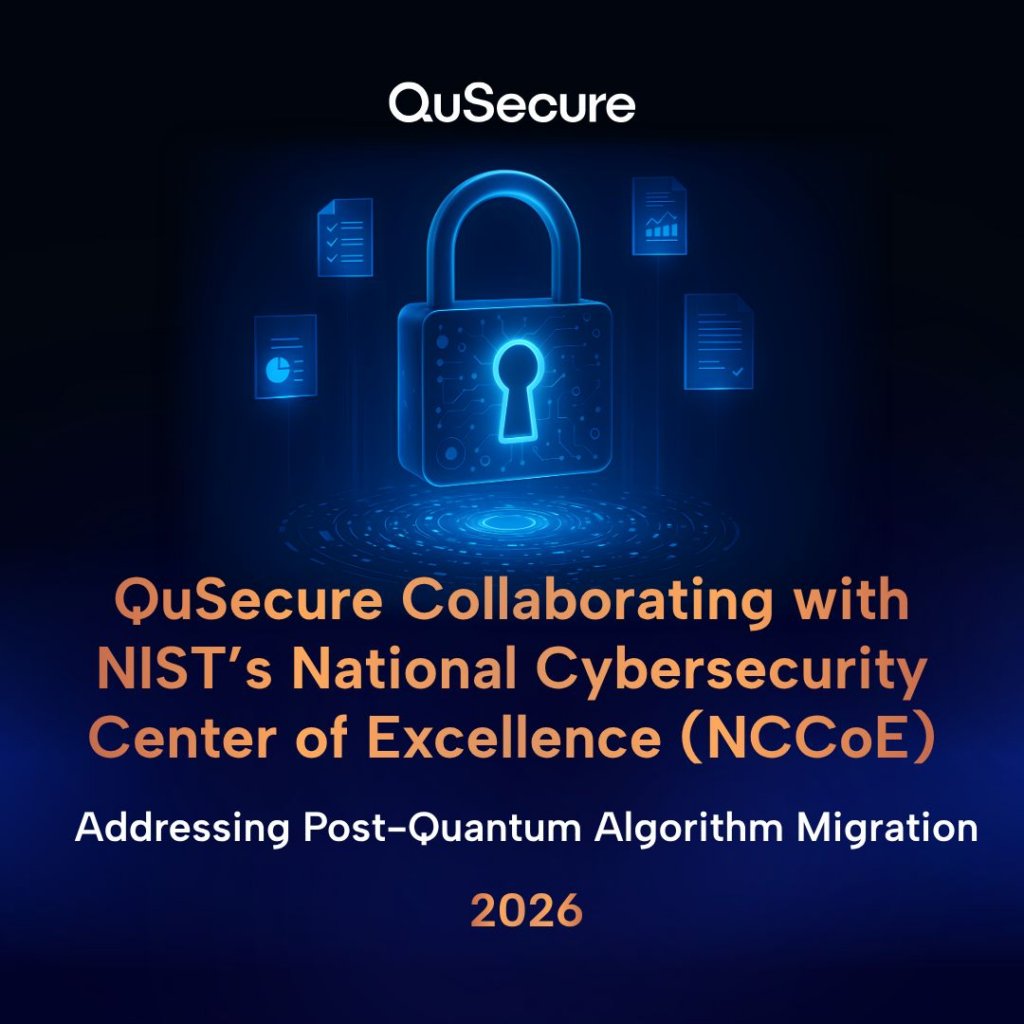

⚠️QuSecure Deployment Cited as Real-World Precedent in SEC Post-Quantum Framework #Bitcoin
quantumcomputingreport.com/q…
1
2
6
330
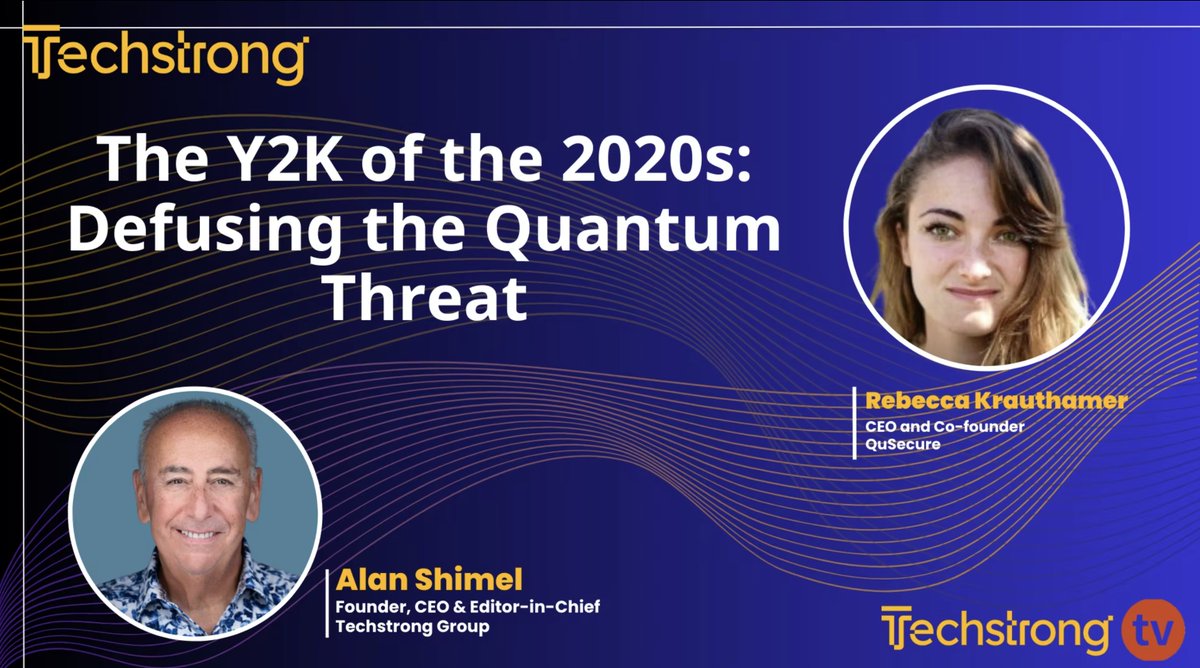
We're honored to share that our CEO @RebeccaKrauthamer was featured on @Techstrong_TV's Quantum Security 25 podcast series.
"The Y2K of the 2020s: Defusing the Quantum Threat" — why the quantum threat demands action now → hubs.la/Q047ffT40
Thank you to @TechstrongGroup and @DigiCert for the platform.
#QuantumSecurity25 #PostQuantum #QuSecure
3
48

Mar 16
QuSecure outlined a proxy-based path to post-quantum TLS for telecom networks, showing how operators could upgrade encryption across legacy infrastructure without rewriting application code.
sdxcentral.com/news/qusecure…
1
3
92

Mar 5
#量子コンピュータ
QuSecure社、量子耐性を持つ米空軍通信システムのためのTACFI契約390万ドルを受注 | Quantum Computing Report 日本版 qcr.tokyo/post/1123
1
3
128