
May 14
I've been using Claude as a research partner in the strategy-build loop for most of 2026. It's now one of the most leveraged pieces of my workflow. Worth writing up what it's actually good for, where it falls apart, and the checks I run before I trust any of its output.
What Claude is good for.
Red-teaming risk rules. Hand it your portfolio-level correlation matrix, your vol contributions per strategy, and your sizing logic, and ask it to argue against your current weights. The output is sharper than most discretionary risk managers. Not because Claude is smarter, but because it has the patience to walk every pair of strategies and ask 'are these actually independent or are they pulling the same trade through a different feature?' That's the question retail almost never asks itself.
Surfacing factor exposures you missed. If you have 28 strategies and you think they're uncorrelated, Claude will pull out the hidden vol exposure, the hidden carry exposure, the hidden trend-following exposure dressed up as something else. It does this through specification, not data, which means it gets it directionally right and quantitatively wrong.
Drafting feature ideas. Give it the instrument, the regime you're trying to capture, and the existing features in the model, and it'll suggest variants you'd take a week to write down on your own. Some of the suggestions are garbage. The ratio of useful to garbage is better than scrolling QuantStart for three hours.
Walking through correlation logic when you're tired. Trading-research nights at 11pm are when reasoning breaks. Claude doesn't get tired.
Where it breaks.
Over-confident pattern-matching on stats. Ask it about the historical Sharpe of a CTA strategy in 2022 and it will quote a number with three decimal places. That number is hallucinated unless the model has access to the data.
Made-up instrument-specific detail. The broker financing cost it quotes for gold CFDs is generic. Your broker, your tier, your account is specific. Don't conflate them.
Plausible-sounding strategy ideas with no edge. Most candidate strategies Claude suggests get cut in the first robustness pass. The signal-to-noise is still high enough to use it.
The three checks before you trust the output.
Stat-source verification. Every number Claude quotes needs a source. If you can't trace it, treat it as zero information.
Instrument-specificity check. Generic FX/gold/index claims need checking against your specific broker setup.
Falsifiability check. Any strategy idea needs a falsifiable hook. If you can't write the hook from Claude's description, the idea isn't a strategy. It's a vibe.
Used this way, Claude is a research partner. Used without these checks, it's a confident-sounding error generator. The difference is you and your "operator discipline".
1
1
19
1,205

Mar 6
Correlated Time Series Generation using Object Oriented Python [@QuantStart] dlvr.it/TRKNCr
3
1,046

Feb 21
Sources & Further Reading
◽ Cortex official website & documentation: cortex-agent.xyz | cortex-agent.xyz/Docs
◽ Cortex on 𝕏: x.com/cortexagent
◽ Drift Protocol docs: docs.drift.trade
◽ Kamino Finance overview: kamino.finance
◽ Jupiter Aggregator details: jup.ag
◽ Markov Regime Switching explained by Aptech Blog and QuantStart
9
658

❑ 𝗥𝗲𝗳𝗲𝗿𝗲𝗻𝗰𝗲𝘀
◽Cortex Site and Documentation: cortex-agent.xyz/ and cortex-agent.xyz/Docs
◽Cortex 𝕏: x.com/cortexagent
◽Drift Protocol Documentation: docs.drift.trade/
◽Kamino Finance Overview: kamino.finance/
◽Jupiter Aggregator Details: jup.ag/
◽Markov Regime Switching Explanations: Aptech Blog (aptech.com/blog/introduction…), QuantStart (quantstart.com/articles/mark…)

1
10
240

29 Jul 2025
Still on LAPO vs NEPO - This is mostly for undergrads and fresh grads.
People regularly ask me how easy or possible it is to get into quant finance.
The truth is, while it is relatively more financially rewarding than most professions, it’s one of the most technically demanding areas in accounting and finance — and even harder to break into when you’re a Nigerian Lapo with lack of access and the right mentorship.
Let’s put the difficulty into perspective. Last week, I had to model how corporate acquisition fund flows affect option valuation — a mix of accounting and structuring logic — and in the same breath, apply Jamshidian’s trick to break down an interest rate swaption for XVA exposure. Two completely different skill sets. Same role.
I personally come from an accounting background, not the typical maths or engineering route, so transitioning into this space has taken time, patience, and a lot of learning. Most people I’ve seen do it like @OladejiTosin15 have had to put in the work. Are you ready to?
Quant finance is not one narrow path. It could span :
– Algorithmic trading
- Derivatives pricing and risk-neutral valuation
– Structured product and illiquid asset valuation
– Financial reporting (IFRS 9 / ASC 820)
– Risk analytics and model validation
– Quant dev roles (Python, VBA, C )
– Investment modelling and portfolio risk
You’re expected to understand at a minimum:
📌 Financial math & probability
📌 Programming and data tools
📌 Accounting standards
📌 Regulatory frameworks
📌 Financial theory
📌 Documentation and stakeholder communication
Now add the reality of breaking in from Nigeria:
– Very few firms offering quant exposure
– Limited access to mentors, training, or interviews
– Many graduate programs not set up for non-UK/US applicants
– Visa issues, relocation hurdles, and network gaps
– Even the best online resources assume you already have a base
So when I say “I don’t know” how to break in, it’s not gatekeeping. It’s that there’s no single route. Everyone’s journey is stitched together over time.
That said, i just jotted a list of ways to explore the industry more and begin to build broad expertise for those that have little to no exposure.
📌 Watch The Big Short / Margin Call
📌 Read Hull – Options, Futures & Other Derivatives (start slow)
📌 watch MIT’s Intro to Probability – full YouTube playlist
📌 Read Stochastic Calculus for Finance I: The Binomial Asset Pricing Model (Springer Finance)
📌 Excel: Master NPV, IRR, PV, Goal Seek, pivot tables, new formulars like LET, FILTER,VSTACK etc
📌 Python: Learn NumPy, Pandas, and matplotlib and popular machine learning libraries
📌 Read QuantStart for quant career tips and code
📌 Practise documenting models and presenting assumptions clearly
📌 Join LinkedIn quant groups, Wilmott forums, and Stack Overflow
📌 Pick up professional certifications like FRM, CFA, and CQF
📌 Explore starting a masters in a numerate course like maths, even in Nigeria
Take it one concept at a time. It builds.
11
64
286
36,148

18 Jul 2025
maths/stats -> probability theory -> statistics -> combinatorics -> stochastic processes -> measure theory -> linear algebra -> matrix calculus -> optimization techniques (convex non-convex) -> Lagrange multipliers -> numerical methods -> game theory ->
econometrics -> time series models -> cointegration -> ADF test -> Johansen test -> VAR/VECM -> ARIMA/SARIMA -> ARCH/GARCH/EGARCH ->
machine learning theory -> bias-variance tradeoff -> cross-validation -> regularization -> ensemble learning ->
python -> numpy -> pandas -> scipy -> matplotlib -> seaborn -> statsmodels ->
data cleaning -> outlier treatment -> imputation -> winsorization ->
feature engineering -> lag features -> rolling stats -> technical indicators -> z-score normalization -> PCA -> t-SNE ->
SQL -> joins -> window functions -> CTEs -> recursive queries -> performance tuning ->
postgresql -> mysql -> clickhouse -> timescaledb -> duckdb ->
web scraping -> beautifulsoup -> scrapy -> selenium -> playwright ->
financial data apis -> yfinance -> polygon io -> alphavantage -> quandl -> tiingo -> bloomberg api -> reuters ->
data formats -> CSV -> Parquet -> Feather -> HDF5 ->
backtesting libraries -> backtrader -> backtesting py -> bt -> zipline -> vectorbt -> quantconnect -> pyfolio -> empyrical -> alphalens ->
portfolio theory -> markowitz -> efficient frontier -> black-litterman -> hierarchical risk parity -> Kelly criterion ->
risk management -> VaR -> CVaR -> drawdowns -> volatility targeting -> stop-loss logic -> hedging strategies ->
options theory -> BSM model -> binomial tree -> Monte Carlo -> implied volatility -> volatility skew -> smile/surface -> greeks -> delta hedging ->
quantlib -> pricing bonds -> swaptions -> FRAs -> caps/floors -> yield curves -> interest rate models (Ho-Lee, CIR, Hull-White) ->
futures -> margin requirements -> contango/backwardation -> rollover strategies ->
HFT concepts -> limit order book -> market microstructure -> latency -> slippage -> co-location -> DMA -> FIX protocol ->
low-latency programming -> C -> Java -> assembly-level profiling -> lock-free queues ->
data engineering -> airflow -> prefect -> Luigi -> cron -> docker -> kubernetes -> bash scripting ->
version control -> git -> git hooks -> CI/CD -> github actions ->
API development -> flask -> fastapi -> dash -> streamlit -> grpc -> socket programming ->
cloud infra -> AWS -> GCP -> Azure -> s3 -> ec2 -> lambda -> Athena -> BigQuery ->
real-time systems -> kafka -> redis -> websocket streaming -> RabbitMQ ->
deep learning -> pytorch -> keras -> RNNs -> LSTMs -> transformers -> attention ->
NLP -> text classification -> sentiment analysis -> named entity recognition -> embeddings ->
alternative data -> news feeds -> sentiment data -> satellite data -> ESG metrics -> Google Trends ->
data licensing -> tick data -> minute bars -> TAQ -> WRDS -> Refinitiv -> Bloomberg Terminal ->
market regimes -> bull/bear classification -> clustering -> HMM -> volatility switching ->
factor investing -> value -> size -> momentum -> low volatility -> quality ->
research workflows -> jupyter -> latex -> arxiv -> SSRN -> kaggle notebooks -> visualization dashboards ->
technical analysis -> RSI -> MACD -> Bollinger Bands -> Ichimoku -> candlestick patterns -> Fibonacci levels ->
execution algorithms -> TWAP -> VWAP -> POV -> IS -> Sniper -> Iceberg ->
trading strategies -> pairs trading -> mean reversion -> momentum -> breakout -> statistical arbitrage -> calendar spreads ->
regulations -> SEC filings -> 10-K/Q -> EDGAR -> MiFID II -> Dodd-Frank -> compliance checks ->
job platforms -> WorldQuant BRAIN -> Trexquant GAR -> Numerai -> QuantConnect -> Kaggle competitions ->
excel -> advanced formulas -> pivot tables -> VBA -> macros -> add-ins ->
interview prep -> probability puzzles -> brain teasers -> guesstimates -> coding rounds -> case studies ->
quant books -> "Options, Futures, and Other Derivatives" -> "Quantitative Trading" -> "Machine Learning for Asset Managers" -> "Trading & Exchanges" -> "Inside the Black Box" ->
quant blogs -> Quantocracy -> QuantInsti -> QuantStart -> Euan Sinclair -> Andreas Clenow ->
soft skills -> research writing -> hypothesis thinking -> interpreting p-values -> storytelling with data -> risk communication
Congrats, ur now a full-stack quant
23
19
171
6,495

20 Jun 2025
Diving into quant can be overwhelming, but start with "Paul Wilmott" books, they’re pretty solid. Also, QuantStart has some good
4
226

22 Feb 2025
This is my 2025 project.
Educating myself to master Quant Finance Analyst Programming Trader.
I recommend this site containing many resources and articles for anyone interested by this topic.
quantstart.com/
X account @quantstart
3
210

10 Sep 2024
quantstart.com/articles/pyth… Good overview of the Python libraries for algo trading @quantstart. @jasonstrimpel talked all about back-testing with Python on our show recently with @mars10p. thealgorithmicadvantage.subs…
3
309

23 Jul 2024
This quants’ approach to algorithmic trading—Michael Halls-Moore, QuantStart
youtu.be/cqEncH4_5ls?si=iZXM…

1
2
302

22 Jul 2024
How To Build An ARIMA GARCH Trading Strategy Using quantstart by @MohdShukriHasa1 pub.towardsai.net/how-to-bui…
7
33
2,242

15 May 2024
在美国,如何学习量化股资,麻烦给出一分详细的学习攻略。
在美国学习量化投资需要结合理论学习、技术实践和市场经验。以下是详细的学习攻略:
1. 基础知识学习
金融和投资基础
阅读经典书籍:《证券分析》 by 本杰明·格雷厄姆 and 戴维·多德
《聪明的投资者》 by 本杰明·格雷厄姆
《漫步华尔街》 by 伯顿·马尔基尔
《股市真规则》 by 菲利普·费雪
数学和统计基础
课程和书籍:《概率论与统计》 by Robert V. Hogg and Elliot A. Tanis
《时间序列分析》 by James D. Hamilton
《数理统计》 by George Casella and Roger L. Berger
2. 编程与数据分析
学习编程语言
Python:在线课程:Coursera、edX和Udemy都有许多关于Python编程的课程。
书籍:《Python编程:从入门到实践》 by Eric Matthes
R:在线课程:DataCamp、Coursera和edX都有许多关于R语言的课程。
书籍:《R for Data Science》 by Hadley Wickham and Garrett Grolemund
数据科学与机器学习
在线课程:Coursera上的《Machine Learning》 by Andrew Ng
edX上的《Data Science MicroMasters》 by UC San Diego
书籍:《机器学习实战》 by Peter Harrington
《Python机器学习》 by Sebastian Raschka and Vahid Mirjalili
3. 量化投资理论
经典书籍
《量化交易》 by Ernie Chan
《Alpha策略》 by Perry J. Kaufman
《Algorithmic Trading and DMA》 by Barry Johnson
在线课程和资源
Coursera上的《Computational Investing, Part I》 by Georgia Institute of Technology
Udacity上的《Artificial Intelligence for Trading》
4. 实践与项目
实际操作
模拟交易:使用模拟交易平台如QuantConnect、Quantopian(虽然Quantopian已经关闭,但它的开源项目仍然可用)。
项目实践:在GitHub上寻找开源项目,参与并贡献代码。
5. 高级学习与专业认证
高级课程
硕士学位:考虑攻读金融工程或量化金融的硕士学位,如纽约大学、哥伦比亚大学和伯克利大学提供的相关项目。
认证:CFA(特许金融分析师)和FRM(金融风险管理师)是两项公认的专业认证。
6. 加入专业社群与实习
社群与论坛
加入量化金融论坛和社区:如QuantStart、Elite Trader、Nuclear Phynance。
参加会议和研讨会:如Quantitative Work Alliance for Applied Finance, Education, and Wisdom (QWAFAFEW)和Algorithmic Traders Association (ATA)。
实习与工作
申请实习:在对冲基金、投资银行或金融科技公司申请量化分析或量化研究的实习岗位。
网络和职业发展:通过LinkedIn和校友网络与行业内的专业人士建立联系,获取更多职业机会。
7. 持续学习与提升
阅读和研究
定期阅读金融和量化投资的研究论文:如《Journal of Finance》、《Journal of Financial Economics》和《Quantitative Finance》。
关注行业动态:阅读如《The Economist》、《Financial Times》和《Bloomberg》等金融媒体。
自我反思与改进
总结和反思:定期回顾自己的交易策略和投资决策,总结经验教训。
持续学习:不断更新和提升自己的知识和技能,适应市场变化和技术进步。
通过系统化的学习和实践,你可以逐步掌握量化投资的知识和技能,在这一领域取得成功。

1
12
21
2,917

25 Apr 2024
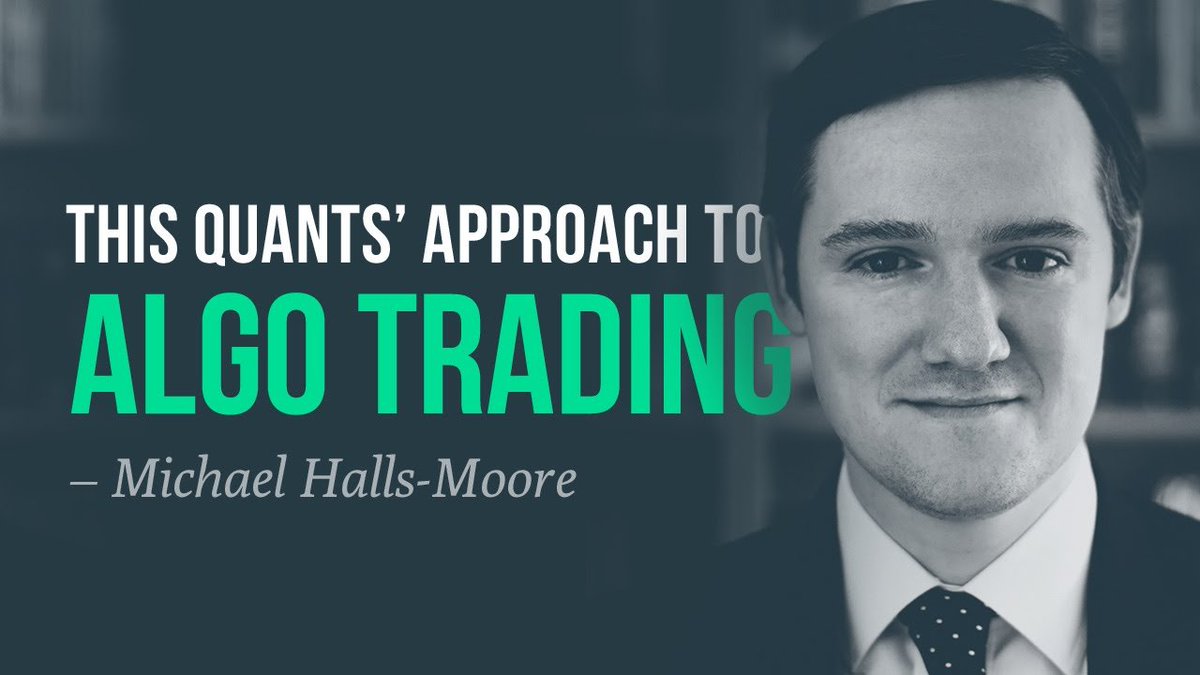
6. "This quants’ approach to algorithmic trading—Michael Halls-Moore, QuantStart"
1
37
14,268

30 Jul 2023
@quantstart hey guys I have just paid my subscription and can’t have access to my account. Impossible to retrieve my credentials.
34

11 Apr 2023
PyBroker is an open source #Python framework for developing algo-#trading strategies that use #MachineLearning and #ArtificialIntelligence
github.com/edtechre/pybroker…
@jasonstrimpel @Robot_Wealth @quantstart @trality_bots @AlvarezQuant @quantdare @QuantNomad @QuantifiedStrat
1
4
125

Por fim, é importante seguir referências de profissionais renomados e atualizados na área. Alguns blogs e sites que recomendo são o QuantConnect e o QuantStart. Acompanhar publicações de revistas especializadas, como a "Journal of Financial Econometrics" também é uma boa prática
1
2
101

18 Jan 2023
7 blogs to help you find your edge:
• Quantstart
• DTR Trading
• Quant at Risk
• CSS Analytics
• Hudson & Thames
• Quantifiable Edges
• Better System Trader
2
6
37
7,479
18 Jan 2023
Quantstart
Learn systematic trading techniques to automate your trading, manage your risk and grow your account.
quantstart.com/articles/
1
3
10
3,450

1 Jan 2023
英語だが、アルゴトレードクオンツの典型的な一日のスケジュール。
quantstart.com/articles/A-Da…
このQuantStartというサイトはアルゴトレードクオンツに興味のある人にとって結構良い記事が多くおすすめ。
QSTraderというアルゴのバックテスト用ライブラリ(Python)も公開している
quantstart.com/qstrader/
1
333
