
Apr 25
Latest from the Build Canada newsletter:
“When equity language is allowed to mask bad management, government inaction, and even to silence critics, it serves as a strategic get-out-of-jail-free card. It also calls into question the good faith of everyone who uses it, no matter how well intentioned.
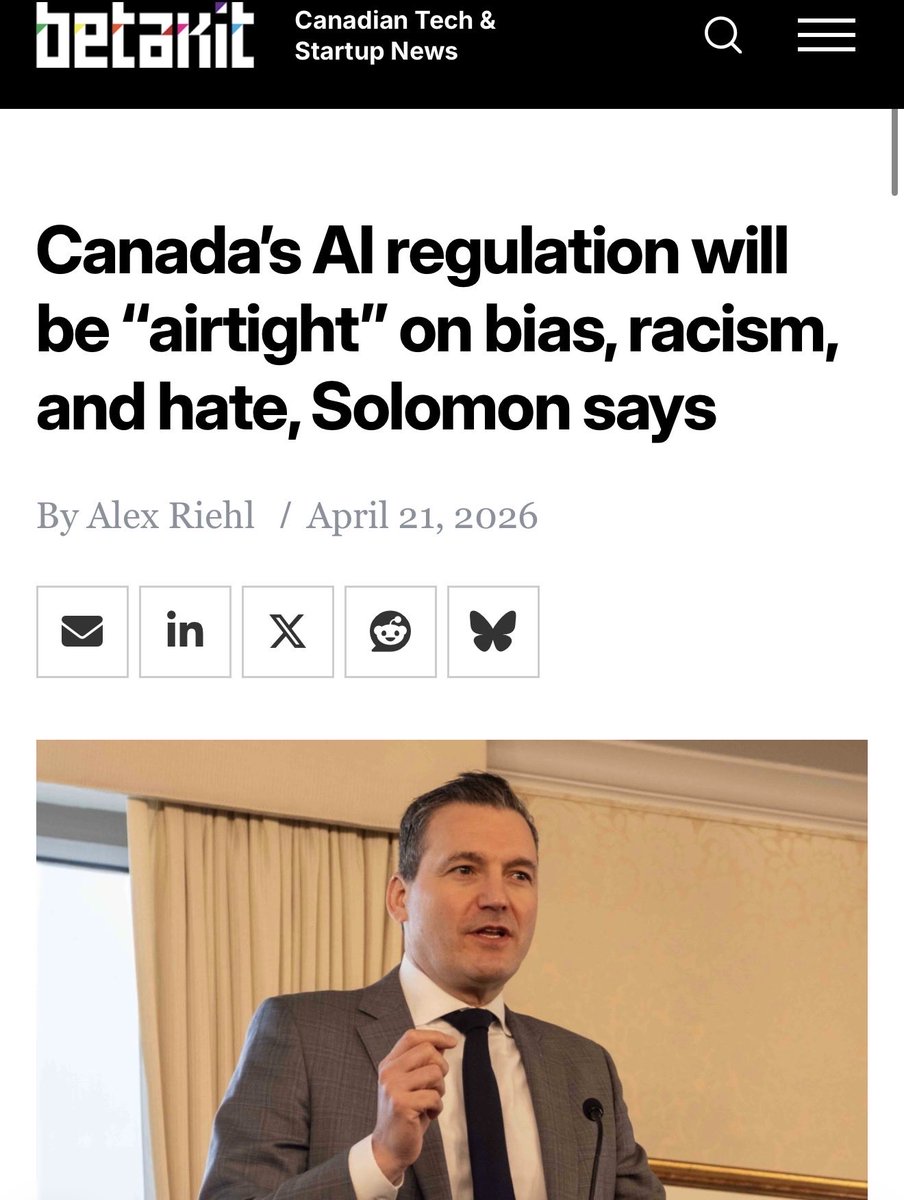
Take for example Canada’s AI minister, Evan Solomon, who spoke this week at a breakfast hosted by QueerTech and the Canadian Queer Chamber of Commerce in Ottawa. At the event, Solomon argued that inclusivity can be Canada’s “competitive advantage” in AI and that the government’s forthcoming AI strategy will be “airtight on bias, racism, and hate.”
Ok. But Canada’s refreshed AI strategy, first promised for the end of 2025, has been repeatedly delayed, and the rest of the world is not waiting for Canada to work out its regulatory framework. The point isn’t that the QueerTech community is unimportant; it’s that when your AI strategy is late and the rest of the world is screaming ahead, leading with diversity as your competitive advantage is a tell that reveals the same instinct the Say It memo is asking us to confront.
In using the language of inclusion as an excuse for inaction, the Carney government is showing disturbing signs of the same behaviour that consumed the Liberals under Justin Trudeau.
The prime minister has a reputation as a demanding boss who doesn’t suffer fools gladly, yet he has had nothing to say about the Christiane Fox issue. On this matter and others, the new government is looking a lot like the old one.”
8
9
81
14,813

Apr 25
Dan Bongino called this out recently (Ep. 2491): AI will make lying politically expensive. Real-time fact-checking chatbots will smoke out phony politicians and grifters — especially 'fake liberal politicians' pushing evidence-free BS. No more gaslighting.While Canada's AI minister obsesses over 'bias, racism & inclusivity' at a QueerTech event (ignoring jobs, China, and innovation), AI could actually reward truth over spin. Bongino: 'These chatbots are going to smoke you out.' Conservatives should back tech that exposes the hawks, not heavy-handed rules that chase talent south.
1
4
146

Apr 25
🚨 BREAKING: Canada’s AI Minister just announced our AI strategy at a Queertech breakfast.
His priority for AI regulation?
“Airtight” rules on bias, racism, and hate.
“Inclusivity as our competitive advantage.”
“Tech bros are consequential BS.”
He didn’t prioritize productivity, competing with China, nor the fact that 60% of Canadian jobs exposed to AI disruption.
Bias regulation 😭
By a minister whose strategy was promised in 2025 and delayed twice.
This is why capital is leaving
Why our best talent moves to the US
And why we’re falling behind.
The US and China are building rockets.
We’re regulating bias and spending hundreds of millions leasing a rocket pad.
We don’t have a serious AI strategy nor a serious AI Minister.
The US and China are spending trillions on AI dominance with China having nearly half of all AI global patents.
It’s embarrassing.
137
144
542
15,298

Apr 25
I am not sure Canada needs an "AI Strategy" but assuming it does it needs to deal with what benefits AI can bring rather than dreaming up regulations in an attempt to control it in order to appease the geniuses at QueerTech (no, really). 12/12
2
56

Apr 25
Josh, your post nails it, Minister Evan Solomon’s remarks at the QueerTech event in Ottawa confirm exactly what free-speech advocates have been warning about: the federal government intends to weaponize AI regulation to police expression under the vague banners of “bias, racism, and hate.”
His exact words: “We’re going to be tight when there’s bias, racism, hate; we are going to be airtight.” This comes as part of the government’s “light, right, and tight” AI strategy, light on innovation barriers, but airtight on content controls that prioritize “inclusivity for marginalized groups,” algorithmic transparency, and a “right to deletion.” The BetaKit report from April 21, 2026, makes the intent crystal clear.
This is not neutral regulation. It is viewpoint discrimination dressed up as harm prevention. Section 2(b) of the Charter guarantees freedom of expression, including the right to express ideas that some, including government officials, may label “biased” or “hateful.” Courts have repeatedly struck down overbroad speech restrictions when they chill legitimate debate (see the Federal Court of Appeal’s 2026 ruling on the Emergencies Act invocation during the Freedom Convoy, which found unreasonable infringement on expression, assembly, and security rights). Solomon’s framework hands unelected AI gatekeepers and bureaucrats the power to decide what constitutes “hate” or “bias” in real time, the same government that has expanded hate-speech provisions, pushed Bill C-9 (removing religious-expression defenses in some contexts), and layered UNDRIP/DRIPA obligations that create race-based vetoes on resource projects worth over $670 billion.
The pattern is unmistakable. Under the current Liberal government led by Mark Carney, federal debt has hit $2.35 trillion (roughly $56,000 per Canadian), with ongoing deficits and Auditor General reports showing $24–32 billion annually in Indigenous programming yielding unsatisfactory outcomes on housing, water, and health for over half the audited items. Yet instead of evidence-based fixes, modern treaties with finality and extinguishment clauses, or one law for all under s. 15 of the Charter, we get more tools for narrative control. Labeling dissent on these policies as “bias” or “hate” via AI is not protection; it is suppression of the very debate needed for reform.
I incorporate AI daily in my own content to cut through propaganda and demand evidence-based policy. AI itself is neutral, a powerful tool for discovery, analysis, and accountability. What Solomon describes is the opposite: state-directed AI to enforce ideological conformity. Regulate provable harms like fraud, defamation, or direct incitement with clear, Charter-compliant rules and judicial oversight. Do not build “airtight” systems that let the government’s preferred narratives determine what Canadians can read, write, or debate.
Dehaas warned about this exact risk in parliamentary committee earlier this week. Canadians deserve better than another layer of technocratic speech control on top of existing fiscal mismanagement and regulatory gridlock. Precision over propaganda. Evidence over excuses. One law for all. Citizens first. Canada first.
π = 3.14159
2
8
24
390




Apr 22
You didn’t even need to mention Canada, we would all read QueerTech and would have figured that out.
Apr 21

Canada is choosing to lead in AI, not just by building new technology, but by building it responsibly, inclusively, and with people at the centre.
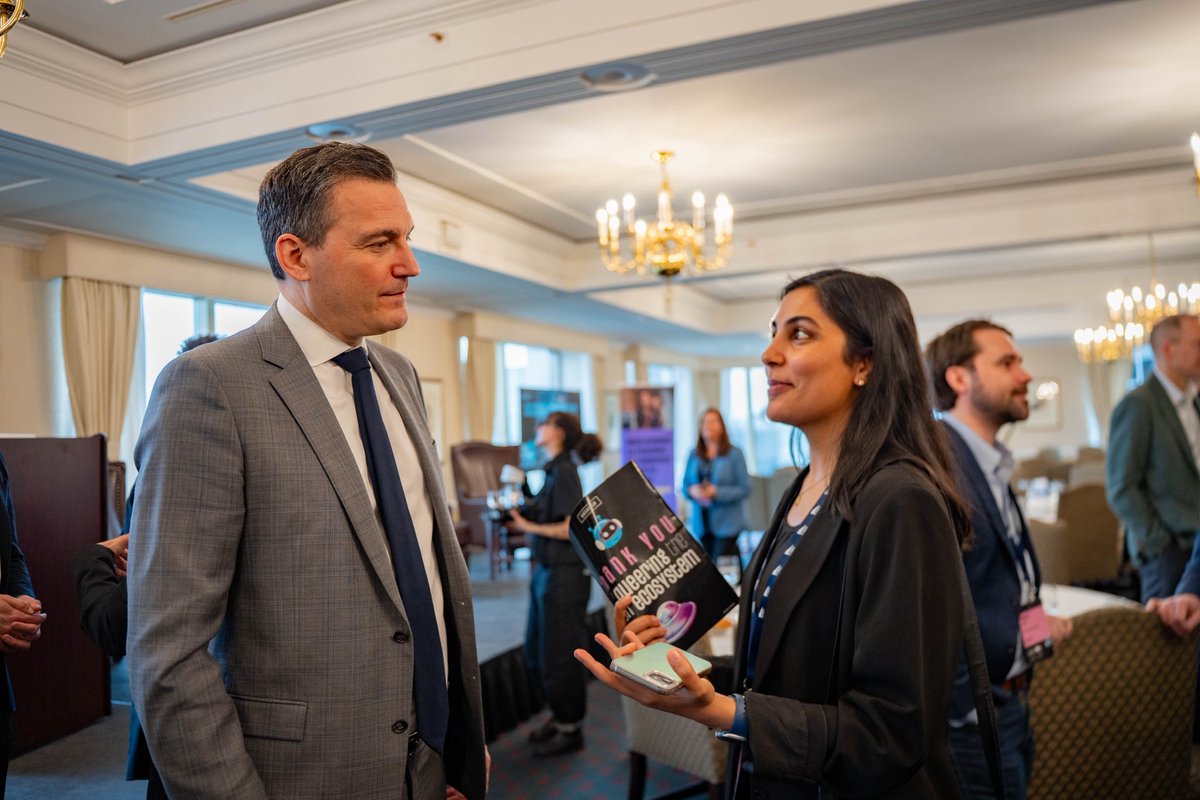
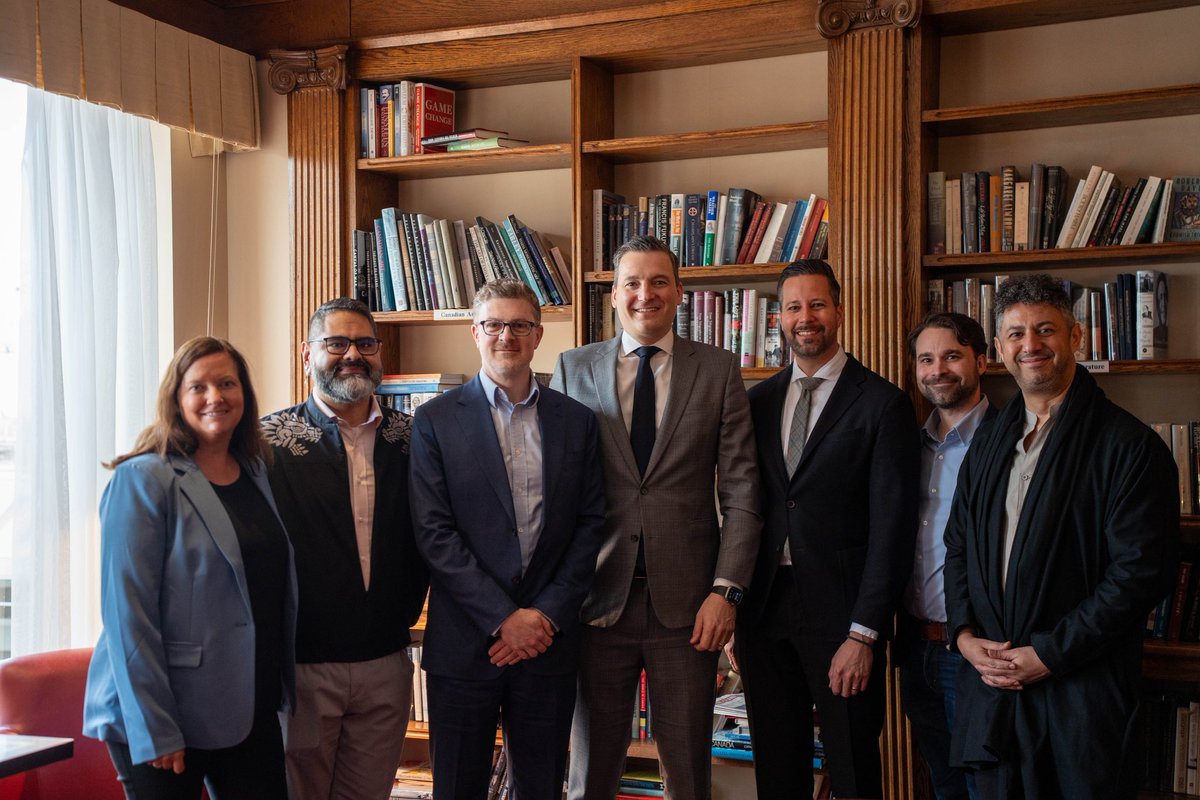
This morning, I joined NHM Connect and QueerTech to celebrate the innovators helping make Canada’s tech sector more inclusive, more representative, and more ambitious.
That’s how we build a stronger Canada.
🇨🇦
Le Canada a choisi d'être un leader dans le domaine de l’IA, non seulement en développant de nouvelles technologies, mais aussi en le faisant de manière responsable, inclusive et en plaçant les personnes au cœur de ses préoccupations.
Ce matin, je me suis joint à NHM Connect et à QueerTech pour rendre hommage aux innovateurs qui contribuent à rendre le secteur technologique canadien plus inclusif, plus représentatif et plus ambitieux.
C’est ainsi que nous bâtissons un Canada plus fort.


1
1
5
350

Apr 22
Canada isn’t even close to leading in AI, and “QueerTech” definitely isn’t the key to closing that gap.
Have you guys tried actually building new critical mineral mines and deregulating so we have some of the most important components to make deals with?
1
6
530

Apr 22
Canada leads in AI as it builds with QueerTech. Not even parody.
I’m sure Google is terrified of Canada dominating them in AI.
Apr 21
Canada is choosing to lead in AI, not just by building new technology, but by building it responsibly, inclusively, and with people at the centre.
This morning, I joined NHM Connect and QueerTech to celebrate the innovators helping make Canada’s tech sector more inclusive, more representative, and more ambitious.
That’s how we build a stronger Canada.
🇨🇦
Le Canada a choisi d'être un leader dans le domaine de l’IA, non seulement en développant de nouvelles technologies, mais aussi en le faisant de manière responsable, inclusive et en plaçant les personnes au cœur de ses préoccupations.
Ce matin, je me suis joint à NHM Connect et à QueerTech pour rendre hommage aux innovateurs qui contribuent à rendre le secteur technologique canadien plus inclusif, plus représentatif et plus ambitieux.
C’est ainsi que nous bâtissons un Canada plus fort.
3
2
61
19,623


Apr 21
Since when is tech Queer?
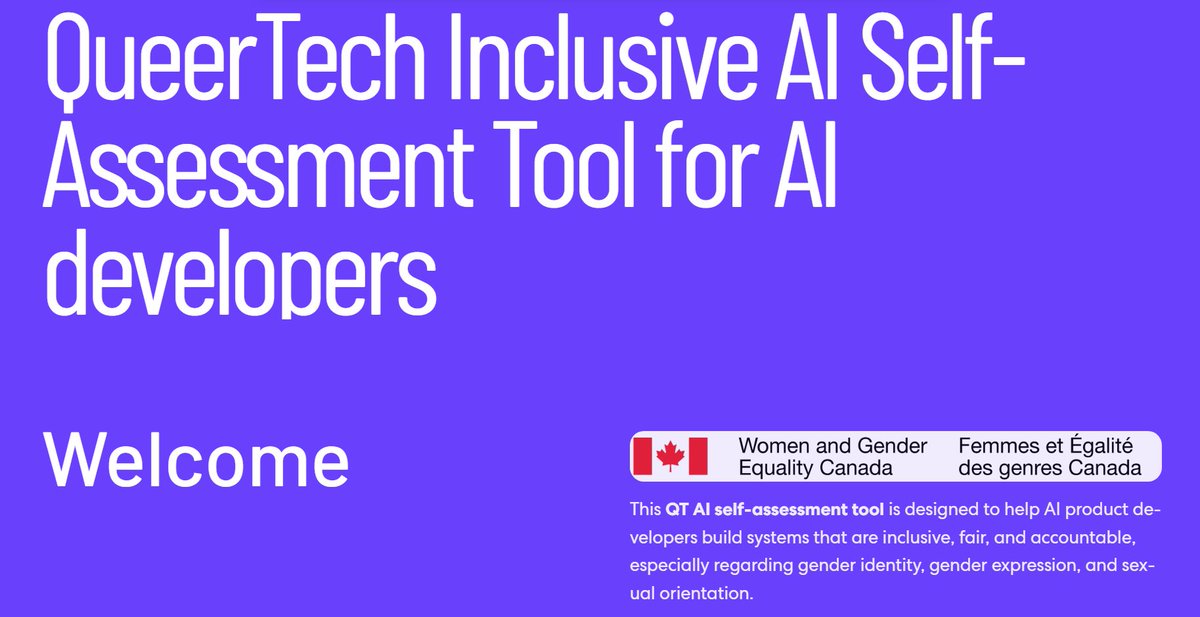
"QueerTech is a national nonprofit advancing 2SLGBTQIA talent, entrepreneurship, and inclusive technology across Canada’s tech ecosys
tem"
QueerTech has received $8M from taxpayers to create apps for assessing queers
Apr 21
Canada is choosing to lead in AI, not just by building new technology, but by building it responsibly, inclusively, and with people at the centre.
This morning, I joined NHM Connect and QueerTech to celebrate the innovators helping make Canada’s tech sector more inclusive, more representative, and more ambitious.
That’s how we build a stronger Canada.
🇨🇦
Le Canada a choisi d'être un leader dans le domaine de l’IA, non seulement en développant de nouvelles technologies, mais aussi en le faisant de manière responsable, inclusive et en plaçant les personnes au cœur de ses préoccupations.
Ce matin, je me suis joint à NHM Connect et à QueerTech pour rendre hommage aux innovateurs qui contribuent à rendre le secteur technologique canadien plus inclusif, plus représentatif et plus ambitieux.
C’est ainsi que nous bâtissons un Canada plus fort.
1
2
30

Apr 21
Canada is choosing to lead in AI, not just by building new technology, but by building it responsibly, inclusively, and with people at the centre.
This morning, I joined NHM Connect and QueerTech to celebrate the innovators helping make Canada’s tech sector more inclusive, more representative, and more ambitious.
That’s how we build a stronger Canada.
🇨🇦
Le Canada a choisi d'être un leader dans le domaine de l’IA, non seulement en développant de nouvelles technologies, mais aussi en le faisant de manière responsable, inclusive et en plaçant les personnes au cœur de ses préoccupations.
Ce matin, je me suis joint à NHM Connect et à QueerTech pour rendre hommage aux innovateurs qui contribuent à rendre le secteur technologique canadien plus inclusif, plus représentatif et plus ambitieux.
C’est ainsi que nous bâtissons un Canada plus fort.
171
19
101
122,497

Feb 14
Connections shouldn’t feel random.
MetNearly helps you meet the right people at the right time.
Safe. Real. Meaningful.
Be who you are. Find your people
#StartupIndia #TechForGood #SocialApp #NewApp #IndianStartups #PrideIndia #QueerTech #SafeSpaces #LGBTQSupport #DigitalCommunity #PrideIndia #QueerTech #SafeSpaces #LGBTQSupport #DigitalCommunity
2
20


21 Jun 2025
🌈 RTF 2025 Update! We're extending our hackathon deadline to August 21st to give creators more time to build amazing projects. Plus join us TONIGHT at 7PM EST for Closing Ceremonies featuring a high-quality re-showcase of Press Gay to Play!
#RTF2025 #QueerTech #GameDev
ALT A colorful gradient background with vertical barcode-like lines transitioning from pink to orange to blue. In the center is a black rounded rectangle containing a rainbow gradient square with a cursor arrow. Text reads "WE'RE EXTENDING RTF!!!" on the left and "08.21.25" on the right, with "RTF TECH FEST 2025 NEW SUBMISSION DEADLINE AUGUST" curved around the date.
3
56

16 Dec 2024
Last week QueerTech testified in front of the Status of Women Committee that orgs like his need more funding. So did Johnstone from Wisdom2Action/Society of Queer Momentum. Yet the government provided $27.7 MILLION in grants THIS year to orgs like his. 50% to Peru/S Africa 1/5
2
8
24
1,415

14 Nov 2024
>queertech
Fucking canopians.... The great houses and star league not smashing canopus to bits was a mistake
3
2
108

14 Nov 2024
Exciting News!
We are thrilled to welcome Growth Collective into the GHCI 24 partner ecosystem!
Growth Collective offers a platform focused on personal and professional growth through collaboration and shared knowledge, uniting diverse individuals for events and meetups centered on skill-building and community connection.
Their focus on inclusivity and development is where our paths intersect, as we share a mission to support our allies' growth and success in all areas of life.
Don’t miss the opportunity to witness inspiring women and nonbinary thought leaders carving India’s tech landscape.
Register Now -anitabindia.org/ghci_india/#…
Interested in partnering with us? Reach out at ghci@anitab.org!
#GHCI24 #WomenInTech #InterweaveAtGHCI #TechForAll #InclusionMatters #EmpowermentThroughTech #TechInclusion #GHCICommunity #QueerTech #DEI #Innovation
ALT Graphic welcoming 'Growth Collective' into the GHCI 24 partner ecosystem. GHCI 24 logo and theme ‘Me We’ highlight this collaborative mission for a more inclusive tech community.
1
2
85