
June 15 Saint Germaine: a Lesson in Humility and Meekness.
.
Today's society no longer recognizes the hand of God in the lives of individuals. Circumstances and environment have become the great dictators that form the moral fiber of the soul. Through these two masters, a person's fate is hopelessly predestined by a tract of inevitable events. There is little hope for change because the purely natural view of life sees these souls driven by genetic or external forces, not by choice or grace. At times it appears as if God Himself has abandoned them to mere physical influences; the alcoholic mother generates the alcoholic child, the abused child in turn becomes a child abuser, and the list goes on. This concept is absolutely false. The doctrine of "free will" has been all but totally disregarded and replaced by Freudianism. Popular preference in society does not affect Truth which transcends time. The Eternal eyes of God still rest solitarily on each new creation of humanity as He alone infuses into its physical and natural beginnings the immortality of a soul that raises it far above the instinctive life of an animal. In this spiritual realm, admitted or not, each individual freely chooses his eternal destiny. He does not inherit it. Responsibility is taken for our actions. Our lives become a means to an end, not an end in themselves. Alcoholism is once again categorized as a vice not a disease, homosexuality remains a "sin that cries to Heaven for vengeance," not a diversified lifestyle. People become either saints or sinners and go to Heaven or Hell judged on their own merits. No one is predestined by his social condition.
.
The Catholic Church has offered innumerable examples of saints immersed hopelessly in the despairing squalor of sin, who suddenly pull themselves out on a sunbeam of grace and soar to the heights of genuine holiness. Saint Germaine, the subject of our story, however, never chose sin, yet was surrounded by the perfect climate (according to today's standards) to excuse it. She was unwanted, handicapped, abused, and neglected. She had no self-esteem, was never sent to school; she was poor and she was hungry. She died when she was twenty-two years old, all alone and in a barn. Yet almost four hundred years after her death, books are still written about her and she is still prayed to. There are churches named after her throughout the whole Christian world and people still make pilgrimages to her shrine in France.
.
What is the secret of Saint Germaine? She was truly a "victim of circumstance". But circumstances have two sides, just as when some people smell flowers and think of a funeral, others smell flowers and think of a spring garden. Throughout life God strews our paths with sufficient graces for our eternal salvation. It is up to each individual, however, to stoop down and pick them up. They are the light spots between the clouds and they grow brighter as they are collected. Saint Germaine is one of the many examples of saints who have surmounted the obstacles of life and soared to the heights of holiness.
.
Off To a Bad Start
.
Saint Germaine was born in the year 1579, in a little village of France called Pibrac. At her birth the entire countryside was enveloped in a "time of nocturnal terror", as one official document stated. Internal wars, famine, and plagues reduced the general morale of the inhabitants of Pibrac to a sad and struggling existence. In this little obscure village, ten miles southwest of Toulouse and a two hour train ride from Lourdes, lay the Cousin farm. Once a prosperous and thriving establishment, the little holdings of Laurent Cousin were sorely reduced to the state of poverty by his mismanagement of affairs. His father, who had been a tailor and mayor of the town, had purchased the farm years before, and handed it down to his son Laurent who did not have his father's ability for business.
.
Earliest records of Saint Germaine fail to relate her formative years, which to this day remain veiled in mystery. Was she the unwanted child of a single parent, left at the Cousin doorstep? Or was she just another hungry mouth of an impoverished couple who abandoned her in hopes she would somehow flourish in another's care? Was she, as most suggest, the child of Laurent Cousin's first wife, who perhaps died in the plague, still raging through the villages? Whatever the case, it was far from a normal start. These mysterious unrecorded years, of her early life, were less disastrous in circumstance than what was soon to follow. Endowed with all the naturally lovable qualities of an innocent babe, Germaine was very ordinary in every way. Left alone she probably would have melted into the common scenery of peasant life, neither hot nor cold, plodding along in an unchallenged way. But God tests His gold by fire and sent the unremitting trial of Armande de Rajols, a mean and selfish stepmother, into the tender childhood of Saint Germaine.
.
When Armande arrived at the Cousin farm to more or less "take over" the household, Germaine had lost the cuddly appearance of a baby and was now a child of four or five and beginning to manifest signs of deformity and disease. To the selfish Armande, Germaine became a source of resentment. Frustrated by the untimely deaths of her own natural children who died shortly after birth, the chafing presence of this unsightly dependent enraged her with hate. Saint Germaine, who was born with a crippled right arm, had her physical misfortune compounded by a purulent disease commonly known in those days as "scrofula". This visible effect manifested itself on her neck and cheek, also affecting her bones and joints, often causing swelling and open, running abscesses. Armande could not bear even the sight of her and banished her from the family hearth and table.
.
Unwanted and Unloved
.
Saint Germaine was given the barn as her living quarters, and she was never again allowed into the house lest she contaminate the other members of the family. There she lived alone, but not unnoticed, for the tenant farmers and their families witnessed much of the abusive treatment that she received. Clothed in the meanest of rags and with her feet always bare, Germaine was treated with less affection than the family dog. Every morning she would appear loyally at the door awaiting her assignment for the day. Begrudgingly her malicious stepmother would toss her the morning's ration of unwanted scraps from the family table, usually a chunk of stale bread. Germaine's job from the first moment of her stepmother's reign was shepherding the family flock of sheep. This greatly benefited Madame Cousin who could be assured that the embarrassing presence of this unwanted child would be gone for a good part of the day–every day, all year! Sometimes she would send her to the field by the notorious, wolf-infested Bouconne Forest, hoping at last to make an end of this burden. Not all her attempts to rid herself of the girl were as subtle. Several attempts were witnessed by the neighbors who later testified at Saint Germaine's canonization. Once, in a fit of rage, her stepmother scalded her with boiling water. No cruelty, however atrocious, was beyond her ability. The little girl was frequently covered with bruises and welts from a woman drunk not with alcohol, but with hate. Besides minding the sheep Germaine was required to spin a certain amount of wool every day. It is difficult to see how, with her crippled arm and hand, she could do this work since it called for considerable skill and dexterity, but it was required of her even when the weather was so cold that her fingers were stiff and hard to move. Severe beatings were in store for any failings in her work. Nothing Germaine did, however hard she tried, would please her stepmother who found one excuse after another to vent her inhuman rage upon Germaine.
.
A Source of Consolation
.
Even though the outrageous behavior of Armande Cousin dominated the scene, Laurent failed only through weakness. Perhaps because of him, every week Germaine was allowed to leave the little farm and attend Mass across the river in the dilapidated village church of Saint Mary Magdalen. It was a rich source of consolation to her lonely and otherwise intolerable life. She eagerly drank in every word of the sermon and the catechetical instructions given after Mass for the village children. It was here that the seed of Faith was planted in her heart and she watered it by her good works. Life began to make sense to her and to have meaning beneath the gaze of our crucified Lord. Suffering became meritorious and reparative. She saw that life was only a trial for an eternity with Christ, if she but merited it. Slowly, as her pure mind matured, she saw herself and her life as a mission of love, to sacrifice and merit for others, even for the conversion of her dreadful stepmother. Although she never went to school, she was a diligent pupil in the school of Divine Love. The catechism that was taught by verbal instruction both from the pulpit and in the little Sunday school class, she learned by heart, storing it in her memory, pondering it diligently throughout the week. Her Eucharistic Saviour became her strength and beloved Companion during her lonely life. Often she would stay in church long after everyone else had left, kneeling for hours on the hard flagstone floor. As years went on, Sunday Mass attendance was not enough to satisfy her need for adoration and an irresistible yearning to attend Mass daily inspired her to leave her sheep. It was then that the first manifestation of divine pleasure showed itself by miraculous intervention.
.
From the meadow where Germaine was herding sheep she could see the parish church, whose lofty tower resounded every morning with the silvery voice of the bell, calling the faithful to Mass. On hearing the signal, the shepherdess's heart would fly to the temple, and there attend in spirit the tremendous Sacrifice of the Mass. This still did not satisfy her fervor. One day feeling so ardent a desire to attend the Holy Sacrifice, she called her sheep together and planted her spindle in the ground next to them. Then, making the sign of the cross, she ran to church. Germaine was overjoyed when she re-turned to discover her sheep were quietly resting about the distaff and under the shade of an oak tree. She began to repeat this same practice. From then on, though abandoned them for this purpose, and though the place was infested with wolves which committed ravages on other flocks, she never lost a sheep or lamb. Rain, snow, or storm never prevented her from following this holy practice. Many times neighbors would be mystified finding Germaine's flock huddled obediently around her distaff.
.
A Good Reputation
.
The village children with the eyes of innocence soon began to see beyond the physical repulsiveness of her illness and began to appreciated Germaine for what they saw in her soul. They were greatly attracted to her and eagerly sought her companionship. They would run through the fields after school searching for her. Often they would take her by surprise, having found her kneeling before a little shrine she made in the field. Two crude pieces of wood, hewed and made to resemble a cross, reminded her of our loving Saviour whom she sought so ardently to please. In her raw chapped hands they would see her only book, the Rosary. A constant companion, it was her perfect prayer and meditation as she ran the rough beads through her fingers–beads made from knotted twine from an old haybale. Often too, she would be seen sitting on a rock spinning wool, with her friends gathered on the grass around her.
.
The moments they treasured the most were those when Germaine would talk to them –not of herself, for she never talked about herself or complained about her own life. She spoke to them from her overflowing heart of the deep knowledge and love of her Holy Faith which was developed in her by long hours of silence, prayer, and suffering. Contemplating the beauties of nature and grace also awakened in her heart a burning love for God. She told of her ardent desire to help others love Him more. When her loyal companions pitied her for her ragged clothes and deficient food or inquired about her bruises and welts, Saint Germaine would help them to see that she turned these sufferings into opportunities to resemble Our Lord who was once whipped and beaten for our sins.
.
The parents of these children would patiently listen to their praises of Saint Germaine and in mild derision they mockingly called her "the devout one". It is to her credit that their mockery was more of her spiritual life than her physical deformity. She was a rebuke to them by her humility and patience. But much of the village derision was instigated by the malicious tongue of the stepmother.
.
A Divine Favor
.
Germaine's life ran its course, day after day, month after month, year after year, with only the changes of the seasons to alter it. The freezing cold of winter, the torrid heat of summer, brought with them their own crosses – but one day God saw fit to manifest His approval of His chosen creature. It was early spring and the snows were melting, bringing the torrents and floods to all the rivers and streams throughout the countryside. Germaine, hearing the church bells, knew there would not be enough time to walk to the bridge and still be on time for Mass. So she decided to cross the Courbet, which at other times of the year was just a stream, small enough to pass through on foot. Now, however, it was a rushing river. Two of her friends on the opposite side, watching her dilemma, shouted to warn her that the river was too deep and strong to cross, and told her not to risk it. The young shepherdess, anxious to be on time for Mass, made the sign of the cross and to the astonishment of the onlookers, the waters parted, leaving a dry path for her to cross, just like the parting of the Red Sea in the Old Testament.
.
The news of this miracle soon made the rounds of the entire village and brought in its wake various reactions. Madame Cousin was angered because many people began to show regard for the young girl whom she hated so much. The fact that the miracle happened more than once did not change her heart for she was a hardened and bitter woman.
.
It is certain that Germaine prayed for her stepmother all the more as the years passed but her stepmother's bitterness increased. Still, Germaine never showed the unfortunate woman anything but respect and love. She knew how much this burning hatred offended God and that unless her stepmother changed it would be difficult to save her soul. It wasn't until the very death of Saint Germaine herself that this almost insurmountable task of conversion was fully accomplished. But God began to pave the way by manifesting His Divine predilection for this forgotten girl.
.
Changing of a Heart
.
Germaine had found another outlet for her charity in the numerous beggars who had discovered her kindness and compassion for their trials. It is difficult to imagine one more destitute than Germaine herself and yet the beggars came to her almost every day for sympathy and to have her share with them her scraps of bread.
.
Madame Cousin heard of this and would often beat Germaine while screaming that she was not going to feed every tramp that passed by. Wasn't it bad enough that she had to provide for this worthless wretch? One very cold winter day Germaine had gone into the kitchen to pick up some scraps for her hungry friends when she was caught by her stepmother, who noticed Germaine was carrying something in her apron. The angry woman imagined it to be a supply of bread. Picking up a stick she began chasing Germaine to the village green hoping to prove to all that Germaine was a thief and to put her in disgrace. With the stick waving above the head of Germaine, Madame Cousin demanded that she open her apron in view of the large crowd that had gathered. The trembling girl did as she was told and a cascade of flowers, unknown in the region, tumbled to the ground.
.
This time there were too many witnesses for Madame Cousin to discredit Germaine with her vicious tongue. The sympathy and admiration of the villagers for Saint Germaine only increased. Soon other signs were seen that proved that God showered His blessings on the girl. It was reported that the barn where she slept was flooded with light at night and heavenly singing was heard by those passing by. Before long "the devout one," was a name no longer used in sarcasm.
.
At last after almost twenty years of neglect and abuse, the weak Laurent Cousin put his foot down and demanded that Germaine's living conditions be altered. He heartily apologized for his neglect and asked her to take her place inside the house and live among the family. Germaine explained, however, that she was perfectly content in her environment. In fact she had added voluntary austerities to her life in order to solicit divine blessings on those for whom she prayed. Throughout her short life she had a totally spiritual outlook and was unaffected by external circumstances. In suffering and solitude she found Christ and would not now abandon Him for the comforts of man.
.
Despite her insistence on remaining where she was, things did begin to change. Her years of prayers and sacrifices began to visibly affect the nasty old stepmother. Armande, however, was soon given much time to make up to Germaine for all her years of abuse. Having accomplished much in a short time, Saint Germaine's life was coming to an end. Her physical maladies had taken their toll, undermining what little strength she had left. But above all, God was so pleased with His little shepherdess, who had cooperated with all the graces sent her way, that He could no longer resist her spiritual beauty and soon called her home to Heaven. Saint Germaine had succeeded in overcoming all the adverse circumstances of her life and had made them work to her advantage. Never once did she succumb to the temptation to become a victim of them. Christ promised us all that we would never be tempted above our strength. Germaine amply proved this by making her sufferings become her glory.
.
Death of a Saint
.
Tradition tells us that, in the spring of 1601, a priest from the town of Gascony was traveling to the city of Toulouse. It was night when reached the village of Pibrac, and he could scarcely make out his way in the darkness. Suddenly a celestial brightness penetrated the night and he saw in a vision a beautiful procession of holy virgins, refulgent with light, coming down from Heaven descending into a section of the village. At the same time, but traveling from another direction, two religious, also overwhelmed by the blackness of the night and having lost their way, sought shelter in the ruins of an ancient castle of Pibrac. They also saw the virgins, surrounded by a brilliant light. Awestruck, neither group of travelers knew the meaning of the sight.
.
At the break of day, Laurent, disturbed by the unusual bleating of the sheep, realized that Germaine had not taken them out as she had the past twenty years. Loudly he called her name and became anxious when she did not answer. He went into the barn and found her dead on her bed of straw, her rosary entwined in her fingers and her face shining like an angel. She died as she had lived, deprived of all human consolation.
.
Meanwhile, that same morning the traveling priest and the other two religious hastened to tell the villagers of Pibrac that they had seen a vision of a virgin ascending into the heavens. She was crowned with a brilliant diadem, they agreed, and was accompanied by numerous angels, more radiant than the stars. The villagers up to that point were not aware of anything having happened in their town, but from the description the travelers gave, they at once concluded that "the holy shepherdess", Germaine, had died. Running to the Cousin farm, they found Germaine lifeless. Her angelic countenance struck them, not with fear and dread, as is usually the case, but with piety and devotion. This beautiful saint was scarcely twenty-two years of age.
.
News of Germaine's death spread quickly throughout the village and soon the Cousin farm was besieged with mourners. Her faithful friends, the children, had gathered wild carnations and stalks of rye to make a wreath for her head. The converted Madame Cousin dressed the poorly clad and undernourished body in a beautiful dress, the like of which Germaine had never worn in her life, and placed a candle in her hands.
.
Germaine's body was interred in the village church where she loved to pray–it being the only place on earth where she had ever truly felt at home.
.
Discovery of Her Body–First Miracles
.
The memory of the shepherdess of Pibrac would surely have been lost in oblivion had not the God she so generously served miraculously manifested His love and approval by the following events. In 1644, forty-three years after Germaine's death, an older woman of the same parish died, having requested in her will that she be buried in the church near the pulpit. Two workmen began removing the flagstones and were stupefied to see just below the surface the body of a young girl. Their pickax had struck the nose of the corpse which began to bleed. Like madmen they ran through the village stammering out their discovery, and bringing back with them a crowd of curious onlookers, two of whom were contemporaries of the Cousin family. These two identified the body as Germaine Cousin, shepherdess of Pibrac.
.
The body was then removed and encased in a glass casket and placed in the vestibule of the church for all to see. But not everyone was happy seeing such a visible reminder of her poor life. One wealthy parishioner and his young wife complained to the pastor, who then removed the body to the sacristy. That night the young wife was stricken with a mysterious disease which in turn affected her nursing baby. Within days the two were on the point of death. The husband begged the shepherdess of Pibrac, whom the village revered as a saint, for help. He asked her forgiveness for having offended her by their disrespect and begged her to cure his wife and child. During the novena Germaine appeared to the dying woman and laid her hand on the afflicted area. Both mother and child were found in perfect health the next morning. In thanksgiving for this cure, the family had a more fitting repository made for the body of their heavenly benefactress.
.
An Attempt to Destroy Her Remains
.
Devotion to Germaine grew and the influence of her life spread to such an extent that, in 1789, almost 200 years after her death, the strength of the Faith in that region of France became an obstacle to the revolutionists. Those wicked men who were attempting to "overthrow the altar and the throne" – to destroy Catholicism – had to destroy the devotion of the people for this simple uneducated orphan. Three soldiers entered the village church and forcibly removed the incorrupt and pliant body of Germaine. They then threw the saint's body out-side into an open pit dug for this purpose and covered it with quicklime to speed the process of decomposition.
.
Those who had performed this sacrilegious deed were suddenly struck with various disfiguring diseases: the neck of one was deformed so that it turned till his face looked backwards; the youngest of the three was afflicted with an obstinate disease, so that he could scarcely walk without the aid of crutches. This last carried with him to the grave the punishment of his wicked act but the other two, repenting of their sin, obtained their complete cure through the intercession of Germaine.
.
In spite of opposition and the rage of the revolutionaries the faithful continued to venerate the servant of God in her degrading sepulcher, till the time when they had the consolation of seeing her disinterred anew. Her body was found as fresh as ever, notwithstanding the corruptive effects natural to quicklime. Our Lord never ceased to glorify His humble servant; and she who in life received only contempt and ill-treatment, after death was honored by kings and their subjects, young and old, learned and ignorant.

1
2
200

Nueva palabra: quicklime/Lime -> cal
Como para decir: “ya échenme cal” para cuando esté enfermo jajaja
14

📖 The Story of My Life | Chapter 15: Fish
About a kilometer down from my house ran a small river. Since drinking water was scarce back then, my sister and I would spend our school breaks carrying bamboo baskets full of dirty clothes down to the river to wash them.
In the shallow parts, the water only reached my ankles, but in the deeper spots, it could come up to my thighs.
Gigantic cobblestones lined both sides of the riverbank. My father viewed them as sacred stones sent from heaven specifically to make him rich, and later on, he indeed used those stones to launch another one of his major business ventures.
Once my sister and I finished the laundry, we would spread the clothes out on the stones to dry, and then our own joyful playtime would begin.
We would dive straight into the water, relying on our self-taught swimming skills to drift and swim all the way down the river.
Plenty of wild greens grew along the banks, looking much like mint and carrying a rich, crisp fragrance. My sister and I would gather some to bring home.
Because the climate was so dry, people in our area preferred to make soup with green vegetables rather than meat.
The river was crystal clear, home to soft green moss and wild wood ear mushrooms.
When I submerged my entire body in the water, feeling the fine sand and smooth cobblestones directly beneath my hands and feet, I felt as though my life was completely whole and fulfilled at that very moment.
We played until dusk, then washed the wild greens, gathered the dried clothes, and headed back toward home.
Wisps of cooking smoke curled gently over the village. After a simple dinner, the four of us, along with a friend of my father’s, headed back to the river carrying quicklime.
Ever since I started school, my father would always bring random, shady friends home.
Even though our family was tight on money, my mother was never stingy, always bringing out the absolute best we had to entertain the guests.
When the quicklime was tossed into the water, it triggered a series of intense chemical reactions, and the fish would quickly float to the surface.
From there, we could easily scoop up plenty of them using just bamboo baskets.
We built a bonfire on the riverbank, skewered the fish, and roasted them over the open flames, soon filling the air with a savory, roasted aroma.
The fish was tender and delicious, needing nothing more than a rub of salt to become an irreplaceable delicacy.
Because quicklime caused severe damage to the local ecology, people eventually stopped using it altogether.
That remains the only time in my life I ever experienced such a wild, primitive way of fishing.
In reality, humans and fish are quite alike.
We all live within the same system and operate under the same rules, and most people have no way of breaking them.
Yet the rules somehow manage to grant exemptions to a chosen few.
That, for the most part, is just how life goes.
#ChildhoodMemories #Storytelling #LifeStory

1
44

Quicklime plays a critical role in construction, steel, chemical, and environmental applications.
It is highly valued for its reactivity and versatility, and is widely used in:
✅Soil stabilization
✅Steelmaking and metallurgical processes
✅Flue gas treatment
✅Chemical processing
✅Construction-related applications
For industrial buyers, the key requirement is dependable quality, including:
✔️ Consistent reactivity
✔️ Controlled particle sizing
✔️ Proper packaging solutions
✔️ Reliable and on-time delivery
Our Egyptian Quicklime is supplied with the level of quality and reliability required for demanding industrial operations.
Request our Quicklime specification:
📩 sales@globestonehills.com
📩 info@globestonehills.com
#Quicklime #CalciumOxide #ConstructionMaterials #SteelIndustry #WaterTreatment #IndustrialMinerals #EgyptExports

7

Attributing the lack of continuity to a singular cause (i.e. Islam) is overly simplistic.
The lingua franca of the Middle East regularly changed.
Akkadian gave way to Imperial Aramaic, Imperial Aramaic was replaced by Classical Syriac and Koine Greek, etc.
The spread of Arabic can be regarded as the latest phase in a long pattern of linguistic change.
Moreover, the various Arabic "dialects" (some would argue they are separate languages) still retain features inherited from the languages which were spoken in the respective regions prior to Arabic becoming dominant.
Moreover, it's worth noting that most of the Middle East had already been Hellenized and later adopted Christianity prior to the spread of Islam.
Christianity was hardly any better in Islam in its view of pre-Christian heritage.
Medieval Christians treated classical pagan temples as supply stores of "spolia."
Rather than going through the trouble of mining fresh stone from mountain quarries, medieval labourers would break the marble from pagan temples and heat the marble in lime kilns to make quicklime, which was the main component in Roman concrete.
The only reason the Pantheon exists today in [relatively] pristine condition is because the idols were thrown out and the structure was converted into a church by Byzantine Emperor Phocas as a gift for Pope Boniface IV.
The gilded bronze tiles on the Pantheon's dome and the bronze or gilded finial at the top of the oculus were stipped off by order of Emperor Constans II in the 7th century and sent to Constantinople and Pope Urban VIII in the 17th century ordered the bronze from the portico ceiling to be melted down and used for the baldacchino of Bernini in St. Peter's Basilica as well as for the cannons used in the fortification of Castel Sant'Angelo; however, the main structure of the pantheon remained intact because it was stripped of all its pagan idols and dedicated to the Virgin Mary and Christian Martyrs.
Likewise, the main reason most of the ruins of the Roman Forum (which was once the bustling civic center of Rome) still stand today is because the Roman Forum became a "Campo Vaccino" ("cow field", i.e. a pasture for grazing cattle and other livestock).
As a result, the area became caked in 40 feet of mud, organic waste (mule droppings and cow dung) and silt from the flooding of the Tiber River.
Labourers did indeed set up lime kilns near the site and heavily plundered it for spolia, digging through the dirt & manure to break apart ancient marble statues, friezes, etc.; however, they never came close to finding everything because the ground level rose by around 40 feet.
In other words, the medieval labourers only found the rocks which were sticking-out & not the ancient structures.
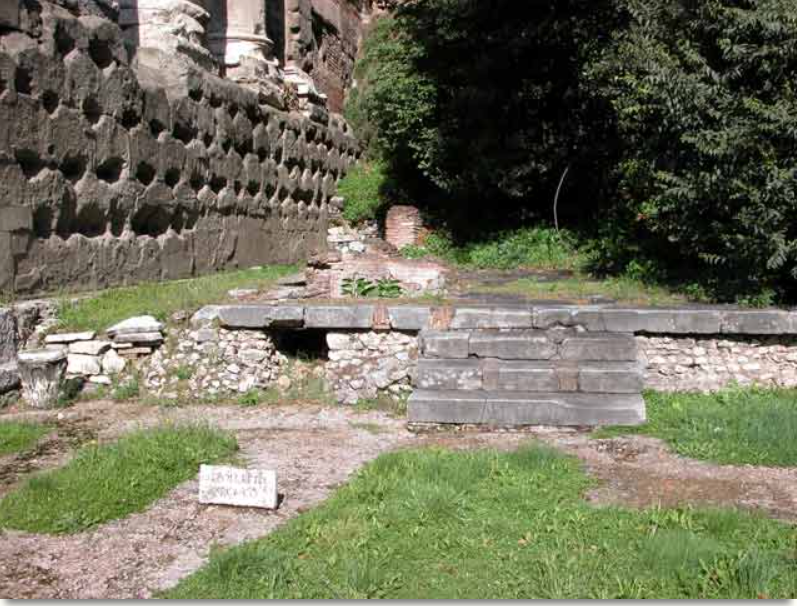
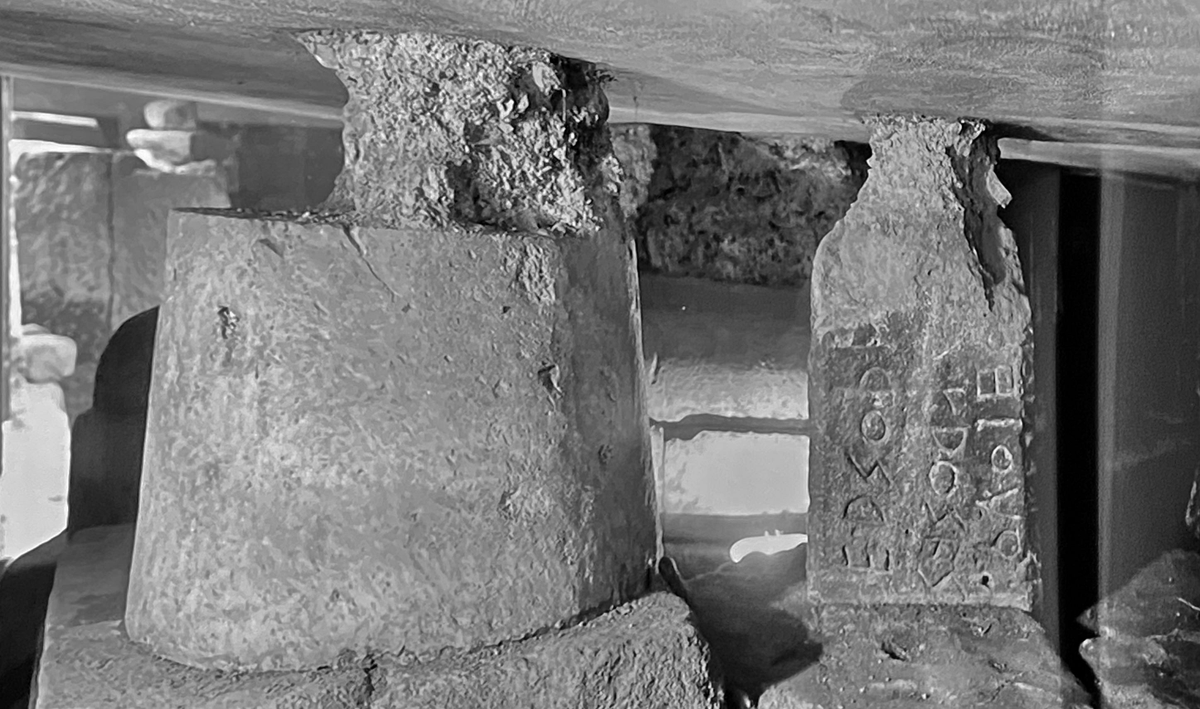
Eventually archaeologists in the early 20th century (Giacomo Boni and his team) would discover even more ancient structures at the site such as the Volcanal (also referred to as the "Lapis Niger shrine," named after the slabs of polished black marble which were used when the Romans paved over the site) dedicated to Vulcan/Hephaestus and associated with the site of Romulus' death in antiquity, which contains the famous cippus bearing a boustrophedon inscription dating to 6th century BC that warns against defiling the shine.
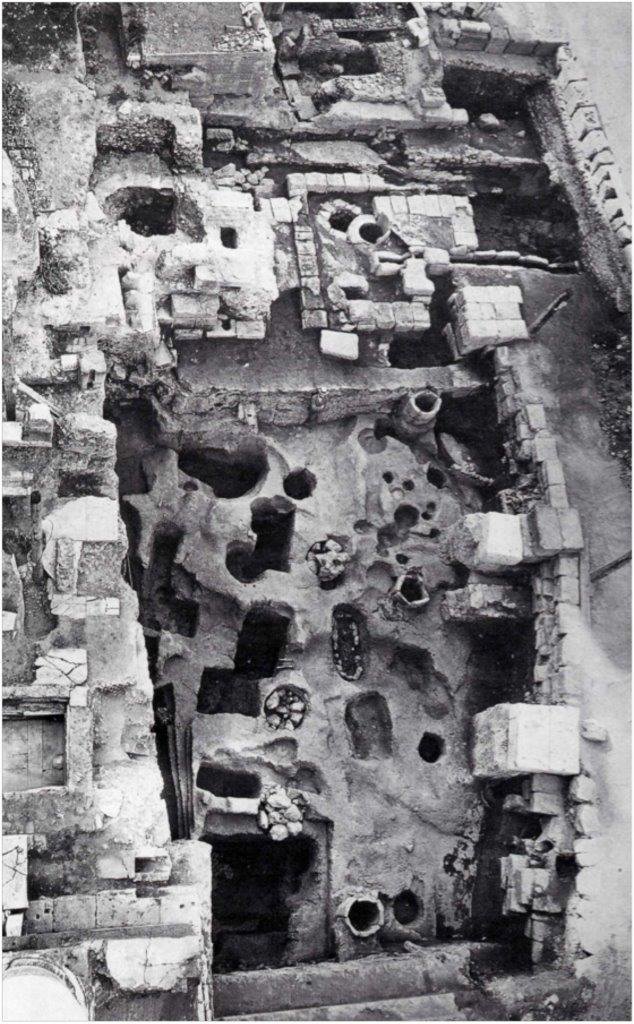
They also discovered the Sepulcretum (Sepolcreto del Foro Romano) with cremation tombs dating to 10th-century BC (the ashes of the deceased were placed inside hut-shaped pottery urns) and inhumation tombs dating to the 8th-7th century BC.

Jun 14

calling the wreckage of cultures caused by islam in the middle east as a "framework" is a misnomer.
2
11
41
1,681


Jun 12
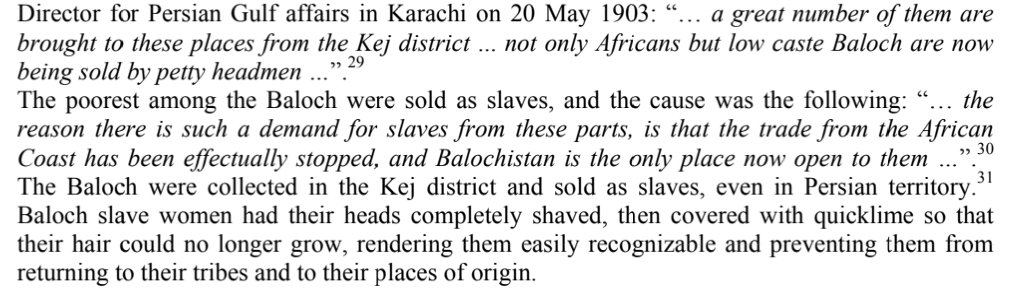
As recently as the twentieth century, many Baloch tribes sold their women into slavery in Arabia. These women were reportedly forced to have their heads shaved and covered with quicklime to stop their hair from growing back, making them easy to identify.
Jun 12

Many Pakistanis aren't aware of the fact that there was a huge, bustling slave trade involving the Makrani Baloch who would sell themselves in hopes of escaping poverty.
They replaced the African slave trade after it was prohibited through force by the European colonial powers.

1
6
46
6,393

Quicklime was to keep the creepy crawlies from getting inside. So in places where limestone wasn't easy to come by, they just white washed the window bottoms.
Fort Rod Hill National Historic Site, Victoria, B.C. where I learned about that in an 8th grade class field trip out of country.

1
33
294

which involves reacting green liquor with quicklime to regenerate sodium hydroxide 📷scienceinsights.org.
15

Jun 11
Roman concrete actively heals its own cracks, which is a big reason 2,000-year-old structures like the Pantheon still stand. A 2023 MIT study found the Romans "hot-mixed" quicklime into the concrete, leaving tiny lime clasts throughout — when water seeps into a crack, the clasts dissolve and recrystallize as calcium carbonate, sealing the gap automatically. Modern concrete, by contrast, typically degrades within decades.
27


Oh I'm sure there are some lads out there who could be creative with bitumen, quicklime, and resin.
I'm not saying I know what they can do, but some one might.
5
507

Jun 10
#英語学習 #海外ドラマ英語の備忘録 【156】
#Xファイル S4-20「スモール・ポテト」より。
エディ役は名脚本家ダリン・モーガンが快演
・shove 押しのける
・cold-cock 〈俗〉ぶちのめす/ぶん殴る
・captor 捕獲者/逮捕者
・quicklime 酸化Ca/生石灰
・underpinning 支え/礎となる

1
249

Jun 10
The secret to Roman concrete's 2,000-year lifespan is hot mixing quicklime with volcanic ash (pozzolana).
When exposed to seawater, it forms a rare mineral called aluminous tobermorite.
This mineral crystallizes inside cracks, reinforcing the structure over centuries, whereas modern concrete degrades and rusts from salt exposure.

ALT The durability of Roman concrete has fascinated engineers for centuries
1
141
Ernst Feng retweeted

Shovel, bag of quicklime, duct tape, that shit adds up and you can’t claim it as a “work expense” on taxes
1
9
244

These overgrown children think anyone not playing by the rules of High School Debate Club is a "degenerate" worthy only of lining a shallow grave and being covered in quicklime.
1
60

Limeco sits on a substantial limestone resource that could support decades of production.
Long life industrial mineral assets can provide reliable supply into growing regional industries.
#FRG #IndustrialMinerals #Quicklime #HydratedLime

ALT Industrial site with stockpiles in the foreground. Two large processing towers are central, flanked by additional industrial structures. The sky is overcast.
1
3
14
438

Jun 8
me when i get covered in a mixture of clay ash salt quicklime and rice hulls and put in a clay pot for several weeks
1
1
116

And here’s the hempcrete recipe for quicklime where you have to do the slaking:
1 PART HEMP
1 PART QUICKLIME
2 PARTS WATER
PUT IN BARREL IN THAT ORDER
LET IT COOK 15-20 MINUTES
MIX, ADD ANOTHER .5 WATER
ADD 2ND PART HEMP
FINAL RATIO:
2 PT HEMP
1 PT QUICKLIME
2-2.5 PT WATER
2
3
620