
🇪🇺⚗️ Philippe Kehren, CEO of Solvay, just gave one of the clearest and most honest assessments of Europe's industrial position I've heard from a major CEO.
Worth your time. Every quote below is verbatim. 🧵
🎬 Watch the full interview 👇
🏭 On Solvay and supply chain resilience:
"We have more than 80% of our sales done regionally. It's very important to be close to the market, close to your customers."
"I think now it's over — we have to get back to shorter logistic chains and to get back to raw materials and energies that are available locally."
"When you are a leader in your market, you master your technologies, you master your processes and you can adjust very quickly. If overnight you cannot buy anymore a certain type of raw material from a certain location, you're able to change very quickly."
🌍 On whether Europe can compete:
"Yes — Europe has everything to be competitive and sustainable in the future. It has the best engineers, technicians, operators, assets. One of the most efficient chemical production units in the world are based in Europe."
And then the line that should make every European policymaker pause:
"A lot of the pain we suffer today has been self-inflicted."
🧲 On rare earths — and this is the part the critical minerals community needs to hear:
"Rare earth is a good example. We've outsourced completely the production of rare earth material for permanent magnets. Between 90 and 100% of those materials today come from China."
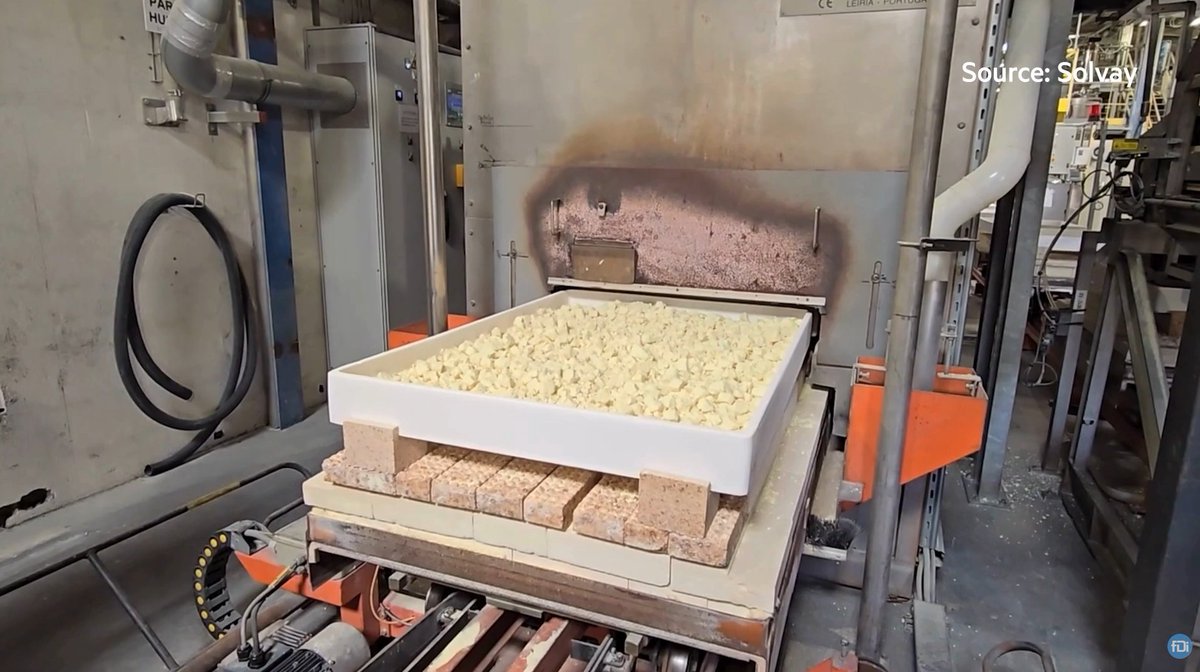
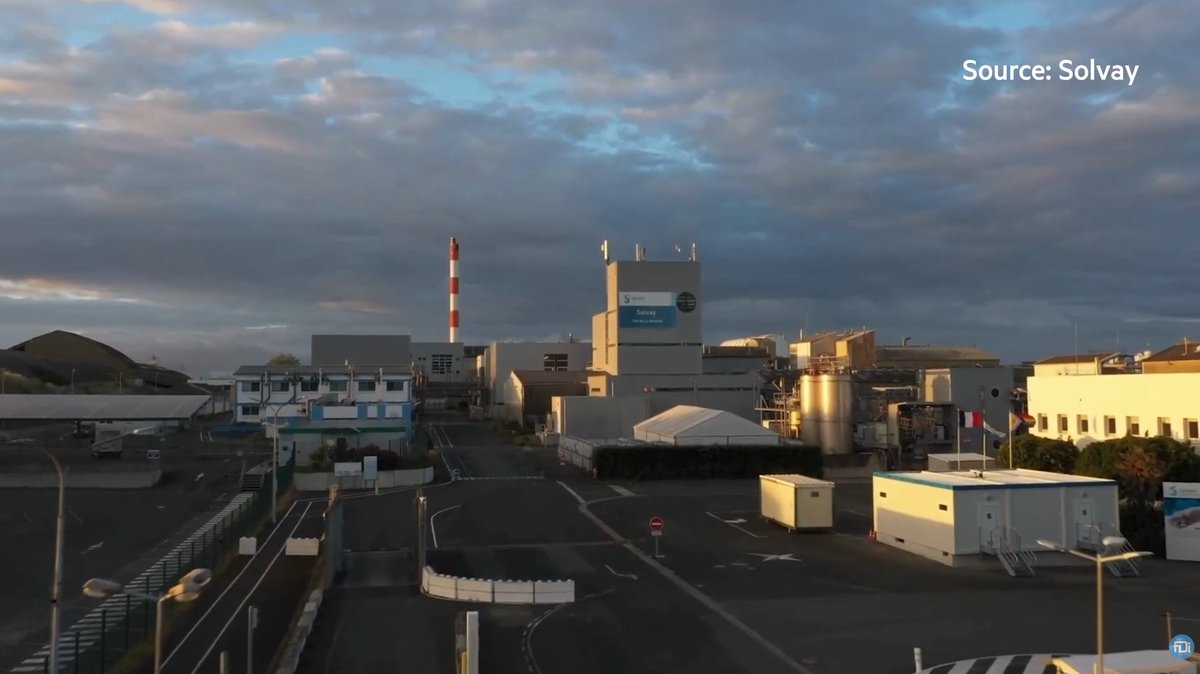
"The plant in La Rochelle is in fact unique outside of China. It's the only plant outside of China that is able to produce any type of rare earth material from any type of source. We've been doing that for more than 75 years — this plant started up in 1948."
"We know how to produce those materials. We can do it very quickly. But we need to have the value chain. We need to have buyers. We need to have contracts with volumes and prices. This is today what is missing in order to invest further."
That last sentence is the most important line in the entire interview.
Europe has the only plant outside Asia capable of processing every major rare earth element at industrial scale. It has been operating for 78 years. It inaugurated a new magnet-grade production line in April 2025.
And it still cannot get enough long-term offtake contracts from European OEMs and magnet manufacturers to justify the next investment round.
⚡ On energy — the other half of the industrial sovereignty equation:
"We need to have competitive energy in the long run by developing nuclear, by developing renewable energy, ways to store renewable energy, hydro... We decided not to produce gas in Europe — that's a fair choice. But you cannot say I don't develop nuclear neither. You need something."
"We see today that the countries that have decided to have nuclear production are more competitive and more sustainable."
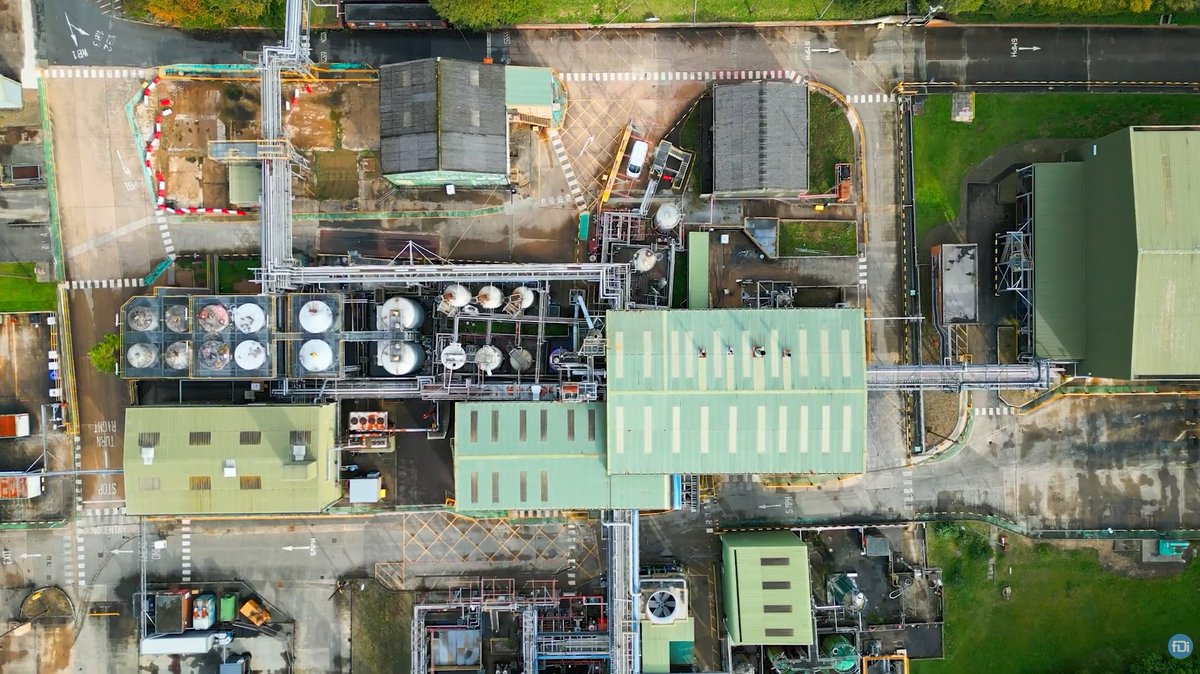
For energy-intensive processes like rare earth solvent extraction — large heated mixer-settler circuits running 24/7 — this isn't abstract policy. It is the difference between a viable OPEX profile and a structural cost disadvantage versus Chinese producers who operate on subsidised industrial power.
🔧 On the CO2 transition and industrial competitiveness:
"If you pay at the same time those projects that are very expensive plus the CO2 quotas because you have a large deficit, you pay the energy transition twice."
"We need to support the industrials that are doing this by giving them the right level of incentives and CO2 quota so that they can indeed pay this transition and solve at the same time their competitiveness challenge."
"It's perfectly compatible to do the energy transition and at the same time be competitive and secure an industrial production in Europe."
💷 On floor prices for strategic materials — a specific, concrete policy proposal:
"One way to unlock this situation would be to set floor prices — to say we guarantee you a certain minimum level of price so that you can secure the return on your investment — and that in that way it would not penalise the customers neither. It's a nice way to diversify and de-risk something that can be strategic."
This is Solvay's direct ask to European policymakers. Not grants. Not subsidies. Price floors for strategic materials — the same mechanism used in the UK for offshore wind contracts (CfD), now proposed for rare earth oxides and critical chemical intermediates.
🔑 On what "economic security" actually means:
"Economic security is really about looking at the value chains. In the past we had this idea that you look at the final product and then you can produce all the rest of the pieces anywhere else. I think that's not completely true."
"It doesn't mean we will produce 100% locally of course, but we need to at least master all the elements of the value chain and master the processes of the different pieces. That's very important so that you can create optionalities and be in control."
"Be in control is really what is very important in the current circumstances."
🌍 The bigger picture Kehren is describing
Europe's industrial model is at an inflection point. High energy costs, dependence on Chinese critical materials, and competition from both Chinese state-backed industry and US subsidy-backed manufacturing (IRA, CHIPS Act) are simultaneously compressing the space for European companies to operate competitively.
Kehren's argument — and Solvay's position illustrates it precisely — is that the response cannot be either purely market-led or purely policy-driven. It requires:
✅ Policy frameworks that make long-term investment decisions credible (stable energy prices, joint procurement, offtake support)
✅ Industry commitment to building the full value chain — not just individual nodes
✅ OEM and downstream manufacturers actually signing the long-term supply agreements that anchor project finance
✅ Financial institutions moving at the speed the geopolitical situation demands
📍 The September 2026 milestone running in parallel:
While Kehren makes the case for policy support, Solvay is already moving. Industrial-scale Dy and Tb separation at La Rochelle is targeted for September 2026 — dysprosium and terbium, the two heavy rare earths under active Chinese export controls, at the only facility outside Asia capable of separating them at industrial throughput.
The policy argument and the commercial delivery are happening simultaneously. The question is whether European OEMs, magnet manufacturers, and policymakers move fast enough to match it.
@SolvayGroup
#Solvay #PhilippeKehren #LaRochelle #RareEarths #REE #CriticalMinerals #EuropeanSovereignty #IndustrialSovereignty #CriticalRawMaterials #CRMA #RESourceEU #EuropeanCompetitiveness #EnergyPrices #Nuclear #EnergyTransition #CleanIndustrialDeal #NdFeB #PermanentMagnets #Neodymium #Praseodymium #Dysprosium #Terbium #MagnetGrade #REOSeparation #SolventExtraction #HeavyRareEarths #HREO #LREO #FloorPrices #StrategicAutonomy #CarbonNeutral #CO2 #ETS #EuropeanIndustry 🇪🇺🇫🇷🇧🇪⚗️🧲🔬💡🏭⚡🌍🔑🎬
2
1
8
479