
May 12
Flutter Architecture Notes
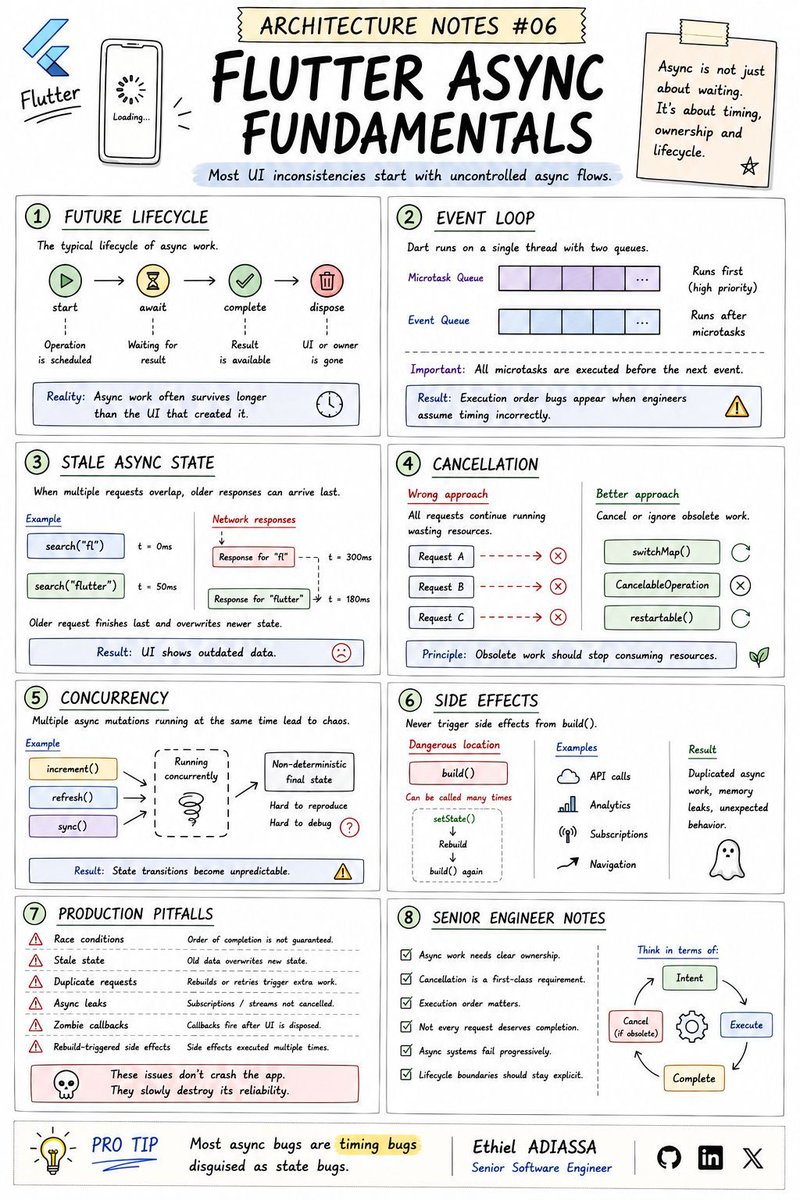
Async systems usually behave correctly under light usage.
Then concurrency increases.
Requests overlap.
Older responses arrive late.
Subscriptions outlive the UI.
Rebuilds trigger duplicated side effects.
The system still compiles.
The bugs simply become harder to reproduce consistently.
I put together some Architecture Notes on Flutter async fundamentals and the production pitfalls that appear once execution timing becomes harder to control.
#flutter #dart #softwarearchitecture #mobiledevelopment #softwareengineering #flutterdev #async #reactiveprogramming #systemdesign #programming
2
14
112
4,414
May 8
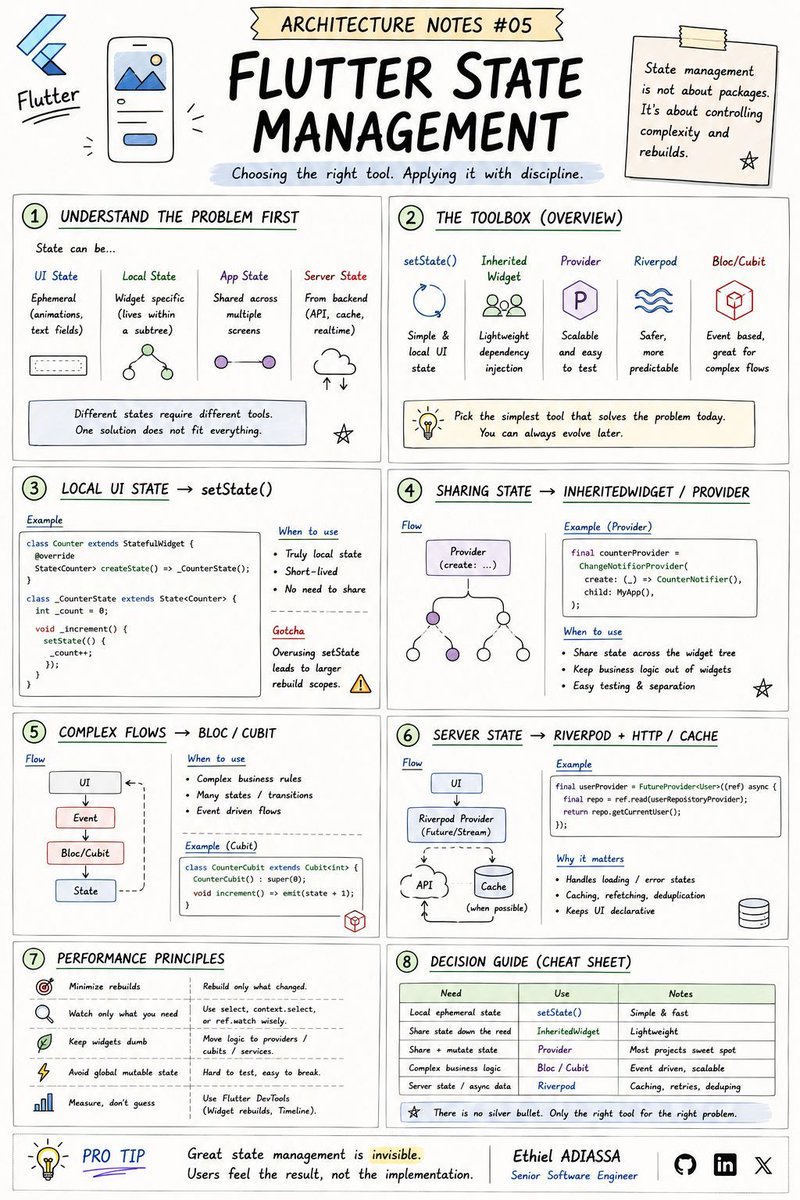
State management discussions often focus on packages.
Bloc vs Riverpod.
Provider vs Cubit.
Hooks vs ChangeNotifier.
That usually misses the real problem.
Most state management issues come from:
- unclear ownership
- rebuild propagation
- business logic inside UI
- duplicated derived state
- uncontrolled async flows
The package rarely causes the architecture drift.
The boundaries do.
I put together some Architecture Notes on Flutter state management fundamentals, the tradeoffs between common approaches, and the production pitfalls that tend to appear over time.
#flutter #dart #softwarearchitecture #mobiledevelopment #softwareengineering #flutterdev #bloc #riverpod #reactiveprogramming #programming
1
14
75
3,374
May 6
Architecture Notes 📝
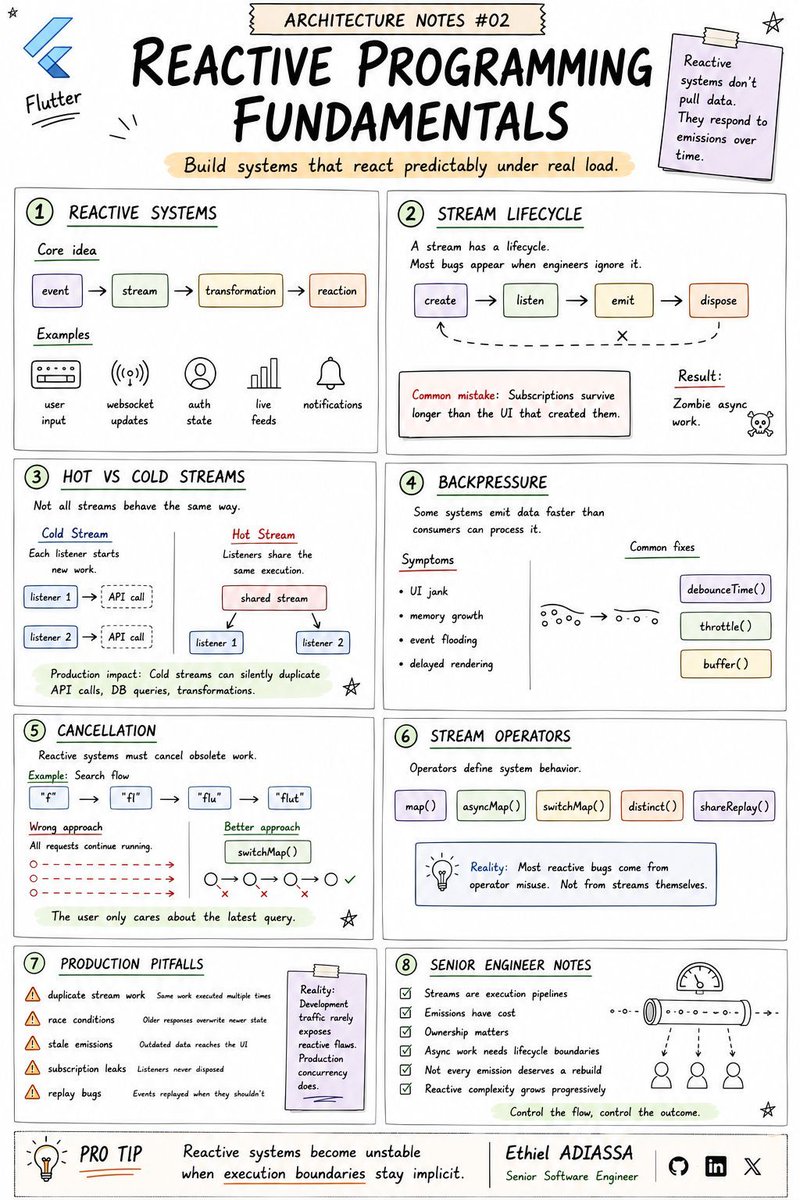
Reactive programming looks simple at small scale.
A stream emits.
The UI reacts.
Everything feels predictable.
Then production traffic changes execution patterns.
Duplicate subscriptions appear.
Race conditions surface.
Async work outlives the UI.
Cold streams silently multiply upstream work.
Reactive systems fail progressively, not suddenly.
I put together some Architecture Notes on the reactive programming fundamentals I keep seeing repeatedly in Flutter systems.
#flutter #dart #reactiveprogramming #softwarearchitecture #mobiledevelopment #softwareengineering #flutterdev #systemdesign #programming #cleanarchitecture
2
17
667
May 4
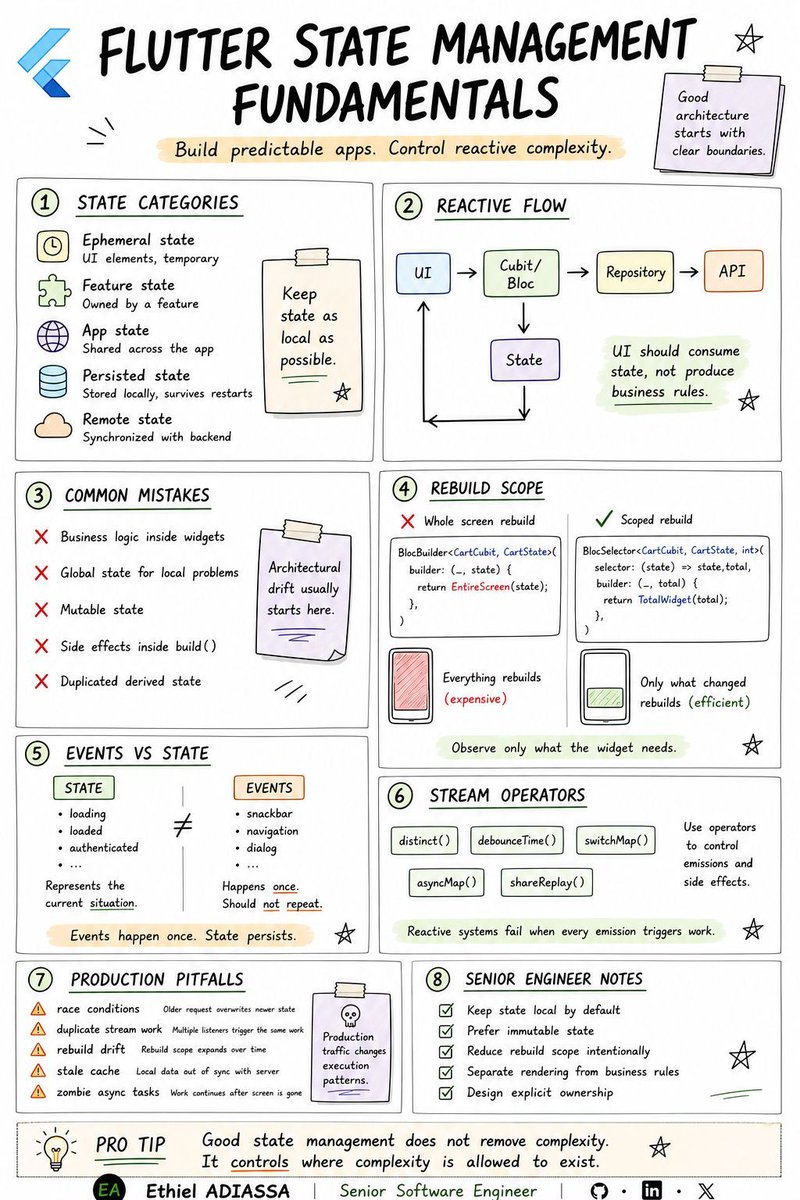
State management problems rarely appear during the first feature.
They appear later.
A rebuild scope grows quietly.
A local interaction becomes global state.
A widget starts owning business rules.
Async work outlives the screen that created it.
The app still works.
But every new feature starts costing more than the previous one.
Good state management has little to do with choosing Bloc, Riverpod, Redux, or Provider.
The difficult part is controlling:
- ownership
- boundaries
- rebuild propagation
- async execution
- reactive flow consistency
That is usually where architectures drift.
I put together a visual summary of some of the principles and production pitfalls I keep seeing repeatedly in Flutter systems.
#flutter #dart #softwarearchitecture #cleanarchitecture #mobiledevelopment #softwareengineering #flutterdev #reactiveprogramming #systemdesign #programming
4
4
60
2,258
Apr 28
Many Flutter streams never stop emitting.
The UI keeps reacting long after the data stopped being useful.
Take a search flow.
A user types quickly.
The stream emits every intermediate value.
f
fl
flu
flut
flutt
The system processes all of them.
That usually means:
multiple rebuilds
multiple requests
multiple state transitions
Most of that work produces no value. The user only cares about the final intent.
The issue comes from treating every emission as equally important.
They rarely are.
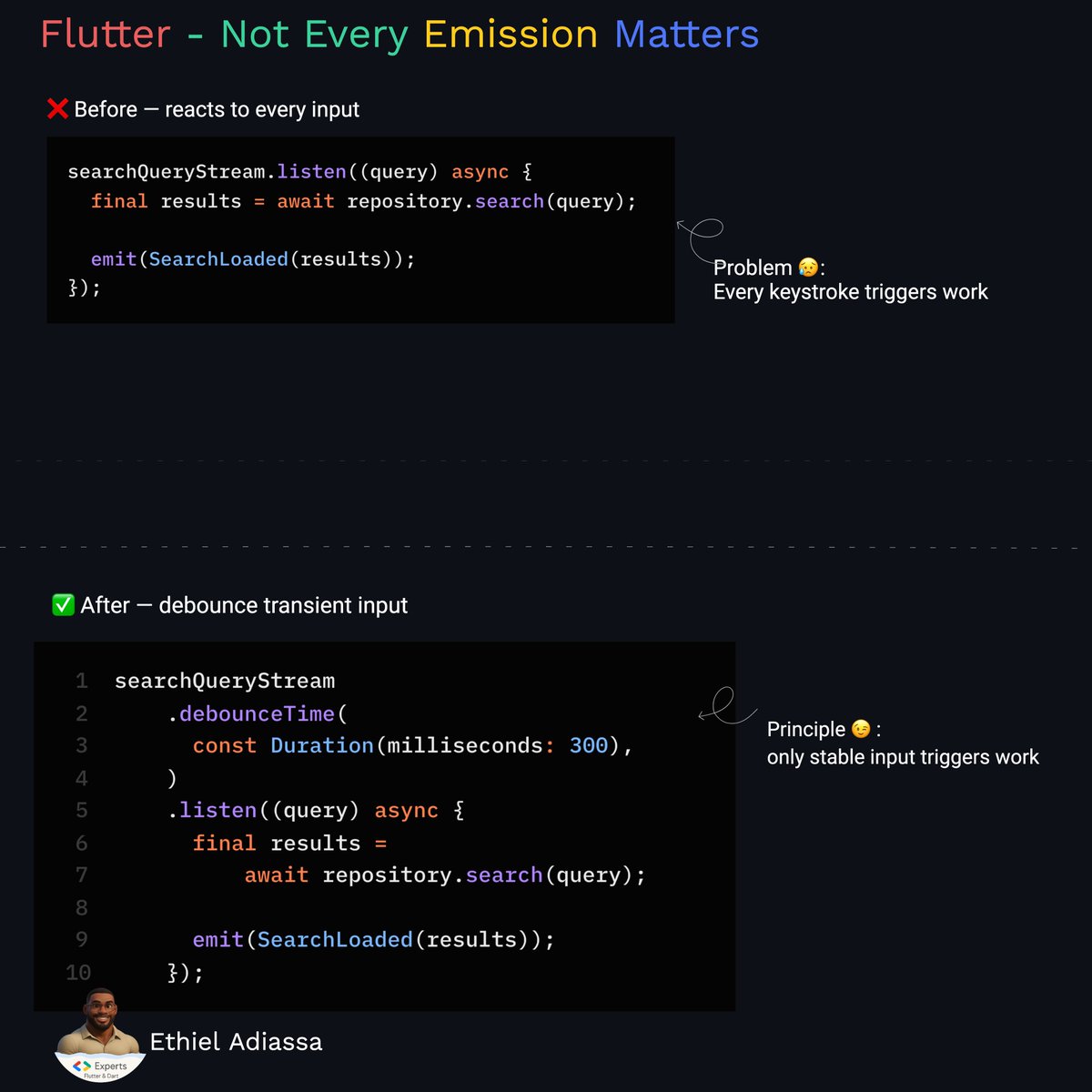
A small operator changes the behavior significantly.
Debouncing delays processing until the stream stabilizes for a short duration.
Now the system reacts to intent instead of noise.
This reduces measurable work.
Fewer HTTP requests. Fewer rebuilds. Less state churn during rapid input.
Look at the visual.
One version processes every keystroke immediately. The other waits 300ms and processes only stable input.
Streams become easier to scale when they stop reacting to transient noise.
#flutter #dart #softwarearchitecture #mobiledevelopment #softwareengineering #flutterdev #reactiveprogramming #cleanarchitecture #programming #developer
1
1
17
1,047

Vaadin 25.1 brings reactive state management to Java—define your state once, and your UI stays in sync automatically.
#Java #FullStack #WebDev #ReactiveProgramming
6
14
837

📚 Use `computed()` for derived state—it's lazy and memoized. Perfect for auto-calculating cart totals or filtered lists without manual triggers. It only recalculates when dependencies change.
Full guide: javascript.plainenglish.io/b…
#Angular #ReactiveProgramming #JavaScript
1
1
70

Jan 31
Looking for a senior professional with 7 years of experience for daily 2–3 hours support.
Required Tech Stack:
Java
Spring Boot(Optional)
Spring WebFlux
Reactive Programming
Apache Kafka
MongoDB
If you have strong hands-on experience with the above stack and are interested, please DM me.
#Hiring #Java #SpringBoot #WebFlux #ReactiveProgramming #Kafka #MongoDB #BackendDeveloper #SeniorDeveloper #TechSupport
6
14
23
2,777

22 Nov 2025
🛠️ From backpressure to schedulers — break down the advanced parts of WebFlux without the headaches. #ReactiveProgramming
1,050
17 Nov 2025
🌊 Traditional MVC struggling at scale? WebFlux’s non-blocking architecture is your answer. Learn how to master it. #ReactiveProgramming
4
1,207

28 Oct 2025
The State of Reactive Extensions for .NET in 2025 by @idg10 #dotnet #ReactiveExtensions #Rx.NET #ReactiveProgramming endjin.com/what-we-think/tal…
1
2
327

8 Oct 2025
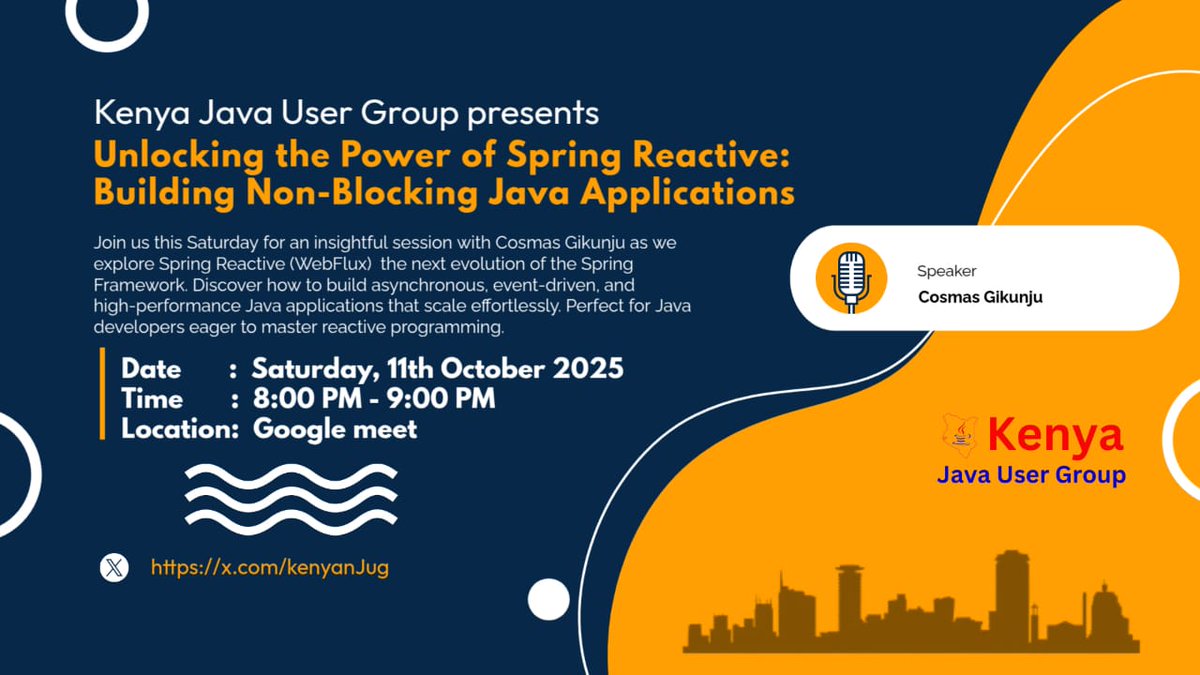
Join Cosmas Gikunju this Saturday as we dive into Building Non-Blocking Java Applications using Spring WebFlux 💻
🗓️ Saturday, 11th Oct 2025
🕗 8:00 PM – 9:00 PM (EAT)
Don’t miss out — register now 👇
🔗 zenlipa.co.ke/events/3v2CPn
#Java #KenyaJUG #SpringBoot #ReactiveProgramming
7
9
1,236
3 Oct 2025
🔗 Reactive pipelines, WebFlux support, filters, metrics—Spring Cloud Gateway shines. But can Zuul 2 keep up in 2025? #ReactiveProgramming
4
1,057

23 Sep 2025
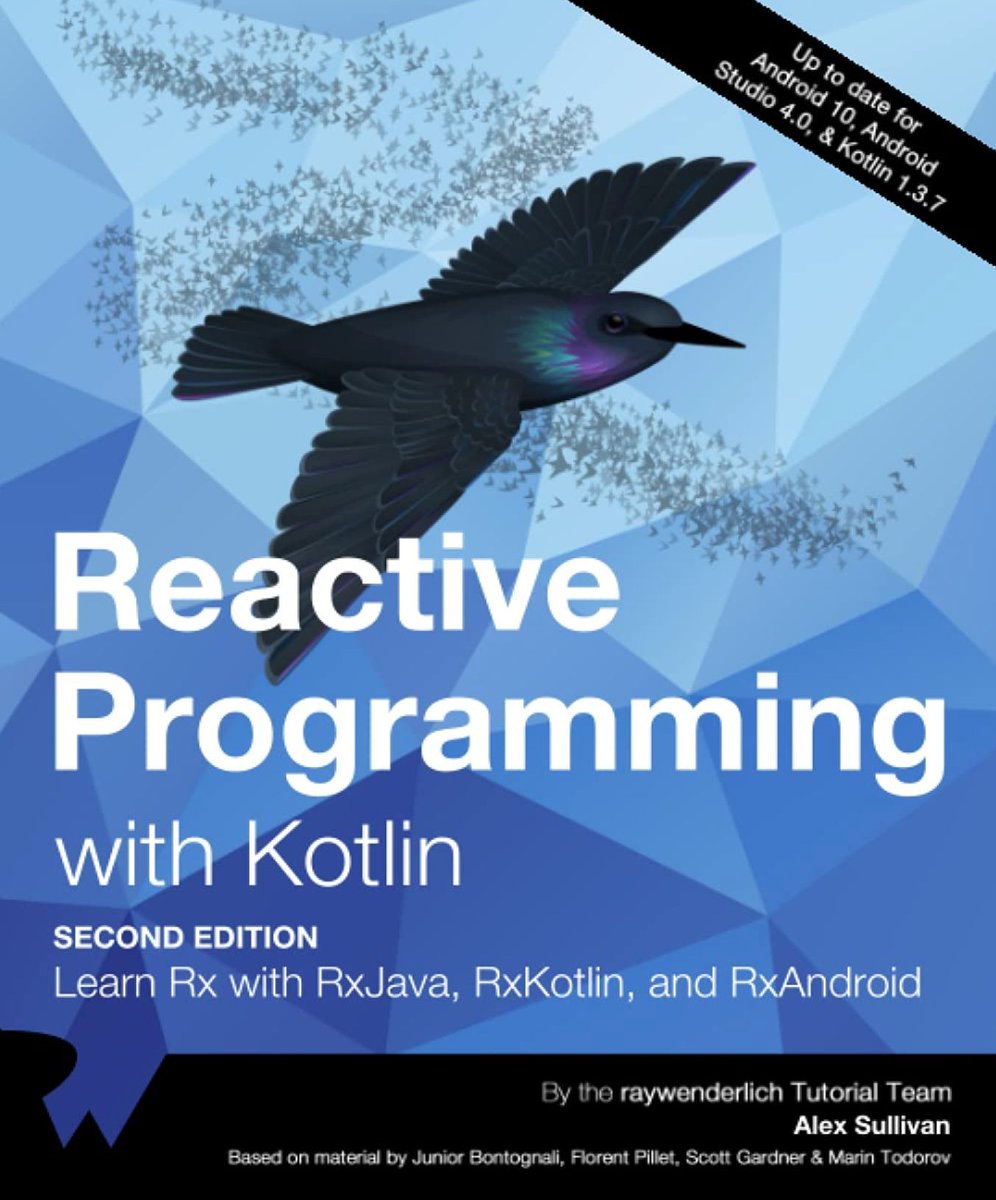
#ReactiveProgramming with #Kotlin (Second Edition): #BigData #Analytics #DataScience #AI #MachineLearning #IoT #IIoT #Python #RStats #TensorFlow #JavaScript #CloudComputing #Serverless #DataScientist #Linux #Books #Programming #Coding #100DaysofCode
geni.us/Reactive-Pr-Kotlin
5
10
457

8 Sep 2025
🛠️ Vert.x in Action: DRAPI’s Developer-Centric Success Story
Looking for a real-world example of @vertx_project ?
👉 Read the full story: vertx.io/blog/drapi-a-vert-x…
#Vertx #Java #ReactiveProgramming #OpenSource
Thanks @notessensei
4
7
1,676

11 Aug 2025
In 3 days, we go live! ⏳
Seats are filling up!
👉 webinar.kt.academy/why-you-s…
#KotlinCoroutines #StructuredConcurrency #ReactiveProgramming #SoftwareEngineering #KtAcademy

3
5
603

29 Jul 2025
When do we use Observer?
👉When we want to respond to emitted data from an observable.
👉Handle errors on completion.
👉React to asynchronous events like API calls, user input, timers, etc.
#Angular #WebDevelopment #RxJS #Tech4all #ReactiveProgramming
1
2
43

Stop Making This State Management Mistake in Angular!
.
.
.
#Angular #AngularDevelopment #WebDevelopment #Frontend #JavaScript #Programming #CodeEfficiency #ReactiveProgramming #Signals #AngularTips #latest #new #angular20 #reel #short #trending
3
160

13 Jul 2025
85/365
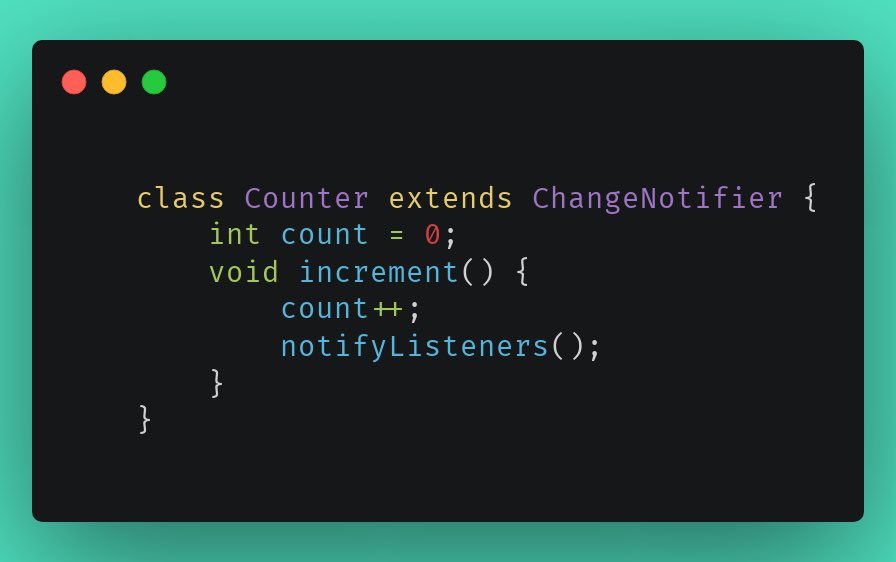
Your simplest path to reactive state in Flutter? ChangeNotifier
ChangeNotifier lets you define a model class that notifies listeners when its data changes.
Commonly used with Provider to manage shared app state.
#ChangeNotifier #ReactiveProgramming #Flutter #Flutter365
1
2
43

8 Jul 2025
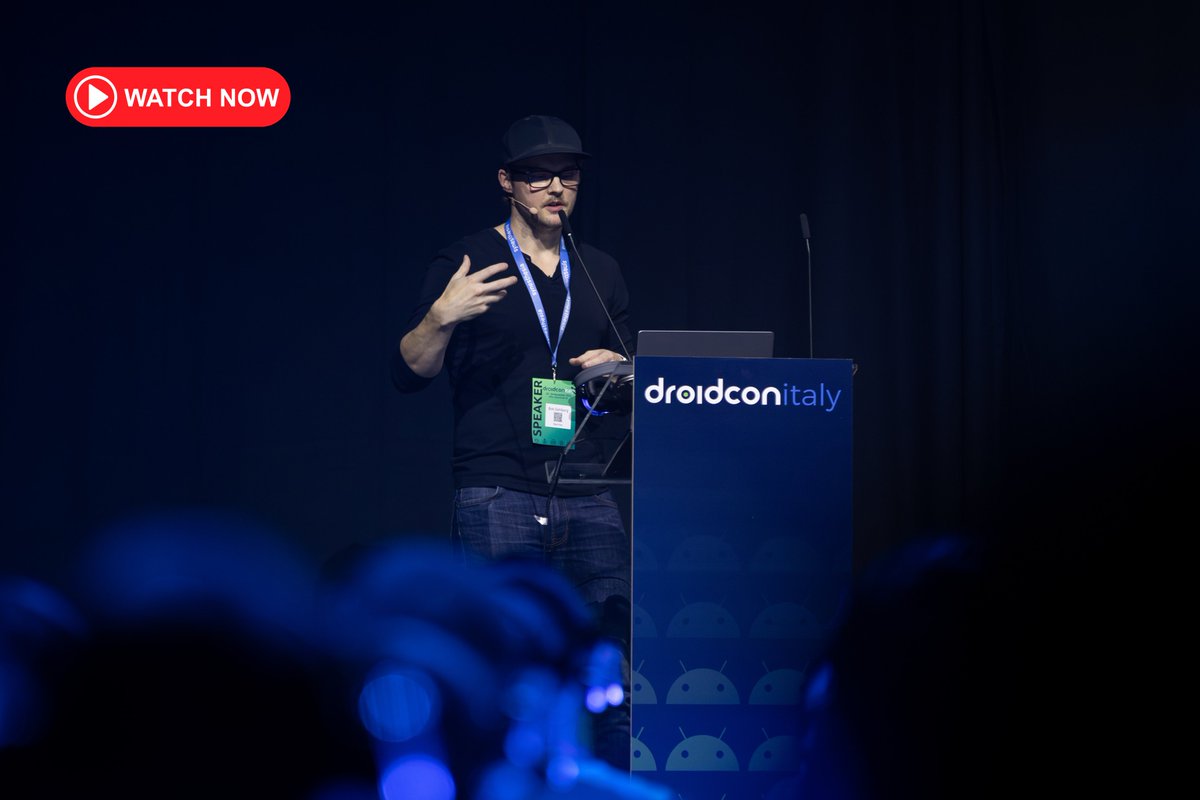
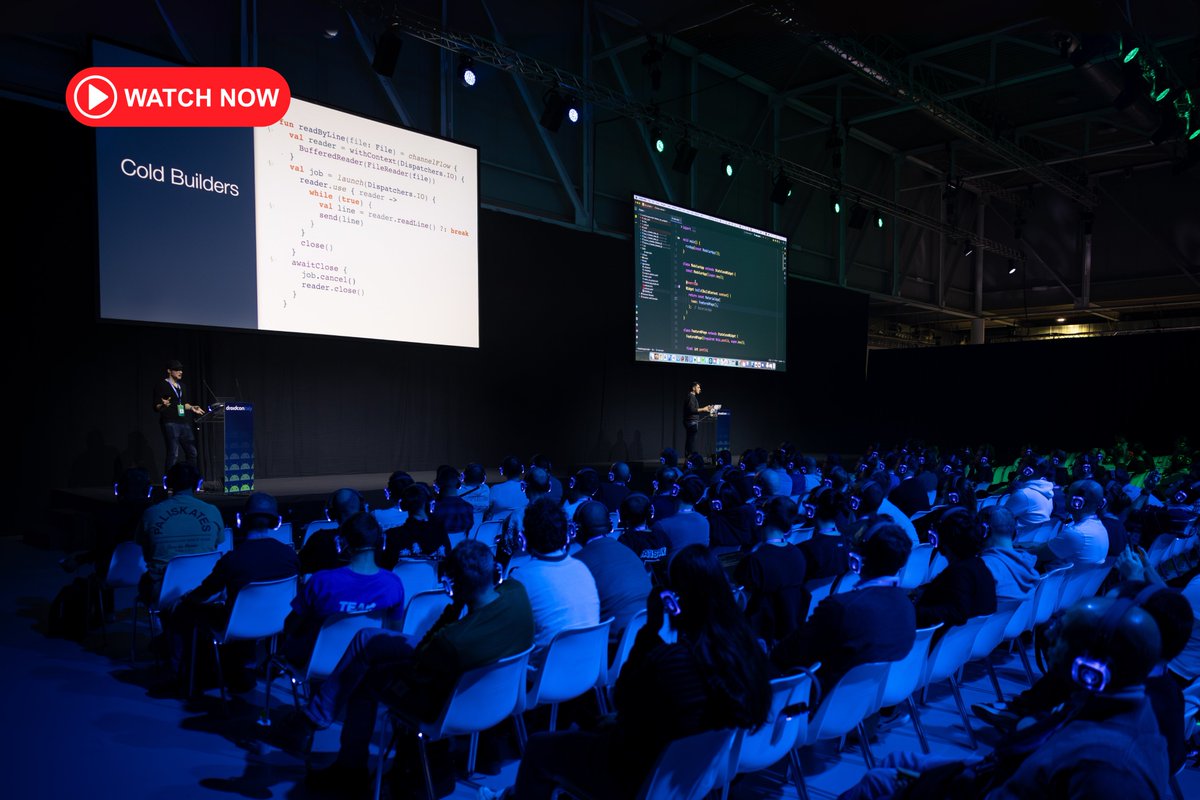
🧩 Cold vs Hot builders, Collectors, Backpressure? Learn how Kotlin Flow really works and when to use what.
🟢🎥 Watch “Kotlin Coroutines library: How to Use Kotlin Flow Like a Pro”
🔗 youtu.be/kPIC8ytcXFM 👈🏻
and learn how to:
• Use Flow builders to handle cold and hot streams
• Manage backpressure and exceptions effectively
• Structure your collectors and pipelines for production-grade apps
👤Bob Dahlberg, Staff Engineer at PayPal
📺 Don’t forget: talks from Droidcon Italy 2024 are live on our YouTube channel!
Catch up here → youtube.com/@DroidconItaly 👈🏻
#KotlinFlow #KotlinCoroutines #AndroidDev #DroidconItaly #MobileDevelopment #ReactiveProgramming #AsynchronousProgramming #JetpackCompose #KotlinTips #AndroidArchitecture @kotlin

5
156